Just Ask

I see a lot of headlines, and not a few books, that puzzle over something that there’s an easy way to resolve: why do evangelicals (I’m thinking here of the sort that back Trump despite his pretty obvious criminal, predatory nature) think the way they do.  The solution is to ask evangelicals who’ve come to see things a bit differently.  I’m not the only one, I can assure you.  Many professors of religion (particularly biblical studies) and not a few ministers came from that background.  If they were true believers then, they can still remember it now.  At least I do.  I was recently reading a report in which the authors expressed surprise that evangelicals tend to see racism as a problem of individual sin rather than any systemic predisposition society imposes.  To someone who grew up that way, this is perfectly obvious.

I’m not suggesting this viewpoint is right.  What I am suggesting is that there are resources available to help understand this worldview.  To do so, it must not be approached judgmentally.  (I sometimes poke a little fun at it, but I figure my couple of decades being shaped by it entitle me to a little amusement.)  I don’t condemn evangelicals for believing as they do—that’s up to them—I do wish they’d think through a few things a bit more thoroughly (such as backing Trump).  I understand why they do it, and I take their concerns seriously.  I know that many others who study religion, or write articles about it, simply don’t understand in any kind of depth the concerns evangelicals have.  It’s only when their belief system impinges on politics that anybody seems to pay attention.

Maybe this is a principle we should apply to people in general.  Pay attention to them.  Listen to them.  Care for them.  Relentless competition wears down the soul and makes us less humane.  Religions, for all their faults, generally started out as means for human beings to get along—the earliest days we simply don’t know, but there is a wisdom in this.  In any case, if we really want to know there are people to ask.  Who’ve been there.  Whose very profession is being shoved out of higher education because it doesn’t turn a profit.  Learning used to be for the sake of increasing knowledge and since that’s no longer the case we see guesswork where before it would’ve been possible to “ask an expert.”  I often wonder about this, but as a former member of a guild that’s going extinct, I simply can’t be sure.
Panic Inducing

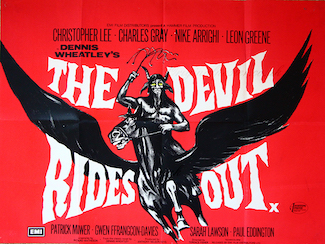
Many movies appreciate in value over time.  The Devil Rides Out (also known as The Devil’s Bride) was not well received initially, but has become a highly regarded horror classic.  One of the few with a G rating, no less.  It’s also hard to see in the US, due to lack of streaming (at least where I stream) and DVDs coded to Europeans viewers.  Anyway, taken from a Dennis Wheatley novel, and screen-written by Richard Matheson, it features Christopher Lee in an heroic role during the days just before public concern about Satanism would become downright panic.  The story itself, effective if long-winded, develops among the aristocracy in England during the 1920s.  It was released, by the way, the same year as Rosemary’s Baby, which helped play into the Satanic panic.  Movies do influence the way we view “reality.”

I’ve never read any Dennis Wheatley novels, but it’s safe to say the story is pretty Manichaean in its outlook.  A coven of Satanists wants a young man and woman to complete their number but the chosen young man has a couple of older friends who quickly comprehend what is happening and attempt to put an end to it.  The Satanists, however, control real power and the movie is pretty much a tug of war between the young man’s friends and the coven.  This is done in such a way that you see very little blood, no gore, and surprisingly for the subject matter, no nudity or sex.  The Satanists here are old school—they want to worship the Devil in exchange for personal power.  It’s pretty clear that some research was done before undertaking all of this, even if the paranoia born of such things was fueled by largely imaginary scenarios. 

I’d been wanting to see this film for some time because of its clear connection between religion and horror.  There’d be no Satan, as we know him, without Christianity.  Indeed, there’s heavy Christian imagery in the film, in keeping with Wheatley’s outlook.  Crosses cause demons to disappear in an exploding puff of smoke.  Interestingly, however, there’s no crucifixes or holy water.  This is a Protestant view of the Dark Lord.  The Satanists, however, are defeated by the spirit of one of their own who refuses to allow them to sacrifice a young girl.  The ending stretches credibility a bit more than the rest of the movie, but still, overall it isn’t bad.  A Hammer production, it never had the box-office draw of its contemporary Rosemary.  Still, The Devil Rides Out was influential in its own right.  Even if finding a viewing copy requires almost selling one’s soul.


Technologies of Hope

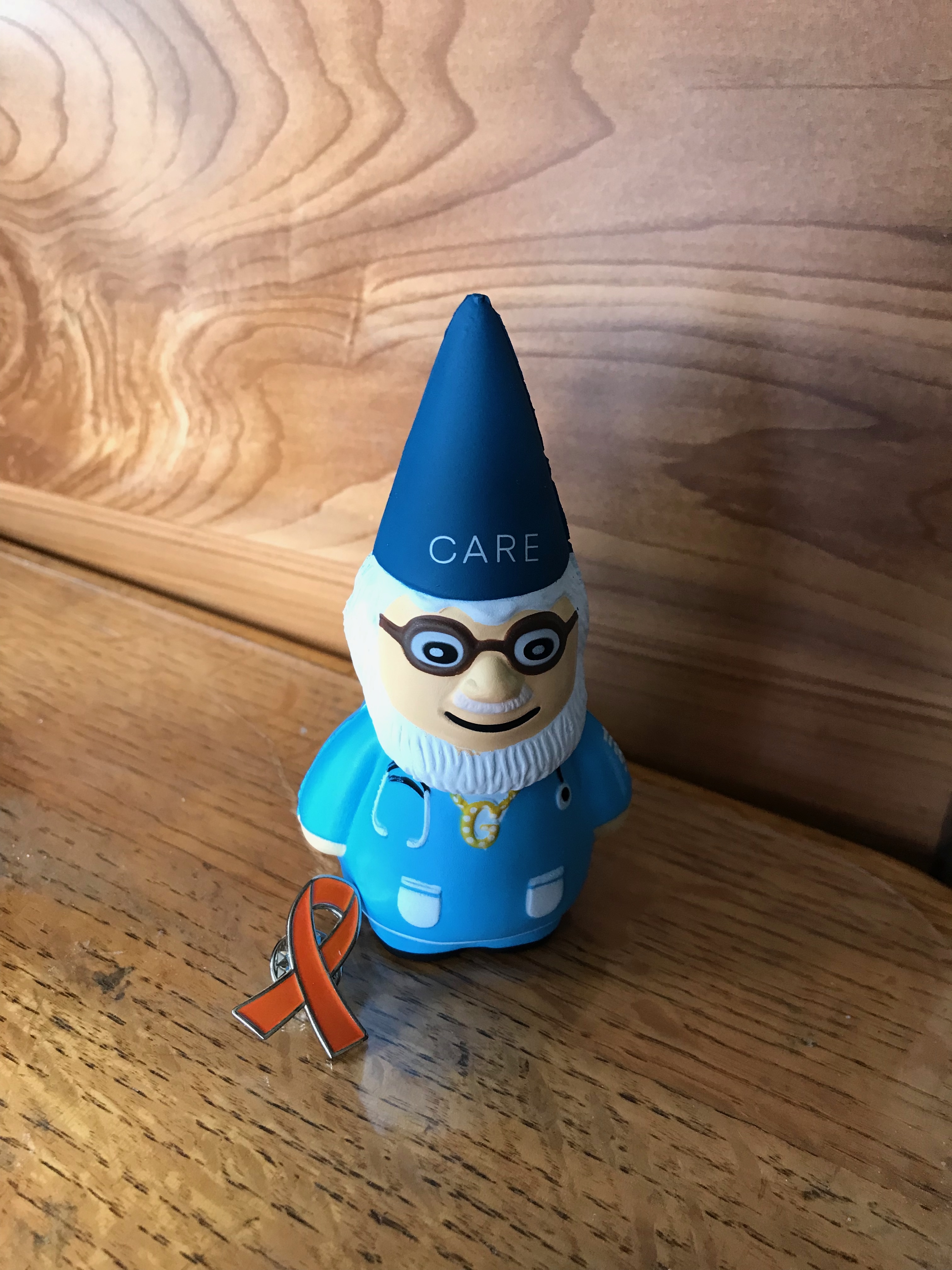
Having an immediate family member with cancer means that you look for hope everywhere.  Those who’ve brushed up against this family of diseases hopefully know that support groups abound.  Given my schedule, I don’t get out much on workday evenings, but we recently attended a survivors’ event hosted by the Andy Derr Foundation (donations accepted).  Two prominent local oncologists spoke and their tone was hopeful—always hopeful.  What really struck me was how much cancer treatment has progressed even just in the last five years.  The “cure for cancer” does not yet exist, but many technologies of hope do.  I sat there awestruck.  There are women and men spending their lives working to treat what used to be nearly always a fatal condition.  It was inspiring.

On the way home I was musing about how much we could advance in human health care if we had the budget of the military.  A vlogger we follow, John Green, happens to be a bestselling fiction author.  He is now writing a nonfiction book on tuberculosis.  This disease, for the most part, is completely treatable.  His efforts have led to lowering the cost of supplies to treat it for cash-poor countries.  I suspect he knows the same thing.  Our government decides which priorities it will fund.  Our fear—let’s be honest about this—funnels billions and billions to military budgets.  (And you wonder why I watch horror movies?)   I’m a dreamer, I confess.  But what if, world-wide, we put our money into medical budgets?  Can you even begin to imagine where we’d be by now?

I know most medical personnel are paid quite well.  My family member’s cancer medication costs more than she makes in a year, per single dose.  The technologies of hope those doctors were describing would be phenomenally expensive.  If only as a nation we had trillions of dollars at our disposal.  If only.  None of this, of course, should overshadow the tremendous work being done by nonprofits like the Andy Derr Foundation.  Channeling hundreds of thousands of dollars into research and treatment, they are making a difference.  Those beautiful survivors there that night are proof of the lives they’re helping save.  We have the ability to do amazing things.  If we support, and love one another, we can overcome a scourge that many, many families will experience, if they haven’t already.  Good work is being done.  And the good will behind it is cause for great hope.


Planetary Thinking

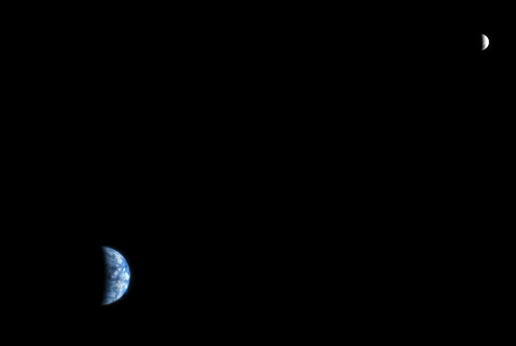
It’s Monday, and I’m feeling like a holiday.  Good thing it’s Earth Day.  Many businesses (who still don’t consider Earth Day important enough to make it a paid holiday) are emphasizing being green these days.  Really, with global warming proving itself no myth it’s just good business to try to adapt to sustainable practices.  Those of us who are vegan find more and more companies offering animal-free options—our dependence on beef is a major environmental hazard.  It’s still a challenge finding shoes that aren’t leather based, but things are improving.  And more and more hybrids and electric cars are on the roads.  We are making progress.  We still haven’t, however, gone so far as to declare a day dedicated to preserving our home an official holiday.

I’m not jaded or capitalistic enough to think our only hope is to find off-world parking.  To raise the future of humanity elsewhere.  It’s just that people fall in line after bullies and bullies only think of themselves.  And who, thinking that an afternoon on the links can be counted as work, would consider giving mere employees a day off?  A day when we might shut down commuting schedules to save power?  A day to rest from the brutality of constant commerce.  After all, a typical weekend consists of a day for chores and a day for church.  (Still, that is, for many people.)  And then back to the office not really feeling refreshed but knowing that you can’t long survive in a pandemic-ridden world without more cash coming into the coffers.  Inflation may be going down but grocery prices aren’t.

From NASA’s photo library (public domain)

A day to celebrate home seems like a no-brainer.  Especially when it comes on a Monday or Friday.  Ah well, we’ll do our best to celebrate it around work, shall we?  We’re moving late into April.  There’s been a bit of sun mixed in with April showers, as is typical around here on this planet.  Days are growing longer and the trees are leafing out.  Spring welcomes us back to the outdoors (after work, of course) where green now predominates over brown and gray.  While we may not have the day off, we can at least take a moment or two to consider how we might be better to our planet.  How we might drive less, use less electricity, generate less waste, spare a few cows.  Who knows, it might become a habit?  If that were to happen maybe every day would become Earth Day.


Poe’s Novel

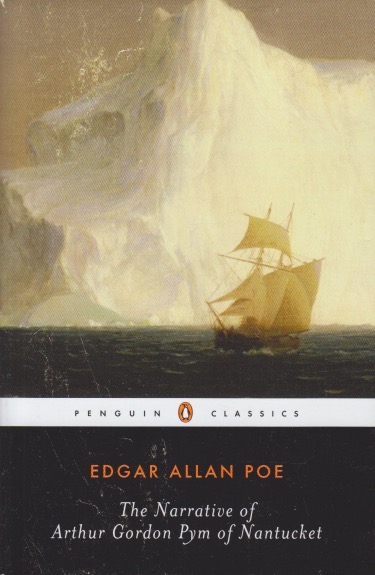
Certain authors, some great among them, excel at short stories.  I know from personal experience that trying to publish a book of such stories is a very hard sell.  For a writer like Edgar Allan Poe, who was trying to live on his words, it often led to periods of poverty.  Thinking of him as a short-story author, I had never read his only novel, The Narrative of Arthur Gordon Pym of Nantucket.  Hailed by fellow brief-tale writer Jorge Luis Borges as Poe’s best, I figured I’d better give it a try.  I’m glad I did.  I had, however, no idea what to expect.  Those who write on Poe seldom pay it much mind.  He was famous for his poems and stories, and this gothic, sea-faring novel was, according to the introduction, suggested to him by those who felt his making a living as a writer might improve if he used long form.

Concerning the edition: the novel is in the public domain.  Penguin Classics, however, often contain nice introductions.  Indeed, the intro by Richard Kopley in this edition is excellent.  A few of his observations stood out to me—this novel was, in some measure, about Poe’s family.  Both the protagonist and the author have five-syllable names with the same cadence, ending on a three-letter surname beginning with P.  Also, as both the introduction and notes make clear, Poe was deeply steeped in the Bible.  You seldom read about Poe and religion.  Writers from America’s first generation, however, were uniquely brewed in it.  I’d never considered that about Poe before.  There are many editions of Pym available, but I recommend this one because of its introduction.

The story ends without resolution, just so you know.  Pym, talked into an adventure by a somewhat devil-may-care friend, goes out on the ocean on a boat after a night of drinking.  And herein hangs the tale.  Well, actually, the friend convinces the young man with a taste for the sea to stow away on a whaler that his father captains.  A mutiny, however, leaves Pym “buried alive” onboard.  A shipwreck leads to near starvation and a boon companion survivor.  Picked up by an explorer headed south, they discover a surprisingly temperate Antarctic circle where a native tribe turns treacherous because of their fear of the color white.  It does seem that there’s a race narrative taking place here too.  I enjoyed the story although the chapters about longitude and latitude don’t quite rise to the level of Melville’s maritime writing.  It’s a tale worth the read, however, but find one with a good introduction and it will be smoother sailing.


Wolfing Hour

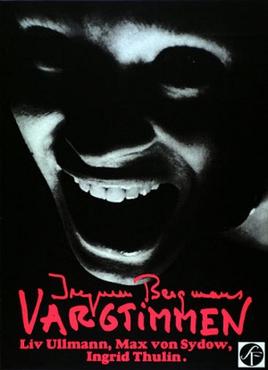
It’s not that I didn’t grow up watching horror; it’s that I didn’t grow up watching horror in theaters.  I’m sure Mom wouldn’t have had it, and besides, we could only afford movies spread apart by wide intervals.  You’d think that now I’m an earning adult (or so I’m told) that I’d have more control but watching is a kind of addiction and money’s still not abundant.  Every once in a while, however, I’ll splurge and pay for a film.  Mostly when they’re not available via any streaming service.  Like many Christians who’ve never read the whole Bible, I know the canon only piecemeal.  So I came to watch Hour of the Wolf, the Ingmar Bergman classic.  Now (at least then) streaming nowhere.  Intellectuals have always flocked to Bergman films since they’re full of symbols and not easy to understand.  (If you want to “get” Robert Eggers, though, you’ve got to do your homework.)

Hour of the Wolf is generally considered psychological horror.  It’s black and white—how scary can it be?  Pretty, depending.  The story of an artist’s wife (Alma) who lives with him in a small shack on an island in Sweden, it’s a tale of unraveling.  Nightmares become difficult to distinguish from waking realities.  The wife reads the artist’s diary, foreshadowing Wendy in The Shining, to discover that he seems to be going insane.  The island’s not abandoned, as they thought.  Soon Alma begins seeing other people too.  And attending their awkward dinner parties.  They speak freely of her husband’s previous affair.  There also seems to be an instance of a real person on the island that the artist keeps secret.

If this doesn’t give you enough to piece it together, well, it’s a Bergman film.  In college we watched The Seventh Seal.  And at least part of Wild Strawberries.  But in 1968 I wasn’t an intellectual and we were poor.  If I’d even heard of Ingmar Bergman it was via reference in some TV sitcom.   I knew to expect strangeness.  These days the box elder bugs are mostly gone from the house.  The weirdness started when, having never seen the film before, I began to pour a glass of water at the very second the artist picks up and begins to pour a glass of wine.  Strange coincidence, I thought.  Several minutes later I saw something edging around my glasses.  A box elder bug crawled right over my right glasses lens.  Like a scene in a Bergman movie.  I knew I’d have to ponder this for some time.


Morte d’Author

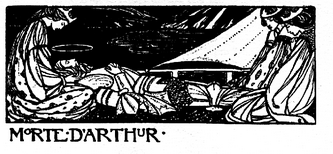
I recently learned of Roland Barthes’ essay, “The Death of the Author.”  Originally written in French, Wikipedia warns it’s not to be confused with Le Morte d’Arthur.  Or is it?  Barthes’ idea is that to truly appreciate a piece of literature you must dissociate it from its author.  I’m of conflicted feelings about this.  To truly understand an author you should read everything they’ve written.  Perhaps that’s a task best left up to biographers and historians.  I have trouble, especially when an author’s name is well known, and perhaps the very reason I purchased a book, of leaving the author out of the equation.  On the other hand, sometimes I’ll read literature merely for the experience, and the author is often someone I know nothing about.  If the book moves me, however, the first thing I start to research is the author.

Said author may not give the ultimate meaning to the story, but I believe it’s a more subtle  interaction than “La mort de l’auteur” might suggest.  It’s not unusual to enter into parasocial  relationships with an author.  In fact, I suspect it’s quite common.  After reading a Neil Gaiman novel I sometimes think we’d recognize each other across a crowded room.  Compelling writing will do that to you.  And from a writer’s perspective, what you write does contain part of you.  Captured in literary form.  As much as—no, more than a photograph does.  An author does not determine the final meaning of what s/he writes, but they mean something by writing it in the first place.

When writing fiction I often find myself exploring themes that require other stories I’ve written to give them fuller texture.  Perhaps this is why finding publishers is so difficult.  I’ve had people tell me that they understand my nonfiction better after they get to know me.  There’s a natural progression here, in this age of endemic loneliness: a story, blog post, or book catches your attention.  You want to know more and what do you do?  Await the death of the author or reach out to the writer?  I’ve done both, and I generally find that reaching out to an author can be satisfying.  It depends, of course.  Some don’t like to be disturbed by those they don’t know, their parasocial paramours.  Of course, there is a way to get to know an author, even remotely.  Read what they write.  It won’t give you the whole story, of course, but the more of their work you read the better you’ll get to know them.  Thus I’m conflicted about “La mort de l’auteur.”

Image credit: Florence Harrison, public domain via Wikimedia Commons

Wondering Wailing

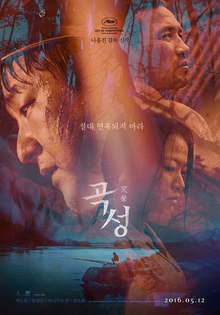
You have to wonder, it seems to me, if the western, imperialistic gaze sometimes overcompensates for its past sins.  We remain reluctant to say we don’t understand something and sometimes even declare such things superior to what we produce.  That was the feeling that came over me upon reading about The Wailing.  Don’t get me wrong—I like K-horror well enough, but I’m not sure that I would say, with some critics, that it leaves American horror in the dust.  It’s good, yes, and it’s very long (two-and-a-half hours seems too long for a horror film).  The story doesn’t answer all the questions it raises and I was looking for some kind of religious message.  That’s why I watched it in the first place.  

What’s it about?  That’s hard to say.  The best that I can do is it’s about the doomed family of a Korean police officer in a small village.  As others have pointed out, this movie has ghosts, demons, zombies, exorcisms, and other horror standards.  There’s a considerable amount of Christian versus shamanism interplay.  And it seems okay, when someone else is doing it, to suggest a foreigner is the Devil.  None of this is intended to take away from the fact that the movie is effective.  I particularly found the shamanistic exorcism scene fascinating.  The thing is, you never really learn if the self-admitted Devil at the end is working with the shaman or not.  Or if the third potential villain, a woman named “No Name,” is in on it with them.  Or maybe I’m looking at this from the wrong angle.  Maybe the policeman’s family is simply doomed.  Nothing they can do changes that.

The movie suggests that such things are like fishing.  You can’t be certain who’s going to take the bait.  According to those who know, apparently a deleted scene at the end helps to clarify this a bit.  There is a lot of talk about belief, and a Christian clergyman confronting the Devil.  For me, however, I need to be able to follow a story well enough to figure out whether I’m misinterpreting or not.  The problem with a movie this long is finding the time to go back and rewatch it.  It opens with a quote from the Bible and it uses biblical tropes, such as the cock crowing three times, to make some strong points.  In fact, the opening quote from Luke 24.37-39 implies that the ghost may be God.  One thing is certain, I’ll be mulling over The Wailing for some time.  And maybe someday I’ll start to understand.  In the meanwhile, I’ll still watch and appreciate American horror, inferior though it may be.


Monopoly by Statute

The Bible is an odd book.  It is foundational for the modern world, no matter how much we might want to deny it.  Even so it’s a strange book.  The King James Version (KJV) of the Bible is a masterpiece of English literature.  There’s not one King James Version, however, as several variants exist.  Nevertheless, the KJV remains quite popular among some religious groups and it is still studied in English Departments as part of our cultural heritage.  It is also in the public domain, which means anyone can print and sell it.  Unless, of course, you wish to do so in the United Kingdom.  Here’s where the story gets interesting.

Because of England’s troubled religious history—remember the whole Catholic v. Protestant monarch thing?—the printing of religious books became a contentious issue shortly after the adoption of the printing press.  In 1577 a monopoly on Bible printing went to one man, Christopher Barker, the Royal Printer.  Ostensively to control the version of the Bible approved for use in the Church (of England), this royal privilege became law.  In perpetuity.  Now rights, as commodities, can be bought and sold.  And this happened from time to time.  Cambridge University, however, had been granted a royal charter earlier—also perpetual—to print “all manor of” books.  Since this arguably included the Bible (a lucrative business) it wasn’t prevented from printing them as well.  Oxford University was granted a similar charter some years later and so the two ancient universities and the Royal Printer were the only ones allowed to print the Bible for sale in the United Kingdom (except Scotland, but that’s a story for a different time).

Image credit: Daniel Nikolaus Chodowiecki, public domain via Wikimedia Commons

This privilege, which still exists on the books, did not apply to later versions of the Bible.  The KJV became wildly popular and really wasn’t challenged much for over two centuries.  By the nineteenth century British lawmakers, presumably, had better things to do than argue about who could print the Bible.  Meanwhile other translations divided and conquered the profits coming in from the sale of what had been, in essence “the” English Bible.  As late as 1990 the Royal Printer status landed with Cambridge University, so the sale of rights continues.  A similar story accompanied the Book of Common Prayer, which has always been in the public domain but can only be printed in the UK by the two major university presses.  The story of the Bible is a fascinating one, and since it has shaped western civilization, it seems appropriate to give it the last word: “where your treasure is, there will your heart be also.”


Why Not Love?

I learned a new word the other day: incel.  I’m not too proud to say that I had to look it up.  Although I’m on the internet quite a bit, I’m not really part of “internet culture.”  Incel is a shortened form of “involuntary celibate.”  It refers to an internet culture of mainly white, heterosexual males who consider themselves unable to find (generally) female companionship.  They often lash out at women, and sometimes at any sexually active person.  In general it seems to be a self-pitying, hateful crowd.  They tend towards misogyny and racism and, one suspects, conspiracy theories.  They apparently suffer what a friend of mine called “DSB” (deadly sperm buildup).  But the thing is, love would seem to be the cure.

Certainly women aren’t to blame.  Look, if I managed to find a woman willing to marry me there must be hope for the rest of my gender.  I’m no catch.  And why is it frustrated men take it out on women?   And underplay the achievements of women?  The Women’s March in January 2017 was the largest single-day protest in history.  Accurate numbers are difficult to attain, but it has always struck me that the U.S. Park service agents, with feet on the ground, estimated a million and a half in D.C. alone.  So we were told.  It’s almost as if nobody bothered to count because it was women.  Why is this still an issue?  How incelular are we?  Is it so difficult to give credit where credit is due?

I wonder if anybody foresaw that the internet would develop such subcultures.  Yes, Neal Stephenson’s Snow Crash gave us a metaverse where individuals lived virtually online, but did we fully realize then that sexually frustrated guys would eventually merit their own title and that some of them would perform acts of real life violence based on their own rhetoric?  Rogue males have been part of human culture all along, but the internet has offered a place to band together and become radicalized.  I, for one, had no idea that such subcultures existed.  It took reading an academic work about female leadership to learn about them.  And it makes the world a less comfortable place knowing they’re there.  Learning love is our only hope.  There are people who sublimate their frustration to hate.  What if we tried to make the internet a place where love, with or without physical entanglements, became the dominant meme?  Even those of us who work largely in isolation can see the hope in that.

Photo by Mayur Gala on Unsplash

One Host

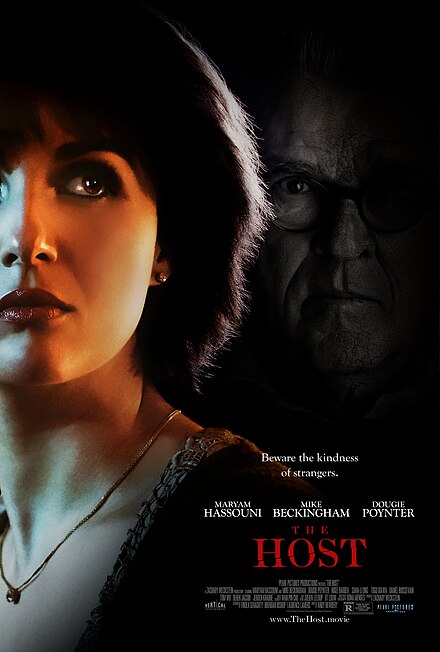
I don’t want to seem an ungracious guest, but I don’t know if I met the right host.  I really need to start keeping track of film dates as well as titles.  I found two versions of The Host and one was free.  (This is the 2020 version.)  Despite what the critics say, I liked it.  It borrows quite a lot from Alfred Hitchcock, and, I’m told, from Hostel (which I’ve never seen).  The plot is complex and, it may be my own naiveté, but it kept me guessing.  It’s the story of how a down-on-his-luck Englishman mistakenly gets involved in a drug smuggling operation.  He travels to Amsterdam where his “hotel” claims they’ve lost the reservation but they can set him up in a stylish house with a local who has extra room.  The local turns out to be a very influential psychotic.  Herein hangs the tale.

For me, I couldn’t guess where this was going.  I thought the drug smugglers were the real scary people but then odd things start happening with the Englishman’s host.  When he doesn’t show up to work on Monday his brother goes looking for him and he too meets “the host.”  The charming murderer is generally a male role, but Vera, the host, plays it well.  It seems to me that those who criticize the movie most strongly have some viewing experiences that I lack.  This is a polished effort and it doesn’t appear to have been cheaply done.  The story has many twists and although it may imitate others, that’s how new filmmakers get started.  Most writers are willing to admit that they borrow.  Doing so with style can make a huge amount of difference.

What remains unclear to me is whether this was The Host I was supposed to watch or not.  There’s a 2013 sci-fi thriller by that title and I also found a 2006 monster film from South Korea.  With a few exceptions, movie titles tend to be short.  You can’t copyright a title.  And sometimes the most appropriate one for your work has already been taken.  Here (the 2020 version) the title maybe gives away who it is you’re intended to watch out for.  The drug dealers aren’t an idle threat, but Vera is a spider waiting in her web.  And the movie has a moral—actions have consequences.  The original apparent protagonist has little to no self control which he blames on an abusive upbringing.  There’s quite a lot of father-relationship analysis going on here as well.  If anything, The Host (2020) may be a little too ambitious, but it’s worth staying a spell.


Best King

I suspect most people have read one or two at least.  Most reading folk, that is.  I mean Stephen King novels.  He’s sure written plenty.  By my count I’ve read nine: The Shining, Carrie, ‘Salem’s Lot, Pet Sematary, It, The Stand, The Tommyknockers, Revival, and Cujo.  I probably have one or two more in me.  The dilemma is that I like King’s writing—I’m not one of those nay-sayers who call it clap-trap.  There’s real literary merit to much of it (sometimes just too much of it), and he integrates religion into horror really well.  The thing is, not all of his books are made equal.  I suspect that’s true of any writer.  I’ve consulted some lists to see which are the best and I’ve watched some movies before reading the books, but I’m starting a ranking of my own here—it will probably be revisited from time to time, as events warrant.

What’s his best?  Well, such lists are supposed to start with the worst and work their way forward.  I’ll cave to convention this time.  So, The Tommyknockers and Cujo are tied for least favorite.  Each has a reason: The Tommyknockers is too long and lacks sympathetic characters and Cujo is just too nihilistic.  The premise is good but the bleakness got to me.  The Stand comes next primarily because of the length.  I like the way that one ended up, though.  Revival, my most recent read, comes here, about in the middle.  It was enjoyable to read, even with its length.  I think King has a little trouble writing convincing kids, but the story was good.  Next I would put ‘Salem’s Lot.  Who doesn’t like a good vampire story?

Not that kind of book.

My top three are, perhaps predictably, generally among the top ranked.  My order is perhaps a bit different than most, however.  I really, really enjoyed The Shining.  The movie, I believe, is better.  That may be heresy, I know.  Carrie has all the freshness of a novelist breaking through, and it’s effective.  Better than the movie.  That leaves Pet Sematary as my current favorite.  The story there caught me up and it’s the only one of my top three that I read before seeing the movie (both of them).  The book is way, way better than the movies.  Compared with Revival, which also deals with what happens after death, Pet Sematary offers a commentary on grief that doesn’t involve everyone dying by suicide.  It’s on a much more human level.  As I read more, I’m sure I’ll form other opinions, but for the time being, these three of the King’s early novels, are, in my standing, the most deserving of the crown.


Sodom Returns

Somebody really ought to write a book.  It’s not me, but when new archaeological discoveries with large explanatory value emerge, they begin to paint an interesting picture.  Archaeologists have determined that Tall el-Hammam, a city in Jordan of about 8,000 residents, was wiped out by a cosmic airburst, or meteorite.  If you missed it in the headlines it may be because this happened in 1650 BCE.  Barring volcanoes and other melting phenomena, since they don’t get hot enough, the cosmic airburst is the best theory.  Given that Tall el-Hammam is not far from the Dead Sea, it has been posited that the sudden destruction of this city led to the biblical story of Sodom and Gomorrah.  This makes sense to me.  Just like the theory that the flooding of the Black Sea by the Mediterranean led to stories of the flood.

Sodom and Gomorrah afire, by Jacob Jacobsz. de Wet; image credit: Daderot, public domain via Wikimedia Commons

People who had no other ways to explain such things would naturally consider them forms of divine punishment.  Deep-seated guilt seems to be a universal of human psyches, sometimes for good reasons.  In any case, an entire city wiped out by a meteorite looks like the finger of God just as much as lightning does.  Biblical scholars have long supposed that the story of Sodom and Gomorrah was an etiology, or origin story, of the formation of the Dead Sea.  This is partially based on the famous salt pillars, more than one of which bears the name “Lot’s wife” or the equivalent.  And the Dead Sea is unlike any other body of water on the planet.  

I suspect that over time other biblical stories may find logical explanations in ancient catastrophes.  I haven’t found convincing those that try to explain the “plagues of Egypt” based on a scientific daisy-chain of events, although they are interesting.  There’s no doubt that between the expulsion from Eden and the arrival of Moses there were dramatic events narrated by Genesis.  If these were ghosts of memories of ancient tragedies that makes sense to me.  They’re moralized, of course.  Aesop’s Fables also ended with the moral of the story.  We still like to know what a story means, and a good movie or novel will have some kind of message to convey.  There’s no way to prove that Tall el-Hammam’s destruction led to the biblical account, or that memories of a catastrophic flooding of the Black Sea led to tales of arks.  But still, somebody ought to write a book.  I’d read it.


Haunted Life

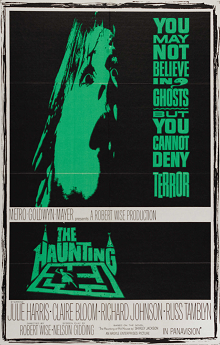
It’s funny what a difference that a few years can make.  I can’t seem to recall from where I sourced my movies in the noughties.  Streaming was extremely tenuous in our Somerville apartment—the plan didn’t include the required speed for it.  Like in the old days when it took twenty minutes to upload a photograph through dial-up.  In any case, I know I’ve watched The Haunting before.  I know it was in Somerville, but having watched it again I have to wonder if my mind is playing tricks on me.  I read Shirley Jackson’s The Haunting of Hill House there, and I saw the movie.  But how?  It’s all about mind games, but the mind games are played on a woman who has an abusive family, one that damages her psychologically.  Escape is important to her, even if it is to a haunted house.

I think the last time I watched this I was looking for something that might scare me.  That phase was one of thinking not much frightened me—but this movie is scary.  Even with its “G” rating, its lack of blood and gore, and black-and-white filming.  It scares.  One thing I’ve noticed when reading about these older movies after I watch them is that many improve with time.  Shirley Jackson was known during her life but you become a classic writer only AD—after death.  The Haunting has aged well.  I suspect it has something to do with Robert Wise, the director.  What must the psychology of a man be who directed The Sound of Music, The Day the Earth Stood Still, and The Haunting?  The latter is all about psychology.

Movies that make you think are those, I believe, that may become classics.  And perhaps there’s a bit of Eleanor inside all of us.  Wanting to be noticed but eschewing publicity.  Needing someone to love us, but pushing away those who try.  Children in bad environments learn unorthodox, and often unhealthy, coping techniques.  Eleanor has difficulty accepting that John is married when she thinks she’s finally found a place that accepts her for who she is.  Even if it’s a haunted house.  Especially if it’s a haunted house.  As a child I’d no doubt have found the movie boring.  There is, however, much for adults to absorb.  And, I expect, I’ll need to go back and read the novel again.  One of the reasons for watching horror is that the viewer is seeking something.  It’s not just thrills.  I didn’t write about the movie the last time I saw it so I don’t recollect when it was.  Or even how.  My thoughts now, however, are that I should’ve paid closer attention the first time.


Eclipsing the Earth

We need a new word.  One for the high an eclipse brings you.  I’m finding myself having difficulty coming down from it.  It seems so mundane to have to do something as ordinary as work after experiencing totality.  We only caught very brief glimpses of the moon over the sun through small breaks in the clouds, but we did get to experience totality.  How do you come down from that?  The next day we had a several-hour drive to get home so that we could all be at work yesterday morning.  What could be more ordinary than that?  And the eclipse happened on a Monday, not an unusual day for a holiday.  Only it wasn’t a holiday, but a “vacation day.”  So was the driving day.  At my age you need a day to recover from all the driving too.

Several friends have posted their amazing photos and videos of the event, so I’ve decided to “release” my video to the wild.  A few explanatory notes: we were in upstate New York, on the shore of Lake Ontario.  It was chilly and we were bundled up (we came home to 80-degree temperatures, which was quite a shock).  The video may seem to have not much happening for the first couple of minutes and this is because electronic cameras tend to “even out” the light (film photography is much better).  When I started filming this it was getting dusky but the phone smilingly tried to make it look like normal daylight.  That wasn’t the case.  (Be patient—drama takes time to build!)

It occurred to me that many people (who had clearer skies) thought totality was all about the moon over the sun.  I take a more Buddhist approach.  The Buddha admonished not to mistake the hand pointing at the moon for the moon itself.  The real experience of an eclipse is what is going on down here on earth.  My video shows how the sun faded, and then went completely dark and back again in a matter of minutes.  My experience of this was quite a spiritual one.  If I’d been looking up I very well might have missed it all.  In other words, being in a cloudy situation, totality was an opportunity to take in what was happening on earth, in real time.  There is a lesson in this.  Life tends to deceive us into thinking the most important thing is the peripheral one.  Experiencing an eclipse is all about being, and living, on earth.