In the Dark

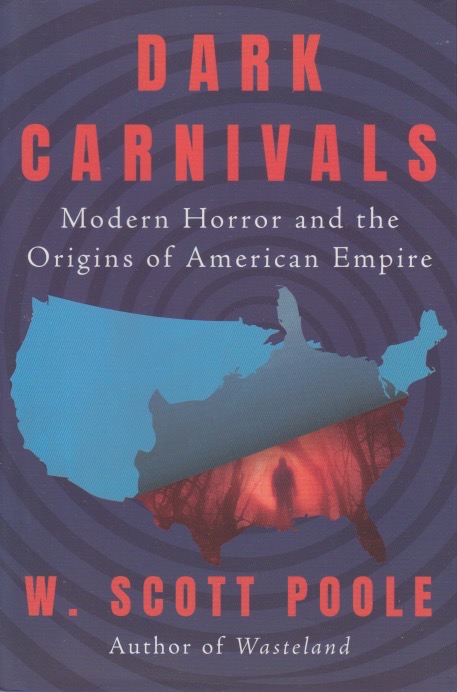
I’ve read several of W. Scott Poole’s books, and each time I read one I want to read another.  Dark Carnivals: Modern Horror and the Origins of American Empire is my most recent.  At first I was a bit reluctant to pick this one up because I misunderstood the “carnivals” of the title.  I don’t find clowns scary and I’m not really a fan of carnivals.  I didn’t make the connection with Ray Bradbury’s early story collection Dark Carnival.  Bradbury?  Well, why didn’t you say so?  But there is serious darkness here.  Poole traces the history of the American empire alongside the truths that horror films reveal.  This isn’t an easy book to read despite Poole’s fluid style and literary gifts.  Historians are uniquely placed to find truths that our country has so carefully hidden in our efforts to make ourselves the international “good guys.”  In unflinching terms, Poole traces the darkness of our acts, domestic and abroad, that have created so many dark carnivals.

The first couple of chapters are nearly impossibly good.  The entire book is insightful, but as is often the case with pop culture I find my experience limited to movies and novels of the horror genre.  There is absolutely fascinating stuff here.  It really begins with Harry Truman, but Poole traces how Ronald Reagan’s presidency was in many ways guided by science fiction authors who projected proudly the idea of America dominating the world.  Even to the point of becoming fascists.  Often confusing movies for reality, Reagan prided himself on being an empire builder who was a boon companion to the rich while keeping the poor exploited and un-empowered.  And it hasn’t just been Republican presidents who’ve done this (although they are clearly the most egregious offenders).  There are many moments of pause and reflection in this book and much of the horror comes from history rather than horror films.

Poole has made a name for himself as an analyst of politics and horror.  Very few “innocent” stories are as guileless as they appear to be.  Empires demand loyalty and must be constantly fed.  And they are extremely hierarchical and oppressive of those beneath the level of influence in their considerable power structures.  Dark Carnivals is a brilliant and disturbing book.  It did, however, take me down an avenue that Poole himself doesn’t explore.  Ray Bradbury was pretty much a Democrat until Reagan.  He wholeheartedly bought into Reagan’s false narrative and became friends with Republican presidents.  The disconnect from the man who wrote such masterpieces critiquing this kind of thinking caused a bit of personal whiplash for me.  His own dark carnival had drawn him onto that insidious merry-go-round.  Even the insightful can be lured by the tempting power of empire.

Holding Still

For some people today is the start of the “holiday season.”  Thanksgiving begins what often becomes a rush up until Christmas.  Moods tend to be more festive, if not carefree.  As for me, I always save up vacation days so that I can make my own mini “semester break” late in December.  From the onset of the holiday season I can see far enough to be able to make it through the rest of the year.  For me the season seems to begin at Halloween.  It’s not a federal holiday and I don’t know anyone who gets Halloween off of work, but I take holidays seriously, and Halloween, Thanksgiving, and Christmas are all anticipated days.  And in the spirit of the day, I’m thinking of the many things for which I’m thankful.

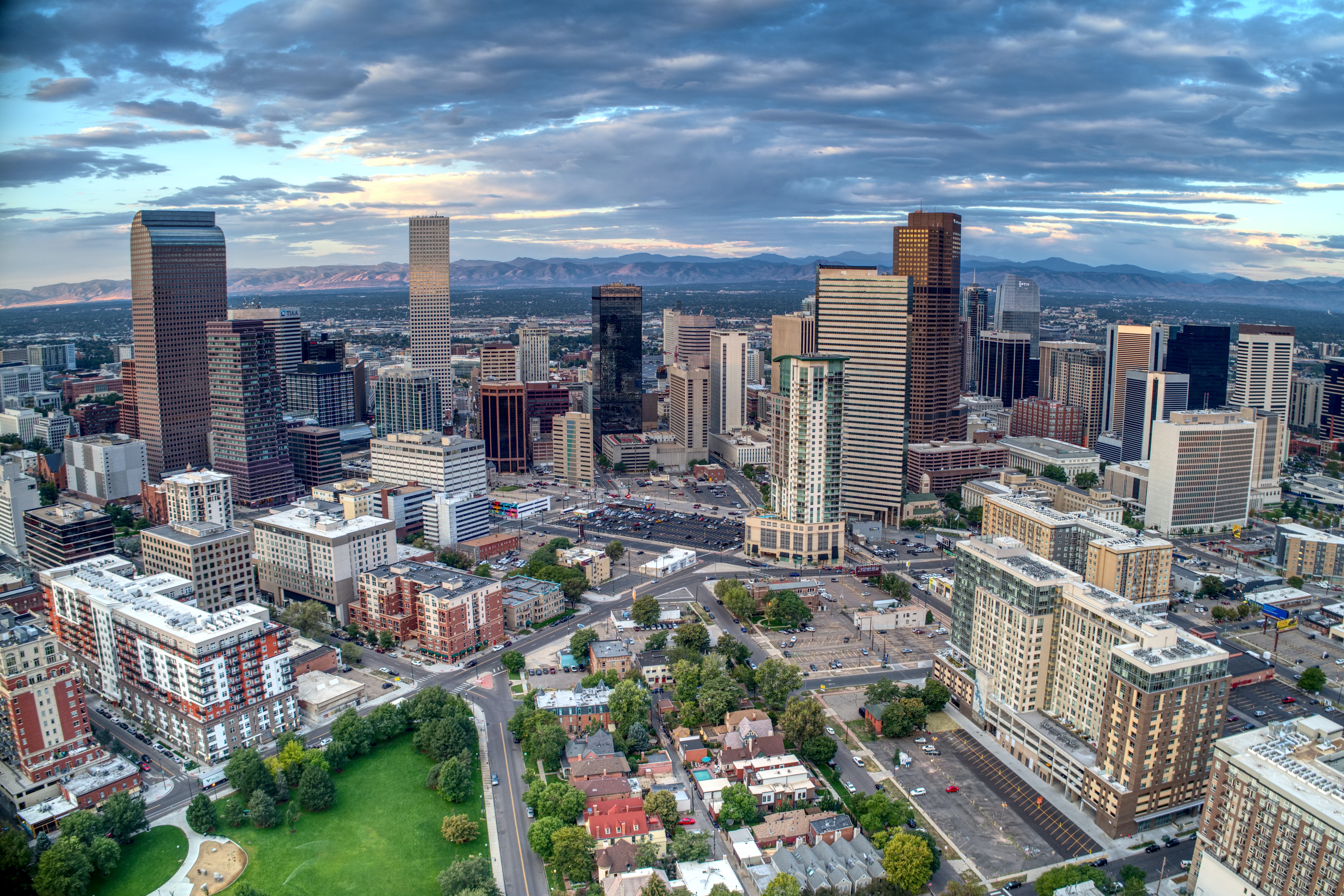
Family, friends, and health go without saying.  I really don’t need a holiday to remind me to be grateful for these things.  This year I’m thankful to have made it back from Denver unscathed.  Since it was over twelve hours of travel (less than three of those hours spent in flight) to get home, it was a long, weary, mask-wearing day of travel.  Denver Airport is nearly an hour from downtown.  The American Airlines agent was able to get me an earlier flight to Chicago.  My reading was disrupted by sleepiness and the fact that the woman next to me was watching Jordan Peele’s Nope on her laptop.  I’ve been meaning to watch it again, so I hope I wasn’t obvious when I didn’t strictly observe the custody of my eyes.  The most grueling part, however, was the four-hour layover in Chicago’s O’Hare.  

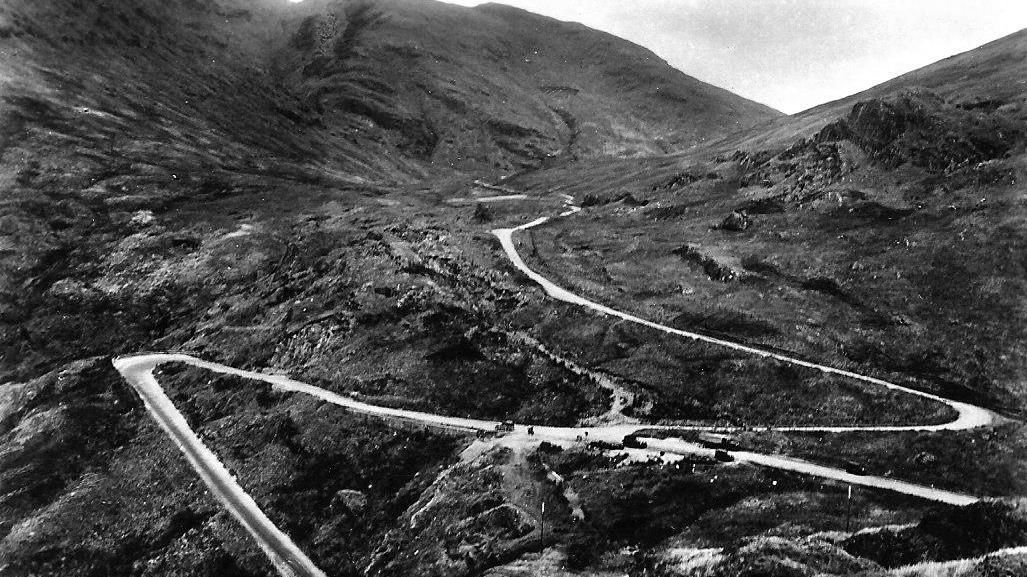
No matter what the owners do, there’s a limit to how comfortable airport waiting can be.  You have to keep a constant eye on your bags.  Very, very few people are wearing masks.  And two days before Thanksgiving is a busy travel day with people trying to avoid the busiest travel day of the year (yesterday).  I’m thankful to have gotten home and not to have been too much the worse for the wear.  And I’m thankful to spend a day not having to wear a mask.  It’s funny how having to wear one for five straight days all day long can become a point of dread.  I like being able to take a drink of water without having to pull down a mask.  Returning to life as usual will take some adjustment—it always does.  So much travel after spending years not doing it is a bit of a shock to the system.  I’m reminded of one of the most colourful place names we encountered in the highlands of Scotland, and it is my theme this Thanksgiving: Rest and Be Thankful.

Rest and Be Thankful, unknown photographer

Religion in the Air

There’s a physicality to it.  Being in Denver, I mean.  My hotel was a mere four blocks from the convention center and the short walk inevitably found me huffing and puffing.  My first night there it had me wondering if something was wrong—should I call a doctor?  I jog on a regular basis and try to stay healthy and so I’m not used to being winded by an inconsequential walk.  My second scheduled meeting saw me with a seasoned scholar.  He pointed out as we slowly made our way to the seating area that the altitude was probably to blame.  The mile-high city does lack the oxygen more abundant down where we lowlanders dwell.  I often wonder if my first trip here was beset by altitude sickness.  I met a colleague at the conference, on his first trip here, who had the same non-Covid symptoms I had all those years ago.

We’re used to our own air.  The familiar atmosphere we breathe each day.  Taken out of that context we’re not exactly fish out of water, but we’re not exactly not either.  The combination of back-to-back meetings, the effort it takes to walk around city center, and the constant chill in the air during my time there dissuaded me from exploring.  Or even finding places to eat.  I started to worry that they’d recognize me at the Chipotle where I ordered carryout the first three nights in the city.  I know there must be other places to get some good, vegan options, but it was always dark by the time I was done with work and I was still waking up on Eastern Time.  On the positive side, I didn’t get sick this time.  And I would really like to explore the place further.

Many years ago, on a family driving trip from Wisconsin to Idaho, we drove through Colorado on the way home.  High above Denver, in the Rockies—driving through Rocky Mountain National Park—I told my wife I felt strangely elated.  “It’s like a religious experience,” I said.  Perhaps it was the physicality of that altitude, mountains spread out before us, that led to that brief moment of rapture.  It’s so closely related to that acrophobia that whispers the warning not to fall off the edge of this globe when you’re so high in the air.  Even now as I’m heading home from Denver when I’ll be even higher in the sky for a few hours, I reflect on what it means to be a physical being enveloped by the air.  And I’ll appreciate with wonder the planet of mountains, endless plains, and eroding hills on which I live, and I’ll be thankful for every breath.


Kids’ Stuff?

Do you want to be popular with the kids this Christmas?  Do you want to hear the squeals of pure delight that every mom, dad, aunt, or uncle wants when that special present is unwrapped?  Might I suggest a book of theology?  Yes, one of the publishers here at AAR/SBL has a table of Theology for Kids.  Staring at that sign during the long hours on the conference floor, my mind kept wandering back to Richard Dawkins’ comparison of teaching children religion to child abuse.  Indeed, my wife had sent me an article in Rolling Stone a few weeks back that declared an Evangelical childhood was a, to put it politely, a total mind-fornication.  It is something from which those of us raised religious spend all our lives recovering.  Some never escape, while others try to make sense of the world without it.

Publishers of religious bodies make up a substantial part of those present at the annual meeting.  The ones with the biggest, flashiest displays are often buoyed up by evangelical dollars.  Teaching kids to think this way is a core part of keeping the meme alive and those of us who dared question it with our God-given brains are the modern heretics and heathens.  Some years here, various publishers are piously closed on Sunday morning (this is only a three-and-a-half day conference) with signs telling the rest of us that they’re observing the Lord’s day.  America is a strange mix of evangelical and secular, the kind of place where you can purchase theology for kids.  I know I grew up with such things, even though we really couldn’t afford the other children’s classics that I only learned about from having a child of my own.

The canon is important to this self image.  For me, I’ve come to expand mine a bit over the years.  That expanded canon includes unconventional sources of spiritual inspiration, or so my conversations with others leads me to believe.  Theology can, and often does, lead to death sentences for adults.  And sadly, occasionally for children.  It’s difficult to blame adults for trying to ensure their children’s eternal salvation, especially when religion is so terribly difficult to escape even as an adult.  I suppose that’s why I still advocate for learning about religion although it has damaged me personally as well as determined what would pass for my career.  So I stand here awaiting my next appointment and find myself again taken into my past which was full of theology for children.


Reflections of a Hermit

Although I acknowledge that Covid has made even more a hermit of me—I won’t deny it—and I often complain when I have to travel for work, I generally end up glad that I have.  (As long as I avoid Covid.)  Being at the AAR/SBL annual meeting is like being in a living library.  You meet and talk with so many smart, smart people and their ideas and yours begin to blend in an amazing kind of way.  I suspect that it shows that my books have been written by a guy in isolation.  That is, they could be improved by other eyes on them.  That’s what peer review is about, of course, but there’s something exciting about talking to my monster friends and engaging them about their ideas.  Frequently they will ask about mine.  I’ve even had colleagues mention that they’ve read some of my work.

The only real problem with how this unfolds is that I have so many meetings in a day that I sometimes lose track of the many ideas that crowd into my head.  Hastily-scrawled memos in my notebook—I’m too busy paying attention—mean that only fragments remain the next morning.  Each of them a gem.  (Fitting for Denver.)  When conversation comes around to what I’ve been working on, no matter how obscure it is, my monster friends know the root story and even have ideas that help shape my work.  No one scholar can read everything, and those of us who tend towards being hermits have the limited sources of one human imagination.  When imaginations get together, however, these ideas blossom.  I learn so much from these brief days that I think I might’ve been dangerous if I’d remained in the academy.  The man with an exploding head.

I sincerely hope that I give as well as receive at these meetings.  It’s really unfortunate that we don’t support humanities scholars in this nation.  These are some of the bright stars in our national constellation, yet they struggle with underfunding, and pressures such as “metrics,” as if you can quantify the influence on young brains and the potential future of our collective imaginative life.  Although I grouse, as is perhaps to be expected of an aging hermit, I can’t help but be enriched by the fertile minds I encounter, even if behind a Covid mask.  I’m never quite sure how to thank all these idea-conjurers properly.  I wouldn’t have met most of them had my career not taken the strange turns it has.  Now I realize that even hermits may have many friends.


Day Two

You have your suspicions when you first spot them, but you have to wait to confirm it.  You’re flying in mid-to-late November and they’re concentrated around one particular destination.  They won’t be the only ones going there, of course—families with kids, late vacationers, others traveling for business—but they will be among them and you can learn to spot them.  The attendees of the American Academy of Religion and Society of Biblical Literature annual meeting.  Pre-pandemic there were reliably about 10,000—a biblical myriad—of them.  We’ll have to wait to get the figures on them this time around.  In any case, I make a game of spotting them at the airport.  Well, if you’ve got a connecting flight you need to wait until the final leg.  It’s possible some got on with me in Allentown, but I didn’t spot any likely candidates.

The male of the species is easier to identify at a glance.  Bearded, serious demeanor, slightly out of touch when it comes to fashion.  Incongruously sometimes they’re wearing jeans but you know that’s just their traveling raiment;  once they arrive and get tweeded up they’ll be easier to place.  Otherwise you can identify them on the path by their talk.  If they enter into discussion with a seat mate or someone walking to the baggage claim or getting onto the public transit, or even in restaurants, they will speak of strange things.  Their language will grow technical and their frowns will be discerning.  They are assessing, you know, assessing the ideas that don’t fit with their personal theories about samsara, or Origen, or Jeremiah.  And they don’t mind saying so, right out in public.

As important as I know religion to be, and as much as I know that to understand it deeply you must spend years and decades studying it, I sometimes wonder just how others must view us.  I still dress like them, although I travel in my tweed because it makes my suit-bag too bulky to pack it.  On the plane I read an actual book (likely about religion, but that’s not a guarantee), and once in a while someone who hasn’t realized that the conference is over will want to talk business in the airport while waiting for a flight when all I want to do is pull out a novel and try to get the shop talk out of my head for a little while.  This is the unusual experience of attending AAR/SBL.  I’m sure there’s enough material here for a sociological study, but I think the sociologists have conferences of their own to attend.


Remember November

I didn’t get his name.  I could have, because he was wearing a name tag.  I was too busy thinking, “that won’t be me.”  I ended up being wrong about that point.  He was sitting in that depressing place at the AAR/SBL meeting in Kansas City.  That room for those waiting to see if they’d scored any interviews.  “I’ve got publications,” he told me, “I’ve got years of teaching experience, but no interviews.”  Our capacity to fool ourselves should not be underestimated.  I was just sure that once I was in that place—publications, teaching experience—I would be able to find a professorship.  I did find one that lasted about fourteen years, but after that, my nameless friend, I have to say “you were right.”

I can’t help but think of that when I attend this conference.  It’s a place of lost dreams for me.  I can see my books on display here.  I can see literally hundreds of people that I know.  I’ve gone from a vocation to a job, and there’s no going back.  Sometimes I wonder if adjacent careers are a good idea or not.  I’ve put some books under contract from new Ph.D.s who eventually decide to disappear.  Not to be found anywhere in academia, their books left unpublished.  Perhaps they met my mysterious prophet.  Maybe they came to realize that working in a job right next door to where they want to be will only ever remind them of loss and regret.  We continue to the glamour of a conference that reminds many of what they never found.  El Dorado.

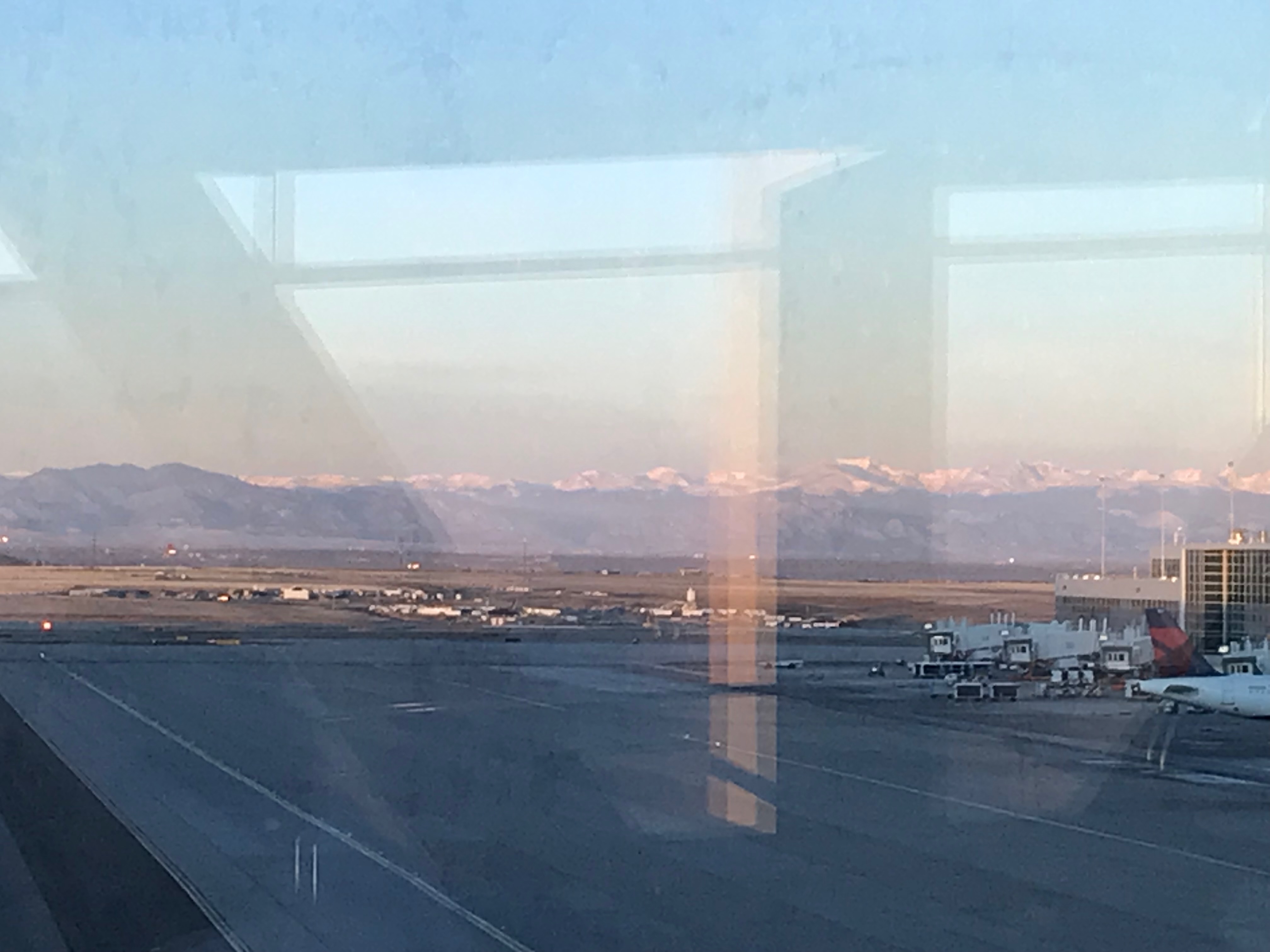
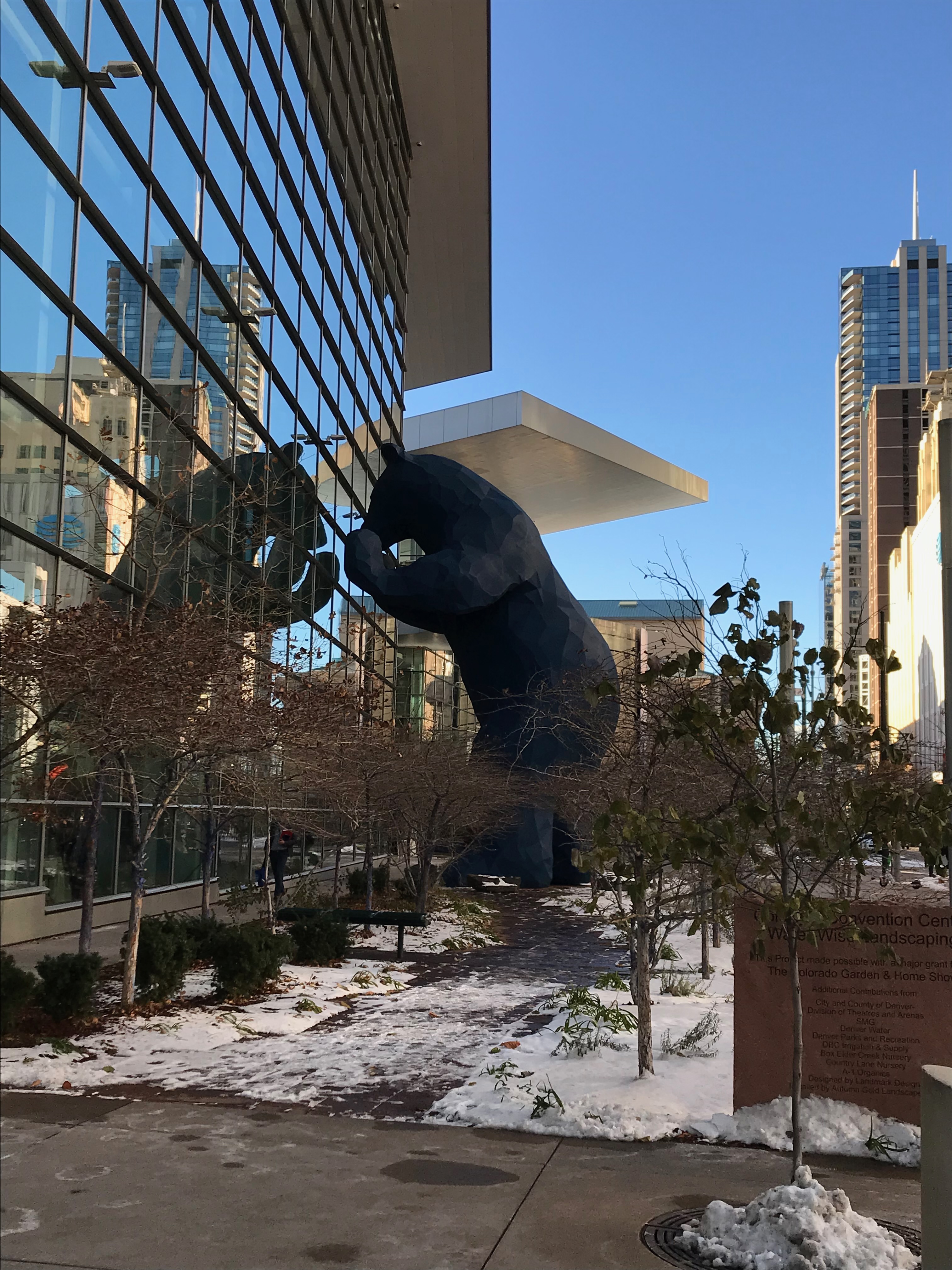
So as I sit here in Denver with my past.  I actually made it to Denver, which is, I suppose an improvement over last time.  There was snow, in Denver, but the locals seem to be fine with it.  Not many people are wearing masks these days, I’ve noticed.  There were a few stalwarts on the plane(s) and a few here at the conference who did.  The pandemic doesn’t bend to the will of people, not even religion scholars.  Viewing Denver from the airport (it’s a considerable way out), it looks so small and insignificant backed by the front range of the Rockies.  Maybe that’s what all of this is about: significance.  My association with this conference spans 31 years.  Perhaps there’s a bit of weariness here too.  The pandemic may never really end, not in any meaningful way.  I do wonder if my nameless friend ever found a job and if he still attends.  If he does I wonder what he would say about all of this.


The Denver Curse

I’m posting this early today because I’m flying to Denver for the American Academy of Religion and Society of Biblical Literature (AAR/SBL) annual meeting.  At least that’s the plan.  I don’t have a good track record with Denver and this conference.  I’d been attending AAR/SBL since 1991.  I can’t recall what year it was when I first attended in Denver.  I was still a professor then and had a paper to read.  I also had free time (something editors don’t have at conferences).  I decided to view the world-famous mineral and dinosaur exhibits at the Museum of Natural History the morning of my paper day.  While at the museum something very embarrassing happened—I got sick in public.  It was scene-from-a-cheap-movie bad.  Literally sprinting to a public waste can to throw up in front of strangers.  I’d never been sick at AAR/SBL before, despite the November timing.  When I went to read my paper that afternoon, the motion of my eyes made me sick again and I had to sit with my head between my knees while a bunch of biblical scholars looked on with what passes for concern in academic circles.

The second, and last, time I was flying to Denver  for the conference there was a small snowstorm.  I was flying out of Newark on an evening flight.  Because of the snow (which ended up being about two inches) my flight kept getting delayed and delayed.  They made the decision to cancel the flight after 11 p.m. by which time all local hotels were full from the earlier cancelled flights.  To make matters worse, there was no way out of the airport.  All public transit shut down.  Even if I could’ve caught a taxi where was I to go?  I live in Pennsylvania.  With no other choice, I slept on the floor of Newark’s Liberty International Airport.  I awoke early, having used my briefcase as a pillow (a step up from a stone, I expect) and found my way to Somerville, where we used to live.  My wife picked me up at the train station there and drove me home.  I missed the conference, needless to say.

And so you see that I’m a bit dubious about trying this again.  I have nothing against Denver.  Before getting sick I was enjoying my time there.  So, if things go according to plan, I’ll be on a plane headed that direction by the time I usually post my daily thoughts on this blog.  Will the Denver curse be broken?  Only the next few days will tell. Watch this space.

Photo by Acton Crawford on Unsplash

Monsters in Common

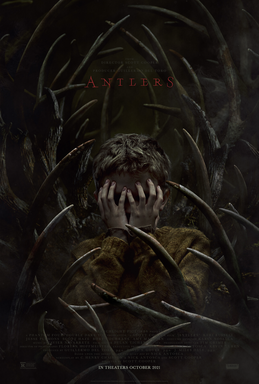
The thing about monsters is once they’re released they go wild.  Antlers is sometimes criticized for cultural appropriation—it takes the wendigo, an American Indian monster, and uses it in an Anglo story.  There’s perhaps some truth to that, but the wendigo is the perfect monster for the social commentary the film makes about the poor.  Those who’ve never been poor can’t really understand, and I can’t blame them for it.  Pointing fingers at symptoms like drug abuse is pretty typical.  It’s not directing the extinguisher at the base of the fire, but at the dancing flames that keep shifting as the base consumes.  In short, I found it a powerful movie, and one that is beautifully filmed.  Yes, it does lift an American Indian monster, but that monster was released long ago.

The wendigo was addressed by Algernon Blackwood in his 1910 story that goes by that name.  It has appeared in other horror venues as well.  Antlers is the first full-fledged horror movie I’ve seen to use it and it builds the story up nicely.  And it does so by tying religion into the narrative.  In brief, Lucas Weaver, a twelve-year old, is protecting his father and younger brother.  After being attacked by a wendigo, his father has become one.  Lucas’ teacher, Julia Meadows, was abused as a child and recognizes it in Lucas.  She become determined to care for him but his father has given over to the spirit of starvation that inhabits him.  

I could’ve used this in Holy Horror because when Julia is searching Lucas’ desk at school she finds, among other things, a Bible.  At one point Lucas’ brother asks if God is dead.  His father has told him that he is.  And when the police are trying to determine what they’re up against, the former sheriff, an American Indian, tells them about the wendigo.  Native beliefs are treated as superstitions, of course.  The wendigo is brought out because of cannibalism.  The use of a native monster and the role of the landscape in the film make this a fine example of folk horror.  And it’s a cautionary tale about the dangers of abandoning the poor.  Those who criticize the film for that have perhaps lost sight of the monster.  Monsters belong to everyone.  The golem, the wendigo, the mummy—these all play a role in someone’s religion and culture.  They also serve to haunt anyone who’s concerned with fairness and justice.  And that’s why we must chase any monster that roams free.


James and John

One of the first questions expectant parents are asked is if they have yet come up with a name for their child.  Quite often, and probably without realizing it, some of the most popular names are biblical.  Jacob is one of the most common boys’ names in English.  It derives from the story of Isaac’s younger son in Genesis.  Its popularity increases exponentially when its variant James is added to the total.  The name James comes into English from Old French where it was derived from the Latin Iacomus.  B and m are, phonetically speaking, bilabials (the former voiced, the latter not).  This Latin form also led to the Spanish name Iago, which many know from the apostolic name Santiago (“Saint James”).  Or Saint Jacob, only nobody calls him by that name anymore.  Biblical names are exceptionally common in the western world.  Even so, it often seems implausible that names like Jimmi could be alternatives to Jacob, but small steps make evolution possible.

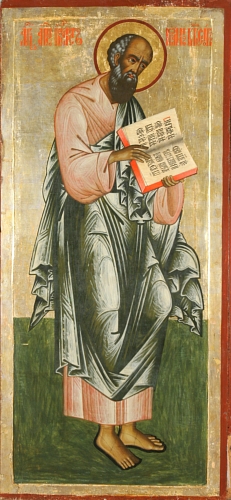
It has been popular among evangelicals for years to know that Jesus is the Greek form of the name Joshua.  Having a savior named Josh just doesn’t have the gravitas we’re looking for, however.  Greek is an Indo-European language while Hebrew is a Semitic one.  While these two family trees have points of contact, their vocabulary and syntax developed quite independently.  Names change when they’re translated.  Many of our familiar New Testament names are translations from their Hebrew (or Aramaic) counterparts.  The New Testament was written in Greek and we receive Greek versions of such names.  John, for example, is another name that comes to us in many forms.

The apostle we call John was called Ioannes in Greek.  This was derived from the Hebrew name Yochanan.  John comes into English via the Germanic form Johannes, where the connection to the Greek becomes obvious.  From there it shortens to John.  It comes in many varieties too: Juan, Jan, Ivan, Han, Evan, Sean, Jonas, Giovanni, and even Jack.  The latter sounds more like Jacob, but in their original forms the names are quite different.  Apart from names, Indo-European borrowing from Semitic languages isn’t terribly common.  Throughout the Christianized world, names based on these two apostles, however, have become extremely popular.  In recent times parents have been branching out into more creative names for their children, but many of them still derive from their biblical antecedents.  This is just one more way that the Bible continues its influence in an increasingly secular world.  


Outside In

Work duties necessitate my attendance at the American Academy of Religion and Society of Biblical Literature annual meeting, starting Friday, in Denver.  Given the state of the pandemic I can’t say that I’m thrilled to be attending, but work is work.  What really prompts this post, however, is the travel arrangements.  The agency I used is based overseas.  They customarily send a fact sheet about the country to which you’re traveling—in this case, my own.  It was fascinating to read how the rest of the world rates the United States.  Overall we receive a pretty good score, but there are a few items of concern.  One is that mass shootings are not uncommon.  The guide laconically states “Due to the wide availability and proliferation of arms across the United States, high-profile shootings occur.”  This is not wrong.

It goes on to note that if you can avoid being shot, crime rates are overall low in the US.  Disease, apart from Covid-19, is well under control.  While organized crime and gang problems are mentioned, it notes that open conflict between states does not exist.  It seems that, despite the rhetoric of certain politicians who like to use hatred to get their way, we do tend to cooperate pretty well.  We have plenty of micro-cultures here, and I know that I’m only comfortable living in a northern one.  I like four distinct seasons, and I don’t mind shoveling snow, but I’m getting away from my guide.  Hurricanes are a risk on the east coast through November and wildfires are possible in the west, also largely through November.  Earthquakes are localized and infrequent.  We live with a heightened risk of terrorism, but our medical care is good.  If expensive.  We have good dental.  

While I didn’t really learn anything about the United States per se, I did learn a little about how others view us.  We are a nation with tremendous resources and great potential.  Our melting pot nature is, I believe, the source of our cooperative strength.  We are still, after two centuries, suffering growing pains because there are some who want things the way they used to be in spite of the incessant, almost daily, changes that take place.  There is no turning back.  After the apple has been eaten you can’t unlearn that knowledge.  The recent elections spoke pretty clearly: we believe in democracy and we support women’s rights.  That’s how we see ourselves.  How the world sees us, however, may be quite a different interpretation.


Dangers of Bookmarks

So you’re a busy person and you don’t always have time to act on something immediately.  Or you have to wait until the next billing cycle to afford something.  Daily life comes at you like a Russian missile, so you need to leave reminders around so that you don’t forget.  For me, those reminders often take the form of tabs.  On my browser I leave at least a dozen tabs open to remind me of things—I’ve got to get those cartons ready for mailing to recycle; thanks for reminding me.  I actually look forward to being able to click a tab closed because that means I accomplished something.  There are so many things to do and time is so rare.  Then the inevitable happened.

I was leading a Zoom meeting and I had to keep track of attendance.  Since I was leading I didn’t want to stop in the middle and write a bunch of names down, so I took a screenshot.  My poor laptop got confused and kept the screenshot on top.  Since the screen shot showed all the open windows (it’s not just the browser that’s open, but all the writing projects in the two different programs I use as well, all in various stages of completion), I couldn’t tell how to click out of the screenshot.  I couldn’t see the actual Zoom meeting or if someone was raising her or his hand.  I tried to keep the discussion going while trying to get Zoom back to the front.  I began clicking any window shut that I could.  Finally Zoom reemerged.

After the meeting I had to examine the carnage.  My browser had been closed and when I reopened it, the option to restore all closed tabs from the last session was grayed out.  I would have to rebuild my tabs from memory.  It was because of my overwrought memory that I’d kept those tabs open in the first place!  Before going corporate, when I could take my time and pay attention, I had a very good memory for things like this.  (As a professor I had time to act on things during the day instead of constantly thinking “I’ve got to get back to work.”)  Now too much is happening all the time.  I’m having Zoom meetings after work when I normally get my day to day business done.  So I’ve added a new task to all the others—trying to reconstruct my lost tabs.  Yes, it’s a classic “first world problem.”  At least that’s what I think it’s called—let me open a new tab and check.

A different kind of bookmark

Complications

That string of ten digits becomes your personal identity.  It’s conveyed by a pocket-sized device that’s so expensive you have to pay for it in installments.  And it’s not a one-time expense.  For a monthly fee that would’ve sent our parents calling on AT&T we carry a compact computer with us at all times and call it a phone because it responds to those ten digits.  The trend is to replace them every two or three years as more and more features become available, many of which, one suspects, are never used.  So, with a notice from our carrier that the card in one of our devices would no longer work at the end of this year, having reached the end of its life, we found ourselves in one of the countless phone stores around the country.

I mused as we waited—buying a replacement phone took two hours out of a Saturday, and that didn’t count driving time—at how complicated life has become.  One of our cars, purchased in 2003, also needs replacing.  My wife and I have to coordinate a day off work to buy one.  It pretty much took a whole day the last time we bought a car.  It’s complicated.  Credit checks, titles, registration, insurance.  And oh so much money.  You can’t, however, live without a car.  Not if you don’t reside in a major city.  You need to get to the grocery store, to doctor’s appointments, the hardware store—and the telephone store.  Many of these places exist in their own carefully zoned commercial habitats and since they have the necessities of life, you need to go to them.  Meanwhile, the internet offers to send them to you.

Ads now tell me you can buy your car online and some smiling stranger will drop it off right at your house.  It’s just that easy!  What they don’t say is all the work that must, I’m assuming, be done in advance.  The insurance, the financing, title transfer, trade in, let alone nothing of the test drive.  Now you have to figure all that out in advance.  Let’s face it—nothing is easy.  If you’re reading this you’re doing it on a highly sophisticated device that may have cost you quite a bit of money.  If it’s a phone it bears your personal ten digits that can be used to reach you at all times and in all places and that, in fact, knows where you are at all times.  Even if you’re out for a virtual test drive.


Deep Life

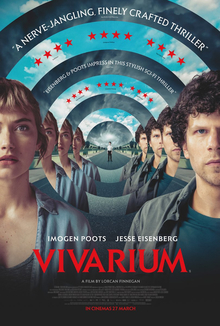
I have a list, you know.  It grows frequently and changes with my moods.  It’s a list of movies I want to watch.  While I never trained as a movie critic, there comes a time when you’ve watched enough, and written about them, that you can’t help but feel you have something valuable, perhaps, to say.  Movies are modern mythology.  At least if they’re done right.  Being a critic of limited means, I often paw through Amazon Prime’s list of freebies for subscribers.  Seldom is anything on my list there, so I try to find interesting offerings for free.  Sometimes they’re lousy (but at least free) and other times they’re provocative and perhaps profound.  Vivarium is a European film that slots somewhere between horror and sci-fi.  It’s like The Truman Show meets Village of the Damned while at a party thrown by the Stepford home owner’s association.  It’s one of the profound ones.

Tom and Gemma, a young couple, agree to see a house that an odd realtor insists they look at.  In a planned community of identical houses, the couple find themselves abandoned and unable to escape.  The house can’t be destroyed and food mysteriously appears.  Then a baby is delivered to be raised by the couple.  The child grows quickly, aging about 10 years in 100 days.  Tom decides to try to dig out while Gemma tries to care for the strange boy.  He mimics them and screams if he wants something.  Tom digs until he sickens.  He finds a body at the bottom of the hole and shortly thereafter dies at Gemma’s side.  The boy, now in his twenties, puts Tom in the hole he dug.  When Gemma attacks him he crawls under the pavement and she follows, only to discover other houses with other trapped parents.  She dies and the boy throws her into the hole and buries her with Tom.  He then replaces the realtor, waiting for other couples to come looking for a house.

The film is full of both existentialism and social commentary.  The boy tells Gemma as she’s dying that mothers raise their children then die.  We learn about two thirds of the way through that the boy is not human.  What he is is never explained.  This is the kind of film I would’ve found mind-blowing in high school.  It’s still very intriguing and will require some thought.  It’s well made, with high production values, unlike much of what I find scrolling through Amazon Prime.  It’s a film worth talking about.  And profound.


Finishing the Set

I hope I didn’t leave you hanging too long.  Autumn is always such a good time for mood reading that I had a couple of books I wanted to be sure to cram in before finishing Austin Dragon’s two-volume Sleepy Hollow Horrors set.  I wrote about volume one, Hollow Blood, some weeks back.  I wanted to read The Devil’s Patch to finish out the series before I forgot too much about the first one.  The subtitle is the same as it is for the first volume: The Hunt for the Foul Murderer of Ichabod Crane.  This imaginative retelling shifts the action away from Sleepy Hollow, although part of it takes place there, to the eponymous Devil’s Patch in upstate New York, near the Canadian border.

Instead of focusing solely on Ichabod’s avenging nephew Julian Crane, volume 2 adds an ensemble cast.  The first half of the novel provides the backstory for ten characters who will eventually accompany Crane to the Devil’s Patch to confront the Headless Horseman on his home turf.  The conceit here is that the Horseman, for some reason, has tried to kill each of the posse who eventually form to dispatch him.  Perhaps there’s some prophecy or something that he’s heard.  In any case, once Julian Crane recovers from his own encounter with the Horseman in book one, he begins to gather a group in Sleepy Hollow to go with him further upstate to take care of business.  The group of ten constitute his posse and Brom Bones goes along too.  They encounter the evil and defeat it.

There’s always a sense of accomplishment in finishing a set of books.  What has dawned on me in the process of all this reading is that the story was already told by Washington Irving in one of America’s first literary collections.  If fans want to engage with the story they need to take it in different directions, or tell it from a different perspective.  This is sometimes done cinematically and, increasingly, in literary form.  For me this is an autumn story.  That makes sense since Irving set the climatic scene during a fall party at the Van Tassel estate.  That tradition is frequently carried on in retold versions, but not always.  Whether or not they are set in autumn, they seem to be appropriate reading for this time of year.  That’s in keeping with the spirit of the season, whether in Sleepy Hollow or not.