Dark Academia

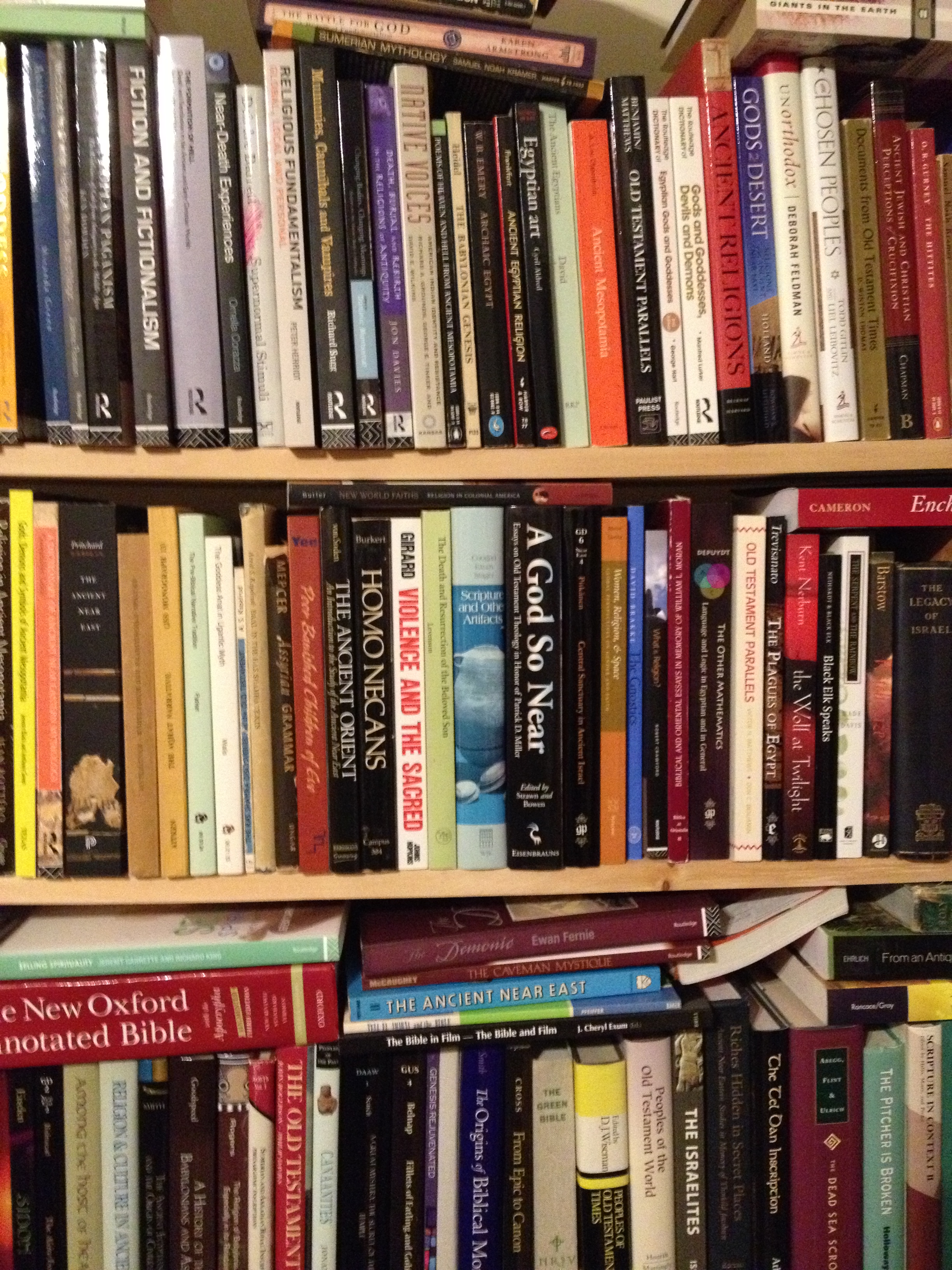
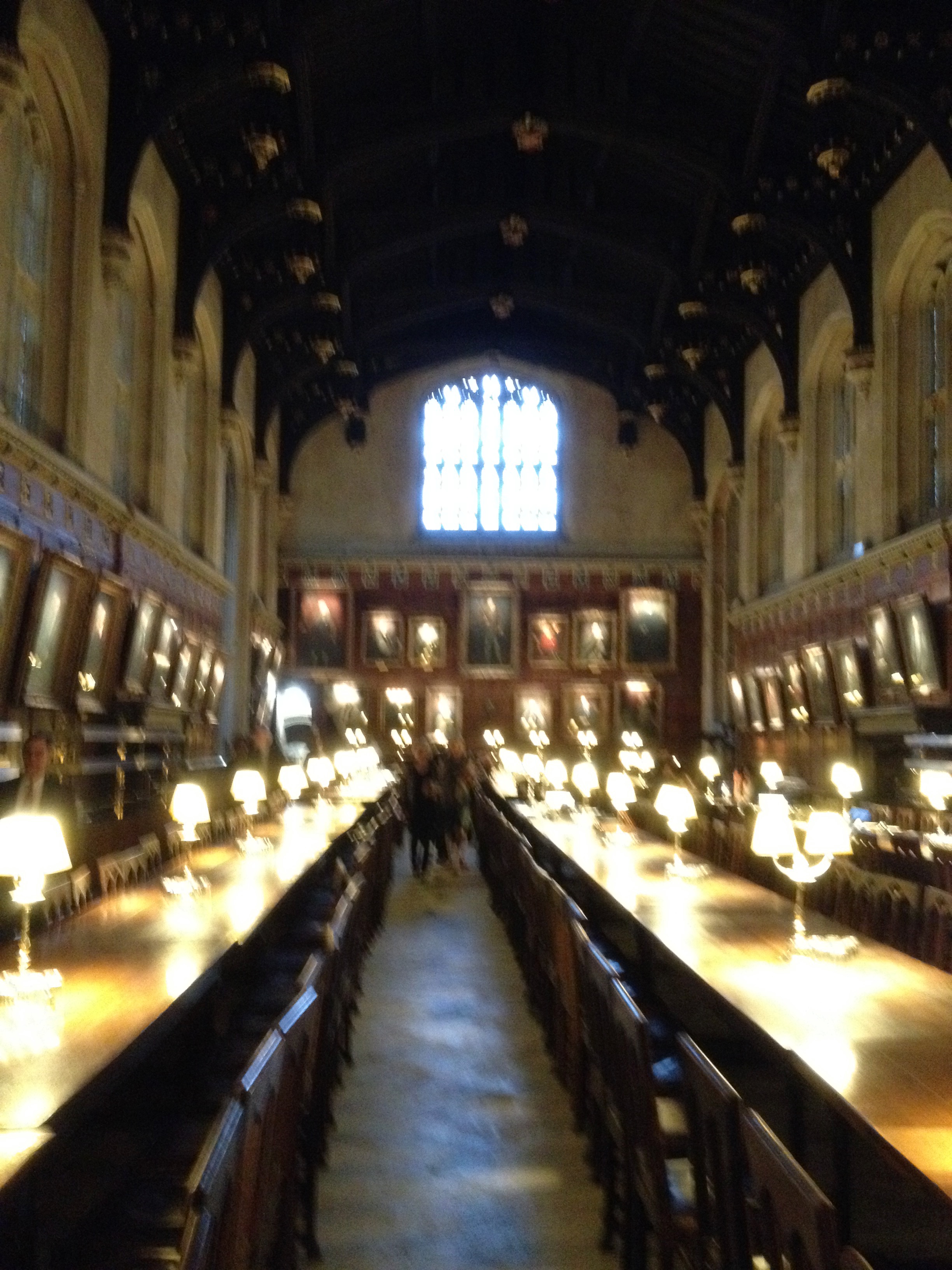
Over the weekend I “dropped” a new YouTube video on my channel (you can see it here, or by visiting my “YouTube” page in this website’s menu).  It ended up getting a little flurry of interest (1,800 views in the first three days), prompting a friend to tell me that if you pay attention to what’s hot on the internet, you can actually get attention.  That makes sense.  What’s so hot?  Dark academia.  Of course, my video really moves to dark academia adjacent, to what happens to real people when they try to teach religion and run afoul of “doctrine.”  There’s a real disconnect here because if you earn a good Ph.D. you’ll be taught to question everything.  If you’re a doctrinal believer, you’ll question nothing.

I stopped posting on YouTube a few years back because my cheap camera no longer worked.  It lost about three episodes I shot and, discouraged and too busy with writing projects, I gave it up.  I started again because I realized my phone was capable of recording and I had a holder that would stop it from slipping.  So why not?  Topics aren’t really a problem, but shooting and editing a video take a lot more than the eight minutes that result from it all.  Finding the time to edit, and learning how to edit in iMovie, are tasks in themselves.  And I’m an old dog.  Still, I miss that classroom audience.  I’ve been told that blogging is passé, and podcasts take even longer to record.

Some people make a living vlogging.  In fact, “YouTuber” can be a profession.  Those who succeed are often young.  And let’s be honest, a middle-aged white guy in a book-lined study is a tired trope.  Well, it is, in reality who I am.  A teacher at heart, I now try to imagine a virtual audience.  When I first started doing YouTube videos I had a very difficult time imagining an audience.  I fumbled a lot—I don’t script my videos.  If you’re interested in scripted I’ve got this blog right here.  The bump in interest in my dark academia post doesn’t translate to my other videos about my books or related topics.  Still, those are the things I know best and so it’s easiest to talk about them.  And possibly reinventing yourself.  I guess that’s what I’ve tried to do here.  Sloppily, stumblingly, but nevertheless, I’ve been changing my identity.  My YouTube channel’s not that active, but if there’s interest I can explore further reflections on dark academia.


Gift Books

The New York Times recently ran a story suggesting that books are not only the ideal gift, but that this has been the case for a very long time.  The article points out that treasured Roman Saturnalia gifts included scrolls, or the books of the time.  Books are the gift of knowledge—who wouldn’t want that?  Also, I’ve been reading about the fact that money can be any medium of exchange as long as it’s agreed upon.  Why not books?  Being an American, it’s often amazed me how intellectuals are held in such low esteem in this country.  We pay our teachers poorly, we mock those who read “too much” (as if such a thing were possible), and we dismiss what experts of many subjects tell us because we don’t like to admit others might be smarter than we are.

Reading, like arithmetic, doesn’t come naturally to people.  We evolved to survive and reproduce and our brains have that prime directive.  Along the way, however, we learned to communicate effectively and cooperate on large ventures.  These ambitions required wrapping our brains around things like advanced math and learning to interpret squiggles written by somebody else.  Kids, full of energy and needing to play, don’t want to sit down to learn these things.  At least most don’t.  In some parts of the world those who do take naturally to such things are celebrated.  Teachers are venerated.  Learning is revered.  Ironically, in this country where some of the best higher education is available, we want to belittle those who attain it.  We prefer to play with our guns.

Now that the holiday season is upon us, however, I think of reading.  I keep a list of books I would like to have.  It’s well over a hundred titles long.  In a good year I can read sixty or more tomes.  It’s an engine that requires a lot of fuel.  Although in all likelihood I’ll never be able to retire, I keep my books against that time when I fear I might become bored.  Or that my mind might start to slip.  Reading is mental exercise.  In my current writing project, I’ve been discovering new connections almost daily.  Often in unexpected places in books I learned about only in recent months.  I write these words surrounded by books.  There are more in the attic, and more in the next room.  I may not ever have enough money to retire, but if we ever decide that books should be currency—and even if we don’t—I’m wealthy indeed.


Not Relic

Someone somewhere sometime recommended The Relic to me.  I can’t recollect who, where, or when, so I’m not sure in which direction to point the blame.  (Or maybe they recommended Relic…)  Weekend afternoons are drowsy times, and rather than sleep, I prefer to watch movies.  Those on my wish-watch list don’t often coincide with what’s on the streaming services available to me, so I try to recall those recommended to me at some point.  I mean, The Relic sounds like it should be good: a Meso-American god that’s part lizard, part beetle, and part mammal rampaging through a major museum?  Well, what’s not to like?  Monsters are usually fun.  This one requires hormones from the hypothalamus to survive, so it beheads people to get at their brains.

Now, if you’re not a fan this will sound goofy to you.  The thing is, in the right hands such a film could be very good.  I hear that the novel upon which it’s based is.  Unfortunately the script and the acting don’t really hold up.  The sciencey explanation doesn’t make sense—the evolution from eating certain leaves is too rapid, outpacing even the monsters in Evolution.  And when we learn that the mammal DNA comes from a human, it raises the question of whether indigestion was mistaken for evolution.  Of course, the monster—shown a little too early—is a chimera.  Since it’s part bug and part gecko it can walk up walls, which is admittedly pretty cool.  But the holes in the plot don’t ever really get filled so it’s a lot of running through tunnels in the dark with flashlights.

When I read the description that it involved a god-monster I thought I’d figured out why it’d been recommended.  Religion and horror share gods and monsters, so I thought maybe something would’ve been made of this.  The scenes where the carving of Kothoga is being prepped make no sense—you use carving tools to excavate fossils, not statues—and we learn nothing of this intriguing deity beyond that it was released to eat your enemies brains and when it ran out of brains, it dies.  Of course, it can eat leaves as well.  Ironically and paradoxically, the film makes me want to read the novel to get a fuller explanation.  The combination of gods and monsters is rich territory to explore and when those making a movie credit the audience with enough intelligence to make this work, it might be enough to keep you awake on a drowsy weekend afternoon.  Or it might keep you awake even if they don’t.


Haunting Hudson

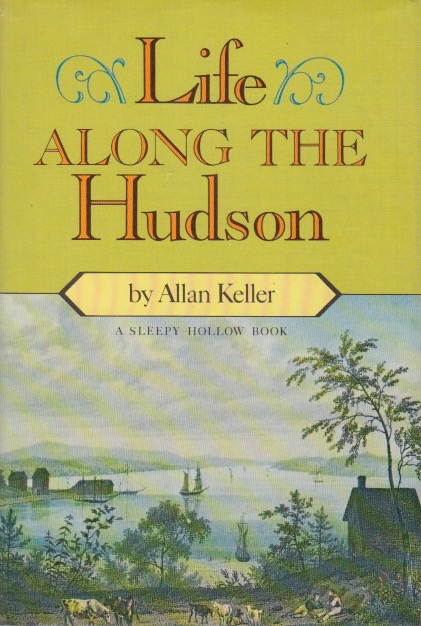
After Maine, the one place I’ve always wanted to live, but never had the opportunity, or could never afford, is upstate New York.  My ancestors were from the state but I just happen to’ve been born in Pennsylvania.  So it goes.  Perhaps it comes with professionally studying mythology, but one of my longterm interests is folklore.  I’m always fascinated by what people tell of their local setting.  Now when I approach books about the paranormal in a region, such as Cheri Farnsworth’s Haunted Hudson Valley, I know to take most of it with a grain of salt.  People love to tell stories and local people like to talk about where they’re from.  The Hudson Valley has had a long history of strangeness and several tales that reflect that are collected here.

I often think of ghosts.  They generally seem to prefer a single place that’s familiar.  And although you can’t take everything everyone says as gospel, there do seem to be regions beset with them.  I wonder if regions early settled by Europeans are particularly prone to haunting.  It’s difficult to imagine that, at the time with the unquestioned rectitude of church and empire, that they ever stopped to think “Hey, we’re stealing land that belongs to someone else.”  Did that idea ever come back to haunt them?  Perhaps such unspoken guilt leads to ghosts.  Or maybe simply dwelling in a place for a long time leaves plenty of opportunity for ghosts to gather.  And, of course, people do stretch the truth at times and misinterpret things otherwise explained.

No matter the reasons or rationale, these kinds of books are always a guilty pleasure read for me.  I don’t expect the get the truth, the whole truth, and nothing but the truth from them, but I enjoy them nevertheless.  Since I can’t afford to live in the Hudson Valley, the other result of such books—and one of the reasons locals appreciate them—is to make me want to travel to the region and see for myself.  For many years we lived not too far from the Hudson while in New Jersey.  Still, we didn’t make it up that way very often.  It’s a bit more of a hike now, but isn’t a hike worth making when you might see something unusual after you arrive?  My ancestors had settled north of the Hudson Valley and eventually migrated further south.  The end up in Pennsylvania, where I find myself.  But I’m still haunted by upstate New York.


Earliest Sunset

Welcome to the day of the earliest sunset of the year.  “But how can that be?”you may ask, “since the winter solstice is many days away?” I’m no wizard when it comes to numbers or math, but I do know tomorrow’s sunset will be a minute later than today’s.  It’s the other end of the day, however, that continues to increase darkness.  Sunrise will continue to creep later and later until on January 16 it will be at its latest.  Mornings will then become longer, very, very slowly.  Combined, the shortest day will be on the 21st, almost two weeks from now.  Then sunlight will begin its slow crawl back to majority.  And so the seasons eternally negotiate on a planet that sometimes seems to spin too fast.

Those awake early, sensitive to sunrise, need to wait a bit longer than those wanting longer evenings.  There’s no taking without reciprocity here.  For those in the northern half of the northern hemisphere, winter has begun its settling in process.  Morning frost on the rooftops augurs the coming of snow.  The almost preternatural stillness of a cloudy late afternoon anticipates what’s to come.  Those of all religions, or of none at all, alike await a glimmer of lengthening days in this season of long nights.  It pays to become comfortable with the darkness in the meantime.  Dark need not equate to evil.  It invites rest and renewal.  Perhaps our culture that valorizes action and movements blurred with speed might learn from the hours of diminished light.

Walking into an early morning room with a light switch on a far wall is an act of faith.  If done before any artificial lights are engaged, it’s always surprising how much light crowds in on the dark.  The luminescent clock.  The power strip on button.  The ever-watchful router.  Darkness is seldom absolute, as much as the tenebrous circumstances might suggest such extremes.  Light and darkness need each other to find any kind of definition at all.  Starting tomorrow, there will be incrementally longer moments of day stretching out into night.  Mornings will grow more reluctant to release their light for another month or so.  In the midst of this we snuggle down into the darkness and learn from it.  Learn to slow down.  Learn to listen instead of always looking.  Learn to breathe slowly and accept that the darkness can comfort.  The solstice is coming, in good time.  Until it arrives, be in the twilight of the moment and trust it.


Split Personality

This may be the way to develop a split personality.  For the majority of my waking hours of the week I’m a biblical studies editor.  I do the usual, boring editorial work associated with that job.  Academics contact me supposing I’m just some Joe who majored in English and who has to pay the consequences.  Once in a very great while the person contacting me knows that I once was a professor as well, but that’s rare.  So I have one part of my life.  When I’m not at work I continue to research (in my own way) and write books, as well as this blog.  Being in “the biz,” I have a fair idea about how to get published in the academic realm.  Ever since Weathering the Psalms came out I realized I could use that knowledge to steer my books toward appropriate publishers, but all of this is very separate from my day job.

A third compartment of this personality is as the closet fiction writer.  I’ve had thirty short stories published (under a pseudonym, for work purposes) and anyone curious about that pseudonym’s life can’t really tap into this one because I have to keep them separate.  I’m also involved in a faith community.  Most of the people there are surprised that I watch horror and write about it, and even write it.  Only two have expressed any interest in reading what I write.  So it is that each of these discrete elements—and they’re not all!—prevent me from being an integrated personality.  I know other religion scholars who watch and write about horror.  Because they’re academics they can integrate it into their profiles in a way a mere editor can’t.  To be fair, they’re misunderstood too.

The possibility of living an integrated life is limited in the workaday world of capitalism.  Companies want you to spend as much time as humanly possible making money for them.  You shouldn’t try to shine any light on yourself, and if you do, well, keep the company name out of it!  Who wants to be associated with some horror pariah?  And yet, statistics reveal about half the population of the United States enjoys horror movies.  A significant number of those people attend religious services or belong to religious bodies.  So what’s a graphomaniac to do?  I write because that’s what I do, and have always done.  I started in fiction and moved to academic and now I blog.  Somewhere in there there’s a person and someday I may discover who he is.


Pods

Some cultural assets (ahem) are so well known that you come to know them by association.  I knew the story behind Invasion of the Body Snatchers (1956 and 1978) long before I saw the original, within the last couple of years.  I may have been body-snatched myself since I can’t remember when it was or why I didn’t write a blog post about it.  In any case, I’d long been curious about the remake and discovered it free (for the time being) on Amazon Prime.  The fact I’m still looking for free stuff proves I’ve not been body-snatched, I guess.  If you’ve been raised with our cultural assets you know that the eponymous body snatchers are pod people who look exactly like the victims they destroy.  Their goal is a well-ordered society with no emotions.

The thing that’s so interesting about the 1978 version is that its assessment has changed over time.  When it first came out, many thought, and opined, that the 1956 black-and-white version was better and this one really added nothing.  However, over time this judgment has been questioned.  Critics taking a second look have now scored it as one of the best remakes ever made, and not only that, but it is considered one of the best science-fiction horror movies of all time.  I suspect nothing in that category will ever displace Alien, but still, my first viewing of the ’78 Body Snatchers agreed with the latter assessment.  It is quite good and it has even aged well.  You can kind of guess how it’s going to end, largely because the final scene has been played over and over, but still it’s definitely worth watching.

The social commentary in the film runs deep and strong.  Non-conformity is suppressed.  Life without emotions is better than really feeling something.  Simply go along because everyone else does.  The parable has changed actors over time—fascination with social media/virtual reality have perhaps become the modern pods—but the story is as old as our species.  Probably even older.  It’s non-conformists, generally after their demise, that are realized as visionaries.  Shooting a car into orbit requires tons of money but not much vision.  I’m not conforming, however, when I agree that the 1978 remake is good.  My taste in movies has always stood apart from others, at least from my own experience.  I also think that horror is often among the more intelligent genres of film.  But then, I tend to side with the emotional.


Religion in Its Place

The other day at work I virtually “met” someone else from western Pennsylvania.  It came about in an odd way.  We were both in an online author talk and my colleague put something in the chat about a particular social issue being purely religious for some parts of the country, like his native western Pennsylvania.  I immediately knew what he meant.  For those who think religion is irrelevant, look at the make-up of our government.  Those preachers in rural places wield incredible power.  Their word is law and because of the shortsightedness of our founders, the rural few have amazing sway over the vast majority of the urbanites.  We need each other, of course, but not all have educated themselves on the issues.  When they want to vote they turn to their preachers for the answers.

Interestingly enough, churches lose their tax-exempt status (and thus many can’t afford to survive) if they openly back a political party.  They are required by the law they game to remain party neutral.  Of course, depending on who appointed a federal judge, they are often willing to overlook that particular law.  You get the sense that God favors some commandments over the others anyway.  But back to the homeland—western Pennsylvania is a preacher-dominated part of the country.  That may well have been what set me off on this strange track I follow instead of a career.  We were a church-going family in a church-dominated part of the state.  If you took what you heard on Sunday seriously, we should all be studying religion, down on our knees.

My colleague brought something into focus for me.  The religiously convinced will accept no other evidence.  They’ll refuse vaccines that could save their lives.  They’ll say women and blacks are lesser humans.  They’ll even—since I pay taxes this is okay—vote Republican.  Clergy have been sidelined by much of what’s going on in society.  They are hardly irrelevant, however.  I recently had a minister tell me that if I were to make a formal “questing” status with a denomination I could pick up some preaching cash on weekends.  Without that status, this clergy asked me, “why should anyone listen to you?”  Ah, there’s the rub, you see.  Although I’ve studied religion more than many clergy, and taught those who are now clergy,  I’m not qualified to make it official.  Perhaps it would be different if I were from somewhere else.  


Not Sleepy Yet

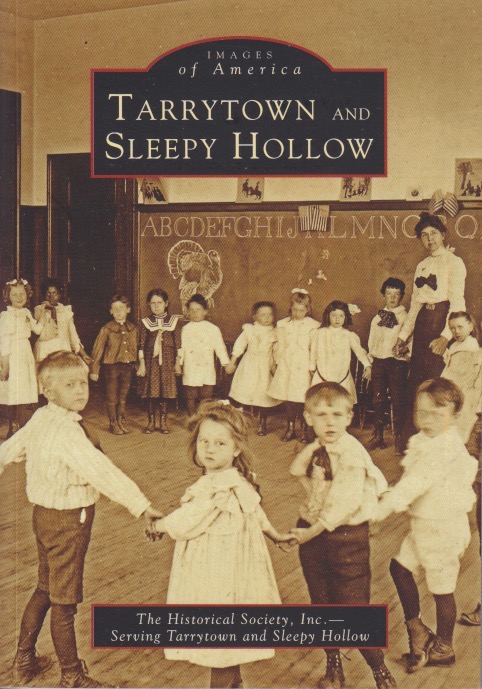
Working on a doctorate changes the way you think.  Or at least it’s supposed to.  Easy answers have to be examined closely, and sources critically scrutinized.  One of the side-effects of this is that many Ph.D.s tend to think that only others of that status are able to do good research.  An essential piece of research, however, is passion.  This part isn’t always logical and can’t always be explained.  A recovering academic, I first resisted Gary DenisSleepy Hollow: Birth of the Legend because it was self-published.  I’ve had bad experiences with self-published books before but what I discovered here is that Denis is quite a capable researcher, driven with a passion for Washington Irving’s tale.  The execution may be a little rough, but the data-gathering is very good.  He tries to point out where accounts have problems and attempts, where possible, to resolve them.

Denis is driven by the question of what in Irving’s story is factual, if anything?  This is probably not a question an academic would ask, presuming that fiction is fiction.  Still, there is data.  The first four chapters are very good.  Here he lays out the background to the region, Irving, and stories of headless horsemen.  I learned quite a lot from it.  The final three chapters turn to the main characters of the story—Ichabod Crane, Katrina Van Tassel, and Brom Bones—asking who they might’ve been based on.  The best drawn of these is the first and there’s good reason to suppose Irving based Crane’s situation on that of his friend, Jesse Merwin.  The other two, however, are sketched rather hastily and lots of people have suggestions for who might’ve been behind them.

Clearly aware that authors borrow and make things up, Denis knows that Katrina and Brom may well be pretty much imaginary.  He also knows that Irving did indeed borrow much from previously known stories and legends.  Irving’s real genius was in the way he expressed these stories in colloquial English, making American literature a blend.  Although Irving wrote many books, his fame was largely due to two of his stories published early in his career.  One of those stories, “The Legend of Sleepy Hollow,” has left quite a paper trail and Denis leaves no rock unturned in his efforts to collect data on it.  I’ve read a fair number of self-published books over the years—they’ve been easy to produce since the internet began—and I’m wary of them.  This book, however, is one that I’m glad I found and it serves as a useful reminder that good research isn’t limited to the privileged few in the academy.


Prosthetic Horse?

Old habits die hard.  As a young researcher, I was dogged about reading everything possible on a subject before writing on it.  Both the profusion of information and the endlessly ticking clock of mortality now suggest that if you want to say something, say it.  You need to do a reasonable amount of research, but you’ll never read everything.  This is the kind of thinking I should’ve heeded before spending a couple of bucks on Headless Horseman.  I should specify, the 2022 film by that name.  The name has been used before and it has an unspecified coding.  Often it has to do with Washington Irving, but not always.  A 1972 Russian film by Vladimir Vajnshtok is titled The Headless Horseman, but it has to do with a completely separate story.  In any case, Jose Prendes’ 2022 film isn’t what you expect.

Sophia, a girl with a former boyfriend who’s a drug dealer, gets engaged to Brandon.  He’s not too bright, but he’s clean.  When her ex, named Angel, tries to kidnap her back, Brandon dies defending her.  The Devil shows up and a deal is made.  Brandon has 24 hours to kill the gangsters.  He’s given a bladed glove (where have we seen that before?) and a burning jack-o-lantern head (ditto?).  Did I mention this all happens on Halloween?  Well, Brandon just isn’t up to killing people and he fails in his mission, defeated by bad guys with holy water.  So Sophia sells her soul to get Brandon back.  She manages to kill the thugs, but gets shot in the process.  Brandon make a third counter-offer with the prince of darkness, to harvest souls.

The pacing for the film is all off.  The writing is about the worst I’ve ever heard.  Someone being sucked to Hell stops to discuss semantics with his girlfriend?  Really?  And not only that, the special effects are sparingly used.  You’ve got a flaming pumpkin head—use it!  I guess part of me felt cheated by the premise that never materialized.  The “headless horseman” isn’t trademarked, nor can it be copyrighted.  It does, however, convey an expected story that viewers know.  The point of this effort seems to be, if you sell drugs you’ll ultimately get yours.  Those who are innocent will also get theirs, although perhaps will remain on Satan’s good side.  For all its faults it does demonstrate how religion and horror play well together.  Even when they haven’t much good material to work with.

John Quidor‘s The Headless Horseman Pursuing Ichabod Crane

Unidentified

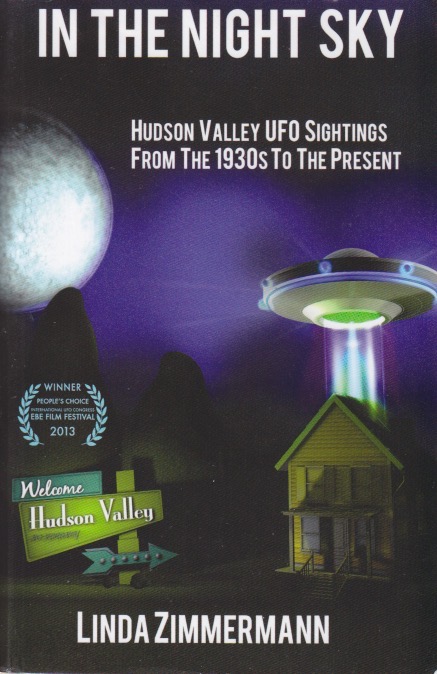
Some places are quite ordinary.  Once you get to know the people, however, you begin to find some oddities.  That’s all normal.  Other places, however, are strange for one reason or another.  One such region is the Hudson Valley in New York.  With all the UFO news the past couple of years, I grew curious about the sightings in the Hudson Valley from about 1983 to 1986.  This was a period when hundreds of sightings were reported of an object flying low and slow, and even hovering, over several locations throughout the region.  They were investigated by J. Allen Hynek and Philip J. Imbrogno, and written up with the help of Bob Pratt.  Night Siege: The Hudson Valley UFO Sightings was published by a mainstream house (Ballantine, a division of Random House).  Not exactly belles lettres, the book is pretty bare bones.  It contains some interesting information, however.

Hynek, who worked for years with Project Bluebook and who was a bona fide scientist, was ailing as the book was written.  Indeed, he died before this book was published.  His name is the big draw, however, since he was a respected authority in the field.  Some questions have been raised about Imbrogno’s accounts of himself, but that shouldn’t take away from the data collected on the Hudson Valley phenomenon.  In short: in a period of mostly two years (1983 and 1984) several “flaps” of reports came in regarding an object that was described in similar terms by hundreds of people, many of them well-educated professionals.  The authorities trotted out mundane explanations that don’t fit the evidence, although even noted skeptics stated that the sightings were unexplainable.  Part of the weird Hudson Valley.

But not just there.  In 1997 a large number of people in Phoenix reported a similar object over Arizona.  This one made national news and even led to stunts by uncomfortable politicians.  We’ve become such an arrogant species that we’re reluctant to admit there are things we just can’t understand, it seems.  Or that there might not possibly be anyone smarter than us anywhere in this vast—indeed, infinite—universe.  I don’t pretend to know what people were seeing in the Hudson Valley, or in Phoenix, but I also don’t pretend that ruling out logical possibilities will give an answer.  I tend to think that when large numbers of people see something that’s unexplained, it’s an insult to our collective intelligence to make up something and refuse to consider the options.  The solution, to me, seems to be to read.  Widely.  Even if it only raises more questions.


Goodbye, Linda

It’s out of the ordinary for me to post twice in one day, but I’m compelled to do so by the passing of a friend I’d never met.  I’ll already published today’s post when I learned the news.  Linda S. Godfrey was a Wisconsin journalist.  She’s known for her many books on paranormal and weird subjects.  She was the reporter who first took “the beast of Bray Road” seriously.  I only discovered her after we’d moved from Wisconsin, although we didn’t live far from her in those days.  Fascinated by her work on the beast, I contacted her with some information I’d read and we opened a very occasional exchange of stories.  She was my very first Twitter follower, and she published one of my true stories (anonymously, by request) in one of her books.

I know that academically-inclined folks are dismissive of her work, suggesting she was credulous.  I always looked at it differently—Linda was willing to listen to people.  Yes, she probably talked to some people with mental issues, but here’s a true secret—all people have mental issues.  Although I never met her in person I had the sense from her writing that she didn’t simply accept what others told her, but she was willing to consider it.  I remember visiting Rutger’s University library while I was an adjunct there, to find a difficult-to-locate reference for her.  I mailed her a photocopy of what I’d found.  As I say, we never met, and we only corresponded once in a great while.

Seeing that her blog hadn’t been updated for some time (so this is related, you see, to my earlier post), I began to wonder if she was well.  Like most of us born to write, I knew it was unusual for her not to post.  Not knowing her personally, I didn’t think it polite to ask.  I’ve read several of her books, some of them highlighted on this blog.  Often dismissed as “only a cryptozoologist,” my sense is that Linda was hounded by the need to know the truth.  Yes, the world is a mysterious place—it’s not nearly as well understood as we’re often confidently told that it is.  Some of us simply can’t rest without finding out for ourselves.  Linda earned a reputation as an expert on werewolves—many suggest the beast of Bray Road was some such creature.  She recognized the tie-in to folklore but she also knew that monsters always, always cross borders.  Linda is missed already, and it’s about time I caught up on some of her latest books, for I’m compelled to believe she now knows.


Forgot Again?

I’ve noticed a pattern.  I’ve been posting daily on this blog for over thirteen years now.  During the past two of those, several days (including the day before yesterday) have gone without a post.  It’s not that they haven’t been written—no, I have a surplus of ideas—it’s because of the pattern I mention.  I know that early morning is a bad time to be active on social media.  Few others are awake and by the time they are many, many more posts come on top of my meager efforts.  So in my reptilian brain, I think, “Maybe I should wait until about 6:30 to post—you know, when people are awake.”  My reptilian brain tends to rise between three and four (sometimes earlier) and so I really do believe people are shaking off sleep at around 6:30.  I think this although my family repeatedly assures me it’s just not true.

In any case, I load up my daily post on WordPress before starting work, which I also do early.  The pattern for the days I forget to post is this: something sets off my early morning schedule and I forget to click “publish” before getting engrossed with work.  I guess I need a blog posting alarm clock.  For example, two days ago I had an early author call from someone in Europe.  I don’t mind early calls,  as long as they’re pre-arranged, but that meant I had to jog early so that I could get dressed in time—I don’t like meeting someone for business for the first time wearing sweats.  By the time I’d jogged, changed, and wolfed down breakfast, I’d forgotten to click “publish” for the post already loaded up and ready to go.  Any interruption to my schedule can do this.  Just last month I forgot because election results were coming in.  I need that alarm clock.

Posting daily is a happy part of my routine.  I’ve done in when I have a flight out of the country later in the day.  Or when I’m overseas, I make sure to post ultra early Eastern Time (presuming I’m flying east) to make sure I get one post in each day.  If I fly west I post ultra early local time so that I can keep it about the same time as usual, or else I post later than usual—time zones flummox me.  (So far those western flights haven’t been out of the country, I would note.)  When I forget to post, however, I’m home and something disrupts my morning schedule.  Those who live by the clock, I’m told, die by the clock.  And when that happens, I’ll probably have a post loaded but I hope I’ll be forgiven if I forget to click “publish,” even if my alarm clock does go off.


ABC 2 QWERTY

I thought this was over after school.  Sitting in a class with a long list of names, always coming in last—or very nearly so—because my name began with W.  Even now, however, it still happens at work.  If there are a limited number of places at an event, just try to register with a W (or X, Y, or Z) name.  Even if you get your name in first, you automatically drop to the bottom of the stack for many electronic lists (AI knows the alphabet, right Hal?).  This got me to thinking about the alphabet.  Alphabetical order is, of course, neither fair nor random.  It follows strict rules and it must in order to work properly.  The assignment of alphabetical order, however, is arbitrary.  More than that, it is a teaching tool cum organizing principle.

Consider your basic keyboard.  It’s used far more often than the alphabet and if we went in QWERTY order, Ws would always be near the front of the list.  Problem is, although our fingers know the keyboard well, who can recite it?  Maybe we need a mnemonic device like “Quite well, early riser, thank you…”   Someone at some stage laid out alphabetic order.  The earliest known abecedaries seem to come from Ugarit.  That doesn’t mean they were invented there, but it also doesn’t mean they couldn’t have been.  We don’t know what the criteria were, but interestingly enough, what we transliterate as w came about sixth place.  The order is largely recognizable to modern schoolchildren, although they had fewer letters and some of them we don’t have.  W was in the middle but closer to the head of the class.

An Ugaritic abecedary

There have likely been psychological studies done on the mental state inflicted by always being last, or near the end.  Granted, a good part of it is because of the gospels, but I wonder if my tendency to think others should go in front of me is a life-long socialization of being a W.  Growing up in a town with few “exotic” names, I don’t recall ever not being last.  There were teachers who would divide by height, but that’s even worse because I’m not tall.  Could it be that something as random as scratch marks made on clay by some priest or scribe in illo tempore, thousands of years ago, led to such a blog post as this in the early twenty-first century?  All I know is that my projects at work still get bumped because kindergarten politics still hold.


This Way

The more I get to know myself—pleased to meet you, sir—the more I realize that my childhood was cobbled together from small but repeated exposures to my favorite things.  I knew Dark Shadows from watching a limited number of episodes and reading a limited number of cheap novels.  I knew Alice Cooper from just two of his albums.  And I knew Ray Bradbury from a couple collections of his short stories.  No doubt this is in part because we weren’t exactly affluent and I found my books, by chance, at Goodwill.  I had no way of collecting Bradbury’s oeuvre, and besides, I was trying to get to know Edgar Allan Poe as well.  I knew Bradbury as a short story writer, and that’s still how I primarily think of him.

I felt compelled to read Something Wicked This Way Comes recently.  Since I’m used to Bradbury the short story author, it felt overdrawn to me.  I know this is heresy.  Great horror writers point to this novel as highly influential and inspirational.  Maybe if it were read closer to when I was born, when it was published.  Too many long paragraphs, especially early on, contain almost abstract descriptions without clear actions, leaving me confused.  Once the story got underway it was quite good.  As someone who writes, I know the dilemma of trying to freeze poetry into prose, and to make a coherent story from thousands of separate impulses.  Believe me, I know.  These days such things are edited out and stories become as thin as Bradbury’s Skeleton Man.  I guess I’m just out of practice.

The plot is great, but it feels so 1950s.  So boy/male oriented.  So American.  I suppose I attended my fair share of carnivals as a kid.  We didn’t go often, and I never knew one to settle on the edge of our small town.  And although we were free to ride our bikes or run as far as we cared to, home was never that far away and, I knew, there were scary things in the ubiquitous woods.  Ray Bradbury’s short stories were likely the main source behind my own early attempts at fiction.  Even today I’ll be scribbling along and think, “this is kind of like Bradbury.”  But I always have his short work in mind.  There are some great parts in Something Wicked, and it does build the tension toward the end.  Still, when it’s said and done I’ll be thinking of Bradbury’s short stories and how they formed my own nostalgia, even if only in little fragments.