All Wet

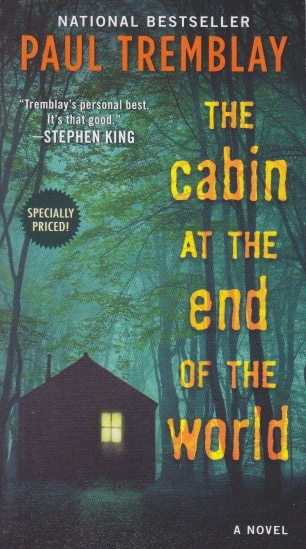
If I keep up this pace I’ll finish next year.  Reading the full set of Dark Shadows novels by Marilyn Ross, that is.  Since they tell me I’m an adult, this might seem a strange avocation.  Driven by nostalgia, and frankly, a love of gothic literature (the latter defined loosely), I’m revisiting my childhood reading.  Long ago I ditched the copies of these books that I originally found in a haphazard way, and it is possible—in this universe of improbabilities—that I have repurchased one of the exact same books I had as a child.  No matter.  I don’t think I read Barnabas, Quentin and the Sea Ghost before.  If I had, no memory of it is within easy recall.  It does seem that W. E. D. “Marilyn” Ross was making some slight progress with his writing as the series went on, but this one isn’t great.

An undersea salvage operation, run by Claude Bliss—accompanied by his daughter Norah (someone has to fall in love with Barnabas, after all)—comes to Collinsport to find the treasure of Jenny Swift, a ship named after its pirate captain.  There is, however, a ghost that haunts any who try to attain the treasure.  In one of the “Scooby-Doo Effect” versions of the Collinwood estate, the ghost turns out to be a man, a neighbor, literally in a rubber mask.  The salvage operation had been a bust from the beginning and Quentin shows up just to stir up trouble and then suddenly leaves before the story finishes.  This particular fascicle feels unfinished to me.  Who was the woman with Quentin?  What happened to the daughter of the man pretending to be a ghost?  Did Norah and Jim Donovan ever get together?  And what of Dr. Hoffman and Professor Stokes?

I’m not naive enough to expect belles-lettres from these books, but the last couple in the series built some hope as they seemed to have been making progress.  The stories were tighter and more innovative, even if still formulaic.  Some seem more cookie-cutter than others.  Since I have only three more novels to go (having read five of them this year), I see no reason to stop now.  I know there are other Dark Shadows fans out there.  I’ll probably put a YouTube video out on the topic down the road.  I did watch many of the episodes, but my memories come primarily from the novels I managed to find back in the seventies.  And like back then, I wasn’t really accurately called an adult, I suppose.


Word of the Year

I still have to look up “goblin mode” each time I read it.  I’ve been reading it quite a bit because it was Oxford University Press’ word of the year for 2022.  Throwing voting open to the public for the first time, goblin mode was overwhelmingly chosen, edging out my personal favorite, “metaverse.”  (It’s not every day that a word your brother-in-law invented gets that kind of accolade!)  But goblin mode is in the Zeitgeist.  It means to live an unkempt existence, perhaps hedonistically, without caring what others think.  It is, of course one of the offspring of the Covid-19 pandemic and its lock-downs.  Like social distancing, it’s something some of us had done before we knew what it was called.  But only partially.  I have a mental self-image that I don’t allow myself to show because I don’t like being judged.  I’d be safer in the metaverse, perhaps.

Image credit: Goblin illustration by John D. Batten from “English Fairy Tales” via Wikimedia Commons

Somewhat a natural hermit, I do crave human company and, like most people, I worry about what others think of me.  The thing is, people are natural actors.  We keep our goblins well hidden, usually.  Social life is quite different from the moments we spend alone.  Goblins are, of course, a type of monster.  Somewhat undefined and malleable, they can be compared to demons or fairies.  They do tend to be associated with households, which may make their use with this phrase appropriate.  Goblins tend to be thought of as ugly, thus goblin mode is letting your “ugliness” take over, no matter who may see.  You could be in permanent goblin mode in the metaverse, though.

I have to admit that such things make me feel my age.  The lessons of conformity, even though I was born in the sixties, were pretty deeply impressed.  “Do you want other people to see you like that?”  I wonder if we’re not all insecure at some level—it’s our primate inheritance.  Going into goblin mode, then, is striking back at the natural human acting ability.  It comes at a time when the message of not judging is also prevalent.  In the metaverse, as it was first used in Snow Crash, you chose an avatar that could look like anything you wanted.  I suppose that’s a form of goblin mode too.  We are natural actors.  Watch people in a crowd sometime.  Or at the office.  Or even at home, if they’re not alone.  If other eyes are watching the question always remains “do you want others to see you like that?”  And what we see is probably not authentic.


Okay to Look

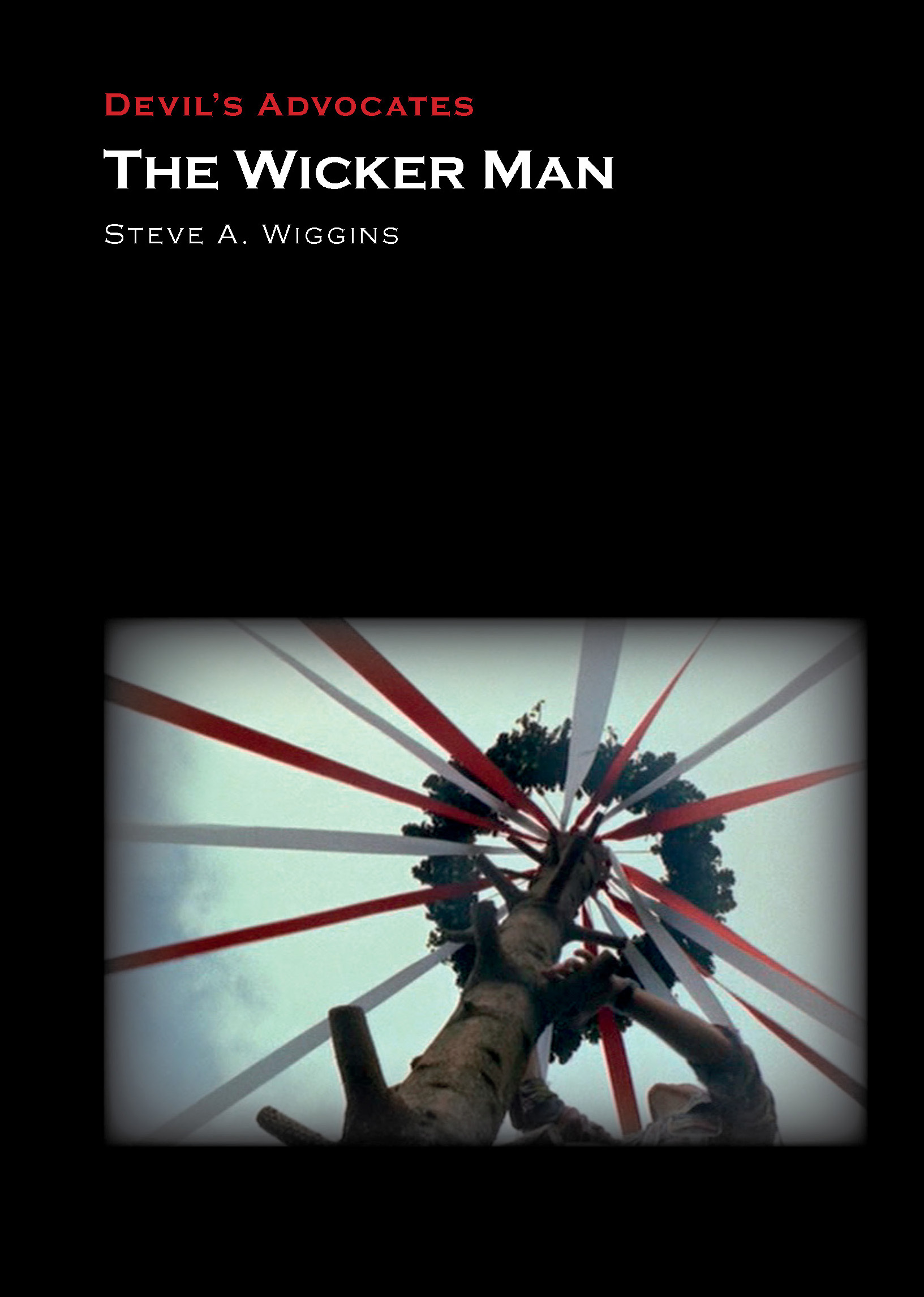
I admit to having learned about Daphne du Maurier from Alfred Hitchcock, and then only after my wife pointed her out to me.  I read our copy of Rebecca with appreciation—a good gothic novel will never steer you wrong.  I saw the movie first, however.  Learning that she’d also written “The Birds” (not the screenplay), I tried to find a book of her stories in various bookshops only to discover that American bookstores tend not to stock her work (beyond, perhaps, Rebecca).  Eventually I started searching online for collections that contained “The Birds.”  I settled on Don’t Look Now, which includes that story as well.  When researching The Wicker Man I learned that Don’t Look Now (the movie) had A billing to the former film’s B place.  I decided I’d read the story first, which I’ve now done.

There are several intriguing tales included in this particular collection.  The one that I found most haunting was the final story, “Monte Verità.”  The narrative of a woman who finds peace in an ancient commune on the titular mountain, it was difficult to read without wanting to find that kind of satisfaction.  Particularly for someone who has had lifelong cenobitic tendencies.  Those of us who struggle against the 925 life, beholden as it is to the great god capitalism, and who require time to think, contemplate, and just to be, this mythic mountain does indeed sound like finding what it is that you’re seeking.  Du Maurier tells the story with such longing that you think she must’ve been there herself.  As a writer I’m sure she had been, in a sense.

Du Maurier was, it should be no surprise, quite a versatile writer.  Some of these stories are gothic and others more naturalistic.  They do tend towards the darkness, but not the kind that leads to despair.  They also reflect a time in publishing when longer short stories were acceptable.  (Most accessible online fiction publishing venues cut their limits far too short these days.)  Some stories really take time to get into.  “Monte Verità” is one such, as is “Don’t Look Now.”  They take time to build up.  “The Birds” isn’t exactly brief either.  The trend these days is for the quick payoff.  We have lost something as a culture with such short attention spans.  This collection of nine pieces provide a good sample of different shades of darkness.  And they encourage further reading.


Ideal Christmas

This blog is even open on Christmas.  I’m enough of a pragmatist to realize that few read it today, but even Carl Sagan knew that launching the Pioneer plaques into the void was the smallest spark of hope.  A quark in a universe so vast that we suppose it infinite.  And even so, it makes room for us.  So, if nobody reads this on Christmas I’ll certainly understand.  If you do, and if you celebrate Christmas, a merry one to you.  Thanks for stopping by.  For some folks, I know, Christmas is a time for gathering together.  A British colleague recently remarked to me, “But Thanksgiving is the big American holiday.”  I think he meant both for family gathering and for time off work—it’s the only regular four-day weekend capitalism deigns to give to those who live between the anvil and hammer of nine and five.  But today’s Christmas, we don’t have to think about that.

For me the ideal Christmas is one hunkered down with my family and when we don’t ever have to get out of our pajamas.  A bohemian holiday when you don’t have to go outside to check the mail.  As cold as it is this year, that’s really a relief.  And it’s also a time for stories.  Most of the Christmas gifts I give require explanation.  Even if they don’t, I like to tell stories about them.  That’s the way writers roll, even us obscure ones.  Holidays are based on stories and are made up of stories.  Those we tell only to our families are the most intimate kind.  You see, the brain doesn’t stop working just because it’s a holiday.  So all the books bear witness.

Although it’s too early to tell (the sun isn’t up yet), we might just eke out a white Christmas around here.  In eastern Pennsylvania we managed to avoid the worst of the massive storm that ruined holiday plans for many.  At the tail end of the rain, and at the knife’s edge of the frigid air, come a dusting of snow.  The temperatures have kept low, so if the sun hasn’t managed to warm the still green grass enough, we may see some white today.  It seems we have Bing Crosby to blame for this particular dream.  Christmas isn’t predictably white around here, and global warming only makes it less so.  But this is a holiday, and we don’t need to think about that.  I know not many will read this post, but if you are one of the few, and if this day is special to you, celebrate it for all it’s worth.


The Eve before Christmas

Even as we sit here on Christmas Eve, the work week finally over, my thoughts go to those who celebrate different holidays.  Or none at all.  Cultural Christians may find it difficult to believe that some sects—thinking themselves strictly biblical—observe no holidays.  Not even birthdays, some of them.  You may be doubting the accuracy of that statement, but my second college roommate was one of them.  He believed any holiday was idolatrous, and celebrating birthdays self aggrandizing.  Perhaps it’s not surprising that he can’t be found online.  Many of us, some without reflecting much on it, have been preparing for tomorrow for many weeks.  The older I get, for me it’s really the time off work I treasure.  It’s so rare, and more precious than gold, frankincense, and myrrh.

Like many people, I associate Christmas with music.  One of the songs—not really a Christmas carol—that has become seasonal by its inclusion on Pentatonix’s album That’s Christmas to Me, is “White Winter Hymnal.”  The song is a cover of a haunting song by Fleet Foxes, a folk band, who included it on their debut album, the eponymous Fleet Foxes.  If you’re not familiar with it you can find it here, along with the official video.  The claymation short portrays a group of old men outdoors watching time pass.  One of them begins to crank a drive that makes them younger as time reverses.  When he reaches that point (please forgive the sexist language) “when a man becomes a boy once again” (from another winter song), he releases the handle and the men rapidly reach the age they were when the song began.  Time is the greatest gift.

As the decades press on, their weight increases.  Dreams of what, as a young man, I hoped to accomplish slip away facing the grinding reality of capitalism.  The need to have money to spend for Christmas presents.  And food and shelter.  But mostly books.  Writing takes time.  Writing well takes a tremendous amount of time.  Time for reading, reflecting, and even listening to music.  Christmas Eve is all about waiting.  We hope for a quiet, if cold, tomorrow when maybe the phone and email will cease to solicit money and time, if only for a day.  I have to remind myself that not everyone recognizes Christmas.  For some it’s simply the season to make money.  I, weak as I am, cannot imagine life without it.  And so I watch the skies, eagerly straining my eyes for the light.


Space Ads

So, I’ve got enough stuff to worry about down here—the chimney needs some attention, that backyard gate still doesn’t hang right, and Giant keeps on running out of the cereal I buy—to have to turn my attention to space.  I love outer space, although, unlike some people I’ve never been there.  One of the simple pleasures in life is to be outdoors at the lake and watching the night sky where there’s no light interference.  Then I learned about space advertising.  You see, as an editor you get to read about all kinds of topics, and this came up in a proposal one time.  I had no idea that companies had been proposing billboards in space to fly across our nighttime skies.  It’s hard enough to use the internet anymore without hacking your way through a jungle of ads, and now they want to clutter our view of the nighttime sky so there’s no escaping capitalism.

“Space, the final frontier.”  This is a mantra that many of us grew up with in the sixties.  Most of us can’t afford to, and really have no desire to, go into space.  Born down here, we’re content to stay down here.  That doesn’t mean we can’t look at the sky with wonder.  Already you can’t go to the beach or a stadium event without planes flying banners trying to draw your mind back to the commercial world.  Even in remote forests you can find litter stamped with some company’s logo, trying to sell you more.  It’s enough to make you want to get to space to get away from it all.  Now that companies can afford to fly people to space as tourists—this is pretty strictly limited to the top one percent, of course—they feel they have the right to clutter the nighttime skies so that you’ll have that midnight urge to go buy a Tesla.

The original space advertising?

At this time of year we look to the nighttime sky in hopes of seeing a special star.  People with too much money cause so many unnecessary problems for the rest of us.  This has been apparent throughout history, but has been brought into sharper focus in the days of late capitalism.  Having too much only makes you want more, it seems.  And since other people have some you need to flash your company in their faces constantly.  From what I’ve read the only reason space advertising hasn’t really taken off is that it costs millions to get your ad up there.  Despite inflation it seems that these kinds of costs always come down.  And yet you can’t even get a contractor to come out and do something about that deck that’s falling apart.  And I do hope that they’ll have my cereal at the store this week.


Holiday Horrors

Holiday horror is a genre—really a sub-genre—that is still being explored.  It’s the subject of my my latest YouTube video.  Typical definitions suggest that it builds on a haunted or inauspicious history of the day.  I tend to think that really to fit the category that the holiday can’t be simply incidental.  It has to contribute to that fear that the movie brings.  The most popular holiday for horror films has long been Christmas.  Halloween may be starting to catch up, but Christmas has a long head start.  I ask myself if Black Christmas fits.  The title suggests as much, but how does it derive fear from the holiday?  It is, like When a Stranger Calls, one of the early cinematic renditions of the urban legend “the babysitter and the man upstairs.”  Yes, the calls are coming from inside the house, but there’s more going on here.  The sorority house is invaded during a Christmas party.

The fear, however, comes from both the juxtaposition of the cheerful holiday and the ambiguity of a slowly emptying residence.  Coeds are leaving for the holiday.  Or are they?  The bleakness of the weather adds to the dreariness of the plot.  The function of holiday horror is to make viewers address what’s really important about the occasion.  Tragedy can strike any day of the year—it’s no respecter of birthdays or other holy occasions.  John Carpenter got his idea for Halloween from this film, so in many ways Black Christmas does fit the sub-genre.  Its titling, however, complicates this.  Originally called Stop Me, the movie was to be set on Christmas break but the focus was not to be on the holiday.  Even as it was released the title continued to change, in America it was first called Silent Night, Evil Night.

Like the remake of Invasion of the Body Snatchers, critics initially didn’t like this movie but time has shifted that.  It is an effective horror film and probably part of the objection (I’m psychologizing here, without a license) had to do with implicating a holiday—a happy holiday—with horror.  Christmas is, for many, a stressful time of year.  Instead of quietness and relaxation, it’s a season of intense socializing and measuring one’s generosity against that of others.  We try so hard to make others happy with material things.  Holiday horror need not add to that stress.  In fact, it can make you stop and think about what’s really important.  There’s a reason that Christmas was long the holiday associated with scary stories before Halloween really took off.


Yule Tidings

Happy Yule!  One of the things my British colleagues find hard to believe is how Dickensian American employers are about days off around the holidays.  Corporations tend to give one day for Christmas, and you can hear them grumbling, “I suppose you must have the whole day?” even as they give it.  Christmas is, however, a season.  The twelve days begin on the 25th, but Yule starts today.  Yule marks the solstice—the fewest hours (minutes) of daylight occur today.  Tomorrow daylight will start to grow longer, although it will take many days before we begin to notice any difference.  I know this reflects a northern hemisphere bias, but having read about how less time is necessary for work, given technology, I wonder if there might not be a more equitable solution to this hemispheric focus.

What if we regularly gave generous time off around the holidays to recharge our batteries—renew our spirits—for both hemispheres?  What if we gave our southern neighbors the benefit of, say, a week off in June, after the summer solstice?  And what if we joined them as well?  Only the most uninformed believe that Jesus of Nazareth was born on December 25.  The best that those facile with calendars and history  can do is that he was likely born in the spring, so why not split the difference and offer rest and respite in both December and June?  Bean counters who equate every second in front of the screen as adding to the bottom line (a fable as sure as anything the brothers Grimm recorded) might need to be the ones leading the way.  Rest is important.  Time to think about something else.

Yule is an ancient celebration.  We don’t know how far back in history it goes because there are no records of its earliest celebration.  Before computers, before the industrial revolution, it was recognized that little truly productive outdoor work could be done during the winter months.  Obviously we can’t sit around and do nothing all the way til March, but these very short days bridging the end and beginning of what we now recognize as the new year, are custom-made for reflection and renewal.  Why not encourage it?  Perhaps the bean counters could use it to read A Christmas Carol.  Maybe they could set aside their abacuses and reflect on the wonder of the seasons that suggest to us that now is the time to rest and wait for the light to return.  Let’s truly celebrate Yule.


Best Beasts

Strange Beasts of China left me strangely affected.  Yan Ge’s novel received quite a bit of acclaim for a book of speculative fiction.  Of course whether or not it is speculative fiction is open to debate.  The narrator, an unnamed former graduate student, makes her living by writing about the “strange beasts” of the fictional city of Yong’an.  Uncertain of where she fits, she’s been researching any number of creatures that resemble humans in various aspects, and who lived often hidden lives among the population of the city.  Her relationships revolve around people who, and this may be a spoiler, often turn out to be beasts.  It could almost be a parable.  I wasn’t quite sure what to expect.  The word “cryptozoologist” occurs in the copy and it was blurbed by a couple of horror writers.

It’s not really a horror novel, though.  There’s some action and even a bit of violence—not too explicit—and some well-executed twists.  I wasn’t sure where the story was going, but I found myself eagerly awaiting the opportunity to pick the book back up again.  One of the truths of our species is that we find ways of othering those who are different than we are.  Othering so that we can fear and mistreat them.  And feel superior.  That’s why this story feels so much like a parable to me.  The beasts aren’t really monsters, but then, monsters are really us.  What matters is how we treat them.  Yan Ge handles them with sensitivity—her narrator, after all, is very interested in these beasts—and our suspicions grow as the novel goes on.  We shouldn’t be judging here.

That this book should come out even as American attitudes toward China veered decidedly toward “othering” (the book was published in Chinese back in 2006, but appeared in English in 2020), is significant.  There are reasons to fear the autocratic government of China, but a significant portion of Americans seem to favor the autocratic style over democracy.  So it is that parables continue to be made.  We live on a planet with billions of other human beings, each with cultures, hopes, and dreams.  They may look a little different and thy may speak in ways that we don’t immediately understand, at least not without some effort, but they are just as human as those who speak English and who live in their own fictional cities isolated by a couple of oceans.  Strange Beasts of China really made me think.


Seasonal Sights and Sounds

It’s listed as one of the top ten Christmas activities in Pennsylvania.  Koziar’s Christmas Village, located north of Reading and really out in the country, has been in business for 75 years.  Family owned and operated, it’s a walkthrough Christmas lights display.  I’ve been to many drive-through displays over the years, but on Saturday we went to this walk-through.  I wasn’t quite sure what to expect.  In the end, it was like many such attractions—lots of lights and painted plywood cutouts, flocked animals and dioramas with mechanically moving dolls.  What was truly impressive, however, was the number of people there.  Opening daily at 5 p.m., just as it’s getting dark, the sizable parking lot was already filling up at 4:30.  Walking through the display was essentially letting yourself by moved along by the crowds.  There were thousands of people there on Saturday night.

Getting into our car to head home, there were yet miles of cars backed up wanting to get in, and this was at 8:30.  Such sights of Christmas put us in holiday mode.  Seeing so many other people getting into the spirit of things was, in its own way, inspirational.  The next night—this being the weekend before the holiday itself—we attended the Christmas with the Celts concert at the Zollner Arts Center in Bethlehem.  Bethlehem prides itself on being “Christmas City,” founded, as it was, on Christmas Eve by the Moravians.  Christmas with the Celts is an annual show with different line-ups having in common live music, Celtic tunes, and Christmas.  The auditorium was pretty full, so I was glad for our masks.  They didn’t get in the way of the sounds of Christmas and a few stories from Ireland.

The sights and sounds of Christmas are part of what make this time of year so memorable, and something to which we look forward each year, despite the shortness of the days and the coldness of the air.  There’s a hopefulness about the holiday season, an underlying awareness that things need not always be as they are now.  Just two days away, the winter solstice—the holiday of Yule in its own right—marks the slow turning point to longer days.  It means winter is just getting started, but the cold brings with it more and more light in compensation.  Holiday sights and sounds help us through this transition.  And maybe, if things go right, they won’t be just the same as before afterwards, they may be even better.


Blooming in December

The cascading petunias are doing fine.  It’s a little odd to see them in December, given that petunias are annuals, not perennials.  (The terminology has always been confusing to me—annual could mean, as it does, that they only grow one year.  Exegeted differently, however, annual could mean that they come back yearly, but it doesn’t and they don’t.)  The Aerogarden (not a sponsor) system provides plants with a perfect mixture of light, water, and nutrition.  The only thing missing is the soil.  Hydroponic, the unit gives plants the ability to prolong their blooming life preternaturally long.  These particular petunias have been blossoming since January and they’re showing no signs of slowing down.  This is kind of what science is able to do for people too—keeping us going, even as nature is indicating, well, it’s December.

I often wonder what the flowers think about it.  We keep our house pretty cool in winter.  Partly it’s an expense thing and partly it’s an environment thing.  In the UK they talked of “overheated American houses”—how many times I Zoom with people even further north and see them wearing short sleeves indoors in December!—and we went about three years without using the heat in our Edinburgh flat.  You see those movies where Europeans are wearing vest and suit coat over their shirts (and presumably undershirt) at home?  It occurs to me that it was likely because they kept their houses fairly cold.  In any case, I suppose the low sixties aren’t too bad for plants, but they certainly aren’t summer temperatures.  Still, what must they think?

Set on a counter where the summer sun came in, at first they gravitated toward the window during May and June.  Even with their scientifically designed grow light, they knew the sun although they’d never even sprouted outdoors.  That’s the thing with science.  I’m grateful for it, don’t get me wrong, but it can’t fool plants.  We can’t replicate sunshine, although we can try to make something similar.  (Fusion’s a bit expensive to generate in one’s home.)   So it is with all our efforts to create “artificial intelligence.”  We don’t even know what natural intelligence is—it’s not all logic and rules.  We know through our senses and emotions too.  And those are, in some measure, chemical and environmental.  It’s amazing to awake every morning and find blooming petunias offering their sunny faces to the world.  As they’re approaching their first birthday I wonder about what they think about all of this.  What must it be like to be blooming in December?


Booking Dreams

There’s a certain kind of person—many of with whom I work—who trade in the currency of books.  These are individuals who would rather be paid in books than in cash, and who worry of book orders shipped that seem to take too long to arrive, as if the rent check will be late because of it.  Who check the tracking number multiple times a day and can’t rest secure until the book is within their doors.  These people tend to be educated, whether formally or on their own, and they often wonder why the world can’t be a more amenable place because reading makes you realize the potential we miss.  My own reading convinces me that capitalism is mostly to blame.  It rewards the greedy and makes them try to fix elections and posture against other greedy leaders.  Books often show a better way.

I realize not everyone likes to read.  In fact, if you do so for pleasure you’re part of a minority group.  Those who read, and conduct surveys of those who do, estimate that only about five percent of the population reads and trades in books.  That makes us a very small nation indeed.  But some countries, such as Iceland, have higher proportions of readers, and other nations have lower.  Books, as a whole, saw a resurgence of interest during the pandemic because they are a way of getting together with other people and going to faraway places all within the safety of your own home.  I like to think a book-lined room is also well insulated.  Especially if all those little gaps are caulked with smaller tomes.  Occasionally photos of individual libraries circulate and go viral.  We’re impressed, we bookish folk, by those who read so much.

The book industry’s having a bad economic year.  In my own humble efforts I tend to read more than a book a week, on average.  I do this by reading more than one book at a time.  The amazing thing about that is you can pick up one of the multiple titles you’re reading and resume where you left off.  Very seldom is there any confusion or even forgetting what a book is about.  A physical book has so many tactile cues to remind the reader of things.  That’s why those of us who like to read tend to keep books.  We like to be able to go back and since we can’t predict our future wants and needs with any precision, we err on the side of collecting.  I do give books away but often I come to regret it because I need some unexpected volume again.  Books have their own economy.  If only we could all trade in books, it would be a very different, and I believe better, world.


Birthing Stars

Fusion.  The recent breakthrough with fusion announced so close to Christmas hardly seems a coincidence to me.  I have to admit to having been interested in fusion since high school.  One of my school term papers was on what was then called a “magnetic bottle”—a theoretical device capable of containing a fusion reaction.  The hydrogen bomb, of course, had already demonstrated that fusion was possible.  Controlling it was, at the time, the difficulty.  Now, I’m no scientist.  I’ve read quite a bit of lay science over the years and even worked on a project about the relationship of science to religion.  Still, you can’t follow everything.  I’d lost contact with fusion until the announcement this week that scientists have finally demonstrated that it’s possible to get more energy out of a controlled fusion reaction than it takes to get the reaction started.

In case you know even less about science than I do, fusion is what powers stars.  Unlike fission, it’s a “clean” nuclear reaction and one, as far as we can tell, that has made life possible on this planet.  Star power.  We’ve known for many decades that this could be the solution to humanity’s energy needs.  Of course, big petroleum has tried to slow such research down—there are personal fortunes to be lost and what is life without a fortune?  Now, with technology far beyond my comprehension, a fusion reaction was born that showed promise that we’re on the right track.

Photo credit: NASA, via Wikimedia Commons

Since it’s been rather gloomy around here this December, the thought of more sunshine cheers me.  Living in the Lehigh Valley, of course, my thoughts turn toward the Bethlehem star.  It’s such a crucial element to the Christmas story that we’d hardly know what to do without it.  Stars are our guides through the dark.  Winter nights are often clear and are opportunities to see the nighttime stars, even as we light up our artificial ones here below.  Light encourages light.  In a laboratory somewhere scientists are busy making stars.  I have to believe it’s satisfying work.  Perhaps the kind of job you’re eager to get back to the day after Christmas.  Although fusion would be used for power in general, one of the functions would surely be the giving of light.  As we move toward next week’s solstice and light our Yule logs, encouraging light to return, women and men in white smocks are designing and using complex equipment to help it on its way.


All About Blurbs

A book recently arrived.  It was unexpected, but when I saw the return address I knew what it was.  My young colleague Daniel Sarlo from the University of Toronto had kindly asked me to blurb his book The Solar Nature of Yahweh.  I’ve known Dr. Sarlo virtually for many years.  He’s engaged me a number of times on issues surrounding my research on solar worship in ancient Israel and Ugarit.  I had a book project in the works on the latter topic when other colleagues suggested going with something biblical for my next book, thus Weathering the Psalms was born.  Books, particularly academic ones, are in constant conversation with one another.  I’ve been writing on horror and religion now for over five years but my material on ancient West Asian religion is just now starting to get noticed.  It’s a funny old world.

One day I stumbled across a blurb lifted off my website for a book from Johns Hopkins University Press.  I was impressed.  First of all, that some author or editor had found my remarks on their book from this blog and that they’d liked them enough to cite them.  Getting blurbs can be a difficult task these days.  Academics are under a lot of pressure and time for such things is at a premium.  The payment is generally a copy of the book.  For some of us, though, it’s a thrill just to see yourself cited at all.  Once you’re no longer an academic you’re easily forgotten.  It has been a number of years since I’ve researched Yahweh and the sun, but someone, at least, still remembers.

Like book reviewing, reading a book for a blurb is one of those things you really can’t talk about pre-publication.  Book production is a slow process.  Like most things in life, it takes a complicated chain of events to lead to something as humble as a printed book.  And you need things like blurbs well before the release date.  As an author you often worry that—even in a field like ancient West Asian studies—your book will be outdated before it’s even published.  Some new find, or new idea might invalidate all that you’ve worked for.  Higher education should be one of the best venues for building humility in a person.  Your great learning is only one example among myriads of other scholars.  It’s a great accomplishment to get a book published in the midst of all that.  And this one, as the blurb indicates, is well worth reading.


For the Eyes

A Welsh horror film?  Lately Euro-horror has caught my attention.  European sensibilities give horror a distinctive flavor, and The Feast doesn’t pull the usual horror tricks.  And reading the subtitles keeps you on your toes.  It’s more a slow build that manages to be unnerving from the start.  A family of four—parents and two boys in their late teens or early twenties—is hosting a feast.  A local girl, Cadi, is hired to help cater the affair.  The family is really seeking to get a neighbor to allow exploratory mineral drilling on her land.  She refuses, horrified when they mention that they’ll only drill on the rise.  The neighbor, aghast, says they know better because they’ll awaken “her.”  The unnamed her is a goddess who is within the rise and who’s been disturbed by the family’s drilling on the land adjacent to their neighbors’ property.

A number of aspects push this beyond Euro-horror.  The goddess, treated as superstition by the family, introduces religion into the horror.  (Cadi, as it turns out, died on her way to the house and the goddess inhabited her body.)  The remote location and role of the countryside also bring this into the folk horror realm.  Having an underlying ecological message, the film is eco-horror as well.  As such it has a positive message, even as all those at the feast, apart from the uncompromising neighbor, die before the evening is out.  Gods will express their wrath.  Although there’s gore, the concept is intelligent and possessed Cady’s unwillingness to speak throughout much of the film adds to the tension.

Horror films with subtitles sometimes don’t work, but The Feast manages pretty well.  Much of the disturbing atmosphere comes from the house.  A modern construction, built over what had formerly been the family’s farm, stands in stark contrast to the natural world all around.  As is often the case in eco-horror, the land is waiting to take its revenge.  It’s a message appropriate for a time when we fail to live up to our own environmental standards, and consider the checks and balances of nature itself as “superstition.”  Maybe a goddess will not awaken and kill everyone at the dinner party, but the wealthy will not be spared, as the movie prophesies.  We share the planet and the earth allows us to survive.  There’s a sense that we deserve to be reminded that living on a finite planet requires careful stewardship of it all.  If you’re going to throw a feast, at least make sure it’s not at the expense of nature.  Some goddesses are best not aroused.