Looking North

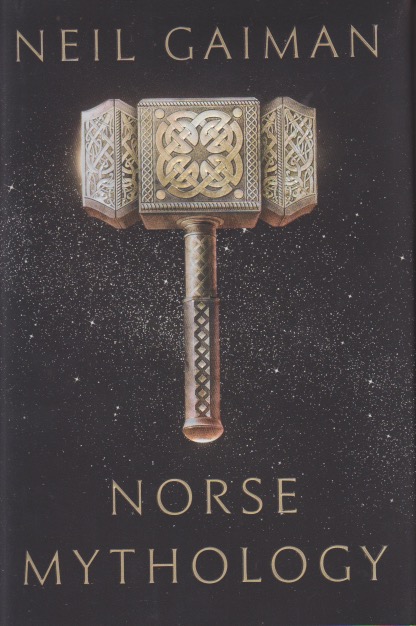
As organized religion continues its slow decline, mythology remains.  Indeed, it seems to be growing in interest.  The problem with many mythologies, for monolinguals, is that they come in languages other than English.  Translation always loses something, which is why, I suspect, Neil Gaiman was tapped to retell the Norse myths.  A very talented story-teller, Gaiman has written about gods before.  He knows their literary potential.  Norse mythology is rather odd in the canon of western thought.  The stories feature gods with as many foibles as humans and with conflicting motivations.  In some ways they are more believable than the monotheistic tradition.  They are both fun to read and poignant.

At the same time Norse Mythology is a somewhat perplexing book.  It’s difficult to tell, without being an expert, what is Gaiman and what is ancient.  In fact, the book sits next to another one with the exact same title on my shelf.  That one is labeled nonfiction, and it’s a bit more academic.  Perhaps it’s an occupational hazard that I tend to want to approach mythology in original languages, if possible.  I’ve never studied Nordic tongues and it would be a little difficult to justify starting now, with all the other things I’ve got to do.  It’s not that I don’t trust Gaiman, it’s just that every retelling is an interpretation.  Still, I’m sure the book gives the flavor of the records that survive.  One of the fascinating features of Norse mythology is that gods die.  Since it ends with Ragnarok, that seems inevitable.

Many mythologies have the world ending with the establishment of the happy reign of a singular deity.  Ragnarok, which Gaiman (and perhaps the originals) sets in the past, sees the gods dying on the battlefield against Loki and the giants.  As the earlier myths make clear, however, death in battle is the most glorious way for the Norse to end their lives.  (And seeing how it has led to a pretty peaceful adult nation, one wonders if the mythology had a calming effect.)  I’ve not read extensively in other versions of Norse mythology so I don’t know if Gaiman’s ending with Balder returning and the world starting anew is his innovation or part of the original.  Having gods who die, however, seems like a potential leveler for humans who suffer from greater powers.  There’s a sobriety to it that lends gravitas to the whole.  And like all good books, Norse Mythology has left me hungry for learning more.

Tax Season

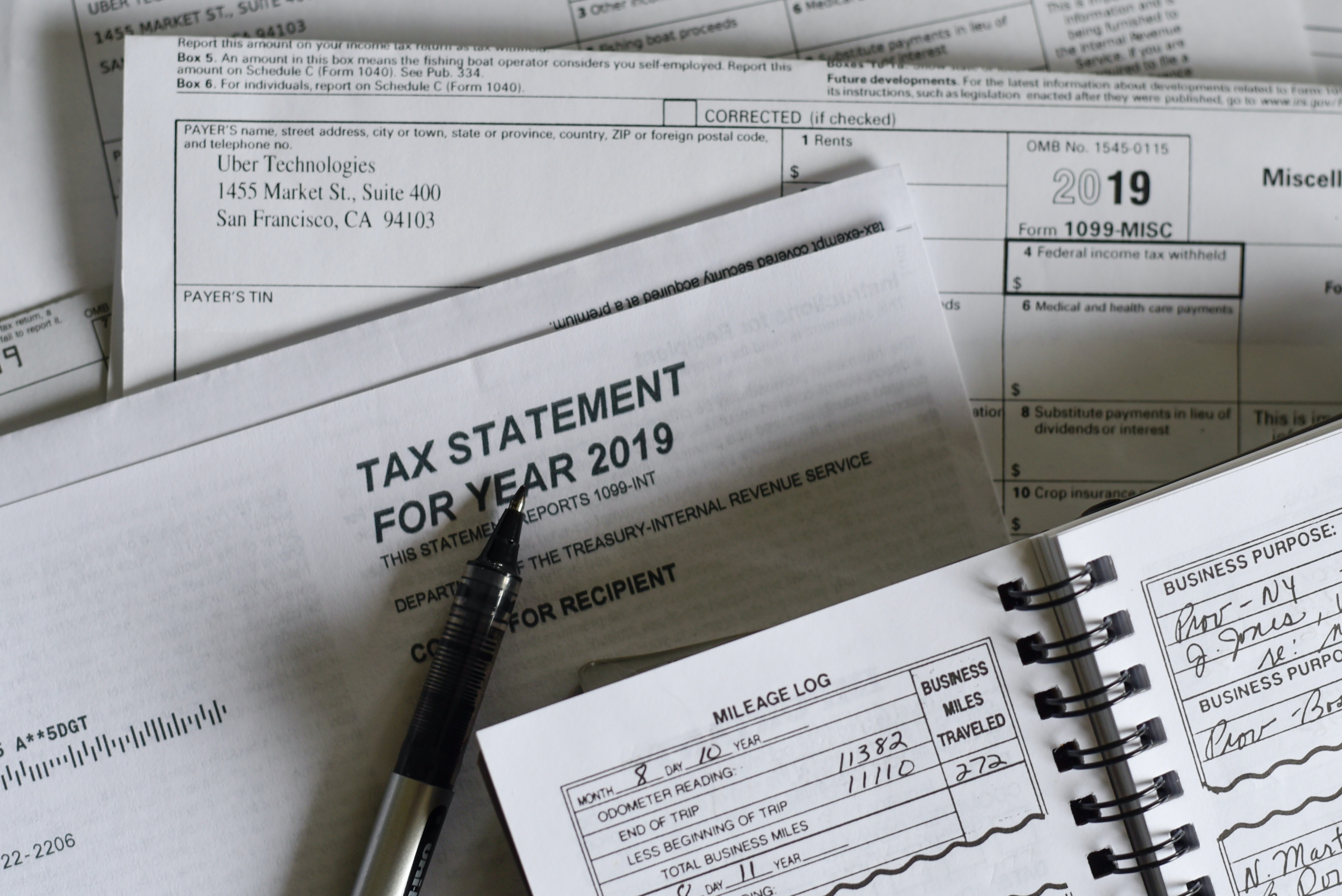
And it came to pass in those days, that there went out a decree from the Internal Revenue Service that all the world should be taxed.  (And this taxing was first made when Penn was governor of Pennsylvania.) And all went to be taxed, every one into his own city. And Steve also went up from Galilee, out of the city of Nazareth, into Northampton, unto the city of David, which is called Bethlehem; (because he was of the county and district of Northampton:) To be taxed with Kay his beloved wife, being great with patience.  Well, not exactly biblical (with apologies to Luke), but this came to me upon having to go to Bethlehem to collect our tax documents from our accountant.  There’s something biblical about living in the Lehigh Valley.

Photo by Olga DeLawrence on Unsplash

I don’t complain about having to pay taxes.  I only wish far less of the money went to pay congressional salaries.  And far less to the military.  Otherwise, I realize that in order for infrastructure to be up-kept, for the many services that make life possible for so many people, those of us who earn enough—even if not exactly flush—owe something to the system.  I’m saddened that the very wealthiest feel they’ve earned the privilege of not paying taxes. Modern-day Herods, I think, ready to kill babies in order to maintain personal power.  Still, those of us who pay participate in the most basic kind of charity.  So we make our annual trip to Bethlehem.

These days many people feel that if they don’t like other people they shouldn’t cooperate with them at all.  Even finding out that a certain Trump has been defrauding the very government which he purported to lead, and has been doing so for many years, doesn’t dissuade some of them.  I think our accountant, who looks gaunt and who doesn’t overcharge, could fairly claim a bit of back taxes that might be due.  Community is an endangered concept.  It’s a place where people support one another, and perhaps even care about others.  When I logon to Nextdoor.com I’m distressed to see the trolling and inappropriate emojis that show up.  The internet makes us all think we’re clever, ready with the snappy comeback.  Even to a recent story about a dead homeless man found in a park.  We need each other.  Society can’t move ahead if everyone keeps everything to themselves.  So it was we drove our rusty, four-cylinder donkey even unto Bethlehem.


1 April

Image credit: Trocche100, public domain via Wikimedia Commons

The funny thing is nobody knows how it got started.  In living memory, and indeed back a century or two—even more—people have considered April 1 a day for jokes and fooling.  Perhaps it was a kind of relief after winter was finally beginning to show its tail, or perhaps it was some distortion of Hilaria, the Roman festival of the goddess Cybele.  Some have speculated that it had to do with switching from the Julian to the Gregorian calendar when many were confused as to what the actual date was.  No matter what its origins are, April Fools has stuck.  It has such resonance that even legislation passed on this date is sometimes questioned as to whether it is serious.  Some locations have grand pranks planned and budgeted.

Nobody, as noted, knows how this got started.  One of my personal favorites posits a biblical origin.  Things tend to go back to the Bible in western culture, don’t they?  This idea takes it all the way back to the tenth generation of the human race: Noah’s flood.  Back in the eighteenth century it was suggested that Noah sent out his first dove before the waters abated on April 1 (this, of course, is based on knowing the exact days of creation—something that was of considerable interest in the seventeenth and eighteenth centuries).  Since the dove was sent on a “fool’s errand”—there was no dry land visible—well, April fools!

With rare exceptions this isn’t a day off work.  It’s not a holiday with any religious implications, despite speculations about Noah and his dove.  It’s really a day highlighting uncertainty.  Practical jokes can, of course, be harmful.  There can be those, such as yours truly, who might be slow to catch on.  Indeed, almost always the victim of a “practical joke” doesn’t find him or herself in an appreciative mood.  I’ve always personally thought the reference was to the weather.  Snow isn’t unusual into mid-April in parts of the northern tier.  In fact received wisdom suggests not planting annuals until May arrives.  April’s weather, in other words, fools.  Around here we’ve whiplashed through March with days in the seventies and others the coldest of the winter (or so it seemed).  Now we’re into the first full month of spring.  The early flowers are out (some of which succumbed to the cold of this week’s weather) making fools of us all.  My hope is that none of us take this day’s unknown-origin holiday too seriously.


Eclectic Electric

It all began with the internet going out.  Less than a month ago the modem was replaced, but the tech this time thought it could be the co-ax cable.  We went outside and he fed the cable through, but when he got to the box he noticed a problem.  “Your electrical drop isn’t attached to the house,” he said.  Sure enough, he was right.  “I can’t replace the rest of the cable until that’s fixed—it’s an electrocution risk.” So I called the electric company.  They said I’d need an electrician to secure the conduit to the house, but they’d send somebody out to look.  The tech must’ve been in the area because he arrived just after I spoke to our electrician.  “Your cable has never been permanently connected to the house,” he observed.  “It should be.  We can do that, but you’ve got to get an electrician to attach that conduit.”

The funny thing about this is actually two-fold.  One is that our home inspector didn’t notice that the electrical cable was not secured to the house (once the tech pointed it out to me it was perfectly obvious).  The second is that the former owner of the house claimed to be an electrician.  In fact, he runs a electrical contracting business.  The electrician we pay has said, on one of his many jobs here, “I don’t think he was an electrician.”  I, for one, believe the guy we pay.  So now we have to have him come out and secure the conduit.  Then call the electric company and have them permanently connect the cable (the house has only been here since 1890, so do a few weeks matter?).  Then we call our internet provider and have them replace the cable that’s been causing our internet issues.

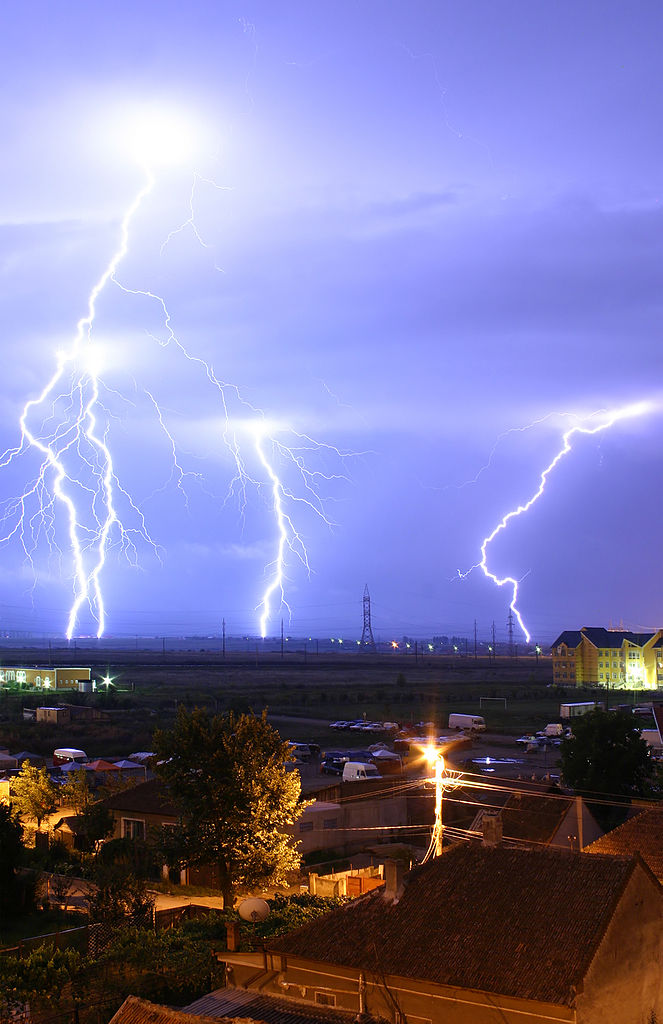
We like our quirky old house.  It does seem, however, that many owners have neglected various aspects of it.  And that our home inspector was a somnambulist.  We’re just trying to get it up to code.  Well, actually, we’re just trying to get a secure internet connection because three livelihoods rely upon it.  Shoddy work has consequences, and caveat emptor reigns.  Few things are more basic to modern life than electricity.  Or even the internet, for that matter.  These things are fragile, it turns out, in ways difficult to imagine.  There’s a lesson hidden here, and it reaches back, I suspect, before the taming of electricity.

Image credit: Mircea Madau, public domain via Wikimedia Commons

Buying Copyright

It our current capitalist, individualist world, copyright is a good thing.  It’s often misunderstood, even by those who hold it.  It can also lead to confusion.  Basically, anything you create is covered by copyright.  This applies to written work, artistic pieces, photography, music, and so forth.  Even the words on this blog are covered by copyright, although it’s difficult to enforce on the internet.  If someone wants to use a work covered by copyright, they have to have permission from the rights holder.  You can sell copyright.  That’s essentially what authors do when they publish books.  They sell copyright for the promotion and, if they’re lucky, royalties the publisher provides.  Once money’s involved, everything changes.  After publishers, say, have the rights they can do anything with them, if it’s specified in their contract.  They can sell them again, or sublicense them.  (This is going somewhere, I promise.)

Different countries have different copyright rules and so sometimes a book is available in one country and not another.  Now Amazon, and some used book sites such as Bookfinder, have made used copies available.  Used copies can get around national restrictions.  I remember wanting a certain Hebrew grammar that was only available in hardcover in the US, and very expensive.  When we moved to the UK, it was available cheaply in paperback.  That’s just one example of how it’s intended to work.  Here’s the twist: the same book can be sold under different titles (even in the same language) if published in different countries.  It’s possible to mistakenly think that they’re different books and buy them twice.  Publishers don’t mind that at all.

Even in the same country, publishers can give the same content different titles by releasing a hardcover version first and later publishing a paperback with a different name.  Sometimes it’s difficult even for someone who works in the publishing industry to know if that’s happening.  Copyright is meant to protect the creator.  For the buyer it’s caveat emptor.  There are times when it’s convenient to have two of the same book.  Like libraries, however, houses also have limited physical space.  And the owners limited budgets.  Publishers need to make money, I realize.  Hardcovers, being more durable, cost more than paperbacks.  And overseas sellers face different markets so sometimes have to give the same book different titles.  In this interconnected world, the buyer must beware—capitalism encourages spending and copyright can be most protean.  Especially when money’s on the line.

Photo by Blogging Guide on Unsplash

The Best Religious Horror Movies Streaming Now

Here’s an extra-special second guest post this week, enjoy!

Many horror movies have religious themes, plotlines or undertones. Here are a handful of the best religious horror movies to make you pray the bad away, in order of release.

Rosemary’s Baby (1968)

Rated R

Director: Roman Polanski

Starring: Mia Farrow, John Cassavetes, Ruth Gordon

A young couple moves into a NYC apartment with a haunted past. When the wife gets pregnant, she experiences an array of strange feelings, believing her baby may be the spawn of Satan.

Stream Rosemary’s Baby on Hulu, Sling TV, The Roku Channel and Amazon Prime Video.

The Exorcist (1973)

Rated R

Director: William Friedkin

Starring: Ellen Burstyn, Linda Blair, Max von Sydow

An increasingly strange-acting 12-year-old girl causes her mother to volley between scientific and supernatural explanations. Ultimately, she seeks the aid of a priest who himself is experiencing a crisis of faith.

Stream The Exorcist on Netflix.

The Exorcist spawned two sequels: Exorcist II: The Heretic (1977) available to stream on Apple TV, Vudu and DirecTV and The Exorcist III (1990) available to stream on Apple TV and FuboTV. There was also a 2016 television remake of The Exorcist that lasted two seasons and is now available to stream on Hulu and Amazon Prime Video.

Carrie (1976)

Rated R

Director: Brain De Palma

Starring: Sissy Spacek, Piper Laurie

Based on a novel by Stephen King, the master of horror himself, this is the story of a shy, introverted and sensitive teen bullied by her schoolmates and abused at home by her highly religious mother. Then, she becomes imbued with the devilish power to take revenge on them for the suffering and humiliation they’ve made her endure. This is such a timeless and beloved horror classic, it’s been remade twice: once made-for-TV in 2003 starring Angela Bettis and Patricia Clarkson in the leading roles and again in 2013 starring Chloë Grace Moretz and Julianne Moore in the leading roles.

Stream all three versions of Carrie on Apple TV, Vudu and AMC On Demand.

The Omen (1976)

Rated R

Director: Richard Donner

Starring: Gregory Peck, Lee Remmick, David Warner

When the wife of an American diplomat gives birth to a stillborn child, he adopts a child named Damien. After the child’s first nanny commits suicide, the family calls in a priest, who delivers a dire warning: the child may be the anitchrist himself.

The original The Omen spawned two sequels and one remake.

Stream the original The Omen on Hulu, Paramount+, Epix on Amazon Prime Video or Epix On Demand, Tubi and DirecTV.

Stream Damien: Omen II (1978) and Omen III: The Final Conflict (1981) on Apple TV and Vudu,

Stream the 2006 remake of The Omen on HBO Max.

Summary

Catch up on these, and you can say you’ve survived the most harrowing classic religious horror films of all time.


Collecting the Past

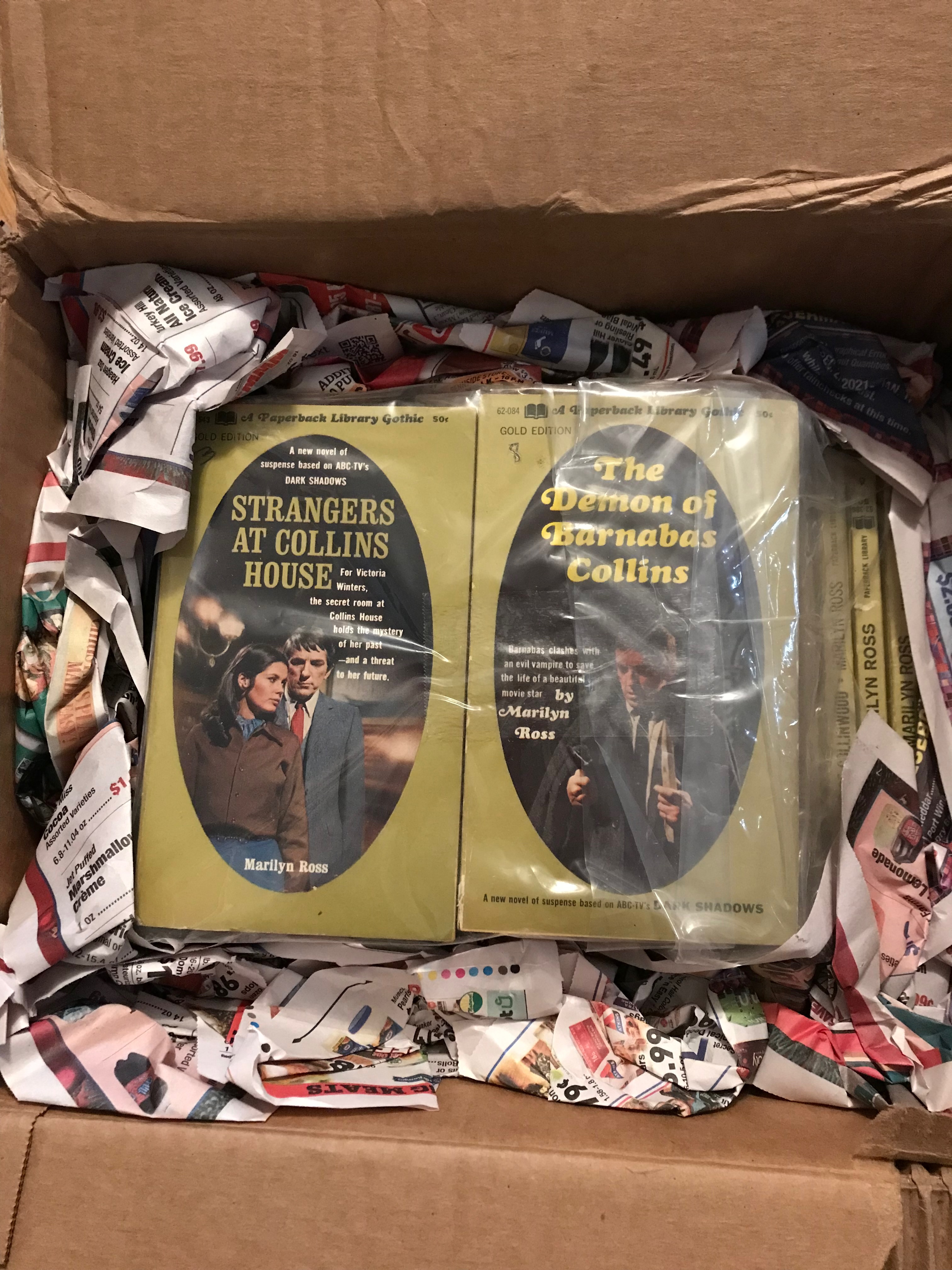
Some readers, probably, react with embarrassment when I go on about Dark Shadows.  The fact is, however, that our childhoods somehow define us and mine included frequent doses of Dark Shadows after school.  This was complemented by the series of potboiler novels by William Edward Daniel Ross, writing as Marilyn Ross.  We didn’t have much money when I was a child (some things never change) and the only means I had of procuring the books in our small town was Goodwill.  The novel series ran from 1966 to 1972, roughly concurrent with the television show.  Since I was buying them second-hand I could never tell which, if any, I would find in the book bins.  If I did find any, I’d buy them.  I got rid of them when I “grew up.”

Dark Shadows, however, has come back to me at various points in my life and about a decade-and-a-half ago I began, somewhat shamefacedly, trying to rebuild that earlier collection.  The individual volumes are considerably more than the nickels and dimes I’d originally paid for them.  In fact, the rate of change has been somewhat astronomical.  Some of the volumes are rare.  Given the prices, I suspect I’m not the only nostalgia-poisoned child of the sixties and seventies who’s buying them.  There’s a sense of satisfaction that comes with having finally completed a task years in the making.  When the box containing the last volume arrived, it was a moment of private ecstasy.

All of this has me thinking about other influences Dark Shadows has had on me personally.  It is probably responsible for my lifelong love of Maine.  The television show was filmed mostly in Terrytown, New York, better known by the name given in Washington Irving’s tale, Sleepy Hollow.  I wasn’t aware of this on my visit to Terrytown—which was before the more recent television series based on, but not filmed in that location, aired.  My first publication regarding religion and horror was based on Sleepy Hollow.  There’s a sense of connectedness here.  To get the final volume, which is rare, I had to buy a collection of several of the books.  Like a man who found a pearl of great price went and sold all that he had so that he could buy the field in which the pearl was.  We’re never told what he did with the rest of the field.  If I had to venture a guess I’d say he used it to house his Dark Shadows collection.


Scary Movies About Scary Movies

Hi all, here’s a guest post to enjoy:

In a meta-twist on the horror movie genre comes the horror film about horror films. Here are some of the most popular and well-executed (see what we did there?) navel-gazing scary films, ie. scary movies about scary movies.

Paranormal Activity (2007)

Rated R

Director: Oren Peli

Starring: Katie Featherston, Micah Sloat, Mark Fredrichs

This film has a relatively standard horror plot: a family is stalked by a murderous demon. What makes this film unique, however, is how it’s told. Much of the film is seen through the vantage of security cameras and other devices used to make it appear they were all culled together to thread together the story. This movie spawned a whole series of eight films.

Stream Paranormal Activity on Paramount+, Pluto TV and Netflix.

The Blair Witch Project (1999)

Rated R

Director: Daniel Myrick and Eduardo Sánchez

Starring: Heather Donahue, Michael C. Williams, Joshua Leonard

When this film – likely the progenitor of the entire found-footage horror sub-genre, first released, its uniquely modern (for the time) style of storytelling scared viewers in a whole new and unfamiliar way. Told through a video camera held by an increasingly panicked teen, this poorly lit, blurry, grainy, unsteady, hyper-realistic video-as-film follows friends investigating the myth of a witch and ending up getting lost in the woods.

Stream The Blair Witch Project on Apple TV and Vudu.

Scary Movie (2000)

Rated R

Director: Keenan Ivory Wayans

Starring: Anna Faris, Shawn Wayans, Marlon Wayans, Regina Hall, Shannon Elizabeth

Warning: This film is as much a comedy as it is a horror film. This parody of slasher flicks satirizes popular ones of the day and their classic tropes. Don’t let the comedy fool you though; it’s still got its fair share of scares! The movie spawned four sequels applying the same formula to formulaic haunted house, mysterious object, alien invasion and demon-possessed children movies.

Stream Scary Movie on Apple TV and Vudu.

Midnight Movie (2008)

Rated R

Director: Jack Messitt

Starring: Rebekah Brandes, Daniel Bonjour, Greg Cirulnick, Mandell Maughan

The polar opposite of the Wayan brothers’ franchise, this horror film takes its horror seriously. Replete with classic blood and gore with a little sex and nudity thrown in (thank you, Mr. Hitchcock,) it involves a rare midnight screening at a dilapidated old theater of a slasher film whose maker apparently went insane from it. That doesn’t dissuade the audience, however, all of whom are unaware that when the lights go down, this bloodbath features audience participation.

The Final Girls (2015)

Rated PG-13

Director: Todd Strauss-Schulson

Starring: Taissa Farmiga, Malin Akerman, Adam Devine

An orphan and several other high-school teens watch a B-movie slasher flick made by the orphan’s mother – an 80s scream queen, before she allegedly died. Suddenly, the friends all find themselves trapped inside the movie and face-to-face with some startling truths. To live to tell the tale however, they must adapt to the classic tropes of the genre.

Stream The Final Girls on Apple TV and Vudu.

Recap

After watching these scary movies about scary movies, you’ll never look at another horror movie the same way again!


Moving Movies

I read something recently which began something like, “Do you remember when you first saw…?” (fill in the blank with a title of a movie).  This got me to thinking.  Movies used to be community events.  I’m not the first to notice this, but your community would wait (especially if it wasn’t especially urban) until a hyped up movie came to a local theater.  Everyone would see it and it was all that they’d talk about for days.  The internet makes all of that rather obsolete.  Even the part where you were the less popular sort who had to wait for the film to be shown on television to get in on the fun.  You can set up an account to see the movie at home while those who aren’t afraid of Covid go to the theater.  Or you may be like me—so busy that years pass before you get to it.  Hopelessly behind.

There is definitely a benefit to being able to catch a movie you missed at the theater when it’s convenient to do so.  You might be a bit late to the party, though.  And, depending on your tastes, you may be watching the movie alone.  I can’t recall having ever gone to a theater alone until recent years.  Once when my wife was away, pre-pandemic, I went to a local theater to catch the latest Annabelle movie.  Since I’m an early person the theater was pretty empty—at least one guy and his girlfriend, or a girl and her boyfriend, depending, were there with me.  Maybe a couple others I didn’t know.  Nobody to talk it over with.  Like bowling alone, I suppose.  The last movie I saw in a theater, The Conjuring 3, I was literally the only one there.

Photo by Denise Jans on Unsplash

I did recall the first time I’d seen the movie in the article.  I was watching with headphones on, sitting in my bedroom.  Sometimes it’s the living room.  I do recall my reaction, which is, after all, what the article is about.  Still, it was a movie that was watched without discussion, without seeing the reactions of others.  Watching it was, nevertheless, an enjoyable enough experience.  An intellectual one, even.  But as a former teacher I still have this haunting sense that if there’s no-one with whom to exchange information, remembering that first time becomes somewhat muted.  I suppose that’s why I keep this blog going.  I can interact with others on the internet and, collectively, recall seeing our movies together.  Attempt to be part of the discussion.


Raven about this Book

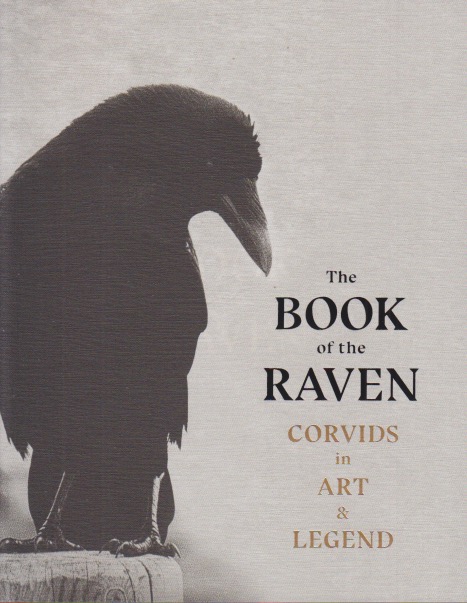
Some books are meant to be looked at.  Being busy most of the time, even on weekends, I’m guilty of not enjoying art enough.  The Book of the Raven: Corvids in Art and Legend is a work of art.  In it Caroline Roberts and Angus Hyland have compiled paintings, photographs, and prints that feature ravens, crows, magpies, and jays, interspersed with facts, poems, excerpts, and bits of lore.  It’s not a comprehensive book, nor is it intended to be.  It is, however, a deeply moving book for a certain kind of person.  It was an accidental find in a visit to The Book & Puppet Company in Easton.  When we’re in town we like to support the independent bookstores.  (I was saddened to discover that Delaware River Books, one of the two used bookstores in town, had recently closed.)

Corvids are, on a scale, about as intelligent as we are.  They think, solve problems, make tools, and recognize human faces.  They remember acts of kindness and reciprocate.  They recognize their dead and they also play.  They’re very much like us.  The book includes, of course, Poe’s “The Raven,” but also other poems that draw inspiration from these smart, magnificent birds.  The artwork is arresting.  One of the great sins of modern life is its busyness that robs us of the time for appreciating art.  And reading.  Learning how to thrive in a world that has become purely about profit and ownership.  Art is intended to be shared.  An artist produces so that others might see.  A author writes so that others might read.  And corvids exist to bring wonder into our lives.

I find the strident call of jays comforting.  I often hear them even on my winter walks.  There are murders of crows in the neighborhood from time to time.  They gather on roofs and in the trees across the street.  Recently I spied a large black bird while on my daily constitutional.  It had left a tree full of crows and was flying straight down the path toward me.  As it flew overhead I had a good look at its tail in flight—one of the best ways to tell a raven from a crow.  It was indeed a raven, and even common ravens are rare in this area.  We live on the edge of their habitat.   I was honored by its momentary attention.  I wished I had more time, perhaps to follow that magnificent corvid and to learn from it.  Instead, I will ponder The Book of the Raven with wonder.


Son of Comfort

So the other day I was reading a book proposal for another editor.  It mentioned the mononymous Barnabas.  Since the proposal wasn’t from a biblical scholar I wondered if this was the same Barnabas mentioned in Acts as the sometime traveling companion to Paul of Tarsus.  As I began to type this into the search box—and this was on my work computer, which, I hope, doesn’t know my reading habits—it autosuggested Barnabas Collins as the first choice.  One of the frustrating things about devices these days is they know who we are and sometimes we want an objective opinion from the internet.  Is Barnabas Collins as popular as I like to think he is, or is it just a case of my work computer anticipating my off-hour whims?  I sincerely hope it’s the former.

The proposal, by the way, was surprisingly referencing Paul’s Barnabas.  I wasn’t aware that he was much known outside biblical studies circles.  Probably about as rarely as Barnabas Collins is known in such circles.  There has been a resurgence of interest in Dark Shadows that has taken place in spite of, or perhaps partially because of, Tim Burton’s movie.  The film made many missteps, but people from my generation who’d never heard of him before began to reference Barnabas Collins to me.  I’ve never been a soap opera watcher.  It does seem that many college students used to go through such a phase—again, it’s the story that draws them in—but that never really happened to me.  I’d grown up watching Dark Shadows, however, and I’ve been tempted a time or two to start watching the series again.  With well over a thousand episodes, some of which are lost, it would be a major time commitment.  And besides, it wouldn’t recapture those grade-school afternoons watching what my mom thought was a waste of time.

The name Barnabas probably means something like “son of comfort.” I don’t know how the somewhat desperate writers, trying to gain back a slipping audience, came up with the name.  Their introduction of the supernatural into the daily drama did, however, transform television.  The usual demographic for the show was a bit older than me when it was being aired and I didn’t by any stretch see the entire series.  I did see enough, however, to forever frame my view of vampires.  There have been efforts, including one current, to reboot the series on television.  It may eventually rise again from its coffin. Featuring, of course, Barnabas.


Look It Up

Say you remember something, but imperfectly.  Maybe it’s from years ago.  You have distinct recollection of a word or two, but other details (author’s name, publisher) escape you.  In the case of a book maybe you remember the cover.  If a journal article you’re out of luck there.  Not even Google can help you.  (I use Ecosia regularly, because they plant trees, but sometimes you just need to google.)  This happened to both my daughter and myself recently.  She was trying to remember a childhood book and I was trying to recollect an article I’d read while working on my dissertation.  And although I remember Edinburgh very well, that was, uh, three decades ago.  I tried searching different combinations of key words, but there’s just too much stuff on the internet.

One of the strange features of ancient Near Eastern mythology is that it’s extremely popular online but not in academia.  Departments have been closed down.  Smart people left unemployed.  But just take a guess whose websites come up first when you google a god?  After Wikipedia, it’s often fan and fantasy material for page after page.  Universities haven’t figured out how to monetize this interest, so it remains the purview of those who’ve read a book or two (or done a lot of web surfing) and have popularized the deity.  If universities offered courses that caught people where they lived, there’d be a steady audience.  That fickle lover academia, however, is quite coy.  In my daughter’s case it was fairly easy for my wife to locate the title and bibliographic details.  My case was a little harder.

Most sources I consulted on my dissertation are in my book, A Reassessment of Asherah.  (It is available in PDF form for free on Academia.edu).  Back in the day, I made extensive bibliographies.  I pulled it from the shelf and ran an index card down through the entire bibliography.  Apparently I hadn’t listed it there.  Or I was remembering the title incorrectly.  There’s a distinct possibility that I imagined it.  When you’re an active researcher you keep ideas current by going over them time and again.  I can still remember some individual articles that were used to make a point some thirty years ago, but those beside the point have somehow vacated my gray matter.  In the end I never did find the reference.  Perhaps some day, like bread cast upon the water, it will come back to me.  Like said bread, it too will likely be soggy by then.


Masking the Devil

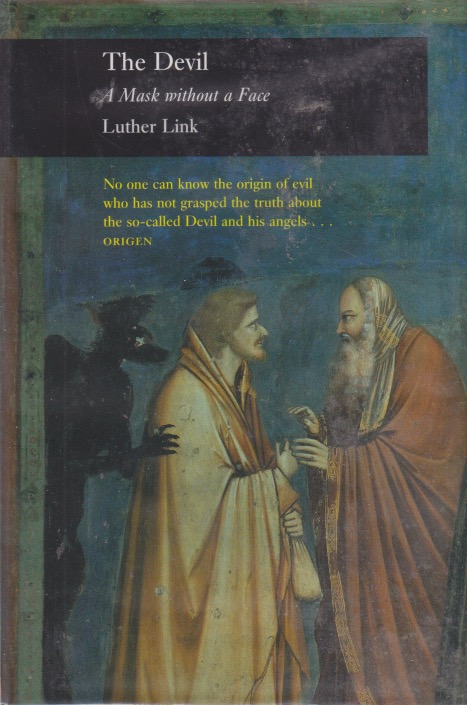
There are many books on the Devil.  In fact, entire horror movies such as The Ninth Gate are based on that fact.  Since writing a book on demons (Nightmares with the Bible), I read a few of the many.  I’ve continued to read some further since, and one of them is Luther Link’s The Devil: A Mask without a Face.  The first thing to note about this book is that it is the same as The Devil: The Archfiend in Art from the Sixth to the Sixteenth Century, as it was published simultaneously in the United States.  (The former was published in the United Kingdom.)  Many authors don’t realize that when you sign a publishing contract you’re selling the rights (the copyright) for your book.  Some publishers or agents will sell the rights in different territories to different publishers.  They don’t have to use the same title largely because, prior to Amazon it was difficult to buy UK published books in the US and vice-versa.  Now a lot of “buying around” happens so books published anywhere can be purchased anywhere.  (Except in authoritarian states.)

In any case, this book is a study of the Devil in art.  The UK subtitle, A Mask without a Face, focuses on the conclusions drawn, whereas the US subtitle is more descriptive of the contents.  There are a number of interesting points made by Link.  One of the most important is that of his conclusion—the Devil, in the biblical and theological worlds of the long Middle Ages, really isn’t so much a character or “person”as a representation of “the enemy.” His looks and actions depend on the circumstances.  As Link points out, to the Pope Luther was inspired by the Devil, to Luther the Pope was inspired by the Devil.  Both, Link concludes, were dealing with a mask without, well, a face. Further, since the Devil does God’s bidding, whether he can be considered evil or not must be questioned.

Another interesting point is the strange continuity and lack thereof that characterize the representations of the Devil.  Some of the continuities go back to an antiquity (such as ancient Mesopotamia) that had by lost by the Middle Ages.  There was no real avenue of transmission since who remembered Humbaba after the tablets of Gilgamesh had been buried for centuries?  This seems to point to what Jung would’ve considered archetypes.  Or it could be that the same things scare people across the ages.  The point of the book isn’t to be comprehensive, but it does make a good point.  Anyone accusing someone of being the Devil opens themselves to the exact same charge.


Leathers

It’s an occupational hazard for the vegan Bible editor.  Leather.  Leather Bibles, although expensive, are popular.  If you want free fetishistic deliveries of colored leather to arrive at your door, well, it’s part of a Bible editor’s life.  Morally I’m opposed to leather and I eagerly await the day when cactus leather is considered a suitable alternative.  Leather began being used in bookbinding early on, when books were treasured possessions.  It was readily available because animal slaughter was a part of everyday life.  It’s also extremely durable.  These days it’s just a status symbol.  When Bibles are produced there’s generally a market for whatever translation in leather.  In my time I’ve seen some well enough used to perhaps justify such extravagance, but not very often.  Usually it’s merely for show.

There’s an entire vocabulary associated with leather bookbinding.  Tooling, or engraving the smooth leather to look like something else, embossing, or pressing a design in the leather, gilding, or the use of gold paint on leather, and dentelle, or having a border run around the outside edge.  All of these were (and still are) signs of the artistry of the binder.  The practice dates back to before the nineteenth century when books were bound by booksellers, not publishers.  Perhaps this is why we shouldn’t judge a book by its cover.  In any case, apart from tradition there’s no need to kill animals to bind books any more.  Law books and Bibles are the major purveyors of leather binding.  It continues simply because it continues.

One term used for traditions unwilling to change is “hidebound.”  While this seems originally to have referred to emaciated cattle, it has come to be associated with codified, as in leather books.  Pigskin, or other cheaper hides, are often used.  Or “bonded leather,” which is as much plastic (if not more) than actual leather.  The Bible isn’t a terribly animal-friendly book.  Dogs are unclean and cats aren’t mentioned at all (except the large, wild kinds).  Yes, there are shepherds—both good and bad—but sheep were kept to be exploited.  And perhaps turned into leather.  There’s something strangely symbolic about this.  And not in a propitious way.  Where does obeying the rules get you?  Sheep are praised for their docility, their willingness to be thoughtlessly exploited, slaughtered, skinned, and eaten.  To do the job, a Bible editor must learn about leather.  Perhaps its a profession best left to carnivores.


Learning to Fly

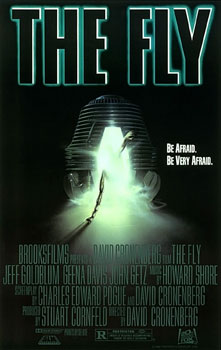
“Be afraid.  Be very afraid.” This quote originates with David Cronenberg’s The Fly.  Of course, after watching the original, how could I not watch its successful remake?  I initially saw this one upon its 1986 release in a Boston theater.  I hadn’t seen it in some 35 years but some of the scenes were as fresh in my memory as if I’d seen it last year.  It’s safe to say that it made an impression on me.  Even usual critics of horror gave the film high marks.  Both it and its predecessor with the same title were quite successful in the financial department and became part of popular culture.  The remake ends without the philosophical statement of Vincent Price in the original, choosing despair instead.  I’ve never seen the sequel.

I picked this up as a used DVD many years ago.  Mainly I wanted to have it on hand in case the mood struck to see it again.  I did recall that, as a Cronenberg film, it was a gross-out of body horror.  So much so that it’s difficult to classify it as science fiction.  It, along with its near contemporary Alien, demonstrated that the fusion of the genres was possible.  Perhaps inevitable.  At the same time, movies, like most other media, have proliferated to the point that such standouts are rare.  Yes, there are still Academy Awards and Golden Globes, but who but a professional can see all the offerings out there?  It feels like we’ve moved beyond the time when a movie could define a generation.  But on a deeper level, that’s why The Fly is about.

We, on the far end from the white male oligarchs, are blending.  We’re no longer simply accepting what we’re told.  We’re becoming more global and more people are starting to break into the power structures.  Even if they sometimes transform if they do.  I saw a recent newspaper article about what to do with your second home, as in decorating it.  Second home?  The majority of us are having trouble up keeping our one home, and that’s if we’re even owners.  Society needs a telepod.  The end results may be messy, for sure, but we need to stop thinking in exclusive terms.  Cronenberg indicated back in the eighties that the movie was about disease and aging and letting those we love go.  That gives the film its poignancy, in a kafkaesque way.  At the same time it may be a teaching tool.  Yes, we can be afraid, very afraid, and still learn.