First, Kings

Recently I sat down to read 1 Kings.  Of course, I used to teach Hebrew Bible so I have more than a passing familiarity with it.  This time, though, I was reading it through the lens of Game of Thrones.  I wonder how much George R. R. Martin drew inspiration from the biblical book.  Indeed, a movie could be made from it—sex, conspiracy, battles, deception, it’s all there.  Perhaps someone should novelize it.  If you read it without knowing that it’s holy writ, you might be surprised to learn that it is.  Of course, having been edited by the Deuteronomists (so it’s supposed), it’s a bit preachy, but the action is pretty much the same.  In fact, Game of Thrones has quite a few biblical tropes in it.  And 1 Kings, if excised from the Bible, with its chapter and verse format, is pretty gripping itself.

Another thing that occurred to me is how little politics has changed over the millennia.  Powerful families want to retain power and privilege.  They aren’t too concerned with religious niceties but they rely on the backing of religious authorities.  (The priesthood and monarchy were always a tag team for keeping power in “the proper place.”)  And a number of the characters are quite colorful, even if you wouldn’t want them in the Oval Office.  Outside that context they can be quite loved, or at least people love to hate them.  Immature boy kings, seductive queens, and armed conflict at the slightest provocation are parts of the story across the ages.  The truth of power in powerful families plays out even in democracies.  Consider father and son presidents from the Adams and Bush families, husband and wife (nearly), in the Clintons, and countless powerful families represented in the senate or in the house.
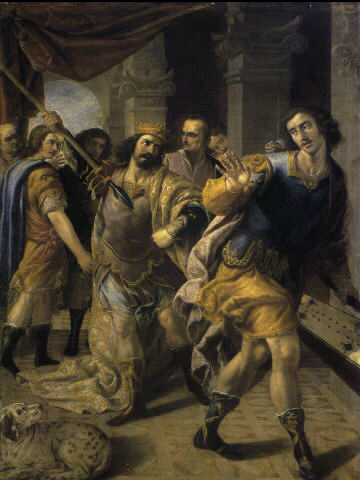
Politics never change. Image: Saul threatening David, by José Leonardo, public domain via Wikimedia Commons

Biblical tales are often more earthy than they might be supposed.  Viewed through the lens of faith, we’re willing to excuse behavior that wasn’t even condoned in that day: David’s adultery, (ahem) or literal political assassination (ahem).  Alas, poor Uriah.  The problem arises when these earthy texts are taken for something magical.  People still believe in magic.  Widely so.  This belief drives much of politics in two related nations far apart but bound together by a book.  Reading 1 Kings is a useful spiritual, and practical exercise.  We can learn much about how people behave.  The Good Book isn’t shy about the motivations either.  Sex, power, and fame drove leaders of antiquity even as they continue to do so today.  The Bible tells me so. 


Kings of Israel

Eating out is something that has become more of a habit than it should. Still, when we get together with friends it’s a cause for celebration, and a restaurant is usually somehow involved. You only live once. Well, maybe. In any case, while waiting for a seat at a new place I happened to glance over at the bar. Two huge bottles of wine stood there. I asked our friends if they knew what they were called. I can’t recall how I’d learned, but the proper name for them is “Jeroboams.” Jeroboam, in case your reading of 1 Kings is somewhat rusty, was the first king of Israel when the “United Monarchy” split into Israel v. Judah after Solomon’s reign. The curiosity of my friends led me to research the subject a bit. What I found was alcohol of biblical proportions.

Another name for the same size bottle as a large Jeroboam is Rehoboam. Rehoboam was Solomon’s son, the king of Judah while Jeroboam took over Israel. Moving up to a 6 litre bottle the name becomes Methuselah. Methuselah, of course, is the Bible’s oldest man. Symbolically, if you do the math, he drowned in the flood. Nine litres will be called a Salmanazar, also known as Shalmaneser, a king of Assyria who attacked Samaria. Twelve litres, and perhaps the namers were getting a bit tipsy here, is either Balthazar or Belshazzar. The former, while not biblical, is the name of one of the three Magi from the visit of the wise men. Belshazzar was, according to Daniel, king of Babylon and is somehow scripturally mixed up with Nebuchadnezzar. Nebuchadnezzar, by the way—famous for his madness in Daniel—denotes 15 litres. An 18 litre bottle, depending on which line you’re following (if you can) is either Melchior—another of the Magi—or Solomon, the father of Rehoboam and one time boss of Jeroboam. The 27 litre bottle is called Goliath, for obvious reasons. And if you’re still standing, the 30 litre bottle may either be Midas or Melchizedek. The latter is the mystical king of Salem, later to be called Jerusalem.

I’m personally no fan of wine, so much of this was news to me. Not all bottle sizes are biblical, but many of them are. Spirits, in all seriousness, were taken to be related to the spirit world in ancient times. And the Bible, a book most familiar to those engaged in the industry of wine, was a natural place to find often ironic names. According to John, Jesus’ first miracle was changing water to wine at the wedding at Cana. Prohibitionists shudder to read that the carpenter from Nazareth changed six jars, each holding between 20 and 30 gallons, into free spirits. Wine bottles, perhaps to society’s benefit, never grow so large. But it’s time to go, our food has arrived.


Is the Truth Under There?

Each semester I introduce my Hebrew Bible students to the dangers of “biblical archaeology.” Not that there is any wrong-headedness in excavating sites of importance to ancient Israel, but I warn them of requiring proof for religious beliefs. Early archaeologists digging in the lands of the Bible were open about their agendas — “proving” the Bible to be “true.” The problem is proof is certain only in mathematics, not in matters of faith. Truth cannot be known, but must be believed. When archaeologists excavate the unknown, they cannot know in advance what they might find.

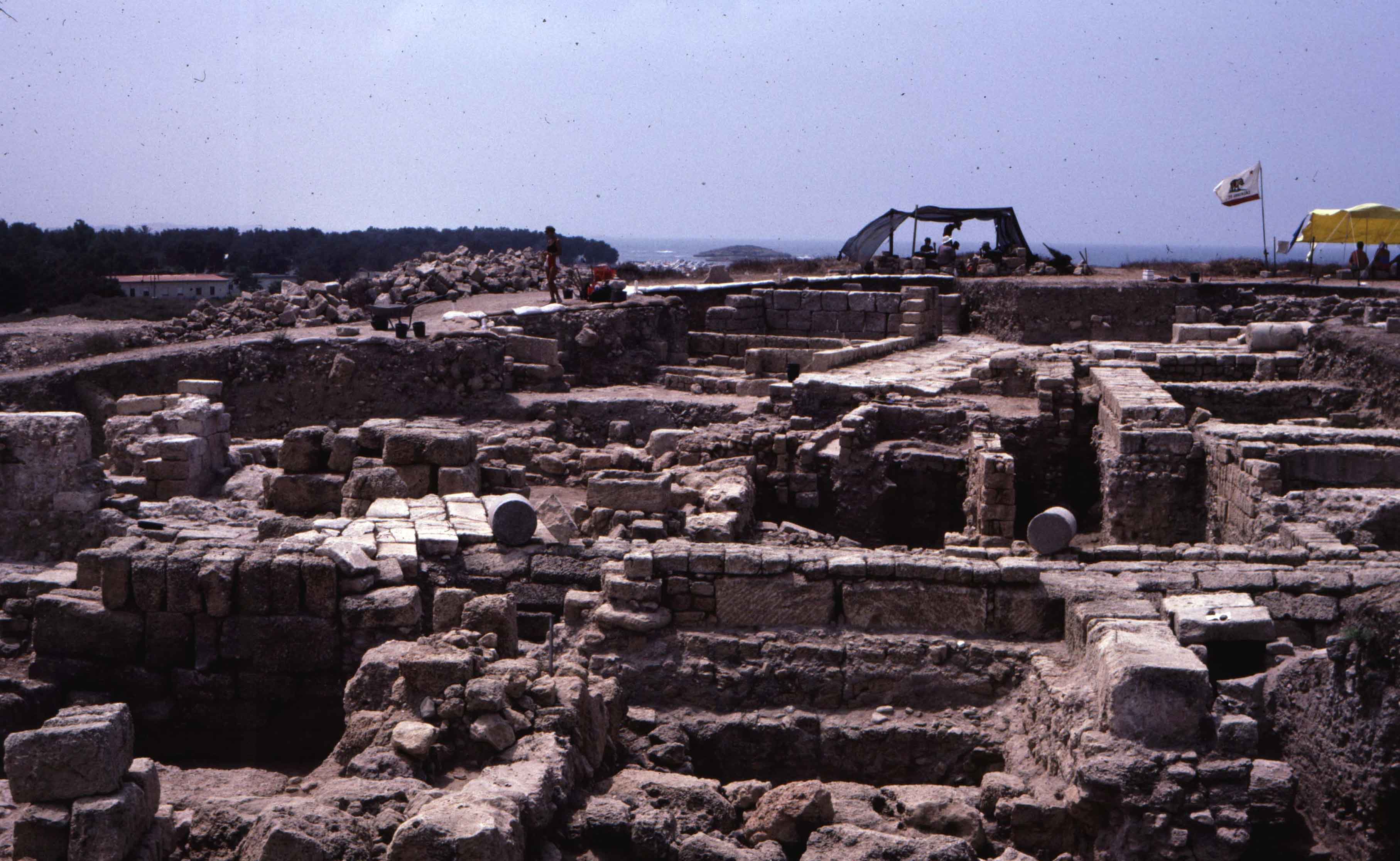
As a young academic wannabe, I volunteered at Tel Dor in the summer of 1987. Before the introductory orientation sessions Dor was only a shadow of a reference to one of King Solomon’s administrative cities mentioned in 1 Kings; I knew nothing of its location or importance. I’d had enough of seminary to be skeptical of many truth claims even then, and the irreverent outlook of many of my fellow diggers underscored the secular nature of the venture. We were digging for the truth, but we might not recognize it when we found it. Apart from the scorpions and tarantulas, we unearthed many mute trinkets from Israelites silenced by time. My square team was assigned to the city gate; we were seeking the coveted fourth chamber to place the city in a Solomonic context.

To the best of my knowledge, our humble efforts did not prove the Bible was true. After manually hauling out tons of dirt, we found what appeared to be a gate chamber and perhaps even a rubbish heap. Of these two features the rubbish heap was the more interesting to me. Here it was that the cast-offs of ancient life had been consigned to oblivion only to be rescued by bewildered strangers far in the future. Truth is often in what we hide. It may not be glamorous or worthy of biblical paeans, but it is that part of our lives that we discard. Finding “Solomon’s” gate proved nothing, but what “his” people threw away contained nuggets of the truth.

Is the Truth Under There? Tel Dor 1987