Thanksgiving Reentry

One of the facets of attending AAR/SBL that I’d forgotten is how international attendees marvel at American Thanksgiving.  While it is far too focused on food for my liking, it is nevertheless an oddity among late capitalism’s sops.  I’m slowly becoming acclimated to the 9-2-5 environment I so desperately wanted to avoid in my career, but I’ve noticed that, at least in my case, the three publishers for which I’ve worked have this in common.  What is “this”?  The only four-day weekend in the entire year is Thanksgiving.  Probably that stems back to the fact that it falls on a Thursday and employers probably don’t want bloated, food-comatose employees trying to keep awake on Friday, and failing.  Perhaps there’s also the kinder motivation in realizing that by this point people have been working hard for many months and the US has comparatively few paid holidays.

I’m thankful for being home after the conference.  My trip to Boston underscored how much of a hermit I’ve become.  Afraid of crowds because of Covid, and not having ready cash as a result of being scammed, staying home has become a comfortable idea.  Being with others, I was glad to find, provided stimulation.  There are colleagues, both in publishing and in academia, that I look forward to seeing.  I’ve been slow to admit, I suppose, that my ouster from the latter is indeed permanent.  It’s wonderful to see friends who remember me when.  Looking back, I was very naive, even as a professor.  And I see many who, pardon my saying so, still are.  Unless you’ve been in the business world where a four-day weekend is a big deal, living in the ivory tower shelters you from much.
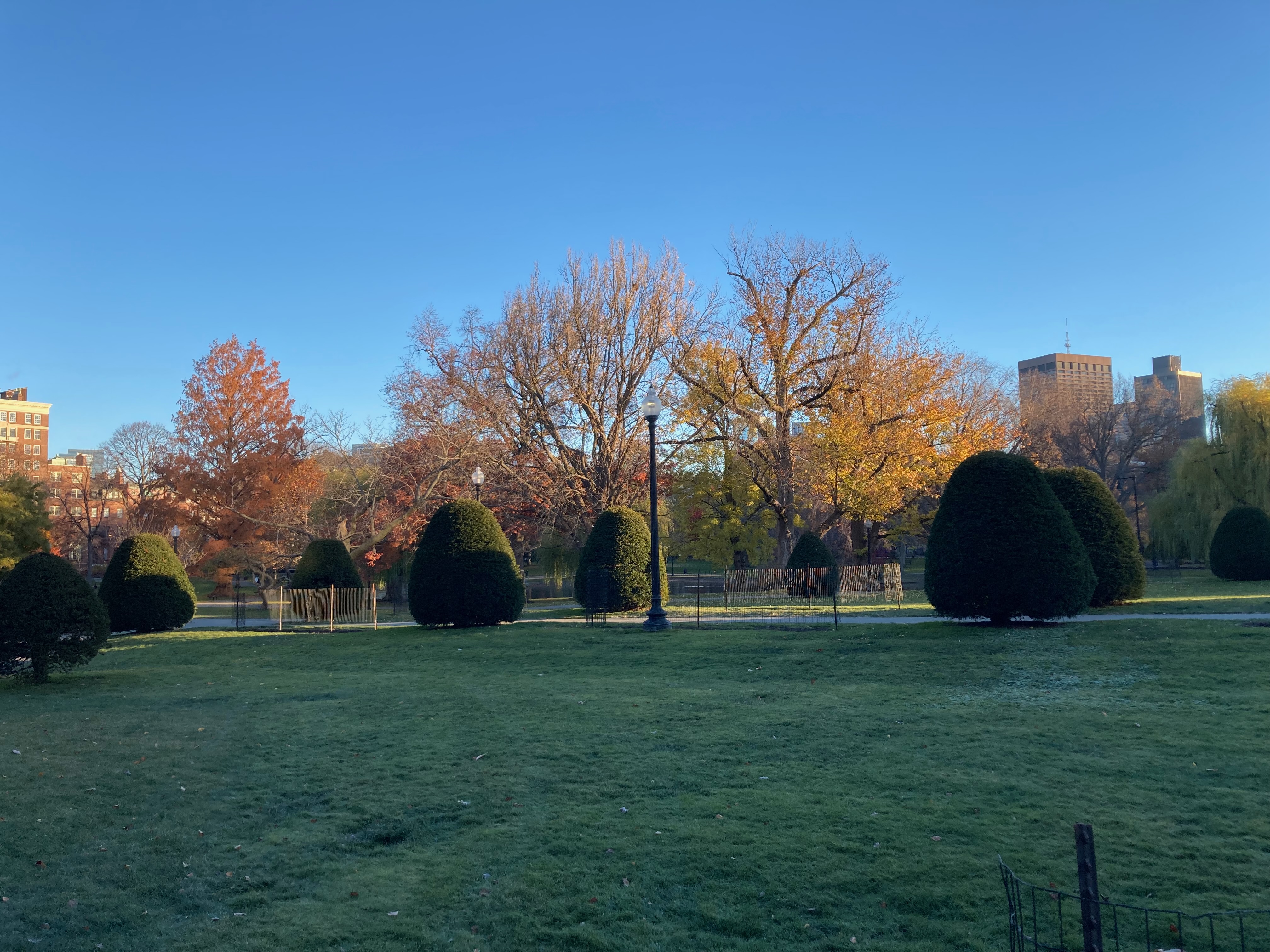
So I’m still in the “reentry phase” of conference recovery.  Although I was thankful to have been able to travel to Boston by train, getting home on a rainy night with heavy New Jersey traffic was a test of endurance.  In my hermit’s life I drink a lot of water and even rehydrating after shorting myself for five days takes an effort.  I’m thankful for the opportunity to have been in New England again.  And for friends on both ends of the trip who appear to welcome me for what I am.  What I’ve become.  Even though sleeping in a luxury hotel where the thermostat isn’t kept quite as chilly as we can afford to keep it at home, I’m thankful to sleep once again in my own bed knowing that there is a wider world out there and I can still function in it.
That Was Quick

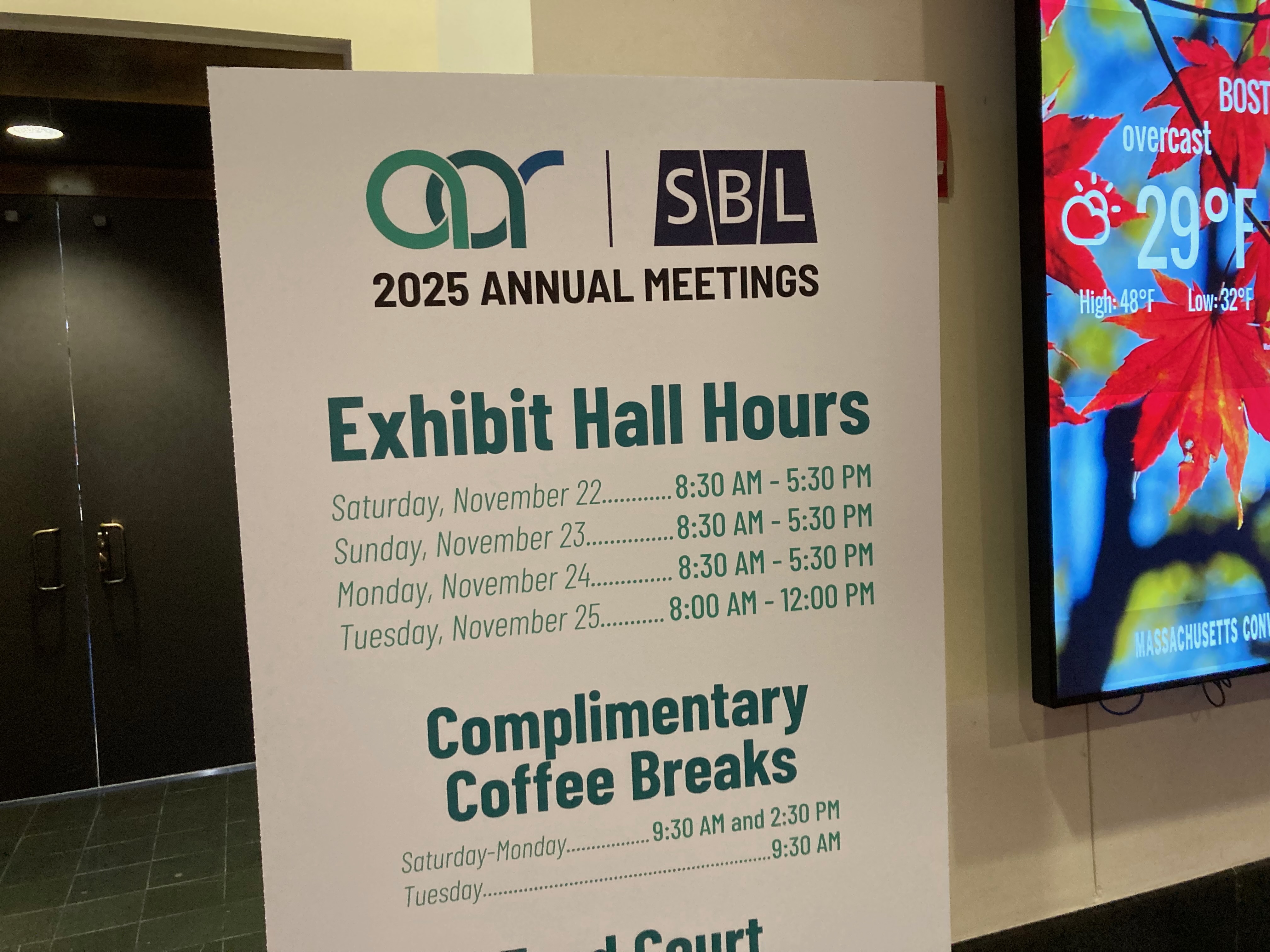
It happened when I wasn’t looking.  If you’re a regular reader you’ll know that I’ve been in Boston since Friday for the AAR/SBL Annual Meeting.  This is a work event for me and I’m pretty much in meetings from 8:30 (or earlier) to 5:30 (or later) each day.  I always come home with “conference voice”—I can barely speak until Thanksgiving.  In any case, while I was distracted in Boston this blog slipped past a milestone.  At some point over the weekend I surpassed a million hits.  Given how rare large numbers are in my life, this is kind of a big deal for me.  I know websites that get attention and critical acclaim hit the million mark within months, or even weeks.  Still, at the ripe old age of sixteen, I’ll take it.  And I’m very grateful to any and all of you who’ve taken a moment to read my musings over the years.

During the conference I was talking to a friend who’s become a celebrity on TikTok.  I also spoke to another friend who’s become a more traditional media darling.  They both outshine me by orders of magnitude.  Attending events like this is always an humbling experience.  I’ve managed to hang around since 1991, with a few gaps, and although it’s always a grind to get ready and get myself out the door, I always walk away amazed at how much so many people have achieved.  Mine is not the only story of a first-generation college student finding a place in the professional world, even if it may not be exactly the place I’d hoped for.  I’m in good company.  I do suspect that most of my readers are not people from this venue.  If I’m wrong, please feel free to comment to let me know.

Mostly since being here I’ve been musing over Edgar Allan Poe and worrying about the traffic I’m sure to encounter once I get off the train and have to drive home during rush hour in New Jersey.  But I’ve also been listening to the stories of friends and colleagues.  They may think they’re pitching me their latest book, but what I’m hearing is their story.  That’s perhaps the most wonderful thing about conferences.  Being distracted enough not to notice when good news creeps upon you.  I know blogs are old fashioned and generally considered outdated.  That describes me as well.  But it warms my heart that so many viewers have stopped by.  My profound thanks to you all!


Boston’s Poe

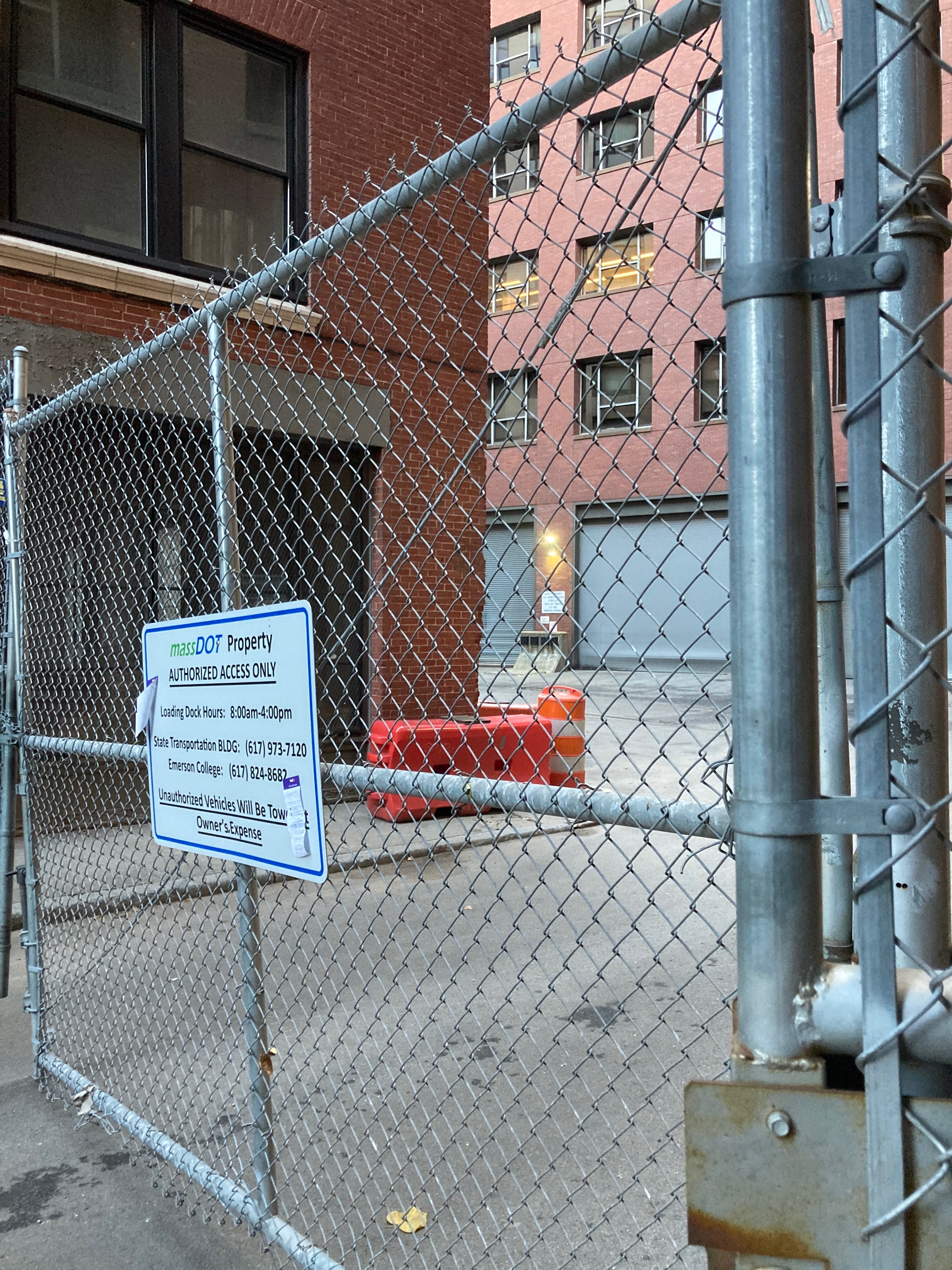
Among my parasocial relationships, the strangest are those with people long dead.  Poe is among them, and, I suspect, this is probably a common thing.  As I age and find it difficult to muster the energy to attend large meetings with lots of people, the one factor that excited me about this year’s AAR/SBL, apart from being in New England again, was meeting Poe.  Now, I know that “Poe Returning to Boston” isn’t actually Poe himself.  But I do believe that places retain something of the essence of what happens in them.  Poe was born in Boston, on Carver Street.  The building itself was demolished some time ago.  I set out to see the site yesterday morning before the conference began, only to find that it is now fenced off, having been acquired by MassDOT.  As I stood there, wondering, fearing, it occurred to me just how much of a role pilgrimages play in our lives.

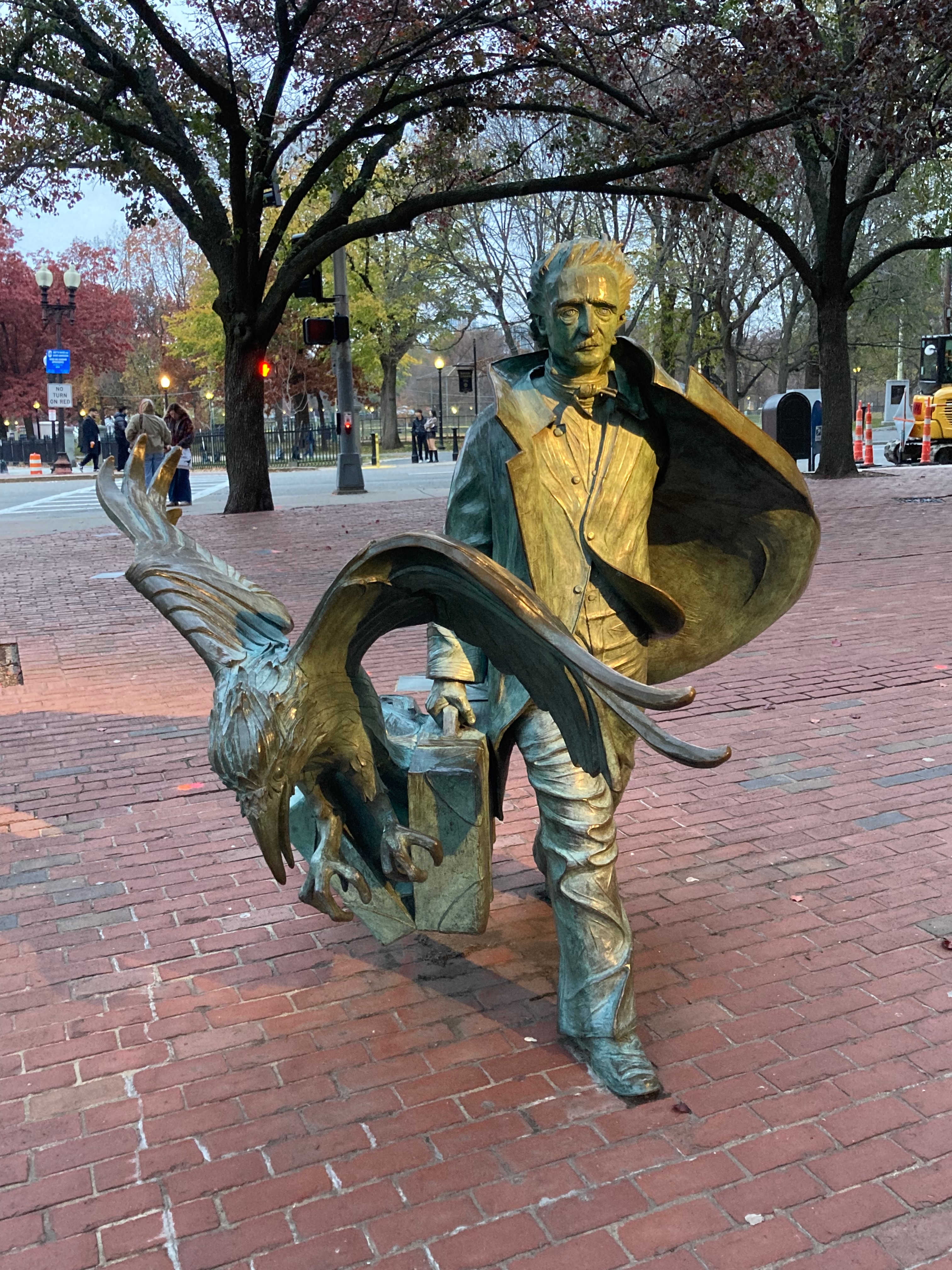
I’ve written about my SBL experiences before on this blog—look at my November posts for many of the years I’ve been doing this—but Boston is by far the most personal.  Part of it is certainly the fact that I lived here for about three years, but Poe is definitely part of it too.  As I went to do an uncrowded photo essay of Stefanie Rocknak’s statue, although it was quite early on a Sunday morning, and also quite chilly, I wasn’t the only one there.  A couple came along to pose with Poe.  When I took my initial photo (on my Saturday morning post) I had to await a different couple consorting with Poe.  I know this isn’t Poe, but it has come to represent his presence is my favorite city.  The mingling of emotions was strong.  

The sign designating this as Edgar Allan Poe Square is faded and weather-beaten.  I can imagine that local politicians have headier issues with which to wrestle, beyond replacing an aging sign for aging tourists.  And having read J. W. Ocker’s Poe-Land, I know there’s a bust of Poe in the Public Library now.  I walk by it each morning and evening, but the conference schedule keeps me out.  Poe himself was no great fan of Boston but this is where the world first met him.  I know that I should get my head in the game of academic conferencing, but I’m a little distracted by the presence of a friend I never met.  And breathing the rarified air of New England.


Old School

How often do hotels refurbish or do they all look the same?  I met someone in the lobby of a hotel in which I had stayed, okay, 26 years ago.  Nothing about it looked the slightest bit familiar .  Look, I grew up poor and only remember one hotel from before college (we never stayed in them)—the one I remember was a place we stayed on a family trip to Washington DC.  Ironically, I had a stuffed elephant toy with me on that trip.  With the career upgrade to professional and conference attendance, stays at hotels became more common, although they’re still somewhat infrequent.  Conference organizers entice with luxury hotels in major cities.  Some remain in memory.  Most don’t.

I know hotels pay a lot to decorate and brand, yet the places of the monied seem anodyne.  This hotel could be just about anywhere and will eventually blend into that haze of places somehow very alike that cost many hundreds of dollars to stay.  I might’ve stayed here before.  Maybe not.  This lobby doesn’t look familiar but the street outside does.  When I stayed here in 1999 [check] my wife and daughter were able to come.  Not being an editor, we’d been to the New England Aquarium that day and my daughter wanted a seahorse rubber ball as a souvenir.  On the way to this hotel she dropped it and it bounced into Tremont Street.  In a poor object lesson, I ran after it.  I wasn’t hit by a car, but my doing so traumatized my daughter enough that she still won’t talk about it as an adult.  That’s how I know we stayed here before.

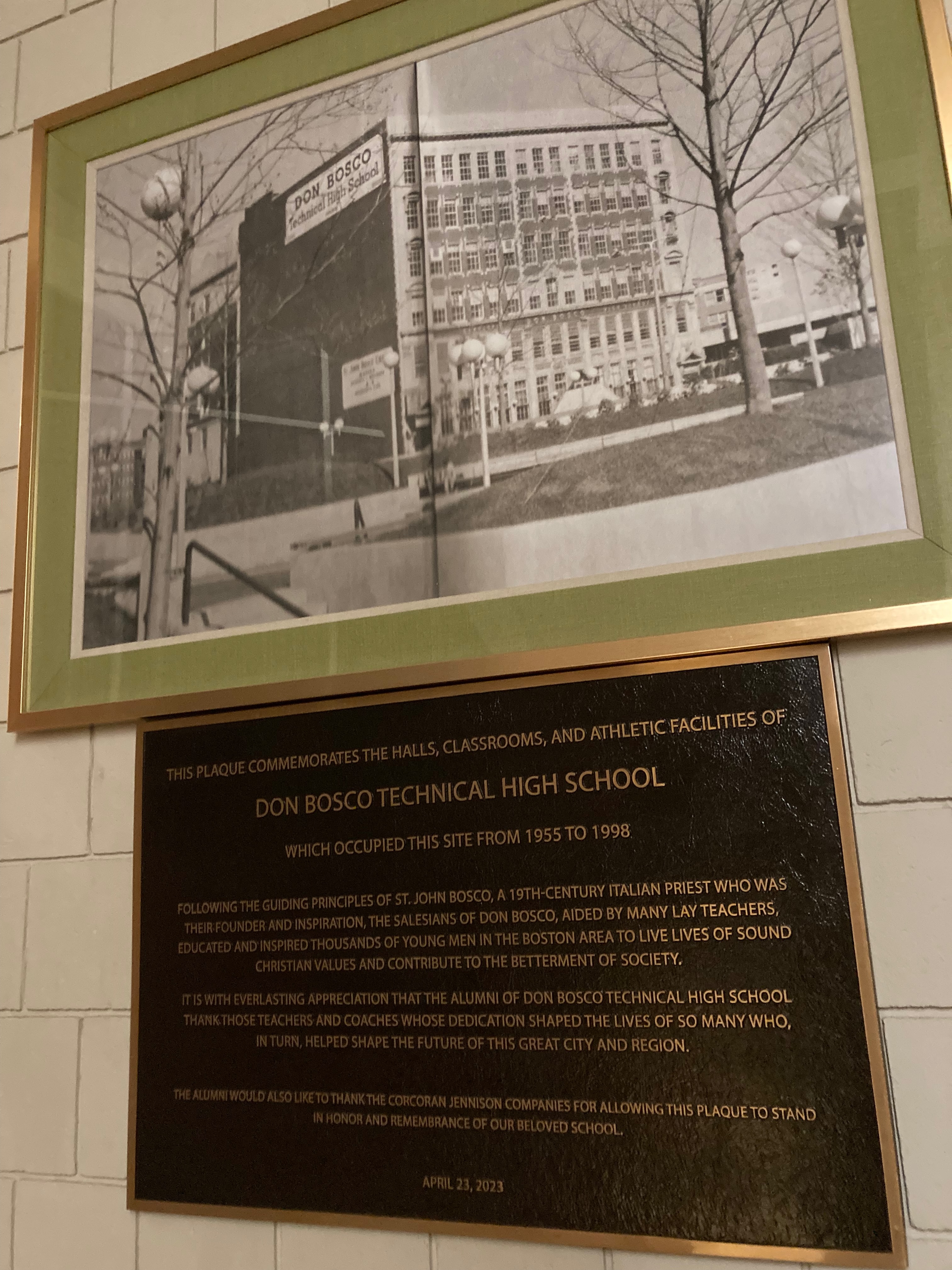
When I visited Boston for work I 2012, I stayed in a hotel I remember but whose name I do not.  It’s never been a conference hotel or I’d choose it.  It was a bit run down, but it had character.  I don’t even know if it’s still there.  Cities change.  Some parts of Boston are unrecognizable since I lived here.  Even the hotel in which I’m staying (which is nice enough, except for the loud music that suddenly starts at 2 a.m.) used to be a school.  I suppose that’s appropriate for a hotel used as an educational conference venue.  Generations of young people were once educated where I’m trying to sleep as the room shakes with someone else’s rock beat.  I may remember this hotel as a place where sleep fled, or I may find it fading into that space where all conference hotels merge even as a poignant thought arises that nothing ever remains the same.


Revisiting

It’s funny returning to a city you once felt you knew well.  Cities are constantly evolving creatures and even though I got around Boston as a student and then as an employee of Ritz Camera, there were places I simply never found.  There was no internet in those days so we relied a lot on word of mouth.  If others weren’t talking about it, I’d never hear.  I first realized Boston had a Chinatown when attending my first AAR/SBL here.  That was in the day when you had to mail or fax hotel registrations in, if I recall, and I do remember staying up to midnight to try to get first choice after that.  Ironically, this year I again ended up in that neighborhood, south of the modestly-sized Chinatown.  I really didn’t mind, though, since the hotel isn’t too far from Edgar Allan Poe.

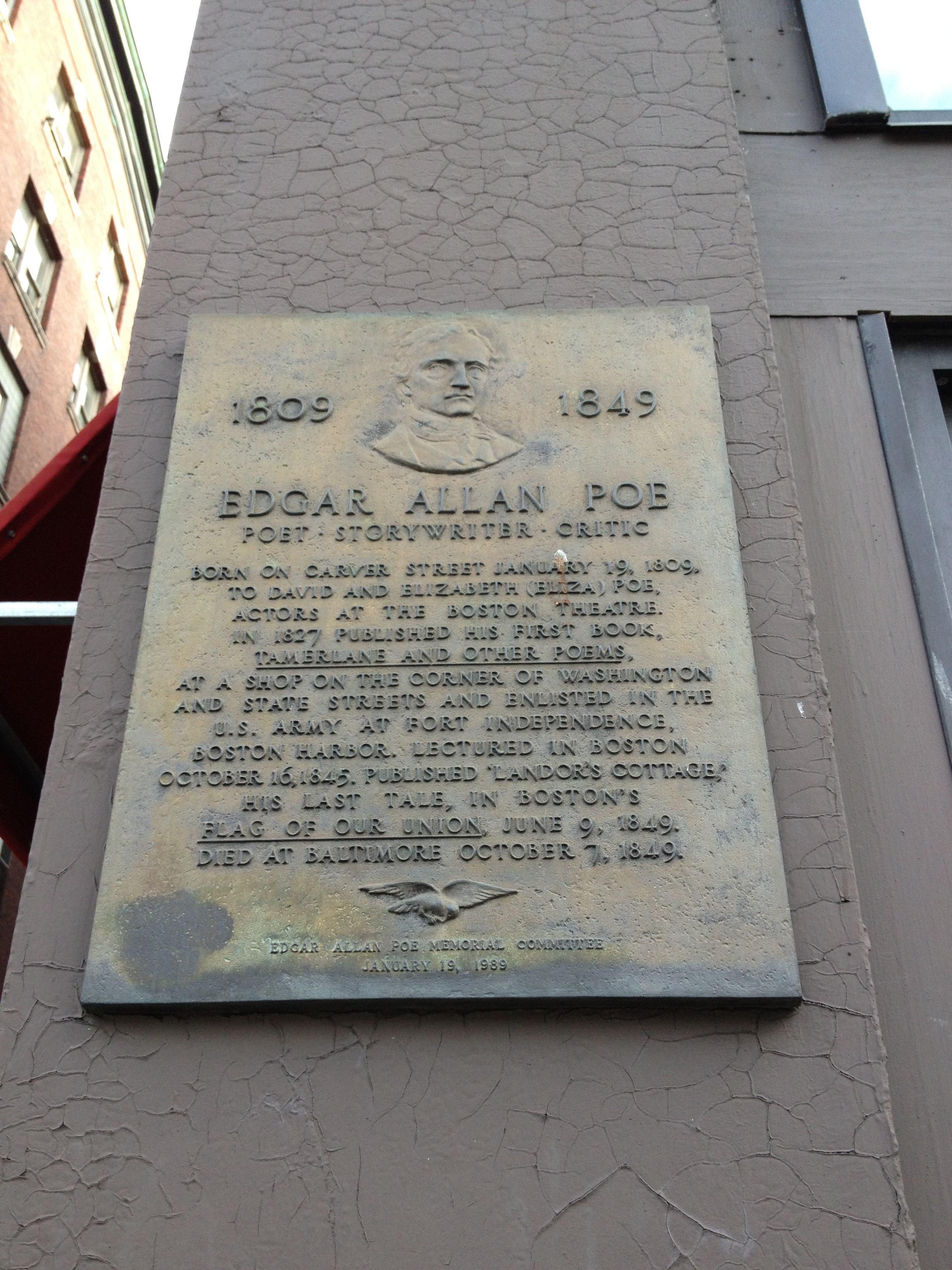
I first learned about “Poe Returning to Boston” from my daughter.  She saw it while visiting Boston with a friend.  I learned more about it by reading J. W. Ocker’s Poe-Land.  When I lived here, from 1985 through 1988, I knew of no public markers of Poe’s presence.  None of the more prominent ones were here then.  On a trip to Boston for Routledge I sought out the Poe birthplace plaque—the actual house had been torn down—and found it.  It’s still here as I saw last night.  But the place that was formerly marked only by a painted electrical box now has a statue.  Poe, preceded by his raven, walks across the area named for him with a suitcase in hand.  Behind him, pages from his manuscripts lie on the ground.

It’s long been known that Boston and Poe had an ambivalent relationship.  Poe was born here and lived here for a time, but never felt that the city accepted him.  He lived in New York City, Philadelphia, and Baltimore for some time, but mostly considered Richmond, Virginia home.  That’s where the Allans lived and where his mother is buried.  Poe himself famously and mysteriously died in Baltimore.  He had some measure of fame at the time but still lived in poverty.  The feeling seems to be that Poe would’ve liked to have liked Boston—it has been my favorite major US city ever since I first moved here four decades ago.  Now, of course, I only get back on occasion, mostly when AAR/SBL comes to town.  Although Poe wasn’t here the last time I was, I always find something new when I return.


Boston Bound

Honestly, I’ve reached a stage where travel seems quite a burden.  I’m a creature of habit and I haven’t had to interrupt that habit for three years now.  I missed the last two years of the AAR/SBL conference due to a variety of issues.  I’m pleased that this meeting is in Boston, a city of which I have fond memories.  Still, getting there from here isn’t as easy as you might think.  It’s simple enough to catch a direct train from New York or Philadelphia, but I don’t live in either.  To be there in time for my meetings later today I have to catch a fairly early train.  That’s not a problem; I’m an early riser.  To get to a station where a car might safely be left for four nights is a bit more difficult.  It involves an hour’s drive no matter where you end up going.  I’ve driven in Philly enough to know that I don’t like driving in Philly.

Although Allentown is the third largest city in the state, there is no train service from it to the Amtrak lines that lead up and down the coast.  So I’ll be driving a while.  Once on the train at least I won’t have to worry about traffic.  At least for a few days.  In Boston I wasn’t able to get into one of the close hotels.  In warmer months that wouldn’t be much of an issue, but November in Massachusetts can be chilly.  I remember that from living there.  There are shuttles from my hotel to the conference center, but I like walking Boston.  It brings back memories.  Beantown is one of those places that many people fall in love with and want to stay after they get there.  Although I lingered three years that didn’t seem enough.

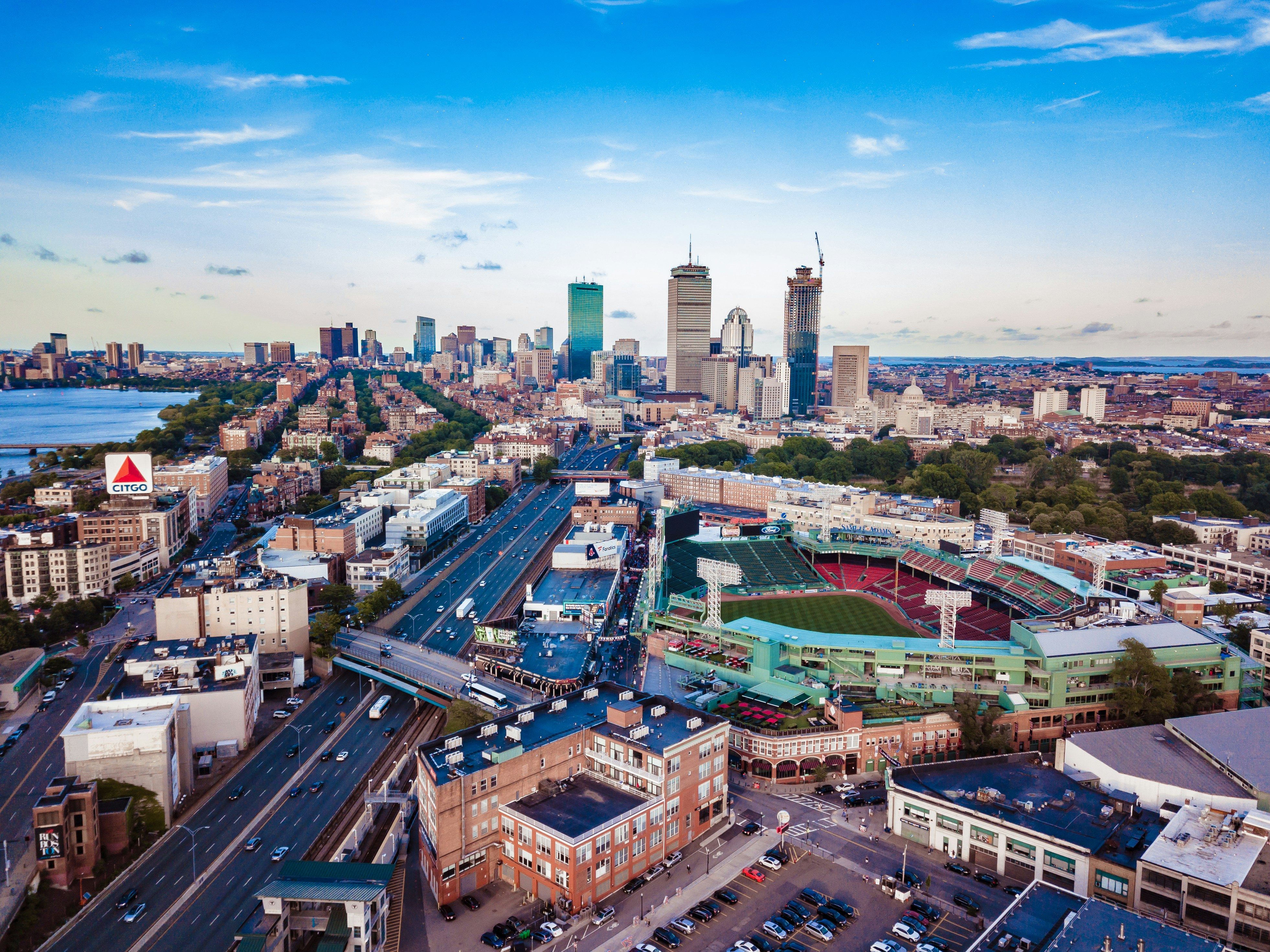
Photo by todd kent on Unsplash

I was a young man when I moved to Boston.  Looking back, I knew so very little.  Almost as little as I know now.  For this conference, I’ve stayed in this same distant hotel in the past.  It’s in a part of town I’d never explored as a student.  It isn’t far, however, from Edgar Allan Poe Square.  I’m hoping the weather allows for some photographic opportunities around there.  The conference itself, in my more familiar Back Bay, is work.  Not much time to relax and see the sights.  Still, I know that once I get there I’ll again feel the old attraction.  It happens every time I go.  Even it means a drive and a train ride into late November.


Migration

Since the American Academy of Religion and Society of Biblical Literature annual meeting (AAR/SBL) is coming up soon, I got to thinking about my experience of the event.  I went to some memorable meetings and missed a few for various reasons.  I’m at the point where I don’t really crave attending anymore, but when I should go, I do.  My first experience was in 1991, in Kansas City.  I flew back from Edinburgh for that one.  It was the last time it met in Kansas City.  It was obvious, however, that this would become an annual pilgrimage for me if I ever landed in academia.  My first couple of years teaching were part-time with a full-time load of courses but Nashotah House had some faculty development funds to help pay my way.  My wife would go and we’d stay with friends whenever possible.  It became an academic addiction.

I skipped the year my daughter was born, but when AAR/SBL met in New Orleans we drove down from Wisconsin.  In 1998 I attended the infamous meeting at Disney in Orlando.  Then in 2000 we met in Opryland in Nashville.  This was an experimental phase, I’m guessing, but themed locations weren’t popular with serious scholars and soon we were back to major cities without theme-park vibes.  Having lost my toehold in academia, I missed the 2005 meeting in Philadelphia, but was back for the Washington meeting, representing Gorgias Press.  The three-year separation that started in 2008 I missed, except for the first lonely year in Boston.  I was back for San Francisco in 2011, working for Routledge.  Two years later I was in Baltimore, staying off site, with my current employer. I drove down for that one.

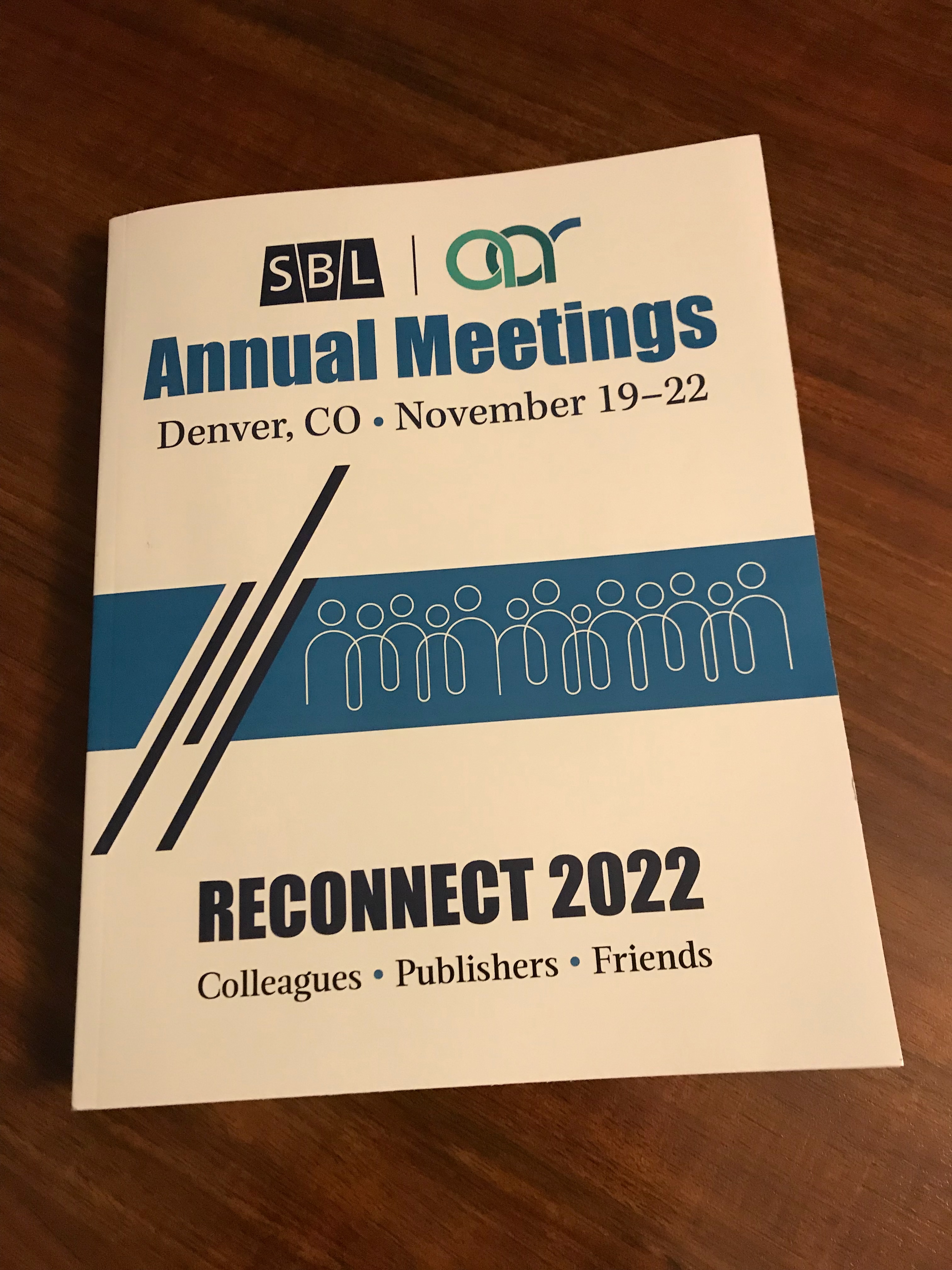
In 2018 I missed the Denver meeting because of a snowstorm panic in Newark, after sleeping the night on the airport floor.  Then the pandemic kept me away for a couple of years, but one of those was virtual anyway.  The last one I attended was 2022 in Denver.  This year I’m scheduled to be in Boston.  Even when my career has slipped off the academic rails, this meeting has been a rather constant touch-stone for November.  Now that I no longer give papers—the last one was on Sleepy Hollow in Atlanta, I believe, ten years ago—the spark has gone out of it for me.  I am glad to be heading back to Boston, however, on somebody else’s dime.  I’ve got some Poe sights to see in my off hours there.  And some 33 years of history to recollect.


Academic Politics

Being the curious sort, I followed up on the post I dropped the day before Valentines.  I had written about Scholars Press and how details were hard to find.  I kept digging after that post.  I learned some things.  The Society of Biblical Literature (SBL) used to meet regularly with the American Schools of Oriental Research (ASOR).  ASOR was all about archaeology.  Then, in the year 1969 SBL and the American Academy of Religion (AAR), formed the Council for the Study of Religion.  The next year they began holding their conferences together.  ASOR was still part of it.  In fact, the three societies, along with Brown University, formed Scholars Press.  (For those in the know, this is why SBL now publishes Brown Judaic Studies.)  Scholars Press churned along, but ASOR was increasingly being shunted aside.  The conference started being called AAR/SBL, with no ASOR.  In 1997 (I remember this personally) ASOR started holding separate conferences.

Two years later, in 1999, Scholars Press dissolved.  SBL, the oldest of the societies, began publishing as Society of Biblical Literature.  AAR partnered with Oxford University Press to do their publishing.  (By the by, AAR started out as Association of Biblical Instructors in American Colleges and Secondary Schools).  ASOR went its own way, and Brown settled on SBL to continue its religious studies publishing.  As a young scholar, I was a member of all three societies.  (I didn’t attend Brown, though.  But I did go to a graduation there once, if that counts.)  I wondered why they couldn’t get along.  In a word, it was because of politics.

Those who know me personally likely know that I have tried to pursue the ordination track in three different denominations.  What they may not know is that the reason I never got through the process was, you guessed it, politics.  I started to learn, when in college, just how many power plays were involved in covens of ministers.  When dealing with the ultimate power, I guess, everyone wants to get the upper hand.  That bothered me as a seminarian.  The second and third denominations both showed their politics up front, and those sharp, flashing teeth made me realize that I’d never be free of politicking had I moved ahead.  I suppose I could go be a hermit and live in the desert—I might escape it that way, but whenever two or three are gathered, the politics start to show.  ASOR, SBL, and AAR have quite a lot in common.  All are under threat as part of the dreaded “humanities” category, and yet that’s not enough to make them want to pull together.  Politics just go that way.


Conference Voice

“Conference voice” is a phenomenon that began with my career malfunction.  While teaching I attended the AAR/SBL annual meeting every year but one.  Even the year that Nashotah House fired me I attended, through the generosity of a seminary colleague who’d left for a parish and who used discretionary funds to help me afford it.  (Churches can actually help people from time to time.)  In any case,  I always met many colleagues at the meeting itself, and had many conversations.  Besides, I taught a full docket of courses every year.  Then the malfunction.  I was eventually hired by Gorgias Press but I had to do adjunct teaching to make ends meet.  I taught up to about ten courses per year at Rutgers, all in the evening.  Then I was hired by Routledge.  The commute to NYC precluded any adjunct work, so I settled into the quiet world of editing.

I also began attending AAR/SBL again.  I came home with “conference voice.”  After going for days, or even weeks, with no substantial conversation, I’d lost my lecturing vocal stamina.  At the conference I had five days of back-to-back meetings, often in a crowded and noisy exhibit hall.  I’m a soft-spoken individual (I can project when teaching) and my larynx was stressed by the concentrated five days of constant conversation.  My voice had dropped in pitch by the time I got home and it took a few days to get better.  I would lapse into cenobic silence for another year.  After the conference I’d return every year with aching vocal cords.  My family sympathized, but I really just don’t talk that much.  Especially at work.

Recently I met a friend for lunch.  I hadn’t seen him to chat for a few years so we spent over two-and-a-half hours talking.  Part of it in a restaurant where I needed to raise my voice.   I awoke the next morning with conference voice.  This bothered me because I’d been invited to do a podcast episode about a horror movie and I faced an existential crisis: what does my real voice sound like?  In my mind, my profession is teaching.  The voice I had at Nashotah House, University of Wisconsin Oshkosh, Rutgers University and Montclair State, was my real sound, such as it was.  Life has landed me in a situation where I seldom speak, and almost never to groups where I need to project.  Conference voice is a reminder of what I was meant to do and what I, of necessity, must do.


Denver Memories

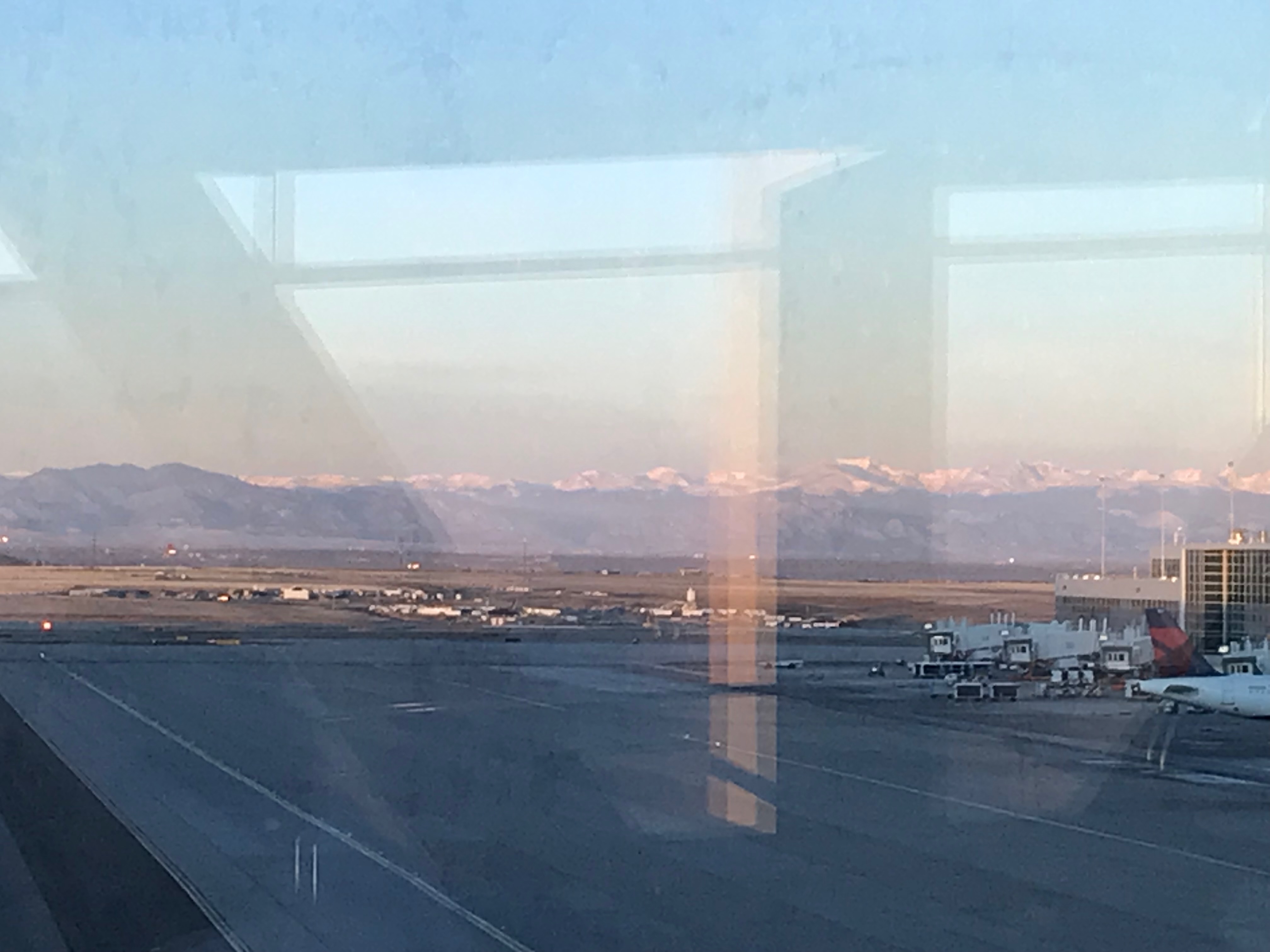
It may be a strange thing to say (or write, as the case may be) but I was kind of hoping to spend some extra time at the Denver Airport.  When I traveled to Denver for a conference last year, I arrived to a workload (attending AAR/SBL as an editor is all work, not play).  I had no time to hang around the airport.  I knew, however, as a recent New York Times piece states, that the airport has a reputation for the paranormal.  While the Times article focuses on Luis Jimenez’s sculpture “Mustang” to start, it quickly moves on to “conspiracy theories.”  And the parts of the airport passengers never see.  The place has a reputation for being weird.  During construction in recent years, the usually anodyne partitions that block construction from the view of passengers, housed images of aliens, bolstering rumors that Denver, and its airport, have some connection with our extraterrestrial neighbors.

The Times story points out alien graffiti in parts of the Denver Airport where travelers can’t go.  And it also points out that although the fiery red eyes of “Mustang” are to represent Jimenez’s father’s start in the neon business, they give the giant horse a demonic aspect.  The artist died working on the sculpture.  A piece fell during construction, severing an artery.  But the conspiracy theories began earlier.  The southwest has a reputation of being the home of the shapeshifting reptilians that have made it onto mainstream television.  Is it any wonder that Trump stands a possibility of getting the nomination while yet more crimes are actively stacked on his record?

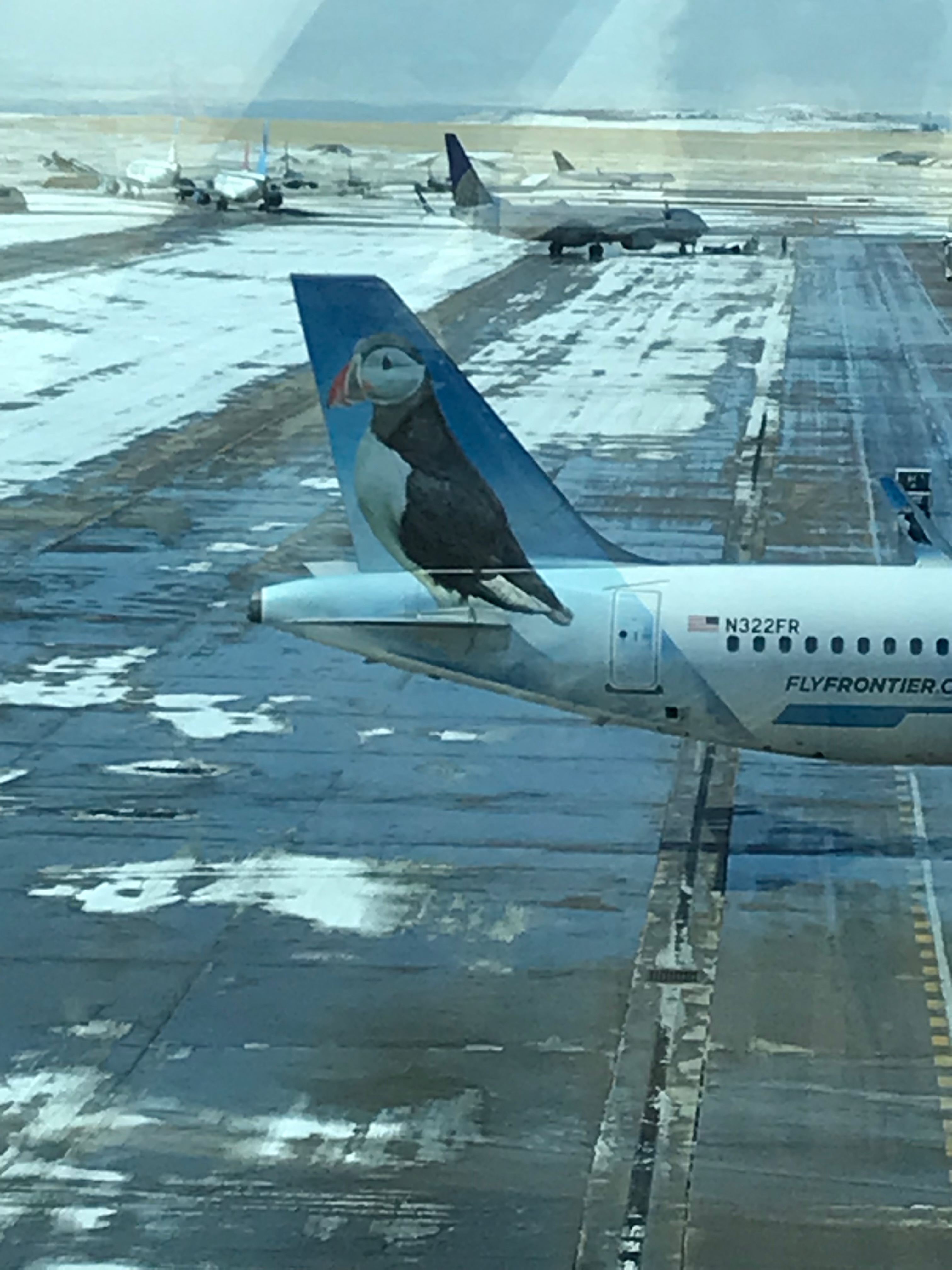
Of course, I was in Denver to work.  I claimed my bag and got a taxi on a snowy southwestern morning.  While there I worked, of course.  It was cold, in any case, back in November, so getting out to see the sights didn’t particularly appeal, especially since it was getting dark by the time the book stalls were closing and I was there alone.  I always want to be on time, and since I’m an early riser, and since Thanksgiving was just a couple days away, I went to the airport three hours before my flight home.  I was thinking I might have some time to do a bit of X-Filing while waiting.  Alas, it was not to be.  The helpful flight attendant put me on an earlier flight and I ended up with a three-hour layover in Chicago.  But I also knew that several “mothman” sightings had taken place at O’Hare over the preceding months.  When you’re a traveler, however, they keep you away from the interesting parts of the airport.


Holding Still

For some people today is the start of the “holiday season.”  Thanksgiving begins what often becomes a rush up until Christmas.  Moods tend to be more festive, if not carefree.  As for me, I always save up vacation days so that I can make my own mini “semester break” late in December.  From the onset of the holiday season I can see far enough to be able to make it through the rest of the year.  For me the season seems to begin at Halloween.  It’s not a federal holiday and I don’t know anyone who gets Halloween off of work, but I take holidays seriously, and Halloween, Thanksgiving, and Christmas are all anticipated days.  And in the spirit of the day, I’m thinking of the many things for which I’m thankful.

Family, friends, and health go without saying.  I really don’t need a holiday to remind me to be grateful for these things.  This year I’m thankful to have made it back from Denver unscathed.  Since it was over twelve hours of travel (less than three of those hours spent in flight) to get home, it was a long, weary, mask-wearing day of travel.  Denver Airport is nearly an hour from downtown.  The American Airlines agent was able to get me an earlier flight to Chicago.  My reading was disrupted by sleepiness and the fact that the woman next to me was watching Jordan Peele’s Nope on her laptop.  I’ve been meaning to watch it again, so I hope I wasn’t obvious when I didn’t strictly observe the custody of my eyes.  The most grueling part, however, was the four-hour layover in Chicago’s O’Hare.  

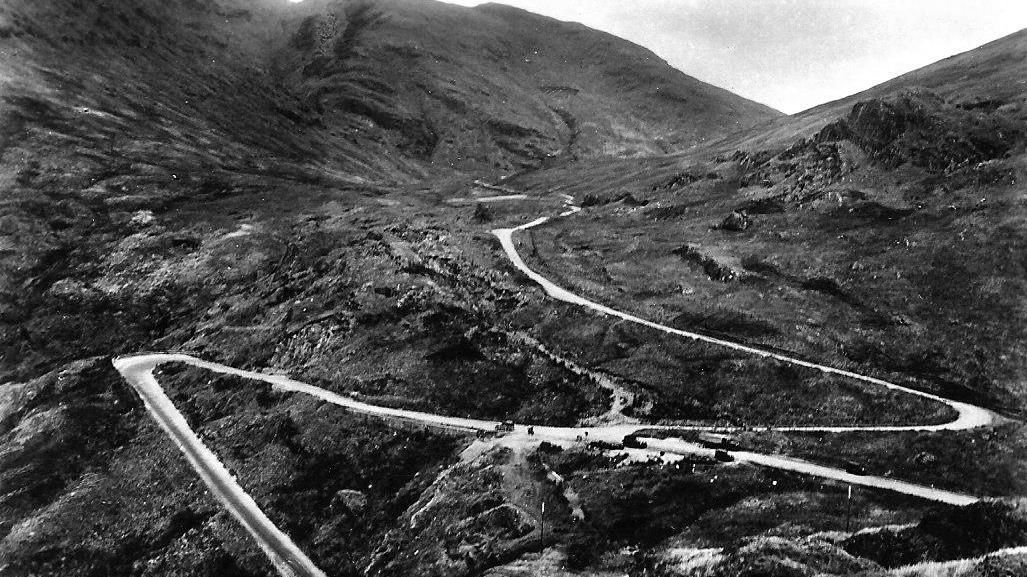
No matter what the owners do, there’s a limit to how comfortable airport waiting can be.  You have to keep a constant eye on your bags.  Very, very few people are wearing masks.  And two days before Thanksgiving is a busy travel day with people trying to avoid the busiest travel day of the year (yesterday).  I’m thankful to have gotten home and not to have been too much the worse for the wear.  And I’m thankful to spend a day not having to wear a mask.  It’s funny how having to wear one for five straight days all day long can become a point of dread.  I like being able to take a drink of water without having to pull down a mask.  Returning to life as usual will take some adjustment—it always does.  So much travel after spending years not doing it is a bit of a shock to the system.  I’m reminded of one of the most colourful place names we encountered in the highlands of Scotland, and it is my theme this Thanksgiving: Rest and Be Thankful.

Rest and Be Thankful, unknown photographer

Religion in the Air

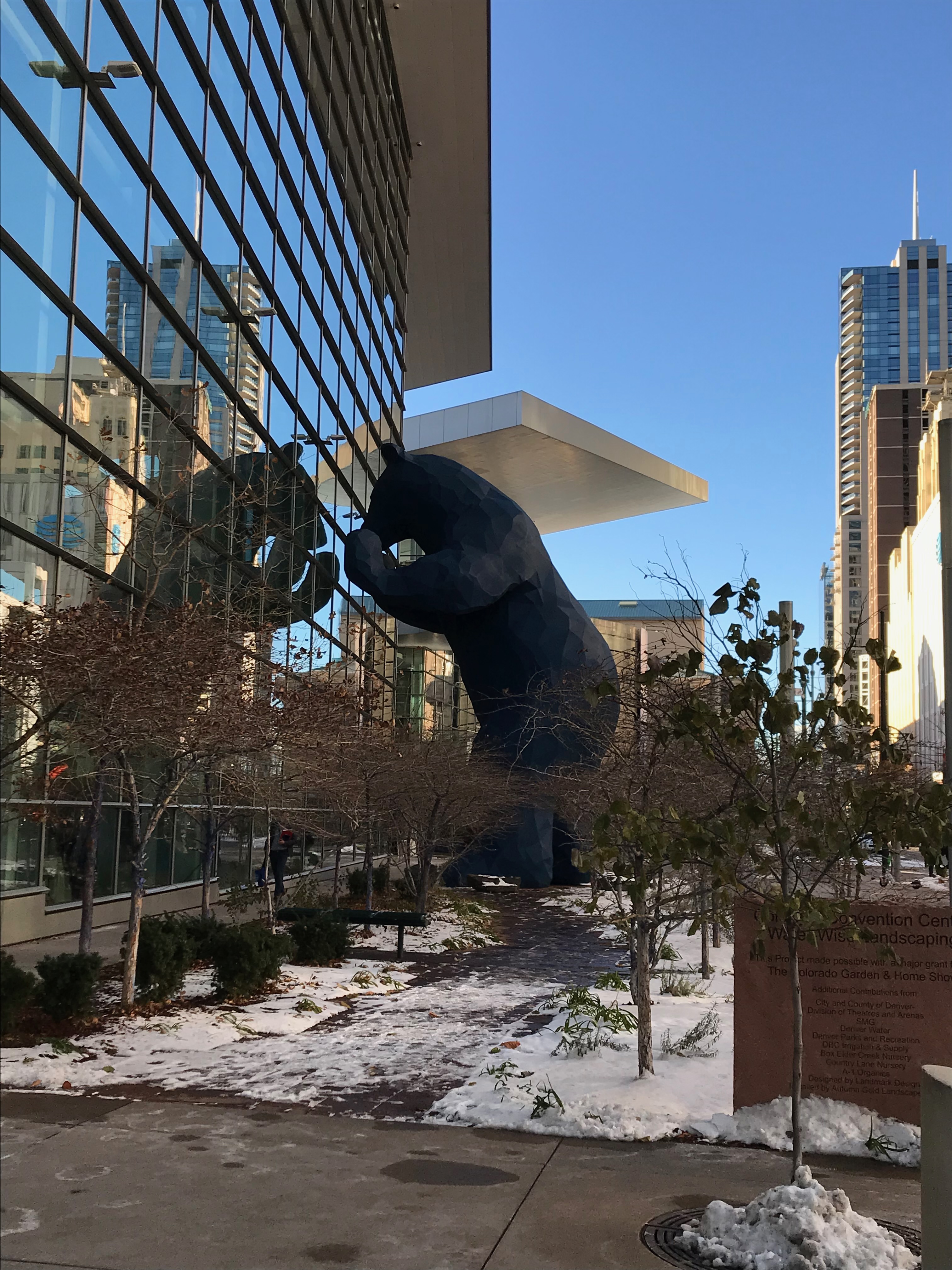
There’s a physicality to it.  Being in Denver, I mean.  My hotel was a mere four blocks from the convention center and the short walk inevitably found me huffing and puffing.  My first night there it had me wondering if something was wrong—should I call a doctor?  I jog on a regular basis and try to stay healthy and so I’m not used to being winded by an inconsequential walk.  My second scheduled meeting saw me with a seasoned scholar.  He pointed out as we slowly made our way to the seating area that the altitude was probably to blame.  The mile-high city does lack the oxygen more abundant down where we lowlanders dwell.  I often wonder if my first trip here was beset by altitude sickness.  I met a colleague at the conference, on his first trip here, who had the same non-Covid symptoms I had all those years ago.

We’re used to our own air.  The familiar atmosphere we breathe each day.  Taken out of that context we’re not exactly fish out of water, but we’re not exactly not either.  The combination of back-to-back meetings, the effort it takes to walk around city center, and the constant chill in the air during my time there dissuaded me from exploring.  Or even finding places to eat.  I started to worry that they’d recognize me at the Chipotle where I ordered carryout the first three nights in the city.  I know there must be other places to get some good, vegan options, but it was always dark by the time I was done with work and I was still waking up on Eastern Time.  On the positive side, I didn’t get sick this time.  And I would really like to explore the place further.

Many years ago, on a family driving trip from Wisconsin to Idaho, we drove through Colorado on the way home.  High above Denver, in the Rockies—driving through Rocky Mountain National Park—I told my wife I felt strangely elated.  “It’s like a religious experience,” I said.  Perhaps it was the physicality of that altitude, mountains spread out before us, that led to that brief moment of rapture.  It’s so closely related to that acrophobia that whispers the warning not to fall off the edge of this globe when you’re so high in the air.  Even now as I’m heading home from Denver when I’ll be even higher in the sky for a few hours, I reflect on what it means to be a physical being enveloped by the air.  And I’ll appreciate with wonder the planet of mountains, endless plains, and eroding hills on which I live, and I’ll be thankful for every breath.


Kids’ Stuff?

Do you want to be popular with the kids this Christmas?  Do you want to hear the squeals of pure delight that every mom, dad, aunt, or uncle wants when that special present is unwrapped?  Might I suggest a book of theology?  Yes, one of the publishers here at AAR/SBL has a table of Theology for Kids.  Staring at that sign during the long hours on the conference floor, my mind kept wandering back to Richard Dawkins’ comparison of teaching children religion to child abuse.  Indeed, my wife had sent me an article in Rolling Stone a few weeks back that declared an Evangelical childhood was a, to put it politely, a total mind-fornication.  It is something from which those of us raised religious spend all our lives recovering.  Some never escape, while others try to make sense of the world without it.

Publishers of religious bodies make up a substantial part of those present at the annual meeting.  The ones with the biggest, flashiest displays are often buoyed up by evangelical dollars.  Teaching kids to think this way is a core part of keeping the meme alive and those of us who dared question it with our God-given brains are the modern heretics and heathens.  Some years here, various publishers are piously closed on Sunday morning (this is only a three-and-a-half day conference) with signs telling the rest of us that they’re observing the Lord’s day.  America is a strange mix of evangelical and secular, the kind of place where you can purchase theology for kids.  I know I grew up with such things, even though we really couldn’t afford the other children’s classics that I only learned about from having a child of my own.

The canon is important to this self image.  For me, I’ve come to expand mine a bit over the years.  That expanded canon includes unconventional sources of spiritual inspiration, or so my conversations with others leads me to believe.  Theology can, and often does, lead to death sentences for adults.  And sadly, occasionally for children.  It’s difficult to blame adults for trying to ensure their children’s eternal salvation, especially when religion is so terribly difficult to escape even as an adult.  I suppose that’s why I still advocate for learning about religion although it has damaged me personally as well as determined what would pass for my career.  So I stand here awaiting my next appointment and find myself again taken into my past which was full of theology for children.


Reflections of a Hermit

Although I acknowledge that Covid has made even more a hermit of me—I won’t deny it—and I often complain when I have to travel for work, I generally end up glad that I have.  (As long as I avoid Covid.)  Being at the AAR/SBL annual meeting is like being in a living library.  You meet and talk with so many smart, smart people and their ideas and yours begin to blend in an amazing kind of way.  I suspect that it shows that my books have been written by a guy in isolation.  That is, they could be improved by other eyes on them.  That’s what peer review is about, of course, but there’s something exciting about talking to my monster friends and engaging them about their ideas.  Frequently they will ask about mine.  I’ve even had colleagues mention that they’ve read some of my work.

The only real problem with how this unfolds is that I have so many meetings in a day that I sometimes lose track of the many ideas that crowd into my head.  Hastily-scrawled memos in my notebook—I’m too busy paying attention—mean that only fragments remain the next morning.  Each of them a gem.  (Fitting for Denver.)  When conversation comes around to what I’ve been working on, no matter how obscure it is, my monster friends know the root story and even have ideas that help shape my work.  No one scholar can read everything, and those of us who tend towards being hermits have the limited sources of one human imagination.  When imaginations get together, however, these ideas blossom.  I learn so much from these brief days that I think I might’ve been dangerous if I’d remained in the academy.  The man with an exploding head.

I sincerely hope that I give as well as receive at these meetings.  It’s really unfortunate that we don’t support humanities scholars in this nation.  These are some of the bright stars in our national constellation, yet they struggle with underfunding, and pressures such as “metrics,” as if you can quantify the influence on young brains and the potential future of our collective imaginative life.  Although I grouse, as is perhaps to be expected of an aging hermit, I can’t help but be enriched by the fertile minds I encounter, even if behind a Covid mask.  I’m never quite sure how to thank all these idea-conjurers properly.  I wouldn’t have met most of them had my career not taken the strange turns it has.  Now I realize that even hermits may have many friends.


Day Two

You have your suspicions when you first spot them, but you have to wait to confirm it.  You’re flying in mid-to-late November and they’re concentrated around one particular destination.  They won’t be the only ones going there, of course—families with kids, late vacationers, others traveling for business—but they will be among them and you can learn to spot them.  The attendees of the American Academy of Religion and Society of Biblical Literature annual meeting.  Pre-pandemic there were reliably about 10,000—a biblical myriad—of them.  We’ll have to wait to get the figures on them this time around.  In any case, I make a game of spotting them at the airport.  Well, if you’ve got a connecting flight you need to wait until the final leg.  It’s possible some got on with me in Allentown, but I didn’t spot any likely candidates.

The male of the species is easier to identify at a glance.  Bearded, serious demeanor, slightly out of touch when it comes to fashion.  Incongruously sometimes they’re wearing jeans but you know that’s just their traveling raiment;  once they arrive and get tweeded up they’ll be easier to place.  Otherwise you can identify them on the path by their talk.  If they enter into discussion with a seat mate or someone walking to the baggage claim or getting onto the public transit, or even in restaurants, they will speak of strange things.  Their language will grow technical and their frowns will be discerning.  They are assessing, you know, assessing the ideas that don’t fit with their personal theories about samsara, or Origen, or Jeremiah.  And they don’t mind saying so, right out in public.

As important as I know religion to be, and as much as I know that to understand it deeply you must spend years and decades studying it, I sometimes wonder just how others must view us.  I still dress like them, although I travel in my tweed because it makes my suit-bag too bulky to pack it.  On the plane I read an actual book (likely about religion, but that’s not a guarantee), and once in a while someone who hasn’t realized that the conference is over will want to talk business in the airport while waiting for a flight when all I want to do is pull out a novel and try to get the shop talk out of my head for a little while.  This is the unusual experience of attending AAR/SBL.  I’m sure there’s enough material here for a sociological study, but I think the sociologists have conferences of their own to attend.