Reading Habits

I keep track of my reading on both this blog and Goodreads.  It’s a little easier to follow the numbers on Goodreads, so I tend to use their stats.  One thing I’ve noticed in tracking my pacing this year is that academic books slow me down.  I desperately hope this isn’t endumbification, but I feel the need to consult the experts even as I try to write for a wider audience.  Having been trained as a professional researcher, it’s difficult to let go and just read the popular books—those with the style I need to learn to emulate.  But academic books take so long to get through.  Maybe it’s because they’re consciously designed not to be fast reading.  They take time and have concepts that require thought as your eyes consume the words.  They’re also the language I spoke for a good few decades.

My nonfiction reading pile constantly grows taller and I can’t seem to keep up.  Largely it’s because many of them are academic books.  I’m aware that in the real world, where books sell more than a couple hundred copies, that those who can’t claim “Ph.D.” after their names make the most successful writers.  A few of my colleagues have broken through to mainstream publishing, but they generally have university jobs, and tenure.  They don’t have a 9-2-5 schedule that holds their feet to the fire for the lion’s share of every day.  There are writers, I’m learning, who hold down jobs and write more successful books.  They generally aren’t academics, however.  Normal people with intense interests that they express beautifully in words.  Then they go to work.

I’m trying to break into that world.  I know that the publishers I’ve resorted to have been academic publishers.  They don’t really compete with the trade world, nor do they really even try.  Their’s is a business model adjusted for scale.  When you can’t sell in volume, you need to jack up the price.  But to have something intelligent to say about a subject, you have to read books.  I guess I need to learn to read non-academic non-fiction.  Kind of like I have to drink decaf when I have coffee (rarely) and have them add oat milk to make it a latte.  This is difficult for an old ex-academic like me.  I want to know how writers know what they do.  What are their sources and how deeply did they dig?  As I set my shovel aside I realize that I’ve begun to dig that academic hole yet again.

Finding the Source

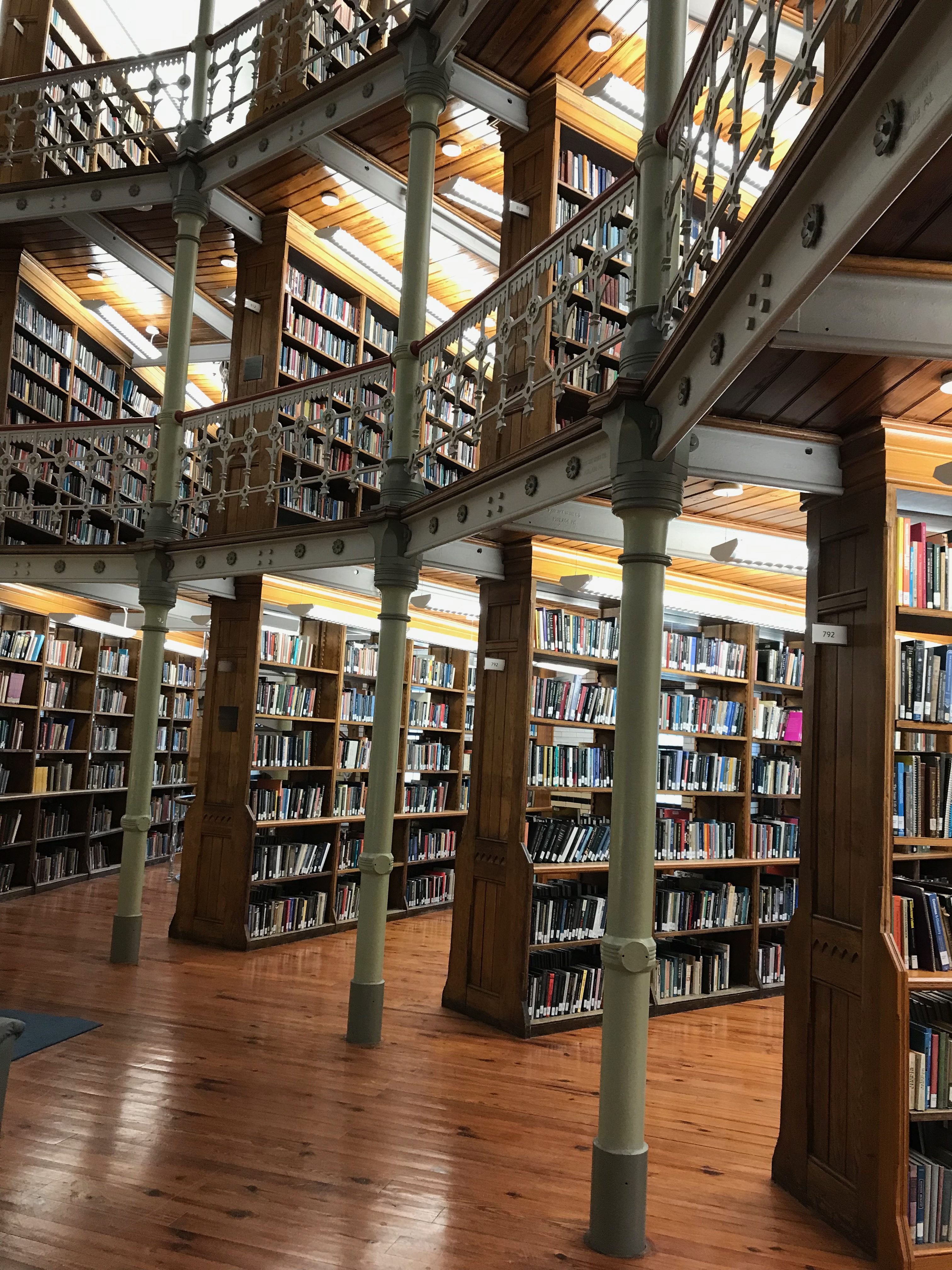
I need to know the origins of things.  Call it a sickness if you will, but I’m compelled to trace things to their source.  This is why I went on to earn a doctorate, and it’s a trait that hasn’t left, despite my career malfunction.  My interest in origins was recently reawakened by the citation, in a book, of a source that was incomplete.  I turned to the internet, of course.  I found the source, reprinted on a Tumblr page, for which I was grateful, but there was no proper citation there either.  Instead, a link to another webpage, which itself consists of yet another link.  Even after pages of googling, I was no closer to finding the source.  This is why I miss libraries.  You were there with books, some of them centuries old, looking at the source.  Outside the academy this rarely happens.  Particularly when you work 9-2-5.

The internet age is one of taking someone else’s word for it.  That’s why it’s important to establish credibility.  The website where I found the information—the top ranked site on both Ecosia and Google—had old books as the background, but no “about” page.  Who had put this information here and where did s/he get it?  The item I was looking for was from the 1700s.  I don’t have a print copy lying around and I was wondering what the source was—a book?  A journal article?  A newspaper?  An actual archive?  And why can’t Google find it in a library?  I know the source actually exists because I also found it referenced in a reputable print book, but one with inadequate citation.  Some of us were cut out for this kind of thing.  Constitutionally researchers.  But you have to work to live.

One of the greatest pieces of advice ever is to stay curious.  It helps keep a mind active, even a 9-2-5 one.  I’ll keep looking for this mysterious source.  I’ll check out likely references in the bibliography.  I’m sure that other people have the same compunction not to take someone else’s word for it.  Particularly not an anonymous poster on some website.  Especially in this day of AI lies.  One of my high school teachers once said that a reputation for being trusted is something you earn by lifelong cultivation.  If people know you are a reliable source, they will believe the things you say.  Anonymous information can be helpful from time to time, but without knowing the source I always remain skeptical.  And curious.


Writing Academic

One of the things that Stephen King detests (or at least detested back in the seventies) was academic literary criticism.  Perhaps you’re more normal than King or I, but if you read such things you find yourself immediately sucked into a world where the writer seems determined to demonstrate their erudition by splicing together words that shouldn’t really sleep together and then throws theory at you until you fall off the cliff.  It can be a frustrating experience for the reader, even as the writer is granted tenure for it.  One of these days I’ll learn my lesson.  Buying books by academics is dicey prospect.  I’m drawn in by the ideas, and the early pages, then I’m soon in the deep end remembering that I never learned to swim.

Is it really fair, I wonder, to begin a book—the first one or two pages impossibly engaging—then start winging ponderous, theory-laden words at the reader?  Your publisher paid for an attractive, inviting design and the reader, lured like a child to a candy store, thinks this will be sweet.  Then the sugar coating wears off and you’re faced with another 253 pages of clawing at words you recognize, hoping to make some sense out of what seemed, and still is, an engaging idea.  This has happened to me multiple times.  I live between worlds.  Even when I was an academic, however, I eschewed theory-heavy language.  I had nothing to prove, other than the point of my article.  And to prove a point, it seemed to me, people have to understand what you’re trying to say.

Higher education is in crisis mode.  Among the various fields you can study, the humanities are under especial scrutiny.  Have you read a book by an English professor lately (present company excepted!)?  Although their title is “English” you can be left wondering what language it actually is that they’re writing.  And they are capable of plain speaking.  Those first two pages demonstrate that.  They are capable, but are they willing?  I begin to understand Mr. King’s reservations.  I’ve run into books even in the field in which I have a doctorate that I can’t understand.  I find myself tentatively cracking open the Oxford English Dictionary to see if perhaps I’ve misunderstood the connotations of that word for my entire life.  I don’t mind a challenging read now and again.  At the same time, I mourn the loss of something beautiful when I can’t make out what the author seems to be saying.  Perhaps such books should come with warning labels.  I suspect Stephen King would have a good turn of phrase for what such a label should say.


Academic Publishing

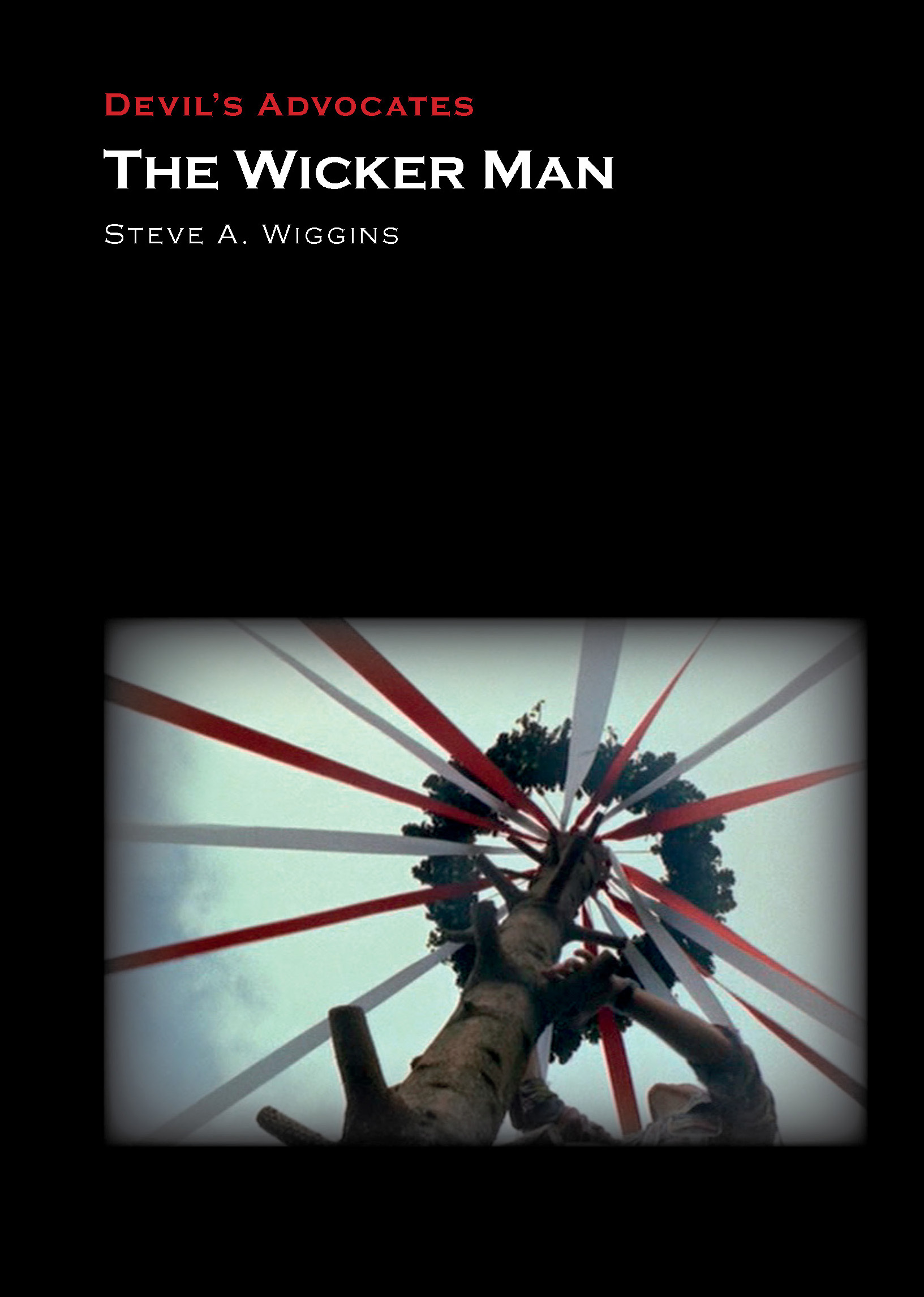
I had lunch with a friend a couple months back.  He is one of the few people who’s read The Wicker Man (the Devil’s Advocate version).  Not many reviews appeared and no royalties at all have yet followed its publication.  The funny thing is, when I search for reviews I notice that the book is “for sale” on far more websites than copies actually sold (I’m assuming).  You see, one of the best-kept secrets in publishing (both trade and academic) is the number of copies sold.  Publishers are terrified of poachers after their authors, and don’t advertise actual sales figures.  For an author only the royalty statements reveal just how many (or few) copies ever made it to the hands of potential readers.  We’re all adults here; we know that not every book purchased is read.  I do wonder if there has been any interest in this little book at all.

My friend actually went and watched the movie because of my modest little book.  The film The Wicker Man is widely known in certain circles, but it is still a movie with a cult following.  Horror fans know it, of course, with some declaring loudly that it’s not horror.  It gets referenced all the time in more mainstream media.  I occasionally read quirky little books like Your Guide to Not Getting Murdered in a Quaint English Village.  I wasn’t surprised to see The Wicker Man (the movie) referenced there.  As I discuss in the book, it’s even the subject of a Radiohead video for their song “Burn the Witch.”  Beyond a few academics, however, nobody’s really interested.

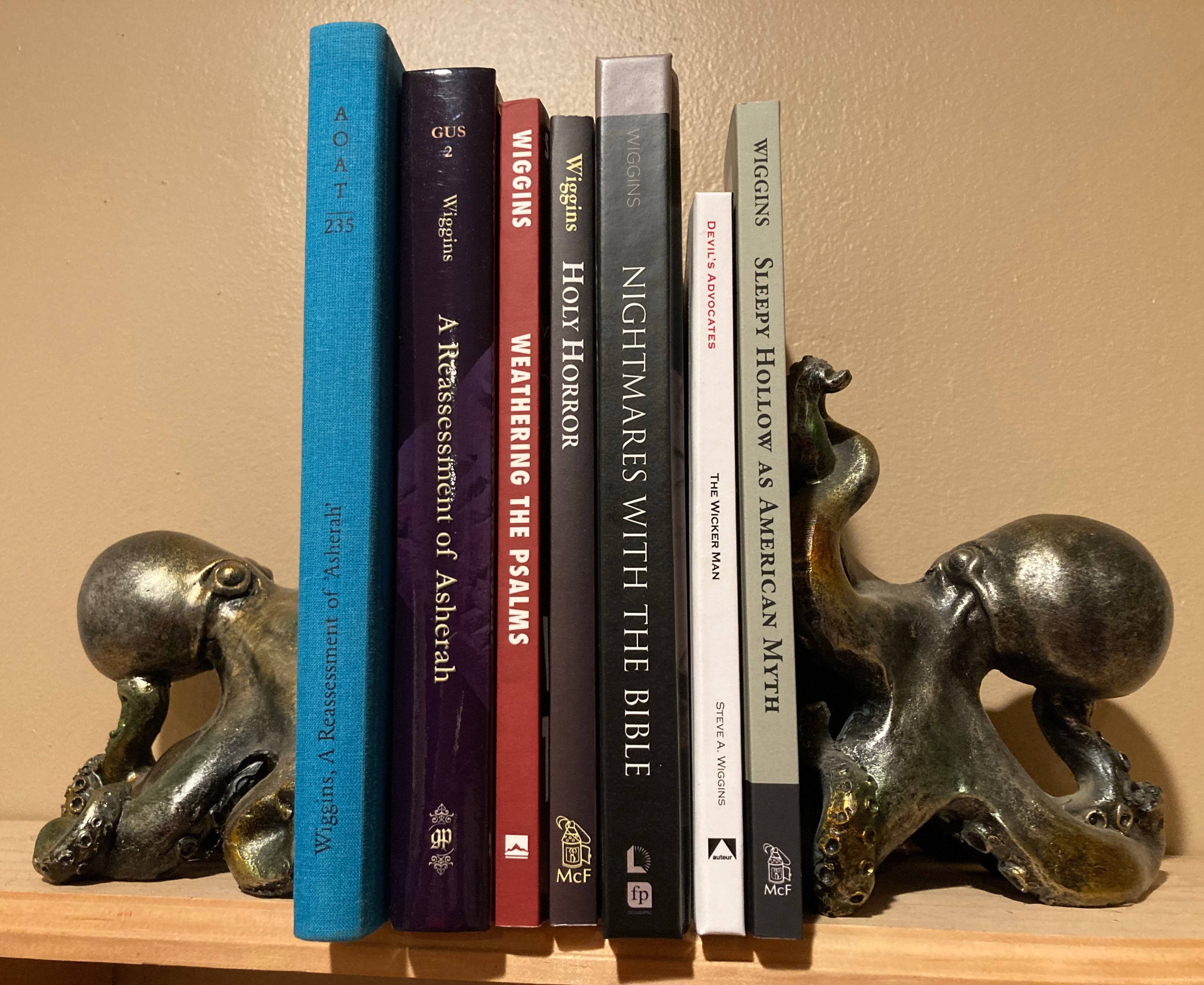
My friend suggested a topic for a new book for me to write.  I didn’t have the heart to tell him that, barring a teaching post coming my way, I’ve given up writing books for academic presses.  I’m pleased McFarland accepted Sleepy Hollow as American Myth, but the crude cost-benefit analysis that I do tells me writing books for academic presses, without library access, is always a money-losing venture.  Remember those old Guiness Book of World Records paperbacks?  I recall seeing, as a child, the least successful author listed.  Of course I don’t remember his name.  I now know that at least that record hasn’t been broken.  Not officially, but when books cost so much to write… Academic publishers are facing hard times but I don’t see the wisdom in pricing your books so that nobody can afford them, just to scrape in a few university library sales.  Not to sound as mercenary as a Hessian, but what’s in it for me?  Certainly not tenure or groundskeeper Willie’s retirement grease.  I’m not paid like a professor. Right now, though, I’m wondering if maybe I’ve broken that record after all.


A Footnote

I was recently compelled to use footnotes.  I don’t mean the clever asides that capable writers sometimes utilize to spice up subjects by making points off topic.  No, I mean the kind with author, date, title, city, publisher, page number.  I deal with footnotes daily—it’s an occupational hazard.  As a recovering academic I’m trying to get away from using footnotes on everything from grocery lists to daily meeting reminders.  Cite your sources!  That’s the kind of rhetoric that’s pounded into the heads of bright young people, often preventing them from learning to think for themselves.  At this stage of my life a footnote is more often trying to find someone who agrees with what I’ve observed for myself.  Hmm, did anyone ever say that before?  If so, where?

My concern goes down to the level of cities.  Yes, cities.  Standard format requires you cite the city in which a book was published.  This ridiculous pre-internet artifact had a purpose originally, but I have worked for two international publishers and I can tell you two related, and perhaps contradictory points: employees can tell which office a book is from: New York or London.  And unless you work for said publisher there is almost no way for you to know.  So if a publisher has offices in a dozen cities, you need to write a dozen of them in your footnote.  Does this sound like a rational thing to do?  Don’t get me wrong—it’s important, very important to cite the publisher.  But it’s not like there are a ton of presses around with the exact same name.

There’s a move among some reference experts (refperts, if you like) to do away with the city in footnotes.  It’s a reasonable guess that Cambridge University Press is pretty widely recognized.  And that Cambridge is located in Cambridge.  Or course, there’s a Cambridge in Massachusetts, and I hear there’s a university there as well.  In any case, if you don’t know where a publisher’s located, there’s a remarkable invention called the internet where you can look it up!  Pedanticism comes naturally to academics, I suppose.  Had I not been one I would probably have had no reason to write such an anal post as this.  Still, there’s a larger point: when is one able simply to assert what one knows?  I frankly don’t remember the page on which I read most facts I point out in my writing.  Often I notice them myself and recognize them as facts when there’s good, solid evidence.  Of course, I really should footnote that.  If I can remember in which city the appropriately named Random House is located.

How do you footnote this?

Why Write Then?

People far smarter and more prominent than yours truly have pointed this out, generally in vain: academic writing is driving itself extinct.  And some of us will not mourn it, if it does.  You see, academics are taught to write with an erudition and pomposity that satisfies dissertation committees made up of people who had to do the same.  This academic hazing generally obscures otherwise interesting observations.  Now thoroughly indoctrinated, academics go on to write their next book, and their articles, in this same turgid prose that obfuscates mightily.  To what purpose?  So that those critics higher on the food chain won’t be tempted to take on this morsel, preferring instead some “popularizer” who actually knows the craft of writing?

Poor writing is poor writing.  Those of us who’ve graded undergraduate papers have spent many red pens (I used to use green, so as not to be so negative) correcting bad stuff.  Why then do we give in to writing even worse ourselves?  I’m not proud.  I’ll admit that I’ve read academic books I really didn’t understand.  And it wasn’t because I’m not properly trained.  It’s because the writing was so full of jargon and “scholar X said but scholar Y rebutted”s that I get lost in the jungle.  One of the things repeatedly said about my teaching, back in the day, was that it was effective because I could explain complicated things in ways people could understand.  Isn’t that the purpose of publication in general?  Too many scholars write only for other scholars.  Not that there’s anything wrong with that, but if they wrote clearly maybe some of the rest of us could get in on the conversation.

I’m sure I’m not the only one to get really excited about a book.  The topic doesn’t matter.  Shivering with anticipation you order it and await its arrival, staring out the window awaiting the postie or the Amazon van.  It arrives and you caress it a little before opening it.  Then you find it’s written in academese.  You struggle to get through it, uncertain that you’ve really learned anything at all.  Except how not to write.  Those in higher education lament that the system is crumbling.  One of the reasons, I contend, is that nobody can understand what they’re saying.  What’s wrong with writing for the average, educated person?  Do you need sixteen five-syllable words in one sentence?  Look, I bought your book because I already believed in you.  If you make me regret my spending you can be sure that I’ll be purchasing someone else’s books from now on.


Life Learning

One thing a recovering academic must learn is that the vast majority of people don’t really care what drives the academy.  They aren’t too worried about larger issues as systemic racism, or various groups’ feelings of unequal treatment.  In fact, most people are just looking to get by, keeping depression and hopelessness at bay.  There are few avenues to break out of the middle class, and even fewer to move up from the lower.  And going to school hasn’t been presented to most people as an opportunity, but as a chore that must be done until work can be secured and they can pursue surviving on their own.  This truth comes to me time and again when I’m reminded that deep thinking doesn’t sell books (not unless you’ve already established a reputation) and that if you try to bring the concerns of the academy to the public, they’ll look the other way.

The real trick, it seems to me, is educating people without them knowing they’re being taught.  People don’t like being talked down to.  Understandably.  When I listen to people without college educations, I learn a ton.  This is my matrix as well—it’s where I grew up.  Higher education changes the way you think, but it shouldn’t prevent you from communicating with those who are the vast majority of people in the world.  Anything can seem to be normal when it happens long enough, even living in ivory towers and discussing things almost nobody else cares about.  You see, I’m a realist.  And I still have a lot to learn.

When I write my books, my style is accessible but my topics are academic.  It has taken me years to realize this simple fact.  Anyone can read my books from Holy Horror on and understand them, but why would they want to?  The questions raised are those of the academy, and those in the academy know you by your specialization (ancient West Asian religions, historically declined, thank you).  A glance at how my Academia.edu page is viewed tells the story.  Nobody who visits there is interested in horror films or this blog.  They want the resource that can’t be renewed—my work on ancient history of religions.  I’ve moved to horror because I find lots of very intelligent people here.  Like those with whom I grew up, they are generally ignored by the academy.  They are also very accepting of outsiders.  You have to unlearn being an academic.  And it might just lead somewhere productive.


Express Yourself

Do you ever get excited by an idea only to be let down when it comes to the execution?  I suspect that’s a standard human experience.  For me it often happens with books.  Especially academic books.  I get excited about the ideas that are sure to be lurking between the covers only to discover that the author has unimaginatively fallen into bad academic habits, such as “scholar A says, but scholar B says.”  Just tell me what you say!  Reflecting on this I realize that building a case has become conflated with taking a test.  A doctoral dissertation is a years’ long test.  Your ideas are being compared to those who’ve gone before you—the fact that they’ve published has proven that—and you are expected to show your work.  Did you read Smith?  Have you struggled with Jones?  Is Anderson in more than just your bibliography?

This kind of extended citation leads to turgid writing that slays any interest in the subject by the end of page one.  I’m not alone in this critique.  Some famous academics, such as Steven Pinker, have noted this.  In a not nearly frequently enough cited article, “Why Academics Stink at Writing,” Pinker lays out the bad habits that get perpetuated throughout the modern academy.  It comes down to, in my humble opinion, the fear of the exam.  Test anxiety.  Recently my draft of The Wicker Man came back from peer review.  While the comments of the reviewers were helpful, and quite complimentary, they felt there should be more academic dialogue going on.  I push back at this: if you don’t believe I’ve done the research, why approve the book for publication?  Most academic writing stinks and there’s no reason it should.

I’m a slow reader.  My average rate is about 20 pages per hour.  I know this because my morning routine sets aside about an hour for reading each day, and I note how many pages I consume.  Lately some of the academic books I’ve read have hobbled me down to 10 pages per hour.  I keep waiting for the narrative flow to kick in, something that I can follow and absorb.  Instead I’m learning what everybody else, often except the author, thinks about each minute point of his or her thesis.  Please, just tell me what you think!  I trust that you’ve done the research.  You wouldn’t have been granted a doctorate if you hadn’t.  The last thing I would want from my, admittedly few, readers is for them to close my book and say, “I’d rather be reading something else.”


Who’s It For?

I suspect editors see this all the time.  I also suspect that I’ve unknowingly participated in it as well.  If you’re a book writer, you have to be clear of your readership.  As an academic editor I receive many proposals for books that either cry for popular treatment, but are too academic, or books that are written for laity on topics of interest only to academics.  A writing life is a struggle to find that correct balance.  Particularly for your typical academic.  You see, doctoral programs don’t generally include instruction on how publishing works.  Or in writing.  It’s assumed that any string of 100,000 words from a credentialed expert is worth publishing.  Worse, as Steven Pinker has pointed out, academics are rewarded for writing poorly.  No wonder people are confused!

Lately I’ve been on a kick about people not paying attention.  It is important to observe.  When writing a book it’s important to gauge who might want to read your potential book.  Indeed, this is something seldom asked early enough in the process.  Who is this book for?  Will they want to read it?  You see, we have this lone ranger attitude to book writing.  In actual fact, most books you see in bookstores are the clear result of teamwork.  Yes, authors do most of the writing.  In many books editors do quite a bit of the fixing of the writing.  Agents, marketers, publicists, sales reps—there are a host of people behind successful books.  It’s easy to think, while writing, that your book will be a bestseller, no matter how academic.  That you will see it in Barnes and Noble and point it out, ever so casually, to your friends.  That it will sell for less than $20.

It’s important to pay attention to what other people think.  We’re all busy, I know.  We have our own lives to live and plans to enact.  Who has time to bother thinking about who might read their book?  Obviously, other specialists such as themselves.  But how many people is that, really?  With the sheer number of books published each year, are there topics that will draw in thousands, instead of hundreds (or less) of buyers?  Writing a book naturally makes you think the topic is important—vital, even.  It’s easy to transfer your personal interest onto the masses.  My advice, for those few who ask or care, is to think carefully about who you wish to reach.  Be honest with yourself.  And try to think from the point of view of somebody else.