Contacting Faith

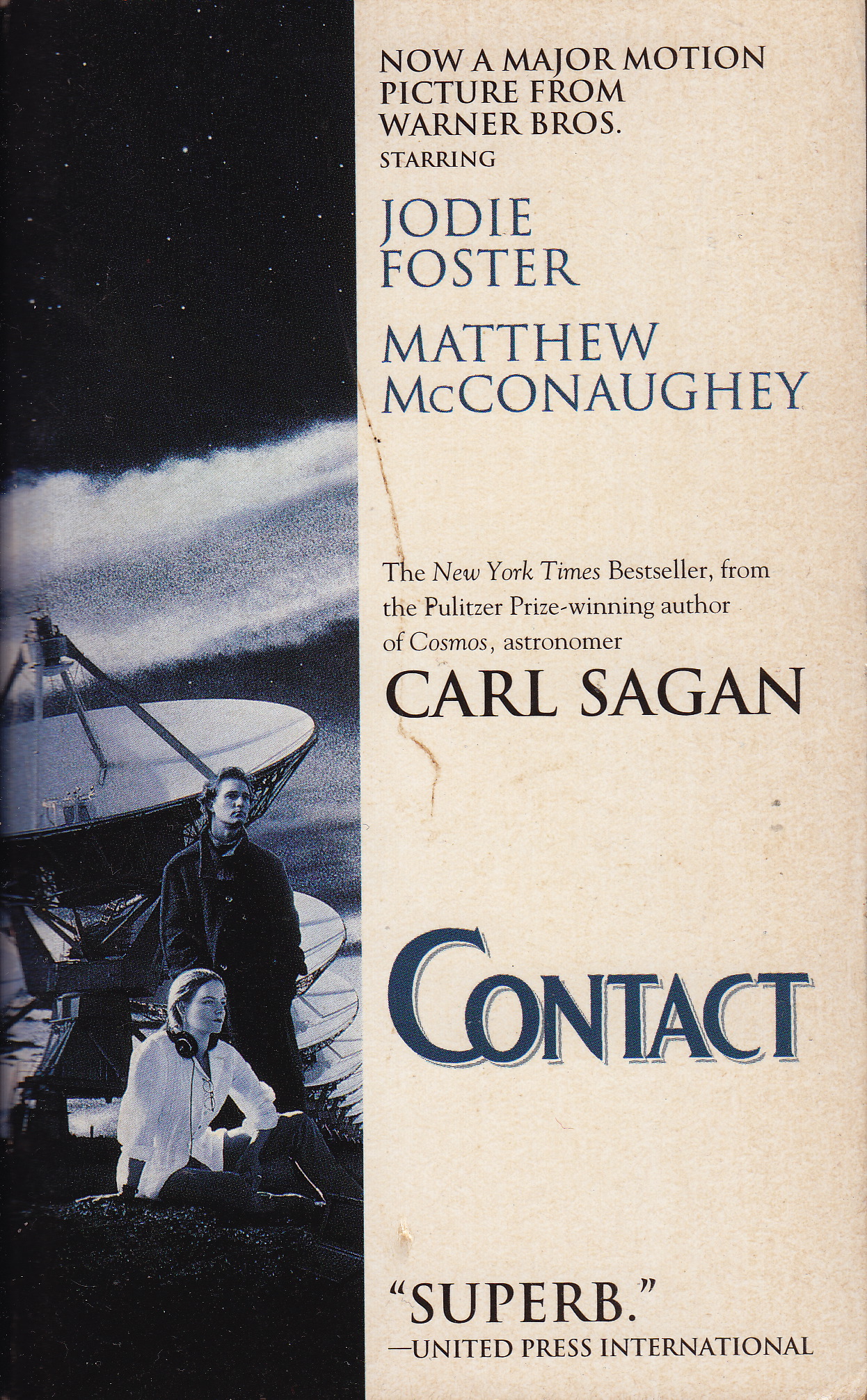
Contact_0001Sometime after the movie Contact came out, I saw it while on a flight to somewhere here or there. As with most movies on airplanes, it didn’t receive my full attention and I seem to recall not hearing a lot of the sound. Having always been intrigued by the possibility of aliens, however, I told myself I’d watch it again. Several months ago I did just that, but as Carl Sagan hoped, much of the story had become somewhat dated. I finally finished reading the novel, and this was a case of the book being better than the movie (as is frequently the case). A number of things surprised me about the story, the primary one being just how prominent religion is in the plot. In the movie some crazy preacher sabotages the first machine just as it’s nearing completion, and even though Ellie Arroway is long connected to Palmer Joss, their relationship doesn’t seem to dominate the script the way it does the book.

Almost immediately upon reading about adult Ellie, it became clear that religion was a major interest that Carl Sagan had. While the chiliasts receive many scathing comments throughout the novel, thoughtful Christian thinkers, such as Palmer, find a way of being taken seriously by Ellie, despite her own personal unbelief. Unable to understand how someone could not accept the evidence before their eyes, she wants to belittle religion but can’t when serious thinkers like Palmer remind her that they have a sophisticated worldview as well. The story represents a long struggle between alternative outlooks. While as a novel it doesn’t always flow, it pulls the reader along, partly based on the intriguing character of Sagan himself.

Carl Sagan believed in life on other planets. He was less sanguine about the possibility of either ancient astronauts or current-day visitors from space, but he kept an open mind. While he was the respected author of numerous scientific papers, other astronomers didn’t always know what to make of such a popularizer. Of course I never knew him, but I have to wonder if his true beliefs didn’t appear in his fiction rather than in his factual writing. At times I found the novel slow and plodding, and as the machine gives ambiguous results, I wondered where the rest of the story could go. Sagan profoundly brings the end back to belief. Without evidence, Ellie finds herself in the place of the religious who believe on the basis of experience and faith alone. And she finds her best friend is a clergyman. Contact, with its God-like aliens, is really a story of finding oneself a place in an infinite universe. To do that well, Sagan seems to have believed, requires both science and religion.


What If?

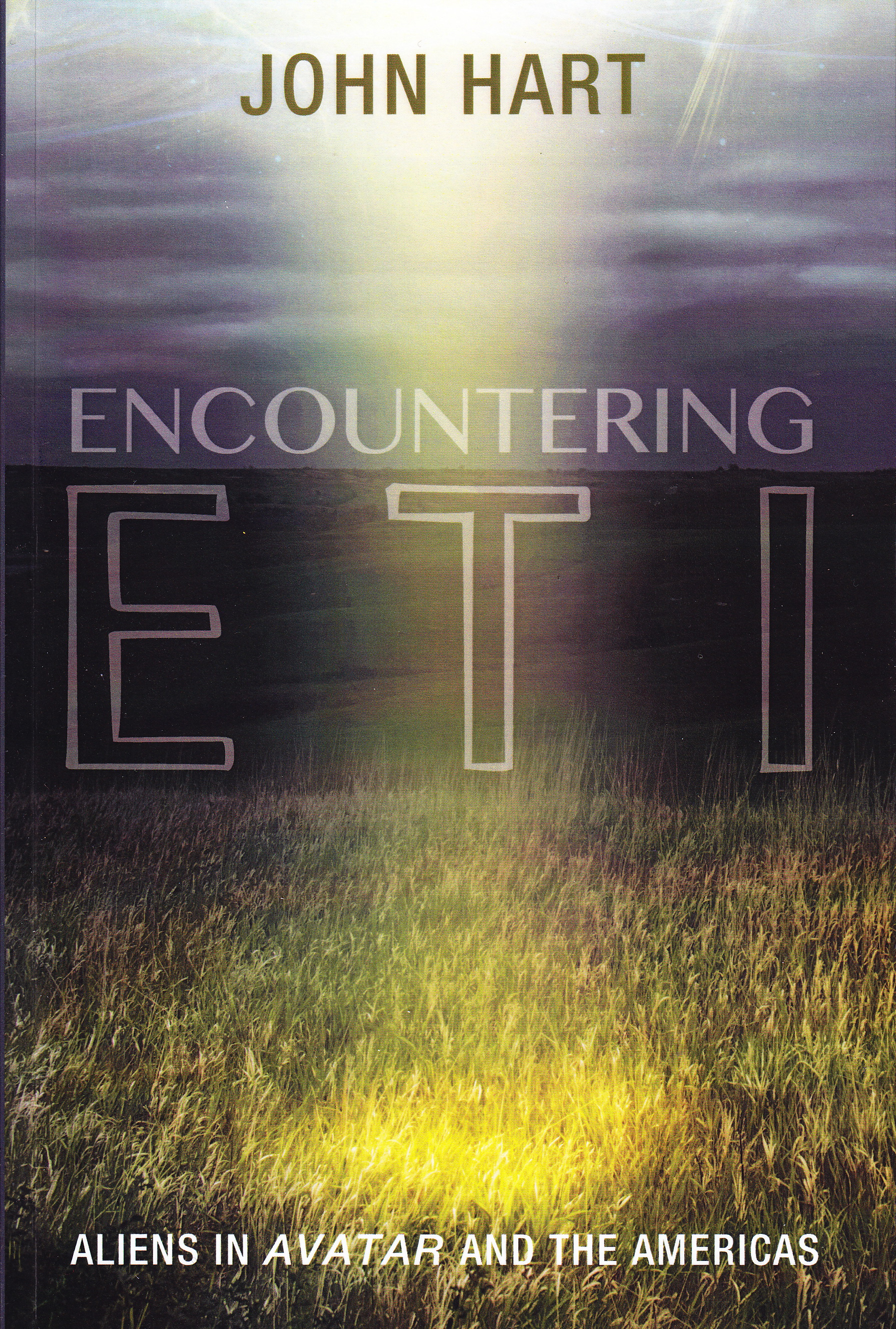
EncounteringETIA game that parenting books used to recommend was called “What if?”. It was an imagination game played by parents with their children to teach them about “stranger danger” in a way that wasn’t too scary. We naturally, it seems, fear the other. “What if?” kept coming to me as I read John Hart’s book Encountering ETI. ETI is a bit more precise than the more familiar ET, whom everyone knows, is an extra-terrestrial. The I stands for intelligence. What happens, in order words, when we meet extra-terrestrial intelligence? I very much admire academics such as Hart who are willing to ask what is such a necessary question. The point of the book is much more an ethical than a speculative one since human history has pretty much documented what happens when the Discovery Doctrine is applied. Natives (or TI, terrestrial intelligence, if you will) at the hands of newcomers with the Discovery Doctrine, are soon wiped out. History has repeated the story far too many times. Scientists such as Stephen Hawking even apply that to us, saying that if ETI arrives we will be exterminated. Hart takes a much more balanced look at the question.

Part of the problem is that we, as a society, have been taught to laugh at those who’ve seen UFOs. UFO stands for Unidentified Flying Object, and many people can’t identify what they see in the sky. But we all really know what I’m talking about. Those who’ve seen what may be non-terrestrial flying machines are automatically classed with the mentally unstable and ridiculed into silence. Thus it has been since the 1950s, despite foreign (!) governments and their militaries admitting that yes, we see things and we don’t know what they are. France, Argentina, and Russia, for example, have opened the files to some extent. The point that Hart makes is well taken—if we ridicule so automatically, will we be prepared when they arrive? Shouldn’t we be thinking about this now that scientists are discovering there are likely billions of planets in the Goldilocks Zone (capable of supporting life)? Ah, but it is so hard to let go of racial superiority! Homo sapiens sapiens are pretty impressed with themselves. As if nothing better could be conceived. Perhaps this is original sin.

Hart, whose book is subtitled Aliens in Avatar and the Americas, takes the possibility of visitation at face value. I’m sure it has impacted his career somewhat. The wise choice, it seems to me, is to take seriously what is almost a dead certainty—we are not the only life in the universe. Ironically, the idea that we are is largely based on the Bible. Genesis makes a pretty clear statement that we are God’s best idea. We’ve largely dropped God from the picture, so we, as humans, now occupy the top rung. And when we find humans different from ourselves we ask how we might exploit them to our advantage. (Here’s where Avatar comes in.) Hart’s book, as readable as it is affordable, is one that any thinker should take seriously. It is a book of ethics, writ large. Universal ethics, one might say. The aliens may not land in our lifetime, but chances are pretty good that they’re out there somewhere. It might be best to take some time to clean up the house before guests arrive.


ET vs UAC

When I first heard of “unaccompanied alien children,” I hope I might be forgiven for thinking about ET. Or EBEs as they’re sometimes called, “Extraterrestrial Biological Entities.” Instead UACs are serious enough to be assigned their own acronym, and serious politicians are making themselves frantic over the proper response. Should we allow children refugees from Latin America into the “land of opportunity?” This is a matter that calls for immediate debate! But should it? I am an American, but I am also a human being. And a parent. To me few things are more depressing than politics getting in the way of care for children. We fear their Spanish-speaking ways and incipient indigence. At the same time we as taxpayers fund Fundamentalist Mormons in their polygamy, reproducing beyond their ability to pay for themselves. The IRS turns a blind eye to those who claim food stamps and eschew birth control. There are children with nothing in this world standing at the door, and we debate whether to let them in.

I saw a recent opinion survey of major Christian bodies in the United States and their opinions on whether the children should be allowed to enter. White evangelicals came in dead last for the compassionate response of sanctuary. Meanwhile, reading the humanist literature, there is a strong sense that the ethics of this situation demand a, well, humanistic response. These are children, not political chattels. We will not purposefully endanger our own children. In fact, it is a criminal offense to do so. When it comes to somebody else’s children, we fuss and fume and I don’t hear many Fundamentalists saying “What would Jesus do?” in this case. Probably because the answer is clear: let the children come unto me.

Some decisions should be easy to make. Children are not political liabilities. They are often victims of adult complications of a world where a hug would solve many more problem than a gun or a bomb. I’m not sure when compassion became so calculating. I’m old enough to know that there are no easy answers, but I do believe some difficult decisions can be made much easier. Excepting Native Americans, all of our ancestors once entered this continent, largely without permission, as outsiders. Granted, they felt compelled to come—some voluntarily, some not. When their hosts suggested the party was over, they refused to leave. Now their descendants can’t decide whether children are a threat or not. We insist on their right to be born, but we don’t necessarily want to give them a home. When ET went home we all cried. Our tears for our own kind, apparently, are a scarce resource on this planet.

Are we all really just another brick in the wall? (Photo credit: Noir, WikiCommons)

Are we all really just another brick in the wall? (Photo credit: Noir, WikiCommons)


Flying Sorcery

In a post on the Huffington Post recently Michael Zimmerman, founder of the Clergy Letter Project, wrote about the strange antipathy of Ken Ham to the search for extraterrestrial life. Ham, founder of a creationist museum and self-appointed spokesman against evolution, has gone on the record saying that aliens cause problems for a creationist worldview. Therefore they can’t exist. Indeed, creationists should reject aliens because of the flat earth the Bible presents. Zimmerman, with his usual unfailing reason and wry humor, demonstrates the multiple difficulties both with Ham’s understanding of science and of the whole alien agenda. The Bible doesn’t address the modern world on many fronts, which is why literalists so often find themselves out of step with the issues of the day. When the final period (an anachronism, I know) was placed at the end of Revelation, it was expected that the world wouldn’t be around much longer, tottering as it was on the underground pillars that held it up. Somehow the Roman Empire came and went without any kind of cataclysm ending it all, and literalists have been backing and filling ever since.

Ham’s angst about extraterrestrials, however, is not shared by all Fundamentalists. I recall going to a session way out at a country church as a child where the guest speaker, a firm believer in aliens, talked about the “sheep in other folds” referred to by Jesus as aliens. I recall the eerie feeling as we drove home under a dark sky with fliers depicting flying saucers and assurances that we were not alone. In college, when I discovered Larry Norman’s music, I was struck by his lyric “If there’s life on other planets, then I’m sure He must know, and He’s been there once already, and has died to save their souls.” Literalists, like Catholics, take multiple views on the question. It seems a terrible waste of space if, in this infinite universe we’re the only sparks of consciousness around. I’ll leave “intelligence” for time to decide.

What would Genesis do?

What would Genesis do?

Ironically, Ken Ham doesn’t seem to have considered the up side of aliens, at least for his point of view. If the extraterrestrials end up looking like us, that does raise some serious questions about evolution. How did it work identically on two different planets to produce such similar results? You’d think maybe Fundamentalists might welcome aliens with open appendages. Of course, some have gone far off the other end and declared that angels and aliens are the same thing. The problem of the literalist world view is that it is severely limited. The Bible never foresaw the internet or the airplane or even the true nature of our own solar system, let alone the infinite sea of space beyond. In charting a course for belief, accurate maps are necessary. As Zimmerman points out, those maps, of necessity must contain the stars. And as we continue to evolve infinite worlds of possibilities await.


Cowboys and Demons

Cowboys_&_Aliens

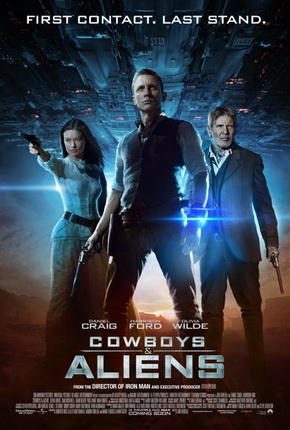
Cowboys & Aliens finally came down into my price range. For movies I’d have to view alone, I generally wait until they appear for free on some online movie service or for less then ten dollars at Target. I’ve been waiting for this one since 2011, but my patience paid off. Inspired, so the rumor goes, by the Roswell incident, the film follows the adventures of some old western stereotypes as they encounter the superior power of aliens. The aliens, it seems, are just as materialistic as humans, coming to the old west in an extraterrestrial gold rush. They abduct humans to learn their weaknesses (which really seems superfluous given the technological imbalance between the species) and anger a number of ornery hombres in the process. Then we have an old-fashioned shootout with ray guns versus bows, arrows, and bullets. Human devotion, however, defeats the evolved armor and flying machines of the—well, what are they exactly?

The cowboys scratch their heads, not quite having the consarned concept to categorize these flying machines and their occupants. The local preacher, who is a pretty handy shot, tries to help the confused cowboys, who settle on the term “demons” to describe the extraterrestrials. We forget that in the early part of the last century other galaxies had not yet been discovered, and although we knew of other planets, there was assuredly no way to get there from here. Ugly things that come from the sky are demons. This doesn’t lead to a whole load of speculation—nobody suggests praying to take care of the menace, although the Native Americans resort to a religious ritual to unlock the mystery of where the demonic hoard is hiding. Through her resurrection we discover that Alice is a good alien, planted in the town to stop the invaders from doing to the earth what they did to her planet. And winning the heart of Jake Lonergan (whose very name suggests lone gunman to insiders) along the way.

Since the movie is three years old, I won’t worry about spoilers—if you’re inspired to watch for the first time, however, you might want to do so before finishing this. When Alice figures out how to stop the alien mining operation for good, Jake is left, for the second time, with his woman being killed by demons. Woodrow Dolarhyde, realizing that the outlaw Jake isn’t such a bad guy after all, seeks to console him at his loss. At the end of the movie, in a camera angle that goes from Woodrow to Jake, the focus falls on the cross atop the local mission as Woody says, “She’s in a better place.” All aliens go to heaven. Literally. With echoes of the X-Files, Cowboys & Aliens is sufficient for a dark night where demons and angels are a little too close to tell apart.


Heavenly Beings

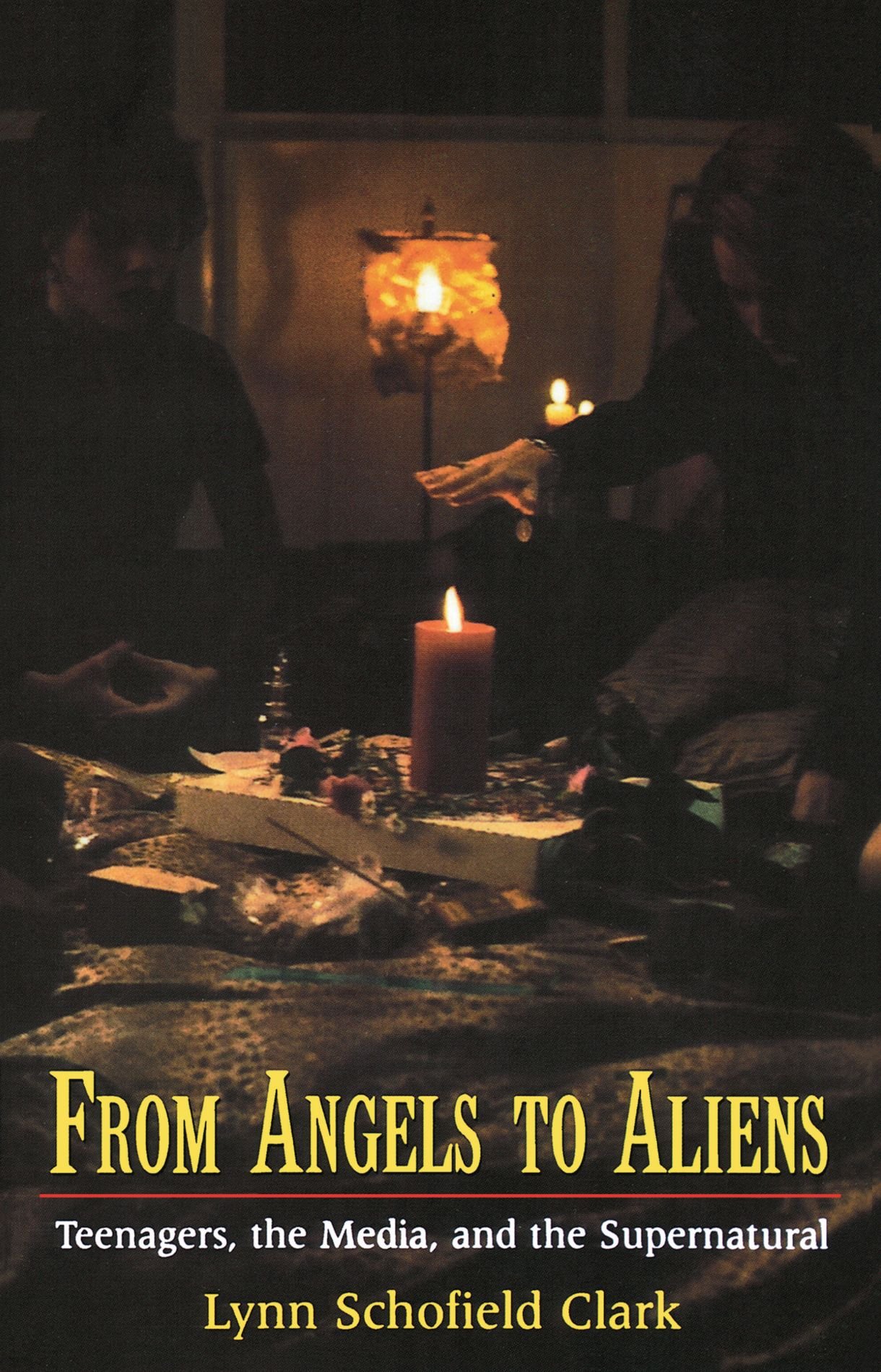
FromAngelsToAliens Religious tolerance suggests that it’s less important what you believe than it is that you believe. After all, where you are born—socioeconomically as well as geographically—determines which options are open to you. And now that the world is virtually inter-connected, the media must play into the idea of what we believe as concepts mix and brew and distill. Lynn Schofield Clark’s From Angels to Aliens: Teenagers, the Media, and the Supernatural, is a study that takes all of this seriously. We know teens as the ultimate disenfranchised demographic. For those of us who were once there, no doubt concerning that status exists. But what of teens in an age where God seems to be effacing and angels and aliens invading? At least according to the media. Clark interviews several teens and their families about their belief in the supernatural, and, in keeping with what the statistics of national surveys continually show, belief in some world beyond ours is indeed deeply rooted. Many youth, however, have trouble distinguishing angels from aliens.

Not literally, of course. Rather, supernatural entities are so much a part of our media experience, and church attendance so little, that clear ideas of how these things all fit together, if they do, are lacking. Scientists are looking for life in space while denying that if it exists it ever could have intentionally travelled here. We are, after all, the most intelligent species in an infinite universe. (Did I say that belief in God was effacing?) Socially, however, angels are much more acceptable than aliens. Belief in aliens is easily equated with mental instability, while belief in angels is normal, if not a little naive. To the average person, it seems that we’re not alone. As many popular media portray, however, God remains silent and we have to wonder if there’s anyone really driving a universe with no real up or down and with an exploding singularity at its center. It’s all a little disorienting—rather like being a teenager.

Clark remains wonderfully open-minded as she asks her questions to the younger generation. I felt a bit of recognition when she mentioned her church experiences in theologically conservative western Pennsylvania, the area in which I grew up, and where neither aliens nor angels were particularly uncommon. And we were in a media black hole in those days. Stations from Pittsburgh or Erie didn’t boost their signal to reach those of us in the boondocks with much reception beyond the big three. Of course, there was nothing beyond ABC, CBS, and NBC. Well, there was PBS in the background, but this was a universe still awaiting its big bang. Angels were good, aliens were evil, and God never remained silent for very long. And nobody really cared what teenagers thought. We have evolved since then, but we still look to the sky and wonder who, if anyone, is out there.


The Cthulhu You Knew

DissectingCthulhuThe word “fan,” an apocopated form of “fanatic,” is a word borrowed from the realm of religion. Most often associated with sports, it can refer to any overly enthusiastic devotee. While I enjoy reading H. P. Lovecraft’s fiction, I think I would stop short of calling myself a fan, but were I to take that step I would have some serious competition. The circle of those truly enamored of Lovecraft have yet to break into the hallowed, or perhaps haunted, halls of the western canon. Fans there are, but not the sort who find regular play in literature classes. Still, as I read S. T. Joshi’s edited collection, Dissecting Cthulhu: Essays on the Cthulhu Mythos, I came to realize just how committed Lovecraft’s fans are.

My fascination with Lovecraft arises from his felicity with gods. Some argue that his gods are aliens, but even Erich von Däniken hasn’t stopped the true believers. Dissecting Cthulhu is a collection of articles from a variety of Lovecraft analysts debating the fine, and sometimes gross, points of the postulated “Cthulhu Mythos.” Cthulhu hardly requires any introduction these days. He has basked in his underwater fame since the internet has made a star of him. The eponymous deity of the alleged cycle, the divinity, or alien, was never really put front and center by his creator. Deities are all the more powerful for being unseen. Here is where Lovecraft the atheist becomes Lovecraft the theologian. By creating gods we tacitly admit their subtle power over our psyches. We may call them aliens or monsters, but compared to us, they’re gods.

After reading Dissecting Cthulhu, however, I’m not sure that I could say much more about him than before. This is often a problem shared by theologians—what more can you say about an entity that won’t sit still long enough to be interviewed? Gods will be gods. The rest of us are humble hermeneuts. There’s no doubt that Lovecraft touched on a deep and abiding current in human experience when he held alienation high as the standard of life on earth. Somehow we resent Cthulhu for not being there, even though his is no octopus’s garden under the sea. Other galaxies were discovered and partially understood for the first time during Lovecraft’s lifetime. Suddenly it felt pretty lonely down here with all that empty space up there. It is better to populate such a large expanse with gods. Not seeing is believing after all.


Reach Out and

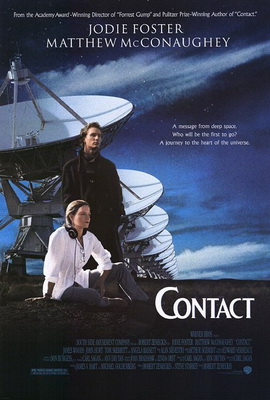
Contact_ver2Carl Sagan, one of the great proponents of the idea that earthlings have never been visited by aliens, wrote a novel entitled Contact. I haven’t finished reading it yet, but many years ago, on a long plane ride, I caught part of the movie version—most of it without the sound on, as I recall. While the ideas have been brewing for about a decade, I’ve been meaning to get around to watching the film. It is a bit of a slow-starter, but I finally sat down to watch it, with sound. While the movie ultimately remains agnostic—with a Twilight Zonish twist at the end—about whether the contact is truly alien or not, one aspect leaves no room for doubt: the movie is really about the relationship between religion and science. Eleanor Arroway cannot raise faith in anything but science, especially since her father’s premature death. Although she has a brief affair with Palmer Joss, a theological journalist, she just can’t believe what her senses don’t confirm.

Once the alien signal is announced, the response of the populace is overwhelmingly religious. One sect in particular seems to channel its faith into the hatred of science, and even Palmer, now an advisor to the president, questions whether science alone can really help humanity to progress. He is the one who nails shut the coffin of Dr. Arroway’s hopes of going to Vega to see the aliens. The reason: she doesn’t believe in God, and therefore is not qualified to represent the human race. Ah, the cruel irony of it all. When she finally does get a chance to visit space, the results are both Freudian and religious. She finds her father in a place like heaven, but her beloved science makes no record of her journey. At a congressional hearing she is made to admit that she believes in what happened without proof. Science is now standing on faith while the religious look smugly on.

Despite the pacing, Contact is an enjoyable movie. In many ways it hasn’t aged much since its 1997 release. Science and religion are still at loggerheads in some camps, and we are no closer to the stars than we were a decade and three-quarters ago. Reading books on the nexus of religion and science, one often gets the impression that the two are inevitably foes. Much of it goes back to a principle that recurs throughout Contact—Occam’s razor. The idea that the simplest explanation is the best does not seem to serve science (or religion) well. Although it works most of the time, it is because, as a friend recently said, we are willing to sweep the stuff that doesn’t fit off the table. Contact showed Occam’s razor with its indiscriminate cutting. Both the religious and the scientific end up bloody when it’s all over (metaphorically speaking, of course). It seems what religion and science really need is indeed contact.


Alien Jesus

While trawling the internet over the weekend, I came upon an interesting article that ties together religion and paranormal belief. According to ADG, a unnamed woman (already the question marks erupt) in Galilee in 1967 was visited by aliens. Instead of photographing them, as most unnamed women would, she followed their instructions to point her camera at the lake (Sea of Galilee) and snap one for the album. When she turned back around the aliens were gone, and when she had the film developed there was a picture of Jesus and a disciple or two, walking along the sea in earnest conversation. Well, one doesn’t have to be a scholar of Tobit to spot the apocryphal, and this obviously bogus story received far more hits than any of my posts do. People are fascinated by the concept, even though most of the comments show some healthy skepticism.

To me the fascinating aspect is that religion and paranormal topics hold hands so easily. That is not to suggest they are the same thing, but rather that they are both perhaps directed toward a similar goal. We find ourselves in a cold world, often. There are cruelties, atrocities, and a disheartening lack of care for others. We want to believe that somebody out there has got our backs. Is it so different to believe that God dwells in the sky than to believe that aliens do as well? What is more important than the putative fact of such celestial dwellers is the belief in them. Our minds, no matter how we may protest otherwise, are perfectly well aware of their own limitations. We can’t know everything, and so we must believe.

Many of us find ourselves in an uninspiring cycle of work, sleep, and work. Sometimes we actually even do sleep, too. Cogs in a capitalistic money machine, we leave our weekends free (sometimes) to pursue a little meaning. As much as some may castigate religion, we should not forget that without it we would not have the weekend! For a little while we can break the meaningless cycle, the treadmill upon which we heavily thump our way through five days out of every seven. Is it any wonder that so many want to believe that, like Calgon, aliens might come to take us away from our drudgery? If that doesn’t work, there’s always religious services. All you have to do is point your camera and believe.

BurnandJeanPierre


Monsters Incorporated

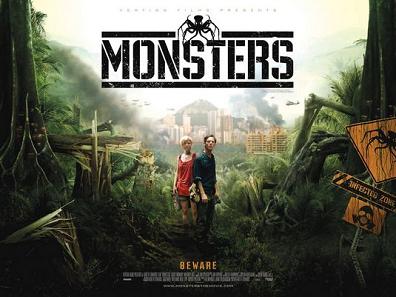
Monsters

Monsters. What’s not to like? With a title so innocuous and limited US marketing, this 2010 British indie film only just came to my attention. I hadn’t even heard anything about it as I sat down to view it. The premise of invading aliens is as old as H. G. Wells, if not earlier, but this is a film without over-the-top CGI and a very human story. Showing far more tension than bloodshed, Andrew and Samantha, their Anglo names very prominent, are caught in alien-infested northern Mexico. Somewhat predictably, Samantha has a rich daddy who happens to be Andrew’s boss, but the couple has to find their way back to the United States as giant insectoid-octopi rampage through the night, destroying just about anything they can get their tentacles on. So far it sounds like standard Saturday-afternoon fare. As Andrew and Samantha reached the Rio Grande, however, overlooking the huge wall the US government built to keep out the aliens, I realized what the film is really about.

During the Bush years, shortly after the Berlin Wall had come down, a new wall was snaking its way along the Mexican border. America had become weary of “Give me your tired, your poor.” This was the land of opportunity, instead, for the chosen few. Never mind that we know that many of the jobs most of us don’t want are gratefully accepted by those who may not be technically legal in this country. Never mind that we deny social justice, in many ways, to those who make our lifestyle possible. Andrew and Samantha face the massive wall that says, “keep out.”

Of course, they make it back to Texas. They discover, however, that the aliens have breeched the walls as well. And they really pose no threat beyond wanting to draw strength from the abundant light-sources of a power-hungry world. The film’s ending is a bit ambiguous, but then again, the plight of the alien generally is. I watched the film with no expectation beyond a bit of sci-fi action to help give me the energy to make it through another week of work. Instead I saw a brash American coming to a deeper sense of humanity while standing in a church where hundreds were mourning their dead. The death of one small girl was as much a tragedy of as the breeching of the borders. Until humanity prevails over artificial borders, there will indeed be monsters. Were that they were only giant insectoid-octopi.


Alien Religion

Alien3

Despite my interest in aliens, my viewing of the Alien movies has been tenuous at best. The image of what looked like an egg hatching a green sun over a particularly badly formed waffle always brought the tagline “In space no one can hear you scream,” to my juvenile mind. When the original movie came out in 1979, it seemed too scary for a kid in high school. I first saw Aliens (part 2) when living with a friend after seminary. He explained to me the missing gaps left from never having seen the original, and I was impressed by how Sigourney Weaver pretty much took on the alien queen single-handedly. I was still too young, however, to realize that there’s always room for an alien or its egg to attach itself inside any spaceship or escape pod. You can never really get rid of the things. I finally saw the first installment some ten years later, and it was clear that, as in nearly all series, the first was the best. Ridley Scott’s films take considerable energy to watch. No one seems capable of matching his dark moods and sense of a hopeless future. I left it at this state for another decade, until recently reading that Alien 3 marked the culmination of the “theology” of the series. Over the holiday break I decided to find out if this was true.

Ripley, who can never get a break, finds herself the sole survivor (again) on a prison-colony at what used to be a lead ore refinery deep in space. While the company had abandoned the facility, a group of inmates who had formed a religious order decided to remain. Having grown up in a refinery town, so far I’m on board with the story. Separated from society, from women, and from temptation, the prisoners are a fundamentalist sect that would seem to fit well into the woods of Wisconsin. Ripley threatens their delicate balance of celibacy, and although not a virgin she ends up conceiving an alien in a Madonna-esque way, not even knowing how she became pregnant. When she decides to incinerate herself rather than allow the alien to be born, she falls into the fire in a cruciform dive just to drive the point home. Before her dive into hell, however, Ripley tries to motivate this band of incarcerated monks to fight the alien. When they say the company will save them, she responds, “What makes you think they’re gonna care about a bunch of lifers who found God at the ass-end of space?” Again, echoes of Wisconsin.

Doubtless, my experience of the movies has been skewed by my own experience. Still, Alien 3 holds to a pattern that emerges fairly often in movies with a strong horror theme—religion is the progenitor of terror. The prisoners’ religion is described as “apocalyptic,” and it frequently appears that in movies where a civilization is on the brink of collapse, religion awaits to greet the survivors with open arms on the other side. In the horror genre, this is often a cold, clammy comfort. Although religious elements were largely lacking in the Ridley Scott and James Cameron episodes, I do hear distant echoes of Moby Dick here from the very beginning. The dark alien, like the white whale, is elusive and destructive and does not relinquish its hunt until Captain Ahab, or Lieutenant Ripley, is dead in its grip. And since Alien Resurrection awaits in yet another sequel, like the white whale, the alien never truly goes away.


Battle the Angels

Over the weekend I finally got around to watching Battle Los Angeles. Now, I’ve never been a fan of war movies, but I do have a soft spot for aliens, so I decided to tough it out and see who won. I knew the historic event upon which the premise of the film was based took place in 1942, before flying saucers captured the American imagination. The official Air Force story suggests that old nemesis to our control of the air: weather balloons. Considering that Los Angeles was blacked out and ground forces lobbed 1,400 artillery rounds at the things, I wonder why the balloons at my daughter’s birthday parties never managed to last the night. In any case, the movie runs with the premise that aliens have taken over the city of angels and the U. S. Marines are the ones to get the job done when it comes to taking out aliens. (The Air Force, one expects, is too busy chasing weather balloons.)

Gratuitous aliens and science fiction action may be merit enough to get into this blog, but there is actually a more compelling reason. Back in my teaching days, I tried to demonstrate to students how deeply the Bible pervades our culture. When I taught those long summer and winter term courses, sometimes lingering four hours into the night, I would break up the inevitability of my lectures with a few movie clips to show them just how often the Bible shows up in films. Sometimes the cameo appearance is a matter of fleeting seconds, but when directors pay attention to every detail of a scene, we can be sure that Bibles don’t just show up by accident. Battle Los Angeles is no different. As our platoon is being air-lifted into the alien hot zone, one of the soldiers (I couldn’t figure out which one, since most of them get dispatched in fairly short order) is shown reading the Bible. The camera hovers there a second before pulling back to show the pre-battle chatter.

The viewer is probably supposed to be reminded that there are no atheists in foxholes, as the saying goes. Or it is a sign of how serious this is: before the big guns come out, bring on the Bible? In our culture the Bible has that kind of role. I recently read of a Catholic astronomer who was seeking alien civilizations in order to convert them to Christianity. The premise is as intriguing as it is arrogant. Human beings can be tenacious when it comes to matters of belief. In Battle Los Angeles, however, we speak with our guns and our missiles. But first we read our Bibles. Without wishing to ascribe to much intentional subtlety to the movie, this might be the underlying paradigm. Once the battle begins in earnest, the Bible never comes back into play. It is human ingenuity that wins the day, and perhaps the aliens are being taught to pray.


Rising to The Abyss

The name James Cameron has become almost synonymous with epic, large-scale adventures that suggest improbable world with stilted dialogue. The first Cameron film I watched with the awareness of his direction was Titanic. Last night I watched The Abyss for the first time. Of course, I’d heard quite a bit about the film since its release over two decades ago, and I had to satisfy my curiosity. The Abyss turns out to be a prognostication for Titanic as well as Avatar, what with the fascination Cameron has for sinking ships, friendly aliens, and impossible love reconciled. In fact, many of the characters presented in The Abyss appear to reincarnate in Cameron’s latter films under different names, but in similar circumstances. The reason the film is worth mention on a blog about religion is its heavy reliance on traditional Christian imagery of the afterlife, projected into the abyss (turning Dante on his head).

When the crew of Deep Core investigate the sunken submarine USS Montana, crew member Jammer sees what he thinks is an angel and goes into shock that lands him in a coma (just to awake at the right time to save the day). The theme of personal sacrifice and resurrection (the Christ syndrome, we might call it) is acted out by both Lindsey Brigman and her husband Bud. Lindsey drowns herself so that she can be resuscitated, with the intention of saving both herself and her estranged husband. In his turn Virgil (aka Bud-everyone get the subtle reference to Dante here?) disarms a nuclear warhead (by snipping a single wire!) by diving beneath the capacity of his oxygen supply, texting his now adoring wife that he knew it would be a one-way ticket down. Then the aliens arrive. The whole light at the end of the tunnel trope becomes factual as the aliens-angel hybrids flutter over and take Virgil to safety. In case you missed the biblical references, they part the water and you get the strange suspicion that Moses is lurking behind the scenes somewhere.

Of course, some of these ideas will be fresher in viewer’s minds from Titantic and Avatar, but the theme of resurrection following self-sacrifice is a staple of Hollywood. It is the right combination for a feel-good movie, even if it ends up being sad. Perhaps it is the mark of living in a secular nation that has its origins in a Christian worldview. The battle of our religious status as a nation rages on, but the fact is, no matter how free we are with our religion, we will flock to movies where the protagonist willingly sacrifices him(less frequently her)-self with the reward of new life. This is not a Cameron trope, it is a United States self-image on the large screen. The technical gaffs of the underwater world of The Abyss may be many, but the film captured the imagination of many Americans, paving the way for the enormous success of Titanic and Avatar. Despite our tough exterior and willingness to start wars, we like to think of ourselves as the ultimate Christians.


Defining Humanity

Positions of power replicate themselves. In a sense this is understandable as power is the most addictive substance on the planet. Once superiority is asserted, it will never allow itself to be uprooted. With the recognition of homosexual marriage in New York, many heated reactions sprouted from the position of power man-plus-woman (always in that order) camp. Such a response was predictable and anticipated. I suspect it is largely based on fear. I have many friends with differing sexual orientations than mine. Raised to castigate such individuals, that outlook became increasingly difficult to uphold once I got to know my gay friends as people. I count them among my most loyal friends. People are people.

The problem lies in labels. Humans are natural categorizers: bird, fish, or mammal? Predator or prey? Religious or secular? We want our world to stay true to categories we devise. People, however, are seldom easily classified. Still, we try: skin color, ethnic ancestry, religious heritage, sexual orientation. People are people. The world of trite classification is ending, and those in positions of power tremble. Anything that is different might upset the economic balance that keeps those on top in their positions. (My own amateur observation, however, is that the economic balance is naturally top-heavy and readily upsets itself. It seems to have been that way since before this blog began.) Would we not do better to try to understand those who are different than ourselves?

As an exercise in this direction, I recently read Alvin Orloff’s smart satire, I Married an Earthling. As my long-term readers know, I have a slight soft-spot for aliens, and this story of a gay man finding nothing but rejection on earth and eventually marrying an alien seemed quite fitting in the present climate. Not part of the gay subculture, many aspects of the story were foreign to me, but what was painfully clear throughout is that people are people. Some are accepting, others are not. When reality offers so few options that he must flee his own planet, Chester, one of the protagonists, takes to the stars. At a couple points before his exodus, he notes the role that religion played in his antagonists’ outlooks. The book is lighthearted and funny overall, but the serious issue remains. Those in power tend to horde privilege. When that happens, economies—material and spiritual—collapse.


Alien Agenda

Aliens are now firmly among the canonical cadre of movie monsters. Just the list of highly anticipated movies of 2011 is enough to demonstrate the fact: I Am Number Four, Battle: Los Angeles (past, but formerly anticipated), Cowboys and Aliens, Super 8, Apollo 18 (now sadly relegated to 2012). With two part-time jobs and the constant hunt for something more permanent, I tend to fall behind, however. I have to wait until the DVD release to see them.

Watching horror films has been an avocation of mine since college. Once when a sociology student asked me why, in the course of a survey; I replied that it was better to feel scared than to feel nothing at all. Well, maybe I’d been reading too much Camus and Kafka at the time, but the habit has persisted and I am now professionally attuned to their religious elements as well. Even the aliens got religion. This past weekend I stayed up late to watch The Fourth Kind. It was suitably scary – when I read the reviews vociferously castigating the producers for claiming it was real, I suspected that the reviewers were overcompensating. The premise (alien abduction) is frightening enough – especially in such a remote location as Nome, Alaska – but the Bible had to be brought into it as well.

Admittedly the fear began to wane when Zecharia Sitchin’s Sumerian hypothesis appeared. Aliens speaking Sumerian is simply not convincing to those of us who’ve actually learned extinct languages. (It could explain some of the textbooks, however, now that I think about it.) The book of Genesis was then cited by the film to verify the much more ancient Sumerian claims. Many horror films deal either directly or indirectly with the fear of religion. The Fourth Kind was no exception. I was reminded of how the Bible played a small but crucial role in The X-Files: I Want to Believe movie as well. As a prop the Bible lends gravitas to otherwise questionable celluloid situations.

Never one to accept the ancient astronauts model, years of studying the Bible have convinced me that context explains most of the anomalous passages in scripture. Nevertheless, the monsters lose their bite without religion, so let’s give Sitchin’s crowd their due and just pretend for a little while.