X-mas Time

As predictable as crocuses in early spring are the controversies that crop up around holiday billboards. Even living in the quite blue state of New Jersey, I see plenty of advocating for the keeping of Christ in Christmas that the “keep Christ in Christie” campaign seems to lack. This year, however, the American Atheists billboard kerfuffle has shifted to Memphis and Nashville. There protests have been lodged that using children on “holidays for all” billboards is a kind of exploitation. And as we all prepare for the visit of baby Jesus, or Santa Claus, or any variety of mythical nighttime visitors, American Atheists are only asking that we all share the presents. It is an odd kind of culture war. Christmas, as we’ve long known, predates Christ. The holiday was usurped from pagan tradition and baptized into a holy day that was barely observed until the nineteenth century. The commercialization of the holiday gave it the current shape we recognize, and some Christian groups feel compelled to reclaim it in a kind of cultural crusade that will only end with complete acquiescence.

This is a holy war in which neither side is right. In the work-a-day world that I inhabit Christmas is above all a long weekend with a respite from the drudgery of a long commute to ensure that the system continues. Thousands stream into New York City, which, amazingly, does seem to transform for the holidays. The city that is, for most of the year, cold and heartless, suddenly displays a more human face. Giant wreaths and tall trees appear, bright decorations hang in windows. Menorahs and dreidels become manifest. Signs of Kwanzaa or other solstice-related holidays are evident for those who know how to spot them. People in general seem more generous than usual. Even many businesses relax their time-grabbing strictures a bit. Christmas did not begin as a Christian holiday, nor, it seems, will it ever be fully supersessionist.
IMG_1849

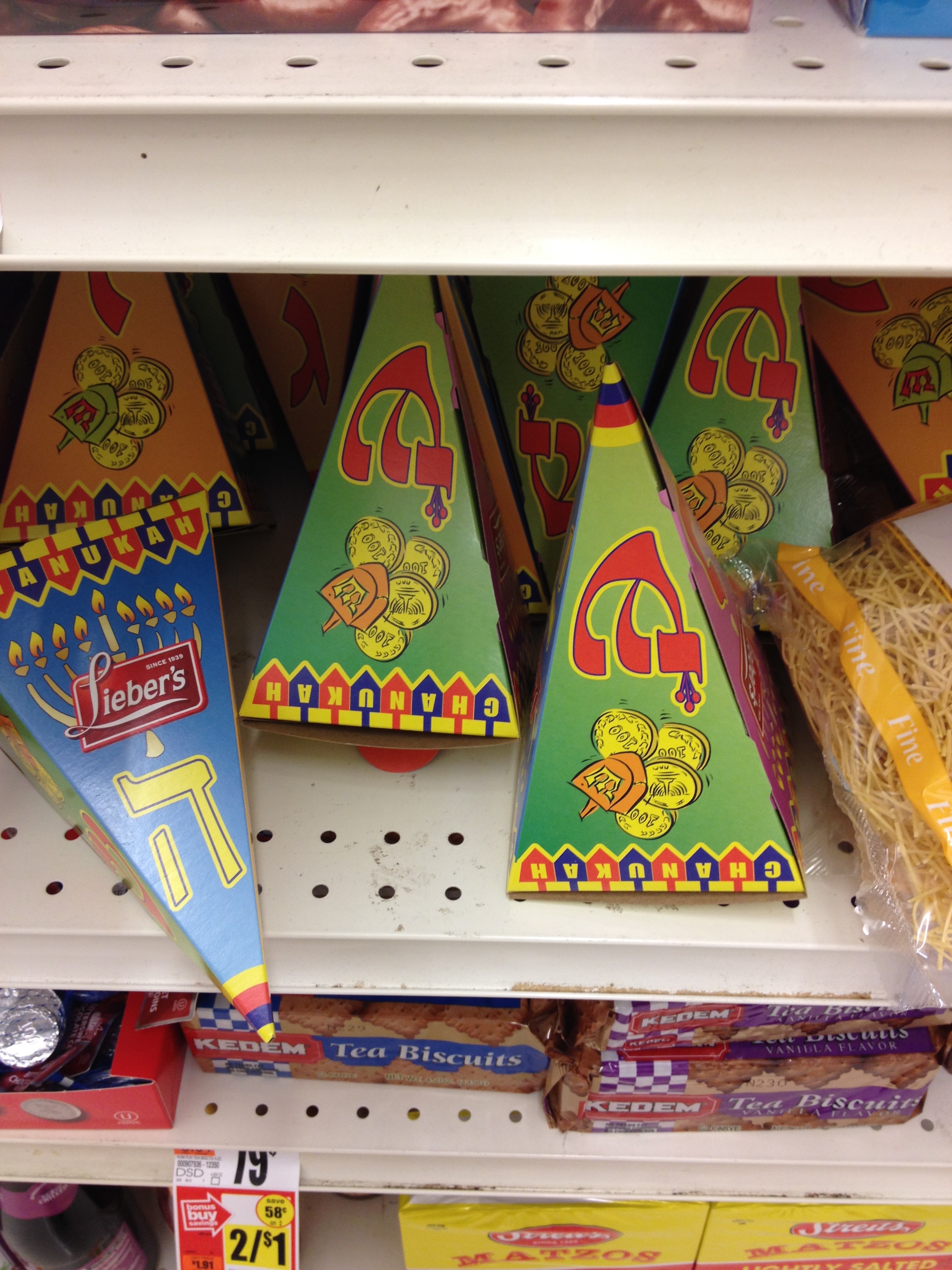
Celebration, I would suggest, is worth celebrating. Should atheists use a poster-child for the secular celebration of the holiday season? Should Christians have displays of mangers on church property where all passers by can see? Should Mensch on a Bench be displayed in stores? Should Santa be advocating for corporate giants who only want us to spend? Perhaps the answers are obvious. In my mind they are. We gather our families in, and in the northern style that has always resonated deeply with me, we look out the window and await the coming of the purifying snow.

Seems Reasonable

Florida is a state of contrasts. A news story from the Associated Press highlights that divergence. On the lawn of the Bradford County courthouse is a monument to the Ten Commandments that American Atheists sued, unsuccessfully, to have removed. In response to their legal defeat, they have placed their own monument to atheism alongside it. Well, what’ fair’s fair. Local reaction, according to the story, has been anything but positive. Nevertheless, I wonder what a monument to atheism must look like. The partial photographs reveal the atomic symbol-based American Atheists logo on top, and words on the sides. The monument, the story indicates, bears quotes from Thomas Jefferson, Benjamin Franklin, John Adams, and Madalyn Murray O’Hair, the last of whom was gruesomely murdered as an early martyr to the atheist cause. There are those who suggest that the atomism of Democritus in the fifth century BCE already tolled the death knell of the gods. Deities and very small particles, however, have continued to get along for the past 2500 years.

Ephesians_2,12_-_Greek_atheos

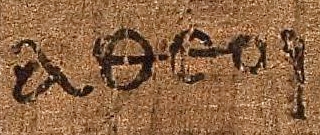
David Silverman, the current president of American Atheists, is quoted as saying the monument is an attack on Christian privilege, not Christianity. This may seem a fine point, but it is valid. Most reasonable atheists have no difficulty granting freedom of religious belief to anyone (only the more radical members of the atheist camp suggest religion ought to be stamped out). Does that mean governments should not display monuments to Moses’s magnum opus but not to, say, that of Lao Tzu? Or, perhaps in this instance, Lucretius? It might appear to be over-protesting, but what would a Hindu’s thoughts be, should s/he be ushered past the statutes of a foreign god on the way to court?

One of the most difficult things for a person to do is envision their normal as another person’s weird. Religions that seem perfectly logical to those raised within them have a way of seeming unbelievable to those who encounter them as a part of an exotic culture. To me it is difficult to suppose anyone would see American culture as “exotic.” I mean, we’re talking Wal-Mart and MacDonald’s here. It seems pretty ordinary to me. When I take a mental step back a little further, however, I begin to see a nation of widely varying traditions. Little pockets of true culture punch through the plastic here and there, and the light that shines through can be brilliant at times. And if you happen to run afoul of the law while visiting, you might end up in a courthouse that not only advertises the Ten Commandments, but also has a monument to humanistic spirit as well.


Battle Billboards

Perhaps the oddest intangible accompanying democracy is the concept that all things are negotiable. Add to that a capitalist sensibility that everything has its price and even truth itself feels like a matter of debate. We see this all the time with Creationists so desperately wanting the Bible to the “true” that they twist science into a fairy tale noose from which to hang their literalist god. The tendency, however, does not stop with them.

Surely one of the most tense stretches of pavement in the country is NJ 495 leading into the Lincoln Tunnel. The aorta pumping countless metallic cells into the heart of Manhattan, drivers and passengers often sit motionless in it for seemingly endless periods to crawl forward like an inchworm entering the Olympics. It is there that Battle Billboards takes place.

I have followed the Atheist billboard development with some interest. In my limited experience with the Lincoln Tunnel, I have noted the digital billboard on the Jersey side bears the message of atheist.org near the major Christian holidays, so as Easter approaches the newest one reads “Celebrate Living Without God” to promote a rally on the Mall in DC. Both religion and science make claims of how to know the truth. Truth with a capital T should be non-negotiable by definition. The problem is that nobody has the Truth. We’re still trying to figure it out. Atheist.org holds a firm conviction that life would be better without religion. Clearly not everyone agrees. Clarity, it seems, is the chimera of debates over Truth.

A few seconds after the atheist.org ad flashes off the big screen, an ad for Wrath of the Titans (coming soon to theaters) flashes on. Irony can be sweeter than honey and as bitter as the Dead Sea. The most recent Clash of the Titans (2010) borrowed little from classical mythology beyond the names and large plot lines. An atheistic Perseus just doesn’t fit the classical taste. In the new film, Zeus—surely one of the prototypes for modern conceptions of God—is captured by Hades and has to be rescued by his unbelieving son. Could any movie be a more thinly disguised Easter story? Atheists? Wrath of the Titans? Which way to jump? Fortunately for me, traffic going into the Lincoln Tunnel in these lanes is one way. That’s the kind of certainty we all can live with.

Light from above or hopeless ambiguity?


Battling Billboards

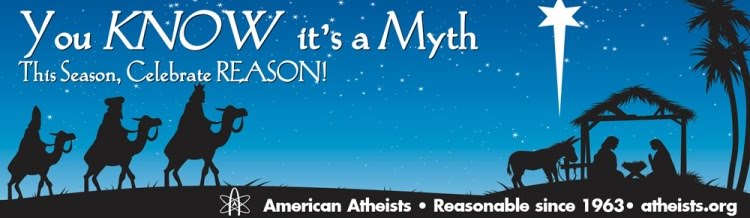
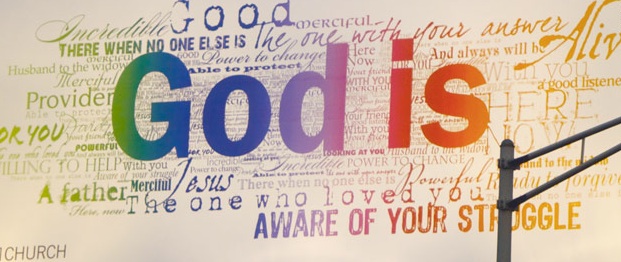
CNN’s Belief Blog carries the beleaguered story of the Lincoln Tunnel billboard battles. Last month a billboard proclaiming that the Christmas story is a myth had been sponsored by American Atheists to try to raise awareness that not all commuters are Christian. In response, the billboard has now been rented by the Times Square Church and newly proclaims “God is” with a number of devotional qualifiers. ‘Tis the season of wearing one’s passions on one’s red sleeves with white trim. Since this is America, it must be writ large.

The recriminations fly like childhood accusations: “but s/he started it!” Can’t mature adults agree to disagree? In a world constantly filled with inequality and strife, religion is used as a cudgel to enforce uniformity. The holiday season is much more than various religions marking their territories. The symbolism of the return of light after a long descent into darkness is archetypical, no matter whether it is the finding of oil to light lamps, the birth of Jesus, or the triumph of Sol Invictus or any of a plethora of other celebrations. It should be something that all people are able to share.

It is the “other” that is feared: the groups who do not share our religious outlooks. “He who is not for us is against us.” It is much safer to slap the other with a billboard barrage than to have to look into the eyes of another human being and say, “I respectfully differ.” Instead of welcoming in the light, we dig further into darkness. The Manichean sensibilities are undiminished after all these centuries. Some would argue that all must be brought into conformity for peace to prevail. To them I say, “I respectfully differ.”


Solstice Now!

Who owns the solstice? Whoever it is, I wish we could just get it over with. The darkness falls before I step into my 5 p.m. class. It is dark when I drive home. The next morning, leaving for my 8:30 a.m. class, I drive to school in the dark. Back at Nashotah House a colleague once said his wife became “almost pagan” in her yearning to pass the winter solstice and head toward the time of year when light prevails over darkness. My wife pointed out a CNN story concerning a New Jersey billboard sponsored by American Atheists. The billboard, just on the Jersey side of the Lincoln Tunnel into New York, shows the star of Bethlehem, the manger and the wise men. The inscription reads: “You KNOW it’s a myth. This season celebrate REASON.” Naturally, motorists are up in arms. Who owns the solstice?

Before the Thanksgiving leftovers even hit the fridge, Christmas season has begun. Santa always ends the Macy’s Thanksgiving Day Parade, making it official. Since we are capitalists, we do what the red-suited captain of industry says: shop. As long ago as A Charlie Brown Christmas complaints of the commercialization of Christmas have reverberated through the media. Personal properties and billboards enjoin us to “keep Christ in Christmas” and remember “the reason for the season.” Economists tell us to spend more to assist the sluggish economy. Meanwhile the light continues to fade; the days grow darker. Why confuse the issue with religiosity? Why not just spend some money on others, feel the release of endorphins, and be thankful?

Nobody knows when Jesus was born. The church selected December to celebrate the event because the shortest day of the year, for those north of the equator, had long been a time of fervent wishes for the return of light. The first-century Christian rivals, the Gnostics, believed in the continual, literal struggle between light and darkness. When sidelined by Orthodox Christianity, the torch was taken up by those who celebrated Saturnalia, Lupercalia, Hogmanay, Yule, Sol Invictus or any number of other winter festivals. Christmas was a relative late-comer to the celebrations that welcome the resurrection of the sun. So drivers from New Jersey should take it easy. The solstice is everybody’s holiday. I just wish that whoever’s in charge would give us all a little more light.