Reading Early America

Reading about Washington Irving is reading about early America.  And reading about early America is to read about what’s happening in politics today.  One thing that’s very clear, even among the founders of this nation, is the fear that politicians like those we have today would arise.  You see, nothing like America had happened before—a nation deciding to govern itself without a king or queen.  A democracy.  The founders weren’t blind to human weakness, however.  They repeatedly warned against what we now have—a two-party system (which will naturally deeply divide a people) that backs ambitious, wealthy individuals who crave power rather than the good of the country.  Instead of bravery, we elect cowards who dodged the draft because of their personal wealth, and then called veterans “losers” when they’re elected.

There’s some comfort in this long view, however.  The fear we all constantly feel is nothing new.  From 1776 onward, those who were architects and analysts of this republic have warned that we’re always on the brink.  Reading about such things at the same time as reading about the history of Russia is enlightening.  Russia was a monarchy.  It’s sometimes hard to remember that it has only been a hundred and five years since the Romanov family was executed and “rule by the people” became the norm in that nation.  That Mikhail Gorbachev was the first leader of post-Soviet Russia and that was only less than 25 years ago.  We are all part of history.  And history is very old.

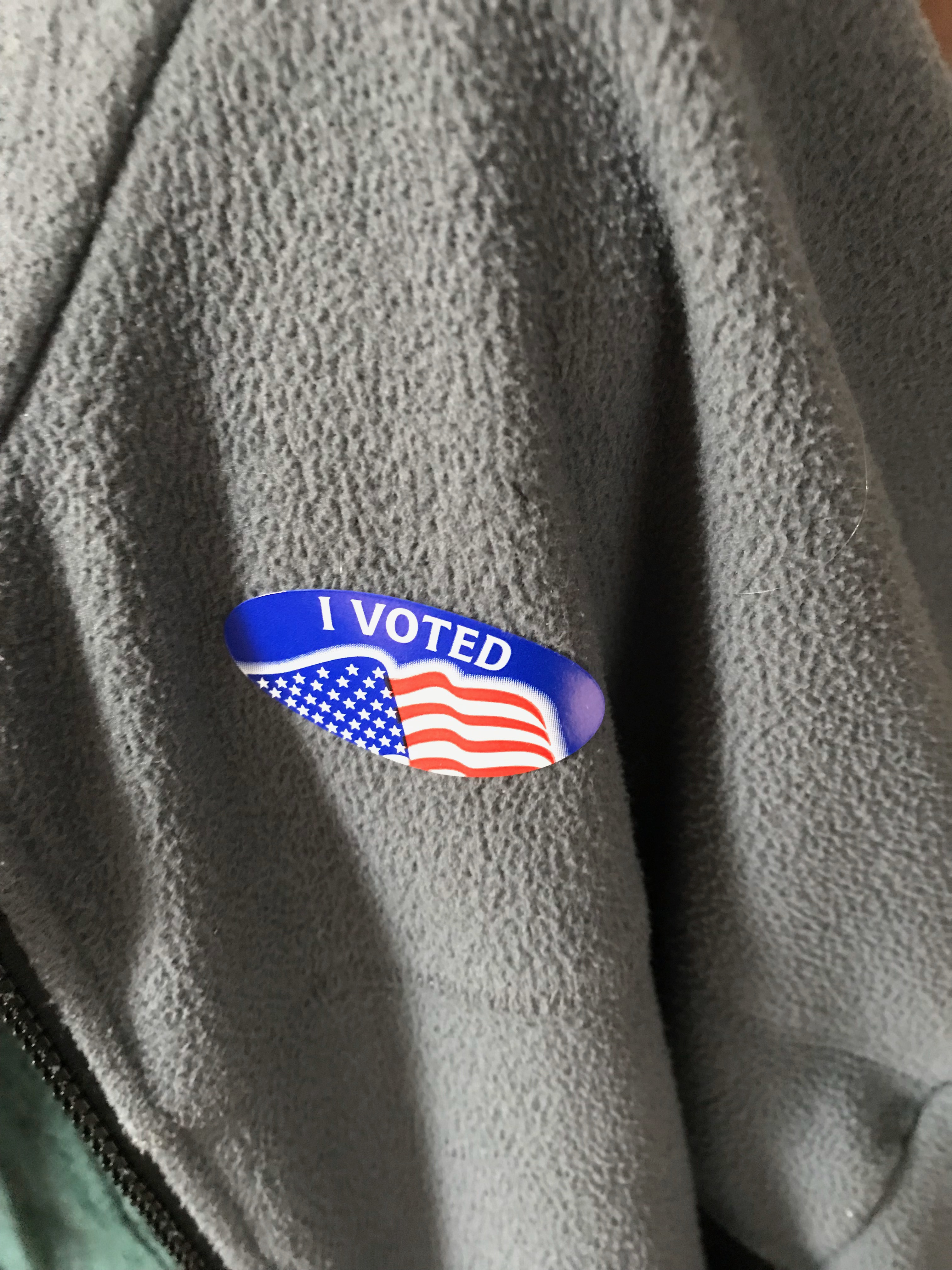
America only works as long as those who lead it are dedicated to the nation, not to themselves.  What is the sense of a nation if not putting the needs of others on the same level, or even above, your own?  Sacrificial thinking is behind what used to be called “servant leadership.”  Instead, we tend to see those who find out how to game the system rising to the top through money, grift, or high self-regard.  And when multiple nations have such people in leadership roles we find ourselves in the situation that we face in the twenty-first century.  But we faced it also in the twentieth century.  And in the nineteenth.  People, it seems, do not change.  Monarchs, through no right other than extreme wealth, rule nations.  The idea never dies.  The thought that wealth equates with worth is a poison to all political systems.  This is something you learn by reading about early America.  Today’s an election day.  If you support democracy, make time to get out and vote.

Celebrating Folk

The whole ox on a spit was kind of disturbing, but there’s nothing artificial about folk tradition.  We’d come to take in a bit of the Kutztown Folk Festival.  The crowds weren’t excessive, and we wore masks if the conditions warranted it.  The oldest continually operated folk festival in the country, this July event is a celebration of Pennsylvania German heritage.  In addition to the usual kinds of festival vendors were a number of specifically folk artists—quilters and hex sign painters prominent among them.  It’s difficult to find a good sarsaparilla anywhere else these days.  We wandered around, watching an old-fashioned hay bailer at work, appreciating the time various craftspeople put into their art, taking in a quilt auction.  (I can’t even imagine having a spare few thousand on hand to buy a quilt, but obviously others can.)

Although mostly white—those of us with blue eyes may have been in the majority here—there were those of various ethnic backgrounds around, enjoying the ethos.  What struck me upon hearing one of the singing, folklore groups telling about Pennsylvania German (commonly called Pennsylvania Dutch) traditions is that this may be one reason people fear the current emphasis on multiculturalism.  It’s fairly rare to hear anyone speaking proudly of being a German, even though Germany seems to be one of the least fascistly inclined countries these days.  Even a dominant culture is afraid of losing a sense of self.  It seems to be a uniquely human problem.  That ox on a spit really bothered me.

While I’m an American mutt, about half of my DNA is fairly solidly teutonic.  Although I was born in Pennsylvania and my grandmother still spoke German, we weren’t Pennsylvania Dutch.  A second-generation American, my grandmother was from Washington, DC.  My germanic grandfather was from upstate New York.  They just happened to settle in Pennsylvania late in their lives.  Still, I felt a strange kind of kinship to those explaining German food—heavily meat-based—and hex signs on barns.  I grew up seeing the latter, and it never occurred to me that while living in the Midwest they simply weren’t there.  I didn’t grow up on a farm—we lived in a cheap apartment—and we never talked of German tradition at home.  No, like the blacks, and south Asians, and those, like me, of clearly mixed descent, that I saw there, we were all simply Americans.  That’s what folk festivals are all about—celebrating who we are.


A Little Bit

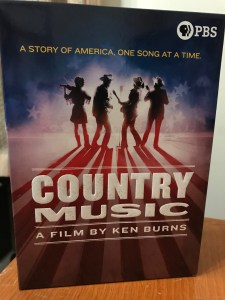
I don’t know about you, but I have a complicated relationship with genres.  As a fiction writer I have great difficulty classifying what I write, and that shows in the reluctance of publishers to embrace it.  We tend to suppose that some kinds of Platonic types exist out there by which we can map what we find here in the physical world.  These genres, however, are far more permeable than they seem.  My wife and I just finished watching the eight-part Ken Burns documentary Country Music.  Neither one of us is what you might call a fan of the genre but I can say that I learned an awful lot.  My stepfather was a country music fan, so many of the names and songs, particularly of the early years, were familiar.  What became clear throughout the century or so covered by the films was that the dividing line was always a blurry one.

While today we tend to think of country music as a southern phenomenon, the documentary made clear that its beginnings were folk music.  And folk lived most places.  While certain styles predominated in certain ages, across the years it was hard to tell some country music from pop music and rock (especially in the early days of the latter).  Even rock is difficult to classify.  What it often comes down to is self-identification.  An artist or band that identifies as country is country.  It is a distinctly American art form and it quite often identifies with religion.  Like rock, it also has some roots in gospel music.  When it becomes secular, gospel can go into many unexpected places.

Another association—again, a generalization—is country music and conservatism.  Partly it’s the promoting of Americanism, but partly it’s based on a false perception.  Performers are actors, after all.  Many of the “clean cut” examples of country singers struggled constantly with drug abuse (often considered the demon of rock-n-roll) and alcoholism.  It’s often right there in the lyrics.  The listeners, however, tend to think of them as stories.  That was the other great takeaway from the series—people are drawn to the stories.  I think that’s something we all know, but country music often excels at the hard-luck story that resonates with people down on their circumstances.  I’m not about to become a country music fan, but watching this series, like any educational venture, has opened me to a new tolerance for what I previously classified as a genre that didn’t have any appeal.


Freedom’s Price Tag

Independence Day makes me feel conflicted.  Jingoism seems to be an international problem, and although patriotism is deemed next to saintliness, I have my doubts.  No nation is perfect *gasp!* and we would all do well to learn from others.  America is a nation in love with money and that affair has serious consequences.  One is our medical care system.  We’re one of the very few (if not only) “advanced” nations without universal medical coverage.  In fact, people routinely suffer because they lack insurance or their coverage doesn’t provide for what their physicians think is best.  This came home to me while staying with a family member who was hospitalized recently.  On the television the GOP was sponsoring ads against universal health care.  The irony was thick enough to be sickening.

Highly touted as the most affluent nation in the world, we refuse to take care of our own.  How am I supposed to get into the mood for Independence Day?  In Britain (as in most other places) they have universal health care.  I lived there for three years and knew that I could get treatment without emptying out the bank.  Here, in my native country, we have less care.  Someone might make a few dollars less, and that, we’re told, is unacceptable.  Anyone who’s experienced the illness of a family member knows the old one-two.  The treatment itself and the bills that come after.  Lately I’ve just been throwing up my hands and opening up my wallet.  It’s Independence Day.

Not that I’d expected much to change, but my first inkling of being a writer was winning a state-wide essay contest right here in Pennsylvania.  I wrote an essay on “Americanism” back in 1980.  It noted the false sense of righteousness that accompanied the notion.  I was an evangelical Christian then, but that didn’t mean I wasn’t cynical.  In my small town I’d seen John Cougar Mellencamp-level suffering.  I saw unemployment, drug use, and desperation.  I saw politicians saying everything was great and would be even better if we had more guns.  I saw trickle-down economics stemmed at the source.  I knew we were being lied to.  I did hope that things would get better, but now with the GOP fully behind 45 the true ugliness of jingoism has become clear.  It’s Independence Day and I feel sick.  I look across the ocean and see the nation from which we declared said independence suffering from a similar backlash.  But at least they can afford to go to the doctor.


Americanism

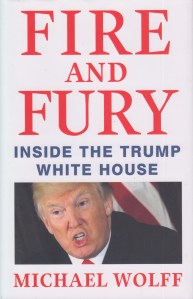
I’m a bit too much of a contrarian to be a regular bestseller reader. I do occasionally bow to curiosity though, and I do have a lot of time on the bus. But that wasn’t the reason I turned to Michael Wolff’s Fire and Fury: Inside the Trump White House. Purchasing this book was a statement. Another in a long line of protests in which I’ve taken part since January of 2017 (and even before). You see, I mourn. I mourn what our country has become. My first indication that I should write (which I of course ignored) was the winning of a statewide essay contest my senior year in high school. The topic of the essay was “Americanism.” My piece was respectfully cynical; I was surprised I won. This was in the days before personal computers and I didn’t think to keep a typed, or even hand-written copy.

The essay was cynical not because I don’t believe in America, but because I do. I’ve been confronted on this issue concerning my blog occasionally. My jeremiads. You see, you only get this fed up with things when you love them deeply. I sometimes rail about higher education, for example, because I care about it. Fire and Fury created in me a—to borrow from the book’s vocabulary—Kafkaesque bewilderment about how a nation based on high principles could possibly sink so low. Politicians are perhaps the most self-serving of human beings, but at least they try to make sure the country doesn’t go off the rails. This train leapt the tracks months ago, and our elected officials refuse to do anything about it, each playing their own angle, hoping personally to come out of it ahead. Worth a jeremiad, I’d say.

I was a Republican in high school. I wasn’t old enough to vote, so that party affliction was never official. When I did register at 18 it was as an independent (remember, contrarian). As a Fundamentalist I was ahead of the Tea Party, at the time. Even with this level of patriotism I wrote an essay taking my country to task. I was raised in a poor family. Told an education would improve my chances, I found myself facing predatory loan officers and others eager to wring my blue collar until it was possible to twist no further. If I had no money, my future money would do. I’d already had a taste of that as a high schooler. That was three-and-a-half decades ago now. I kinda hoped the country might improve in all that time. And I kinda wish I’d kept a copy of that essay as a memento of more optimistic days. Fire and Fury sells so well, I suspect, because I’m not really alone in feeling this way.


Liberty and Justice

I confess to being a bit vexed. How are we supposed to celebrate Independence Day under the Trump administration? Since January our government has demonstrated over and over and over again that it’s dearest desire is to pick democracy apart, to its own advantage. Making voting more difficult for those who oppose the Republican Party, gerrymandering to ensure local election victories, cutting their healthcare so that they might, well, just die off. Repeated and loud public protests do not impact them at all. When their own party moderates protest, they claim they’re collaborating with the enemy. The American people have become the enemy of the wealthy and privileged who want this country to resemble a country club, not a nation of liberty and justice for all.

How do we celebrate a country like that? Back in high school, my senior year, I won a state-wide essay contest. I got my picture in the paper and everything. I don’t have a copy of the essay, but I do remember that the topic was Americanism. Yes, the “ism” was part of it. Although I didn’t know Shostakovich at the time, it was my attempt at what he did in his fifth symphony. Looking back, it seems strange that a Pennsylvania statewide committee would select an essay so full of irony from a working class boy who was only too well aware of his own inferiority. Yes, there was irony in that essay, and anger. Carefully hidden. It sounded patriotic. The hundred dollar prize didn’t make a dent in my fall tuition bill.

Nearly four decades have come and gone since then. I’ve watch my nation teeter-totter between humane treatment of those left out by the system and offering kick-backs to those who by no definition need or deserve them. Until November of last year I’d never seen a nation stoop to the absolute abyss of cynicism in the election of Trump. Although President Obama had the grace to say that many people were obviously happy with the results, it was as if my essay—now lost and forgotten by all but one—had come true. Make no mistake about it—I’m a poor boy who grew up among the working class. As a teenager I could see, hear, and taste the hypocrisy. I hoped and dreamed that as I grew up so would my nation. It’s the fourth of July. Normally I would be celebrating Independence Day. This year, however, I’m only wondering what went wrong along the road to liberty and justice for all.