Fire and Blood

Religious intolerance again claims lives, and yet the self-righteous never flinch from their smug smiles. What insane pressure drives extremists like Terry Jones to desecrate the symbol of another religion? What did burning a Quran accomplish other than a feeling of personal satisfaction at a religious one-upmanship? Did he even stop to think that his own religion was once persecuted and that this nation that allows him the freedom to spit in the face of other faiths also welcomes his imaginary enemies? Now innocent people are dead in Afghanistan because of his intolerance. It may be that Terry Jones’ personal act of impropriety may soon blow over, but the damage has already been done. These dead will have died in vain.

Putting match to paper proves no superiority of intellect, spirituality, or especially, righteousness. The problem Terry Jones’ brand of Christianity faces is that Mohammed was born before the metaphorical return of Jones’ Christ. It is clear from the (unburned) Christian scriptures that early believers were convinced Jesus’ return was imminent, within their own lifetimes. For those who did not successfully transition to the meaning of the metaphor, it has been a weary two-millennium wait. The emergence of new religions in the meanwhile has become a threat to the superiority of their own. Apocalypticism claims many victims. Now people are dying because Terry Jones can’t cool his heels to see how this one comes out.

Religions that prove their point by trying to brutalize other religions have already shown their true character. Muslims do not burn the Christian scriptures because they accept the validity of Jesus’ teachings as well as those of Mohammed. Has Terry Jones damaged Islam by burning a book? No. Has he damaged the already languishing opinion on western supersessionism? Certainly he has. It is now incumbent on the rest of us to declare that we excoriate the acts of Terry Jones and his contemptuous version of Christianity. Islam need not try to give Christians a bad image; we are quite capable of helping ourselves.
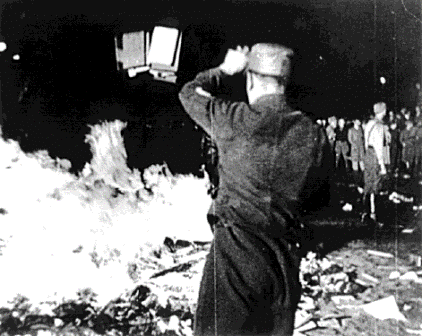
Terry Jones' ideological companions
Two Roads Diverged

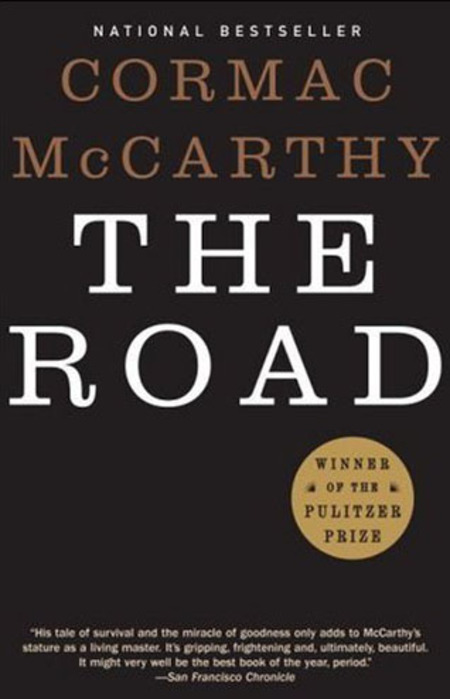
Back in my Gorgias Press days one of my co-laborers (BU) suggested that I might enjoy reading Cormac McCarthy’s The Road. Since then it has come out as a movie, and further apocalyptic events have occurred – the Deepwater Horizon disaster and the election of Chris Christie come to mind – so I finally got around to reading it. It is a harrowing book for any parent to read and I doubt I have the heart to see the movie. Already the book is spawning internet quotes and quips, but I was particularly interested in seeing how this post-apocalyptic novel handled God.

Since the Bible, via Zoroastrian influence, gave us the religious concept of the apocalypse, it is fitting to see how religion fares in its unhallowed progeny. Mostly God is absent. When the man and his son mention God, the language is spare and laced with betrayal. “There is no God and we are his prophets,” the old man declares after the man and his son leave the bunker. A few paragraphs later he states, “Where men cant live gods fare no better.” The value of the apocalyptic metaphor is that it forces us to face life as we find it: raw and uncompromising. In the fictional apocalypse it is permissible to utter aloud implications of life’s callous lessons.

My career has had its share of jagged edges. The lacerations I’ve personally received have been at the machinations of Christians eager for self-justification. Self-congratulatory individuals and collectives that suppose God has specially favored them. “There is no God and we are his prophets.” It is like reading Camus in slow motion. One of the lessons both Nashotah House and Gorgias Press taught me was that it can always get worse. Reading McCarthy’s sad yet true tale of the woe we bring upon ourselves, the lesson for those eager for the apocalypse is that they have only to open their eyes.


Lost Apocalypse

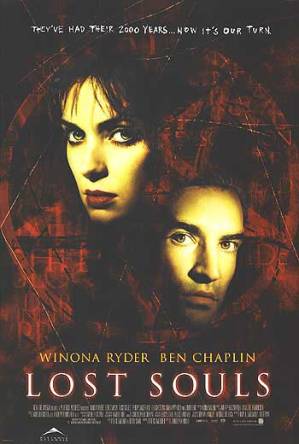
The Bible has many eminently quotable passages. I suspect that is one of the reasons it has the staying power that it does. Many critics of the theologies spun off by the Good Book have turned their vitriol toward the Bible itself, but I believe such hostility to be misplaced. Not everyone enjoys reading the Bible – that much is true for any book. The Bible, however, is foundational for not only our society, but the entire western literary tradition. Its influence on Shakespeare alone, who has, in turn, influenced just about every writer since the seventeenth century, underscores its literary importance. That’s why I’m always surprised with film-makers use concocted verses from the Bible when actual passages would produce the same effect. Granted, few Bible scholars comprise movie audiences and producers and directors seldom worry about writing the story for them. Last night I watched the “horror” film, Lost Souls, released in 2000. I’d read about the movie in Douglas Cowen’s Sacred Terror, so I wanted to see how it rated.

The movie begins with a false Bible quote: “… A man born of incest will become Satan and the world as we know it, will be no more. Deuteronomy Book 17.” Now granted, the movie failed to rock the critics, but the sheer weight of errors from pre-scene one should be the first warning to start from a better script. Beginning with an ellipsis for dramatic effect may be acceptable, but it serves no purpose – and what’s with the misplaced comma? A man born of incest in Deuteronomy is a non-starter because his potential parents could only be found dead, crushed together under a pile of hurled stones before the unfortunate could even be born. Satan as a devil is never mentioned in the Hebrew Bible, let alone Deuteronomy. Deuteronomy is almost never quoted by apocalypticists since it does not predict the end of the world, and Bible books are divided into chapters, not “books.” Well, the biblical illiteracy of Hollywood may be overlooked for a good story, but this is no such thing.

Lost Souls fails on the premise that a biblical “literalism” (and that is only if certain Evangelical interpretations are given unwarranted credence) about the coming of an Antichrist should be shored up by a fabricated quote from the Bible. I’m not trying to be a movie critic here, but a cultural one. The whole “end of the world” scenario held by many Evangelicals is a hodge-podge of biblical verses brought together by clever nineteenth-century clergy with little exegetical training. It is like trying to connect the dots while having to change pages constantly. The idea caught on amid the discarded lives left behind by advancing industrialism and the perceived threat of evolution. Apocalypticism has become its own industry as some otherwise unknown writers can attest. Movies like Lost Souls, or even The Omen, however, pale when compared to the antics of religiously motivated apocalypticists in the real world. Some of the rules in Deuteronomy itself are more frightening, if better written.


The Call of the Apocalypse

In discussing various polemics against religion, such as those by Christopher Hitchens and Bill Maher, I have frequently stated that they have a point, but they have ignored the good that religion hath wrought. It is like an Anti-Julius Caesar – the good is oft interred with the bones. Then the news goes and validates their polemic. The arrests yesterday of the leadership of the Christian militia calling themselves the Hutaree (I’m sorry, but it sounds like a happy Boy Scout gathering) highlights once more the danger that religion poses to an already unstable society. I’d not heard of the Hutaree before, and chances are I would never have heard of them had they not plotted an apocalyptic war against the United States’ government that landed them on the front page.

Few people are willing to admit just how dangerous apocalyptic thought is, or how deeply rooted it is in American politics. Tracing the roots of this form of belief is not difficult – apocalyptic first appears in the Bible when revelation through prophecy met and mated with Zoroastrianism’s dualism. The offspring of this union was the belief that a new, and better (!), age was about to dawn. God would usher in an era of peace, but it had to be precipitated by an era of war. Presidents drawn from the Religious Right have held this belief. Some have even eagerly begun wars in hopes that this ancient Afghanistanian religion would lead to the Christian apocalypse. At least the Hutaree were up-front about it: they believed that armed conflict with the government would flush out the Antichrist and usher in the end.

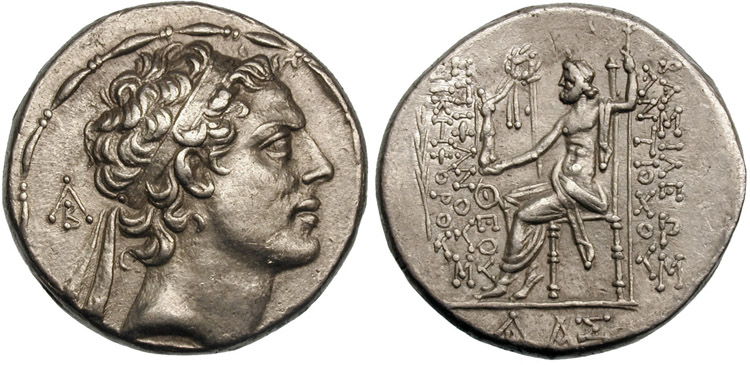
Last night in my Prophets class student questions indicated just how much interest there is in apocalyptic. We live in an era when information is all-too-easy to find, and yet many otherwise intelligent people believe that a hidden knowledge about the future is available in the Bible. It is not. For those who have ears to hear, Daniel was written about Antiochus IV Epiphanes. Revelation was written about a Roman emperor (perhaps Nero or Domitian) who threatened nascent Christianity. The apocalyptic battle was already underway. The future they longed for was peace. Modern apocalypticists see all of this as future prediction and believe that they must start the war. All of this makes me feel strangely vindicated. The FBI and other government officials are starting to demonstrate an awareness that to prevent religious extremism you must understand it. Now if only universities would catch on and realize that the study of religion is vital to national security I might end up with a full-time teaching post after all.

The original Antichrist


2012

As the economy rolls along like a marble on a pebble beach and the stock market continues its own bumpy road to recovery, apocalyptic thought is again on the rise. It is when times are bad that apocalyptic comes in most useful. Individuals who feel that this world has run out of possibilities generally look to a new future world where things will be radically different. That’s why people flock to movies like 2012 and dream of a new day, a new era.

That’s the way it has always been. Jews being tortured to death under Antiochus IV Epiphanes, the Seleucid tyrant, looked for that day when Michael would take on the “Prince of Persia” and the new world would gush in and overtake this one. Almost two centuries later the early Christian movement, suffering at the hands of Roman emperors such as Nero and Diocletian, reveled in the visions of Revelation — the new world coming. Rental property is free in the New Jerusalem! The earliest exemplars of apocalyptic thinking appear to go back to the ancient Zoroastrians. This early Iranian religion (which may have originated in Afghanistan) took comfort in a dualistic world where good and evil constantly struggled until a cosmic conflict would result in the ultimate destruction of evil. It helped to explain why things could be so bad for good people in the here-and-now.

2012, however, derives from concerns that the Mayan calendar seems to have run out of space at that time slot just over three years from now. Otherwise intelligent people panic; this is an apocalypse of the secular kind! Experts on the Maya (among which I am not) explain that the Mayans use(d) many calendars (there are still Mayans around). Their large-scale, 5000 year calendar may run out on December 21, 2012, but that doesn’t mean the end of the world. In fact, that calendar only began on August 11, 3114 BCE, about 4.5 billion years after the creation of the earth. It was not meant as a road-map to the cosmos. The real apocalypse is in the minds of those suffering from their own private ills in this world. Ever since Zarathustra spoke, people have had an alternative, better future to anticipate.


Momma Maya, Is It the Apocalypse Already?

Where have all the Maya gone, long time passing?

Where have all the Maya gone, long time passing?

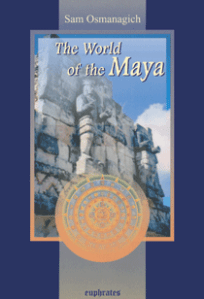
While recently reading a Gorgias Press book on the Maya (Sam Osmanagich’s The World of the Maya) I couldn’t help but notice the concern of the author with the year 2012. Actually, Osmanagich is looking forward to 2012; it will be when a new era in human existence begins. Since he freely admits throughout the book that extraterrestrials provided technical support in the Mayan monumental architecture, I suppose the fixation on 2012 should not be surprising. The book is charming as a folksy travelogue and disarming in its innocent sense of wonder, but academic it is not.

Concern with the end of the world as we know it seems to have entered the Judeo-Christian tradition with Zoroastrian contact. As soon as the idea was conceived it was immediately apparent that this was going to be a very large baby, and it has not disappointed. Back in my rural Pennsylvania high school, concern that the world would end in 1980 was seriously rampant. (Considering that the Reagan-Bush years were about to begin, it makes sense in retrospect, at least on a metaphorical level.) Worry ran so high that on the stated day — noon was the confirmed hour of doom — my English teacher laid down her grammar book and had us spend our final earthly minutes writing an essay arguing why the world was, or was not, going to end that day. When the class-bell rang, other than some soiled undergarments, everyone seemed pleased still to be there.

I was at Nashotah House for Y2K. A prominent administrator insisted that we all prepare for the likely event of a societal collapse. (From my present vantage point, I’d rather have taken my chances just about anywhere else.) Yet here I am to recount the tale.

Now only a dozen years down the road from Y2K we are being told to prepare for yet another apocalypse. People I speak to seem genuinely concerned about this one, and even I had a shiver or two as Osmanagich calmly laid out how the Maya just didn’t make mistakes like that. As I see it, there are two choices: people should study the origins and rationale of apocalypticism or someone should start a business selling Apocalypse insurance (the name Four Horsemen might be catchy). People seem ready to believe that extinct civilizations knew something about our fate that we just can’t see. And if the world does end in 2012, well, you wouldn’t want to have all those premiums weighing you down by then, would you?

The Four Horsemen -- would you buy insurance from them?

The Four Horsemen -- would you buy insurance from them?