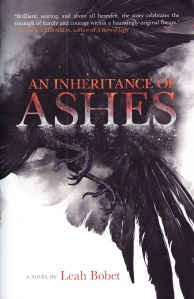
Autumnal Ashes

I once told someone that a book I was reading was a “good autumn book.” The friend looked at me quizzically and asked what I meant. Seasons have a feel to them, even as books do. When the days grow shorter and the chill seeps in through the storm windows, I start looking for a book that matches the mood of a year that’s dying beautifully. So it was I came upon An Inheritance of Ashes by Leah Bobet. While I like Amazon just fine, the magic of the brick-and-mortar bookstore is finding that book face out that you’d otherwise never have seen. I read a lot of fiction—more than I post about on this blog—and a great deal of it come from the unexpected find in the local indy.

The story’s difficult to classify. Set in a future that sounds quite a lot like post-Civil War days, two sisters, Marthe and Hallie, try to keep a living at Roadstead Farm. The last of the soldiers have made their way back from the war where the Wicked God was killed. We never see the Wicked God clearly. He’s from a parallel world and is championed by his prophet. The death of the Wicked God was largely thought to be the end of the war. The passage between worlds, however, isn’t as secure as they armies thought. Religion doesn’t play a strong role here, but it was the cause of the war that has devastated the nation.

Fictional worlds require believers. Stories need not be religious to include religion. Without it, many tales lack verisimilitude. People are religious creatures by nature. Belief drives us, whether secular or sacred. This novel about a family trying to pull together in the aftermath of an evil god’s death. There’s a purgatory here from which those who believe can be rescued. And Hallie, who believes, ends up saving her own entire world. Religious? Not really, but it is all about belief. We need books that encourage faith in dark times. Indeed, An Inheritance of Ashes is about a dark period of uncertainty. What used to be true is open to question in these days when one belief system is determined to wipe out all others for good. Not so much live and let live as it is give and not give back. Ashes, whether literal as in Bobet’s world, or figurative as in our own, are appropriate reflections as the year begins to die.
The Fall

“Herr, es ist Zeit. Der Sommer war sehr gross,” go the opening words of Rainer Maria Rilke’s 1902 poem, “Herbsttag.” Autumn day. “Lord,” one might feebly translate, “it is time. The summer was very great.” The English words fail to capture the lyricism of the Teutonic original, but these words have been running through my head since about the middle of August when, standing outside before dawn waiting for the bus, some days, I think a jacket might be nice. Just a light jacket. Something to cover the parts of my arms not protected by a tee-shirt. And I realize, although autumn has always been my favorite time of year, it cannot come without a sense of loss. I’m no summer beach fan. Most of the time when I wander to the ocean it has already taken on its gray fall coat. But still, the passing of summer is sad, always sad.

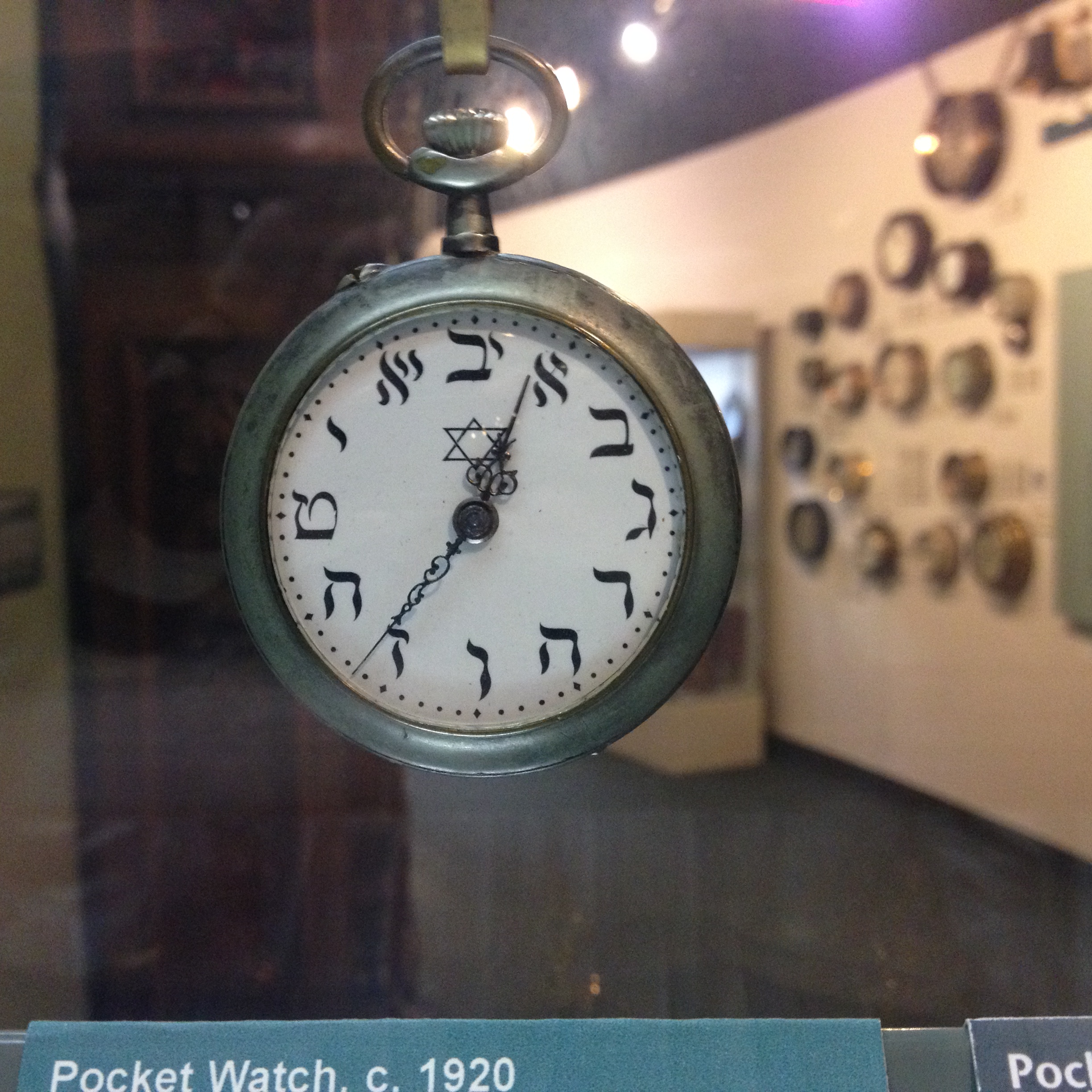
At the National Watch and Clock Museum, we learn that Galileo, often presented as the antagonist of the church. got his idea for the pendulum from watching church lanterns sway from their chains. Time was passing, but it was “God’s time.” The growing season ends, and the harvest is at hand. Our children head reluctantly back to school after too few months of unstructured time. Time when sleep is abundant and the sunshine lasts long into the night. Adulthood robs us, perhaps, of such finery, but I can still appreciate it from a distance. Were I more mature, I might even say it is of greater significance for being further away. I’m a little too young, however, to have forgotten how summer can make me feel. I adore the autumn, but I miss the sun nevertheless.

IMG_2451

Here in that transition between hot, endless days and the chill release of Halloween, I find myself contemplating the religious nature of time. “If I could save time in a bottle,” Jim Croce wrote, and then his plane crashed on take-off. Time is like that. It promises eternity but gives mere seconds. Apart from the beach bums pining for endless summer, those of us enamored of autumn stand still and reflect on the cusp of seasonal change. Perhaps, like the year itself, this is all a cycle. The face looking back at me from the mirror has more gray hair than I remember growing. And yet the clock on the wall continues to tick. Work will always be waiting there on Monday morning, and the sun can reach quite as high in the sky as it did only last month. “Herr,” I sigh, “es ist Zeit.”


Autumn Music

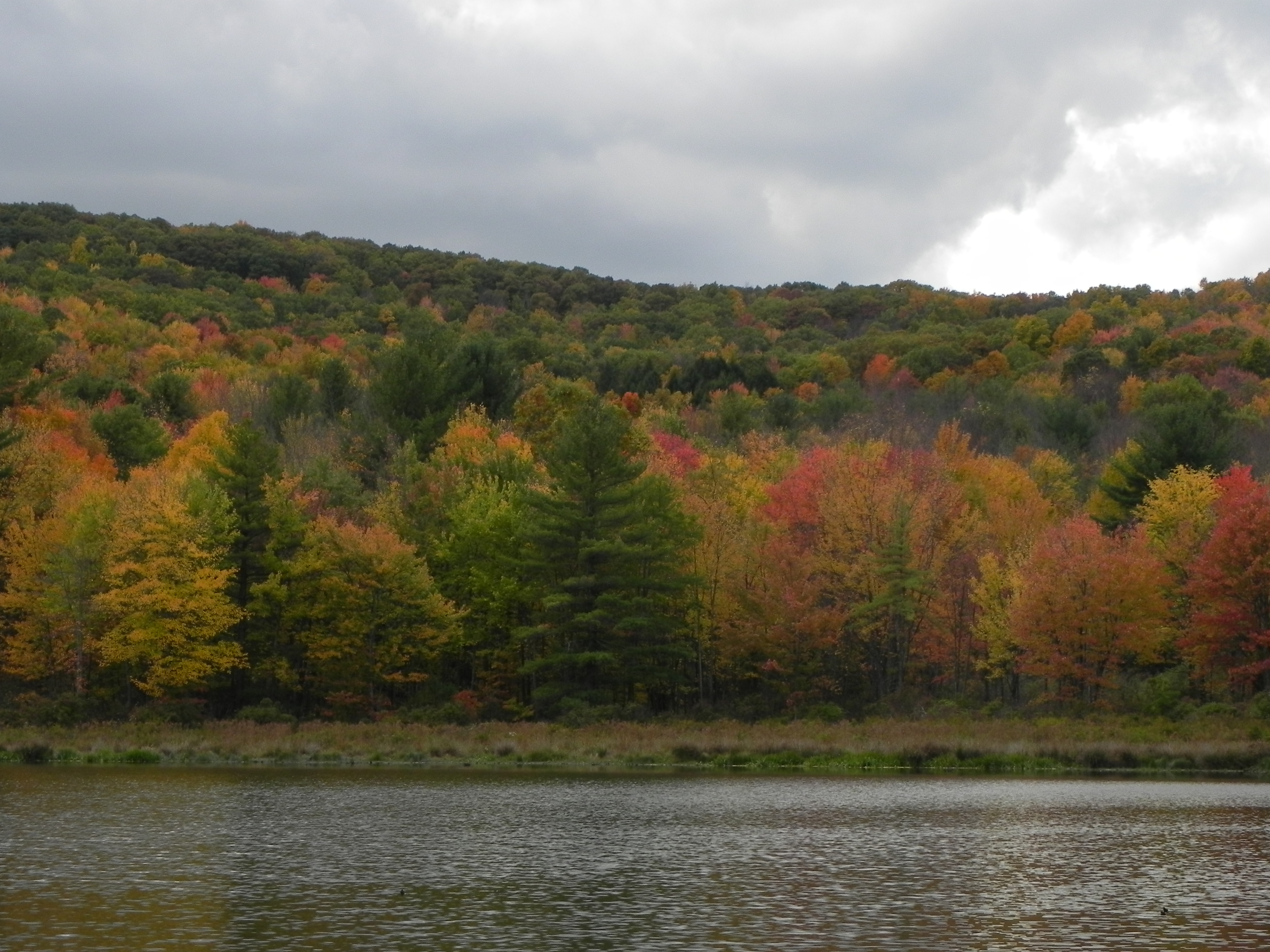
It is an experience as old as humanity itself. At least humanity that started to realize that age, as remote as it may seem, will always eventually catch up with you. This past weekend was Family Weekend at my daughter’s college. Since her school does things up right, there were a variety of events on offer, one of which was an a cappella group concert. A cappella has come a long way since my college days, with students able to use their voices to sound like a band, professionally mixed, and full of energy. Somehow, I don’t recall that much energy from when I was a student. In any case, the inevitable group doing “oldies” took the stage an opened with a song from 1987. Wait. What? Since when was a song of which I remember the first release an oldie? The kids did a great cover, and I suspect in their minds it was really an old song. I was only 25 when it was given to the world. Can I really be an oldie? Outside the leaves on the trees were brilliant, as if on cue for the tuition payers to have their heartstrings wrung. Trees become their most alluring as they are about to die.

Songs, however, have a way of becoming part of you. Back when we were young(er) and idealistic, my wife had thought to study music therapy. Nashotah House, however, decided to change the career trajectories of an entire family in the name of orthodoxy. One of the things she learned in her classwork, prior to being sent back to the work-a-day world, was that patients suffering from dementia can often sing a song from their youth, even if they can’t speak a word. Music gets into our brains in a way that language learning doesn’t, and when we hear that song we are, to borrow a phrase from Bob Dylan (which another of the groups sang), forever young. It is a beautiful wish, endlessly covered and recovered. Watching those kids on stage, I recalled being on the cusp of adulthood myself. Everything seemed possible then. Then a world that others constructed imposed its constraints on me. My hair began to grow gray even as the leaves lit up yellow and scarlet and fire orange.

DSCN4928

Religion is the business of those who are old. Even as a religion major in college I was classed among those old before my time. We think of the hereafter on our deathbeds, not when we’re twenty. For those who teach their children to ponder eternity at a young age, however, that portal is never far from view. My fellow students were looking ahead to careers in all kinds of fields that would make their fortunes and reputations. My modest attempt to bring a younger generation to a more mature outlook faltered at the hands of Fundamentalists, and it was music that helped me through that terrible shock. Little do we think that that song we like so much is marking us indelibly as a child of our age. Time will not relent. We will be the ones, like the trees, showing our signs of age as our children show us where the future lies. And the attitude of that song from 1987 will be, for any who truly listen, forever young.