Writing the Cosmos

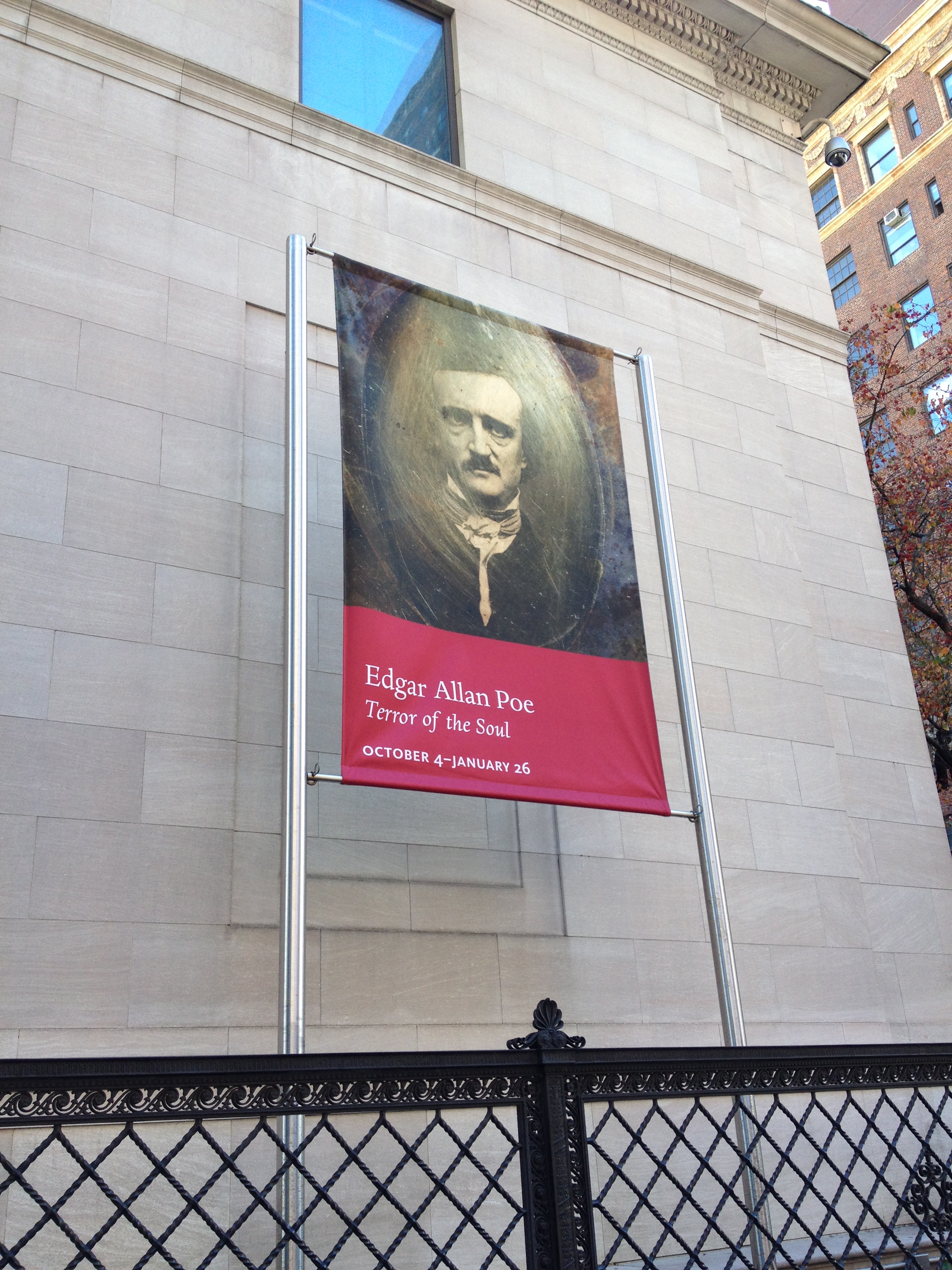
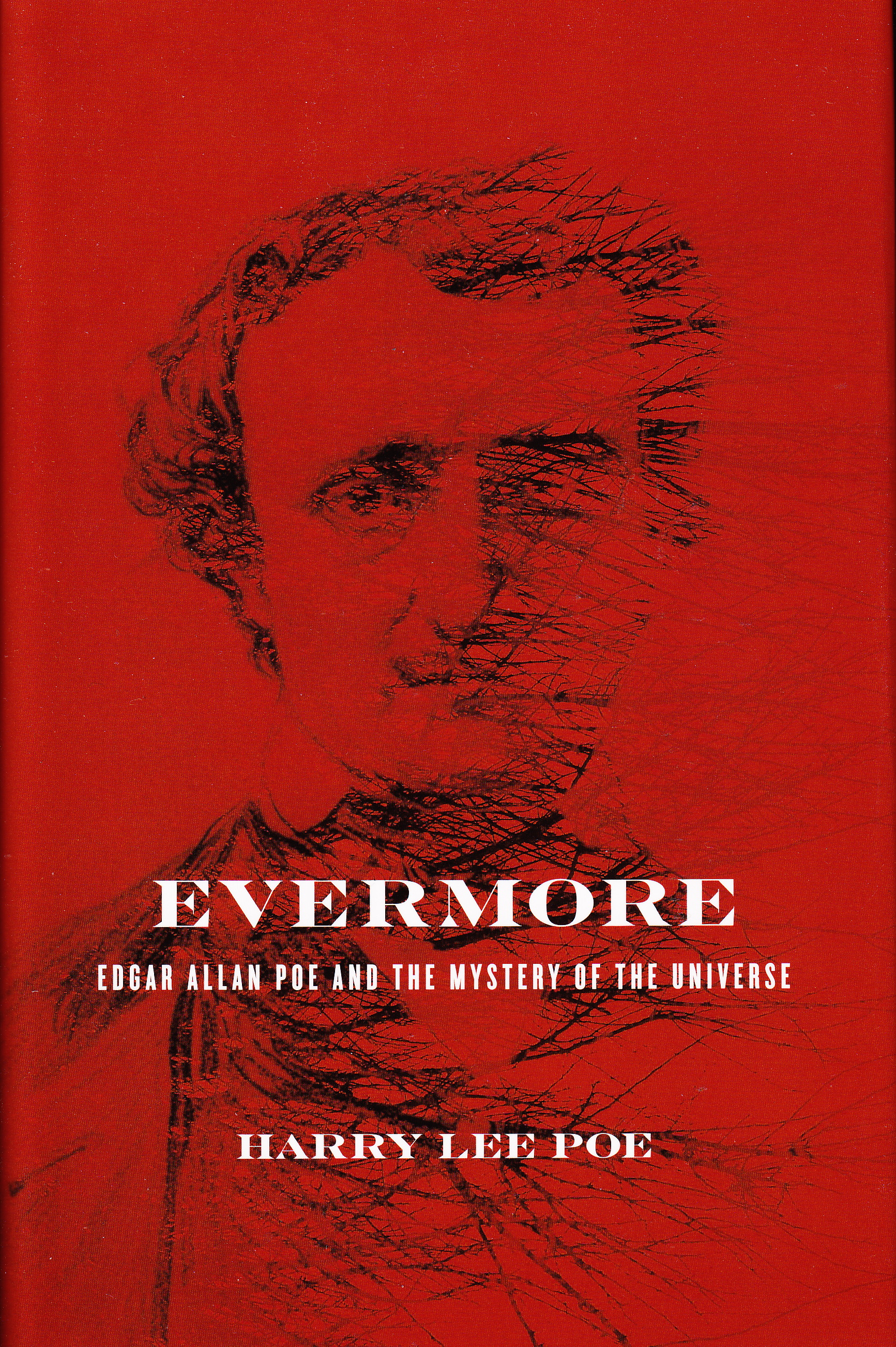
EvermoreOn occasion those with great wealth try to give something back to society. One such gift takes the form of libraries. The J. P. Morgan Library on Madison Avenue in New York is a touch pricey for those who live in humbler domiciles, but the Edgar Allan Poe display proved too immense a draw to ignore. Standing inches away from manuscripts written in Poe’s fine hand was a kind of communion. It wasn’t too difficult to believe he might have somehow been there. In Baltimore last month I didn’t have the opportunity to revisit his grave, but I picked up a book by one of his modern cousins, Harry Lee Poe. This Poe has theological training and an interest in seeing that his famous cousin isn’t theologically shortchanged. Evermore: Edgar Allan Poe and the Mystery of the Universe is a rare look at Poe and religion. Treatments of the theology of writers are hardly rare, but since Poe wasn’t openly religious, he was typecast a little too readily into the putatively godless camp of those of us with a taste for the macabre.

Evermore may not convince everyone that Poe was a profound religious thinker, but Harry Lee Poe marshals substantial evidence from both Poe’s published writings and letters that he was often caught in that crux between science and religion. Indeed, there is no evidence that Poe was an atheist. He wrote on what were considered lowbrow topics because those were the kinds of pieces that would sell. Since Poe was perhaps the first American to attempt to make a living solely by his pen, he had to pay attention to what people wanted to read. Evermore, while not a biography in the usual sense, does point out that Poe wrote across genres and that his life, while often tragic, had many spells of happiness and some contentment. Poe was a victim of character assassination after his death by a second-tier clergyman, Rufus Griswold. Much of the book is spent dispelling myths.

Perhaps above all, Edgar Allan Poe had a clear mind that could keep imagination alive in the religion and science debate that was to explode shortly after his death with Darwin’s Origin of Species. For Poe, the universe was a story being crafted by God. Creativity was essential to beauty, a concept that haunted Poe. A writer must be introspective, and this will often leave him or her open to criticism by those who prefer simpler answers. Great beauty can be found in complexity, however, and the practice of ratiocination requires a healthy dose of imagination to help make sense of a world that often seems to make no sense any other way. And standing here, my face inches from a handwritten copy of “The Bells,” I can almost hear them ringing.
Poe Knows

CambridgeEdgarAllanPoeA recent trip to Baltimore prompted me to read Benjamin F. Fisher’s The Cambridge Introduction to Edgar Allan Poe. Well, that and the fact that I had purchased the book from an overstock table on a visit to a local indie bookstore (support your local!). Poe is a difficult writer to get to know. His personal life seems to have been largely an effort to find financial security while he knew his intellect was greater than those who employed him, and yet he was the one left without means. His literary talent, now considered one of the brightest constellations in the American writers’ heavens, was denigrated and demeaned and not fully appreciated until after he died of unknown causes in a city where he no longer lived. There is a profound sadness about Poe, and he seems a tragic figure. I do wonder, however, whether success would have ruined him. The more society woos you, the more you’re willing to lower your standards, I shouldn’t wonder. Not that I would know.

GhostsKnowFisher’s guide is a basic introduction that only toys here and there with Poe’s religious outlook. I’ve not run across much about Poe and religion, but there is a deep spiritual awareness, along with ratiocination, in his tales and poems. I suspect it might go back to the fact that religion and fear are so tightly intertwined. If a religious element is missing, it sometimes leaves a reader hungry. I’d also been reading Ramsey Campbell’s Ghosts Know concurrently with Fisher. This is a novel where a skeptical radio talk-show host takes on a stage psychic to see who really knows who might’ve killed a young girl. As the story unfolds it becomes less and less likely that the psychic is tapping into anything other than individuals’ wish projections.

While I found both of these books interesting, I pondered the fact that Poe referred to the scariest elements in his works as “terror of the soul.” The supernatural in Poe, as Fisher points out, is often really just a projection of an interior state of one of the characters—the eponymous tell-tale heart is guilt breaking through, not an undead heart beating. In an era where belief in the soul is waning, scary books seem less frightening. We’ve been robbed of both the supernatural and the soul, so what is left to fear? If death is only a more profound kind of sleep and morals are only a matter of social convention, then we are truly alone in this vast universe. Of what should we be afraid? Still, when the night stretches on for many long hours this December, I find myself inclined toward Poe and I wonder if ghosts truly do know.


Some Baltimore Lessons

As someone who hovers around the edges, perhaps I’m preoccupied with perceptions. I have been attending the American Academy of Religion and Society of Biblical Literature annual meeting regularly since 1991, with a few years off for bad behavior. Usually it is held in a colorful US city that can afford to have a myriad of religion scholars show up all at the same time. I have noticed, over the years, what a conspicuous lot we are. As I drove into Baltimore, for example, I could tell who the locals were right away. They fit their environment. When I reached the medical area near one of the large hospitals, the people were wearing scrubs and white coats. I could navigate to the convention center by following the bearded, tweeded, and professionally dressed feminine to where the specialists in arcane subjects gather. We rather stand out. The funny thing is, once you get us together, we don’t always have a lot in common.

I used to teach, and as a teacher you run into this strange contradiction of roles where you are expected to keep your expertise up-to-date, to entertain students in the classroom, and to write books and articles in your spare time. I excelled at this and found my niche for a while. The beard I already had, but the look had to be acquired. Tweeds were not difficult to locate in Scotland, and so I returned to the States with the image already down. At Nashotah House, I recall many students complaining about the rules that forbade wearing a “seminarian collar.” Yes, even priests have a guild. A seminarian collar looks like a Roman collar, only it has a dark vertical stripe in the middle to warn the penitant that this is not a full-fledged priest and confessing your darkest deeds might not be a good idea. Don’t buy any wafer’s s/he’s selling. Their complaint was that to learn the role you have to dress the part. The administration at the time had rules against it. Confusing someone for a priest can have serious consequences. (Never mind that on a campus with at most 50 students everyone knew everyone else by name and habit.)

So I sit in my car at the stoplight and watch the academic parade. In this crowd there are people with god-like status in the academy, but whose names would mean nothing in even a highly educated household. The metaphorical Red Sea of scholars in the bookstalls parts at their approach. On the street corner they look lost. To the locals it is obvious that a horde had descended upon the town. Many forget to remove their name tags, announcing to the secular world that there be giants here. But they are shivering giants, as if they might’ve forgotten to pack a coat and the wind sure is chilly for this time of year. I suppose I must look like one of them myself. After all, I’m trying to turn the wrong way on a one-way street again.

Am I that obvious?

Am I that obvious?


The Write Place

In my mind, Baltimore is inextricably bound to Edgar Allan Poe. From the accounts of Poe’s life, it is clear that he sensed nowhere as a welcoming home. Indeed, he was barely mourned at his passing and the memorial gravestone in this city was only added decades later when his works had attracted serious attention. Many of the eastern cities now like to claim him: Boston (although with Bostonian diffidence), New York, Philadelphia, Baltimore, and Richmond. All have various mementoes of his transient existence in those places, although he was not made to feel at home there when he was actually alive. The writing life is a difficult and often lonely one. Poe knew that better than many. It is so lonely that nobody is even sure why he was in Baltimore when he died, or what the cause of death was. He has become an icon to many that write.

Ironically, my career has repeatedly shoved me back to the publishing industry. That doesn’t mean that it is any easier to get published, however. The world is full of words, and those who hold the key to publishing respectability have so little time (a fact I know well, as a sometime editor). Some of us resort to blogs and pseudonyms while others die young in Baltimore. The world loves a self-promoter. Those with something intelligent to say are often discovered only in retrospect. And soon their work enters the public domain and can be claimed by all.

Other writers have called Baltimore home. Not many have football franchises named after their literary works, whether here in Maryland or elsewhere. And Baltimore, like many of the major cities of the United States, has great swaths of the neglected, the poverty-bound, and the hopeless. As I drive through the city it is clear that many have been left to face the cruelties of a self-promoters’ economy. They live with little—overlooked and forgotten. But there’s a party in town for those who can afford it. As I settle down with a cask of Amontillado and my notebook, I know that I have only just begun to get to know Baltimore. Maybe I will meet the ghost of Poe here, amid the brightest lights of scholarship and the darker shadows beneath.

Poe in New York

Poe in New York


Away as a Stranger

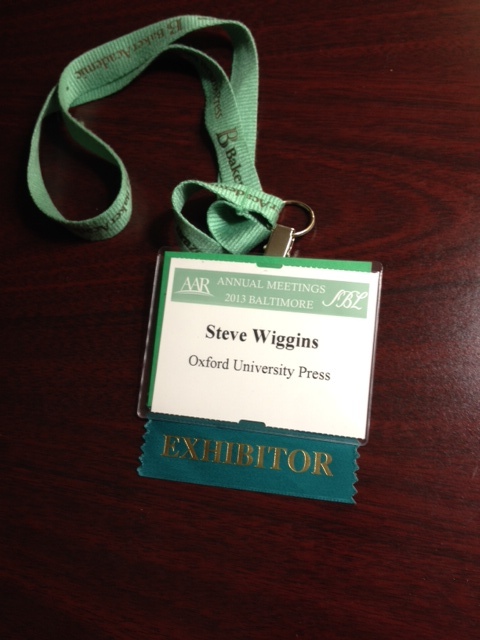
I’ll admit it. One of the things many scholars secretly enjoy about the American Academy of Religion and Society of Biblical Literature annual meeting is discount rates at fancy hotels. Unless things have changed drastically since my teaching days, professors don’t make enough to spend nights at four-star hotels as a matter of course. This year, however, Routledge pulled the rug out from under me less than a month before the conference. I had to cancel my reservation and forget the dreams of a leisurely train ride to Baltimore, a nice walk to a luxury hotel, and four days of schmoozing with the intellectuals (or at least those who are considered smart enough to write books). Then, Oxford University Press. I started work on Monday, and by Friday I was attending AAR/SBL. But with a twist. All the hotels were full—not a room in Bethlehem, I mean, Baltimore. So I had to find a run-down hotel several miles away and drive four hours to get there frazzled and decidedly unacademic. Still, map is not territory.

worldmap

Getting back to the hotel from the Convention Center, I had technology issues. You see, I didn’t have time to plan the trip out this year. I had no maps, figuring my smartphone was more intelligent than I (I don’t set a very high bar). Alas, for the GPS on my phone knows Baltimore less well than me, apparently. When the scenery turned industrial and I could see the ocean although my hotel is miles west of the city, I knew I was loss. My GPS, groping for dignity, kept instructing me to make u-turns on the interstate. Finally, I pulled off an exit and tried to use dead reckoning. Baltimore, like most cities, has problem areas. My GPS took me on a tour of them, as darkness was falling. Boarded up row houses leered at me as I took each turn the phone dictated. I noticed with alarm that the low battery indicator had come on and I was nowhere near anything that looked like a conference center, highway, hotel, or even Salvation Army. I had trusted technology, and it had let me down. Finally, with 8 percent battery power remaining, I spied my seedy hotel in the distance. I was never so relieved.

I have attended this conference since 1991 (I’ll leave the reader to do the math), and only one year did I not stay at a conference hotel. I think I remember why. People are discarded here. Entire cities left to crumble. Without a map, I witnessed territory that I’d rather not have seen. My academic friends, I know, were tipping back a glass, knowing that they had only to find the elevators to be home. Map is territory. And the terrain is untamed. We have created our urban jungles, and it will take more than a GPS to get our way through them. Tomorrow I will try again, if my trembling fingers can find the ignition, so that I can drive to where the more fortunate dwell. Some dreams are best left undreamt.


Year of Poe

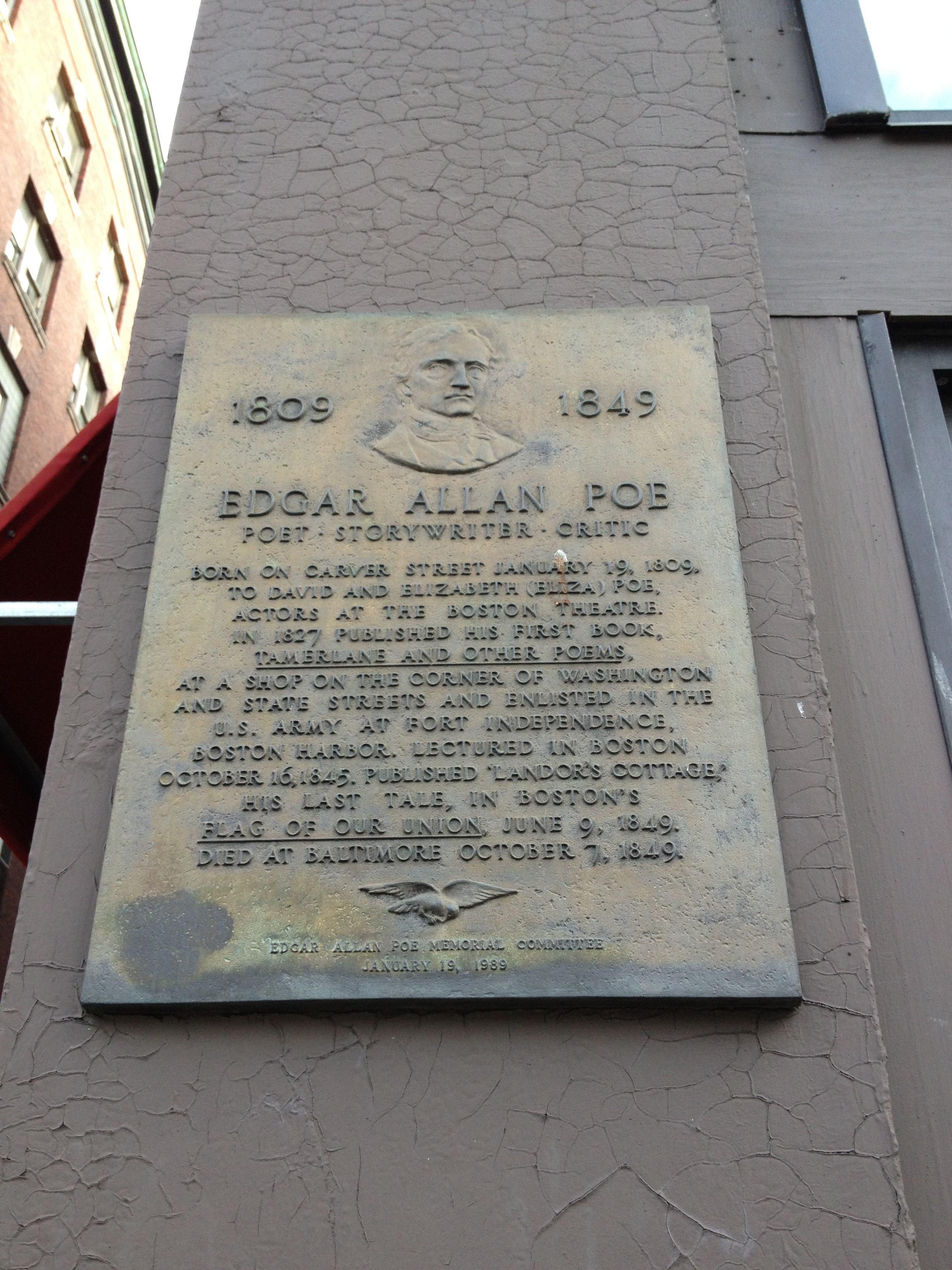
Apart from sharing a “middle” name, I would never dare compare myself to Edgar Allan Poe. Yes, I dabble in the literary arts, but every acolyte recognizes a true priest when he sees one. So as my train pulled into Boston, a city that has deep emotional resonances for me, I decided to stop and see where Edgar Allan Poe was born. The actual site is now a parking structure, an unexpected parallel between our emerging universes. All of my childhood homes, with one exception, are now parking lots. Standing at the foot of the memorial plaque near Emerson College, I reflected on my Poe year. I visited his college room at the University of Virginia in February, his one-time apartment in Philadelphia in March, his burial site in Baltimore in August, and now his birthplace. Not in any chronological order, but a voyage of discovery nevertheless.

This is the essence of pilgrimage. It is not rational and not really practical, but it is something people do. With religious intensity. I am in Boston as part of my secular job, but the city has sacred associations for me. I met my wife here, and that single event has changed my entire life. Boston will always be the place where something extraordinary happened to me. Poe did not like Boston, but for me it is the eternal city. Even the places with negative associations stake claims upon us. Over the weekend a friend posted a picture online taken before combat forced his evacuation from Vietnam many years ago. I kept coming back to that picture throughout the day. Lingering. Staring. Even though I’d never been there, it was like place had the ability to haunt those who’d even dared to look.

Poe and my friend are both writers who’ve drawn me into their worlds. What better way is there to learn that the universe is indeed infinite? Looking out my window at a Kenmore Square I recognize only by the giant Citgo sign that shed its garish light on many an evocative student night, I realize even eternal cities change. The last time I was in South Station I was saying goodbye to the woman I hoped, but did not know, would become my wife. Almost as if on cue, ” Lola” by the Kinks spills out of a local store as the Citgo sign flickers to life over the scene of my coming of age. In Boston I will always be twenty-three, wars will be long over, and Poe will remain alive forever.


Traces in Between

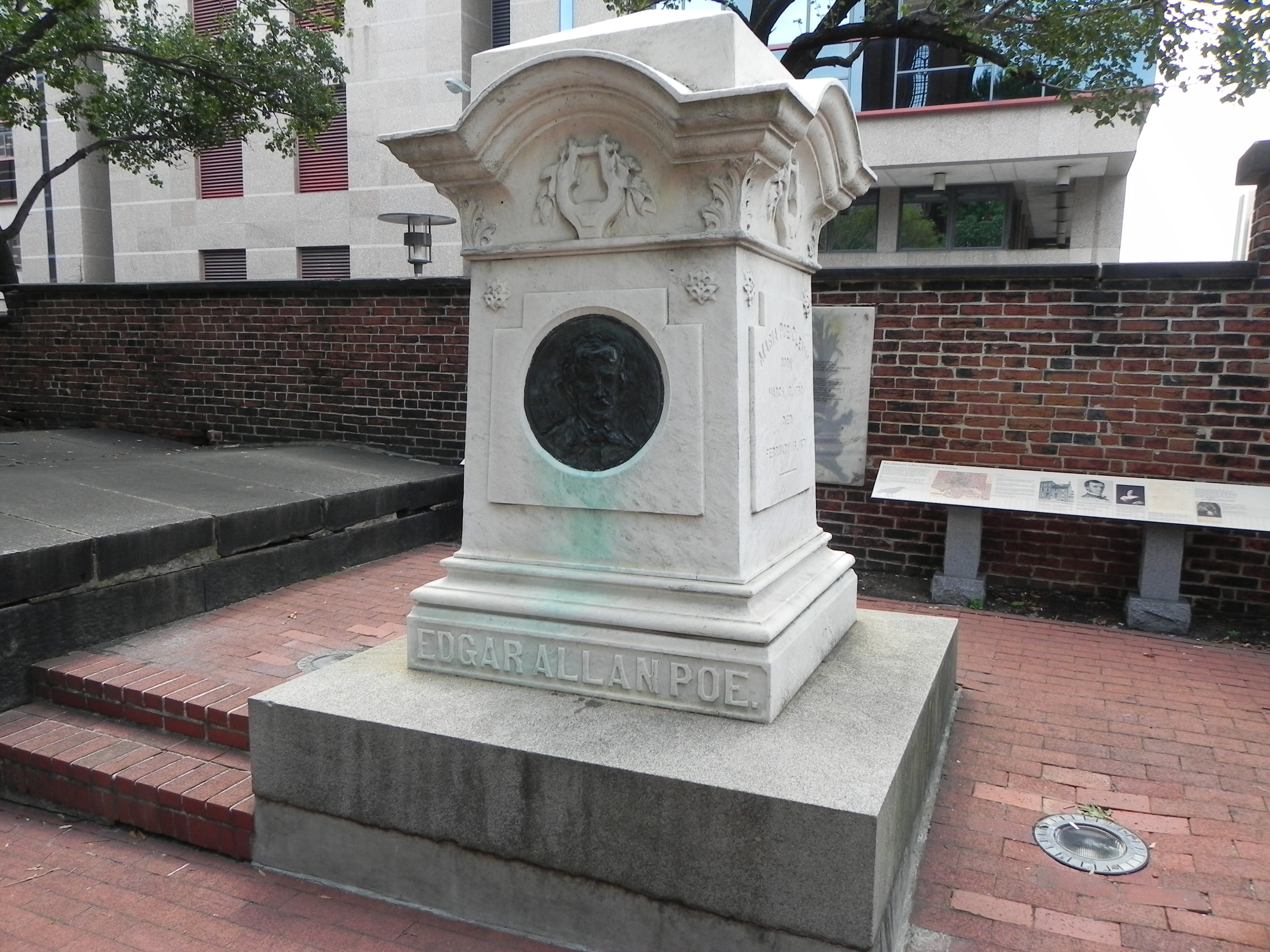
I first discovered Edgar Allan Poe as an adolescent who believed monster movies actually represented physical malefactors. By the time I was writing high school term papers, Poe had become my favorite author, and I delved a bit into his sad life story. It has taken a few decades for me to realize that no lives really fit into the prepackaged paradigms that we’re sold. We think of Poe as a writer, but he was also a man who wandered from place to place, dying in Baltimore and nobody really knows why he was even there at the time. Sure, he had lived in Baltimore fourteen years earlier, but his fractured career had taken him many places in between. Having nothing but his published writings and gut feelings to go on, it seems to me that Poe was a man who felt unconnected to any single place. His view of the world made others uncomfortable, as even a cursory reading of his obituary demonstrates. He may have been attempting to find a place to belong. Maybe that’s why I’m standing here in Baltimore next to his burial place.

In a world characterized by xenophobia, having a sense of place can be a matter of life and death. I often wondered, as a child, at the fact that I was born in a different state than either of my parents, and that my mother was born in a different state than either of hers. Where was my place? I really didn’t start to travel until attending seminary, and since then I’ve lived in many places. At times I think of Poe and his peregrinations—not that I would dare compare myself to him; Poe was a genius in a world that couldn’t understand him. I am merely a disciple.

On a recent college-visiting trip, I found myself in Charlottesville, Virginia, where Poe spent a few weeks as a student before being forced out by his debts. Later that day I was in Baltimore, and I could not neglect a stop to pay my profound respects. Throughout my life I have felt a connection with writers whose work I admire. Perhaps as an erstwhile dabbler in the literary arts I feel as though I might somehow connect to the guild. The sense of knowing, I realize rationally, is entirely one-sided. Standing here in Westminster Cemetery, however, feels like being in the presence of a friend. Even had I lived in the nineteenth century I would unlikely have ever met Poe, just as I am unlikely to meet most of the authors I read who still walk among us. Maybe I just feel no fear of rejection—call it a sense of place—among the deceased, unquiet spirit who is Edgar Allan Poe.


Sacred Philadelphia

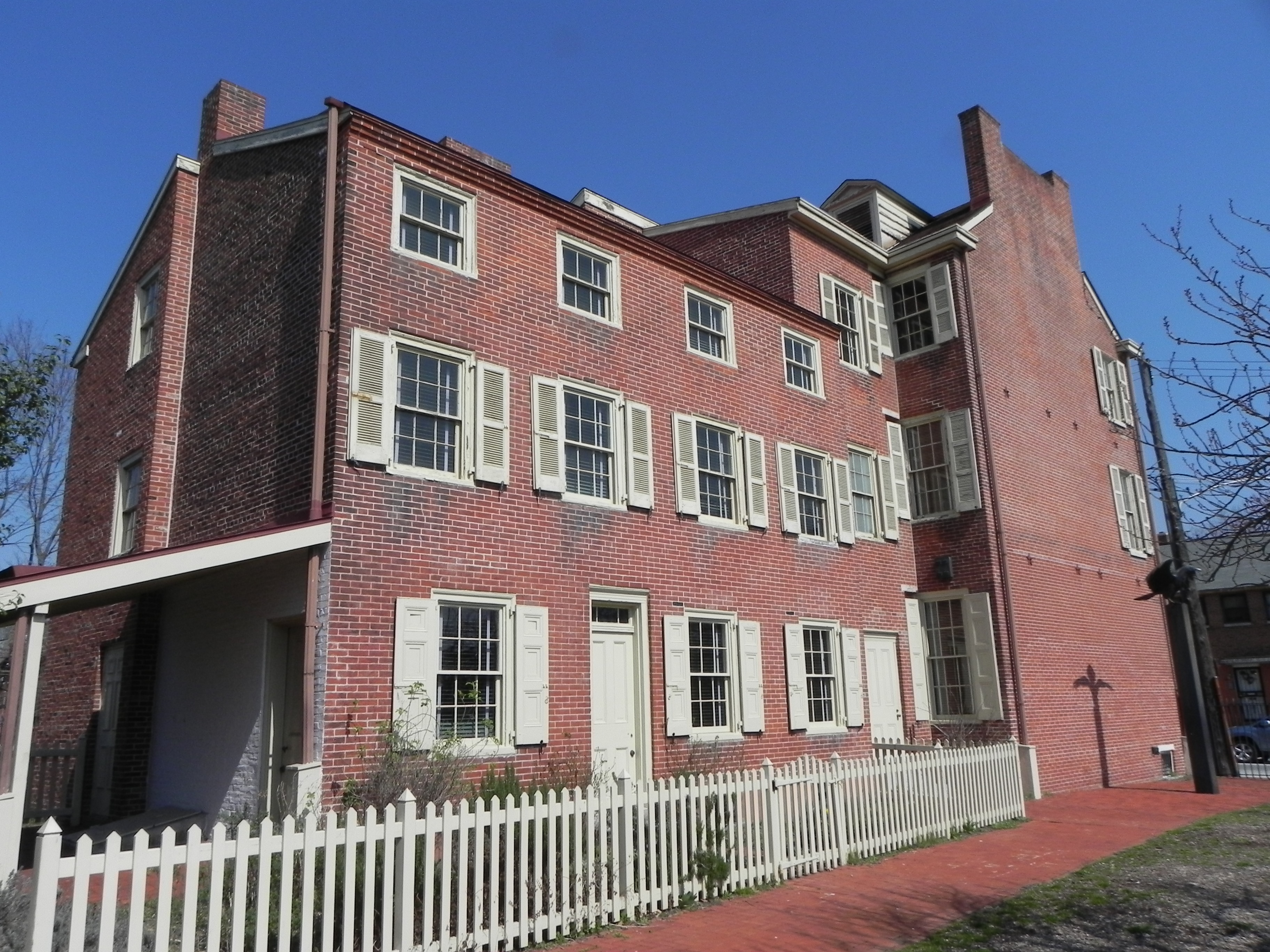
What makes a space sacred? There is no agreement on that issue, but it is clear that considering a specific location numinous, holy, or just special is something that even the most secular do. We trek to the places where something happened, maybe hoping for a personal epiphany or enlightenment. So yesterday I found myself in Philadelphia on the trail of Edgar Allan Poe. Like some other famous figures of the past, Poe was essentially homeless—no place claimed him (though now many do). Several years of his short life were spent in Philadelphia, and only one of his residences still survives there. On a pleasant Saturday it was clear that many others were drawn to this sacred space on pilgrimages motivated by diverse needs and curiosities. My family has gone on literary trips for many years, visiting the places of writers—for, at the end of the day, every piece of sacred writ has a writer.

Poe's house on Spring Garden

I can’t recall a time, after I began to read, when I did not favor Poe. Like some other inspirational figures he lived a short life, frequently rejected by his peers. Sad circumstances haunted him and he expressed them so well. His was a rare gift. Standing in his Philadelphia house, I guess I might have been hoping that, on some level, he might know that his life had touched mine. We all seem to leave an intangible part of ourselves in places we have been. Even the hardest skeptic of the “paranormal” will travel countless miles to come to some location of significance. There is no logical reason to do so. It is perhaps the most human of religious impulses. I saw no specters, heard no ghostly voices. But I saw and listened and wondered.

Writing is among the canon of sacred activities. It is taking what is hidden safely inside the confines of our minds and offering the opportunity to others to read it. Frequently it is ignored, lost in the noise. Life is too busy to sit down and read unless some teacher or professor assigns a task with grade consequences. We miss, however, so many opportunities to explore the legacy bequeathed to us by great minds. Our lives are driven by economics, not enlightenment. Poe died poor and largely unmourned in Baltimore after having called many locations home. Those locations are now shrines. I suspect he may have been very surprised to learn that over a century and a half later some people would attempt to follow in his footsteps for what can only be described as religious reasons.