The Wars of the Worlds

Just as it is appropriate for news sources to carry religious stories without ridicule in weekend editions, October is the month when strange things might be reported with a degree of seriousness. I have often noted in the past that “paranormal” (think X-Files) phenomena are closely related to religion. Since our ruling paradigm is one of belittling the intellects of those willing to consider evidence beyond the accepted, news stories featuring the unexplained do so with a generous helping of scorn. I was amazed, then, when my wife sent me a story on the BBC News Magazine from the World Service Sport section. (Which is near enough to paranormal, as sports fail to interest me in the least bit.) A story by Richard Padula is entitled “The day UFOs stopped play.” Near this date in 1954 in Florence, Italy, a soccer game stopped as UFOs appeared above the stadium. Former World Cup players stared upward instead of at the ball. The event was documented and never explained. I kept waiting for the jowl-waggling punchline. It never came. Here was a news story from a reputable source taking something strange at face value.

Paranormal activities and religious experiences are in the same category when it comes to a materialistic universe. They can’t exist and so the superior mind must laugh them off, stating they are an illusion, hallucination, or hoax. They still happen, nonetheless. Some world governments are beginning to announce to their citizens that they recognize unexplained arial phenomena exist and—truly astounding for government rulers—they have no explanation. Something weird is going on. It was on Halloween Eve in 1938 that Grover’s Mill, New Jersey, was invaded, according to an Orson Welles radio play. Since the inexplicable panic that came following that broadcast, extraterrestrial visitors have been laughed off the serious news page into the comic section. News stories have never taken it seriously since.
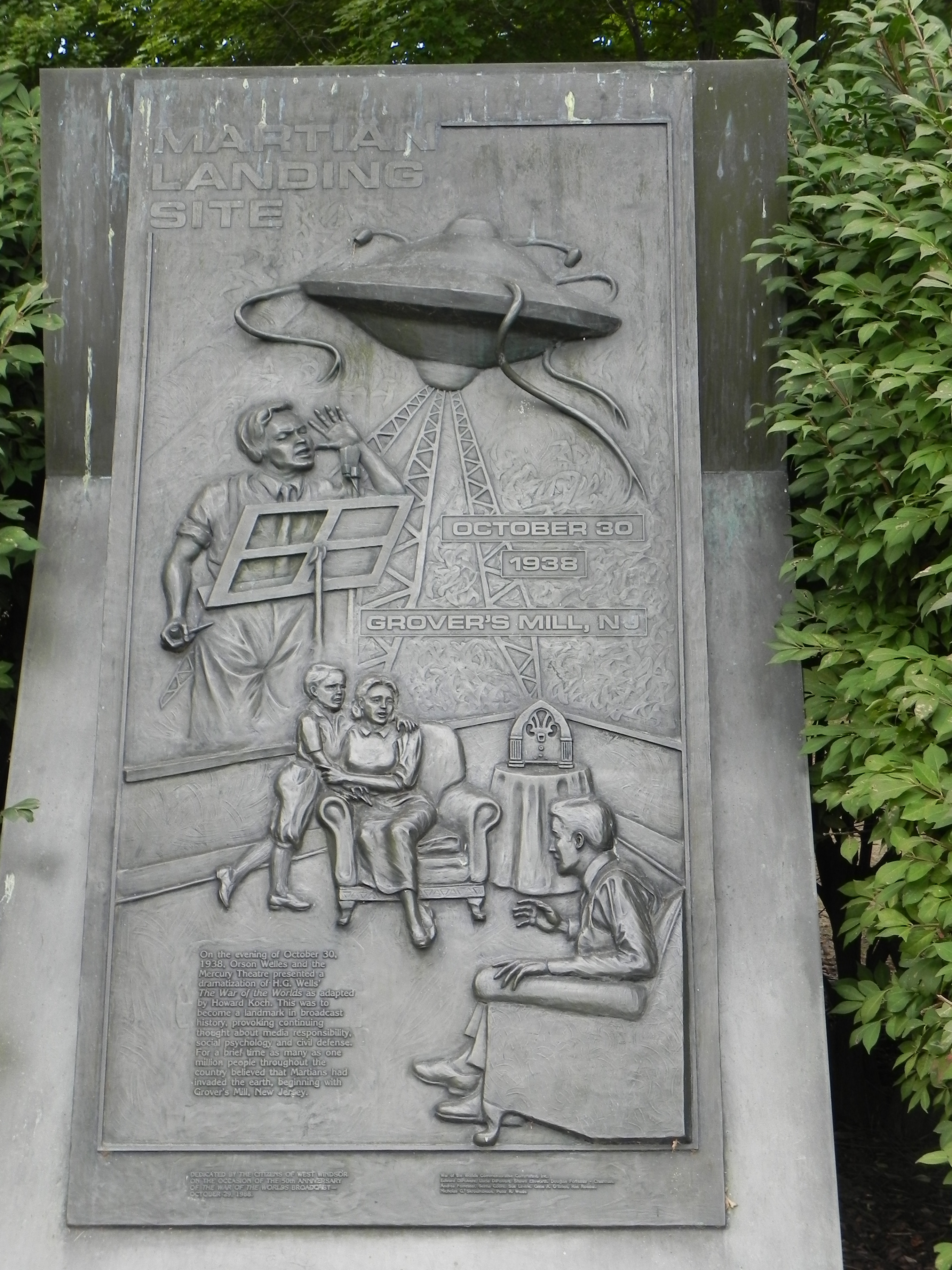
DSCN4237

A sports writer, casting about for an interesting story, might well focus on an event of such Fortean dimensions. Some highly respected people present at that game were interviewed with utter seriousness and traces of physical evidence were even gathered. A substance whimsically called “angel hair” was found all over the city, and despite the chemical signature, was declared to be the webs of a massive spider invasion (who needs aliens to be scared?) by many scientists who didn’t witness it. Laugh and the world laughs with you. The BBC doesn’t seem to be laughing in this story. Tomorrow is Halloween, when many improbable things seem possible, if only for a short time. Weather balloons, swamp gas, and Venus notwithstanding, sometimes people of normal intellect turn their eyes to the sky and wonder.

Dystopian Paradise

Dystopias resonate with me. As I ponder why, two factors seem to rise to the surface: dystopias are inevitably populist in orientation, and I was raised religious. Each of these factors requires some explanation, but so does the choice of addressing dystopian topics on a cheerful September day. In an article by Debbie Siegelbaum in the BBC News Magazine, Project Hieroglyph is featured. Project Hieroglyph, which involves some people I know, is an attempt to write a more optimistic future back into science fiction. To understand my reservations, I have to confess to having grown up as a nerdy science fiction reader. The stories from the 1950s and ’60s to which I had access (growing up poor, and buying books at Goodwill and second-hand shops) tended to be optimistic—people colonizing other planets, creating great labor-saving inventions, traveling time itself. In the meanwhile I slept in torn sheets in a ratty room and had to work to buy my own school clothes, inevitably cheap. For a few years our house didn’t even have a bathtub or shower. It wasn’t an easy existence, and I found solace in religion and science fiction, both of which promised a better future.

Today, forward-looking literature tends to be pretty bleak. With reason. Optimistic futures are the luxury of the elite. The average working person labors under a constant threat of unemployment and no jobs to replace the one you have. Hey, some of the people I see begging in Midtown are not dressed in the rags of the classic ne’er-do-well. Their signs asking for help are articulate and neatly written. The elite may look to a brighter future, but from street-level things appear a bit more challenging. There’s no question that politicians long ago lost touch with the commoner. They have no idea what life is like for most of us. Same is true of most university folk (cited in the article); unless they’ve been cast out, I suspect, they can conjure a pretty rosy future. With tenure.

That’s the populist angle. Now for the religious. The basic idea of Project Hieroglyph is as old as Buddhism, or perhaps even older than that. Salvation. Religions promulgate the idea that people require salvation. Otherwise it’s pretty difficult to get people up on a Sunday morning and convince them to drop their money in the plate. Look, however, at what has been happening to mainstream churches. So technocrats and other elites think technology, rather than the gods, will save us. Those devices of optimistic 1950’s and ’60’s sci fi have turned on us, and we have become slaves to our own technology. Gee, it’s awfully gloomy in here! Perhaps we need a brighter vision of the future where technology makes things better. It sounds like a return to the stories I read as a child. Still, I can’t help noticing all the closed churches I see, and how much the penmanship of the indigent has improved with the passing of time. If only I could decipher hieroglyphs my future might look shinier too.

Is this paradise or what?

Is this paradise or what?