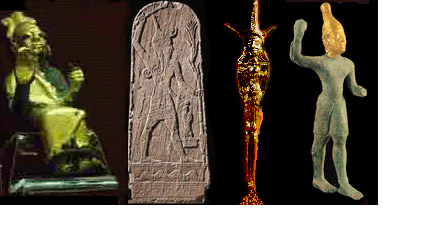
Credo

One of my seminary professors, who shall remain nameless, averred in class that Christianity in the first centuries was popular because it was exclusive. Like a country club. If just anybody can get in, why would you want to join? I’ve come to disagree with said professor’s analysis, but I have to admit there are cases where the idea does apply. Country clubs, for example. Organizations that intend to improve society, however, have it in their best interest to have doors as wide open as possible. Otherwise it’s a kind of hypocrisy. If Christianity wanted to make a better world, it soon realized, all takers should be welcome. That paradigm broke down fairly quickly, but at the beginning, I have the sense that all were welcome. So I was pleased to hear that the Boy Scouts have dropped their ban on gay troop leaders. Making a group that sets out to do a good deed a day exclusive heterosexual seems awfully backward. After all, gay leaders are nothing new. Why try to be exclusive?

Of course, the Scouts continue to disallow atheists. This is a fairly common, if medieval, marker of personal integrity. The Elks, last I heard, had few entrance requirements. One of the few stipulations, however, is that you have to believe in God. I don’t know how that plays out for Hindu Elks. Perhaps the more the merrier. Somehow, I doubt it. Exclusive belief entry requirements are a way of weeding out questions before they’re raised. Sheltering those inside from baleful influence among hoi polloi. We are better because we are different. Granted, these organizations go back to a time when theism, of sorts, was virtually a given in American society. Times have changed. Boy Scouts, it seems, are dragged into the future kicking and screaming.

I’ve always been impressed, by contrast, with the Girl Scouts’ openness. No creedal requirements are in place. Atheist girls, Buddhist girls, girls who climb on rocks, any girls are allowed to join. The last three presidents (including Obama) have been Boy Scouts. Two prior presidents have been as well. You might think the organization could meet its pedigree requirements with ease. In my view, they might look to the girls to take a cue on how to make the world a better place. When I was growing up, I knew no atheists. I remember attending a funeral of a family friend who hadn’t been a church goer, and that was pretty traumatic. As an adult I know many atheists and I trust them as much, if not more than, some of the religious I know. Would they be able to lead Boy Scout troops well? I have a suggestion—why not ask the Girl Scouts and find out?
IMG_2405


God’s Wormhole

Can God and science mix? I suppose that the third season of Through the Wormhole would be the place to look. The entire season has a distinctly metaphysical feel to it, so it is no surprise that the final episode is entitled “Did We Invent God?” It’s also no surprise that, like the other metaphysical issues explored, no resolution is really offered. Interviewing psychologists and neurologists, the show attempts to parse how scientists might address the question of God’s reality. God, of course, being immaterial, is normally understood not to be a subject discerned by science. So instead of putting God under the microscope, human perceptions of God will have to do. Everything from theory of mind to magical beliefs are probed to find hints of whence this strange idea of God might have come. The answer: we don’t know.

The more I pondered this, the more the same result reflected on science itself. When I was growing up I thought science was the truth. If science “proved” something, there was no arguing the point. I have come to realize, however, that science must be falsifiable to be science. That means it is potentially wrong. Not that it goes as far as Creationists take it to say that something is “only a theory,” but rather that science is the best explanation that we have at the moment. Future discoveries could falsify what we now know and the science textbooks would have to be rewritten. The difference here with religion is that most belief systems do not admit of this possibility. The truth has already been revealed, and there is no adding to or taking from it. God is not falsifiable. As stated above, God is not subject to science.

I don’t expect these observations of mind to change anybody’s ideas of the world. I do hope, however, that they make clear that science and metaphysics find themselves in similar situations. Both strive to know the truth. Neither can know if they’ve arrived. Both can believe it. The final episode of the season raises this point starkly. People are hardwired to believe. What they believe in is open to many possibilities, but believe they will. From my earliest days I have taken belief very seriously. What I have believed has changed over the decades, but at each step along the way I believed it was the truth at that time. I don’t know the truth. Nobody does. We all, whether scientist or religious, believe that we have found it. At the moment.

Image credit: CorvinZahn, Wikimedia Commons

Image credit: CorvinZahn, Wikimedia Commons


Worn Out Religion

Truth claims are integral to religions. No one would join a religion not declaring itself to be true. Some months ago, I posted about the store True Religion that had recently opened at our local mall. I’ve always found such branding odd—surely the store wasn’t proselytizing those who had religious commitments to buy its jeans. Or perhaps it was trying to lure in the increasing generation of nones. I have seldom felt any kinds of truth claims applied to my apparel. I buy clothes at reasonable prices and wear them until they are no longer fit to be seen in public. Even then I continue to wear them at home until they simply grow too holey to be of utility. I seldom have clothes left in good enough shape to donate, and I’m only fashion-conscious in terms of a decade or two between stints of buying what’s on the bargain rack. Religions, of course, sometimes do dictate what it is appropriate to wear. Leviticus famously declares that fabrics of mixed fibers are an infraction. Perhaps True Religion carries only single fiber-fabrics? I guess I’ll never know.

IMG_1868_2

Since our local mall has mostly clothing stores (few whimsical shops appear any more), I seldom go. There is an Apple store, and since our family has used exclusively Apple products since the 1980s, we do have to stop in from time to time. On my most recent trip, I noticed that True Religion, right across the corridor from Apple, had gone. “There’s no more true religion,” my daughter quipped. I couldn’t help but think about the implications of all this. Surely this was not the first religion to die. Disused churches have been converted into businesses for years, and some religions die out entirely rather than just fade away like an old pair of jeans. What is the message, however, when a claim of truth is made, only to be closed down by the exigencies of finance alone? Something disingenuous is going on here.

Religions not only make truth claims. They also convey a sense of promise. If you believe, you receive something in return. But what does it mean to believe? Driving home we passed the Elks Lodge. Once, when my daughter received a certificate of merit from the Elks, we were invited to an award ceremony there. The president of the lodge, doing a bit of proselytizing, mentioned that very little was required to join the Elks. “You do have to believe in God,” she said. How do you measure such a belief? Did she mean to say “you have to say that you believe in God”? The Elks are, after all, not a religion, but a community organization. Although True Religion is gone, the Elks, with their minimal commitment to faith, are still around. My clothes are perhaps a bit too worn to join the Elks, but what else is there to do when there is no more true religion?


The Devil’s Dues

Belief, no matter how inscrutable, must be taken seriously. Although we frequently prefer to privilege that which we “know,” belief is one of our main motivators. Strangely, many who reach a certain level of education begin to denigrate belief as if it were an embarrassing indication of improper brain functioning. Belief is, however, all we really have. A case of this was recently shown in an interview with Justice Antonin Scalia. A piece in CNN Opinion by Rebecca Buckwalter-Poza discusses an interview of Justice Scalia by Jennifer Senior where the topic of the devil arose. Buckwalter-Poza, as she makes clear, is no fan of Scalia, but when Senior began to treat the Justice’s belief in the devil with a condescending kind of incredulity Buckwalter-Poza called time-out. We need to take his belief seriously. Could such a powerful man really believe in a mythological figure? Yes. Belief will do that to you. Just the same, Senior’s non-acceptance of the devil is equally a matter of belief.

The devil is a problematic figure. Despite the certainty with which a recent demonology lecture treated the subject, the devil is scarcely present in the Bible. Indeed, he is somewhat a late addition, cobbled together from Zoroastrian beliefs and fragments of ancient mythology. The Hebrew Bible mentions the devil not once. By the time of the Gospels he has become a fixture representing an anti-God figure, clearly derived from the influence of the Magi (not necessarily the three riding on camel-back that first Christmas Eve). The devil was a convenient excuse for evil in a world where an omnipotent deity was believed to be entirely good. The devil is an escape-clause. Evil can exist in such a world and not be God’s fault. The idea stuck.

Today, sophisticated materialists (which is what some forms of science urge us all to be) have dismissed belief in anything not composed of atoms, electrons, quarks, or strings. Or, more recently, dark matter. The rest is all illusion. Sometimes the sophisticated don’t realize that other intelligent, sophisticated individuals don’t share their worldview. Materialism can’t be proven, and every true scientist knows that any theory is the best explanation given what we know at the moment. It is contingent. Science has a fantastic track record for explaining the physical world. Little in my experience has given me cause to doubt its efficacy. Still, I suspect that there is more to this universe than material. I have trouble supposing that some of that non-material universe is a horned, goat-footed, evil man with a tail and my worst interests at heart, but I can see how someone might believe that. Belief works that way. As much as we might want to eject it from the game, it will always be on the first string throughout the season.

IMG_1070


Dying for Religion

devotedtodeathReligions never lose their ability to surprise. This entire concept of belief is one with which I am intimately familiar but about which I’m completely puzzled. If we’re honest, we don’t know from whence belief comes or why it is so effective in keeping people balanced. (There are fanatics for rationalism just as surely as there are for religious faith.) When I saw R. Andrew Chestnut’s Devoted to Death: Santa Muerte, The Skeleton Saint, I figured it would be a good read for October, when Halloween comes so readily to mind. Although I’ve studied religions all my life, I’d never heard of Santa Muerte, “Saint Death.” Probably this is because, as a representative of folk religion, Santa Muerte is not an “official” religious figure. Folk religions are what the faithful actually believe, rather than what the religious officials declare that they will believe. Many a deluded bishop would learn to his chagrin, if he deigned to speak with mere laity, that his platitudes count only in the high court of theological heaven. Saint Death is more like the experience of the rest of us.

Chestnut, a scholar of Mexican religions, discovered Santa Meurte while living in Houston. His book is a narrative introduction to the background and history of the religion, its beliefs and practices, and a consideration of what the skeleton saint offers so many Latinos. Although the news in the northern reaches of America often does not bear it, Santa Meurte has regularly made the headlines in southern climes. As a symbol of death, and therefore potential protection from death, Santa Meurte has gained notoriety by her worship being taken up by drug runners and convicts. Mexico’s regrettably long struggle with poverty and sometimes corrupt governments has led to a society in which death is very familiar. As Chestnut demonstrates, Santa Meurte likely has her roots in the Grim Reaperess of plague-ridden medieval Spain, and she has been a somewhat hidden figure in Mexican Catholicism for at least a century or two. Her first public exposure came in 2001, and since then her association with the criminal element has been repeatedly highlighted in the media.

Santa Meurte, however, is a source of consolation for those who have little in life to anticipate but death. Often, in societies driven by the acquisition of wealth, plutocrats forget that justice comes in the guise of the Reaper. To the believer, Santa Meurte is not evil. She is a natural offshoot of the Catholic veneration of saints in a culture where human aspiration is quickly and unfeelingly snuffed out. Those in positions of power claim the Santa is Satan, but they may be looking in the wrong place for evil. Pointing to the Gospel statements that death will be overcome, they overlook the passages that insist on giving away all that you have will make you ready for the kingdom of heaven. Death, even if trumped at the final trump, will greet us all by and by. Santa Meurte is a very practical saint. Chestnut’s book is a good choice to read when the chilly wind shakes the trees for their particular October rattle of dry, lifeless leaves.


Alien Jesus

While trawling the internet over the weekend, I came upon an interesting article that ties together religion and paranormal belief. According to ADG, a unnamed woman (already the question marks erupt) in Galilee in 1967 was visited by aliens. Instead of photographing them, as most unnamed women would, she followed their instructions to point her camera at the lake (Sea of Galilee) and snap one for the album. When she turned back around the aliens were gone, and when she had the film developed there was a picture of Jesus and a disciple or two, walking along the sea in earnest conversation. Well, one doesn’t have to be a scholar of Tobit to spot the apocryphal, and this obviously bogus story received far more hits than any of my posts do. People are fascinated by the concept, even though most of the comments show some healthy skepticism.

To me the fascinating aspect is that religion and paranormal topics hold hands so easily. That is not to suggest they are the same thing, but rather that they are both perhaps directed toward a similar goal. We find ourselves in a cold world, often. There are cruelties, atrocities, and a disheartening lack of care for others. We want to believe that somebody out there has got our backs. Is it so different to believe that God dwells in the sky than to believe that aliens do as well? What is more important than the putative fact of such celestial dwellers is the belief in them. Our minds, no matter how we may protest otherwise, are perfectly well aware of their own limitations. We can’t know everything, and so we must believe.

Many of us find ourselves in an uninspiring cycle of work, sleep, and work. Sometimes we actually even do sleep, too. Cogs in a capitalistic money machine, we leave our weekends free (sometimes) to pursue a little meaning. As much as some may castigate religion, we should not forget that without it we would not have the weekend! For a little while we can break the meaningless cycle, the treadmill upon which we heavily thump our way through five days out of every seven. Is it any wonder that so many want to believe that, like Calgon, aliens might come to take us away from our drudgery? If that doesn’t work, there’s always religious services. All you have to do is point your camera and believe.

BurnandJeanPierre


Civil Lies a Ton

Often I began my classes by asking a basic question: if something pervasive, invisible, and very powerful were affecting you daily, in all aspects of your life, would you want to know about it? I don’t recall too many sleepy shoulders shrugging. We want to know what it is that is impacting us on a daily basis. Of course, I meant religion. Our secular society has a peek-a-boo affinity with religion; if we close our collective eyes, it will go away. Time and history have long put the lie to this idea—religion is a deep and pervasive force in society, and it is not about to go away. In our one-size-fits-all culture, however, we like to think that the bottom-line of greed and personal promotion will satisfy everyone. Statistics, however, seem to indicate otherwise. Not just America, but the world is a pretty religious place. I have always wondered at the strange elitism that considers itself above the influence of hoi polloi (in the literal sense). “If I’m not religious,” so the reasoning goes, “then no sensible person can be.” And we ignore religions until they explode and then go on ignoring them some more.

Although my career hasn’t turned out the way I’d hoped—I am an academic through and through—I still believe in the conviction that got me started down this rough and tangled trail. Religion is important. It is important to understand because it is very much a part of what it means to be human. Even those who are not religious have had to switch off an instinct that every child feels during a thunderstorm, and every adult feels at a time of deep, existential crisis. We may not believe, and yet we believe we believe. Religion is part of us. If we ignore it, we become strangers to ourselves.

I often look at our insipid culture. Sure, the internet provides hours of entertainment, and even some bits and pieces of knowledge. We have, however, consistently devalued those things that make us civilized. Art, music, literature, and yes, religion, all played a part in the very founding of what we consider civilized existence. Prior to that we were hunter-gatherers, roaming after the necessities of daily life. While our institutions of learning struggle to make entrepreneurs believe they still have value, we train our children to hunt and gather. It may not be food, but it is something not so different from food. Only money truly satisfies. If there were another way of being in the world, it might imply—why, it might imply that there is something more to be gained from life. And since that idea is a religious one, it is safest to ignore it and pray it will go away.

IMG_0558


Wolves and Sheep

A state of the university address might not be a bad exercise.  If I might be so bold, as an inveterate outsider who nonetheless has tried to play by the rules, I have been cast in a supporting role—I think a few of my observations might be valid.  Some of my more pastoral colleagues try to reassure me that editors influence more people than professors, but in fact, the professors are the ones with the luxury to write books.  I get to sit on the bus and read them.  I do read many proposals before they become full-fledged books, and, interestingly, I get to discern how someone becomes an “expert.”  I worry a little about this latter point.  When it comes to religion, there are a few too many experts and dreadfully too few places for them to find gainful employment.  This is a volatile mix. I often run across religion experts who have professorships because they are of the right brand.  In a way that is almost inconceivable in any other profession, schools where religion is taught are actually allowed to discriminate.  This fact may even stretch out, in the case of some religions, to more objective fields.  Some religions teach that illness is spiritual rather than physical.  Some of them have medical schools, staffed by believers.

This comes back to the privileging of belief.  We all believe things, and most of us (if not all of us, when the lights are out) include some irrational things in that realm.  Beliefs can change, but not easily.  In the case of religions, most often we are taught our beliefs.  Sitting back and thinking about those truisms is the ultimate of academic enterprises, and yet few matters have a greater impact on society as a whole than the belief structures of people.  If you want to start a university for your brand of religion, after all, the law protects you if you keep your biases on your sleeve.  These people get to write books with the credibility that pathetic posers, like the current blogger, are doomed to lack.  You see, if someone is an expert, they have to have an institution to prove it.  That’s the way higher education works.

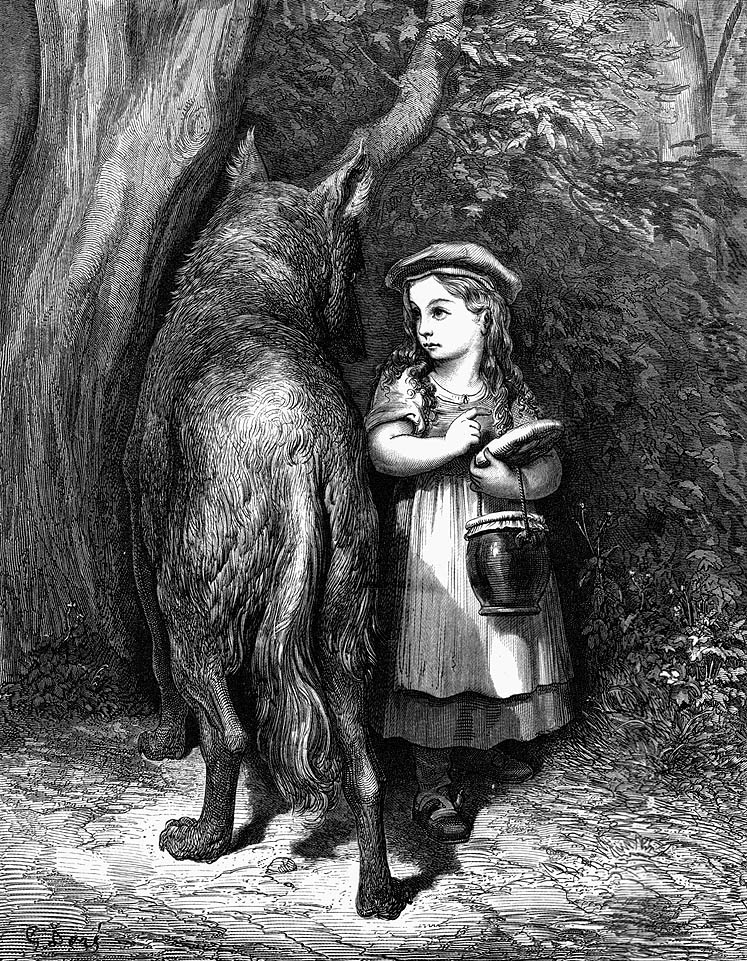
I read lots of stuff.  I sometimes think maybe I read a little too much because the ideas begin to affect my beliefs.  Nevertheless, it is a risk I’m willing to take.  It seems to me that if a religion is really as secure as they all pretend to be, you’d be willing to invite a few interlopers in your doors—a few wolves in wolves’ pelts.  If the sheep have to run, think of it as a chance to test their belief systems.  If the sheep overcome the wolves, then they will have earned the stars in their crowns.  Sometimes I am criticized for my liberal approach to things.  One thing my training has taught me, however, is that systems carefully reasoned through don’t shy away from challenges.  That’s a major difference on many belief-based structures.  Beliefs do not appreciate being challenged.  They want to be right.  But then, don’t we all?  It seems to me that the time for allowing prejudice against other religious views has outlived its usefulness.  If the truth is the truth, after all, it will be able to stand any fright that the wolves might bring.

Dore_ridinghood


Red Eye Religion

It is a slow news day when Bigfoot makes the front page of the New Jersey Star-Ledger (without a body being found, of course). Not even halfway through the article the word “supernatural” shows up. This illustrates once again my contention that paranormal and religion often share mental space. A few months back I posted on the recent book Paranormal America by Christopher D. Bader, 
F. Carson Mencken and 
Joseph O. Baker. The authors, sociologists by trade, expressed a revealing connection between religious belief and willingness to accept the paranormal. One exception stood out, however; professionals who engage the hunt for sasquatch often toe the line of science and disparage the popularizing notion that their quarry is supernatural. There’s no doubt that Bigfoot has a growing clientele. Whether mythic or biological, there can be little doubt that the big guy’s here to stay.

Appearing in the newspaper as a bit of New Jerseyana, the local tradition about Big Red Eye—the north Jersey version of Bigfoot—suggests instant comparison with the Jersey Devil, a tactic the paper takes. Similar to responses presented when religious behavior turns criminal, adding a light touch helps to ease the tensions. Both religion and the paranormal thrive in the realm of belief. As I waited all morning in the garage for car repairs yesterday, the incessantly chatty morning talk-show hosts were going on about some quote that the Tea Party had been compared to terrorists. One of the gambolers stated, in rather self-righteous tones, “they are entitled to their beliefs-the constitution protects our right to believe what we want,” or something to that affect. Belief is a very powerful motivator. Even those who thrive on science alone secretly imbibe.

The physical reality of a phenomenon is not the sole indication of its significance. People are meaning-seeking creatures. Our concepts of what life means range from nihilistic, to simple, to complex. Even those who claim life has no meaning arrived at that place after the search. The significance of the unseen, the unknown, is that it provides an Ebenezer for meaning. Does Bigfoot exist in New Jersey? I can’t say. If so, it would still not rank as the strangest thing I’ve seen here. Nevertheless, among the fervent critics and uncritical adherents a common bond exists. Belief can’t be measured in any laboratory (yet) but only the most naïve would assert that it doesn’t exist.

Do you want to believe?


My Myth is Bigger

“Do some people still worship those gods?” That is the question my daughter asked on the way home from seeing Thor yesterday. I had to staunch my immediate “no,” and qualify it. Revival movements exist for most ancient religions, although it is difficult to gauge how serious they are. Then I open this morning’s paper and see that conservative Muslims have been attacking Copts (by definition conservative) in Egypt again. Religion foments hatred more effectively than just about any other aspect of culture because it concerns belief. Beliefs must be held with conviction, we are constantly reminded, and conviction means convincing others that you are correct. This is the devolution from mythology to religion.

Mythology is a meaning-seeking system of stories that are true but not factual. The modern religious (and scientific) mind has difficulty accepting something that is true and false at the same time. No one requires convincing that life harbors plenty of difficulties. Even in this softer, technologically sophisticated environment we’ve created for ourselves, disappointments and difficulties abound. Religions often promise paradises that they just can’t deliver, and so true believers often grow frustrated. The myths, however, remind us that struggle is part of existence even for gods. For every Thor there is a Loki. The simplistic nicety of one God padding a harsh world with a comfortable lining simply does not match reality. Mythology has an answer for that, an answer which is more honest than many “sophisticated” religions.

In ancient times it really did not matter what you believed. Gods don’t really care what you think of them as long as you provide what they require. Offer your sacrifices, do your duty, and get on with life. Religion today is a matter of correct mental assent. If in my head I agree that this particular deity is the only one, and I love that deity, all will be well. Funny thing is, even monotheistic religions can’t figure out that if there’s only one God than everybody is worshiping it (him, according to many) already. Better to kill off those who don’t agree, just to make sure. All gods, after all, demand sacrifice.

Even scientists honor the gods: the Thor Delta


Faith Stealing

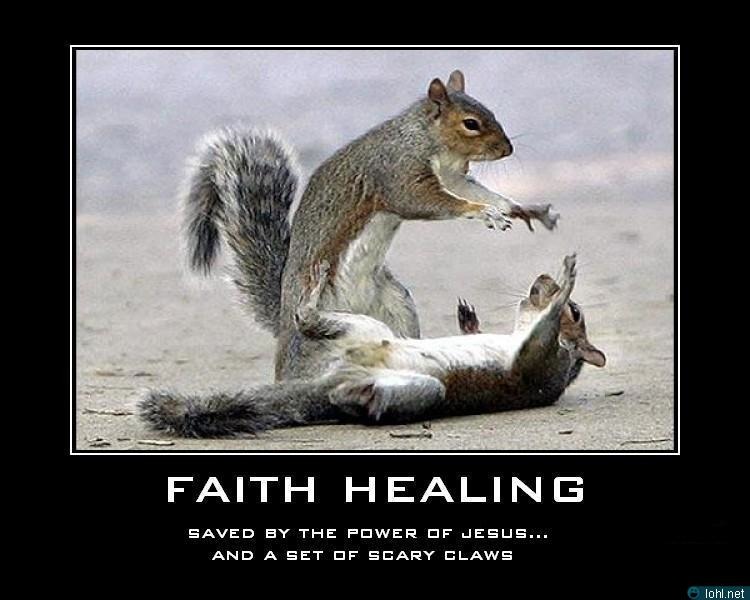
The sad story of the Schaible family of Philadelphia has reached a compromise that demonstrates just how awkwardly religion and politics sit together. Believers in faith healing, the Schaibles watched their two-year old son die for lack of medical attention. No limits exist on what people are capable of believing. Belief is at the root of most religions, so any nation that advocates freedom of religion has to open itself to the bizarre and wonderful possibilities that follow. Belief can’t be legislated. Too many revolutions throughout the world have amply demonstrated that. If a religion decides that the use of turn-signals is sinful (apparently a popular doctrinal stance here in New Jersey), it may bring conflicts with civil authorities and other citizens. When a religion declares professional medical treatment to be wrong, it is simply exercising its right to believe. When civil laws declare that parents must watch over the physical welfare of their children, clashes with such faith systems are inevitable. Believe what you will, physical death will not be cheated.

The shift of religion from praxis to belief gave believers a shove down a very slippery slope. Ancient religions tended to be matters of practice: gods demand sacrifice, so we grudgingly give them that. In actual fact, sacrifices supported the temple staff, often an arm of the government. It was, although probably not disingenuous, taxation in disguise. To be the member of a community, you have to pay the price. The system started to break down when religious individuals began to internalize this external structure. Instead of just offering the sacrifice, you have to do it with the right intentions. Those intentions evolve into beliefs. And beliefs are the ultimate free agents.

When a society defines religion as a belief system to which you may (or may not) subscribe, then myriad religious concepts emerge. Offering religious institutions tax-exempt status only encourages such behavior. If you tax them, on the other hand, the wealthier religions will have more political influence. No matter what pious lips may say, money will always trump pure belief. Meanwhile very real human suffering takes place, hostage to belief systems made up by somebody else. Religion has given us many lofty ideals; maybe one of those ideals is that we should limit its own infinite power.

Borrowed from some place on the Internet


Birth of Religion

Since “religion” is a relatively modern concept, I always begin my Ancient Near Eastern Religions class with an exploration of what “religion” is. We all have a concept of “religion” (I’ve reached my quotation quota, so I’ll assume it is safe to write “religion” without them from now on). The idea, however, is an offshoot of the development of monotheism. Prior to the recognition of a single deity, in a world where no laws of physics existed, just about everything was the result of the conflicting interests of the gods. Why call it anything special beyond the facts of daily life? Keep the gods happy, live long and prosper.

With monotheism arrives the component of belief. If there are hundreds or thousands of gods, belief in the right one simply doesn’t enter the equation. Ancient gods aren’t overly concerned with humans. People were created to serve them, but salvation, fulfillment, apotheosis, and belief weren’t part of the picture. Look at the world around you: this is proof of the gods and their power. Religion in such a world is more a matter of what you do – placating the gods – than it is a matter of what you believe. It is difficult for modern people to project their minds back to a world without the explanatory value of science, a world where all could be explained by the gods. Such was the world of antiquity.

Once monotheism emerges with its views of belief in the correct god, and the corollary of that god’s personal concern for you, religion experiences a sea change. Yes, that god still may require placation, and yes, that god may still intervene regularly in the world, but this is the only god now. One of the surest ways to anger him (for he is male, like human rulers) is to disbelieve. A jealous deity, he detests belief in other gods, although they do not exist. At this juncture, we have found religion. When the world itself operates at the behest on one god, keeping that one god satisfied becomes a specialized part of life and religion is born. The world will never be the same again.

The usual suspects