Stratego

lossy-page1-428px-CLiff_being_undermined_by_the_Virgin_River._West_wall_of_Canyon_above_Temple_of_Sinawava._-_NARA_-_520458The idea is a simple one. When someone undermines, the very foundation of an idea is left with no foundation. We are taught not to undermine ourselves; for enemies it’s okay. Encouraged even. The Bible contains the seeds to its own undermining. The claim that it is a sacred book encourages—even demands—serious attention be paid to it. When it is examined closely, however, it becomes plain that the status accorded it as a book undermines its own claims. Believers can respond in several ways. One is to declare the Bible inerrant and to claim that contradictions are not contradictions and that what history has proven false is actually true. The keenest breed of such inerrantists hardly exists any more, since it does require a stable, geocentric view of the universe, if a universe there be at all. On the other extreme there are believers who make sacred writ so highly symbolic that we need not worry about the obvious factual errors—they were never meant literally anyway. And, of course, every position in between.

The Bible is not a unified composition. This was evident to the person, whoever it was, who first joined the Prophets to the Torah. Or even Genesis to Exodus. We have no way of knowing if s/he (mostly likely the latter) really believed that Moses wrote all the stories from the creation of the world through his own death, but the books of the Pentateuch roughly hang together in an extended narrative with plenty of instruction along the way. The “Bible” that Jesus knew had considerably fewer books than our “Old Testament.” And one gets the sense that Paul’s letters were tacked on in a catch-as-catch-can fashion, with everyone knowing (as the letters themselves say) that material is missing. And what Paul authoritatively wrote to the people of Galatia may not have been the same advice he sent to the Corinthians. Tides and times. Bibles and believers.

When scholars began, out of deep devotion, to look closely at the Bible the cracks in this historical facade began to fracture. Once the breach is in the dike, one dare ignore it only at great peril. The first shaft had been dug. By the time of Julius Wellhausen, the undermining was already engineered and well underway. And it couldn’t be stopped. Biblical scholars had choices to make: ignore the evidence and continue to sing the Lord’s song in a strange land, or climb out of that tunnel before it caves in. And the church, unsuspecting of what it means, insisted on an educated clergy. Serious study of the Bible shows what many believers wish it didn’t. And yet we continue to make claims based on evidence that is faulty. Just as long as these supporting pillars hold up we have nothing to worry about. And the undermining continues daily, lest we all find ourselves in the breadline.
High Road

“You take the high road and I’ll take the low road,” starts the chorus of that overused, unofficial national anthem of Scotland. The low road, while offering less spectacular views, is quicker and more practical. At least that’s how it seems to this erstwhile expatriate who spent three bonnie years in that land. Still, we all know the appeal of taking the high ground. In studies of morality, high moral standards are better than low. High income is sought after over low. We are encouraged ever to reach higher, shooting our probes out to the very stars. Who wants to admit to being low? There’s more than a hint of this condescension in the terminology I’ve lately been noticing when it comes to the Bible. Instead of saying that an author of a book is Conservative, it is now common code to claim that s/he has “a high view of scripture.” I guess the rest of us have a low view.

Despite the increasing secularity of culture, there are still many, many books being written about the Bible. In fact, the standard industry rag, Publisher’s Weekly, routinely carries story after story about religion publishing, much of it biblical. But readers want to feel safe when approaching the Bible. New ideas can be dangerous and challenging. So we want to know the perspective of the writer before we crack open the cover. Those who believe, within a reasonable degree, that the historical tales of the Bible are factual have a high view. When the four stories of Jesus contradict one another they can be harmonized. That’s the high view. Saying that the world was created in one day, as Genesis 2 asserts, is tending toward a low view, literal though it may be. After all, didn’t we just read in the previous chapter that it was six days? One can become six with a high enough view. Just stand on your tippy-toes.

A high view

A high view

Now the cynical side of me wants to believe that this coding of the high view of Scripture is willful misrepresentation. The stratospheric viewers may not actually say that the industry standard has a low view—not exactly—but miracles are easier to see from the mountain top. If you want to know who to trust, you rely on those with a high view. In this world the sun can stand still and giants can grow to be nine feet tall. It is a high view indeed. While no one knows the original meaning of the lyrics to “Loch Lomond,” many associate it with the Jacobite rebellions of the eighteenth century. The lyricist may be referring to the heads of the executed exhibited on pikes along the high road from London to Edinburgh while their dispossessed relatives walked on the low road. Neither group devalues its native land where some hope to return and others died trying. So feel free to take the beheaded high road while I take the low, because we’ll all end up at Loch Lomond in the end.


Kingdom Come

Bible in HistoryPopular media tells us the Bible is irrelevant. As someone who has struggled for years to find a non-sacerdotal job in that area of specialization, it’s not difficult to believe popular media is right. Despite all the rationales on all the religion department websites out there, there is little that you can do with your degree. It was refreshing, therefore, to read The Bible in History: How the Texts Have Shaped the Times, by David W. Kling. While not exactly what I expected it to be, Kling’s book did explore several specific pericopes (pericopae sounds too pretentious) with an eye toward showing how a single verse from the Bible could change western history. The examples go from the early monastic movement up to debates about women’s ordination that are, unbelievably, still on-going. The social movements he traces demonstrate that the Bible has been, and continues to be, more than just a book.

At several points through this volume I stopped to consider the implications. From an outsider’s point of view many of these debates must seem almost infantile. They would have no teeth at all if not for the belief that the salvation of humanity rode on their correct interpretation. Often—too often—the results were the torture and oppression of others, for the sake of the Gospel. If we’ve got this right, then we need to prove it through might. A mighty fortress is our God. So the Psalms seem to say.

Few people stop to consider just how deeply engrained in our culture the Bible is. The idea, on the surface, is almost like a fairy tale: once upon a time, God said… And yet, some of the most intelligent people the world has known have staked their very reputations on this claim. As a postscript to Kling, we can still see the Bible’s influence on politics—and therefore society—over a decade later. We still debate whether homosexuals can legally love one another. The biblical basis of this debate is thin, but it is a bulwark even today. We argue about stem cells, and although from the biblical worldview such things are mythical; yet that same Bible gives people the material with which to argue, eh, Jeremiah? And where is that female president we should’ve elected long ago? Any ideas, Paul? No matter how we may discount it, the Bible is, and will continue to be, a most influential book. Too bad we as a society don’t care to learn about it from specialists. Not when it’s so irrelevant.


Inspired. Absolute. Final.

IMG_1394Recently I spent some time in my native Pennsylvania. Doing so sometimes makes me believe in a bizarre kind of predestination. I never had any truck with theological fore-ordainment; I’d rather just give up and get it all over with now. Nevertheless, the Bible was very present in the Pennsylvania of my youth and logic dictates that if something is, a priori, more important than everything else, only a fool wouldn’t pay attention. When we’d be driving along a country road and a prominent outcropping of rock was spray painted with “Jesus Saves,” I’d feel a quiet reassurance that my choices had been sound. I started reading the Bible as a child, toughing it through Leviticus and Chronicles, with true Protestant fervor. The Bible, I believed, could never let you down.

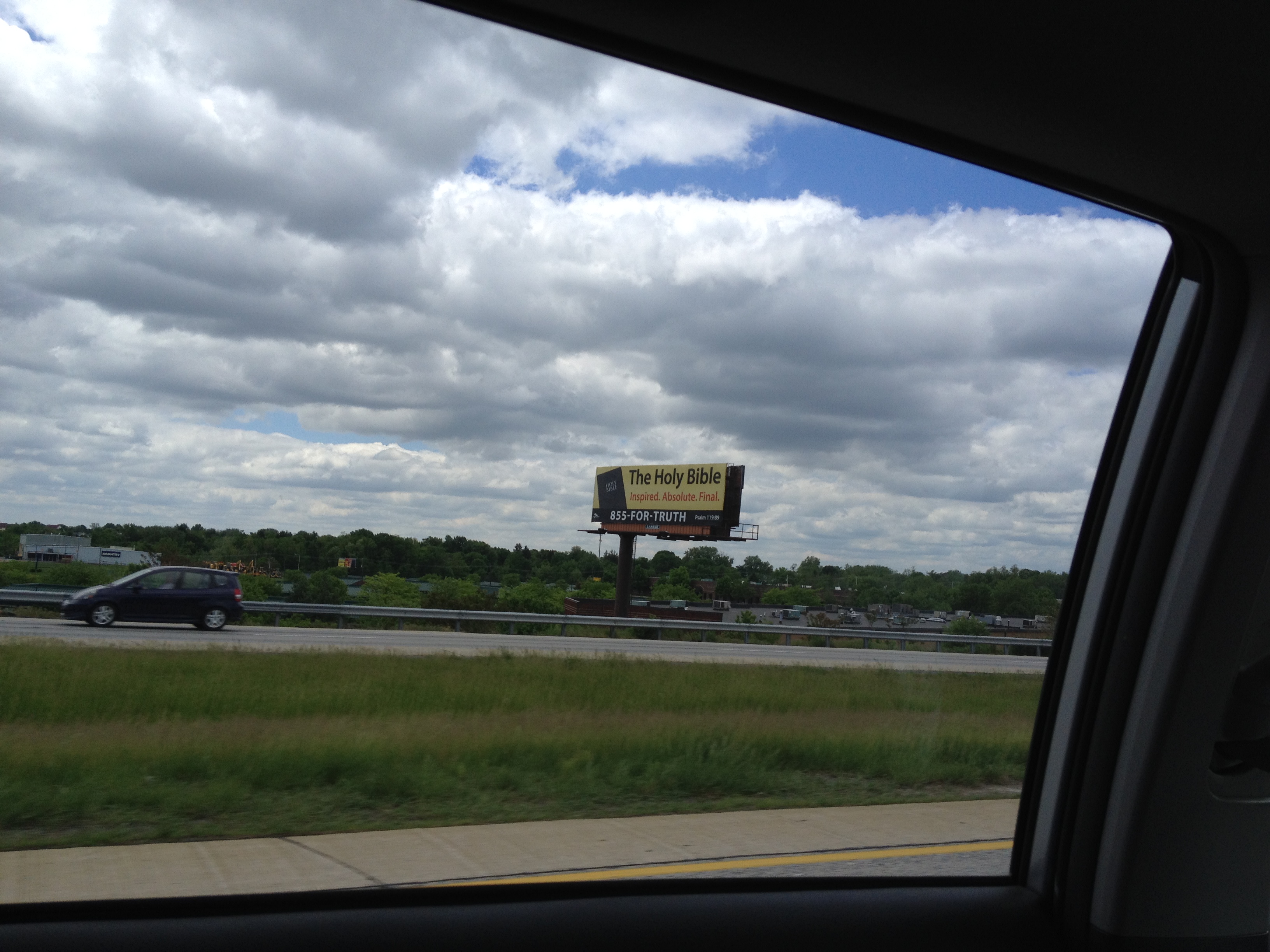
On my recent drive down memory lane, I passed a road sign advertising the sacred scriptures. It read “The Holy Bible. Inspired. Absolute. Final.” There was a number to call, ending with the words “for truth” in place of digits. Operator. Information. Get me Jesus on the line. (With apologies to Sister Wynona Carr.) The odd thing is that I always assumed this was normal. Ticking off the miles on Interstate 80, I used to see how many “Jesus Saves” graffiti I could find on overpass pylons. Even in Manhattan I still find the same phrase scrawled in the cement of a grimy sidewalk, and I always look for it when I walk that way. It was all so matter-of-fact that there seemed to be no reason to question any of it. The same held true for most of the faculty at Grove City College. No questions asked. Just read the highway signs.

Ambiguity toward the Gospel truth seemed wrongheaded and foolhardy. It is, however, difficult to take the Bible seriously without at last beginning to ask questions. Even the Bible has a backstory. Be careful how far back you turn the pages. There was a prequel to Genesis, for those who dare to look, just as their is a sequel to Revelation. Inspired—no doubt. Absolute—perhaps. Final—I doubt it. The last word comes only when all has been said and done, and given the signs I see along the road, it looks like this journey is only just getting started.


St. Ghost

HauntedSouthernTierSince they combine two of my soft spots—local history and ghost stories—books telling the tales of home-town specters are compelling in a homespun way. On a visit to Binghamton, New York, I picked up Haunted Southern Tier by Elizabeth Tucker at the local bookstore (I have a hard time passing up an independent bookstore anywhere). Those of us at least a little familiar with upstate New York know that the southern tier is not strictly defined, but it is a recognizable section of the Empire State that runs just north of the Keystone. I was drawn to the book by Elizabeth Tucker’s name; she is the author of Haunted Halls, a book I reviewed earlier on this blog, about college campus ghosts. These local travel guides tend to focus on the weird and whimsical, and aren’t meant to be taken too seriously. Nevertheless, the connection between ghosts and religion is tangible in just about any part of the world, no matter what one believes.

This fun read brings a number of explicit religious points to the surface. One involves the strange phenomenon of haunted churches. Given that many varieties of Christianity offer Heaven as a reward immediately following death, having a ghost hanging around a church seems strangely disingenuous. Perhaps that’s why few churches admit to such things. Another interesting tie-in to religion comes in Tucker’s section on roadside ghosts. Stories of spectral hitchhikers are quite ancient, but I had never considered them biblical. Tucker mentions one such instance in the Book of Acts, and upon reflection I realized that she may be onto something. The account of Philip converting the Ethiopian eunuch is one of the odder tales of the early Christian movement. Philip explains Isaiah’s prophecies to the chariot-riding dignitary who gives him a lift, and baptizes the visiting Ethiopian before mysteriously disappearing. Could this be the prototype for the vanishing hitchhiker folklore theme?

Perhaps the most serious of the religious connections in the book, however, has to do with St. Bonaventure University. For those familiar with Thomas Merton’s life story, St. Bonaventure will not be unexpected. Merton taught at the school as he was struggling with his identity that led him to become one of the most renowned Trappist monks in the world—one who spoke approvingly of Buddhism, to boot. Merton is not said to haunt the university, but his presence there at one time has endowed this Catholic school with a sense of spiritual gravitas. The ghosts come from elsewhere.

Books on ghosts are a guilty pleasure with a serious undertone. End of life issues, once we move beyond the medical, are the unquestioned provenance of religion. Whether or not there are any ghosts out there, religion will claim the final word on afterlife. And only those who experience it will ever really know.


Inerrant, Indeed

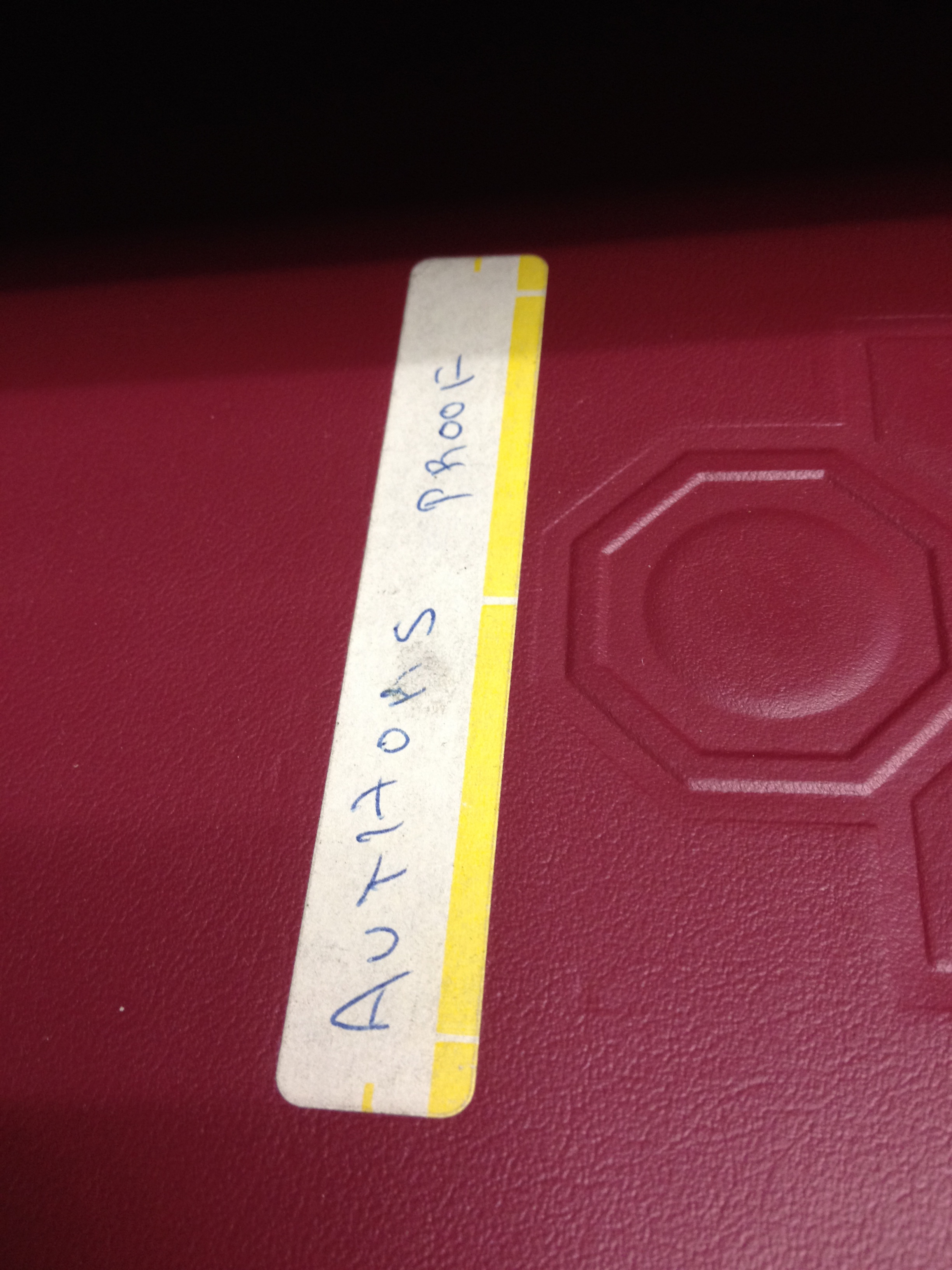
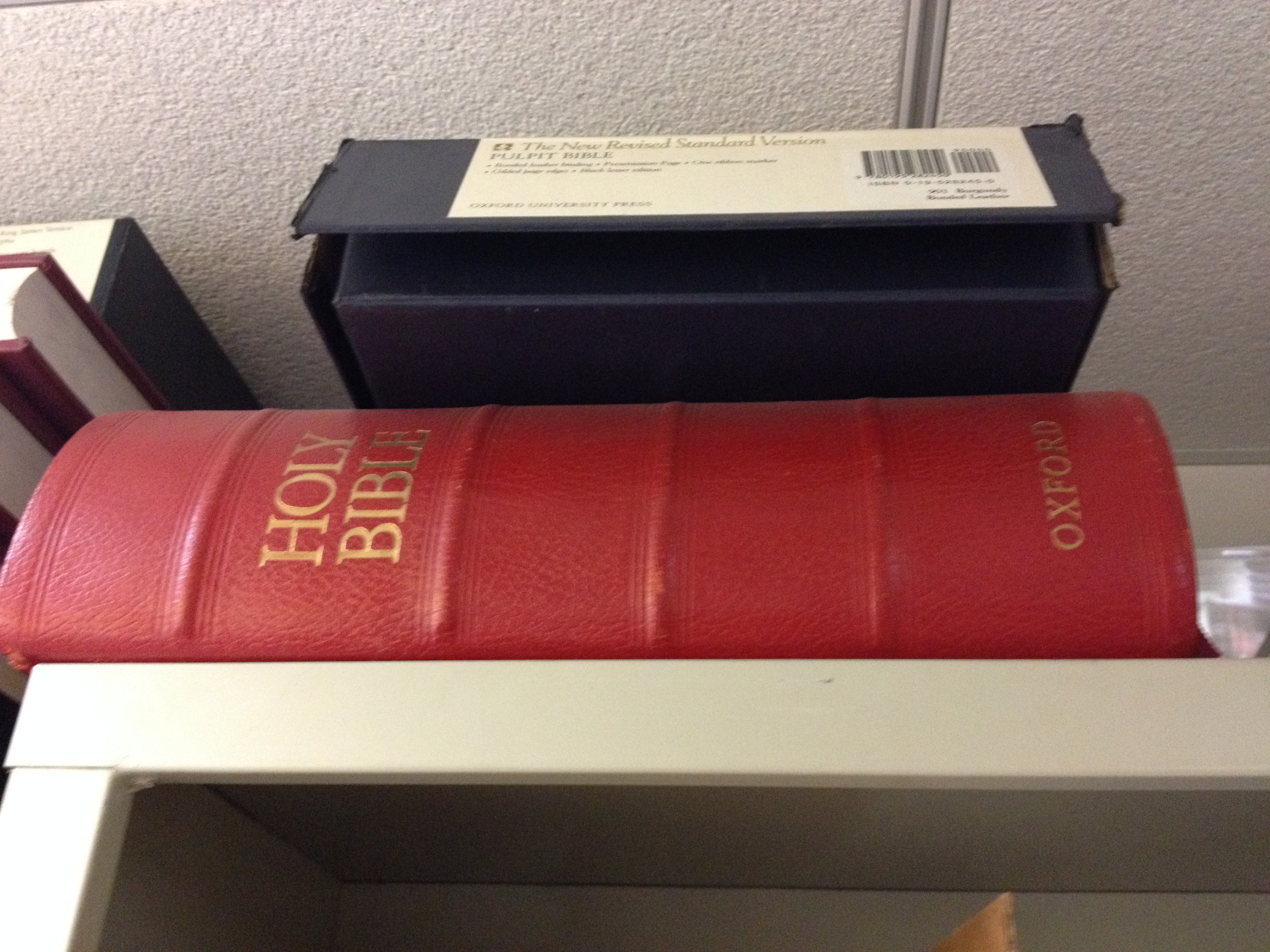
The other day at work, I discovered a huge Bible. This one was truly massive, in three volumes, almost too heavy to lift. As I pulled down the last fascicle, which weighed more than a newborn, I noticed the sticker on the cover. “Author’s proof.” This gave me pause. Does God read his own material or does he hire out freelancers? Printed Bibles have a long and venerable history of typographical errors, especially in the early days. Speaking in the name of the Almighty does have its risks. After all, little is more persuasive in America than the words, “it’s in the Bible.” I remember kids saying that to me in high school, where I had the reputation of being a walking concordance. More often than not, I had to correct them, since, in fact, the Bible mentions nothing about Popes or guns.

IMG_1389

Prior to the electronics revolution, printing a Bible was a complex process. Typesetting, or compositing, was not an undertaking for the foolhardy. Type has to be set, cast, and molded in order for offset printers to roll. And although page proofs aren’t set in stone, metal isn’t a forgiving medium to manipulate. And let’s face it—the Bible has a lot of words. Some of them very dry. The King James Version has over 780,000 words. Those with any experience in publishing know that’s one big book. Bible proofreaders command a hefty fee. I would be afraid to correct the word of the Lord myself. Reading through holy writ, word-by-word, takes a bit of time. The mind wanders to monks in their scriptoria.

Nevertheless, printer’s errors abound. Growing up as an evangelical, lighthearted entertainment was to be had as we read about the “Breeches Bible,” the Geneva Bible that had Adam and Eve fabricating britches for themselves from fig leaves. Coverdale’s Bible was known as the “Bug Bible” for its translation of Psalm 91.5, “Thou shall not nede to be afrayed for eny bugges by night.” Various versions of the King James have typos including Judas telling the disciples to watch in Gethsemane while he goes yonder to pray, and the somewhat self-serving “Printer’s Bible” that renders Psalm 119.161, “Printers have persecuted me without a cause” (which may be true, but the Hebrew would seem to indicate “princes” instead). The most notorious was the “Wicked Bible” wherein the seventh commandment in Exodus reads, “Thou shalt commit adultery.” All but eleven copies were destroyed and one of the remaining sold in recent years for $89,000. A Bible printed during the First World War, had “Thou shalt kill” as a commandment, Freud be praised. I slip the author’s proof back onto the shelf. I’ll let this be somebody else’s problem.


Transparent

With its endless versatility, gold is many things to many people. Already at the dawn of civilization, both in the old world and the new, it was a valued commodity. It is one of the few things that conquistadors didn’t have to impose on their victims; love of gold was already there. One of the qualities of gold that makes it such a remarkable metal is that a little bit can go a long way. Gold plating, for example, can be accomplished with very thin sheets of gold. This made it ideal for decorating statues of gods in antiquity, or at least the heads of the statues, as reflected in Daniel’s dream of Nebuchadrezzar’s statue. “Thou art this head of gold,” even Daniel obsequiously crows. Today, of course, gold represents commerce and it often sits, unused, in great storehouses heavily guarded, so as to prove a nation’s worth.

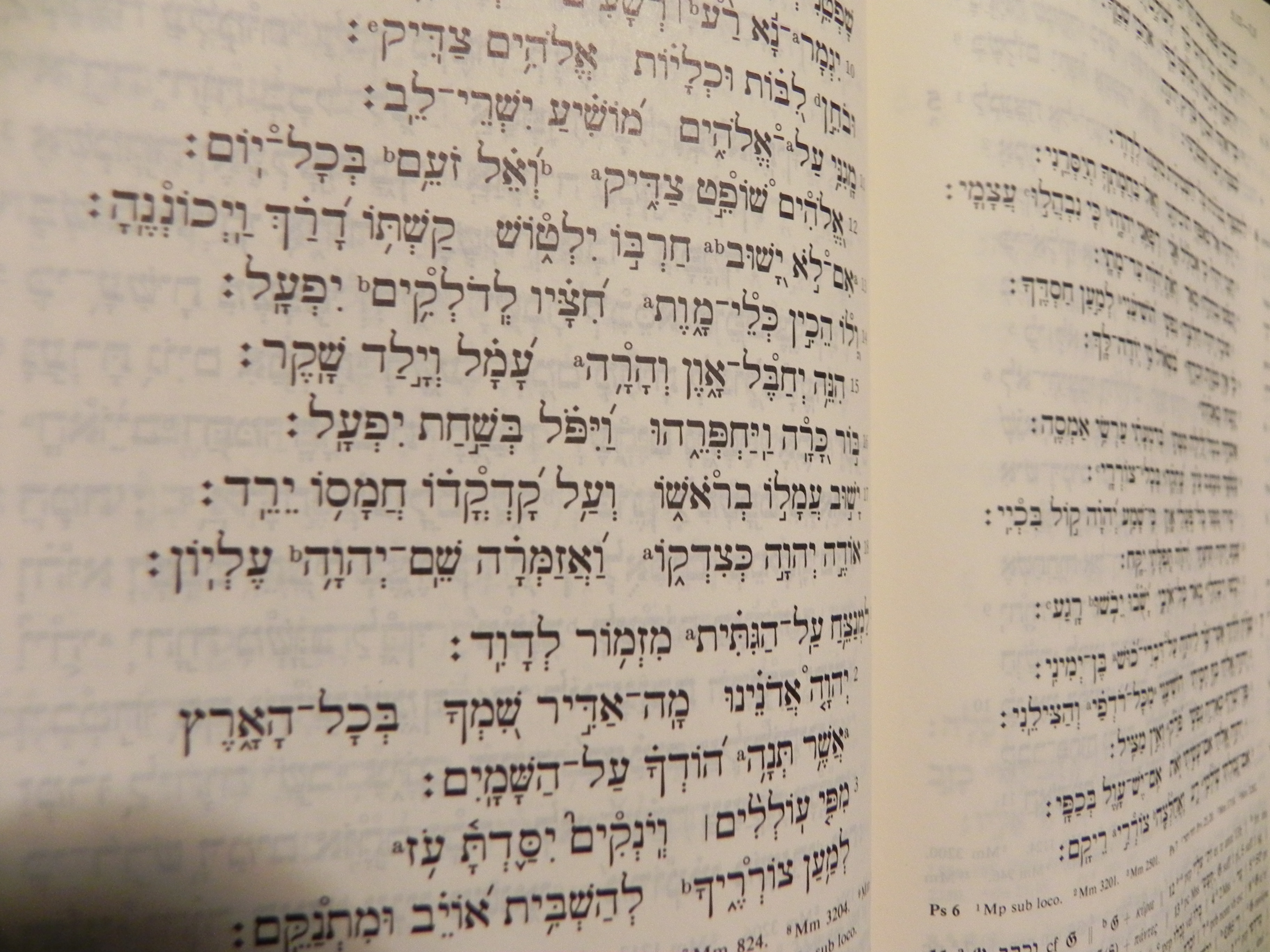
Gold still has industrial uses in the book business, particularly with Bibles. A classic Bible with calfskin leather, gold letters stamped on the cover, and gilt-edged pages, can be a luxury item. The gold on the edge of Bible pages is only 1/300,000th of an inch thick, or thin, meaning that a Troy ounce goes a long, long way. Only books with an idolatrous value get this kind of treatment. And they still sell. Somehow an ebook just doesn’t compare. The irony here is that the contents of the Bible suggest that gold is of lesser value than the spiritual truths contained within. Still, we can’t help but smooth the outside with burnished gold. Show and tell it on the mountain.

DSCN4534

Although the populace demanding evangelical standards such as the Scofield Bible are going ever more and more towards the large-print editions, the leather-and-gold crowd is still alive and has the cash to prove it. The same content is available online with just a few keystrokes, but there is no gold coating here. All that glitters is not gold, goes the old saying. As we turn our gaze ever heavenward, the glass visors of space helmets are also covered with a thin layer of gold, as if the deity we might glimpse is best viewed through gilded glasses. From the moon—humanity’s farthest step—back to the early statues of gods whose names have been forgotten, even though it may be the thinnest veneer possible, we look at the world through gold.


Genizah Bible

Overproduction is a survival strategy among many animal and plant populations. Just consider the number of acorns under one oak tree, or “propellers” under a maple in the spring. Swarms of ants or the legendary multiplication of rabbits. It’s as if nature knows most won’t survive, so you’d better prepare plenty. The same applies in the publishing industry. Every book is a gamble, and you can’t know which one will sell out and which one will collect the dust of ages on a warehouse shelf—a shelf you have to pay dearly to lease. This applies to best-sellers as well, such as the Bible. By almost any standard the Bible is among the best selling books of all time. Literally more than a billion have been printed. It exists in multiple translations and in many languages. And many copies end up sitting on the shelf. So many, in fact, that eventually a kind of limit is reached and you either need to rent another warehouse or thin the stock a bit. In my position, knowing what other publishers are doing is vital, so buying their Bibles is important. Then someone else needs your shelf-space.

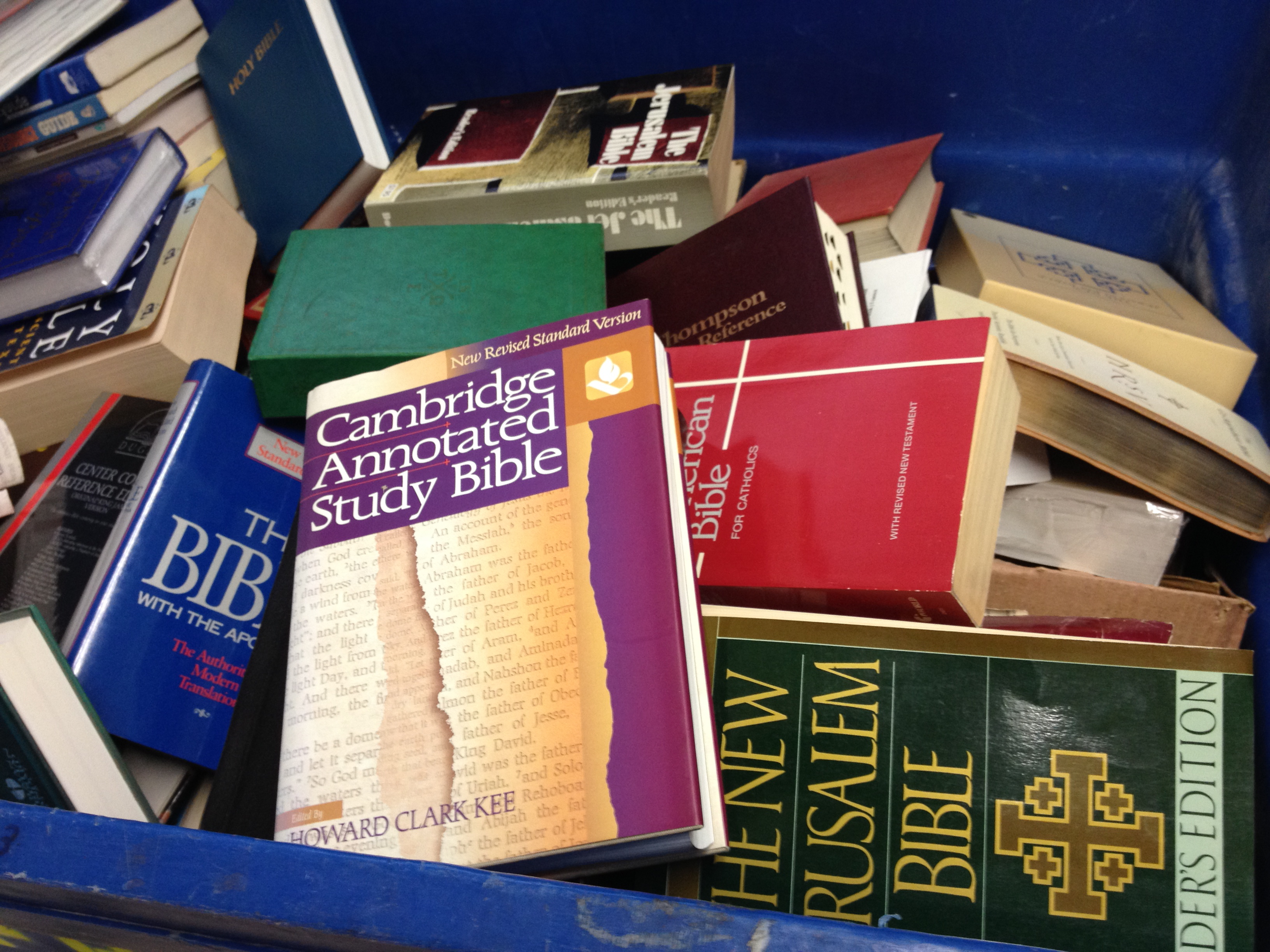
A genizah is a repository for “retired” sacred scripture featured in some synagogues. Texts that are too sacred to toss into the garbage when they’re worn out may be buried among others of their kind in a genizah. Well, a storage room at work isn’t exactly a genizah, but it is a room where hundreds of out of print Bibles lie forgotten. Salvation in dry storage. As the new kid in the department, I get to clean the closet. Our own Bibles we are able to sell, but the hundreds amassed from other publishers over the years, well, we aren’t running a genizah here.

My instructions are: “see that dumpster over there?” For a kid who grew up believing that it was an order of sin even to place another book on top of a Bible, the idea of filling a dumpster with the good book presents a crisis of a greater magnitude. The simply is no room in the inn. Besides, I’ve lost a job or two already. And I’ve seen the damage that Bibles can wreak in the wrong hands. Still, I followed the Bible through three degrees, and in some form or another my entire life has revolved around that book. But I’m talking like an idolator. Bibles are big business. Few Bible publishers can’t turn a profit. And profits, we all know, lead us to produce even more.

IMG_1364


The Cow Jumped

While digging through the attic for some reference material for a colleague this weekend, I came upon a box of Bibles. I actually have many Bibles around the place—often within an arm’s reach—despite the ease of internet biblical access. One thing of which I own few are leather-bound Bibles. Trying to be as vegetarian as I can, I have avoided leather in my apparel as much as possible (sometimes the alternatives are even more expensive), and apart from a rare, old book, I prefer cloth to leather, and, generally, paperback to cloth. Still, working in the Bible industry, I know that among the best selling Bibles are the leather variety—those that involve the ultimate sacrifice, although not of the human kind. Leather as a book-binding material is an early development. Leather is durable, and strong, even if a little kinky. Before synthetics, it was used to protect tomes that had been written by hand, representing hundreds, or thousands, of human-hours of work. You wanted it to last. So kill the fatted calf.

I was amazed, therefore, to discover that most leather Bibles are bound with pigskin. That’s right, the material tossed around the grid-iron Sunday afternoons from September through February is kin to the very binding on your standard Bible. Pig leather (never called that) is cheap and durable and is the routine binding for leather Bibles. You want a kosher holy book, you’ll need to buy calf-skin (one thinks of a savior dying at only 33), and it will cost you. Pigs, generally eaten by Christians, are unclean to Jews and Muslims, and books bound in pig cannot be touched by the most religious of the monotheistic sibling faiths. To me, I just see dead animals all around in any case, and wish we might find some way to protect our pages with something else.

Photo credit: Ben Salter, Wikimedia Commons

Photo credit: Ben Salter, Wikimedia Commons

A larger issue (isn’t there always a larger issue?) is a porcine one. Pigs, we are told, are very similar to humans. We use their organs to transplant for our own, and some scientists think they may have played a role in human evolution (although this is not the conventional view). Although I can’t claim Babe led me to vegetarianism, it certainly didn’t hurt. For that matter, neither did Charlotte’s Web. Still, the idea of swearing atop a deceased pig to tell the truth, or watching a televangelist beat a dead pig, definitely has some theological implications. So as I sit here staring into a Hammermill box full of Bibles, I wonder about the hidden costs. Not just to calves and pigs, but to the species who claim that this box of books contains a truth deeper than the many other tomes all around me. And I wonder just how naive I may have been on the finer points of the religion based on these books as well.


The Trouble with Trajectories

The Bible has a way of defining lives.  I realized this at a young age, and although my experience was limited to what life reveals in a small town. Still it was evident that people even there traced trajectories defined by Holy Writ.  I used to ask my students that if something effected you every day, in ways both massive and subtle, and was potentially dangerous, wouldn’t you want to know about it?  Religion in general, and the Bible in particular, fit this description.  As the road began to fork at the usual junctures of my life (high school, college, whatever comes after college), the Bible played a role.  For some reason the Hebrew Bible captured my attention more than the Christian scriptures—perhaps it was because there was more narrative in the “older testament,” and more puzzles to be solved.  While the New Testament seemed to be definitive for matters of doctrinal importance, the Hebrew Bible retained a sense of mystery and intrigue.  Many of its characters, although ending up as “good guys” have decidedly questionable episodes in their pasts.  What’s not to like?

DSCN4387

Ironically, however, I discovered a job market where someone from a Christian background was immediately suspected of a supersessionist outlook on the Hebrew Bible.  Why would a Christian have any interest in that, if not for fabricating prophecies?  Many Jewish scholars were focusing on biblical studies from “both” testaments, and my puerile interests were suddenly naive and not worthy of attention.  This dynamic has always interested me: what right does an outsider have to speak with any kind of authority about another peoples’ culture or belief?  You’d think in higher education we might be beyond such parochialism, but instead, this may be the very definition of its hotbed.  What does it take to gain scholarly credibility?  Being a “white” male in a pluralizing society certainly doesn’t help.

Books are like companions on life’s journey. My reading life started with the Bible and soon gained hundreds of other companions on that long, difficult path to a doctorate in biblical studies that defined an ill-fated career. I cannot reckon the number of books I’ve read along the way, hundreds of thousands of weary pages. And now I find myself back among the biblical crowd, from the outside looking in. They speak authoritatively, I merely whimper. Whether you see it or not, the Bible is here on the streets of Manhattan. Proclaimed or ignored, invisible or plainly manifest. And those of us who’ve spent a lifetime with it have nothing considered worthwhile to say. Once the Bible take a hold, the trajectory for life is set.


The Edge

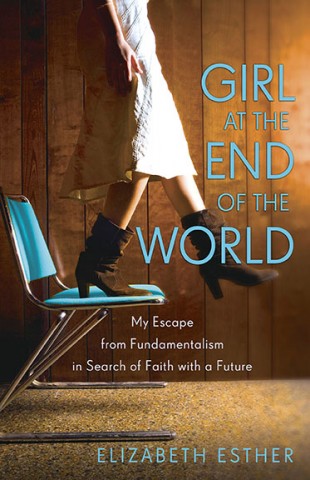
GirlattheEndoftheWorldElizabeth Esther’s Girl at the End of the World is finally out. I can’t remember the last time I read a book within two weeks of its release date. Of course, I have a soft spot for the religious memoirs of women, particularly when they manage to make their escape (I guess otherwise they wouldn’t be writing their experiences) from an unforgiving faith. Reading of the trials they have to go through to get there is far from enjoyable. But necessary. Often Bible-wielding males make the rules with a macho God behind them, and girls are abused in various ways so that the wrathful guy upstairs will be, well, a little less wrathful. I’ve read many of these accounts, and I worry deeply about the state of religion’s soul. Elizabeth Esther was raised in what she calls a cult, begun by her grandfather. This brand of fundamentalist Christianity taught the virtues of daily spankings of children, often beginning at about six months of age. The descriptions of how they used candy to tempt their children so that they could spank them to break their wills made me cringe. Evil wears many disguises, but none so effective as piety.

Religions are able to get away with quite a lot in a land of religious liberty. Elizabeth Esther proves that she’s made of some pretty stern stuff to have come through all of this, although she admits to still having panic attacks all these years later. She calls it Religious PTSD. She is right to do so. Although I grew up in a fundamentalism that scarred me for life, it wasn’t with the physical beatings that members of her grandfather’s religion doled out. When Elizabeth Esther describes the tendencies she has, the hyper-awareness of threat, I know that I am nevertheless still reacting the same way in my own life. After my fundie upbringing, I had the misfortune to be employed by a different kind of literalist religious institution. Faculty whispered about the new malady coming out of the Gulf when we started to develop nervous ticks and odd quirks after being kept under constant threat. When I contact many of my former colleagues I can still tell we were badly damaged there. Some religions, as Nietzsche long ago recognized, are life-denying to the point where a soul death would be more merciful. And yet we carry on.

Elizabeth Esther ends her book with a reluctant escape to Catholicism. She notes that even it doesn’t exist without its problems. We are, however, religiously evolved beings. It is in our constitution to seek the solace of communal worship, or at least a kind of spiritual solidarity. And there are those who will take advantage of people who simply seek their sense of self-worth from authority figures who claim to have it all worked out. Disproportionately those who are made to suffer are women. The Bible, although it cannot be blamed on the abuses heaped upon it in the name of the Judeo-Christian tradition, conveniently emerged from a patriarchal society. In the hands of some men it becomes an implement of torture. And many are left far poorer in life for having encountered this particular form of demon disguised as an angel.


Holy Cows

Back in the days when a book was a luxury item, great care was taken in its production and protection. Having your investment lying around with flimsy paper covers that would begin to grow blunt and roll back even before you finished reading would have seemed irresponsible. To shield the vital contents from the weather and other dangers, leather was used as a kind of skin—come to think of it, it really is skin—and safely the words were housed. Many of these volumes were, naturally, Bibles. Leather and the good book became synonymous for some—even with onionskin paper a book’s not a Bible with just a printed case hardcover. Paperback? How can you take that seriously? To make a Bible authoritative, it seems, cattle must be harvested. After all, sacrifice is at the center of it all.

Being a long-time vegetarian, this often gives me pause. My belt and watch-band are made of canvas, and I try my best to avoid leather shoes (although this is often difficult). I’m pretty sure that my leather Bibles are faux skin. Even though my family respected the Bible to the point of bibliolatry at times, we really couldn’t afford genuine cowhide. Now I take a more circumspect look at the cost of appearances. We’ve outlived the need for animal-bound Bibles. It has become more of an expectation than a necessity. An affectation. There is, however, still a big business in leather Bibles, and Italian leather seems the best fit for a Semitic savior.

What troubles me the most is the idea that animals—deemed not conscious by the very religion that allows their slaughter—are made to pay the cost for human foibles. The whole sacrificial system is built around a radical inequality. Humans domesticated cattle for their own exploitation, and their skins, when no longer needed by their hosts, came to clothe holy books of their masters. In any shade or hue of the rainbow. We can make it less grim by dying it a cheerful color and declaring its progenitor had no thoughts in its vacuous head. It lived a life of servitude and when it paid the ultimate price, it received the martyr’s gift of becoming part of the Bible. The end result? We should feel less qualms about our peccadillos and atrocities. We’ve wired their brains to trust us—we are not the predators to fear. Try not to take it personally. It’s just what our religion demands of us, for we too are a domesticated herd.

From the herd of purple cows...

From the herd of purple cows…


Weathering Qohelet

Over the weekend I finished the initial formatting of Weathering the Psalms, my long-suffering book on the weather terminology in the Psalter. While I’ll have to give it another going over, a strange cocktail of feelings has come over me in the process. Scholars age quickly. The time between putting that last period on that last sentence and the book showing up in a few dozen hands is generally over a year. You feel outdated. Not only that, but this book was finished, for all practical purposes, a dozen years ago. In this world of endless, indeed, almost insane academic publishing, many books and even more articles have appeared that I should have read, pondered deeply, and incorporated into my work. That, however, is a luxury reserved for those society deems fit to place in colleges, universities, and seminaries. The predominant feeling, apart from relief, was a kind of melancholy, however. The book represents a world that no longer exists. Indeed, a young scholar who no longer exists.

From the day I started teaching at Nashotah House in 1992 (or even before), I knew it would be a limited-time engagement. The then dean, interviewing me, knew that I was too liberal to fit the medieval theology then current (and still current) at the school. As a teacher of the “Old Testament,” however, the damage I might do was deemed minimal. I wrote several articles on my beloved Ugaritic, but no job interviews came. Those who’d sussed the system suggested I try publishing biblical material—after all, that’s where the jobs are. (Ha!) So I began. Weathering the Psalms took several years to research and write in scholarly isolation. I began rising at 4 a.m. to find the time to do the writing. Most of the book was written between four and six in the morning. Yes, it’s rough. And tentative. A young scholar unsure of himself. Now I’m an old man even more unsure of himself. Still, there are insights in that outdated tome that I hope some will find worth their time.

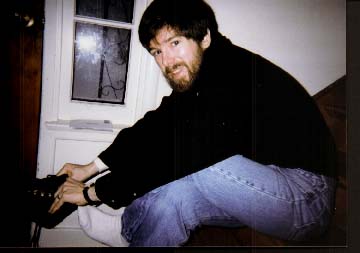
I have a photograph of myself that my daughter took at the time. I was putting on my boots to go shovel some snow. The face in the photograph is young. Optimistic, even. I was facing the weather. I’ve come to realize that all photographs are lies. They capture an instant of time that has already vanished. In my case, a livelihood. A dream that was shredded on the plains of some theologian’s ideological Somme. Winters seem to have become much harsher since then. Colleagues who’ve found jobs prosper while the rest of us fight against nightmares and that sense that all we ever tried to do was, in the end, vanity. One of the questions in the study, The Bible in American Life is, which is your favorite book of the Bible? Mine has always been Ecclesiastes. And even as I make final preparations to ship my manuscript to Wipf and Stock, I know that the preacher is right: there is nothing new under the sun.

snowman


Royal Reading

Post-Christian America still reads its Bible. One of the perks, such as it is, of working with Bibles is getting such vital news early. The Center for the Study of Religion and American Culture at Indiana University-Purdue University Indianapolis (IUPUI) has just released a study that was underway when I visited the school a couple years back. “The Bible in American Life,” available online, presents the results of a scientific survey of Bible reading in the US. Suffice it to say, we’re not done with Holy Writ just yet. In our world of high tech gadgets where the waves and particles that make the internet possible penetrate our bodies constantly, it is sometimes easy to forget that the Bible in many ways made this all possible. Both the good and the evil that drove western civilization to colonize its world had at least some dusty memory of “manifest destiny” embedded in sacred writ about it. And those who take the Bible seriously have continued to read, mark, and inwardly digest it.

The Bible in American Life, already picked up on by major media, indicates that about half of the population of the United States reads the Bible outside of worship. Perhaps not surprising given the still faltering civil rights dream, African-Americans are the biggest Bible reading demographic in the country. In fact, the study states, race is the single largest indicator of probable Bible reading. Those who are low on the economic scale also tend to read Scripture more. Those for whom “success” isn’t what it seems to be at first. Those whom “success” has passed by. Even Hispanic readers outnumber the white majority. People who have been distracted by material success, predictably, have little time for ancient wisdom. Still, half the country does turn to the Bible on occasion. Among the more interesting demographics is the fact that nones—those who are unaffiliated with any religion—also turn to the Bible for learning about life.

434px-King_James_I_of_England_and_VI_of_Scotland_by_John_De_Critz_the_ElderThe media seems to have picked up one of the major points as well—few Bible readers turn to Holy Writ for political advice. To hear the news weavers tell it, politicians and rabble-rousers trawl the Bible for its scant words about homosexuality and abortion—issues ignored by Moses and his ilk, for the most part. In fact, most people rate such issues very low on their scale of why they turn to the Bible. It is read more for consolation than for political intrigue. Having just about finished my formatting of my book on the Psalms, it warms my heart to read that the Psalter tops the list of favorite books of the Bible, narrowly inching out the Gospel of John. The study doesn’t, and can’t, come right out and say it, but the Bible is read by people to help them feel better. They still prefer the King James by a considerable margin. And in this world of self first, they can still read, “For what shall it profit a man, if he shall gain the whole world, and lose his own soul?” Even though Bible readers are, in the majority, women. Good old King James still shows the way, as the ruling white man always has.


The Varieties of Biblical Experience

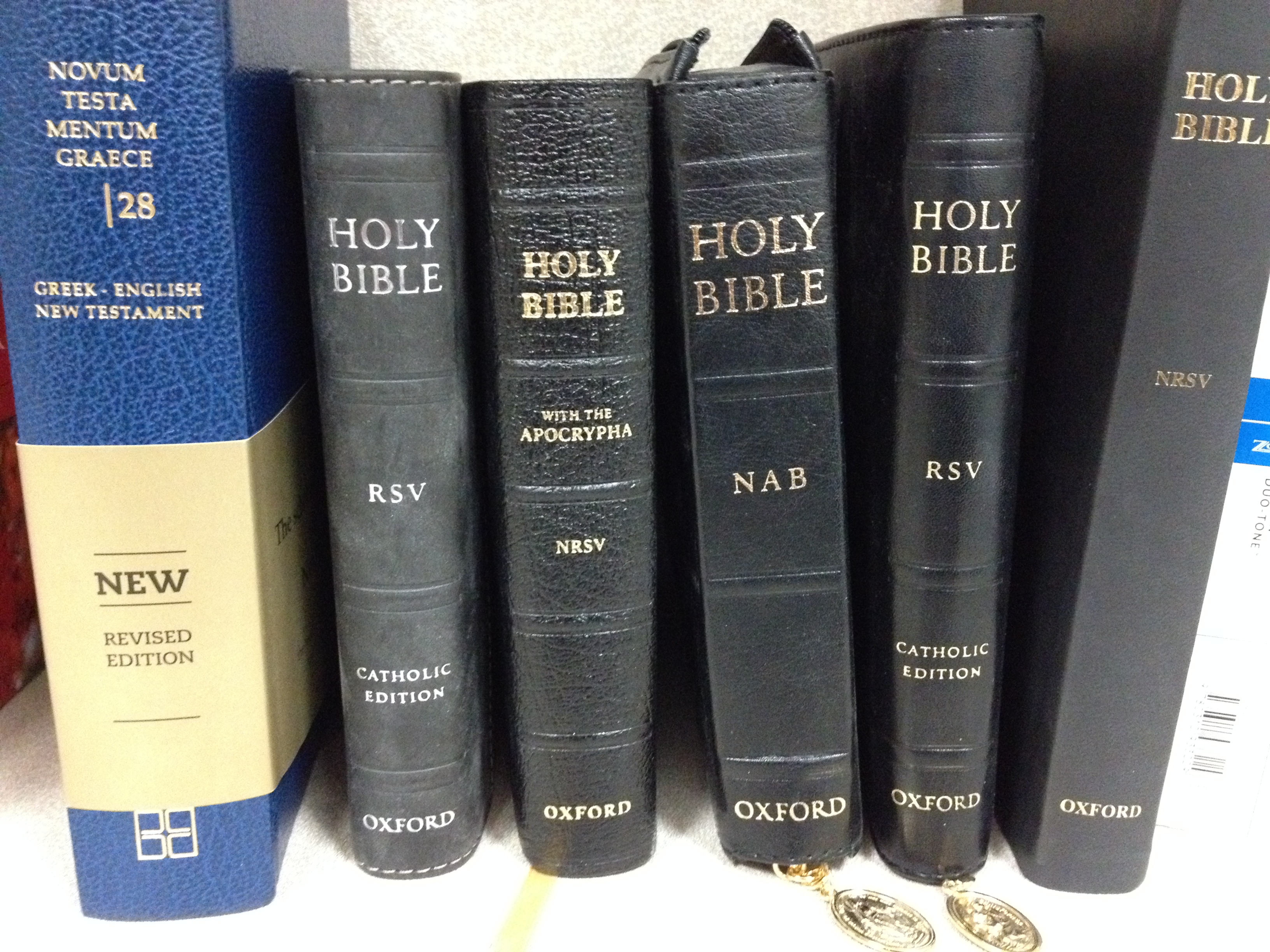
Working with Bibles can be a heady experience. I mean, the sheer numbers are staggering. A whole herd of cattle must be slain annually just to manufacture the covers for all the Scofield Bibles in the world. What is it about literalists that demands animal sacrifice to read the words of the Prince of Peace? Bibles, Bibles everywhere, and not a word to read! According to statisticbrain.com, there are over 6,001,500,000 Bibles in print. That’s closing in on a parity with the world population, only one billion to go. There are websites dedicated to selling only Bibles. Nearly any bookstore will have at least a shelf full of them. I even ran across the website of an enterprising individual who seems to have figured out that there’s a market for taking Gideon Bibles from hotel rooms and selling them online. The Bible business, in the words of Big Dan Teague, “is not a complicated one.” And every year more are printed. Full-text versions are freely available online at any number of sites, and still more can be sold.

IMG_1235

I often ponder the western love affair with the Bible. My entire career, with all its ups and downs, has been fashioned from an early intrigue with holy writ. In the beginning was the Bible. And culture followed in the footsteps of holy scripture. It’s not difficult to see why. Even further back than ancient Palestine, people worried about dying. Consciousness is funny that way—it has trouble conceiving of the world without itself. The Bible, for many centuries, offered the accepted solution to the death equation. You may have to die, but you don’t have to stay dead. Today we think of zombies as those refusing to remain lifeless. The Bible begs to differ, unless, of course, you’re reading the Zombie Bible. And still the presses roll on.

Considering the profit to be turned by selling Bibles, I wonder that more don’t show the cynicism of Big Dan. Is no one suspicious that printing the Good Book is called an industry? What other book, so freely given away, can sustain such a massive global market? I have to plead guilty myself to having a least a dozen different Bibles within easy reach every day. They even have their own separate labels at Barnes and Noble. So as I sit down planning on how to grow this ever-expanding market even more, I think of the many other industries that rely on mine. We have spun off worlds that orbit around the Bible. It is, despite the many nay-sayers, the cornerstone of modern Western civilization. If a tree falls in the woods, a Bible may be printed from it. Which of the 57 varieties do you take with your daily bread?