Go Down, Moses

For a time, I tried to write down family tradition. My family was somewhat unusual in that regard. Family saying came generally from my maternal grandparents—my father wasn’t around for my childhood years—and since my grandparents died when I was relatively young, I didn’t hear much of their wisdom firsthand. Still, my mother told me various things her parents used to say and I tried to keep a record. Kind of like I wanted to be an anthropologist for raw folk sayings among the, non-elites. One thing my grandmother used to say, so I was told, was “Where was Moses when the lights went out?” I was always intrigued by this since I supposed it had something to do with Moses the miracle-worker. I guess I imagined Moses waving his rod and the lights coming back on. That single question is all I ever heard of this particular family treasure. I forgot about it until recently, though the miracle of the world-wide web, I learned that the query comes from a song.

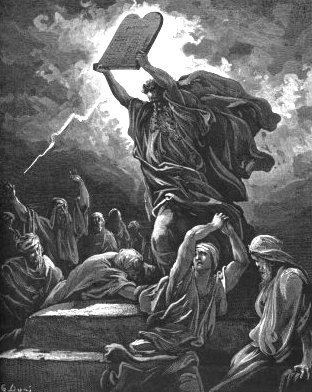
Moses gets down

Moses gets down

The song, it turns out, exists in multiple versions. The Library of Congress has a recording dating to 1901 available on the web. According to this version, written by Harry von Tilzer, Moses was not “the” Moses, but a preacher condemning gambling. Also, “lights” is rendered in the singular. So much for the canonicity of family tradition. Duke University library has an undated, but clearly old, version of another song by the same title. This one does reference the biblical Moses, also the name of the song’s narrator. A child afraid in bed at night falls in love with and marries his nurse girl who used to ask him the question “Where was Moses when the light went out?” as he was falling asleep.

Yet another version, dating from 1965, has the question “Where was Moses when the lights (plural) went out?” followed by the answer, “He’s in the dark.” With all of this instant information from the internet, I’m still not certain what was being conveyed by my grandmother with this cryptic question. My mother said she used to say it when someone walked into the room too late to help with something, a kind of sarcastic “Where were you when I needed you?” What is clear is that the song was about as old as my grandmother and she found it somehow appropriate in an unconventional situation. I have to wonder how much of sacred tradition, including the Bible, might have come from misunderstood original instruction. We will, of course, never know. I don’t know what the original lyrics were, but I have learned that even family wisdom has a backstory, like any Scripture, for those who look hard enough.


Biblically Business

Bibles are business. I recently read that the first book of which Oxford University Press sold a million copies was the Scofield Bible. The Scofield is incredibly resilient to the advancement of scientific thought, and, although large print editions seem to be gaining, it is nevertheless an icon. Conservative Bibles still make good business sense. Still, the Bible originated in a rather more Catholic context. As Christianity was being born, and growing up, there were many sources of information on what it mean to be a member. Initially, being Jewish was a prerequisite. When that was dropped, you would have needed to be able to find an enclave. This wasn’t always the easiest thing to do since Roman emperors sometimes made a quasi-Olympic sport out of killing Christians. Once a church was found and joined, you just participated in the fellowship and listened to the leader. Reading from “Scripture” was likely part of worship services, but the Bible we recognize didn’t exist.

Well, parts of it did. Torah and Prophets were around. The Writings were written. Paul’s letters—several of which are still missing—were still circulating. The Gospels and Revelation would come somewhat later. About the fourth century there was general agreement about which books we meant when the word “Bible” was used. There was some fuzziness around the edges, though. Books like Tobit and Maccabees were accepted by the church, but had never been part of the Jewish canon. Judaism never officially closed its canon, so putting a limit around what would become the “Old Testament” was not as easy as saying it was just the “Jewish Bible.” No books have been added, of course, but nobody bothered to set the list in stone. Now Catholic Bibles, largely because of the counter-Reformation, included the Deutero-Canonical, or Apocryphal books. Protestants soundly rejected them. And Protestants were the champions of personal Bible reading.

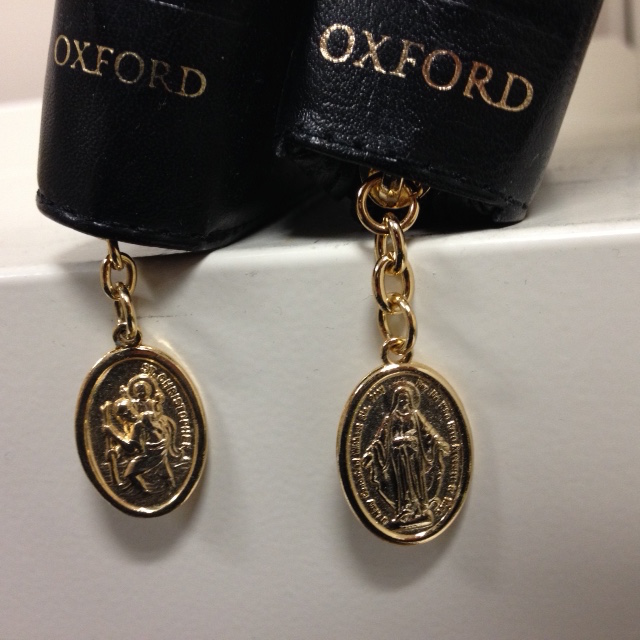
About the midpoint of last century, both Roman Catholicism and Judaism began to show a renewed interest in what had largely been a Protestant (and somewhat Teutonic) endeavor: critical study of the Bible. Bibles specifically directed toward these new readerships began to be produced. With metaphorical bells and whistles. The zipper Bible has always intrigued me. I never owned a zipper Bible. Once I had a zipper case, but never a zipper Bible. What was the message here: the word of the Almighty had to be protected? The other day I came across two zipper Bibles with saints’ medals as fobs. One was St. Christopher (who protects travelers) the other was for St. Mary (generally overall saint). These symbols of tradition interact with the more textual tradition that has come to be known as Bible. Religion is seldom monolithic, and even saints can watch over what is hidden by a zipper and regarded as the ultimate truth among those for whom Bibles are business.

IMG_2404


Ancient Tech

I feel like scraping Roman numerals on the wall of my cave with a sharp rock. One for each day I have to spend without my laptop. I’ve been working on this blog, born in this very cabin in which I sit, for six years now. With some exceptions, I’ve posted something new (and, I hope, thoughtful) every day. Even holidays and weekends. Most of those posts have been written on the deceased laptop that’s sitting in my carryon, electronic carrion. This has caused me to stop and consider that the most lasting words—the ones we all quote or at least recognize—tend to come from a far older form of communication technology: the pen and paper. Of course, there are older technologies yet. The Sumerians figured out that clay of the right consistency keeps marks made by a pointed reed pressed into it while it was still damp. Cuneiform writing lasted for millennia as the most advanced technology humanity had devised. The results, however, were bulky, heavy, and fragile. Few could learn the technique. It was an elite skill.

Nobody quotes the Sumerians anymore. Well, maybe the occasional quip from Gilgamesh will work its way to memory, but not much else readily does. The Bible, perhaps the most quoted book of all time, at least in western culture, wasn’t written on clay. By the time the earliest books of the Bible came along, scrolls had been developed. Probably suggesting itself from the way that papyrus naturally rolled up, this early form of paper—indeed, the word “papyrus” gives us our word “paper”—could be marked up with styluses or brushes and ink. Prepared animal skills, or parchment, sometimes called vellum, could also be used, but they were expensive. Pens at this period were sharpened objects dipped into ink, but the most famous words, well, penned by humankind were passed down in that medium. Copied, recopied, memorized. Electricity hadn’t even been discovered yet.


Printing presses and their children—typewriters and the consequent qwerty—have led the way since they were invented. Until, however, the 1980s at least, professors would accept only the old fashioned manuscript for papers. Indeed, the medium had given its name to the end result. We still write academic papers, although they are more often published and read electronically. So here I find myself in a cabin on a beautiful lake, surrounded by nature, worried about a communication device that can speak with the stars. There may not be workable clay here—the soil is far too sandy and I don’t have the patience to look up how to make clay on my phone—but there is paper. Pens are scattered everywhere. I am at home in the matrix that has given us the great ideas of humankind.


Preacher’s Best Friend

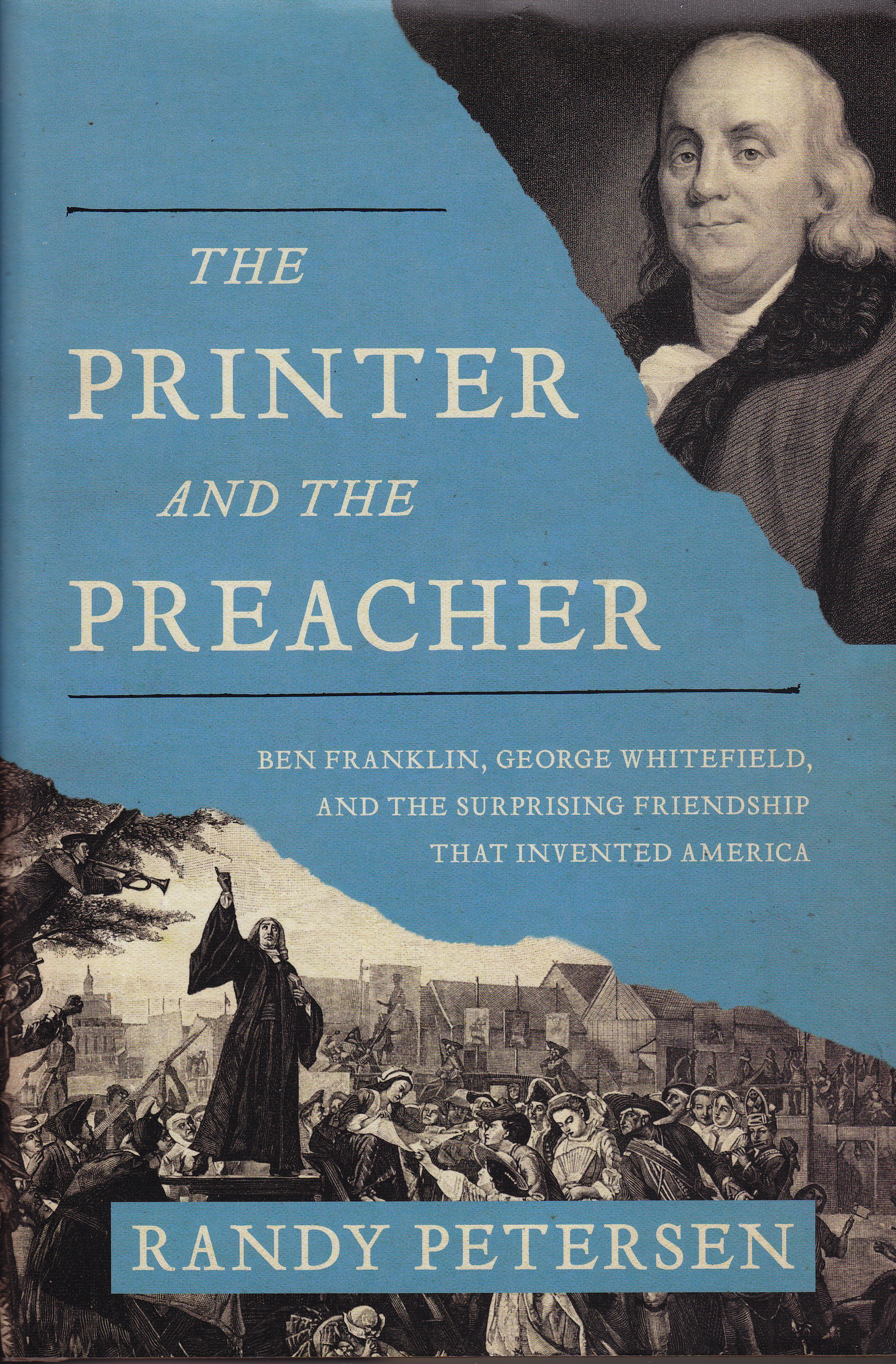
PreacherPrinterPerhaps it’s because I was born in Franklin, Pennsylvania, or perhaps it’s because everything I’ve ever read about him suggests he was delightfully unorthodox, but whatever the reason, Benjamin Franklin has always held my admiration.  Probably we all like to hear echoes of ourselves in the great.  It is difficult to believe that during his early rise to fame, Franklin was eclipsed by an unlikely superstar who was, of all things, an evangelist.  George Whitefield, an early English Methodist, wowed the colonies with his born again message, perhaps being responsible for its appeal even today.  Randy Petersen’s The Printer and the Preacher explores the unlikely friendship that sprang up between Franklin and the younger Whitefield.  While cataloguing early founders’ religious lives is always problematic, Franklin was a self-described Deist, and certainly not an Evangelical.  Whitefield was very into the personal relationship with Jesus idea that Franklin found, at best, simplistic.

Petersen’s book is a kind of wishful history.  He wants to see Franklin and Whitefield together, often suggesting that they might have met here or there, or that they might have discussed this or that.  The fact is, we have little to go on beyond the reality that the two knew and respected one another.  Whitefield stayed in Franklin’s house in Philadelphia.  Franklin printed and sold Whitefield’s best-seller sermons.  Certainly there was a good business opportunity here.  Even today the evangelical Bible market is a strong one.  Savvy businessmen and women know that a good living may be had from the Good Book.  You can’t read a book like The Printer and the Preacher without thinking that Whitefield and Franklin were a kind of odd couple.  Franklin is remembered as a man of wit and science.  Whitefield is barely remembered at all.  One of the first preachers to hire a publicity manager, Whitefield was the Joel Osteen of his day, raking in the accolades for being emotional in front of salt-of-the-earth colonials.  His oratory skills were legendary.  Even though he is honored as one of the founders of the University of Pennsylvania, he was no scholar and has largely been relegated to an historical footnote.

Petersen’s book is a quick read.  His writing is winsome in an evangelical way.  He assumes the truth, or so it appears, of the evangelical position.  Nevertheless, there is material to stop and ponder here.  Many of the questions can never be answered: why, particularly, did Franklin and Whitefield hit it off, for example.  On a more approachable level is the why of Whitefield’s faded flower verses Franklin’s perennial bloom.  The message of Whitefield simply doesn’t stand up to the experience of history.  Human beings—many of them born again—experience constant turmoil in their lives.  Franklin, on the other hand, was the consumate pragmatist.  His aphorisms are regularly mistaken for verses of the Bible.  Although others would have gotten there, we largely have him to thank for our harnessing of electricity, and even the birth of a new nation.  Whitefield’s spiritual descendants now rally to prevent stem cell research and the teaching of evolution.  Franklin’s children, illegitimate or not, reap the benefits of the lightning rod.


Ethics for Rent

Ironically, the Bible is the basis for the western preoccupation with land ownership. What with commandments against stealing and coveting, the Israelites had a sense of being promised a land by God. It was their land and no human motivation—including imperial conquest—could trump the divine will. In the western world, so heavily influenced by the Bible, the concept of private property is itself considered sacred. If enough land to sustain yourself is good, even more land than you need must be better. That’s logic. Land-grabs by the powerful are nothing new. In America (land stolen from the original owners) no better symbol of affluence exists than property ownership. Like many things biblical, this is often a myth. Although I’m a white, Anglo-Saxon, straight, Protestant, I grew up among renters. My family couldn’t afford a house. When my mother remarried, my step-father owned his house and it was in such bad shape that as soon as he moved out to a rental property, it was immediately razed. On my own, I’ve always been a renter because I couldn’t ever afford to be anything else.

After Nashotah House, my wife and I considered buying. Wisconsin, apart from having no jobs, seemed like a nice place to settle. We researched. Your mortgage payments should be no more than 30 percent of your income, we learned. Living in suspended animation since those days, we’ve rented in a variety of places and the 30 percent figure has also turned out to be a myth. Affordable housing, in the United States, is set at that benchmark. A recent news byte in the Christian Century notes that in not one of the fifty united States is it possible to rent a one-bedroom apartment on 30 percent of minimum wage. 49 hours of work a week would be necessary to meet that benchmark in South Dakota, the state with most affordable housing. I know professors of Bible who own summer houses. That’s in addition to their regular houses. Meanwhile, many who would like to own something much more modest can’t afford even that.

The biblical worldview is an idealistic one. Recognizing that greed is inseparable from human will (even among a chosen people) the hope was that the poor would be taken care of by those who had more than their share. As the statistically inclined like to say, the numbers don’t lie. Housing, one of the most basic of all human needs, is exploitatively expensive. Many renters can never break out of the cycle of paying too much in rent so as not to be able to save up enough to make a down-payment on a place of their own. Yet prices go up while raises don’t keep pace with inflation. It’s all about ownership. Laws are in place to protect those who take (“legally”) for themselves. The rest pay into the system at three times a tithe. And even this, the numbers say, isn’t nearly enough.

Rent


America’s Book

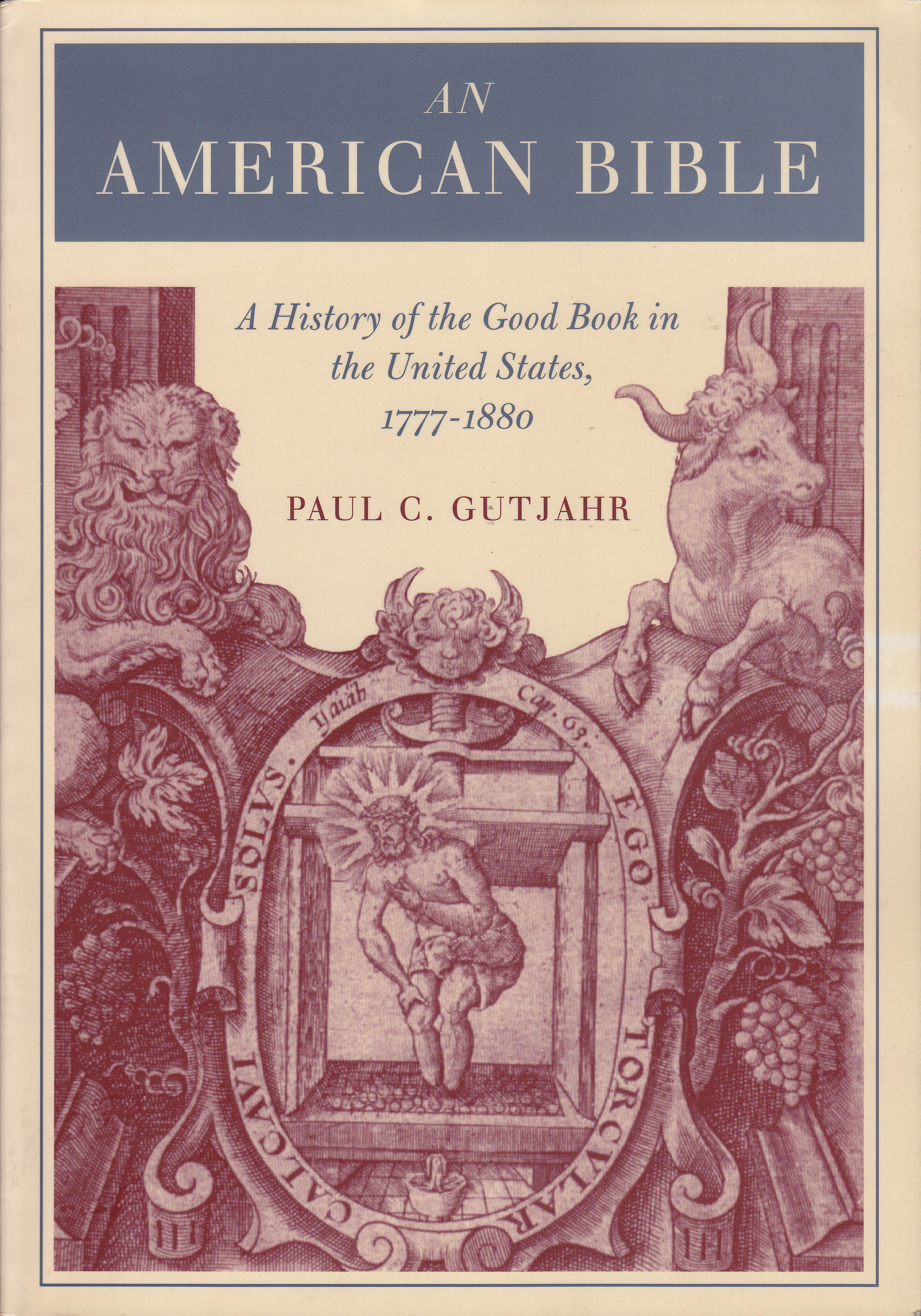
AmericanBibleOne thing that would be difficult to overstate is the influence the Bible has had on America. In our increasingly secular society, it may seem like the Bible has lost its edge. Then comes a presidential election and the Bible is headline news again. Actually, it is present all along in more subtle forms, causing embarrassment for those who think it’s just puerile mythology. Many useful aspects of this may be glimpsed in Paul C. Gutjahr’s An American Bible: A History of the Good Book in the United States,1777-1880. Thorough, insightful, and at times even witty, this reader-friendly analysis probes many aspects of how the Bible has impacted society in ways long forgotten. Who remembers that there were “Bible Wars” in the nineteenth century? That Bible publishing could at one time make one wealthy? That Bible illustrations caused scandal because bare-bosomed biblical ladies appeared in the pages of sacred writ?

The Bible is America’s book. Although Gutjahr only covers about a century of the story, there’s no question that the Good Book has roots that reach down into the sixteenth century and branches that continue to sprawl into the twenty-first. Some of it may be chalked up to civil religion, but the whole picture is more complex than that. From earliest days the colonial invaders drew on their understanding of the Bible to justify actions that really can’t be justified, and assuaged their guilt with the same holy book. Medieval European culture held the church and its founding document in high esteem, and when the Reformers broke from the hierarchy, the Bible became, well, sola scriptura. It was the Protestants who were annoyed enough at the situation to seek a life in somebody else’s land.

Once here, however, the Bible became foundational. Schools were established to teach students to read, and the main reading material was the Bible. A moral society, it was believed, would be founded on such curricula. Colleges were built primarily to train ministers. Revivals periodically swept the land. We currently live in the days of mega-churches. The elites sometimes overlook the appeal of the Bible to the average person. Here is a book that offers hope. And even if it’s rough, a love to those who don’t get their share of the culture’s spoils. It is more than a book. The Bible is a symbol. On his inauguration George Washington not only laid his hand on it, he also kissed the Bible before the crowds. If, like me, you didn’t know that, I suggest An American Bible as a reminder of how it has brought us to where we are. Borrowing a term from its sub-title, it too is a good book, and it serves to remind us of the power of an idea.


Receive History

Sacred texts, without readers, are mere artifacts. While so evident as to be trite, this truth lies behind the area of biblical studies called reception history. Perhaps from the earliest days that some books were considered holy, those who studied them wondered primarily what the original author meant. That was, after all, why the texts were preserved as special—they possessed a quality that other writings lacked. Over the centuries this perspective gained nuance and sophistication. (Despite what some secularists say, the study of the Bible can be quite scientific. Some of it is so technical that even specialists have a difficult time following it.) Until last century, however, one aspect remained unchallenged. The goal was to reach what the original author meant. The enterprise of exegesis is geared toward that end. Strip away the reader to get to the writer.

thumb_IMG_2069_1024Meanwhile sacred texts, such as the Bible, continue to develop their own lives in culture. While today’s facile use of the Bible in politics may seem to be something new, the use of Scripture in government is as old as this nation. It easily goes back to European explorations of text, and perhaps even to Asian exegesis before then. Even though the founders of the United States were unquestionably Deists, for the most part, they also were biblically literate. Even the Enlightenment recognized that the Bible held a privileged place in western civilization. Perhaps it was not the only sacred text, but it was a sacred text to many thousands, or millions, or people. Such a pedigree is wasted only with great loss to all. Enter reception history.

In the days of ecclesiastical hegemony, the church, however defined, had the right to interpret Scripture. With the growth of literacy and education the possibility of understanding the Bible spread to any who could read, or had ears to hear. We have only to glance around to see the ramifications of that today. While students may not know who Moses was in the Bible, they can tell you Christian Bale played him in a recent blockbuster. They may not know that Noah was 600 years old when the flood came, but they can tell you he was a troubled, if not somewhat psychotic, devotee of God. At least in popular culture. And that is merely the thinnest veneer of the surface. The idea of sacred texts remains embedded in our worldview. It would seem that if we want to understand ourselves, reception history will unearth vital clues.


Rorrim

It was an object of wonder. Handed to me as a child, the Bible inspired a kind of awe reserved for the big events of a young life. Here were the very words of God, in King James English, for me to read, mark, and inwardly digest. Well, at least read. And read I did, as only the fear of Hell is able to motivate an impressionable psyche. When a parish minister saw the trajectory of my life, he suggested exploring the ministry. More Bible reading ensued. With only Halley’s Bible Handbook as a guide, interpretation was largely a matter of what the minister said, and the kind of primitive reason that resides in a teenager’s head. I made it through college as a religion major without ever hearing about Mesopotamia’s influence on the Bible. Once I did hear, in seminary, it was clear to me that to get to the truth, you had to go back beyond the first page. Mesopotamia was only part of the story. The Bible was a book compiled in a region where other religions shared concepts, deities, and stories with the Israelites. While unique in some respects, it turns out the Bible wasn’t as unique as I’d been led to believe.

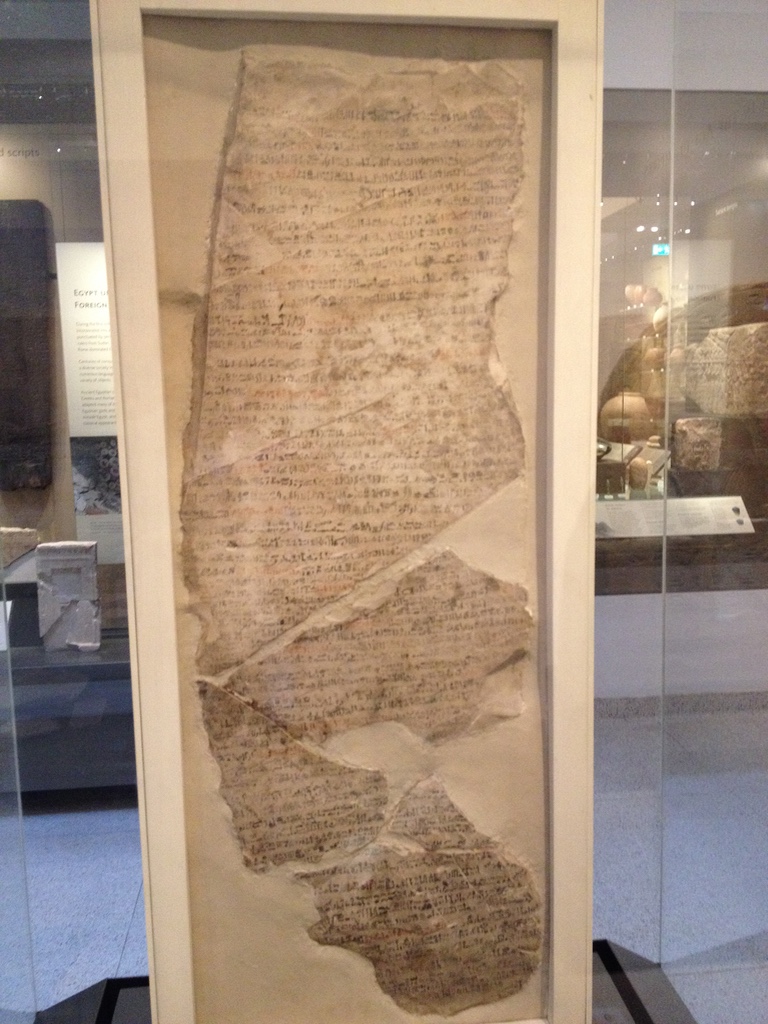
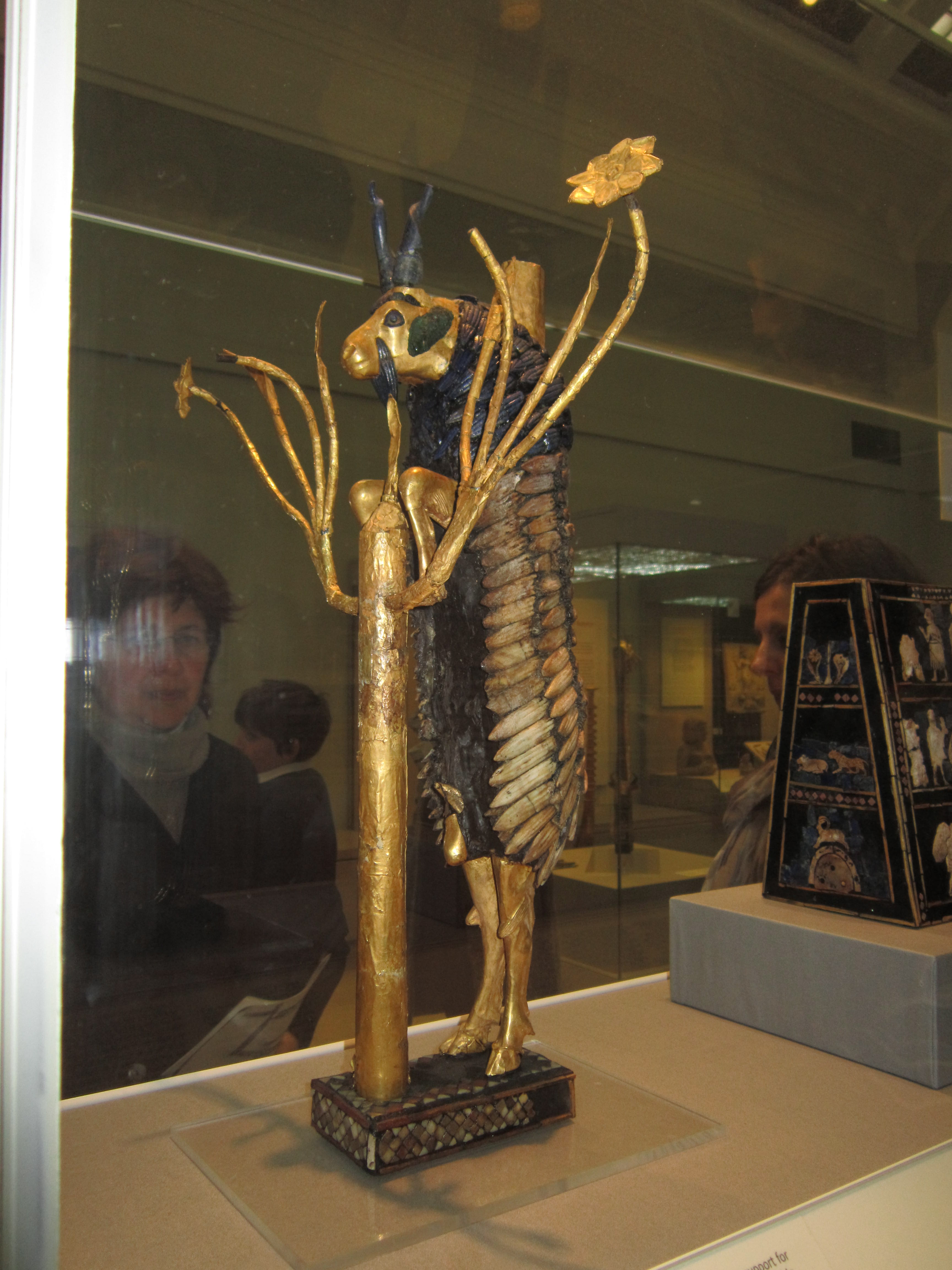
Mesopotamia, vying with Egypt, was the true cradle of the civilization that gave rise to who we are in the western world. Perhaps in the eastern hemisphere as well. The great cities of Sumer, and later Babylonia and Assyria, yielded cuneiform tablets and other artifacts that insisted we widen our view of antiquity. The heirs of this tradition developed Judaism, Christianity, and Islam. All three monotheistic religions have bred sects that despise this ancient past with its uncomfortable truths, and thus we hear of IS destroying the evidence with abandon. The years of my life spent studying these cultures disappears so quickly under the bulldozer’s blade. For all this, it is IS that is the passing fancy. You can’t destroy the truth. You can damage it, however, to the detriment of everyone.

IMG_0188

Political regimes, and not just in the Middle East, operate with an unbecoming arrogance when they believe in their own self-righteousness. Were it not for those who wondered what these wedges on clay meant, we might still have to reckon (more seriously than we already have to do) with those who insist that it’s the Bible way or the highway. Unfortunately, it often takes disasters such as this wanton destruction of the past to wake the media from its lethargy concerning the cultures that gave our religions birth. There’s so much more to distract. The world can’t make up its mind about the color of a dress, and meanwhile those backed with a justification of true belief destroy that which can never be replaced. Given the rhetoric of political leaders even here, I suspect that our past is no longer safe, no matter where we house the artifacts bearing witness to the truth.


Pauline Resurrection

271px-Bartolomeo_Montagna_-_Saint_Paul_-_Google_Art_ProjectPaul is dead. Has been since the first century. In biblical studies, however, he is undergoing a kind of resurrection. Studies of Paul are coming thick and fast, with many claiming, with some justification, that Christianity was his invention. Biblical scholars have long realized, however, that many New Testament letters do not come from Paul. Some never made that claim (Hebrews), while others seemed to have played on the popularity of the epistle genre and added Paul’s name to gain authority. Or maybe they were written by somebody else called Paul. Far more intriguing to me is the fact that in the authentic Pauline letters, the apostle from Tarsus mentions other letters he wrote that were not preserved. This should strike no one as unusual; would Luke’s grocery list have been preserved as scripture if it had been found? Probably not. Still, these missing letters do raise an issue that might crinkle brows with thought. What have we been missing?

Paul, like other scripture writers, had no idea he was writing “the Bible.” In fact, the Bible is one of the most obviously cobbled together holy books in world history. It is inspiration by committee. We have known for many many decades that there were other Gospels, for example. Some scholars treat the Gospel of Thomas as canonical, while others have reconstructed Q down to chapter and verse. The Hebrew Bible cites some of its sources that have gone missing. Some of the existent biblical books in their current state are obviously somewhat garbled. An imperfect scripture. And I’m wondering what Paul might have written in those missing letters.

The process of constructing a Bible has been examined time and again by scholars. Mostly they accept the material we have to work out some scheme of how Christianity decided “thus far and no further” and these books only will be Bible. Isn’t there, however, a problem when we know that other bits of parchment were floating around out there with the apostolic stamp of approval? What if Paul changed his mind over time? His current letters, the ones that survive, aren’t always consistent. It’s the job of exegetes to try to tell us what Paul really meant, but the fact is we know that this founder of Christianity sent more advice to more people and nobody bothered to keep a copy. Those bits that were preserved are not systematic or comprehensive, making me wonder just how solid a foundation a theology built on such small bits might have. Nobody, it seems, wrote a life of Jesus in real time. It took a couple decades at least before people started to sketch out his life’s story and teachings. By then Paul had already been killed. His letters, slowly gathered over time, formed a nucleus of a faith that grew to be the world’s largest. And, despite all that, we don’t know what he fully said. And we never will.


Biblical Script

The popular perception of the Bible generally does not match the actual contents very well. Like most books, the Bible has its highlights: Creation, Flood, David and Goliath, Jonah, Daniel and the lion’s den, Jesus, the Apocalypse. Between all the fascinating narrative, however, come the instructions. More instructions, in point of fact, than most people would care for. Nevertheless, over the centuries the Bible has acquired an aura in western civilization. It has become what some colleagues call an “iconic book.” It is this aspect of the Bible that stands out most clearly in the Fox series Sleepy Hollow. I wrote a post about Sleepy Hollow as I began to watch the first season on DVD. The headless horseman is an agent of the Apocalypse, and clergy and witches play a prominent role in the story. I wondered if the role of the Bible would diminish once the audience was drawn into the conceit of the four horsemen thundering out of Revelation into Sleepy Hollow. Just the opposite, in fact, occurred.

Sleepy_Hollow_-_Title_Card

As the series unfolds, the Bible is drawn more and more into the story. Demons and detectives both want to get their hands on it. Not to read the Ten Commandments or the Sermon on the Mount, but because the Bible contains esoteric information. Those “in the know” can unlock its secrets and thereby save society. Ironically, this is a subtextual version of the biblical metanarrative. It is all about (from the Christian perspective) salvation. The means, however, are quite different. Jesus is not really part of the Sleepy Hollow story. The Bible belongs to George Washington, cryptically bringing politics into the story. The text is not secure; there are extra verses in Washington’s Bible, just as there are many excised bits in Thomas Jefferson’s. Washington leaves instructions for saving his fledgling nation from the evils that roamed its shores during the Revolution. Or is that Revelation?

Right up to the cliff-hanger ending of season one, the Bible comes back time and again, focusing the viewer on its magical qualities. It is a book of secrets and mysteries. Meanwhile in the real world, biblical studies positions are being slashed from universities as if the horseman’s axe were anything but fictional. We don’t want to know about the real Bible. Politicians, real ones, use it as their own sword to force their personal faith agendas onto the electorate, but we generally do not even understand what the Bible really is. We’ll fund economics, that dismal science, and business, and maybe even actual science. The humanities, however, the stuff that makes us human, we will gladly call luxuries and deny them fiscal security. So the Bible grows in stature even as it diminishes in stature. Those who don’t know the factual Bible can easily be swayed by the fictional one. Are those hoofbeats I hear in the distance?


Truth Anonymous

SparkMany a student has been spared the reading of primary sources by study guides. This is not a new phenomenon. While still regularly teaching Hebrew Bible, I picked up a copy of Cliff Notes, The Bible, to show students how not to get the picture. To be fair, I was teaching future priests, and, despite my progressive outlook, I believe all Christian clergy ought to have read the Bible at least once. I know enough of Christian history to realize that the emphasis on sacred writ is not as ancient as many Protestants think—before the advent of modern literacy rates, scripture reading (and interpreting) was the business of the church. The laity were to receive it in the form of sermons, and so reading the Bible wasn’t really necessary. With the Reformation, however, the Bible became central and preaching became a matter of intelligent interpretation of the same. Today any Christian minister should have a pretty good grasp of holy writ, believe it or not.

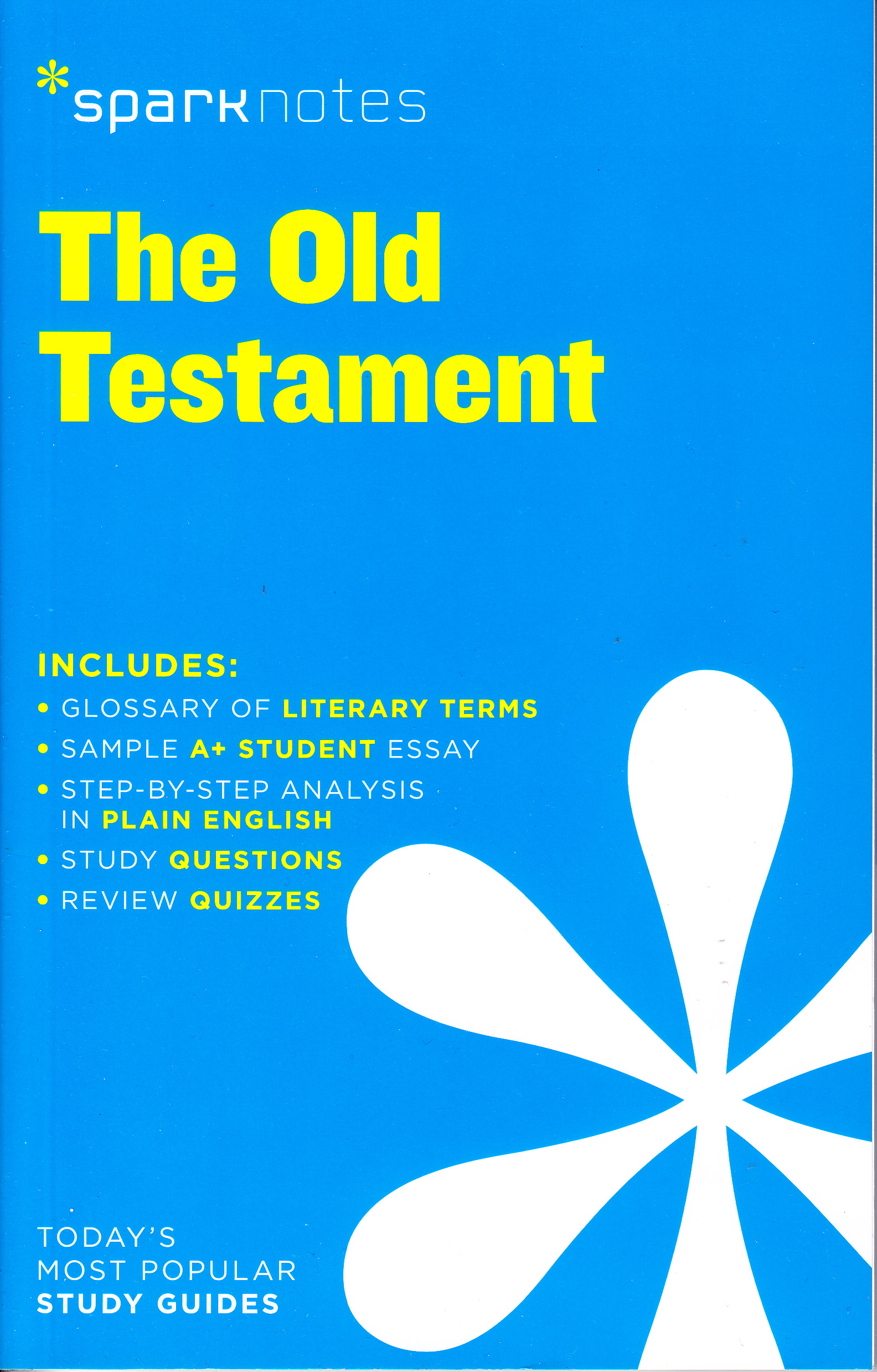
With a touch of puckish optimism, my family gave me a copy of the Spark Notes Old and New Testaments at Christmas. Spark, according to the copyright page, is a division of Barnes and Noble, and, should the cover be believed, today’s most popular study guides. As an erstwhile author of biblical studies material, I was curious about who wrote the notes. Enough of the scholar remains for me to be critical, and one of the first questions always to arise is, who wrote this? The question ought to be even more poignant for Bible readers. One of the most looming of questions is that of authority to interpret. Different branches of Christianity still maintain the proprietary right to be the true guardians of the sole truth. Although perhaps softened somewhat from soaking in the broth of religious-political activism, the Fundamentalist would, in any natural world, distrust the interpretation of a Catholic. And vice-versa. Looking at my Spark Notes, I wonder who it is that is telling me the truth.

Abridgment is a kind of crime for literary connoisseurs. As a child I purchased my books from Goodwill or Salvation Army—the kinds of places to which poverty-level readers have access. Although occasionally drawn to Reader’s Digest editions on purely economical grounds, I studiously avoided abridged works. Who decides what single syllable of Melville should be left out of Moby Dick? All the degrees in the world don’t justify that! The interpreter is just as human as the reader, and this kind of power is too heady for mere mortals to handle. The abridger of the Bible must take heed of Deuteronomy 4.2 and Revelation 22.18-19. There’s a lurking suspicion, nevertheless, that something might be learned from the stripped-down scriptures. It is with some anticipation that I look forward to receiving some anonymous instruction as I seek a Spark of truth.


Sola Scriptura

IMG_1641Would you buy a Bible from this man? “The trade is not a complicated one,” quoth Big Dan Teague. People are looking for answers. To making a living selling Bibles, however, requires some finesse in a world where scripture may be had for free. The trick is added value. Now, for those who approach this from a religious angle the obvious question is how you add value to what is claimed to be the word of God. It is, however, a matter of understanding it. Martin Luther, apart from starting the Protestant movement, also translated the Bible into German. The concept was simple: if the Bible contained the truth, the whole truth, and nothing but the truth, then if the laity read it, we wouldn’t need priests. Greek and Hebrew (and a smattering of Aramaic) are no longer the main elements of a well-rounded education so we need a version that anyone might read. Even the King James is a little rusty, what with words that don’t mean what they seem to—who wants to suffer? Especially in the biblical sense.

Contrary to Big Dan’s assertions, the Bible trade is a complicated one. The text of the Bible (if not specific translations) is in the public domain. The Bible is, however, more than words. It is ink, and paper, and binding. It is an object. By swearing with your hand on it, you can convince the court you’ll tell the truth. Or become president. Or raise a lot of money. Despite the Bible’s decline in academic prestige, it remains a source of popular trust. Not too many items that can be had for free can make such claims of power. It is the book that founded western civilization.

As I board a plane for San Diego, I know that I’m about to see lots of Bibles. Lots and lots of Bibles. Thousands of scholars who spend their lives studying it will gather to discuss its continuing significance and debate its finer meanings. Some will venture to purchase new Bibles. New versions of old words. See what others have to say about them. Somewhere distant I hear Big Dan breaking a branch from a shade tree. This, like most patterns, repeats itself endlessly. Some with tenure will argue that the whole thing ought to be abandoned. Others, forever denied tenure, will vociferously disagree. “One, find a wholesaler, the word of God in bulk, as it were.” And so the debate will continue long into the night. And over the weekend. In fact, ’til Tuesday.


Literary Hunter-Gatherers

Perhaps the clearest place my hunter-gatherer roots show is in my tendency to collect. In principle, in Manhattan, I leave coins on the pavement for those less fortunate than myself. This past week on the way to work, I walked past a scattering of pennies on the sidewalk. It physically ached to leave the shiny coins there—one of my recurring dreams is to find a bunch of coins that will lead to the end of my constant fear of want. News of ancient hordes found excite me inordinately. As a child I collected odd things if they came in numbers: stamps and coins and baseball cards go without saying, but also fossils, bottle caps, little HO scale military figurines, even pockets full of punched metal slugs that had obviously fallen from a truck leaving the steel mill just across the river in blessed abundance. My mother asked, not unreasonably, “what do you plan to do with those?” My brothers and I had no answers, but we had found something in profusion. The hunter-gatherer urge was to collect.

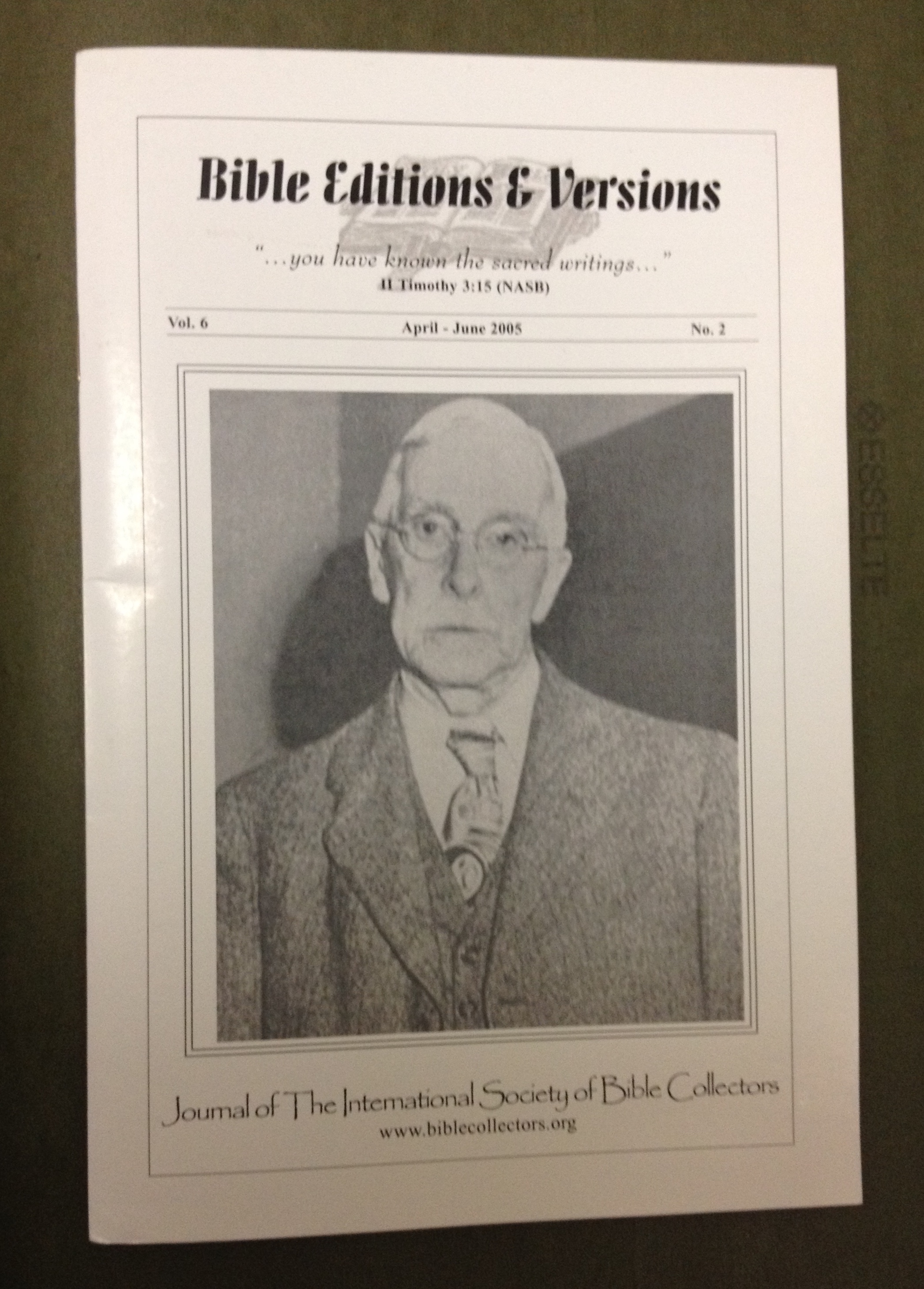
IMG_1642In my teenage years my collecting focused on books. It has remained there ever since. Even in times of penury when I’ve visited the used book store with intent to sell, I’ve always skulked out with more guilt than cash. The Judas Iscariot of the publication world. While sorting through some old files at work, I found a magazine called Bible Editions and Versions. Now, Bibles are books, and I have a fair collection of them, and have even read most of them cover-to-cover. I never knew, however, that Bible collecting was a recognized avocation. And one with a society and magazine. Looking closer, I found the address: www.biblecollectors.org, online home of the International Society of Bible Collectors. Yes, they have a website and the magazine still exists. Porn for sacred writ aficionados. The society has been around since I was two, but it took me half a century to find it.

The Bible is a totem. One colleague describes it as an iconic book. The more secular elements of society simply dismiss it until the loss of the senate makes them scratch their heads and say, “there are people who still take this stuff seriously?” While the numbers may have fallen off a bit, Bibles remain big business. Large print editions may be selling better these days, but the species is hardly endangered. In a world where so much seems uncertain, there is a natural appeal to a book that hasn’t really changed too much for a couple thousand years. Oh, and which claims to have God as its author. As I walk by that pile of pennies on the sidewalk, an almost magnetic force slows me down. I really want to stop and pick them up. I walk on knowing that in a box in my attic I have some real collectors items, in certain segments of society. For the ISBC I might be considered already a wealthy man.


Non-Fiction Steampunk

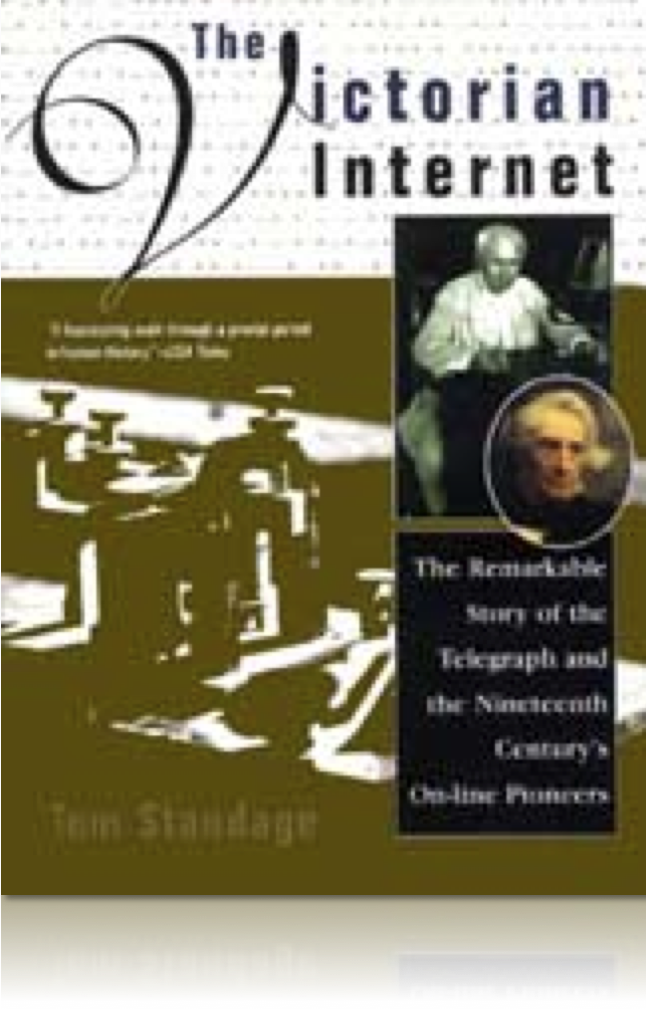
TheVictorianInternetThe histories of Tom Standage approach familiar things from unfamiliar angles. Being interested in Steampunk, and a daily user of the internet who has trouble recalling what life was like before then, I found The Victorian Internet fascinating. Subtitled The Remarkable Story of the Telegraph and the Nineteenth Century’s On-line Pioneers, the story of the wiring of the world did resonate in any almost eerie way to the early days of the world-wide web. Despite my disclaimer, I do recall those days clearly when the only way someone could get in touch with you immediately was the telephone, and you had to be at home for it to work. Prior to the telegraph, news traveled even slower and you could go months without hearing from those closest to you, if they happened to be away. Samuel F. B. Morse knew that first-hand, as Standage tells it. His wife died while he was out of town, and although he rushed back right away upon hearing, she had been buried before he reached her. Such was life when news arrived only by letter. Morse was among those who invented the telegraph, a device that made the world realize that yes, it was possible to send information to distant places almost instantly. It soon become a wired world.

Standage is also more circumspect than some writers who declare, with breathless awe, that some new device will cure the world’s ills. Showing how the telegraph generated much the same hyperbole as the internet (that peace would reign now that people could communicate instantly, that technology had brought a miraculous rapprochement, etc.) he notes that people remained people. Wars continued—intensified, in fact, into World War One where technology was devoted to destruction. People had always been able to kill each other. Now they could do it faster, and in more hideous ways. Still, there’s no denying that once the idea of instant communication caught on that we would continue to develop it rapidly. You never need be away from a network that covers much of the developed world and you can talk on your phone from deep under the Hudson River to the top of the Empire State Building. You can order a pizza from anywhere.

Ironically, Morse dedicated part of his earnings to endow a lectureship concerning how science related to the Bible. It was clear that technology had achieved the impossible (okay, well, the improbable) and yet, Victorian society still relied on the truths contained in Scripture. The telegraph, which began with the words, “What hath God wrought,” ended with the attempt to figure out how the Bible fit into all this. Just because humans had crossed the great barriers of oceans with electric cables didn’t mean the Almighty was out of a job. Even today God can be found on the internet. Along with many other choices of distraction and business. God is not so much dead as commodified. The difference between Morse’s day and ours was that then they knew that the Bible impacted daily life. It continues to do so today, but we’ve become too sophisticated to give it much of a nod. We might be well served, however, to look back once in a while as well as to look forward. We might be surprised at how little things have changed.


North Tarrytown

Ichabod Crane has undergone many incarnations since Washington Irving conjured him. Not very sympathetically described in the original “Legend of Sleepy Hollow,” he was gangly and somewhat clumsy and full of self-importance. The story of which he is forever a part, however, has become iconic of American myth-making. A deep symbolism runs through the story of the headless horseman, and for those who’ve actually been to Tarrytown, the modern incarnation of Sleepy Hollow, there may be a disconnect between the urbanity of a town so near to New York City and a rustic school teacher in a rural setting. Still, there seems to be quite a bit of buzz about the current television series “Sleepy Hollow” that I decided to see for myself what was happening. The conceit of Ichabod Crane reawakening, in a kind of Rip Van Winkle twist, in the present day is engaging. He is now a professor at Oxford University turned patriot to the American cause, which brings him to the point of actually beheading the horseman in the first place. But this literate, witty, and moody retelling involves more than Irving. The Bible is pretty much central to the series, at least as far as I’ve seen.

The headless horseman is none other than Death, the final of the four horsemen of the apocalypse, according to holy writ. Although the characters all refer to the Apocalypse as “Revelations,” something that causes premature baldness in biblical scholars, the program places the town of Sleepy Hollow at the crux of the oncoming end of the world, with the other three horsemen to be summoned along the way (Pestilence or Conquest, War, and Famine, for those who are keeping score). Also, witches, hearkening back to Salem, have a prominent place in the narrative, and the forces of rational law seem to be at their collective wits’ end to make any sense of religion breaking into a secular world. Without the Bible’s final book, Sleepy Hollow would have no legs (as well as no head).

Ichabods_chase_crop

In Tim Burton’s Sleepy Hollow, Ichabod Crane came through as a detective plotting science against superstition. At the end, however, even the most rational had to admit there was more going on than the science of the day could explain. That is part of the appeal of the Sleepy Hollow legend. No matter how strong the light we shed on them may be, our psyches reach out for the immaterial, the ghostly, the supernatural. We like to believe in sacred books and spells to protect from evil. Even the Twilight Zone episode “The Jungle” plays on how in even the most advanced cultures we still build skyscrapers with no thirteenth floor, as if our towers represent an unknown hubris for which we may be held accountable. Irrational? Perhaps. But Sleepy Hollow is not so somnolent these days when the Bible once again takes center stage and hoofbeats are heard once again in the night.