In Public

Mere days after my dentist appointment I had occasion to be back in the waiting room.  Of course I had a book with me.  Then my attention was caught by either a patient or someone waiting for a patient.  This man had not one, but two books with him.  He was poring over one of them, which was an older hardcover, like an academic.  Since I’d just posted about seeing nobody reading books, I felt I needed to publish a kind of, well, not exactly retraction, but reflection.  The sight of this man, about my age, was profoundly hopeful.  I have no idea who he was and waiting rooms are not generally where I choose to introduce myself.  I do sometimes weigh, however, the demerits of interrupting someone reading with the merits of meeting another reader.  We reading sorts can be private people, although reading in public marks us.

The book I happened to have had a bright, trade cover.  His were more somber and academic.  How could I, whose reading looked facile (it was not, but it looked like it might be) approach someone perhaps awaiting a root canal, who had some serious reading to do?  Two hardcovers bespeak serious business.  This made me reflect on another occasion in Easton.  Again, I was waiting for someone and it was summer so I sat outside on a curb, at the traffic circle, reading a book.  It was actually Toni Morrison’s Beloved.  Evening was falling.  A couple of coeds, or they seemed to eyes from my age, stopped and asked what I was reading.  I explained, and, unaccountably, they seemed never to have heard of Morrison, but were interested.  It was a teaching moment.

Back to the dentist office.  Had I missed out on the opportunity for a free lecture?  If this man were a professor, he’d likely have talked gladly about his work.  One thing I learned from being a professor myself is that people rarely ask about your work.  Yes, colleagues in the same field do, but even at Nashotah House with its small faculty, nobody seemed interested in the research of their colleagues.  As academic dean I even tried to institute a faculty seminar where we could read a paper and discuss it.  I was the only one who ever volunteered to do it.  In retrospect, it might’ve been a lost opportunity, that waiting room visit.  I’ve attended many medical appointments in my life, and finding a fellow reader at one of them was a bit of a silent gift.  I was glad to have been proven wrong.


In Praise of Paper

There’s an old saying that the tech industry might consider.  “If it ain’t broke, don’t fix it.”  I’m thinking books.  I work in an industry that’s running after ebooks, sometimes at the expense of actual books.  You know what I mean—the kind printed on paper.  With a cover.  An object.  What techies don’t seem to understand is that something happens to you when you’re reading a book.  It changes you.  Curled up in a chair with a half-pound of bound paper in front of you, you become absorbed.  Chair, person, paper.  All one.  And you’re taken somewhere else.  I’m not saying that reading online isn’t valuable.  Clearly it is.  The experience, however, isn’t the same.  Industry moguls express surprise at vinyl’s return.  They shouldn’t.  It wasn’t broke either.

After reading a meaningful book I’ll carry it around with me for days like Linus’ security blanket.  Its mere presence reminds me that something profound happened to me while I was spending time with that tome.  Especially meaningful books I hesitate to shelve away with the others.  No, I want them to hand to remind me.  To bring back, at a glance, the fascination they engendered.  Let’s call it enchantment.  Capitalism removed enchantment from the world.  In the heat of materialism’s fervor, it made all alternatives irrelevant.  That’s what’s driving the ebook craze.  Hey, I’m fine if you like to read on a piece of plastic, but please leave the option of paper for those who prefer to truly get lost.

I spend most of my waking hours (and all of my sleeping ones) surrounded by books.  When my eye falls on one that I really enjoyed, I take a nanosecond pause to appreciate it.  We all have to decide how we’ll spend our time on this weary old planet.  A good deal of it will be work, and if we’re lucky it will be doing something we enjoy.  Otherwise we have roughly five hours of waking time five days a week to squeeze in the necessary and the enjoyable.  Some will go out and party with friends, others will stay home and read a book.  Many will use devices to fill the time outside the office, whether alone or with friends.  I tend to be in the book crowd.  I’m not embarrassed by that.  Books have been good to me.  Very good.  They say reading is fundamental.  I would add that reading a real book is life itself.


Toothsome Books

A visit to the dentist always entails a certain amount of anxiety.  Will the sins of my mouth have caught up with me?  Are my sleepy nights’ brushings thorough enough?  Is that spot where I declined to have a false molar replace the missing one causing any problems for the teeth above?  That kind of thing.  In any case, I like our dentist.  The town we live in, which is small, has four dentist offices.  The one I selected is run by three women and instead of always getting the same mouth doctor, on a standard visit you meet with the one who has an opening in her schedule.  I like to support women-owned businesses.  But still, the anxiousness.  Something happened on my last visit that may help.  I’ll try to remember it.

Unlike anyone else I’ve ever seen, I always take a book with me for those minutes in the waiting room.  I have so much that I want to read and so little time, so as long as I’m cashing in a sick day, I might as well get some extra reading done.  Since it’s summer, I didn’t have a coat in which to leave my book, so I took it back to the room with me.  They’ve never said anything about me taking up a little of their medical counter with a book, so I figured it was okay.  The hygienist did the x-rays and cleaning, then the dentist stopped in.  I had never seen this particular doctor before, and she began the conversation by asking what the book was about.  Now, as strange as it may sound, I have wondered why nobody ever asks about the book I inevitably have.  I take books to every medical appointment—I’m not a magazine reader—and in all these years no one has asked me.  Until now.

This wasn’t just a polite query either.  She asked whether I thought it was good, and even suggested some similar things I might want to read.  It was, in fact, a literary conversation.  As I walked home (teeth are fine) I pondered how rare this is.  I’ve told people that I write books and the conversation usually dies when I say what they’re about.  Of course, I don’t go around reading copies of my own books.  I already know what they say.  I guess I miss a literate society where people discuss the books they read.  I do it on this blog, and on Goodreads, but engagement is low.  At least next time I won’t be afraid to go to the dentist.


Expectations

Our minds are our most powerful tools.  Some of us wonder what reality is, and David Robson has written a very important book that the title explains: The Expectation Effect: How Your Mindset Can Change Your World.  Now, before your woo-woo meter goes off, Robson is a science writer and everything in his book is backed by evidence.  The basic idea is this: what we expect to happen often becomes our reality due to the “expectation effect.”  The brain, as Robson describes it, is a prediction machine.  And what it expects often takes place.  In other words, belief matters.  Probably the most famous example of this is the placebo.  We all know that patients treated with placebos often recover just as well as patients given the active ingredient.  That pill the doctor gives will heal them, and so it does.  The brain expects it, and it happens.  Belief.

This book also explores the nocebo response.  This is where you expect something bad, and it happens.  The most extreme examples of this, well documented, are when people are convinced an imaginary threat will kill them and they die of it.  In fact, the book opens with consideration of such an occurrence where a cultural expectation led to otherwise unexplainable deaths among healthy Hmong populations fearing a night demon.  Hysteria grew and so did the deaths.  Robson also explores how hysteria leads to expectations that our brains carry out.  He shows how training our expectations can help good self-fulfilling prophecies take place.  Athletes, for example, can seem to do the impossible.  Why?  Partially training, yes.  But also because of their mindsets.  Their expectations.  Their beliefs.

The implications of this are very broad.  Everything from our health, to how we handle stress, to how food benefits our bodies, to how we age as we expect to.  Robson is quick to point out that this isn’t a book to solve all our problems, but it is a book that demonstrates our minds do make things real.  Or at least they can.  It is filled with fascinating examples, backed with science, showing that even how a doctor or nurse introduces a shot “you’ll feel a bit of a sting” versus “you won’t feel a thing” can make a difference to how our body perceives it.  And our brains can make our worries, or our hopeful expectations, real.  Personally, I believe that there may be even more to this than Robson explores.  But then again, I enjoy a bit of mystery.  I believe in belief.  Regardless, this is a life-changing book and I hope, for your own sake, that you’ll read it.


Not Content

I write books.  When I want to “create content” I do it on this blog.  (And a few other internet sites.)  These aren’t the same thing.  I find it distressing that publishers are trying to drive us to ebooks where content can easily be changed, as opposed to print books.  The shelves of this room are lined with books and the technology doesn’t exist to come in and change “data” without my knowing it.  Facts are secure in print, right Ilimilku?  I’m not looking forward to a Star Wars future where there’s no paper.  I was born in the last century and, perhaps, I’ll die there too.   You see, when you write a book you have a project in mind that has an endpoint.   It may change and shift as you write, but you know what a book is and that’s what you produce.  It gets shelved and you move on to other things.  (At least I do.)

Content is something different and the creative process behind it also differs.  If I find something wrong after the fact, I go into my past posts and change it.  I’m not afraid of admitting I’m wrong.  The point of this blog is to share ideas with the world, not to write a book.  (Although, I confess that I would not say “no” if someone in publishing wanted a selection of worthwhile posts for a book… just saying.)  It amazes me how publishers have pretty much gone after the money and have forgotten what the creative process is like.  Of course, they’re having to figure out how this whole internet with free content plays into it too.  But still, my book writing uses a different fold in my gray matter than my blog writing does.  All of it feels pretty different from writing fiction too.

These things together adds up to a writing life.  I have a ton of “not for publication” writing.  This is something different again.  I suspect it will never be read by anybody, moldering away on some old hard drive after some AI-induced apocalypse.  I write it for of the same reason, I suspect, that people used to spray-paint “Kilroy was here” on things.  The book of Job, it seems to me, was the preservation of words that someone simply had to write.  We know the framing story is folklore.  But those who have words to carve with iron on lead, or engrave on a stone to last forever.  It’s more, I hope, than just “creating content.”


More Than Dark Shadows

The Television Horrors of Dan Curtis is one of those books that makes me feel less alone.  Jeff Thompson is not only a true fan of Curtis’ voluminous quality output, but he knows more about Dark Shadows than might seem possible.  I knew I wanted to read this book as soon as I learned of it.  As I’ve confessed many times before, although Dark Shadows was formative for me, I’m a mere dabbler.  I saw a fair number of the original run on afterschool television, I read the novels, but I never dove in.  I was more of a wader.  Still, this book demonstrates that many people were influenced by Dark Shadows, some that you might not expect.  But the book is about Dan Curtis and his horror work (mostly).

Dan Curtis went on to a kind of fame for his war epics (considered “serious” work), The Winds of War and War and Remembrance.  Although he directed some theatrical movies (all of which I’ve seen), he mostly stuck to work in television.  One of the results of this is that he never attained the level of appreciation of a number of auteurs who focused on Hollywood.  And it’s also clear that Curtis was interested in more than just monsters.  I personally dislike gangster and war movies (although my great-uncle Melvin Purvis was one of his interests).  Curtis found them worth of his considerable talents.  As Thompson makes clear, however, even as his own death was approaching, Curtis knew that, like Washington Irving, his early work would be that for which he was remembered.  That’s because Dark Shadows went where nobody else dared to go, and it’s memorable even today.

I learned a lot from this book.  Enough to know that Curtis was an enigma.  He remains less recognized as a director and producer than many Hollywood personalities that are household names.  Still, if pressed, a number of people even today would recognize some of Curtis’ work, whether or not they associate it with him.  Dark Shadows went through a short television reboot, for instance, and a second reboot attempt before being made into a movie by Tim Burton.  This book, however, made me watch some movies I had only known vaguely before.  And it has inspired me to watch others as well.  Curtis was an incredibly hard worker, and a man with definite opinions.  It’s perhaps a bit surprising that he never really attained the kind of fame that other “content producers” did.  Even his Wikipedia article is brief.  This book helps uncover a large amount of information behind a person who influenced many people without the glamour associated with that level of impact.


Discovering Ordinary

I wasn’t quite sure what sense of ordinariness to expect from Robert J. Wicks’ The Tao of Ordinariness.  I would say as a whole it is about becoming ordinary you.  I found the whole interesting, but it was chapter four that really caught my attention.  It’s here that Wicks starts to address those whose damaged childhoods have created a false (and frequently re-affirmed) sense of our ordinary selves.  I’ve always known I have issues—it’s pretty obvious that I’m not quite like other people I know.  I often lack confidence and, thanks to my career and publishing history, have had that sense pounded in even as an adult.  (Poundedness is not a protected category, however, and it won’t get you any special consideration.)  Up until that chapter I was thinking, “This is nice, but it just doesn’t match my experience of things.”  Then I learned why.

It is possible to change your outlook, of course.  It’s not an easy thing to do.  Our culture isn’t set up to allow for it, what with 9-2-5s and all that.  You see, my personality really fit the teaching mode and lifestyle.  I loved the work, although it was hard.  And I loved the fact that if you had free time during the day you could, if you needed to, run an errand or two.  I guess I’ve never been one to invest in that capitalistic idea that your employer is buying your time.  For some jobs, yes.  In fact, my first employment experiences were of that sort.  I started at nine, did physical work until five, with a lunch break in the middle.  Now work begins early and doesn’t really end.  Days off are few and they fly by quickly.  Changing your outlook requires time to think.  That, it seems, is what’s missing.  It makes it difficult to find out what my ordinary is.

Wicks’ book is a hopeful one.  His optimism comes through page after page.  He gives practical advice.  The subtitle reveals why the book is important: Humility and Simplicity in a Narcissistic Age.  (That last adjective is so common now that spell-check completes it automatically.)  Politicians have frequently been narcissists, but Trump has made it into a high art—care only for yourself and tell people the lies they want to hear.  You can see the calculating cynicism in every glance and gesture.  And yet, here we are.  Books like this are important.  We need to be told that there’s another way.  If only it were also possible to get your horse to drink.


History Lesson

This blog, which has come to define me in many ways, wasn’t my idea.  A niece started it for me when Neal Stephenson suggested I should have a place for podcasting.  I still have ideas for podcasts, but finding the time to put them together (and a place to host them) has proven quite challenging.  In any case, the title, “Sects and Violence in the Ancient World,” reflected where I was at the time.  I started posting when I was 46, and now I’m over 60.  Things are bound to change a little.  From the start, I wrote about books.  Indeed, for things I’ve read since summer of 2009, I check the blog to find out when.  I also noted significant movies.  In the early days I tried to limit the posts to religion-themed topics since, well, I have three degrees in the field.

As I gradually grew comfortable discussing pop culture (generally horror), I gradually addressed movies and books without a religious bent.  It could be that I didn’t record everything I read or watched here, and that makes things before 2009 kind of a muddle.  While the muddle really began before 2005—my last year at Nashotah House.  That period was a kind of maelstrom of desperation to find a job, teaching classes, pretending to be an editor, making my way in a world unfamiliar to me and certainly unchosen.  Eventually this blog came to focus on horror movies more than religion.  Now, like my life, it’s a jumble of conflicting impulses trying to make sense of the world as an existentialist with a bit of faith.  I’m still aspiring to that mustard seed.

I’m not sure when it was that I began commenting on most movies I watched.  I’ve used movies as therapy since 2005—for some reason horror made me feel better.  Even now, when I want to remember when I saw a movie I check this blog.  Or if I want to know when I read a book.  My wife pointed Goodreads out to me in 2013, and that became another place to post on books, even if they didn’t qualify for “Sects and Violence.”  But that slushy period between 2005 and 2013 was full of books, I know.  In addition to movies, I read incessantly.  If I want to remember when I read what, however, I’ve only got the last decade really covered.  Goodreads says I’ve read about a thousand books since 2013.  For movies, I have no way of knowing how many I’ve seen.  Or where, for the most part.  Maybe I need to start keeping a proper diary.  Maybe one with a lock and a key.


Empowerment

Recommended as a worthwhile contemporary gothic novel, Alix E. Harrow’s The Once and Future Witches is a feminist tour de force.  Set in a world similar, or perhaps parallel, to ours, it follows three witch sisters in 1893.  The sisters are estranged, having been raised by an abusive father, and each has found her own way to New Salem.  The old Salem had been destroyed after the witch trials.  The three find their lives drawn together, not even knowing the others are there.  But there are also still witch hunters.  None worse than Gideon Hill, the leading candidate for mayor.  I’ve long known that books written after Trump are often fairly obvious for the hatred that oozes from political leaders.  This is one such case.  The story is one of female empowerment in the face of constant male opposition.  It goes fairly quickly for a book its size.

It’s an enjoyable read but it grows, well, harrowing towards the end.  You come to like these three very different sisters and appreciate the gifts they offer to their world.  Men, however, make the rules and often they feel that women have no place in making decisions for the public good.  I’m amazed at the number of people who still believe this.  It makes novels such as this so important.  Women with power are crucial examples to present.  The three sisters may cause mayhem, but it is generally good for the city.  When men are in charge, things tend to get repressive.  Sound familiar?

Conveying the gist of a 500-page novel isn’t a simple task so I’ll simply say that this isn’t a conventional witch story.  There’s never a question that witches are good, but capable of doing bad things.  In other words, they are pretty much like all of us.  That’s not to deny that some people become evil and that such people will gain ardent, blind followers.  The characters are memorable and likable in their very humanness.  As far as genre goes, this is a magical realism novel.  As you get drawn into Harrow’s world it becomes believable.  It’s a book that should be widely read and its plea for tolerance must be heard.  I can think of other comparisons—others have also conveyed that an unquestioning religion may become evil unintentionally.  Such conversions aren’t the kind publicly discussed, but they do fit with human experience.  I’ve intentionally left out spoilers since I want to encourage readers.  It certainly has left me thoughtful.


International Standard

Probably nobody gives them much of a thought.  ISBNs, that is.  International Standard Book Numbers.  An ISBN is a book’s unique identifier.  And they cost money.  I’m not sure how self-publishing works, but at some stage, whether it’s obvious or not, you have to pay for an ISBN if you want wide distribution.  And since they cost money, most publishers don’t assign an ISBN until a contract is signed.  If a deal falls through, hopefully they can recycle the ISBN and assign it to another book.  The system only began in the 1960s and not all books printed their ISBNs.  The thing about them is, the best way to find the book you’re looking for is by using the ISBN rather than the title.  Titles can’t be copyrighted, and that’s why you see so many books with the same name.  The ISBN won’t let you down.

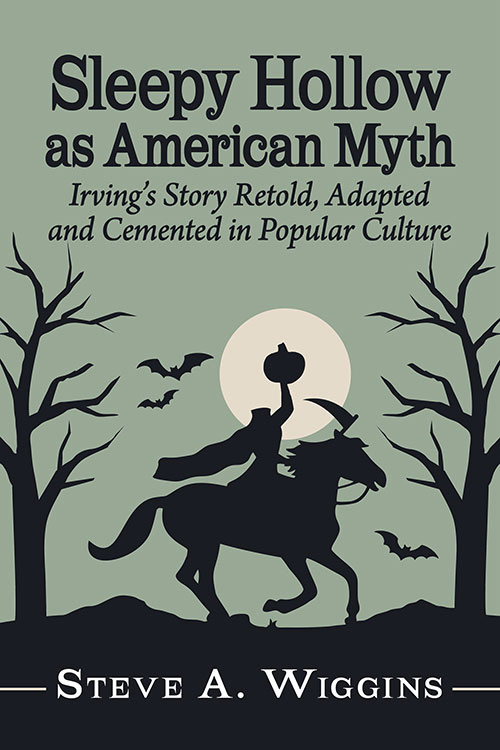
My book, The Myth of Sleepy Hollow, now has an ISBN.  I just found out yesterday.  It’s 978-1-4766-9757-4, in case you’re curious.  It won’t lead to anything on the web yet since I haven’t submitted the manuscript and work hasn’t begun on the title.  It is, however, a step in that direction.  In the past, when I’ve signed book contracts, I’ve always felt a little anxious until the ISBN is assigned.  Is the publisher really sure about this?  Once they assign an ISBN they’ve started to invest in your ideas.  My book has existed in draft form for several months, but I’m going through it again, for the umpteenth time, to make it presentable to the world.

One of my jobs at Gorgias Press, my first full-time publishing gig, was to assign ISBNs.  They had to buy blocks of them and they came in a printout in a large notebook.  If a project with an ISBN didn’t materialize, some White-Out and a pen could save the company some money.  It was all very hands-on.  I imagine it’s gone electronic these days.  The ISBN is a technical code, by the way.  The 13-digit code, which is now common (it used to be ten), has a meaning.  The schematic below explains that.  The “group” section has to do with language and that’s followed by the publisher’s ID.  Simple deduction (and dashes) tell me that 4766 is McFarland.  That’s followed by the title identifier.  I’m not a numbers person, however.  Those of us drawn to the words part generally try to provide the inside content.  And since it’s a weekend I’d better get to it.  I have a submission deadline I’d like to meet. But I’m thinking about the ISBN.

Image credit: Sakurambo; via Wikimedia Commons, GNU Free Documentation License

Number Six

Signing a book contract always makes me happy.  There’s a validation to it.  Someone thinks my thoughts are worthwhile.  And now I can reveal what it’s about.  Regular readers likely already have some inkling, due to the number of times I referenced Sleepy Hollow over the past couple of years.  I’ll provide more details closer to the time, but it struck me back when working on Holy Horror that few resources exist for “The Legend of Sleepy Hollow,” despite its status as such a well-known story.  An agent or two agreed with me that the topic was good but they really weren’t sure it was a commercial project.  This despite the fact that Lindsey Beer is slated to write and direct a reboot of the famous 1999 movie.  It seemed that a book on the topic available at the time might sell.

John Quidor, The Headless Horseman Pursuing Ichabod Crane, public domain via Wikimedia Commons

I tried a number of independent publishers that don’t require agents.  I learned that most of them won’t even reply to your emails.  It seems that to get published by any trade publisher you have to be already famous.  Or maybe my idea’s just not good.  Weird.  Finally I found a university press that thought it might be a good fit, and it occurred to me that McFarland, who recently dropped the price on Holy Horror, would be a good press for this kind of thing.  McFarland made an offer first, and yesterday they sent a contract.  Hopefully the book will be out next year.

This is quite a personal project.  The story is one of my early memories—most likely due to the Disney version of the story, and most likely as seen on television.  My treatment is, as in all of my books, idiosyncratic.  I look at things differently than other people do.  And I’ve been looking at Sleepy Hollow for half a century or so, and I’ve read quite a lot about Washington Irving and the Hudson Valley.  I don’t want to say too much since others write more swiftly than I do and some presses speed books along.  For the time being I can enjoy that rare feeling of having a book contract and an editor who’s excited about my project.  I do hope that the next book, number seven, might find a trade publisher.  What’s it about?  Well, I’m working on two at the moment, and it depends which reaches book length first.  And I can’t say anything since someone may scoop me.  So I’ll just bask a little bit before starting another work day.


An Interesting Prize

If you’re born without it, you get by any way that you can.  Capital, that is.  Those of us who inherit nothing but active minds don’t stand a chance, really.  Without connections or the cash to draw others in, we tend to be scrappy.  And cheap.  This is probably the reason I’m drawn to characters like Ed Wood, and those who started American International Pictures.  I get the sense that Mark Thomas McGee must be an interesting guy.  After all, he met some of his idols when he was young.  Fast and Furious: The Story of American International Pictures is available in a second edition, I know, but I tend to find first editions fresher.  They say what’s really on an author’s mind.  Besides, used books have their own charm.

Although American International Pictures (AIP) was early on known for fast shooting schedules and cheap effects, it eventually started to earn some mainstream respectability before the company being acquired by Filmways.  Along the way they engaged some famous champions of cheap, such as Roger Corman.  A number of films discussed in this book were part of my childhood.  And as someone who’s always had to live cheaply (I just don’t comprehend finance), I found this an extremely hopeful book.  Some of these folks never became famous in the lifetimes, but they left a legacy.  And that’s a worthy goal.  I suspect that for those of us who can’t break into mainstream publishing, blogging is about building a legacy.  What some of us want, however, is to appear in print.

And I mean in print.  The book is an object.  I bought this one used.  I sometimes find interesting things in used books.  The former owner of this one (a McFarland hardcover!) carefully glued postcards of AIP movie posters to the covers and endsheets.  They didn’t put their name in it, but they (in pencil) ticked off the movies, presumably that they’d seen, from the filmography.  This is a person after my own heart.  I tend not to write in most books anymore, realizing that someday someone will probably sell them and, hey, it’s hard enough to make money in the book business.  But this personalization is something you can’t find in an ebook.  No, a book is meant to be held and loved.  This one clearly was.  As publishers chase more and more after electronic and audio books (the latter of which are also electronic) and learning moves from reading to watching, we’re losing something.  They’re called books, and they bear their own meaning.


Fear of Big Books

I have to get over my fear of big books (I can’t find an official name for this and so I’ll coin machrysbibliophobia—and why did my autocorrect replace this with machrysbibliophobmia when there’s no such word?  It’s a scary world where my fears go unnamed—go, aporripsophobia!)  I’ve read many large novels with payoff (several by Stephen King and Neal Stephenson) and plenty of nonfiction from which I’ve learned a ton (perhaps literally).  But still, when a book I really want to read is big, I tremble.  I try to decide how to justify the time.  Now, I know I don’t have to justify time reading—that’s a constant activity.  I think it’s more a question of caesura, places to stop and perhaps claim credit for work done.  I’m not a fan of multiple volumes since that drives prices up.  Maybe just say it a bit more succinctly?

In my case—and I can only speak for myself—it’s all about a sense of accomplishment.  The distinct, discrete book that I’ve jammed into my gray matter along with its companions.  Some of us are driven by the shot of joy that accompanies completion.  I have a few compendia of authors/genres I really like.  I dip into them but never quite seem to have the time to finish them.  You see, recently watching the X-Files got me thinking about Charles Forte.  I have a compendium of his four books and I read Book of the Damned right through.  But I’ve got three more to go.  How are you supposed to count that on Goodreads, without its own ISBN?  Or the collected fiction and poetry of Poe.  It’s nice to have it all in one place, but will I ever read it cover-to-cover?  I tried once, really I did.

Scary books

As I write this I just started a big book.  It’s on a topic I really find fascinating but I’d been putting it off for some time because of my machrysbibliophobia.  I’ve been entrenched from before page 1.  I know it’s going to take me quite a long time to finish it—I have a job that takes its pound of flesh daily, and even when I do get a day off, well, mowing season is here.  And the porch needs painting again.  Maybe if non-Catholic monasteries were a thing I’d have time to devote to the reading I really must get done before my time’s up.  I like big books, but I’m also afraid of their ramifications.  Enough so even to name my fear.


Going Once, Going Twice

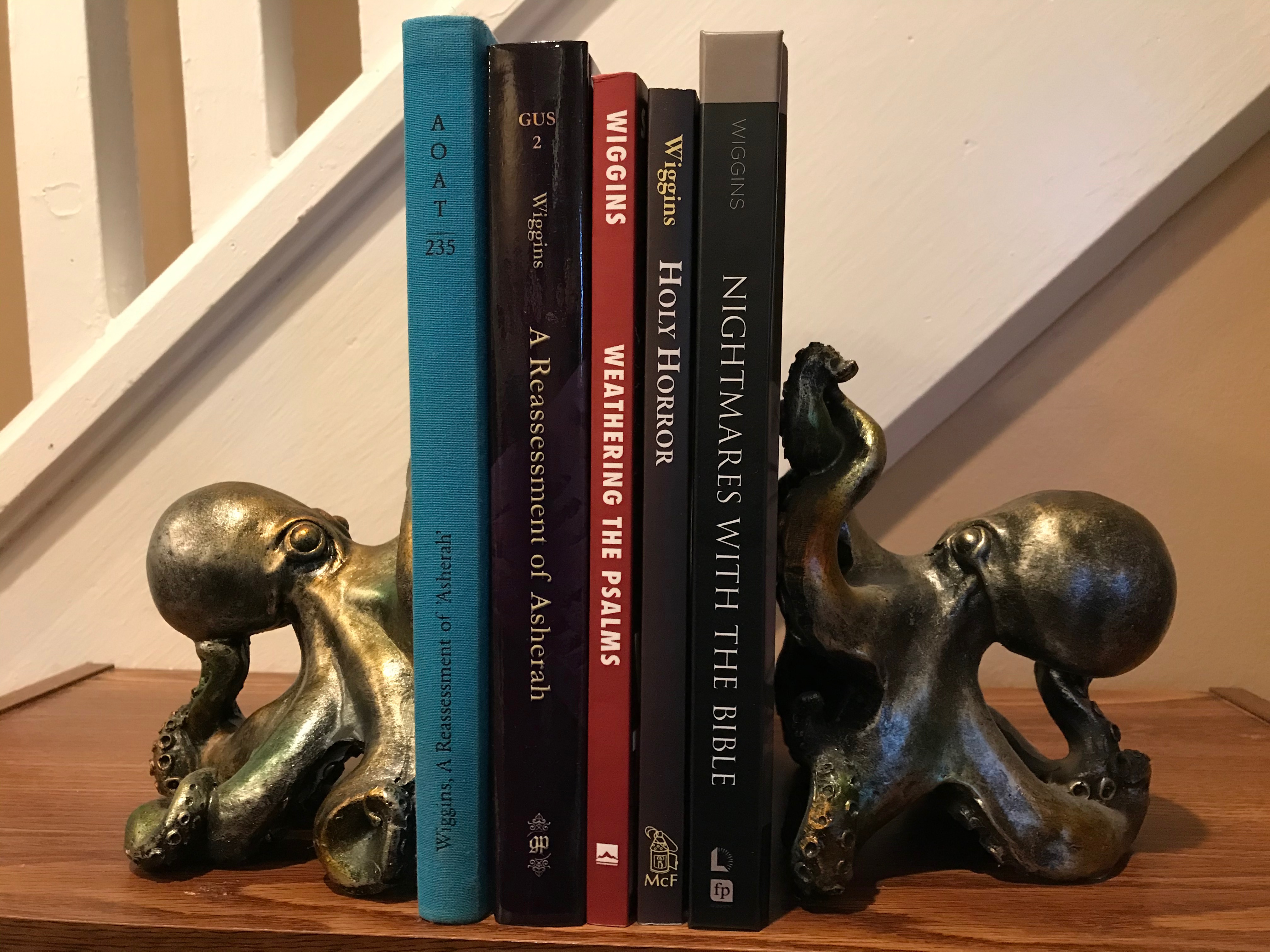
Do you ever get that feeling that you’ve been sold?  One thing I learned early on in academic publishing is that buyouts aren’t that unusual.  I recently wrote about Transaction being acquired by Taylor and Francis, for example.  Just a couple days ago I noticed in Publishers Weekly that Bloomsbury had bought out Rowman & Littlefield’s academic wing.  Then, at a company meeting the buyout was mentioned again.  Finally, I had an email from R & L letting me know.  You see, Nightmares with the Bible was published by Lexington Books/Fortress Academic.  This is an imprint of Rowman & Littlefield.  This means the rights to Nightmares have just been sold to Bloomsbury.  I do hope Bloomsbury has a more progressive idea about paperbacks!  In one of those strange synchronicities (all of this happened on the same day), I’d emailed one of the series editors of Horror and Scripture, asking if the series was still going.

I have no real concerns about being owned by Bloomsbury.  If you haven’t heard of them, it’s probably because they were a small operation until they took a chance on an unknown author by the name of J. K. Rowling.  Suddenly flush with cash, they started buying out smaller presses.  Big fish got to eat too!  Rowman & Littlefield had been buying out other publishers for years.  If you’re an academic you probably remember University Press of America.  Ever wonder where it went?  They bought Rowman & Littlefield in the late eighties and took over their name.  They bought other “assets”: Prometheus, Scarecrow Press, Hal Leonard.  They grew an enormous list of academic titles, now owned by Bloomsbury.

As someone who has knocked around academic publishing for some years now, it seems like this small world is getting even smaller.  Companies buy other companies and sometimes it works out for the benefit of authors.  Sometimes not.  Bloomsbury is only 37 years old.  Rowman & Littlefield was 75.  University Press of America (which first bought R & L, would’ve been 49.)  The younger buying out their elders.  Perhaps it’s because of my career malfunction, but I’ve discovered academic publishing to be a fascinating world in its own right.  Many academics pay little attention to the publisher, especially outside the big-name university presses.  But there are stories here.  I know that before I began working in the industry I’d never heard of Bloomsbury.  Then they bought out Continuum, which had bought out T & T Clark, from my beloved Edinburgh.  Now one of my books is under their umbrella.  And I have to wonder who will be sold next.


Six-Hundred and Sixty-Six

I have to confess to never having read a biography of Aleister Crowley.  I’ve known of him since I was a teenager, however, since you can’t read very much about esoteric stuff without running into his name once in a while.  Crowley was famous for starting the religion called Thelema, revitalizing interest in magick (the additional “k” was to distinguish it from stage magic), and for generally being a bad boy.  In fact, he declared himself the “wickedest man on earth” and liked to be called “the Beast” and loved the number 666.  It was the latter point that caught my attention recently.  In pop culture, 666 really only took off after The Omen.  (Movies often dictate, or at least inform, our religion.)  Crowley, who lived much earlier than the film, saw the marketability of 666 and I wondered how it caught his attention.

Aleister Crowley, public domain via Wikimedia Commons

As I recently posted, the end of the world as we know it is a fairly modern construct.  I happened to be reading about Crowley recently and learned that he was raised in the Plymouth Brethren tradition.  (They don’t loudly claim him as a native son, for some reason.)  He is probably the most famous of the Brethren, across all walks of life.  He even earned a place on the cover of Sgt. Pepper’s Lonely Hearts Club Band.  The Plymouth Brethren were massively influenced by John Nelson Darby, the inventor of dispensationalism.  Dispensationalism is the fairly new Christian belief that time can be divided into ages, or “dispensations,” during which God has a plan already mapped out.  He apparently waited for Darby before letting the rest of the world in on this secret.

Things about Crowley then began to make a little more sense.  His choice to name himself after Darby’s preoccupations adds up.  I haven’t read any biographies so this may be old news, well known among scholars of esoterica.  It nevertheless bears pondering because the religion we teach our kids may have unexpected consequences.  Crowley rejected the Brethren (whose moral predilections were not to his liking, especially as a hot-blooded young man) but the religion influenced him nevertheless.  I wonder if the teachings Crowley received as a child encouraged him to become, in his own mind, the opposite.  Crowley wasn’t “the Beast.”  His precepts included “love is the law” (granted, his version of love was a touch earthier than Christians with whom he’d be raised, but still), not a bad start for an ethical system.  Even the wickedest man on earth believed in the power of love, even if his religion introduced him to 666.