Old Dracula

Francis Ford Coppola’s Bram Stoker’s Dracula is one of the “old movies” about which I posted some time back.  I’ve seen it at least a couple of times, and I wrote a previous blog post about it (October 11 2009).  This is a film about which I have conflicted feelings.  It has immense visual appeal and it influenced a tremendous number of followers.  It also did exceptionally well at the box office.  Since 1992 was a year in which I’m pretty sure I saw no movies in the theater (finishing a doctorate, moving back to America, and commuting weekly from Champaign-Urbana to Nashotah House drained my time and energy.  Besides, still being fairly newly married, I had not transitioned to horror movies again (that’s a different story, also involving Nashotah).)  Being a former literalist, when I first saw it I resisted the title since it takes significant liberties with Stoker, but the overall story is probably the closest of any vampire movie I’ve seen.
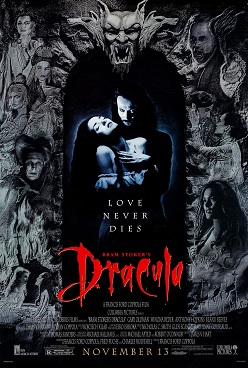
The strengths of the movie include its interaction with religion.  Vlad begins by renouncing God and becoming an agent of evil, stabbing a cross, and drinking the literal blood that pours out.  A number of Stoker’s own religious elements are also portrayed, and the ending brings God back into the picture, implying a kind of redemption for the defeated vampire.  The stylishness and opulence of the movie also make for engaging viewing.  It doesn’t have the gothic feel that it might—there seem to be some almost Burtonesque elements to it and some of the casting decisions feel ill fitting.  Anthony Hopkins just doesn’t do it for me as Van Helsing.  His one-liners feel out of place, and his interpretation of Van Helsing as a whole doesn’t resonate with me.

I do like Gary Oldman’s Dracula, however.  He’s right up there with Lugosi (but not quite at that level).  The conflicted vampire is an appealing character—much more intriguing than the pure evil kind.  This Dracula forsakes God because church rules about suicide keep his Elisabeta out of Heaven.  Even now the rulings seem not to allow for much nuance.  At heart, the vampire is a religious monster.  Fear of the crucifix may go back to Bram Stoker, but this movie tries to give it a backstory.  It’s a question of theodicy—why bad things happen to good people, essentially.  This is probably the biggest reason people end up turning away from religion, and it’s something theologians ponder.  While it isn’t my favorite vampire movie, Bram Stoker’s Dracula is stylish and accurate to a degree.  But it also turns back the pages a bit further than Stoker’s book does.

Psychotic Vampires

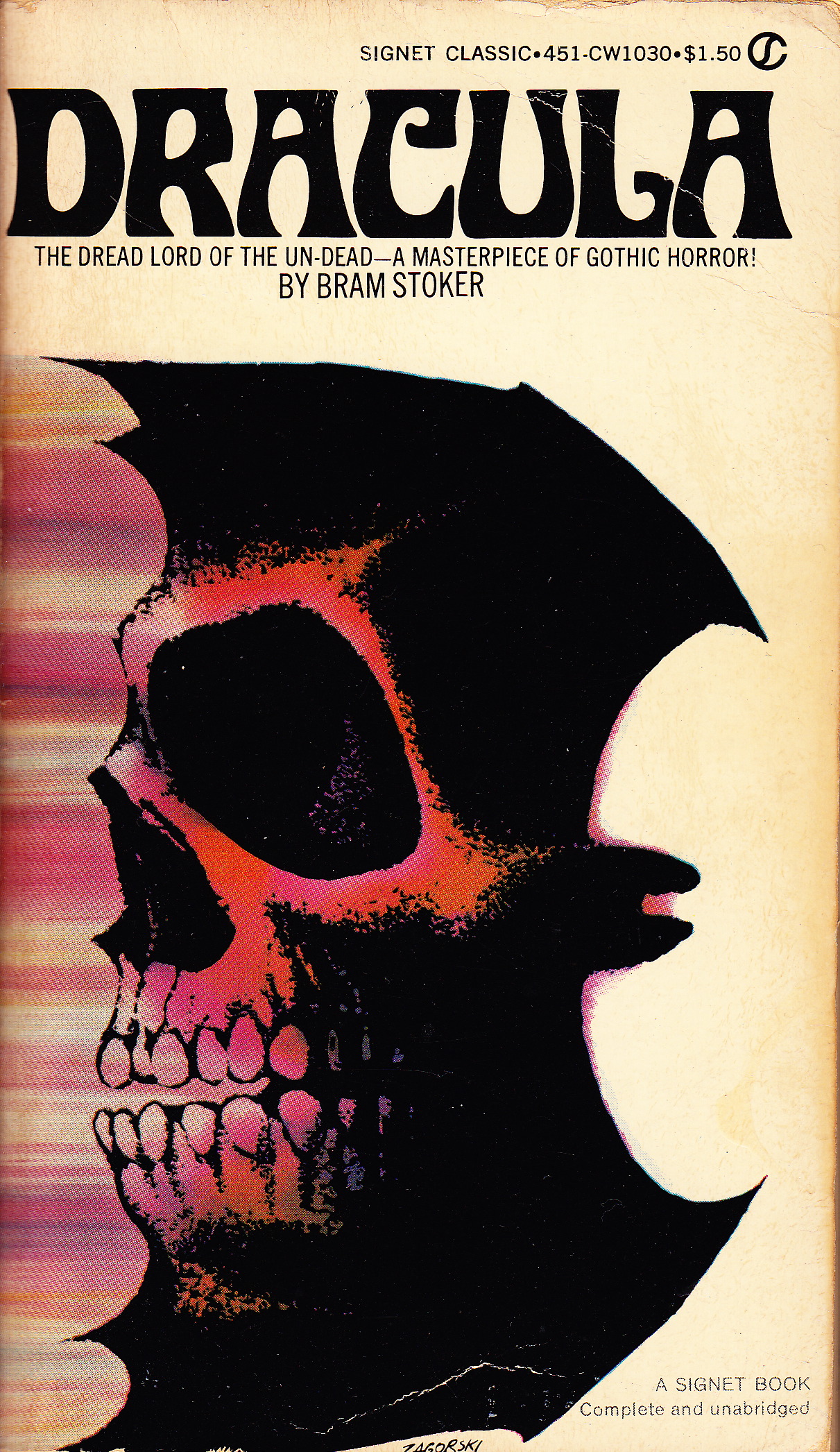
Over the past several months, and unrelated to the current vampire craze, I have re-watched some of the classic vampire movies: Dracula, Bram Stoker’s Dracula, Nosferatu (both Murnau and Herzog), and even Shadow of the Vampire—a movie about making vampire movies. Although the prototype of the vampire goes far back in civilization, in some form back to even the earliest of civilizations, the modern rendition rests mostly on the imagination of Bram Stoker. I’ve been re-reading Dracula to recapture a sense of why this particular telling of the tale has become iconic. One suggestion that comes as I’m reading is that it presses the religious taboos of its Victorian era sensibilities. Indeed, Stoker consciously wrote religiously provocative elements into his story. Of course, in movie form the story is altered to fit the needs of both time and scope.

A character that transforms in these various films is Renfield, the lunatic. In Stoker’s original Renfield is the foil for Dracula himself, his devotion interpreted as insanity by the science of the day. At one point Dr. Seward, Van Helsing’s protege and the man in charge of Renfield, notes with clarion penetration, “for a strong man with homicidal and religious mania at once might be dangerous. The combination is a dreadful one.” Renfield is, as a servant of Dracula, complicit in both homicide and religious mania. He uses Christianesque language when referring to his master. In describing his devotion, Seward notes, “He thinks of the loaves and fishes even when he believes he is in a Real Presence.” To a generation raised without Bible, this confession makes little sense.

I have contended throughout this blog that religion and horror are intimate familiars. To understand the appeal of the vampire, one must explore the religious context. Surely the simple neck-biting and blood-sucking without religious underpinnings would soon grow tedious. It is the sense of mystery—most fully realized in religious thought—that brings the vampire to life in the imagination of a generation lacking traditional religion. Not to mix metaphors too intimately, but there is a dose of Melville to be mixed in as well. Renfield is the epitome of madness, blindly following where he believes he is called. But the reader knows how sadly mistaken he is. So it is that I return to Bram Stoker’s Dracula and in so doing find a form of true religion.


Christian Underworld

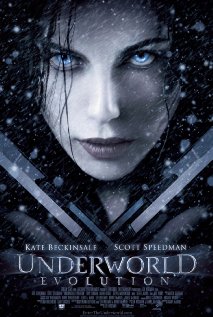
For constructing a mythology teeming with monsters, I must doff my metaphorical hat to the Underworld series of movies. Unrelentingly Gothic and stylish, I’ve watched the first two installments a number of times, but I have yet to see the last two (the latter of which is still currently in theaters). I have to admit that seeing Kate Beckinsale in her werewolf hunting gear two stories tall on midtown electronic billboards is some enticement to catch up with the story. Over the weekend I rewatched Underworld Evolution, number two in the set, to refresh my mind of the story. Quite apart from the implicit religiosity of vampires, the Underworld movies, while eschewing crucifixes and religious origins for vampires (which Bram Stoker’s Dracula by Francis Ford Coppola narrates to an explicit extent), nevertheless partake of the power of religion amid all the shootouts and weird transformations.

In Underworld Evolution, Marcus, the son of the original vampire, in a scene straight from Christian mythology, has the devil rebelling against his creator. As he is killing his powerful yet ineffectual father, Marcus predicts the beginning of a “new race created in the image of their maker—their new god. Me.” As he says this he has his own creator impaled on a demonic bat wing. Running him through with a sword he states, “And the true god has no father.” I admit I’ve been trying to read some post modern treatments of monsters, and this kind of reversal fits well with the conflicted outlook of the twenty-first century. Who is god? The good or the evil? The old certainties have grown gray and blurry. No wonder some people are uncomfortable.

Perhaps the most religious element in the film, however, is blood-memory. Blood is a cheap commodity in horror films, but it represents, in the Abrahamic traditions, life. In the Christian sense drinking communion wine is to consume the blood of Jesus, or at least to remember his death (the fancy word is anamnesis). Vampires, in Underworld Evolution, remember the lives of those whose blood they drink. The taking of life has a sacramental quality to it here. To a world less immersed in a Christian worldview, this concept might seem more macabre than it already is. Monsters often take their cues from the gods. So on a February weekend some of this feels terribly familiar. It may be a small underworld after all.