
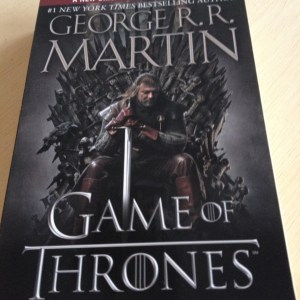
 I risk my already flagging street cred by admitting this, but I don’t watch Game of Thrones. In fact, I started to read the first book a couple years back and I just couldn’t get into it. Well, only 80 pages into it. The fault is, I’m entirely sure, my own. I lack some gene or enzyme that makes life without Game of Thrones impossible. Still, I have to admit curiosity. A story on the Washington Post, by Ishaan Tharoor, suggests “The ancient Persian god that may be at the heart of ‘Game of Thrones’” is Angra Mainyu, aka Ahriman. This managed to catch my attention. Zoroastrianism is a religion that seems to lie behind quite a bit of modern religious thought. Although dating Zarathustra, or Zoroaster, is notoriously difficult, concepts from his religious system show up in Hinduism—one of the earliest forms of religious expression about which we know a fair deal—as well as in Judaism and therefore Christianity and Islam. In fact, many of the ideas you may associate with the central tenets of Judeo-Christo-Islamic tradition may go back to Zarathustra.
One of the certainties about Zoroastrianism is that it was a dualistic religion. Good and evil are engaged in a constant struggle for control. The good god, Ahura Mazda (which sounds like a blend between Star Trek and a Japanese auto maker) struggles constantly against Angra Mainyu. Mazda’s website states that the car line is named after the deity (according to Wikipedia, I note, losing the last vestige of cred), pushing his reach even further east. With this incredible pedigree, it is no wonder that George R. R. Martin may have tapped into it. This kind of dualism is ripe for the picking.
My friend K. Marvin Bruce wrote a satire about the Persian gods, in fictional form, that was published a couple years back in Calliope, a small circulation literary journal. He told me he even won third place in a contest for it. The idea was that a disgruntled professor wanted to start the apocalypse (a Zoroastrian idea) by summoning Ahura Mazda and Angra Mainyu to earth to try to start a fight between the two. It was a fun story, but the point, if I may speak for my friend, is serious. Warring religions stand the best chance of beginning the end of times. We don’t even need the gods to do it, really. Although I don’t watch Game of Thrones, I can’t help wonder if Martin had the same idea in mind. If you want the answer to that, don’t ask me. I’m not even a hundred pages into it, and I don’t have triple play.

 Steve A. Wiggins