Ice Church

Eternity is a concept closely associated with religious thought. It bears a freight that phrases such as “steady-state universe” and “Big Bang” lack. Indeed, the foundations of Christianity and Islam involve the belief that eternal life can be had for those who play by the rules. Great cathedrals and mosques were erected to last forever, or at least until the end of the physical world. Perhaps that is the reason I find the idea of a church constructed out of ice so engaging. Annually for the past several years, a church has been built of ice in the Romanian Alps. Accessible only by cable car, the church is a temporary structure in a land where varieties of Christianity (let alone other faiths) are openly hostile to one another. As the globe slowly wobbles back to a northern inclination, the church will melt and disappear. Still, in its brief time in the world, baptisms and marriages will be performed there. Eternal vows in a temporary structure.

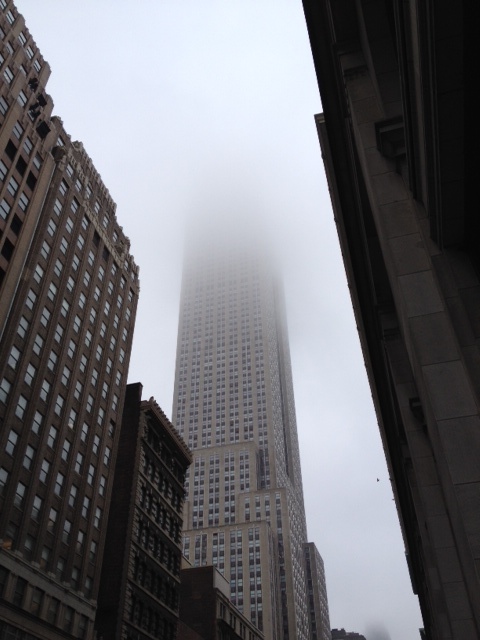
A theological message is inherent in such an institution. We are trained from our earliest days to be consumers. We are to acquire goods and desire more. Were we ever to be satisfied, capitalism would crash to the ground like an ice church left out in the heat. The secular world in unrelenting in its message that we are born to eat, buy, and use. The more expensive, the better. And the more quickly obsolete, the more profitable it will be. The towers of our cities are constructed of concrete and steel, and yet, I have watched new buildings grow and supplant those that have seemingly stood forever but which, in reality, have existed for less than a century. Indeed, all of our towers ought to be made of ice.

IMG_1252

Ice is cold and hard, but it is still water. An article in The Guardian notes that some pastors see this as a kind of baptism frozen in time. Shape given to that which follows the contours of its container. The water, however, will ultimately follow its natural order and rejoin the oceans of the world. While humans are naturally disposed to collect, to save up against lean times, we have to be taught to be consumers. Some of us are content with relatively little, knowing that elsewhere our fellow human beings have nothing at all. Their churches are made of ice, and our corporations are eager to reach even them, to teach them to covet what the more “affluent” have. And the world slowly warms, turning all into liquidity.


Hallowed Be Thy Income

IMG_1924

Some time ago, I was invited to attend a “best practices” session where the language was businessese. As I suffered through statements about how everything can be quantified as numbers and how emotions should be left at the door but creativity should flourish, I began to wonder when I’d become so cynical. I mean, the presenter really believed this–it was clear from his eyes. He’d been so indoctrinated that he really believed selflessness was letting somebody else have their way when they’re your supervisor. Then it hit me. It was so obvious that I felt silly for not seeing it sooner. Corporate culture is a religion. The business world has its own specialized vocabulary, belief system, deity (Mammon), prophets, and ethics code. Those who believe it pass their teachings on to the next generation with the zeal of converts. It gives their lives meaning and purpose. It even has its own origin myth, going back to Adam Smith. All the elements are there.

A point that I come back to repeatedly on this blog is that a solid definition of religion does not exist. I once had a boss who told me there was no such thing as “religious studies.” Too many universities also believe that. When we see terror all around committed in the name of religion and our response is to decide the business curriculum is far more worth saving, I believe we’ve just decided on our religious preferences. Reward and punishment. The price of non-conformity is high. Ironically, our motivational speaker indicated that we shouldn’t be just like everyone else. Only, just don’t be too different.

I couldn’t help but to think back to an episode of Ruby Wax. While living in the UK some friends had a television license and we watched an episode or two. Ruby Wax is an ex-patriot comedian. On one episode she followed a vacuum cleaner salesman for an upscale vacuum manufacturer. Her path took her to a motivational convention which was—there’s no other way to describe this—an emotional religious ceremony. Although their god (Mammon) may not suck, his prophet (the vacuum) most surely did. At the time I saw the episode I thought it was simply entertainment, something at which to laugh. I’ve been to enough business seminars now to find that I’m a heretic in this faith. I may not know much, but I do know selflessness when I see it. And it is a trait that takes a lifetime to master and those who have belong to a different line of work altogether.


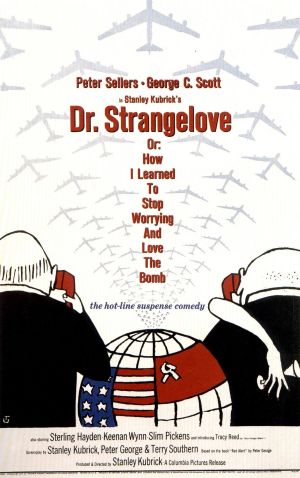
Dr._Strangelove_poster

In honor of the fifty-year anniversary of the release of Dr. Strangelove this past week, my wife and I sat down to rewatch the movie this weekend. Psychologically, as Kubrick found out, dark humor was the only way to deal with the sense of doom that pervaded the world into which those of my generation were born. Nuclear weapons had been developed and the Cold War was in full swing. Somehow, even in small-town America, I didn’t find Communism to seem so awful. After all, I grew up reading the Bible and it sounded quite a bit—at least in theory—like the arrangement the apostles had made in the book of Acts. The idea of private property, the very spine and muscular system of capitalism, was considered a sure way to lead to God’s kingdom not being established on earth. Nevertheless, that is the way, as the phrase goes, that the money went. And Communism threatened the right of one percent to horde all the money, so we were ready to annihilate all human life for it. Talk about taking your marbles and going home! No child should grow up knowing the meaning of the phrase “mutually assured destruction.”

Dr. Strangelove has held up well for the half-century since its release. Despite the thawing of the Cold War, the big chill isn’t over yet. And humor still seems the only way to keep sanity and deal with the state of the world. There are still many General Turgidsons out there (some of whom have held very high government offices, and this is no joke). There are at least, as far as we know, fewer General Rippers. So we hope. As the bomber crew nears its target, Major Kong goes over the contents of the government issued survival kit, among which is a comically small Russian Phrase Book and Bible combined. Kubrick, a master of satire, has the godlessness of Communism thrown time and again across the lips of the hawks. It is better to kill everyone than to allow the godless to rule. Even the Bible, however, shares space with the Russian phrasebook, making us wonder whether it is a tool of conversion or an admission of inevitability. Still the bomber, piloted by a Texan, flies on.

Perhaps the biggest moral dilemma we face is our ability to destroy hope. Capitalism promises opportunity to all. Like many who grew up poor, however, I have found lies hidden in plain sight. It is not easy to move ahead if you choose to mire yourself in debt to get an education. In fact, if you lose a job in higher education you can easily find yourself adrift for a decade or more, not earning any retirement money and being frequenly sought out by your local universities as an adjunct instructor. In fact, at many points your career might look like the end of the world. So it is that I take great comfort in settling down to watch Dr. Strangelove again. At least it is an honest movie, and that hasn’t changed in the past half-century. And I think I may have been wrong about how few General Rippers there really are.


Weather to Panic

Over the long weekend, our furnace kicked off two days in a row. This January has been chillier than some, and we’ve been sitting around with blankets on our laps waiting for the air temperature to reach a tolerable level. We keep our place cool, in any case, partly from environmental concern, and partly because we can’t afford to do it any other way. So I was interested to see an article from the Guardian that my wife forwarded to me about the weather. I’ve been interested enough in the weather to write a book about it (Weathering the Psalms—available now!) and since I stand outside every morning waiting for a frequently tardy bus, I do tend to notice when it’s cold, raining, or snowing. The article, “I don’t care what the weatherman says when it’s just hysteria,” by Martin Kettle, makes a good point. The weather used to be information on the news, now it is entertainment. We dramatize and give names to storms as if each is a miniature apocalypse. As Kettle notes, most of us have been around long enough to know how to survive a cold snap or two. But an apocalypse?

We’ve become accustomed to the controlled environment. Many of us define our “work” as sitting in front of computers all day, tapping out virtual ideas that other people will see, indoors, and we probably don’t even have to step outside to get the message delivered. The weather might make it difficult to get to work. We might lose a day of productivity. That snow that was fun as a child has become an impairment to those adults driving to work to get inside so we don’t have to be made uncomfortable any longer than is strictly necessary. Snow never makes it into the forecast, but a storm personified with a name and with destructive intent. No wonder the biblical world saw weather as a divine weapon.

That which Kettle terms “[t]he debauching of the weather” is a sign of the times. We seem to be deemed unable to process facts. We must be entertained. How many mornings have I sat worried in the dark, wondering if I’ll make it in to work or if I’ll spend a good portion of the day trapped on a bus frozen on the Parkway? How much energy do I expend trying to decide whether I should spend extra money to take the train, even though I’ve already paid for a month of bus service? Will the weather throw itself on us all and prevent us from another day’s work? In the Psalms, the response was often one of wonder and praise. These were things only the deity could do. Now, however, we are in the realm of the media meteorologist. If they don’t entertain us, we might just turn off the television or computer and go outside to check for ourselves. If only we would we might discover one of the true wonders of nature that doesn’t require comment. It might be the ability to judge for ourselves.

DSCN0099


Biggest Buy

It isn’t really that much of a specialty item. You see, we live in an older apartment and three-pronged outlets were mostly reserved for kitchens the last time the place received any kind of upgrade. I’m not sure which century that was, but here in the twenty-first, we have lots of electrical toys, and of course, they come with grounding plugs. We needed an outlet for a device, but the nearest plug was yards away. Well, it seems that extension cords are now fire hazards, so you need to use a power-strip. Your typical power strip, as I came to learn, has a six-foot cord. (Although I said “yards,” I meant more than a couple.) So I drove to Best Buy. I can’t remember the last time I was in one. These “buy it large,” “consume excessively” kinds of stores aren’t really my style. I never believed the consumer myth, but I figured these large appliances must require surge protectors or power strips, right? And surely not all houses have conveniently located plugs.

Photo credit: Myke 2020, Wikipedia Commons

Photo credit: Myke 2020, Wikipedia Commons

I am neither a large man nor a fetching woman, but it became clear that I was practically invisible in the store. Trying to get the attention of anyone on the blue-shirted staff was impossible. Even walking right up to someone with purpose wasn’t enough. I did notice, however, that the blue shirts were fairly adept at helping the female clientele. Eventually I found the surge protectors, etc., in their aisle—up to eight feet in length. I tried for another 20 minutes to find help, but the kind of help I need, apparently, doesn’t come in bulk. Maybe on a couch. I went home and within minutes found what I needed on Amazon. I would have it in two days.

Bulk buying, in my humble opinion, is an ethical issue. I’ve stopped going to Home Depot, and even Staples and Barnes and Noble are final resorts. What I’m looking for can’t be found in such places. Besides, nobody wants to stop and direct a bearded, perpetually confused-looking guy. We live in a culture where worth is measured in comestibles and durable goods purchased in bulk. Those with the most buying power are the gods. I can’t even drive by Costco without a substantial delay on a Saturday morning. I don’t need very much to get by. Still, come to think of it, I could use a power source that is conveniently located. And perhaps, some day, a culture more interested in quality than quantity.


On Vocation

“There ain’t no use in complaining,” Bryan Adams once wrote, “when you got a job to do.” If I may be pardoned from removing rock and roll from its love song context. As a guy who’s suffered unemployment several times, I have to agree that having a job is good. Of course, such goodness has its natural limitations. Switching jobs too often means starting out over and over again. In today’s world, that means that at half-a-century-old you might well find yourself having to earn vacation days from nothing all over again. So when family vacation plans were made this year, one of us—the one with a new job—could not be included. My family is out near the west coast while I remain here on the east. Once upon a time we were somewhere in the middle. I’m glad they have the opportunity. This post isn’t about sour grapes, or vacation; rather, it’s about vocation.

I often think about how life has become only earning for the sake of earning. People say you should get a job you like, which is fine if such jobs exist. The jobs I like are now considered beneath me. Not by me, but by those doing the hiring. Where has the sense of vocation gone? Back in the Middle Ages (and I’m not one to suggest that things were necessarily better then) the learned had opportunities. Those who had a skill could be inducted into a guild that would help to ensure job security. We’ve moved to a free agent model where someone can be removed from their natural vocation with nary a thought what they might do next. Detritus of a throw-away culture. For those with highly specialized skills—Ugaritic, anyone?—such severance is like setting one on an ice floe, only crueler. Ironically, the guild offers no help.

Reading about the Transcendentalists reminds me of how restorative the woods are. Emerson and Thoreau, heading off to the forest to commune with the divine. Since this road is blocked for me, I take the one better traveled, into Manhattan where, I’m sure, there is life. Elevators, ubiquitous pavement, quotas and tallies. Prove your worth. Among the students I knew I was accomplishing something. Since then it’s all just numbers. In the woods I don’t count the trees. I don’t demand to know what they’re producing for the good of the company. I don’t question their motives. Outside my window, if I had a window, I would see only stone, concrete, and steel. And inside all I feel are numbers. Can a soul be quantified? I think I would have to side with the Transcendentalists on this one. But that’s not what I’m paid to do.


Myth of Infinity

There are only five major trade publishing houses left. Despite the bewildering number of publishers around, five corporate giants own most of the industry labels that make really big money. Those of us who dabble in the literary arts dream of some day being published by one of these big houses because it might mean some success is involved. There are, of course, hundreds of indy publishers who are more author friendly, but you might never get noticed. So when I attend meetings and see the zig-zag that represents the EKG of capitalistic vital statistics, I often wonder about the myth of perpetual growth. A business isn’t really considered a success unless it can chart continued growth, year after weary year. And this in a finite world of shrinking resources. How long can perpetual growth last? In the publishing industry, if you get too successful you’ll be purchased by an even bigger company. Remaining solvent isn’t enough in a hungry, hungry capitalist world. The winner, they say, takes it all.

EndlessThis idea bothers me long after the meeting’s over and the lights have been turned off. Have we truly come to believe in our own mythology? What kind of value is it that can be measured only by acquiring more? I went into higher education unsure of my commitments to capitalism. I’d rather not have some kind of quota hanging like Damocles’ stock report over my head. I want to ponder through the implications and burst out on the other side, hold the whole thing at arm’s length to consider it. If all businesses constantly grow, we run out of material. Don’t we? If all businesses don’t grow, some will shrink, then die. As often as not, they will be the ones I like the best. Infinite growth in a finite universe. Or is it really infinite and the capitalists are mining the very stars we can’t yet reach?

Glancing over my bookshelves, I see publisher’s names I’d never noticed before. Long before I was forced out of academe, I had purchased books on esoteric aspects of religion from publishing houses most consumers would never recognize. I even surprise myself sometimes. Some of these publishers haven’t survived. The self-published never outlast the death of the author. This is not a world of perpetual growth, but some of the ideas are nevertheless very fruitful. Can infinity grow from a finite stock? I think we all know the answer to this deep down. But mythologies thrive when not examined too closely. So perhaps it is better just to keep on pretending. And if you ever find someone who works for an independent publisher, give that person a hug.


Education for Hire

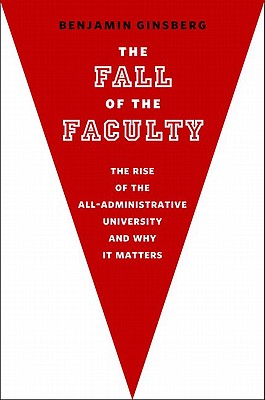
FallOfTheFacultyCapitalism takes no survivors. Ironically, the very concept of capitalism was the result of deep, intellectual reflection. Not that trade hadn’t existed before then, but the arguments that an economy could be based on these principles took an academic setting to become established facts. Universities have been the bastions of new ideas for centuries now. In the United States, however, they are being eroded into corporate playgrounds. Benjamin Ginsberg’s The Fall of the Faculty: The Rise of the All-Administrative University and Why It Matters, will, unfortunately, probably be read only by those who actually care about higher education—faculty and a few curious parents who wonder why they’re paying so much. This is a very important book, and Ginsberg addresses a theme that has been repeatedly expressed on this blog: higher education is in severe crisis because it is treated as a business, not as an educational enterprise. Unlike most situations in life where ambiguity reigns, there’s no question, in this case, whence the blame lies. Ginsberg places the finger firmly where it belongs: professional administrators do not understand, or really even care for, higher education. If you’re curious why you’re paying top dollar for your child’s education, and yet they’re being taught by adjuncts, look no further. Ginsberg has your answers.

Administration, while somewhat necessary, has become an end in itself. A self-perpetuating lackey of capitalistic double-speak. I’ve worked in corporate America enough to know that recognizing a person’s true strengths (what we used to call gifts) is not where managers excel. The bottom line is all they can see. Ginsberg’s is an angry book. And this anger is full of justification. Higher education has become just another garden-variety business, for profit at the heart of it, because faculty have let it slip away. I have been formally associated with eight institutions of higher education, and I’ve seen this pattern operate over and over and over again. Despite the fact that universities thrived in the centuries before professional administrators began treating them as “businesses,” even my alma mater, where Adam Smith himself once taught, could not help hiring a public relations firm to try to bolster the image of an institution which could claim David Hume, Walter Scott, Charles Darwin, and Alexander Graham Bell, among many others.

How the mighty have fallen. Ginsberg does offer some solutions, but is skeptical that many schools can be saved. The fact is, the highest growth rate in the higher education “industry” has been administrators. As faculty jobs are cut and diced ever finer, administrative posts increase at triple-digit rates, and their standards are those of businesses, not educators. Hindsight, of course, comes with greater acuity than foresight, but now that faculty realize they’ve been outmaneuvered, there is little hope of turning the ship in time. Nine-tenths of this iceberg lies hidden beneath the sea, and everyone presumed this ship was unsinkable anyway. Universities were devised by theologians, not entrepreneurs. Like ants crowding around cookie crumbs, business interests have been drawn to the great, untaxable bastions of what used to be called higher education. Factories come in many shapes and sizes. One of the most deceptive is that which bears the once honest nameplate of university.


Under Fire

The tragedy that has been unfolding in the Ukraine has brought to light some unlikely heroes. A story on NBC last week showcased, albeit briefly, priests on the front lines. In a world where joining the clergy is often a way to avoid the dark and dreary reality of war and want, it is strangely heartening to see (in this case) men of the cloth willing to walk into danger. These are people who truly do believe. Sometimes it is easy, sitting safely behind a computer monitor in a relatively quiet neighborhood, to believe that the world is a peaceful place. Even a walk through the “cleaned up” parts of Manhattan will reveal, however, that human need is very real and omnipresent. Perhaps it is just the times when I’m out—it is winter after all, and we do value our comfort—but I seldom see clearly identifiable clergy on the streets of Manhattan unless they are trying to convert. The homeless almost always are sitting alone. The chill this winter has been almost Siberian. Where do the helpless turn?

Seminary is not the training ground for combat. At least not in the way that armed conflict brings. As a student and teacher in a seminary setting, I was constantly watching for signs of hope. It takes a truly remarkable individual to engage in caring for those who need it. Far too often “minister” is a job, with benefits, because that is the only way to get along in a world enamored of capitalism. That clerical shirt can be quite costly—who wants to sully it with human need? The world inside the church is often artificial. If the people are not inspired to go out and help, then we’ve just wasted another hour in a feel-good social gathering. We’ve learned to tune out the bitter lessons of life. Yes, there are war zones. Some with real guns and the dead we see in photographs used to be people just like us. Who cares for them? A cassock can cost upward of 600 dollars. How many warm meals would that buy for the woman sitting on the sidewalk with a baby on her lap and a handwritten sign on cardboard in front of her nearly empty paper cup?

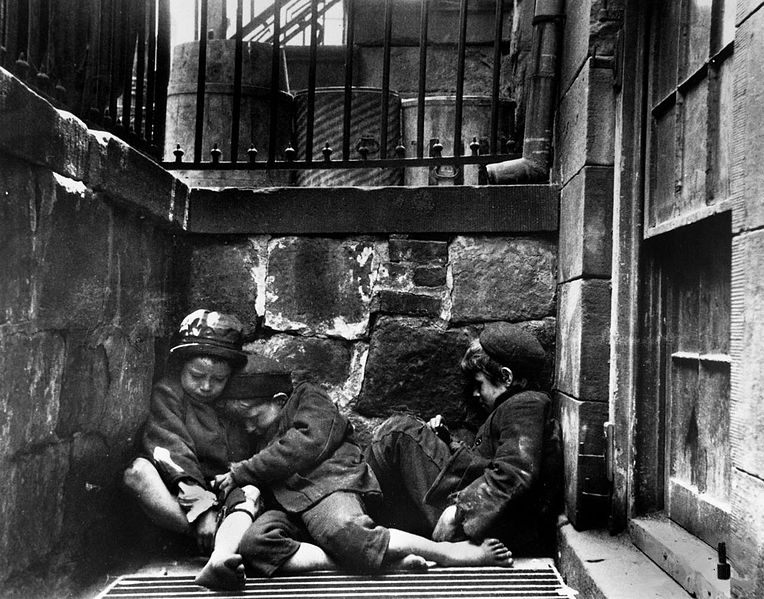
764px-Riischildren

Too often religions become ingrown. The job of missionaries is to convert, not to comfort. We would like to crawl into a world where people are safe and happy, but the moment we wander outdoors—and the mall doesn’t count—we find a different reality at work. It is difficult for me to read about current events. The Olympics are not the only reality of the world of the former Soviet Union. There are others who will never be recognized with gold, silver, or bronze, They may walk into the crossfire holding aloft a brass cross to indicate that they are there to try to help. No great cheer arises, no great ceremony for torches that have fictionally burned since ancient times. There is a fire here, however. It is the fire of human warmth. In this long winter, it is an honest flame of hope.


Not Narnia

The snow fountain from a fast-moving snow-plow is a thing of beauty.  Unless you’re standing in the way.  It’s been that way this winter.  The sidewalk where I usually stand to wait for the bus is an arctic wasteland of waist-high snow piles shoved higher and higher by weary plow-drivers.  So I stand in the road, near a streetlamp in winter, but this is not Narnia.  I decided to try out New Jersey Transit’s highly anticipated “real time” bus locator—that way I know when to step out into the blowing wind to wait for the bus.  After I’d been sprayed by passing cars and the occasional snow-plow for 20 minutes, I became convinced that “real time” is just academic; it is the time that the bus would arrive, were the bus actually on time, if it ever left the garage.  Not that I blame the drivers—theirs is a thankless job that must lead to early retirement, or at least support the state mental hospitals.

Where's Mr. Tumnus?

Where’s Mr. Tumnus?

Now, I’m not the only one to be standing in the street, a hooker for capitalism, under my lamppost,  and some of the stops are completely snowed in.  When three passengers ganged up on the driver for nearly missing them because they weren’t at the stop because of all the snow, I began to feel a bit uncomfortable.  Springs can be wound too tightly, you know.  All of this is an issue because businesses don’t want to close for inclement weather.  During last week’s blizzard, I ended up taking the PATH train into New York, not knowing where it was going.  A young lady was fretting—she was going to be late for work.  An older African American gentleman comforted her.  “Don’t worry.  They don’t care if you come in late on a day like today.  They just want you to show up.”  They just want you to show up.  His words have haunted me. Businesses want you to show up because that reinforces the power of capitalism.  You don’t show and you don’t eat.  You lose healthcare.  Cobra is aptly named—you pay far more than unemployment’s pittance for monthly coverage.  Obamacare is about thirty years too late.

Every time I see the Mayor of New York justifying his decision to keep schools open when literally nine inches of well-predicted snow fall on the city—dressed in his trendy action-figure jacket, just like Christie after Hurricane Sandy—I wonder who is really being cared for.  The Mayor claims that of the over 1 million kids in the school system, a substantial proportion go to school so they can get their only hot meal of the day.  Is this the purpose of schools?  Is it not the humane duty of the largest city in the country to make sure fair opportunity is offered to those who wish to contribute?  Their parents, he adds, as an aside, have to go to work.  Why aren’t they being paid enough to feed their kids?  Oh, there is a blizzard coming, and it’s one of our own making.  As for me, it’s time to step back because I think I see another snow-plow coming.


Bleak Friday

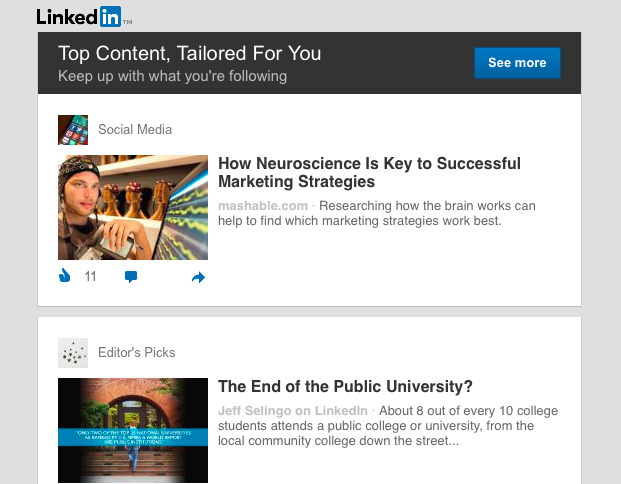
Among the high holy days of capitalism, Black Friday stands as a beacon for those in the service of Mammon. It seems that we’ve taken the basic process of fair trade and constructed from it an über-religion based on getting more for less. Certainly in my little world of academic publishing I’ve encountered those who believe marketing a book is far more important than what it actually says. Ironically, my last two publishing jobs were located through LinkedIn. LinkedIn allows you to put your professional life online and those who shop for souls are free to “find” you, read about your accomplishments, and even occasionally contact you with employment options. It may not work for everyone, but it has for me. LinkedIn will also email you with opportunities, and this Black Friday as I opened my email I discovered that the top article they’d selected for me was entitled, “How Neuroscience Is Key to Successful Marketing Strategies.” Welcome to the temple of Mammon.

Screen Shot 2013-11-29 at 4.25.20 AM

Neuroscience has been as fascinating to me as it can be to a layperson. Since we all encounter the world through the gateway of our brains, we stand to learn a lot through its study. Of course, my mind always goes to the deeper questions: what can we learn about religious belief through neuroscience? What can the study of the brain reveal to us about reality? Will this science eventually reveal to us that more than brains are involved in the pure, raw experience of the ultimate? Of course, you can also use this study to figure out how to make a buck. We are so eager to make money that we’ll open stores on the prototypical family holiday itself, before the turkey is even digested. Try to corral the stampedes in a day early, and the great god Mammon smiles. We consume, therefore we are.

If you want to shop, someone has to be on duty. The worker might be enticed from her or his family by the prospect of “time and a half” pay. It might sound tempting, but I ask what the baseline cost really is. We’ve known since at least the days of the Charlie Brown Christmas and the original Grinch that happiness does not accompany owning more stuff. As a society we’ve promoted materialism so heavily that we are left feeling empty without the urge to buy making us feel like we’re accomplishing something important. I still find learning new things more satisfying than buying new things. Ironically, just below the neuroscience article, LinkedIn suggests I read “The End of the Public University?” It seems to me that Black Friday might have more than a single connotation. Of course, I’ll have to check in with Mammon on that; the smart money’s on the most demanding god.


The Write Place

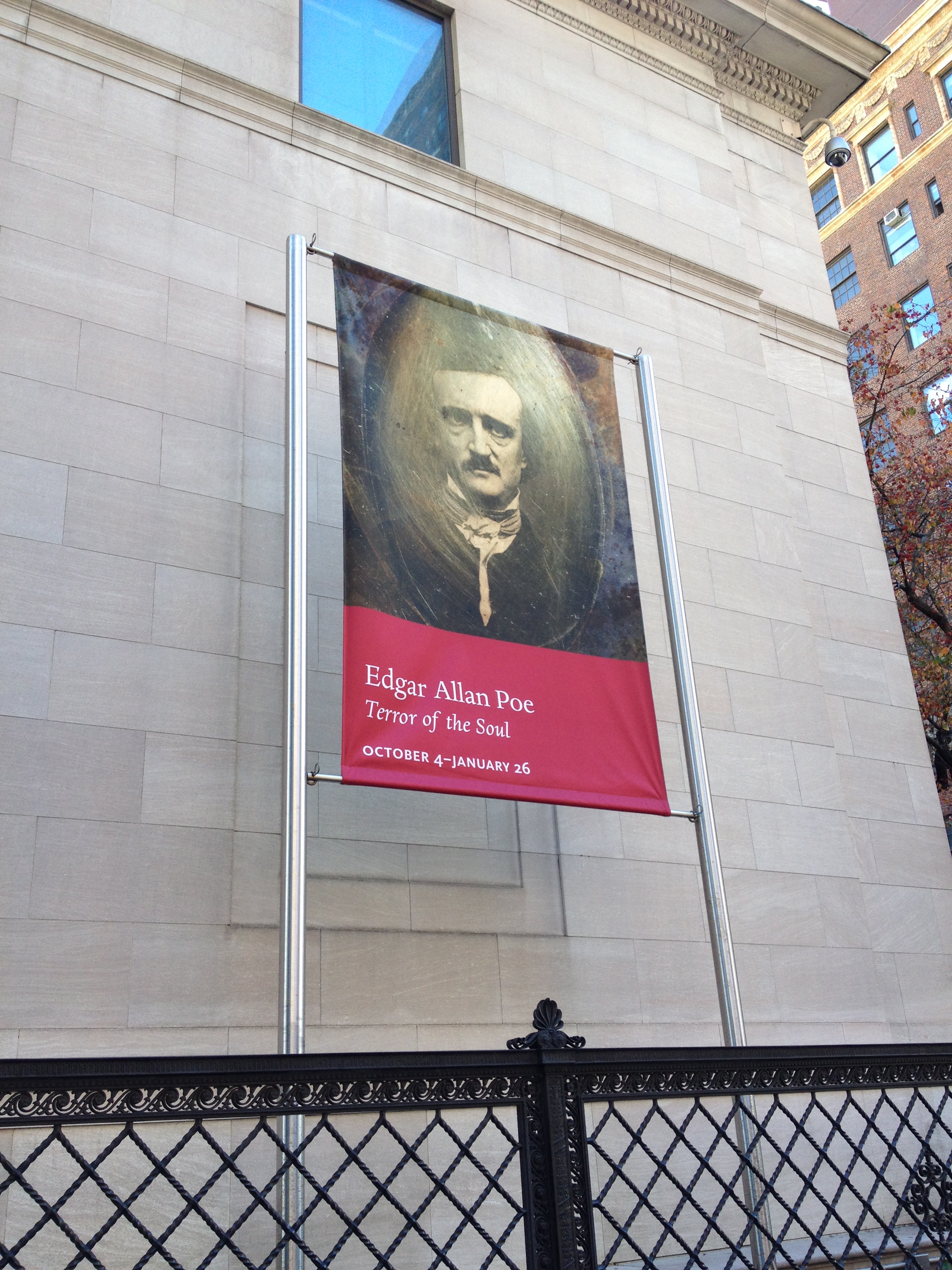
In my mind, Baltimore is inextricably bound to Edgar Allan Poe. From the accounts of Poe’s life, it is clear that he sensed nowhere as a welcoming home. Indeed, he was barely mourned at his passing and the memorial gravestone in this city was only added decades later when his works had attracted serious attention. Many of the eastern cities now like to claim him: Boston (although with Bostonian diffidence), New York, Philadelphia, Baltimore, and Richmond. All have various mementoes of his transient existence in those places, although he was not made to feel at home there when he was actually alive. The writing life is a difficult and often lonely one. Poe knew that better than many. It is so lonely that nobody is even sure why he was in Baltimore when he died, or what the cause of death was. He has become an icon to many that write.

Ironically, my career has repeatedly shoved me back to the publishing industry. That doesn’t mean that it is any easier to get published, however. The world is full of words, and those who hold the key to publishing respectability have so little time (a fact I know well, as a sometime editor). Some of us resort to blogs and pseudonyms while others die young in Baltimore. The world loves a self-promoter. Those with something intelligent to say are often discovered only in retrospect. And soon their work enters the public domain and can be claimed by all.

Other writers have called Baltimore home. Not many have football franchises named after their literary works, whether here in Maryland or elsewhere. And Baltimore, like many of the major cities of the United States, has great swaths of the neglected, the poverty-bound, and the hopeless. As I drive through the city it is clear that many have been left to face the cruelties of a self-promoters’ economy. They live with little—overlooked and forgotten. But there’s a party in town for those who can afford it. As I settle down with a cask of Amontillado and my notebook, I know that I have only just begun to get to know Baltimore. Maybe I will meet the ghost of Poe here, amid the brightest lights of scholarship and the darker shadows beneath.

Poe in New York

Poe in New York


Sacred Fear

Last week’s Time magazine ran a story about fear. I’m no stranger to this emotion, so long ago I decided to engage it creatively rather than run away. The article, “Monsters Inc., Inside the weird word of professional haunting,” by Lily Rothman, contains the laments of those who operate seasonal haunted houses. People are just getting too hard to scare. Some blame violence in the media and computer games, a large-scale desensitization to the suffering people might cause to others. CGI has made the most hellish nightmare realistic in the theater or on the small screen. If you can imagine it, it can be brought to life. Yesterday was Halloween, the day we’re allowed to be afraid. Of course, those who fear the influence of negative emotions on children have cute-ified the frights: bulbous air-filled creatures lit up from within billow harmlessly in front lawns, monsters of various sorts sport silly grins, and humor is liberally sprinkled in with the horror. One haunted house owner wanted patrons to walk through naked, so they could feel vulnerable. Today most people will wake up to just another day of work, while others will roll out of bed ready for All Saints’ Day and a rousing chorus of Vaughn Williams. Some of us will still be scared.

DSCN0216

Thrice I’ve had to face the highly secretive severance agreement offered by employers who know that people over forty have a difficult time rebuilding a career. I know that in this I’m not alone. If it hasn’t happened to you, here’s how it goes: you show up to work one day and begin doing whatever it is someone pays you to do. Depending on the size of the organization, either Human Resources or some level of supervisor will innocently invite you to the office. They will have solemn smiles on their faces. The door will be closed. You will be told that, for whatever reason they wish to give, your services are no longer required. In return for your silence you’ll be offered some kind of adult care package. You’ll leave shattered and stunned and willing to sign anything slipped under your nose.

The secrecy’s the thing. I’ve never revealed to anyone, under pain of prosecution, what any of those agreements said. What I have noticed, however, is the fear. The lawyer-instilled fear of bad press. Organizations want to be thought of as caring and concerned. They do not want any clandestine information released. Truth seems to be the greatest engine of fear in the corporate world. A few years back, before the Bush-whacking of the economy, I read about optimistic companies practicing “naked business.” Revealing vulnerability. I immediately admired the idea. Like walking through a haunted house in the nude, businesses could demonstrate that they have nothing to hide. But there’s real fear here. Like a ghost, truth can pass through walls. Like Godzilla, truth is indestructible. Like the invisible man, naked truth just can’t be seen.


Human Resources

I’m thinking about how we blithely accept cruelty and christen it “just business.” It’s legal, and even encouraged. Was a time when you wouldn’t dare trade with a stranger because he might cheat you. To make a deal implied a relationship. To get away with something unseemly you had to be able to look someone in the eye and take advantage of her or him anyway. Oh, we’ve sanitized it alright. Most workers never meet the CEO. His hand doesn’t even deign to sign the paycheck. The workers are forced to trust nevertheless. Don’t worry, it’s just business. Or is it?

Wired GeniusThe system, of course, favors those with the loudest voices, and those voices speak the language of Mammon. We don’t dare upset the order, believing we will get ours some day. Delusion is so sweet. On the cover of Wired magazine is a little girl. The caption reads, “Genius is everywhere—but we’re wasting it… Seventh grader Paloma Noyola Bueno lives next to a garbage dump in Mexico. Last year she had the top math score in the country.” Careful, Wired, you’re beginning to sound socialist. Bueno was on the cover of a major magazine because she was discovered. Those who remain hidden far outnumber those who claim far more than their share of capital. You don’t make it to the top unless you crawl over the other caterpillars. When you reach the top, as Trina Paulus sagely warned, you find there’s nothing there. Just human detritus beneath your feet.

Business has come to mean “cold and impersonal.” Keep the human element out of it. In fact, the term “just business” is a very effective shield against all kinds of unethical behavior. And it is the model on which we shape our society. Is it any wonder that the economy takes such precipitous tumbles? Funnily enough, those who support “business ethics” such as these most vehemently also claim the title “conservative Christian.” Unless Christianity has thrown its moral compass into the sea, there’s no legitimate way to claim the latter half of that moniker. We praise and wonder at our Einsteins. How many of them died in the gas chambers and ovens of the Nazi regime? How many of them have starved in Africa? How many never rose above the crippling poverty of Mexico? Perhaps it is time we as a society demanded a stop to the wastage. “Waste not, want not,” should be our mantra. And if those at the top can’t show what they’ve done to help their fellow human resources, perhaps they should live next to the garbage dump. Don’t take it personally, one percenters, it’s just good business.


At World’s End

“I am not a number, I am a free man” Number 6 plaintively cried on The Prisoner. Capitalism, however, has a way of making each of us quantifiable. A statistic. Not a guy with a kid in college. Not a human being with a sense of self worth and pride of achievement. From far above, in houses and penthouses owned by those who climb ladders made of other human beings’ hopes and dreams, those below are just means to an end. I’m sorry Number 6, you are wrong. Freedom is not free and the capital in capitalism is humanity, commodified.

It used to be that on the way to work I’d walk past the homeless in Midtown and wonder what could have brought them here. What could happen to a person to make them invisible—just a statistic waiting to die? What system could reduce a person to a number? Learning to count is, at times, a betrayal of our very humanity. It used to be that hard work was rewarded. It used to be when someone looked our way s/he saw a human being, and not a number. I’m terribly sorry, Number 6, I truly am. We don’t know your name. You are a number. So are we all.

In the aptly named Pirates of the Caribbean series, the second installment complicated the story by introducing the unmoved Englishman Lord Cutler Beckett. Satisfied with nothing less than the control of the world’s oceans—some two-thirds of the planet, he secures the means to reduce all enemies to fish-food with no show of emotion beyond a shallow smile. In At World’s End, as the Flying Dutchman and the Black Pearl bombard the Endeavour, blowing the ship of unbridled capitalism to bits, Lord Beckett, bewildered, significantly climbs down the steps muttering, “It’s just good business.” Aye, but not Aye, aye. (There is a serious difference.) As the Endeavour sinks I think I hear Number 6 from the depths, and I desperately hope he’s right.

Pirates_3_AWE_Poster_International