The Least of These

Despite criticisms to the contrary, the pre-Reformation church did have concerns about the average person. About the poor. In those days church offices commanded a good deal more esteem than they currently do among the populace, and being a priest was a position of power. The concern for the quotidian human—at least of the Christian variety—was demonstrated in All Souls’ Day. Although the date migrated around the calendar before settling on November 2, it came part of one of the very serious (days of obligation) annual celebrations along with All Saints’ Day, November 1. It was recognized that not everybody could be a saint, and all the faithful departed deserved a special day of commemoration. Through a complicated history this two-day celebration came to be associated with Celtic beliefs about the crossover day between worlds, samhain, giving birth to Halloween. It seems appropriate on All Souls’ Day to think about the poor.

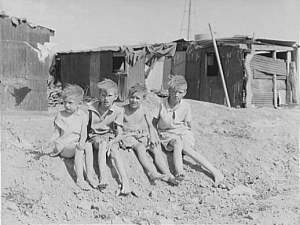
An article in the Washington Post reports on findings that poor children, in their words, “that do everything right don’t do as well as rich kids who do everything wrong.” There are indeed deficits that attend the poor all their lives. Those of us who began in such circumstances can sometimes break through in a system that favors the upper classes, but it is rare. Good paying jobs are reserved for friends of the wealthy or to those who might pay them back in some way. The poor have little to offer beyond their souls. Our system, the so-called “free market” deals in souls. The poor are, make no mistake, chattels. Even in higher education, where we’d like to think thinkers think, positions are granted based on privilege. The loftier music and liturgy is, after all, reserved for All Saints’ Day.

dorothealangemigrantworkerschildren

Like many raised in humble circumstances, I grew up hearing about the American dream. If you work hard you can succeed. But that really depends on who you know and how much they’re willing to help out. Stats are now beginning to back up what those of us who have lived experience in the lower register already knew. Having faced it throughout my career, I know I’m not alone. Just the other day I met someone else who grew up poor who’d hit the bullet-proof ceiling carefully installed by children of privilege. Not ambitious beyond desiring the basic comforts of a job that covers the bills and allows for some reasonable amount of surplus against lean times is, it seems, more than the wealthy are willing to grant. After all, All Saints’ must come before All Souls’, for even Heaven has its hierarchies.


Reveries of the Fall

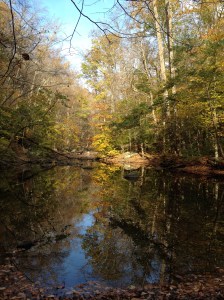
Just a quarter of an hour, studies show, of time in the woods can reduce stress. I suspect that if those fifteen minutes are spent running from a bear the opposite might result, but in general time in nature is an incredible solace. The weather hasn’t been particularly cooperative for October walks in the woods around here, but yesterday my wife and I managed to spend some time, along with many others, in Hacklebarney State Park, one of New Jersey’s gems. Living in the most densely populated state, to gather from the number of hikers we saw, encourages time in the woods. It was good to be reminded of the compelling scent of autumn leaves, the wonder of seeing their colors in the daylight when daily commutes begin and end in the dark. When work days are spent in the grayness of the city. Being out with nature, to borrow words from the Good Book, restoreth our souls.

img_2989

I suppose there’s nothing really logical about it. We’ve built civilization to protect ourselves from nature. Solid walls to keep predators out. Heat, running water, and electricity so that we can surf the internet without ever going outdoors. Permanent settlement always within reach of cell phone service and work email, we are the scions of civilization. Being unplugged just for an hour or two—even fifteen minutes—can feel like salvation. If that fifteen minutes is spent among rocks, trees, and the peculiar light that reflects off a lazy river. The internet will always wait, won’t it? Thoughts of work can be suspended until Monday, can’t they?

Hiking among the other expatriates of civilization in what used to be the Garden State contrasts so sharply with the image we project to the world. The Chris Christies and Donald Trumps who bluster that nature is there to be exploited. They may not say so with words, but lifestyles speak so much louder than syllables. Gaining wealth requires putting one’s own agenda first. We’re out here picking our way carefully over a rocky path. We have to stop frequently to let others go by the other way, or to let those faster than us pass by. But we’re all out here for the same reason. It’s a beautiful autumn day and spending it indoors feels wrong. I know that even getting online now feels like my time is being demanded by a million distractions. Unplugging, walking at a moderate pace, feeling the cool air and breathing the aroma of fall deeply into tired lungs, I can feel the stress draining away. If only for a day.


Life As We Knew It

The government does funny things when your back is turned. Back in January, reading Scott W. Gustafson’s At the Altar of Wall Street, I learned that the government treats corporations as people. It assigns certain rights and privileges to these collectives so that business can thrive without interference. A recent article by Chip Colwell in The Conversation asks, “What if nature, like corporations, had the rights and protections of a person?” This isn’t merely an academic question. As Colwell points out, New Zealand has recently accorded a natural area personhood status to protect it from exploitation. Meanwhile we in the United States live in a country where companies—those nasty people—are chomping to get their teeth into the “natural resources” of our national parks and wilderness areas. Not because it’s best for the planet, but because their corporate person has one of humanity’s greatest evils—greed. Gluttony used to be a deadly sin. Now it’s called economy.

One thing this corporate person doesn’t understand: we have only one planet and it belongs to everyone. Or no one. Our capitalist outlook has given an undue sense of entitlement to those who have the means to take without asking. They can frack the ground under your feet and you’ll never know it. Until the earthquakes or sink holes come. Meanwhile natural areas—as Colwell indicates, considered sacred by many Native Americans—are unprotected from fictional persons that have immensely more power than any individual. We know what happens when the sacred is engaged in battle by the economic. It’s an unfair fight.

img_2476

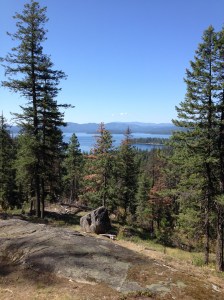
When the crush of work stress gets to be too much, nature is our balm. Many times my wife and I will head to the woods on a weekend just to regain the balance that is stolen by what we call civilization. Manhattan has its wonders, to be sure, but they pale next to a simple stretch of “undeveloped” land and a path to walk through it. There’s a reason that corporate executives have their vacation houses far from the towers they build. It’s not a question of whether the sacred forests are valuable, but rather who gets to own them. With the legalization of fiction—corporations are not people, no matter how logic may be distorted—we have doomed fact. The earth is our fact, and, at this moment our only fact. As Colwell suggests, if it were treated like a person we’d have to show it some respect. And with respect true civility can thrive.


October Weekend

img_2973

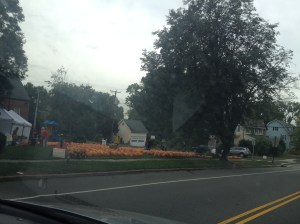
Bright orange pumpkins under a cloudy gray sky. October is surely here. But this is an urban area of the kind in which northeast New Jersey specializes. As I approach I see that it’s a church. A church that has made a truce with Halloween. Judging from the number of people here, it’s a cordial detente. So much of American society lies mired in contradiction that I have to ponder this. Halloween in an age of nones may be simply fun. An opportunity to spend money on pumpkins that won’t be eaten and gourds that can’t be. Decorations for a mildly scary night that somehow makes us feel comfortable and snug at home. October is like that.

Churches have been struggling to maintain active memberships. And although the antagonism has been overblown, Halloween has been an uneasy part of the church calendar. It has, however, become a major commercial opportunity. Depending on the commodity, only Christmas or Easter will draw more lucre from people. The devils and demons and ghosts of Halloween sit awkwardly in the pew next to the victory over death that is the main draw to traditional Christianity. But people will predictably spend their cash for the privilege of carving a pumpkin. Just the memory of the scent, the feel, the contentment of creating a jack-o-lantern makes me want to stop and support whatever denomination this might be.

It is a weekend, however, and I have many errands yet to do. I content myself knowing there are happy people in this temporary pumpkin-patch. The faith of Linus is a powerful thing. To get ready for the week ahead in which I’ll have time only for working, commuting, and sleeping, I keep moving. The orange fades from sight. The cheerful memories of childhood pass. I go on to my next stop. My first errand began at 6 a.m.this morning. Noon is fast approaching. I need a tiny piece of hardware that can only be found in a big box store. I prefer to support the local economy but that shop is all the way across town. Inside the Depot plastic Christmas trees of every description fill the front of the store with winter dreams of even more spending. I forget what I came in here for.


Day Labor

It’s difficult to believe in Labor Day. Don’t get me wrong—I’m glad for the day off. It’s just that I don’t think people really believe in the idea any more. It’s hard to take professed goodwill for workers seriously in a plutocracy. Especially when money’s a fiction. When pay was in coin, although abstracted, you were literally handed something of value for your work. Now technicalities and loopholes and utter abstractions make some—including would be and actual politicians—wealthy. These are all tricks on paper, affirmed by accountants, and we watch like the audience of a magic show as the improbable is made out to be actual fact. And these who hold this imaginary wealth control the lion’s share of the waking hours of the rest of us. We’re given Labor Day off with a pat on the head and we’re told to go enjoy ourselves before summer is up and we really have to get back down to work.

DSCN5084

Many of us—I know because I can see the cars—use the holiday to travel. It’s not really so much a day of rest as it is a day of trying to get back home so we can be to work bright and early tomorrow. Since it’s the last break before Thanksgiving you’d better enjoy it. If there were really money in that pay envelope—not even real envelopes are used any more—it might be easier to buy the illusion. Like Amazon I take a small cut of the transactions between employer and debts I owe just to live near where I work, which isn’t really so near but as close as I can afford. At least today I can not go into the office. I can spend the day getting home instead.

I often wonder why we’ve let ourselves be fooled by a system that will only ever allow the very few to truly find financial independence. Like lemmings we run right after them, thinking that just beyond that cliff true prosperity lies. A chicken in every pot. A car in every garage. Right now all those cars are actually out on the road—I can see them—and they’re not really paid for because they cost too much to buy outright. Most of us need them to get us to and from work. Or to and from vacation. Summer’s winding down. Hurricanes are already spinning away in the Atlantic. I’ve grateful for the day off. I really am. I only wish I could believe that it meant something deeper about human nature.


Twitter Me This

Techoncrat I’m not. At least I understand that to be authentic in this world you need to be on social media. I have a Twitter account. Have had for years. I don’t follow it religiously, but then, I don’t treat any social media like holy writ. The other day I noticed a disturbing trend. Donald Trump’s tweets end up on my bird feed. No, I didn’t accidentally follow him—I have a natural aversion to fascists with delusions of divinity—but nevertheless his mug shows up so frequently that I tend not to follow the bird maybe as much as maybe I should. I wonder how someone thinks s/he has the right to buy part of my consciousness.

Tweet or honk?

Tweet or honk?

The world-wide web is without laws, like the subconscious mind. Thoughts from around the world—at least the affluent part of it—milling, swirling about in an electronic soup thickened by irony. It’s addictive. The opiate of the masses. Perhaps it is a religion after all. Tweets are micro prayers. Blogs are sermons. Facebook is coffee hour. All these connected minds have created a consciousness of their own. Like Victor Frankenstein, we too know what it feels like to be God. It’s not a particularly joyous place to be. Does God, I wonder, lack the control that we experience on the Internet?

I like Twitter. It doesn’t demand much. The only problem is that to stay on top of things you have to have it going all the time. I turn it off and when I come back on I’ve missed hundreds of tweets. And then there’s Donald Trump again. I can come up with my own nightmares, thank you. I don’t need Twitter to suggest any.

Perhaps this is the apotheosis of capitalism. The ability to buy anything, including space on somebody else’s bird feed. Buy the most powerful office in the country, if not the world. Buy hatred and distribute it freely. One thing you can’t buy is intelligence. At least, up until now, some universities still understand that. It has taken me years to gather Twitter followers, like Mrs. Partridge the family band-mates fall behind in a neat, technicolor line. I have no money. I have very little influence. I’m really not a very good capitalist at all. I give away for free what universities charge for. Just like in the classroom, few pay attention. What do I expect? Who really listens to sermons anyway?


Food for Thought

You probably know the ritual. On a given day of the week (often the weekend—your “time off” for good behavior) you troop to the grocery store. You toss the items you’ll need for the week into a cart and trundle home to fit them into the interstices of a crowded kitchen or pantry. Then you start to notice that funky smell when you open the fridge. Or you eat a snack chip and find it gives no resistance to your teeth. Something’s gone off and needs to be tossed again, but this time into the landfill (or hopefully, compost). We’re all so busy that we don’t really have time to ponder this much. After all, the work’s the thing, and we only have a few hours at home anyway, and we can go shopping again soon. Now here’s where it starts to get ironic: we subscribe to Consumer Reports. I’m about the least consuming person you’ll be likely to meet (or not meet), unless, of course, the topic is books. I don’t buy stuff unless I have to. My jobs have been financially disappointing since earning a doctorate and I’ve got tuition bills of my own to pay. Every penny counts. But I digress.

Consumer Reports, in its September issue, discusses the problem of food wastage. Since I’m a simple man statistics impress me. 52 percent, for example, of the produce Americans purchase is thrown away. Math class was some time in the past, but even I can see that’s over half. This is something we’ve paid for and we simply jettison because it’s gone bad before we use it. This particular figure hit me because I like to have fresh produce with my boringly consistent lunch. When they’re in season I buy snow peas. Problem is, our grocery store only sells snow peas in massive packages, hermetically sealed. I can’t get through them before they go bad, and I can’t buy just what I need. For my convenience, I’m told, these tasty greens are prepackaged and pre-priced (at the cost of a small automobile) so I don’t have to dip my grubby hand in the basket and weigh out just what I need. And it’s not just peas. I can’t remember how to make a salad any more because, well, they come in bags, right? The natural habitat of greens.

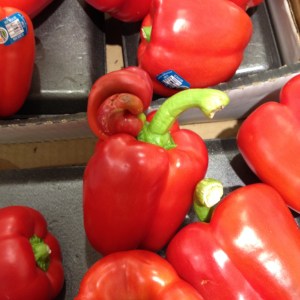
Free-range peppers

Free-range peppers

The problem goes further than that. Here’s where the stats get scary. According to the article 28 percent of the agricultural land of the world generates food that isn’t consumed. Over a quarter, if memory serves, is ultimately wasted space. A full quarter of our freshwater usage is for stuff we throw away. In the land of overabundance we’ve learned to squander our resources and think nothing of it. It’s just food, after all. It’s not like there are starving people in the world. Perhaps the greatest ethical crimes are those that are so ordinary as to become forgettable, like that trip to the grocery store. Let someone else do the packaging. Anything I don’t eat I can always throw away. We can grow more. It’s a ritual, after all.


Words for Play

IMG_2849

Maybe you’ve seen it too.  Corporate-style psychobabble.  Memos land on your desk, whether real or virtual, jostling with neologisms, indicating the trendy new directions the business is going.  Apparently a legal requirement is that old vocabulary is vorboten in such information-bytes.  You can’t call a spade a spade—it might confuse somebody.  Do you mean a playing card spade, or something to dig with?  And do people even use spades anymore?  Why not call them loam-moving facilitators?  Isn’t that really what they are?  If you can get through a memorandum without a dictionary (slang or otherwise) you’re much more fluent in my native language than me. Or I.  I often wonder how much this has to do with an inherent inferiority complex.  A cog in this corporate machine has to prove it’s usefulness.  If nobody can understand what you’re doing, it seems, your job is secure.  I imagine think tanks as being like big aquaria, but with fewer viable ideas than captive fish.  I once read a memo that had to give each and every stage of a process a chic new name.  I felt like I needed to update my wardrobe and get a fashionable haircut just to read the thing.

Perhaps it’s just that a simply guy like yours truly prefers things explained clearly.  I can imagine a meeting taking place where nobody really understands what’s going on but they all have to nod their heads in approval for fear of feeling stupid.  New phrases, of course, have their place.  We needed a portmanteau for “telephone” back in the day, since there had been nothing like it before.  Most of my memos, by contrast, have been about plain old things that have been around for centuries.  Or millennia.  And if an old word is used, such as “idea,” it has to be in quotes.  Business must find a way of ensuring stakeholders that it’s on top of the latest developments.  Who uses a fax any more?  Most people consider email outmoded.  The period itself, I’ve read, is about to go extinct.  Still we have time to make up corporate-speak.

I work in the publishing industry, which is notoriously slow.  Unhurried attention to detail is a sign of quality.  If you want a book to be good, you need to take your time at every stage of the process.  Sure, a book can be churned out mere days after an important event, but if you read it you’ll see the corners that have been cut.  We even received an issue of Time once that had the “e” accidentally chopped off by a hasty cutting machine.  You want quality, you need to take your tim.  Adopting the newest coinage in the busyness business hardly seems a way for minting success.  Utilizing quality ideas isn’t the same as the fabrication of nonce words.  Of course, attention to detail takes away from time that could be spent making more money.  Churning out new verbiage creates the illusion of being ahead of the game.  If you need a dictionary to understand what your company is doing, perhaps it’s a good thing to work in publishing, even if you have to look words up online.


Buying Intangibles

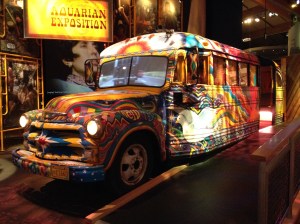
Perhaps it seems that I’m writing quite a bit about music these days. Being a theoretical and practical failure in the practice of music, it may seem presumptuous. If I’m honest, I’d admit that visiting the site of Woodstock was kind of a religious experience for me. That experience and the fact that popular musicians from my younger days have been in the news of late compel me to analyze a bit. My wife shared a blog post on John Pavlovitz’s website entitled “Bono Called Out Christian Musicians For a Lack of Honesty. He Didn’t Go Far Enough.” The screed is both about the Christian music industry and about current trends in evangelistic super-churches that share in the glitz and glam and leave you wondering what Jesus would do. The message of early Christianity and the sixties was similar: social justice, peace, non-judgmental attitudes, care for others, love all. Don’t worry about the bottom line.

Many churches, it has become clear in this age of nones, are struggling to compete in the spiritual marketplace. Since every institution must have “product”—not books, music, reverence, or worship, but “product”—money must change hands. If you have any doubts look at what the mega-church pastors are driving. Christian bands seem not to have a social conscience so much as a desire to feel good. It’s a thriving industry, for sure. Music that makes you feel safe is delivering false promises, though. The deity thundering on that mountain might ask you to sacrifice your own son, and there could be a good, solid backbeat to that. What is the role of religion in an entrepreneurial society? It used to be that you couldn’t buy what they were giving away. Everything now has a sale tag on it.

Back in college we used to argue about whether U2 was a “Christian band” or not. Clearly they recorded on a secular label. Amy Grant, the darling of 1980s believers, matured and seemed to fall from grace. Larry Norman, never part of the establishment, died too young. Music and religion both stand, in fact, out of the reach of sticky capitalist fingers. Anything that you have to pay for is more a cheap imitation. YouTube has made all of recorded history available for all. Even mainstream churches are experimenting with tablet hymnals and virtual communion. Grace mediated through a touch screen. Debit cards accepted. The only thing that seems to be missing is that human touch. That down in the mud reality of it all. Music that had a message and that message wasn’t about supporting convention. “Upon this rock,” you can almost here the man say, “I will build my church.”

IMG_2833


Human, Nature

Wild EarthSomeone recently told me that a city blocks a certain vibration that people draw from contact with the earth. I know that vibration often sets off “new age” alarms, but this person was rational, scientific, and had grown up in New York City. I grew up in a town on the edge of the woods. We didn’t live on concrete. In fact, the floor of our shack was so thin in some places that you could see the actual soil underneath. Even our driveway was gravel. Although it was a dysfunctional family, I felt more connected to my planet back then. Wild Earth, Wild Soul: A Manual for Ecstatic Culture, by Bill Pfeiffer, is just what it says. It’s a manual for how to get back in touch with nature. Basing his ideas on those of indigenous cultures world-wide, with a healthy dose of shamanism, he explores the vibrations of the earth. I had, at times, to force myself to listen. He’s right about so much that I stayed with the narrative to the end.

Civilization comes with a price tag. A very high price tag. The rates have been set by a small group of “progressives” who operate with the idea—mistaken—that all nature is a machine. Physics, they claim, and chemistry, show that all of life is mathematical. Nothing in the universe doesn’t add up. But biology, as Pfeiffer repeatedly shows, often doesn’t. The mistake is as fundamental as it is reductionistic. Life isn’t quantifiable. Biology messes up the nice, neat system we’ve invented. Indigenous peoples, while not idealized, lived in much better harmony with the land, not over-exploiting. It was a sustainable existence. What “civilized” people wanted was more. More of everything. A surplus, in fact. Without that surplus there is no business, right? Capitalize on that!

We’ve lost touch with nature. Our “leaders” want to exploit it. Mine it, refine it, and make it “useful.” When’s the last time I looked at a tree just to appreciate it as nature? Civilization can’t envision a tree without an axe. If it grew it can be improved. Even our food has to be genetically modified because obviously nature can’t make a profit on its own. No, Wild Earth, Wild Soul hasn’t made the impact on the world it might have. I’d never have found it if it weren’t for a used book sale. That doesn’t mean, however, that it isn’t right. We need to dismantle. We are not electronic devices, as much as the internet tells you otherwise. I knew that as a child. And as my feet ache from walking over acres of concrete on my way to “work” I know it’s true. There are indeed good vibrations out there, but here they’re too deep under my feet to feel.


Map to Eternity

One of the most remarkable things about Christianity is its fascination with the end of the world. Far from being the obsession of nineteenth-century dispensationalists alone (the other Mr. Darby), the earnestly anticipated end goes back to Paul of Tarsus, the first known Christian writer. Before even a Gospel was penned, this sect was expecting the end to come any day now. It still is, at least among many sub-sects. My wife, however, recently sent me a story on National Geographic about a map collection from the 1480s that depicts a geography of the apocalypse. If you were wondering where to make that left-hand turn, this book may be for you. One wouldn’t want to drive a German mile into Hell without an indicator signal on.

The story by Greg Miller describes this late Medieval manuscript and its assurance that the world will end in 1651—talk about your great disappointment! The unknown author of the codex feared Islam almost as much as Donald Trump but instead of running for the GOP nomination he wrote a book showing just how the end would take place. Illustrated, of course. Map is territory after all. I grew up reading fundamentalist tracts that did essentially the same thing. The more progressive bits of the propaganda left out the actual dates because an earlier Miller seems to have missed the doomsday boat, along with various and sundry telltale timekeepers. There in front of me I could nevertheless unfold the future and once the European Common Market gets its tenth member—wait, what? Has yet another head of the beast been lopped off?

Maps give more than directions.

Maps give more than directions.

Ironically, early Christianities were anti-materialistic. Money was considered the root of all evil and communism was the ideal. If you doubt me ask Ananias and Sapphira. They thought long-term investment was a bit of a foolish notion—something that I have somewhat naively, if unintentionally, followed my whole professional life. You can’t be vested without three years of servitude after all, and I was expecting the Second Coming after one year. Two, tops. If only I’d had a roadmap. It’s only 1777 German miles from Lübeck to paradise, so maybe I can catch the next doomsday boat and still get there in time.


Big Boxification

When was the last time I purchased an actual book at Barnes and Noble? In a vain hope that they might have something intellectual and edgy, I stop in once in a while. If I were a faster learner I might have known that I’d leave disappointed. You see, it’s been rainy a lot around here and rainy Saturdays are perfect for book stores. But where are the good books? I’m not just picking on B&N. I stopped in Bed, Bath, and Beyond (they don’t really use the Oxford comma, but then, who had time for commas?). This is not a frequent occurrence since we rent and it’s hard to gentrify bohemian decor, but we needed a practical household item. After wandering enough aisles that I thought it was time to hire a jungle guide, I found that the choices were actually rather limited. If I don’t like what they tell me to like, well, I’m out of luck. The local stores were driven out of business, you see, and you have to like what we have to offer because we are the BIG GUYS.

It’s not just housewares. It’s everywares. We’re a big box society. Costco and Sam’s Club and SUVs to haul it all home. Once, back when paper was still a thing, I had to find some file folders. I tend to like color coding—my non-Harvard-educated mind just rolls that way. So I went to the local stationary store and found a virtual reading rainbow of options. A year or so later, strangely, more papers had accumulated. I went back and the store was out of business. A Staples had opened nearby. Everyone was going there. They offered a superfluous loyalty card—where else would you go? They had four colors of folders. Just four. In industrial cardboard boxes that mean business. I mean BUSINESS. You want choices? There’s a clinic down the road. Unless you’re female, of course.

Photo credit: Ben Schumin, Wikimedia Commons

Photo credit: Ben Schumin, Wikimedia Commons

I’m not a genius, but I can recognize repeating patterns. Big box settles outside your town then limits your choices. I consume, therefore I am. To buy, or not to buy? I am not a number, I am a—what? What am I if I’m not a consumer? A communist, I guess. And everyone knows the Bible says communism is evil. And if you need a Bible you can purchase one from Sam’s Club. To be part of the resistance, you need to buy from Amazon. What a radical I’ve become! At least at Amazon they still have books.


Mother Earth

Son, behold thy mother.

Behold thy mother.

As a planet-locked earthling, I’m thinking about Earth today. Such a quotidian planet. While I’ve been to others in my mind, this is the only one on which I’ve ever been or am likely to be. And yet there are no laws protecting it from my own species. Corporations are treated as individuals, legally. Only they’re much, much bigger and have lots more money. They can drill and dig and spew and slew all they wish. I can mutter a feeble, “Hey!” but they legally have to pay no attention. It’s like that guy with a loud device on a quiet bus. Or someone smoking too close to the door. They invade the little space you occupy and there’s nothing you can do about it. We look to our politicians to learn how to be better bullies. Our corporations look past us to the bottom line. When the planet dies, that will indeed be the bottom line.

We tend to make fun of those who believe there’s other life out there. Whether sci-fi nerds or gullible believers in conspiracy theories, we tell them all intelligent life is located right here. In your bank account. Your net worth. The contribution you make to the GNP. It all comes down to numbers. As if there weren’t something magical about walking in the woods. As if all of this is just dress rehearsal for the play of getting rich. The beasts we had to fear used to lurk in the jungle. Now they brazenly drive through our cities in expensive cars with tinted windows. They build towers to defy the spacemen to come down. “Don’t worry,” they seem to say, “our money is great enough that we can come to you.” And yet, we are still left with only one planet. And it seems to be getting quite stuffy down here.

I worry about our throwaway culture, because there’s nowhere else to go. You can’t prevent me from fracking the very ground beneath your feet. Or like Martin Luther, prevent me from flying over your head. You don’t like my loud music? You don’t like my noxious fumes? I can blow my vape into the shared, public airspace if I want. Ownership is a funny concept. Our species has been on this planet for a geologic sneeze and yet we plant our flags and bray our allegiances. It takes treaties and accords for us to act like civilized people. We won’t call it “global warming” because that offends those big people called corporations. If it feels a little warm in here to you, turn on the air conditioner. If we use up this planet, we can always buy another one.


Seeing Red

Not being commercially minded, it took many years for me to understand why it is called Black Friday. To many people “black” indicates negativity, sort of the opposite of Good Friday which, when you think about it, doesn’t seem so good. After I was forced into jobs in the money-making business, I came to realize that budgets were written in black and deficits were written in red. Since my lifetime, with a few exceptions, has been a series of economic disasters following one another (the implications should be obvious) and businesses operate in the red while projecting budgets ever higher the next year. This model is, in a world of limited resources, the very definition of unsustainable, and yet we keep raising our sights and getting disappointed. Nobody knows for sure where the term Black Friday originated, but it is a modern term. A holiday for those who measure celebration in terms of dollars and cents. (Mostly dollars.)

As I was pondering this phenomenon, my thoughts turned to red letter days. Red here is a positive thing—special days on the calendar that let us step outside the usual routine of pushing ourselves to make this year’s budget and allow us to relax with family and friends. The black and the red have switched places here. In fact, red letters, apart from the dismal science, have historically been considered good. Think of the red letter editions of the Bible. These Bibles had the putative words of Jesus printed in red so that they would stand out. The concept dates back to the change of the twentieth century. Red letter Bibles caught on among Evangelical readers. Red letters, however, go back even further in history.

Who said what now?

The book that Catholic priests used to set on the altar was a missal. Missals contained the instructions for saying mass, and during certain parts of the ceremony priests were supposed to make specific gestures. The places at which these actions were to be made were printed in red to draw the priests’ attention. They were called “rubrics” since they were written in red. Missals date back to the Medieval Period and they give us perhaps the first positive use of red writing that we know. Even further back in history when inks were organic, red writing was found. Epigraphers of antiquity know of red inscriptions but the meaning at that time remains speculative. We call this Black Friday because the one percent hope to get a bit richer. Those of us further down are supposed to enjoy the trickle. For me, in principle I don’t go shopping on Black Friday. I see it as a red letter day.


To Whom? For What?

Thanksgiving remains one of the few relatively uncommercialized holidays. Not tied to a specific religion, but with a general sense that gratitude is important, there’s nothing really to sell. Grocery stores may see a bump in profits, but we need to eat every day, so this is only a matter of degree. The icons of Halloween quickly transform to those of Christmas and even Thanksgiving begins to pale next to Black Friday as companies give employees the only four-day weekend of the entire year. Without money changing hands what can there possibly be to celebrate?

The strident question of to whom one is thankful is graciously subsumed under that of for what. History has demonstrated that the relative abundance that we enjoy in matters of gustatory gifts is indeed not to be taken for granted. Droughts are realities. Dustbowls and depressions occur. In many parts of the world starvation is stark reality. Having enough—even too much—to eat is less a sign of blessing for good behavior than it is an obligation to help others. Want is a specter that no one can debunk. The homeless here in a land of plenty remind us that holidays are truly opportunities to be thankful. Thankful simply for being able to get by. Not for what we buy.

IMG_2601

Holidays have their origins in religion. They may wander far from their foundations, but we have religions to thank for every day there’s a break in the routine of trooping into the office for yet another stint of work. Days when staying home is acceptable and spending is purely optional. The stretch from Labor Day to Thanksgiving is long. This goal can only be reached by a frame of mind rather than a state of one’s bank account. Having a day when money falls from focus is cause for thankfulness indeed.