To Whom? For What?

Thanksgiving remains one of the few relatively uncommercialized holidays. Not tied to a specific religion, but with a general sense that gratitude is important, there’s nothing really to sell. Grocery stores may see a bump in profits, but we need to eat every day, so this is only a matter of degree. The icons of Halloween quickly transform to those of Christmas and even Thanksgiving begins to pale next to Black Friday as companies give employees the only four-day weekend of the entire year. Without money changing hands what can there possibly be to celebrate?

The strident question of to whom one is thankful is graciously subsumed under that of for what. History has demonstrated that the relative abundance that we enjoy in matters of gustatory gifts is indeed not to be taken for granted. Droughts are realities. Dustbowls and depressions occur. In many parts of the world starvation is stark reality. Having enough—even too much—to eat is less a sign of blessing for good behavior than it is an obligation to help others. Want is a specter that no one can debunk. The homeless here in a land of plenty remind us that holidays are truly opportunities to be thankful. Thankful simply for being able to get by. Not for what we buy.

IMG_2601

Holidays have their origins in religion. They may wander far from their foundations, but we have religions to thank for every day there’s a break in the routine of trooping into the office for yet another stint of work. Days when staying home is acceptable and spending is purely optional. The stretch from Labor Day to Thanksgiving is long. This goal can only be reached by a frame of mind rather than a state of one’s bank account. Having a day when money falls from focus is cause for thankfulness indeed.


Go to, Let Us Make Brick

Next year marks a quarter century. It’s a sobering thought. A quarter century of attending the Society of Biblical Literature annual meeting. A lot has changed over the years. Much of the loss, I fear, has been of innocence. When I first flew into Kansas City, naive at 29, and still believing the world offered opportunities for those who would work hard enough, the academic job market was tight. I had no interviews whatsoever, and spent many hours in the employees’ hopeless lounge, dreaming that someone might call my name. Although no jobs came of it, I could hardly blame the academy for “market conditions” outside their control. An economy based on unadulterated greed and emulating the worst practices of the business world was eating higher education alive, from within. I had no way of knowing. For a couple of decades I attended more often than not, optimistic that the lies I’d been told might yet turn out to be false. That those who had the gifts and abilities would be recognized for what they were. I was so terribly young then.

Through a variety of roles I have continued to attend this conference for all these years. I have not seen so much hopelessness until this. Colleagues come to me, barely holding back tears. Conditions in our universities are bad and are getting worse. We have no students, but clients. The hours of preparation for the classroom are now being measured in metrics like “return on investment.” The basic vocabulary of higher education has evolved to the point that it is a new Tower of Babel. It sits on Wall Street and considers what is offered to our young as commodities. Nobody worries if they learn anything or not. The exchange of goods at personal advantage is the only way that one can exist in a market economy.

IMG_2610

The only hope any culture may dare to claim for its future lies in education. Those economies that have not suffered as much as our own are those where education is still revered. Where you don’t have to hold a MBA to speak with authority. Where truth might just be an abstract and where not all things can be measured in shekels. I have been attending this conference for a quarter century and never I have I seen despair such as this. I have to wonder about a nation that takes those highest achievers and those with the most initiative and slaughters their hopes on the altar of the angry deity of vain baubles of self-aggrandizement. We bet on futures that are no futures at all. My beard is whiter now, and my glasses stronger. I am still able to see, however, the folly of launching into the North Atlantic in early April before any kind of radar has been invented with lifeboats made only of money. I only hope I’m wrong.


City of Lights

As the civilized world struggles to make sense over the senseless attacks of ISIS in Paris, the question of where to turn emerges. An attack has taken place. Innocent people have died. We are in mourning, and we want to analyze what happened to make the world feel a little less insane. As my wife pointed out an article on CNN, I was shocked by the terms in which the attacks were described. Here I read about ISIS extending its global reach. Top leaders, we’re told, planned the attack. And ISIS is “getting into the international terrorism business.” These phrases are common in just about every business meeting I’ve ever attended. This commodification of terror frightens me. The way we’ve chosen to handle terror is by making it into a business. These are human lives that have been lost—futures of the most promising kind. Not only are we the victims of blind terrorist groups, but we are victims of a world that can’t see beyond capitalism.

Terrorism is not a business. It is evil, but in a world where religious value is never invoked outside the few who still find meaning in matters of the soul, the vocabulary has been lost. How do we deal with ISIS? Just like you would any business. A hostile takeover bid? Gather your resources, make some deals, and if retaliation takes innocent lives, well, some bonds and chattels aren’t worth that much anyway. Have we lost the ability to describe the world in anything other than economic terms? Is humanity simply another business?

Paris_SPOT_1017

I do not wish to downplay the horrible events that took place in Paris Friday night. At least 120 are dead for doing only the kinds of things people do on a Friday night. Yet there is a terror that has been creeping through the world that refuses to be named. When it feels threatened it clears out Zuccotti Park. It has taken over our institutions of higher education. It buys political offices and rewards those at the top until the rest of us become commodities. Yes, some goods are lost or damaged during shipping. We need to have a metric to measure that. And when our eyes are streaming with tears we grasp the nearest—the only way we have of describing what has happened. A new business has come to town. When terror becomes a business all hope is already lost.


Soaring Prophets

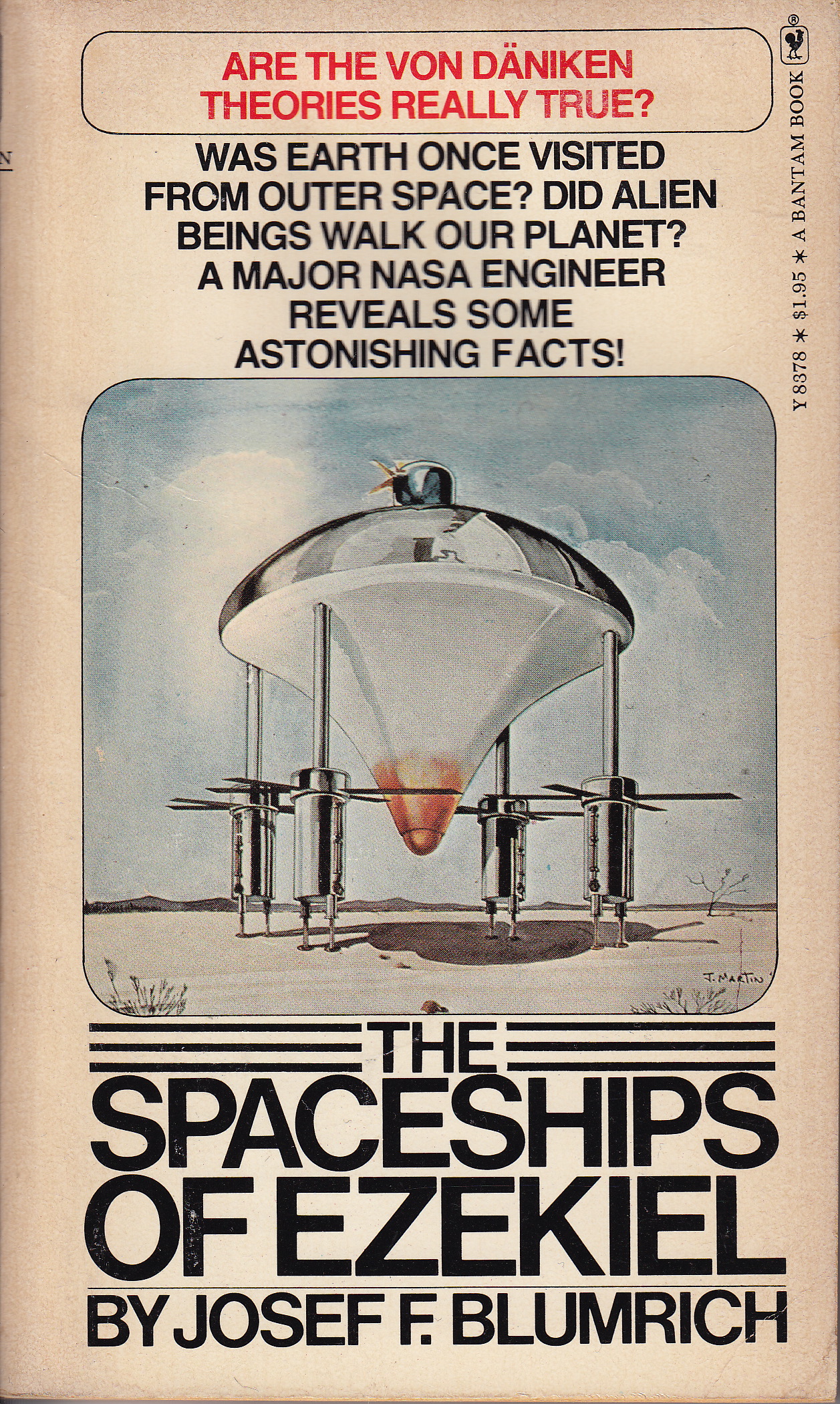
EzekielSpaceshipOkay, so I pulled the book off the shelf, and I feel now like I need to read it. Call it an occupational hazard. Josef F. Blumrich’s The Spaceships of Ezekiel, despite its von Däniken-like sales, has never been taken seriously by biblical scholars. Blumrich, no doubt a brilliant engineer, simply had no street cred among biblicists. His handling of biblical passages is awkward and he leaves out anything that really can’t be explained by his theories. Not exactly professional exegesis. He suggests, of course, that the “chariot” vision of Ezekiel was, in fact, a spaceship. The figure Ezekiel assumes is God is actually a commander of the ship and the message (which accounts for the vast majority of the book) really doesn’t matter in this context. In my earlier post, having not read the book then, I made the error of supposing that the helicopters were impractical in space. Reading it, I instantly saw my error. This was engineered as a landing craft from the mothership circling the earth above our heads. Boy, do I feel stupid now.

The overall mistake Blumrich makes is the “unforgivable sin” of eisegesis. Suspecting that he has a well-engineered spacecraft on his hands, he draws out the implications—such as the propellers—which would not be necessary, but must be there because of a “literal” interpretation of Ezekiel. Once the eisegesis is done, it can be used to explain further episodes throughout the prophetic book. The message of Jerusalem’s destruction and the hopeful prospect of a return from exile get lost in the space dust raised by these propellers. Blumrich was quite right, however, that technical people and humanities people need to be willing to learn from one another. Ezekiel may have seen something unexplained, but his function was that of a prophet, and prophets say the strangest things.

Even more odd, from my unprofessional reading, was the sense that Blumrich saw capitalism as the default economic system of the galaxy. Time and again he mentions how expensive such interplanetary travel must have been. How do we know, I wonder, that aliens like to exploit each other as capitalists do? If they are a more advanced species, surely they must have an imagination that reaches beyond one percent controlling 99 percent of the wealth to aggrandize themselves. I can imagine a society without money. A society with fair trade where everyone is cared for by medical individuals who don’t charge an arm and a leg to treat an arm and a leg. A world where doctors don’t worry about being sued by lawyers. A world where dreamers are free to dream and society values it. Ah, I’d better be careful since, it seems, I may be beginning to sound like a prophet.


Father’s Day

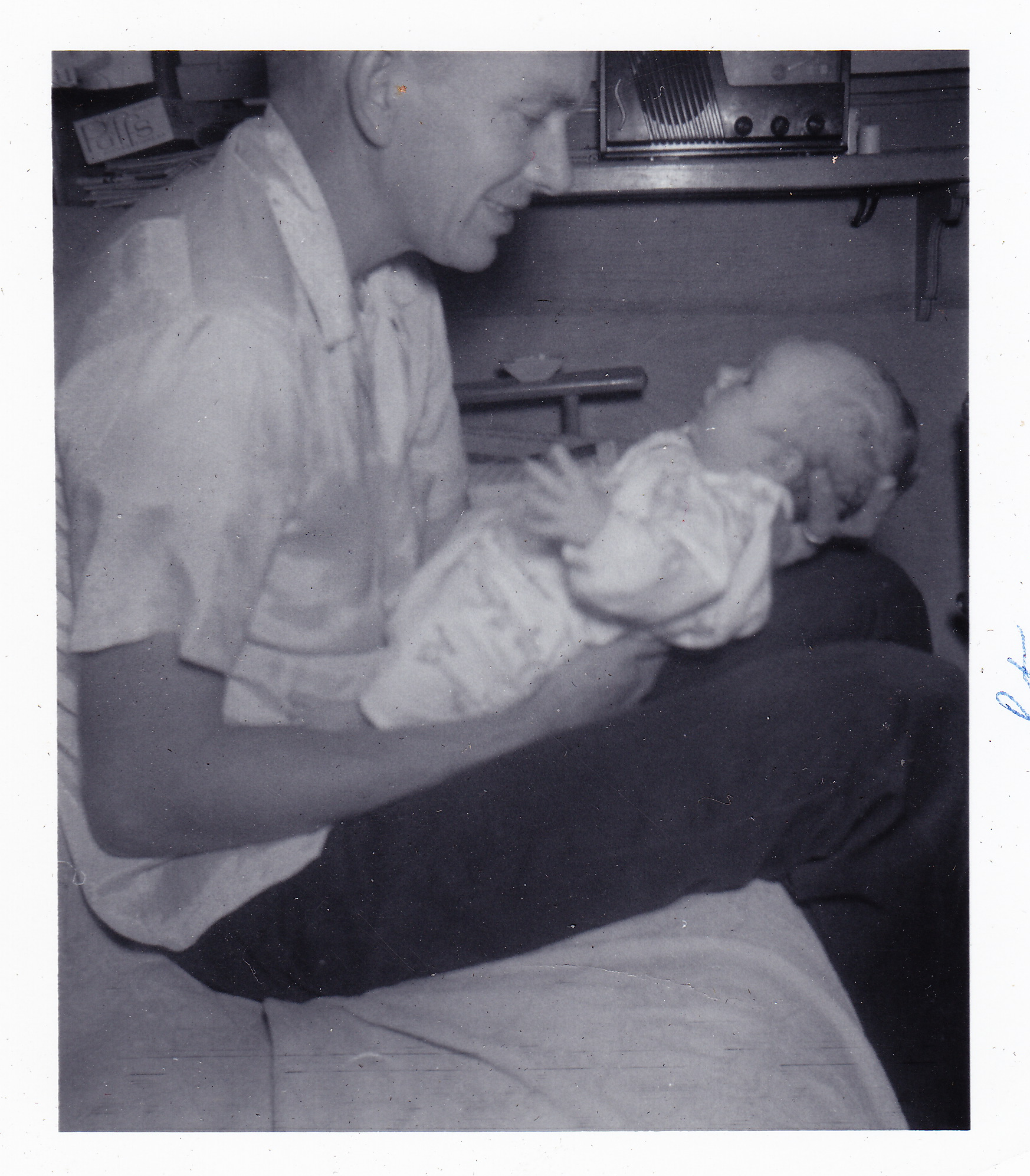
DadI’m not completely stupid.  I know that the Father’s Day ads with which I’ve been peppered all month are nothing personal.  They’re intended to tug at the sentimental heartstrings and get me to spend some money on dear old Dad.  As one of the generation for whom computers were a new household commodity well after college was over, I know that I’m part of a fairly large demographic of middle-age users.  I do wonder, when I see these ads, how many other readers ponder the fact that their fathers have died and that Father’s Day is an occasion as much of mourning as it is of celebrating.  While I know, dear reader, that you’re not my therapist, my father died many years ago after a lifetime of separation from my brothers and me.  I can’t claim to have known him, except in unguarded moments looking into the mirror at the blue eyes he contributed to my genetic code, along with other aspects I can only imagine.
 
Father’s Day can, of course, be a day to honor the memory of, as well as buy things for, dad.  Holidays, however, aren’t really holidays without the changing of hands of lucre.  Although I never tried to think much about it, I never spent a Father’s Day with my father.  I know I’m not alone in this, but many are the days when I believe I would have benefited from a bit more instruction than I received on that front.  “Majoring in religion is not the best career choice,” might have been one of those nuggets I could’ve done with hearing.  The women in my family seemed  to think it was okay.  Even one of my dad’s ancestors was a clergyman.  I like to think that fathers might be able, in some cases, to see farther than their sons.  Call it male bonding.  Call it being a man in a post-patriarchal world.  Call it confusion.
 
I’m all for honoring parents.  I also tend to think people are basically good and that by far the majority of people try to do what they think is right.  They may not have much with which to work, but they try.  I can also think of better ways of honoring them than spending money.  Maybe we could try restructuring society so that those who start out with little might have resources available to move ahead.  If some father’s child has obvious gifts, might we not offer a way for that child to use them and thrive?  As a father myself, I can think of nothing that would make me happier than to see my child have better prospects than I’ve had.  Instead I see a society of one-percenters encouraging us to spend a bit more since, after all, fathers measure their worth in stuff.  The stuff that really matters, at least for this father, include those no longer here as well as those who are yet to inherit.


Mother for a Day

In a world set on tearing itself apart because of its differences, there is one thing every single person has in common. We all have a mother. In societies enamored of domination and competition, we take one day out of the year to stop and remember those who gave of themselves so that we could live. We place this day on a Sunday, the most passive of days when it will not interfere with regular business. We give chocolates, flowers, fruit-baskets, and then go back to the same usual grind come the next day. At the risk of gender stereotyping here, I do wonder how much wisdom we must miss by relegating our mothers to the background.

Growing up, we all know, is inevitable. We need to release ourselves “from the apron strings” and learn to cope in a hostile world. Not only do those overseas, different from us, wish us harm, but even our neighbors become our competitors and although friendly, we look for a way to find our advantage. Motherhood is a reminder that there is another way. Families, at least ideally, are built on cooperation. A willingness to set aside our own personal agenda for that of those for whom we care deeply. Used to be that the largest families (before family became a weapon used by religion) were those best placed to succeed. You had a set of people who shared a common mother, who united in a cooperative venture. Capitalism has little room for such a dynamic. It’s “each man for himself.”

Although churches around the country will mention mothers in their services today, Mother’s Day is a secular holiday. Hindus, Buddhists, Muslims, and Mormons all have mothers. Many religious groups, however, do not. Just last week some Roman Catholic women were ordained as priests here in New Jersey. Of course, the “mother church” disowned them, as priesthood is a male prerogative. Mother’s Day is not on the church calendar. It grew out of the Civil War with the sad realization that, left to their own devices, men will make wars that pit brothers against one another. Although I am stereotyping again, I have a hard time imagining a mother who would do such a thing. Mother’s Day should be an opportunity. Not only should we thank or remember our mothers, we should take to heart what motherhood means. I can’t help but believe the world would be a better place for it.

DSCN1941


Biblical Art

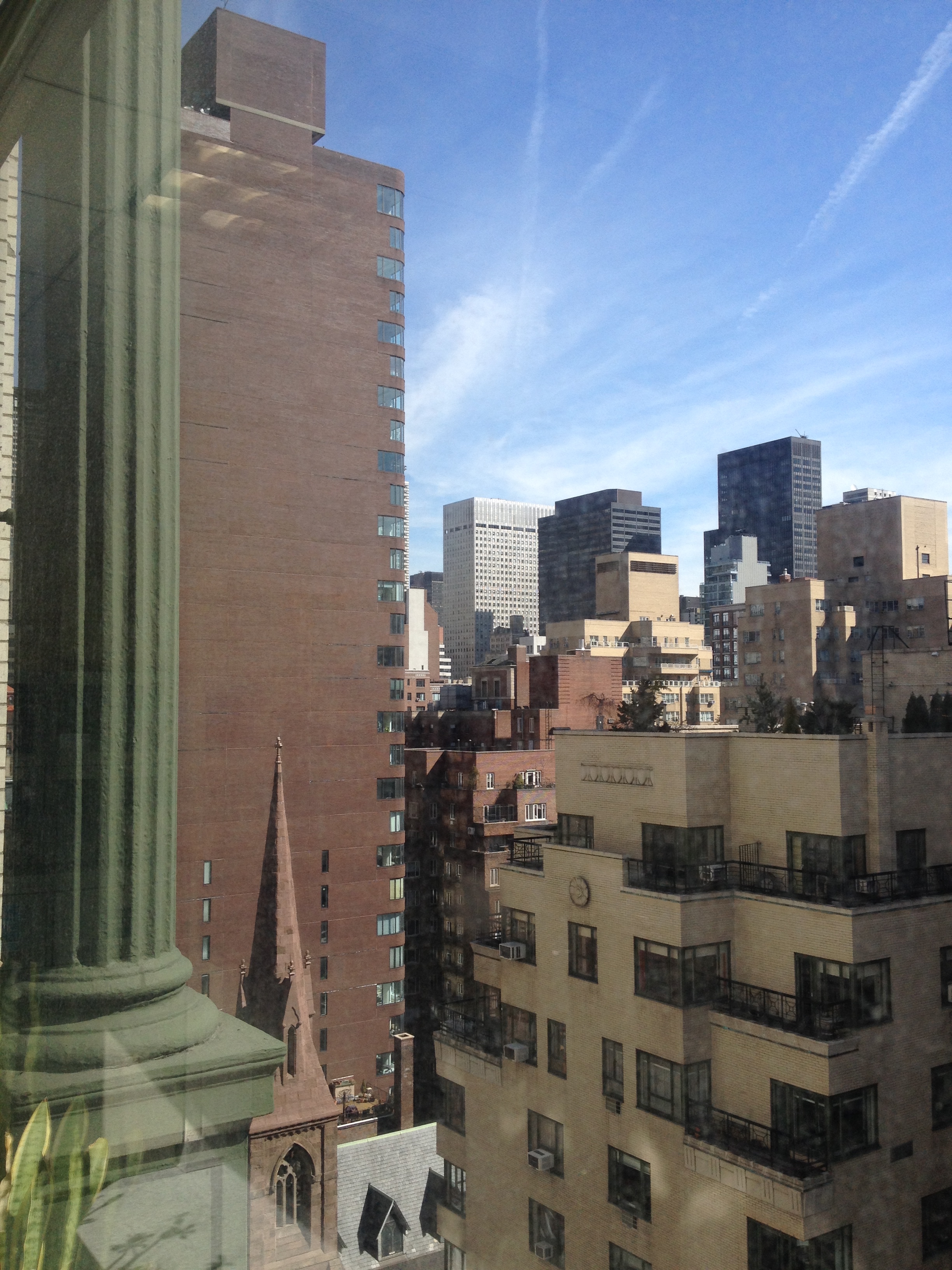
Although the United States is a religious nation, according to all polls, not many Americans know about the American Bible Society. This organization, based in New York City, has been vastly influential in the history of the nation. Even more influential, however, has been the Bible itself. It pervades every aspect of life in America, whether acknowledged or not. It is an integral part of the fabric out of which the nation is cut. I used to ask my Rutgers students: if there were some unseen force that impacted your life every day in ways that you couldn’t imagine, wouldn’t you like to know about it? Of course they would! But our society has very little tolerance for actually learning about the Bible. As a story in the New York Times states, the American Bible Society had to sell its historical Manhattan property recently. I visited the site on my first trip to New York as a seminary student. Here amid the towering secular concerns of money and greed, was a building dedicated to Sacred Writ.

IMG_1272

The New York Times piece, however, is pointing to the fact that the selling of the building has led to the closing of the Museum of Biblical Art. As Randy Kennedy makes clear in his piece, the Museum was (technically will have been) dedicated to showing the impact of the Bible in secular contexts. The American Bible Society is an evangelistic organization. They arrange for the distribution of Bibles not for secular reasons, but for good, old fashioned conversion of the heathen. This set the Museum a little bit at odds with its host. The Museum, critically acclaimed according to Kennedy, is (was) generally secular in outlook. It recognized that the Bible has influenced us in ways far less than obvious, pervading into our artistic sensibilities.

Although I’ve worked in Manhattan for about four years now, I never had occasion to nip into the Museum of Biblical Art on a lunch break. (Lunch break? What’s that? Money takes no breaks.) This is unfortunate. It seems that the message I had been trying to pass along to my temporary charges was being openly displayed here for New York society to see. Little do people realize, I suspect, that the principles of capitalism—the very system that transfuses the lifeblood into the city—developed out of biblical outlooks on private property. Not that the Bible itself is capitalistic, but it gave a society the basis to develop a form of thought that is, honestly, quite foreign to the biblical outlooks themselves. And ironically, the American Bible Society will continue, even though its intent may be less in keeping the spirit of the very book whose impact the Museum attempted to display.


Post Script to Art

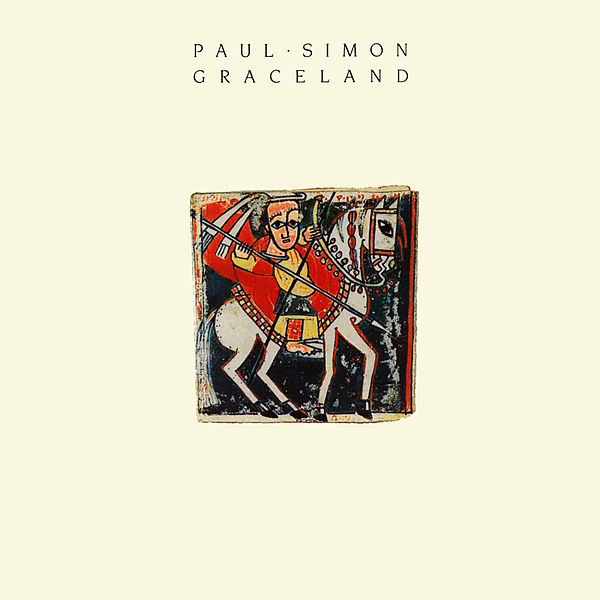
At work Christian Century is a magazine that sometimes lands on my desk. I suspect the book reviews are the main reason for this, but I like to skim the headlines to see what the more progressive, popular periodical has to say about the world. I always glimpse the news in brief section, and quite often the quotes of the week are poignant. This past week I read one from Paul Simon, who was speaking at Princeton University. The quote ran, “We are living in an anti-art age. The world is now a brutal place and obsessed with speed and wealth.” I found my head nodding as I read that sentiment. While I was a little too young to be aware of Paul Simon’s considerable contribution to popular music while it was happening (although I was old enough to appreciate Graceland when it came out), I nevertheless listened to Simon and Garfunkel during college and beyond, amazed at the depth and accuracy of Simon’s poetry. Here was a true artist.

What a difference half a century can make. I find myself not recognizing the world that I took for an assured thing as a child. Drawing back to get some perspective—which is something I think Paul Simon would appreciate—I think about the world without technology. Other species, for example. The behavior of, say, deer is the same today as it was when Europeans first invaded these shores. While deer still wander out onto roads in their natural quest for food, we race at them in heavy machines that leave them dead and twisted grotesquely at the roadside. Deer may not have the mental capacity to think, “hey, there’s fewer predators than there used to be,” but they are frequently brought into contact with a technology that is so nineteenth century, and the result is fatal. Where has the artistry gone? The deer remain the same.

I read a lot of older stuff. When I see the literature that was clearly published for its beauty of language and artistry, it brings a tear to my eye. We don’t publish work like that any more, unless it can make money. Everything has become a calculated capital venture. If you can’t make money off it, it’s not worth doing. When I was stressing out in college over exams, I would sometimes put on my old Simon and Garfunkel records and listen to the deep and complex lyrics to “Mrs. Robinson,” or “Bridge over Troubled Waters,” or “The Sound of Silence.” Despite the angst, this was a world that had a place for beauty for its own sake. It’s not just the music that’s changed since then, because I knew that I was listening to the words of a prophet. And prophets only appear when there’s trouble ahead.

Graceland


Ice Church

Eternity is a concept closely associated with religious thought. It bears a freight that phrases such as “steady-state universe” and “Big Bang” lack. Indeed, the foundations of Christianity and Islam involve the belief that eternal life can be had for those who play by the rules. Great cathedrals and mosques were erected to last forever, or at least until the end of the physical world. Perhaps that is the reason I find the idea of a church constructed out of ice so engaging. Annually for the past several years, a church has been built of ice in the Romanian Alps. Accessible only by cable car, the church is a temporary structure in a land where varieties of Christianity (let alone other faiths) are openly hostile to one another. As the globe slowly wobbles back to a northern inclination, the church will melt and disappear. Still, in its brief time in the world, baptisms and marriages will be performed there. Eternal vows in a temporary structure.

A theological message is inherent in such an institution. We are trained from our earliest days to be consumers. We are to acquire goods and desire more. Were we ever to be satisfied, capitalism would crash to the ground like an ice church left out in the heat. The secular world in unrelenting in its message that we are born to eat, buy, and use. The more expensive, the better. And the more quickly obsolete, the more profitable it will be. The towers of our cities are constructed of concrete and steel, and yet, I have watched new buildings grow and supplant those that have seemingly stood forever but which, in reality, have existed for less than a century. Indeed, all of our towers ought to be made of ice.

IMG_1252

Ice is cold and hard, but it is still water. An article in The Guardian notes that some pastors see this as a kind of baptism frozen in time. Shape given to that which follows the contours of its container. The water, however, will ultimately follow its natural order and rejoin the oceans of the world. While humans are naturally disposed to collect, to save up against lean times, we have to be taught to be consumers. Some of us are content with relatively little, knowing that elsewhere our fellow human beings have nothing at all. Their churches are made of ice, and our corporations are eager to reach even them, to teach them to covet what the more “affluent” have. And the world slowly warms, turning all into liquidity.


Hallowed Be Thy Income

IMG_1924

Some time ago, I was invited to attend a “best practices” session where the language was businessese. As I suffered through statements about how everything can be quantified as numbers and how emotions should be left at the door but creativity should flourish, I began to wonder when I’d become so cynical. I mean, the presenter really believed this–it was clear from his eyes. He’d been so indoctrinated that he really believed selflessness was letting somebody else have their way when they’re your supervisor. Then it hit me. It was so obvious that I felt silly for not seeing it sooner. Corporate culture is a religion. The business world has its own specialized vocabulary, belief system, deity (Mammon), prophets, and ethics code. Those who believe it pass their teachings on to the next generation with the zeal of converts. It gives their lives meaning and purpose. It even has its own origin myth, going back to Adam Smith. All the elements are there.

A point that I come back to repeatedly on this blog is that a solid definition of religion does not exist. I once had a boss who told me there was no such thing as “religious studies.” Too many universities also believe that. When we see terror all around committed in the name of religion and our response is to decide the business curriculum is far more worth saving, I believe we’ve just decided on our religious preferences. Reward and punishment. The price of non-conformity is high. Ironically, our motivational speaker indicated that we shouldn’t be just like everyone else. Only, just don’t be too different.

I couldn’t help but to think back to an episode of Ruby Wax. While living in the UK some friends had a television license and we watched an episode or two. Ruby Wax is an ex-patriot comedian. On one episode she followed a vacuum cleaner salesman for an upscale vacuum manufacturer. Her path took her to a motivational convention which was—there’s no other way to describe this—an emotional religious ceremony. Although their god (Mammon) may not suck, his prophet (the vacuum) most surely did. At the time I saw the episode I thought it was simply entertainment, something at which to laugh. I’ve been to enough business seminars now to find that I’m a heretic in this faith. I may not know much, but I do know selflessness when I see it. And it is a trait that takes a lifetime to master and those who have belong to a different line of work altogether.


Dr._Strangelove_poster

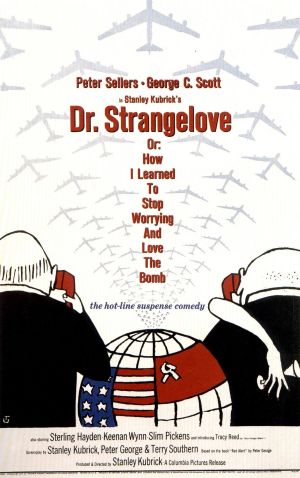
In honor of the fifty-year anniversary of the release of Dr. Strangelove this past week, my wife and I sat down to rewatch the movie this weekend. Psychologically, as Kubrick found out, dark humor was the only way to deal with the sense of doom that pervaded the world into which those of my generation were born. Nuclear weapons had been developed and the Cold War was in full swing. Somehow, even in small-town America, I didn’t find Communism to seem so awful. After all, I grew up reading the Bible and it sounded quite a bit—at least in theory—like the arrangement the apostles had made in the book of Acts. The idea of private property, the very spine and muscular system of capitalism, was considered a sure way to lead to God’s kingdom not being established on earth. Nevertheless, that is the way, as the phrase goes, that the money went. And Communism threatened the right of one percent to horde all the money, so we were ready to annihilate all human life for it. Talk about taking your marbles and going home! No child should grow up knowing the meaning of the phrase “mutually assured destruction.”

Dr. Strangelove has held up well for the half-century since its release. Despite the thawing of the Cold War, the big chill isn’t over yet. And humor still seems the only way to keep sanity and deal with the state of the world. There are still many General Turgidsons out there (some of whom have held very high government offices, and this is no joke). There are at least, as far as we know, fewer General Rippers. So we hope. As the bomber crew nears its target, Major Kong goes over the contents of the government issued survival kit, among which is a comically small Russian Phrase Book and Bible combined. Kubrick, a master of satire, has the godlessness of Communism thrown time and again across the lips of the hawks. It is better to kill everyone than to allow the godless to rule. Even the Bible, however, shares space with the Russian phrasebook, making us wonder whether it is a tool of conversion or an admission of inevitability. Still the bomber, piloted by a Texan, flies on.

Perhaps the biggest moral dilemma we face is our ability to destroy hope. Capitalism promises opportunity to all. Like many who grew up poor, however, I have found lies hidden in plain sight. It is not easy to move ahead if you choose to mire yourself in debt to get an education. In fact, if you lose a job in higher education you can easily find yourself adrift for a decade or more, not earning any retirement money and being frequenly sought out by your local universities as an adjunct instructor. In fact, at many points your career might look like the end of the world. So it is that I take great comfort in settling down to watch Dr. Strangelove again. At least it is an honest movie, and that hasn’t changed in the past half-century. And I think I may have been wrong about how few General Rippers there really are.


Weather to Panic

Over the long weekend, our furnace kicked off two days in a row. This January has been chillier than some, and we’ve been sitting around with blankets on our laps waiting for the air temperature to reach a tolerable level. We keep our place cool, in any case, partly from environmental concern, and partly because we can’t afford to do it any other way. So I was interested to see an article from the Guardian that my wife forwarded to me about the weather. I’ve been interested enough in the weather to write a book about it (Weathering the Psalms—available now!) and since I stand outside every morning waiting for a frequently tardy bus, I do tend to notice when it’s cold, raining, or snowing. The article, “I don’t care what the weatherman says when it’s just hysteria,” by Martin Kettle, makes a good point. The weather used to be information on the news, now it is entertainment. We dramatize and give names to storms as if each is a miniature apocalypse. As Kettle notes, most of us have been around long enough to know how to survive a cold snap or two. But an apocalypse?

We’ve become accustomed to the controlled environment. Many of us define our “work” as sitting in front of computers all day, tapping out virtual ideas that other people will see, indoors, and we probably don’t even have to step outside to get the message delivered. The weather might make it difficult to get to work. We might lose a day of productivity. That snow that was fun as a child has become an impairment to those adults driving to work to get inside so we don’t have to be made uncomfortable any longer than is strictly necessary. Snow never makes it into the forecast, but a storm personified with a name and with destructive intent. No wonder the biblical world saw weather as a divine weapon.

That which Kettle terms “[t]he debauching of the weather” is a sign of the times. We seem to be deemed unable to process facts. We must be entertained. How many mornings have I sat worried in the dark, wondering if I’ll make it in to work or if I’ll spend a good portion of the day trapped on a bus frozen on the Parkway? How much energy do I expend trying to decide whether I should spend extra money to take the train, even though I’ve already paid for a month of bus service? Will the weather throw itself on us all and prevent us from another day’s work? In the Psalms, the response was often one of wonder and praise. These were things only the deity could do. Now, however, we are in the realm of the media meteorologist. If they don’t entertain us, we might just turn off the television or computer and go outside to check for ourselves. If only we would we might discover one of the true wonders of nature that doesn’t require comment. It might be the ability to judge for ourselves.

DSCN0099


Biggest Buy

It isn’t really that much of a specialty item. You see, we live in an older apartment and three-pronged outlets were mostly reserved for kitchens the last time the place received any kind of upgrade. I’m not sure which century that was, but here in the twenty-first, we have lots of electrical toys, and of course, they come with grounding plugs. We needed an outlet for a device, but the nearest plug was yards away. Well, it seems that extension cords are now fire hazards, so you need to use a power-strip. Your typical power strip, as I came to learn, has a six-foot cord. (Although I said “yards,” I meant more than a couple.) So I drove to Best Buy. I can’t remember the last time I was in one. These “buy it large,” “consume excessively” kinds of stores aren’t really my style. I never believed the consumer myth, but I figured these large appliances must require surge protectors or power strips, right? And surely not all houses have conveniently located plugs.

Photo credit: Myke 2020, Wikipedia Commons

Photo credit: Myke 2020, Wikipedia Commons

I am neither a large man nor a fetching woman, but it became clear that I was practically invisible in the store. Trying to get the attention of anyone on the blue-shirted staff was impossible. Even walking right up to someone with purpose wasn’t enough. I did notice, however, that the blue shirts were fairly adept at helping the female clientele. Eventually I found the surge protectors, etc., in their aisle—up to eight feet in length. I tried for another 20 minutes to find help, but the kind of help I need, apparently, doesn’t come in bulk. Maybe on a couch. I went home and within minutes found what I needed on Amazon. I would have it in two days.

Bulk buying, in my humble opinion, is an ethical issue. I’ve stopped going to Home Depot, and even Staples and Barnes and Noble are final resorts. What I’m looking for can’t be found in such places. Besides, nobody wants to stop and direct a bearded, perpetually confused-looking guy. We live in a culture where worth is measured in comestibles and durable goods purchased in bulk. Those with the most buying power are the gods. I can’t even drive by Costco without a substantial delay on a Saturday morning. I don’t need very much to get by. Still, come to think of it, I could use a power source that is conveniently located. And perhaps, some day, a culture more interested in quality than quantity.


On Vocation

“There ain’t no use in complaining,” Bryan Adams once wrote, “when you got a job to do.” If I may be pardoned from removing rock and roll from its love song context. As a guy who’s suffered unemployment several times, I have to agree that having a job is good. Of course, such goodness has its natural limitations. Switching jobs too often means starting out over and over again. In today’s world, that means that at half-a-century-old you might well find yourself having to earn vacation days from nothing all over again. So when family vacation plans were made this year, one of us—the one with a new job—could not be included. My family is out near the west coast while I remain here on the east. Once upon a time we were somewhere in the middle. I’m glad they have the opportunity. This post isn’t about sour grapes, or vacation; rather, it’s about vocation.

I often think about how life has become only earning for the sake of earning. People say you should get a job you like, which is fine if such jobs exist. The jobs I like are now considered beneath me. Not by me, but by those doing the hiring. Where has the sense of vocation gone? Back in the Middle Ages (and I’m not one to suggest that things were necessarily better then) the learned had opportunities. Those who had a skill could be inducted into a guild that would help to ensure job security. We’ve moved to a free agent model where someone can be removed from their natural vocation with nary a thought what they might do next. Detritus of a throw-away culture. For those with highly specialized skills—Ugaritic, anyone?—such severance is like setting one on an ice floe, only crueler. Ironically, the guild offers no help.

Reading about the Transcendentalists reminds me of how restorative the woods are. Emerson and Thoreau, heading off to the forest to commune with the divine. Since this road is blocked for me, I take the one better traveled, into Manhattan where, I’m sure, there is life. Elevators, ubiquitous pavement, quotas and tallies. Prove your worth. Among the students I knew I was accomplishing something. Since then it’s all just numbers. In the woods I don’t count the trees. I don’t demand to know what they’re producing for the good of the company. I don’t question their motives. Outside my window, if I had a window, I would see only stone, concrete, and steel. And inside all I feel are numbers. Can a soul be quantified? I think I would have to side with the Transcendentalists on this one. But that’s not what I’m paid to do.


Myth of Infinity

There are only five major trade publishing houses left. Despite the bewildering number of publishers around, five corporate giants own most of the industry labels that make really big money. Those of us who dabble in the literary arts dream of some day being published by one of these big houses because it might mean some success is involved. There are, of course, hundreds of indy publishers who are more author friendly, but you might never get noticed. So when I attend meetings and see the zig-zag that represents the EKG of capitalistic vital statistics, I often wonder about the myth of perpetual growth. A business isn’t really considered a success unless it can chart continued growth, year after weary year. And this in a finite world of shrinking resources. How long can perpetual growth last? In the publishing industry, if you get too successful you’ll be purchased by an even bigger company. Remaining solvent isn’t enough in a hungry, hungry capitalist world. The winner, they say, takes it all.

EndlessThis idea bothers me long after the meeting’s over and the lights have been turned off. Have we truly come to believe in our own mythology? What kind of value is it that can be measured only by acquiring more? I went into higher education unsure of my commitments to capitalism. I’d rather not have some kind of quota hanging like Damocles’ stock report over my head. I want to ponder through the implications and burst out on the other side, hold the whole thing at arm’s length to consider it. If all businesses constantly grow, we run out of material. Don’t we? If all businesses don’t grow, some will shrink, then die. As often as not, they will be the ones I like the best. Infinite growth in a finite universe. Or is it really infinite and the capitalists are mining the very stars we can’t yet reach?

Glancing over my bookshelves, I see publisher’s names I’d never noticed before. Long before I was forced out of academe, I had purchased books on esoteric aspects of religion from publishing houses most consumers would never recognize. I even surprise myself sometimes. Some of these publishers haven’t survived. The self-published never outlast the death of the author. This is not a world of perpetual growth, but some of the ideas are nevertheless very fruitful. Can infinity grow from a finite stock? I think we all know the answer to this deep down. But mythologies thrive when not examined too closely. So perhaps it is better just to keep on pretending. And if you ever find someone who works for an independent publisher, give that person a hug.