Halloween Mothers

There’s an irony in seeing Samhain returning back to Ireland as Halloween.  One movie that ties its Celtic roots in particularly well with the denizens of the Otherworld is You Are Not My Mother.  Written and directed by Kate Dolan, it’s an intensely creepy film set in Dublin as Halloween approaches.  A dysfunctional family of grandmother Rita, mother Angela, and daughter Charlotte have a family history of changelings.  As the tension grows in the family the viewer, and Char, must decide whether to believe her mother or her grandmother.  Particularly disturbing are the actions of Char’s classmates as they bully and threaten her in truly horrific ways.  All of this happens as Halloween nears and adds to the uncertainty.
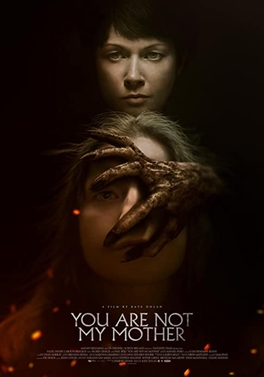
I really don’t want to give too much away as this is a movie well worth watching.  It satisfies an October itch.  It’s also a fine example of both “elevated” horror and folk horror.  Although filmed in Dublin, the landscape—particularly the river, plays an important role in the story.  The film even helps us out by having a museum tour explain what liminal spaces are and although much of the action takes place indoors, these outdoor places are essential.  There’s an awareness of landscape and what it implies regarding the Otherworld.  As with much intelligent horror, there’s little bloodshed but plenty of tension.  And the moody atmosphere of overcast Irish skies makes it possible almost to feel the chill in the air.

The families shown in the movie are working class, which adds to their emotional resonance.  Houses are lived in and not spic-n-span.  Work provides enough to get by but not much else.  In a strange way, having the Otherworld break through in such circumstances isn’t all that unusual.  Here is something to anticipate, to look forward to.  Something that might lift you out of the mundane workaday life.  Folklore began long ago and served a similar function, I suspect.  Surviving is difficult work.  Even the tradeoff in modern times of giving most of our waking time to our jobs is a reflection of this.  It’s not difficult to believe that there’s something a bit more stimulating, if dangerous, out there.  Something we want to avoid but that we can’t help but be fascinated by when we encounter it.  Horror offered by women directors is often thoughtful in that way.  You Are Not My Mother will help to set the mood for Halloween, as it’s done in the old country.  In its own way, it’s a changeling.

Mabon

Given the immense popularity of Halloween, and the attention lavished on the solstices, it’s a little odd that Mabon is so infrequently observed.  Unlike its twin, the Vernal Equinox, the Autumnal Equinox has really only recently been added to the natural calendar observed by Wicca.  The ancient Celts, from whom many Wiccan traditions are drawn, celebrated Samhain, which became our Halloween.  Their other holidays divided the year into seasons, but perhaps the Autumnal Equinox was a little too subtle to merit much attention.  Or it simply fell between their own four-fold divisions of the year.  Starting today, however night will be longer than day, a situation that will last until the Vernal Equinox.  In other words, we’ve entered the dark half of the year.

As someone who enjoys horror, I often ponder the benefits of living in the dark.  Theologically the dark is often cast as evil compared to the light.  We have taken that metaphor and made it literal.  This makes sense, I suppose, given our natural fear of the dark.  The only real predators in the night, however, are now of our own kind.  The dark can also be peaceful, a time for contemplation.  One of the things adulthood has on offer is disrupted sleep.  Many of us find ourselves awake at some point in the night.  We need to become comfortable with it.  I’m not a Wiccan, but I appreciate the naturalness with which Mabon acknowledges the fact that half the year is darker than the other half.  It’s also a harvest-themed holiday, one of the many that stretch to Thanksgiving and on to living off the stored supplies through the winter.

No doubt there is some melancholy associated with Mabon.  The lessening of the light brings a chill with it.  Summer’s ease is at an end and we will need to start layering our clothes and adding blankets back on our beds.  Already it is dark when I begin work, which means the brightest part of the balanced day and night is spent indoors at the computer.  I will need to leave the harvest, so obvious in the fast-approaching October, to others.  Mabon and Halloween aren’t company holidays, but that fact won’t stop the encroaching dark.  There’s a wisdom associated with acceptance and even melancholy can been sweet.  The leaves, while still mostly green, have begun to turn.  The bright songbirds of summer have given away to ravens and crows.  We need to learn to walk in the dark again.  Perhaps it’s time to consider what Mabon can mean.


Being Equal

With all that’s been happening lately—as 2020 shudders along—we find ourselves at the equinox.  For some of us the weather has already been unseasonably cool, feeling like mid-October rather than September.  It stands as a reminder that the wheel of nature continues to turn, despite human foibles and plans.  Some trees have begun to sense the change and have started their winter fast while others keep their green to suck the last possible sugar from the sun.  Days have been getting shorter since late June, of course, but now the drama will increase until the winter solstice has us in the dark for much of the time.  It all depends on where you live, but for me the temperate zones have always been home.

I suspect our various predilections toward the oughtness of the world depend in large measure on what we experienced in childhood.  I knew winter before I ever experienced summer and the transitional seasons have always been my favorites.  The idea that we can take more time and reflect, it seems to me, mirrors what happens in autumn.  It’s cooler, so we spend time indoors a bit more.  Some years that doesn’t kick in until later, when the heat is on and there’s a coziness to a house that’s been left to nature’s fever all summer.  Windows are shut and locked.  Artificial warmth reminds us that we can find some solace inside.  Meanwhile the trees show us the proper way to face harsh conditions, and yet half a year from now we’ll be eagerly watching for buds.  The Celts, temperate zone dwellers, thought of this change as the wheel of the year, slowly turning.

From where I sit in my study, with south and west-facing windows, I watch the path of the sun.  Having worked in a cubicle with no outside windows for years, I was always disoriented at the end of the day.  Now I can watch and begin to understand.  The difference is really striking if you have a single place from which to watch it unfold.  The sun is so much higher in the sky in July that it’s evident we’ve entered a new phase now.  Instead of being overhead at noon, the shining orb rolls more to the south, sending blinding rays directly through my window.  When it reaches the west (where it will, before long, sink before touching that window) I know the work day is over.  It’s no wonder our ancient ancestors kept this transition with holidays we’ve long sacrificed to capitalism.  I can still, however, see the changes and appreciate them for what they are.