Powerful Movies

PowerOfMoviesOur friends were shocked. I don’t even remember the title of the movie, but they couldn’t believe we had gone to see it. Not because of the content of the film, but because it had been shown on a Sunday morning. Why hadn’t we been in church? This was back in Edinburgh when we had very little money—wait, we still have very little money. This was back in Edinburgh, and we had won free tickets to an early screening of a new movie. The showtime was on Sunday morning. So in our own version of weak-willed athletes from Chariots of Fire, we’d skipped church to go see the movie. I don’t remember the title and I remember very little of the film. It had something to do with Richard Wagner and a conductor. An art film. We didn’t really feel too guilty missing church to go, since at the time, it seemed like a rare opportunity and the movie was, in some sense, religious. Or at least mythological.

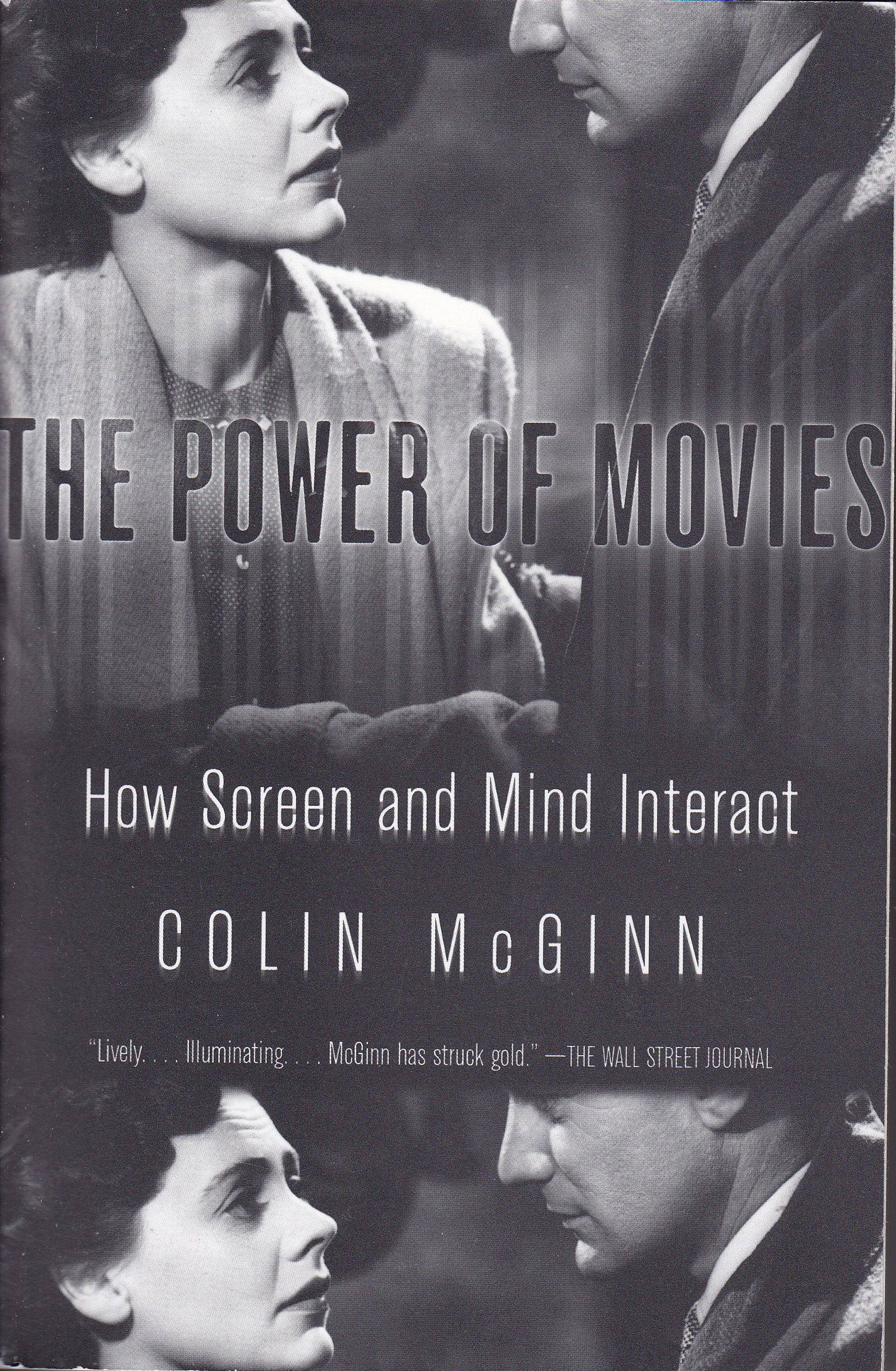
Movies have a way of really influencing people. Thus it has been since the invention of the art form. We’ve all had the experience, I suppose, of a movie hitting us with a profound impact. It never really occurred to me to ask why. That is, until I read Colin McGinn’s The Power of Movies: How Screen and Mind Interact. I’d always thought that movies were simply a successful form of entertainment, and scholars seldom take entertainment seriously. As McGinn makes clear, there’s a lot more than casual watching going on when we slip into the theater. As a philosopher, McGinn is duty-bound to look beyond the obvious. Time after time in this profound little book I found myself pausing to consider the implications of what he says. Ultimately, he suggests that movies access the same areas of the brain that dreams do, not only giving them dreamlike qualities, but also making films emotional experiences like dreams.

At one point, McGinn draws explicit connections between going to church and going to a movie. Beyond the superficial aspects of a darkened building with a performance meant to impact a person, there are clear parallels between going to the theater and going to church. Both can be transformative experiences. The Power of Movies is a powerful little book. As much as we like to think that we have custody of our minds, the realm beneath the surface—that which gives us dreams and syncs with movies—has more influence on us than we’d generally like to admit. More and more, scholars are beginning to realize that films do have a profound impact on viewers. This is not just entertainment. It may not be worship, but after reading McGinn I think it might not be too far from it. The mind able to dream, after all, is a mind that’s truly free.


Bonnie the Brave

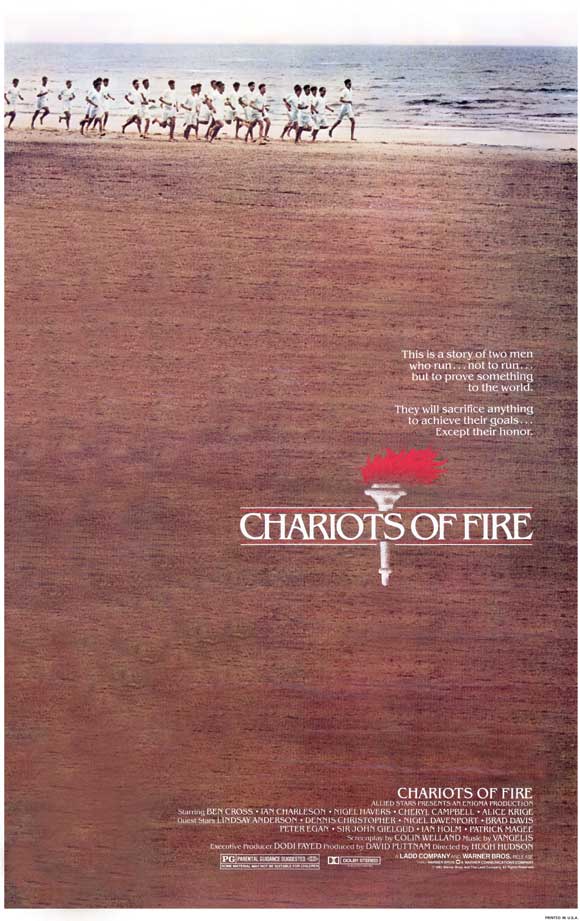
As a preemptive warning to my regular readers (am I’m sure you both know who you are), I am off today for a stint in my old haunt of Scotland. Before you get out your congratulations, be advised that this trip is for work. The Society of Biblical Literature, in addition to the big meeting about which I sometimes post, holds an international meeting every year. Since my employers frequently want me out of the office, I am being sent to the fair city of St Andrews in the kingdom of Fife for a week. Although I studied across the Firth of Forth in the wondrous town of Edinburgh, I ventured to St Andrews a time or two during my postgraduate days. By that time anyone in tune with popular culture had seen Chariots of Fire, and it was almost a requirement of credibility to visit the famous beach on the North Sea where the actors iconically ran as the movie began. And as in Chariots of Fire, I’m not sure that wifi access will be readily available. Should I find access, I shall gladly update my blog with my customary observations. If I fall silent, you’ll know why.

Scotland had a tremendous draw for me as I was contemplating where to complete my studies of religion (as if one ever can). Not that I was Presbyterian, and not that I have Scottish ancestry (although Celtic is represented in the Irish stowaway on my father’s side a few generations back)—it was the antiquity that drew me. One of the mysteries, to me, of new religious movements, is how people can believe in a religion that recently began. Should there be a supernatural, I’ve always supposed, and should that supernatural be concerned that humans have the truth, why wait so late in the story to start? It was such thinking that drew me from Methodism to its estranged parent, the Episcopal Church. Among the Episcopalians are many who argue for a continuity with the Catholic tradition, separated, literally, only by a matter of divorce. And Catholics go back to Jesus himself, a member of a religion so old that even the Romans grudgingly respected it (Judaism). I guess I’m guilty of old-school bias.

Kim Traynor's Edinburgh, from Wikicommons

Kim Traynor’s Edinburgh, from Wikicommons

So it was that I came to spend some years among the Presbyterians at Edinburgh University. The Ph.D. that I earned there translated to an unfortunately brief career doing what I’m best at—teaching. My tenure at Nashotah House never offered the opportunity to travel back to Scotland, or even England with its Anglicans. And as I prepare to board a plane across the Atlantic, although strictly for work, I can’t help but to reflect on those years of intensive learning, hoping to do my Scottish alma mater proud. And returning to the States to have my career shipwrecked on the rocks of unforgiving religious dogma. It may be that once I’m back among the heather and thistles, I may cast my laptop aside and try to claim religious asylum in a past that I can only see through rose-coloured glasses.


The Sign of Jonah

The Sign of Jonah?

Each year during the spring semester my Prophets class brings new levels of fixation on those familiar characters that so few actually know. The process began early this year. With several students of eastern Christian persuasion, Jonah became an issue based on the folkloristic nature of the tale. Jonah is particularly prone to a literal interpretation because of the “sign of Jonah” trope cited by none other than Jesus himself. Also, as I learned in my doleful days at Gorgias Press, many eastern Christians understand Jonah as a special favor to them, sent by Yahweh well before Christianity began. Even with the full weight of history against them, the students are unwilling to relinquish Jonah to his native literary genre. Then came Isaiah.

Isaiah is the most heavily co-opted prophet in the canon. Well, one might put Elijah in the running, and it would be a Chariots of Fire finish I’m sure, but as the most quoted prophet in the Christian Scriptures, Isaiah would come out on the Liddell end. So massive is this sense of ownership that Isaiah’s direct prophecy concerning the Syro-Ephramite Crisis in 7.13-17 is incapable of being understood as anything other than a prediction of a virgin birth some seven centuries down the road. Interestingly enough, it is the literal sense of this passage that is generally overlooked in favor of a later interpretation.

Even the sense of what prophecy was in the ancient world has been altered to an unrecognizable jumble by later agendas. Prophets spoke out regarding current issues (“the two kings you dread”), occasionally providing future, generally conditional, remarks. In our apocalypse-hungry society, pundits are eager for the culmination of all things and the more fireworks the better. If old Jonah and Isaiah were sitting together in a bar I can imagine the stories they’d exchange. And it wouldn’t be a whale (excuse me, “big fish”) that would be doing most of the swallowing.


Flaming Chariots

Religion is a demanding taskmaster, often completely at odds with the lifestyles of even its most staunch practitioners. Having spent my entire lifetime trying to understand it, I marvel at its imperiousness. In a story reminiscent of the unlikely hit film of 1981, Chariots of Fire, a recent Verizon human interest story highlights how religion sometimes impedes people, particularly children, from achieving what they may believe God put them here for. The story focuses on aspiring gymnast Amalya Knapp, yet to see 10, who has been prevented from full competition potential because of observing the Sabbath. As the article points out, this is not an issue limited to Orthodox Judaism, since “She isn’t the only young athlete faced with reconciling her passion for sports with religious obligation. Experts say the issue arises in all faiths, in nearly every sport, and at all levels of competition.” In one of the great ironies of human psychological development, we have engineered religions to prevent us from reaching our full potential.

In a way that few can appreciate today, the Sabbath rest was originally an unexpected gift. Ancient people had no concept of a weekend, a harrowing thought for most frantic people today who live their lives for the brief respite from insanity that the weekend offers. The recognition that a mandatory day off might actually improve the human condition was as prescient as it was radical. Time off to improve productivity? Today we know it to be true. But the more a religion gives its adherents, the more it seeks to take away. The God who gives you that free time wants to take it back. It is not really your time after all. “I believe God made me for a purpose, but he also made me fast. And when I run I feel His pleasure.” So says Eric Liddell in Chariots of Fire. He will also refuse to feel his pleasure on the Sabbath.

Religions disagree on the fine details of why the divine put us here. They are united in the belief that such a reason exists, but the terms of the contract differ widely. For reasons that the divine alone can comprehend, many human activities are subject to heavenly hegemony. The classical Greeks called it hubris when a mere mortal excelled to a point that embarrassed the gods. In response a human who wanted the most out of life knew not to show the gods what you are truly made of. For even the kindest of gods are jealous of divinity. And as all religions repeatedly demonstrate, despite divine demands for us mortals to share, gods are in no way obligated by their own rules.