Star Struck

One of the coveted symbols of approval in my childhood was the star at the top of a paper. I watched in amazement (perhaps because they were so rare) when a teacher would inscribe a star without lifting her pencil from the paper. I thought I had never seen anything so perfectly formed. Of course, in my teenage years under the influence of Jack T. Chick and his ilk, I learned that the five-pointed star, especially in a circle, and more especially upside-down in a circle, was a satanic symbol. My childhood achievements had been, apparently, a demonic blunder. This fear of geometry still persists in America, as a story of a woman in Tennessee fighting to have “pentagrams” removed from school buses shows. The woman, who has received death threats and therefor remains anonymous, took a picture of the offending LEDs and has asked, out of religious fairness, to have the satanic symbols removed from the bus. The news reports are almost as tragi-comic as the complaint.

600px-Hugieia-pentagram

The pentagram, or pentacle, has a long history, some suggest going back to the Mesopotamians. (Uh-oh! We know how they loved their magic!) In fact, the symbol was benign in religious terms until it was adopted by Christians as symbolic of the “five wounds” (zounds!) of Christ. The symbol could also be used for virtue or other wholesome meanings. The development of Wicca began in earnest only last century, although it has earlier roots. Some late Medieval occultists saw the star as a magic symbol, and the inverted pentagram was first called a symbol of “evil” in the late 1800s. As a newish religion seeking symbols to represent its virtues, Wicca adopted the pentagram and some conservative Christian groups began to argue it was satanic, representing a goat head. (The capital A represents an ox head, so there may be something to this goat. I’m not sure why goats are evil, however.) Wicca, however, is not Satanism, and is certainly not wicked.

Symbols, it is sometimes difficult to remember, have no inherent meaning. Crosses may be seen in some telephone poles and in any architectural feature that requires right angles. The swastika was a sacred symbol among various Indian religions, long before being usurped by the Nazis. And the pentagram was claimed by various religions, including Christianity, long before it was declared dangerous by some Christian groups. There may be a coven in Tennessee seeking to covert children by designing and installing taillights of school buses, but I rather doubt it. School children feel about their buses as I feel about mine on a long commute to work each day. A kind of necessary evil. The truly satanic part, I suspect just about every day, is the commute itself. There must be easier ways to win converts.


Divergency

DivergentSelf-denial, no matter what its motivation, is a religious ideal. In its more extreme forms it becomes martyrdom, but most religions agree on the value of taking less for yourself so that others might have more. This has been running through my head since seeing the movie Divergent. I read and posted on the book some time ago, but having recently seen the movie—a fairly faithful adaptation to the novel—I was forcefully reminded that this is a dystopian parable. In the future, society is divided into different factions, based on a person’s predisposition. This is done to keep the peace, and the factions seem to get along until suspicion grows about the group called Abnegation. The Abnegation faction is moved by pity and compassion for others. They are the consummate self-deniers, not thinking of themselves to the point of limiting time they can spend looking in a mirror. Others are the focus. Naturally, those who see the utter selflessness of others wonder what they’re really up to. Suspicion grows that this group is after wealth, in the form of food, secretly stockpiling it for themselves. Nobody would give up for themselves so that others can have more.

As I watched the movie I thought about religious groups that preach self-denial. Granted, I’m only one person, but growing up that was the message I continually heard loud and clear in the teachings of Jesus, according to the Gospels. Deny yourself so that others might have more. The deeper I became involved with the church, however, the rarer I found such behavior. By the time I reached college, I still hadn’t figured out that religion had become an industry, like any other. A service industry, to be sure, but it still had CEOs and treasurers and, increasingly, political power. The political seduction of religion already had a history by the time I became aware of it, but I still believed that self-denial was at the core of true religion. Perhaps the factions I heard whispering around me were right. Perhaps there was something more driving all this.

In Divergent, the belief in selflessness leads to self-sacrifice. In many feel-good movies, this leads to an expected resurrection. Here the future is bleak, and the dead remain dead. There is a kind of resurrection as the Dauntless faction comes out of its stupor, but the movie leaves the viewer wondering if there is a future after all. Is there a place in the world for those who legitimately want everyone to share? I think that every time I find myself driving. Behind the wheel, selfish maneuvers that lead to little, if any, ultimate gain seem to be deeply embedded in those who want to get there first. Abnegation, it seems, is a danger on the road. Driving, it seems to me, is a real test of someone’s religious convictions. Perhaps it is that one has to realize that the vehicle in front of you contains another human soul. Or perhaps it is that the fragmentation of society has already gone too far and those who don’t take for themselves are not emulated, but consumed.


The Past of Education

Meanwhile on earth, I have been checking up on my colleagues at General Seminary. While I’m limited in what I’m allowed to say, an article last week on Inside Higher Ed indicated that a provisional readmission of seven of eight of General’s faculty is now in place. There will be mediation. People are especially good at recognizing patterns. Some years ago, a naive and overly trusting individual, I also participated in mediation. The faculty at a certain seminary had been turned over to Conflict Management Incorporated to learn that you need to make the pie larger before slicing it up. Everyone can get enough to be satisfied. Of course, that doesn’t mean you’ll still have a job after the dessert course. Power structures being what they are, no one willingly lets go. And we’ll do just about anything to get the media off our backs.

Seminaries are probably more important to higher education than anyone would like to admit or acknowledge. The impetus to gather and educate individuals began as a religious enterprise. The earliest universities were often founded for that very purpose, and even the great intellectual powerhouses of Harvard, Yale, and Princeton were originally established to train clergy. Religion and education have been inextricably tied together since the Middle Ages and even before. Ironically, these days clergy are often cast as backward and superstitious. When’s the last time a seminary faculty landed a robot on a comet? If you ever venture to a church door, however, often the denizen of the pulpit is seminary bred. And there is power here. The collective collections can support such splendor as the Vatican. The faithful, we know, are willing to give. With a little pressure.

The Protestant traditions, despite their power structures, never officially developed a doctrine of ex cathedra truth. It is actually a difficult concept to pull off when there are over 40,000 different denominations of Christianity, and many other religions besides. But we can insist that our clergy attend special schooling. We can pay close attention to those we hire to teach them. Not everyone can read a dead language. Anyone, however, can quote scripture (or at least look it up on the internet). Seminary professors must have advanced degrees and faithful hearts. A combination that may be rarer than a comet. And we will put those individuals into a power structure that dates from the Middle Ages and wonder why it no longer works. Somewhere out past Jupiter a human device sits on a comet. Meanwhile in New York City we’re just not sure we can trust these people with our future priests. People are, however, especially good at recognizing patterns.

IMG_1275


Huge or Not?

The word “refugee,” I recently learned, was originally coined to refer to the Huguenots. As the Reformation began to take hold in Europe, although mostly associated with Germany and Switzerland, many French believers left Catholicism and became known as Huguenots. Early modernity was a time when religious persecution was rather openly practiced (as it still is in parts of the world) and many Huguenots were forced out of their homeland where Catholicism was the state religion. The word used to describe these unfortunates was “refugee.” For whatever reason, the plight of the Huguenots has never really captured the public imagination the way that many groups of displaced individuals has. We seldom hear of Huguenots any more, but generic refugees are daily in our news.

800px-Print_entitled_Horribles_cruautes_des_Huguenot_en_France_16th_century

While it is hardly a mark of pride or accomplishment to have Christians persecuting Christians as the origin of the term “refugee,” the fact that refugees are becoming more common rather than less so should be worrying. Borders, all of which are artificial, no matter how high we build our walls, lead to closed opportunities. Every once in a while, I ponder the phenomenon that none of us has any control over where we’re born. We might be fortunate enough to find ourselves in an affluent democracy (so I’m told) or equally beyond our control in a repressive totalitarian military state. The ability to see things from another’s point of view is essential to the concept of the refugee. Can we imagine what it is like to be persecuted for religious belief? For being born female in a chauvinistic society? For being poor when money seems to be everywhere for those who know how to extort it? Have we no sympathy for those who find themselves conceived under trying circumstances? If it were me, I’m sure I would think differently about it.

Historically, and by the numbers, the Catholic Church has been by far the most successful form of Christianity that the world has known. Claims to the title of “Christianity” are hotly contested, but the continuity, in some form or other, has hung together for a couple of millennia. In times past, those who differed, such as the Puritans in England and Huguenots in France, were encouraged to leave. The world was plenty big enough. Were the borders of today erected in early modernity, the plight of the Huguenots, like that of many untolerated religious groups, might have been far more dramatic. Largely assimilated today, the Huguenots are not much on most people’s minds and yet refugees still regularly approach the borders beyond which a more humane life awaits. Religious persecution gave the world the word; could its opposite provide the solution?


Washed Out or Burnt Over?

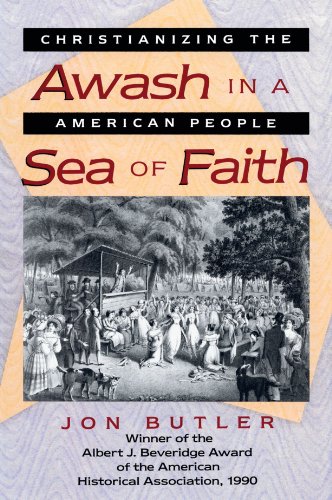
AwashInASeaOfFaithIs America a Christian nation? The answer to that question will no doubt raise ire in some part of the room. People, speaking mostly without data, will assert yes or no, generally based on opinion and sensibility. It is refreshing, then, to read what an historian uncovers by asking the right questions. Jon Butler’s Awash in a Sea of Faith: Christianizing the American People is a book that asks the right questions. On the surface, yes, colonial America was settled by disgruntled Christians from various religious conflicts in Europe. Actions, however, are notoriously louder than words. Butler examines church attendance patterns and affiliations among these early (and later) settlers and finds that they weren’t nearly so Christian as one might think, listening to the rhetoric. Indeed, for people struggling to survive in a new land, religion might well have been the last thing on their minds most of the time. Throughout the book surprising changes of perspective appear. When clear thinking is railroaded by political agendas the issues often become clouded.

A good example of this is Butler’s exploration of the survival of magic and occult traditions. It is not unusual to hear, anecdotally, that the Enlightenment did away with superstitious thinking. In fact, the data point elsewhere. Not only did Americans bring magic and occult practices with them from overseas, they actually continued to develop them in the New World. At times these beliefs substituted for congregational religion. At others, they subsisted alongside it. There was a “sea of faith” here, but it wasn’t always very orthodox. It wasn’t until fairly late in the history of the country that church attendance could be considered the norm. At the same time, many read back into history that “we’ve always been like this.” Not so.

The “myth of the American Christian past” was born out of wishful, and one suspects, political thinking. The country’s founding by Deists led to a fear of Deism—a fairly new phenomenon that descended from that self-same Enlightenment. Still, America could give birth to Spiritualism and a host of new religions. Perhaps it would be more accurate to think of the United States as fertile soil for religions rather than a Christian country. Certainly, by the numbers, Christians have been in the majority since statistics were kept, but, if the anachronism may be pardoned, the “nones” are not a new phenomenon. They were previously just those to be converted. Through much of history, we’ve been a people who didn’t think too much or too deeply about religion. Only when the issue really became politicized did the past become distorted. We have Dr. Butler to thank for providing a clear view into what history actually reveals.


Viking Trail

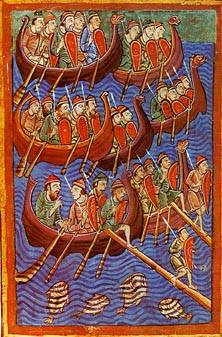
History is a powerful elixir, capable of transforming sinners to saints with the mere passage of time. Well, calling Vikings saints may be a bit of a stretch, but still, they have become some of the sexy bad boys of the Middle Ages, and with the finding of a Viking horde in Scotland last month, they are in the news once again. Vikings and monks were kind of like medieval dogs and cats. Monasteries, located in lonely regions, often amassed wealth and Vikings, looking for loot and less scrupulous about bloodshed, were eager to take it. The give and take (literally) of this violent lifestyle involving seafaring, battles, and churches, makes for good ancient drama and much of it took place along the coasts of Scotland. Our Scandinavian scourge, however, didn’t stop there. It is well established that the Vikings made it to North America well before Columbus. Those who don’t dismiss the Kensington Rune Stone also claim that the Vikings reached Minnesota long before football ever did. Whatever the reason, we are fascinated with Vikings.

Wikinger

Perhaps they are the ultimate autonomous self-promoters. We all would secretly, at least, enjoy being able to set our own standards so that they favored us and our loved ones. The Vikings represent the flaunting of the rule of law, traveling far to take what they want by force. And, perchance, leaving a bit of treasure behind as well. The Vikings became Christianized and the slave trade (long before the New World caught hold of the idea) was effaced to the point of becoming uneconomical to them. Nobody is certain why, but the Vikings, probably for a variety of causes, ceased to be the terror of the seas. Now the Scandinavians are considered among some of the most literate peoples of the world.

Along with the decline of the Vikings, however, also came the fading of the monastic cultural hegemony. To be sure, there are monks and nuns still today, but the force with which they gripped the medieval imagination began to decline with the Protestant Reformation and the recognition that vast wealth, even if cloaked in poverty, is still vast wealth. Now the finds from both monasteries and Viking sites constitute historical treasure. Information about a world long gone. The underlying idea, however, is never very far from the surface. We may lay claim to post-colonialism, but powerful economies have a way of getting what they want in the way of trade treaties and tariffs in any case. When a Scot finds a Viking these days, it is a cause for celebration as we let bygones be bygones and cut the humanities curricula nevertheless. The Vikings never really disappeared.


Centuries and Millennia

This past week I had a look at Christian Century. It has been about a century since I’ve read it, so I noticed quite a few changes in that time. Magazines in general, I’ve noticed, have been on a weight-reduction program. They are thinner and more direct than they used to be. Also, the last time I looked at Christian Century, perhaps in my college days, it was still assumed that Christianity was the dominant paradigm for American society. Church attendance wasn’t stellar, but it seemed pretty solid. In my town, in any case, pretty much everything was closed on Sundays. There was a sense of status quo ante, perhaps it was just that social changes of the sixties and seventies were taking a while to settle into the cracks. My college town was pretty far from the forefront of theological, or even social developments, and enough other places must have still been as well. There was no denying that you had great odds of finding Christians, self-professing, in places outside the halls of government.

Christian_Century_Dec_2010

It was almost sad that Christian Century felt so diminished. Inside I was surprised to see so many ads and reviews concerning themselves with secularism and/or atheism. Attempts to understand, or convert, were the foci of seminars and books. Get things back to the way they used to be. A century ago. One gets the sense that subscriptions might have slipped a bit. The consensus is breaking up. Too much information—too many choices. People aren’t sure what they will choose after all. The Christian Century seems to have been the nineteenth or twentieth. We are sadder but wiser.

It could be that I’m misreading this whole thing. After all, a couple of the articles were written by big name scholars teaching at big name institutions. One of them, however, is admittedly not a Christian. Those who are are, it seems, trying to learn about this sea change that happened around them while they perhaps supposed everything was progressing as normal. Growing up where I did, I know that I was unaware that people could not, in great masses, not go to church. That other religions were not but minor blips in an otherwise uniformly Christian country. Considering the posturing of many televangelists, I’m not the only one who thought so. It may be that another Christian century is to come. Or even a millennium. Until that happens, however, the institutions that look backward instead of toward a future approaching very fast will feel, I suspect, that a century quickly slipped by and left them wondering in its wake.


Water Flowing Underground

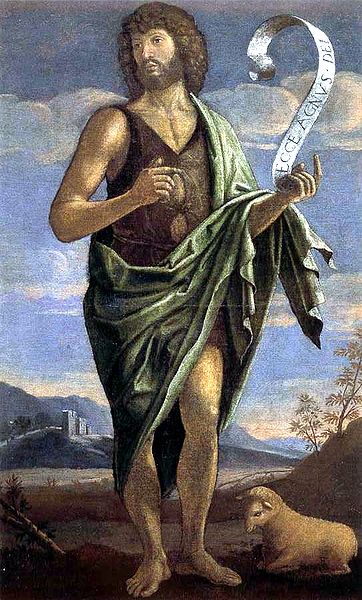
One of the most compelling characters of the Bible is John the Baptist. Unconventional and non-conformist, he speaks with unquestioned authority based on pure conviction. Baptism comes in many forms. When we moved our daughter into her dorm room, we found water from the HVAC vent dripping on her bed. I’ve been similarly baptized on NJ Transit buses in the summer when the condensation gathers just above my head. (Of course, being on the bus, I’m always hoping that it’s only water.) Considering how well HVAC contractors seem to be paid, it is always a wonder to me that little things like leaks can’t be sought and settled. Water always seeks the lowest point. In baptism a person is plunged even lower, beneath the water. It’s kind of like drowning.

John the Baptist with the number of the HVAC guy

John the Baptist with the number of the HVAC guy

I was baptized in a river (or a creek that passed for a river in my part of Pennsylvania). Our church didn’t believe in infant baptism, so I was old enough to know that I was to be held under the surface for a second or two—a frightening prospect for a non-swimmer like me. It turned out alright, as these things generally do, and my ten-year-old sins were washed away to be somebody else’s problem further down stream.

The origins of baptism are somewhat of a mystery. Many religions include purification rituals, including Judaism. Judaism, however, never seems to have taken ritual washing to the level demanded of John the Baptist. Even he had a rather tepid view compared to that of later Christians who made salvation without it impossible. It is perhaps the implicit admission of shame, or possibly the public spectacle of it all that makes it such a rite. Being rained on in the presence of a priest doesn’t count. Nor does, in some traditions, a mere trickle on the head. The victim must be cut off from the air above. Religion does insist on a fair bit of threat for believers as well as non. And so the water drips. Of course it’s a holiday weekend so they can’t get the maintenance guy to fix it until at least Tuesday. As we wait we know that the water will always continue to seek the lowest point.


Men Without Hats

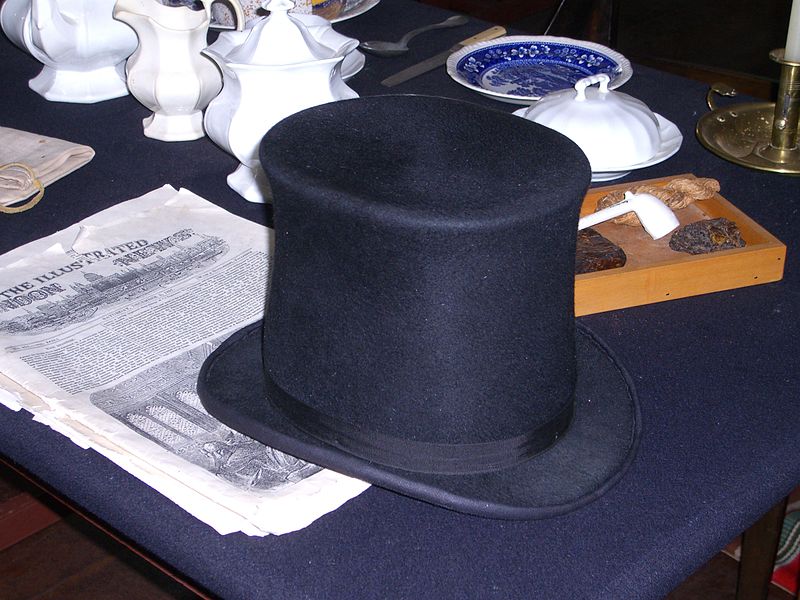
Do you want to start an argument? Mention hijab in a Christian environment. Some tempers will likely flair. The idea that a patriarchal religion would tell women to cover themselves suggests something sinister, doesn’t it? The other day I came across headcoveringmovement.com. There are, as I have come to know, many Christian groups that consider Paul’s directive for women’s headwear as, well, gospel. Commentators still spar about why Paul insisted that women cover their heads in worship. Adding “for the sake of angels” only evokes more convoluted imaginations. As any stroll through Manhattan will reveal, many Jewish men also observe head covering. What is it with bare heads, gods, and angels?

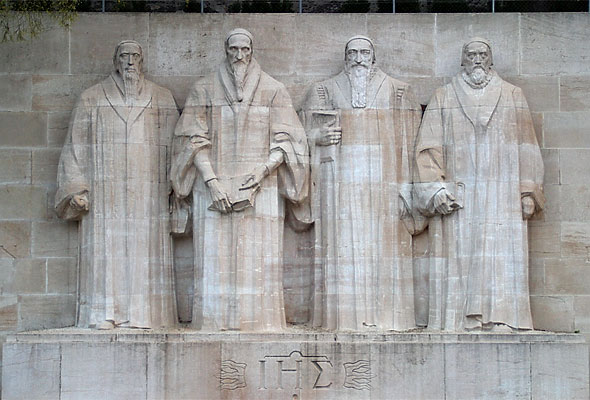
No doubt, in cultures where men are expected to restrain themselves less than women, hair can sometimes be seen as sexually provocative. (I’m not excusing, just observing.) Most men will eventually experience nature’s tonsure in some form or another, and perhaps this knowledge makes feminine hair more alluring. None of this, however, answers the question. What is so hubristic about uncovered heads? I’m not authorized to speak about fashion, but I feel confident in asserting that in many periods of human history, hats were the norm. Look at old portraits. What did Martin Luther or John Calvin look like without their ubiquitous hats? Did they serve to cover bad theological hair days? Or was it just the climate? Distinctive hats have been used to identify social classes and professions. We still use the expression “putting on my [chose a noun] hat.” So what’s all this with head covering for women?

“The wearing of fabric head coverings in worship was universally the practice of Christian women until the twentieth century. What happened? Did we suddenly find some biblical truth to which the saints for thousands of years were blind? Or were our biblical views of women gradually eroded by the modern feminist movement that has infiltrated the Church…? – R.C. Sproul.” So states Headcovering Movement’s homepage at the date of this writing. There can be little doubt about what’s behind this scheme. I recall a phase when my mother wore headscarves to church. Many years later, even in high church Episcopalian settings I’ve seen women walk in with what looked like lace doilies on their heads. Is there an agenda here? I can’t speak for Muslims, but it seems that Sproul believes the rightful place for a woman is beneath a man. Theology in the service of chauvinism. Just try to read 1 Corinthians 11 and come out without a headache. The saint’s logic here is so confused that I want to pull my hat over my eyes. Or I would, if I wore a hat.

Photo credit: Themightyquill, Wikimedia Commons

Photo credit: Themightyquill, Wikimedia Commons


To the Swift

Despite its generally secular reputation, one of the great charms of New England is its churches. I was forcefully reminded of this during my recent trip to Boston. Each city along the way boasts impressive churches that might be glimpsed even from the highway, and although there are now many taller buildings it is possible to imagine the days when the steeples stood over all. Boston’s historic churches remain stunning symbols of the power Christianity once held in this city. We first climbed off the T at Arlington in the shadow of the great stone Arlington Church. On the Esplanade the looming steeple of the Church of the Advent violently reminded me of the deep mysticism that drew me to the Episcopal Church even while I was a Methodist seminary student. Park Street Church, King’s Chapel, The Old North Church, the Old South Church, and finally Trinity Church in Copley Square invited us to gander and ponder. Almost like fossils, these churches remind us of the history of what made the city, or the nation, what it is.

Trinity Church lies nestled at the base of the John Hancock Tower, Boston’s tallest building. A blue glass Brobdingnagian, this prophet of capitalism represents the highest possible aspirations of our race, so we are led to believe. The material triumph over the spiritual. And yet the tourists stop to photograph the stunning church. It is on the street level, down here among us mere mortals. Upon closer examination, I noticed the statue of the tortoise and the hare in the plaza of Copley Square, the holy terrapin racing toward the sanctuary, it appears from my angle. It seems that I have unexpectedly received a kind of epiphany.

Look closely.

Look closely.

I first came to Boston many years ago as a spiritual seeker. In the intervening years during which I was attempting to find out what that might mean in a life that was intellectually honest, many bronze sculptures appeared in this city. The one commemorating Robert McCloskey’s Make Way for Ducklings, installed after I completed my studies at Boston University, would not have caught my pre-parental attention, as I had never read the book. Now you have to stand in line even to snap a picture. The work of local artist Nancy Schön, both “Make Way for Duckings” and “The Tortoise and the Hare” are part of Boston’s continual evolution of character. Officially, we are told, the turtle and rabbit are representative of the Boston marathoners who trudge the final feet past this church toward the finish line. To me, this sculpture suggests something more as the hare dawdles and the tortoise breaks toward the church. It may be a marathon, indeed, but the race, I remind myself, is not always about being swift.


Elmer Gantry

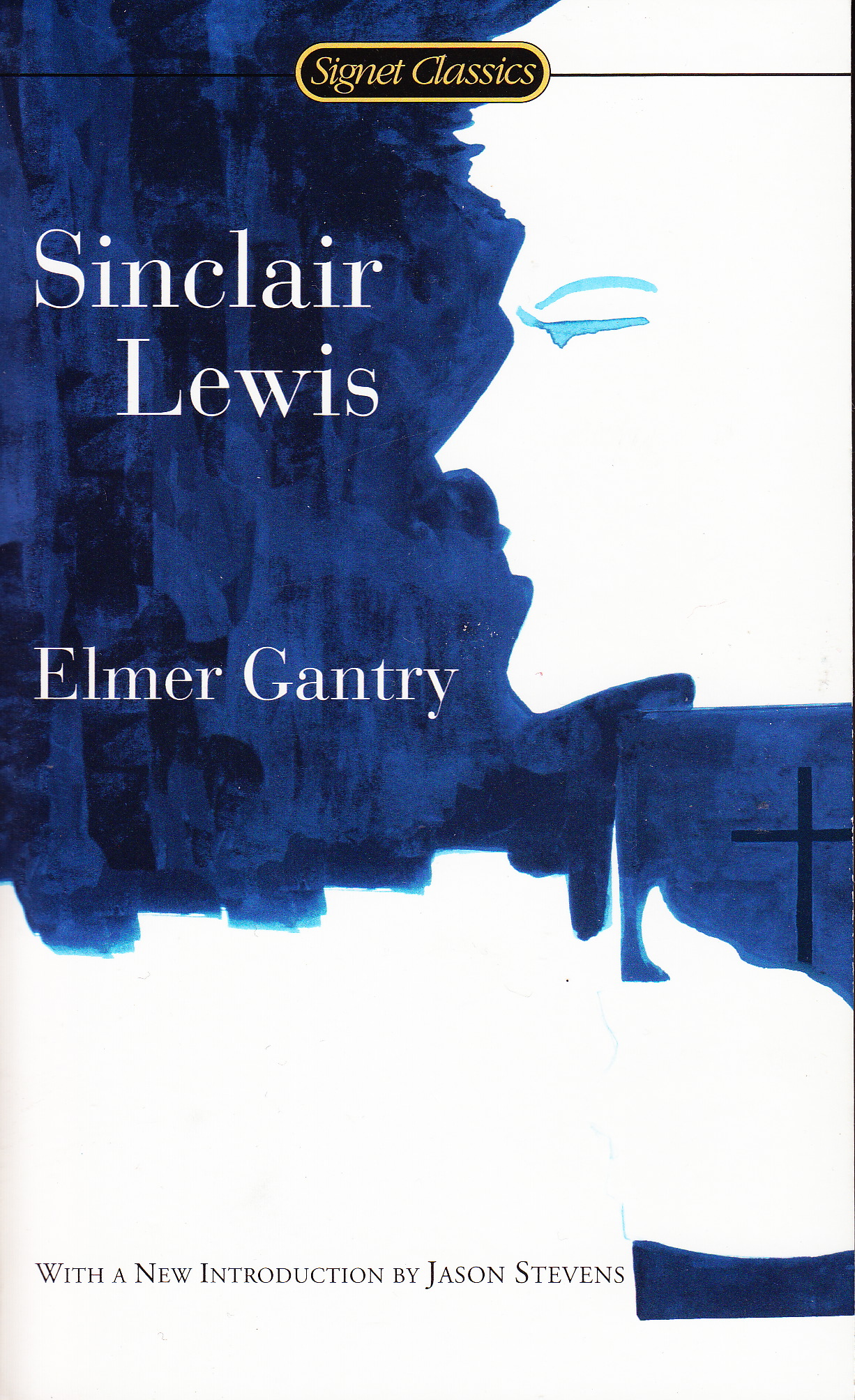
ElmerGantryIn recent years a renewed interest has arisen concerning how powerful entities are perceived by others. Academics are asking how the United States is seen by other nations. Corporations are trying to improve their public images because, well, let’s face it, it effects the bottom line. The same thing applies, but with a difficult kind of finessing, to churches. Part of the difficulty is that churches declare that they have the truth. Backing down from this in the face of public opinion more or less scuttles any claims being made. Thus I’d been curious about Elmer Gantry for some time. Sinclair Lewis’s novel of the self-absorbed, arrogant clergyman who believes in no god other than his own desires, is considered a modern classic. Written during the height of the follies of the Scopes Monkey Trial and Prohibition, as the Fundamentalist movement was just getting started, Lewis used dark satire to try to put the self-righteous in their place. I’d known the name Elmer Gantry from many other media references, so I figured it was time to see who he was.

Going into the novel I had few preconceived notions. Gantry, I knew, would be a hypocrite from the start, but beyond that, cultural references don’t give many hints. Although Lewis’s well-known wit shines through from time to time, on a whole the novel is a distressing read. I suppose it’s the mark of a great writer that you can despise a character so, but really, Elmer is led on his path, indeed, encouraged, by those who know him and whose only zeal is conversion for conversion’s sake. A womanizing, athletic, hard-drinking student, Gantry is where many young men want to be. The campus ministries, however, keep after him until he realizes what all clergy know at some level—there is power in being able to manipulate people by religion. As portrayed by Lewis, Gantry does try, once or twice, really to believe. His cynical and selfish nature, however, are too difficult for him to overcome and he therefore employs them in all his relationships as he climbs the corporate, ecclesiastical ladder.

There is really no triumphalism here, with the society discovering and ousting the charlatan. Indeed, as the book ends, the Reverend Doctor Elmer Gantry dodges a serious threat to his career only to be appointed to one of the most influential churches in New York, poised to go on to even greater things. Trying to find the blame in the novel, however, is not a simple task. Gantry is all too easily led. He follows his base desires deftly and confidently. He knows a mark when he sees one. Throughout his ministerial life, however, he is encouraged and prodded onward to success. Most ministers, in my experience, are burdened with conscience. I’m sure a few slip through with their own agendas, but the working clergy are nothing like the protagonist to this tale. Lewis focuses on the worst offenders. Those who are in it for the power, should they read Elmer Gantry, would find a model who is, like many in the era of early psychology and sociology, too easily excused because of circumstance. More than that, however, they might learn how they look to a larger society for which the church has become a mere historical curiosity. Elmer Gantry is by no means the worst type of figure we can imagine in a secular society.


St. Ghost

HauntedSouthernTierSince they combine two of my soft spots—local history and ghost stories—books telling the tales of home-town specters are compelling in a homespun way. On a visit to Binghamton, New York, I picked up Haunted Southern Tier by Elizabeth Tucker at the local bookstore (I have a hard time passing up an independent bookstore anywhere). Those of us at least a little familiar with upstate New York know that the southern tier is not strictly defined, but it is a recognizable section of the Empire State that runs just north of the Keystone. I was drawn to the book by Elizabeth Tucker’s name; she is the author of Haunted Halls, a book I reviewed earlier on this blog, about college campus ghosts. These local travel guides tend to focus on the weird and whimsical, and aren’t meant to be taken too seriously. Nevertheless, the connection between ghosts and religion is tangible in just about any part of the world, no matter what one believes.

This fun read brings a number of explicit religious points to the surface. One involves the strange phenomenon of haunted churches. Given that many varieties of Christianity offer Heaven as a reward immediately following death, having a ghost hanging around a church seems strangely disingenuous. Perhaps that’s why few churches admit to such things. Another interesting tie-in to religion comes in Tucker’s section on roadside ghosts. Stories of spectral hitchhikers are quite ancient, but I had never considered them biblical. Tucker mentions one such instance in the Book of Acts, and upon reflection I realized that she may be onto something. The account of Philip converting the Ethiopian eunuch is one of the odder tales of the early Christian movement. Philip explains Isaiah’s prophecies to the chariot-riding dignitary who gives him a lift, and baptizes the visiting Ethiopian before mysteriously disappearing. Could this be the prototype for the vanishing hitchhiker folklore theme?

Perhaps the most serious of the religious connections in the book, however, has to do with St. Bonaventure University. For those familiar with Thomas Merton’s life story, St. Bonaventure will not be unexpected. Merton taught at the school as he was struggling with his identity that led him to become one of the most renowned Trappist monks in the world—one who spoke approvingly of Buddhism, to boot. Merton is not said to haunt the university, but his presence there at one time has endowed this Catholic school with a sense of spiritual gravitas. The ghosts come from elsewhere.

Books on ghosts are a guilty pleasure with a serious undertone. End of life issues, once we move beyond the medical, are the unquestioned provenance of religion. Whether or not there are any ghosts out there, religion will claim the final word on afterlife. And only those who experience it will ever really know.


Two Roads Divergent

DivergentOne of the most hopeful signs for culture is the quality of young adult fiction on the market. Since I’m now in the book industry, Publisher’s Weekly is required reading. I always take a look over the fiction lists as well as the non, and over the past several months a couple of “teen fiction” books have been near the top for regular bestseller lists as well as for demographic-specific ones. (That is, adults seem to be reading them too.) One of those books is Divergent by Veronica Roth. While movie tie-ins certainly don’t hurt, as many of us opine, it is difficult to do justice to a complex story on screen. Divergent is one of those books that stays with you after you’ve closed the cover, and that suggests to me that something deeply meaningful is going on. What about dystopias is so compelling?

I’m not indulging in any spoilers to say that Divergent is a dystopia. Set at an indeterminate time in the future, civilization still exists—at least in Chicago—as society has fallen into five factions: Dauntless, Erudite, Candor, Amity, and Abnegation. Each group has its own beliefs as to why civilization collapsed, based on philosophical dispositions. Abnegation, the self-deniers, are the leaders of government. And clearly, the idea of Abnegation is a form of quasi-monastic Christianity. In fact, among the factions, Abnegation is the only one that seems to mention God. The other groups, stressing bravery, intellect, honesty, and peacefulness, don’t really have much need for the divine. To deny oneself, however, requires a powerful motivation. Even the protagonist’s name, Beatrice, is taken from its favored status among early Christians. I know little of Veronica Roth, but I have to wonder whether Dante is in the background here.

In the acknowledgements to the novel, Roth first gives thanks to God. As a high school convert to Bible-based Christianity, I suppose that’s only natural for a writer who is, at the moment, only twenty-five. Writers for young adults often have their religion close to the skin. Stephanie Meyer’s Mormonism translates into moral vampires. Orson Scott Card provides Ender Wiggin with values from the same faith tradition. People are, despite the logical implications, inherently religious. That doesn’t prevent Divergent from being a page-turner. Full of action and personal development, the first book of Roth’s trilogy bristles with self-sacrifice and belief in something better to come. Even if it’s a world we have to make ourselves. And like most human enterprises, it comes out as a well-meaning dystopia that underscores the value of reading for us all.


Singing the Truth

Attending a local high school choral concert recently, I arrived late. That’s fairly common since the bus from New York is often quite tardy—arriving forty minutes after the scheduled time is pretty standard. In any case, I joined the concert already in progress. One of the first pieces I heard was “Operator,” a number based on an old Manhattan Transfer song. Since my wife grew up liking the group, I recognized the song and yet it felt strange to have Jesus mentioned repeatedly in a public school setting. Music, by its very nature, however, often contains religious sentiments. The Doobie Brothers had, in the early 1970s—the height of a hedonistic age—done very well with a cover of “Jesus is Just Alright.” Jesus, after all, had been declared a superstar a couple of years before. I used to tell my students that the musical impulse is linked with the appearance of religion in very early human culture. Still, disestablishment reigns.

I know that a large Jewish population makes up a significant demographic at the school, and I often think about how the cultural supersessionism of Christianity must feel. Much of what became Christianity has deep roots in Judaism, and even Jesus was Jewish. Can a song be just a song? After a while Randall Thompson’s “The Last Words of David” was performed. No offense there, since the Hebrew Bible is recognized by both Jews and Christians. But what of those of other faiths? Don’t get me wrong—our high school has an excellent music program. I was just wondering how the music might be perceived in a multicultural world. We have Muslim and Hindu students, as well as secular. Is this just counted as mythology to them? The selection of music teachers would be far more restricted if all music associated with religious words or themes were jettisoned.

Affaire_de_Bizoton_1864

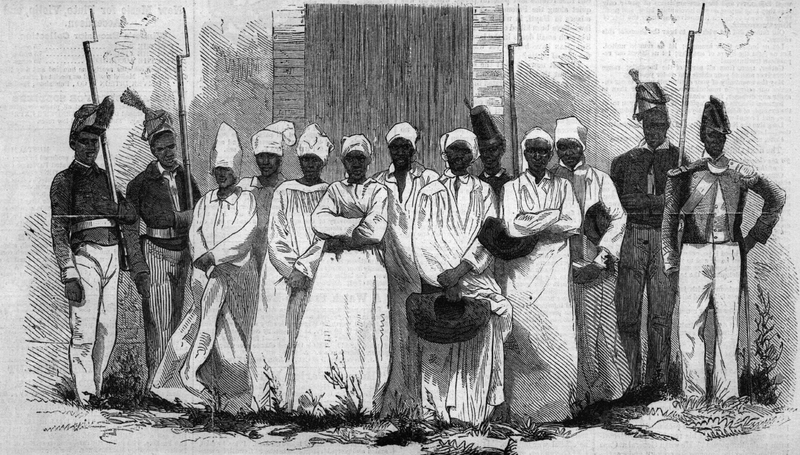
These were the kinds of thoughts milling about my head when the last song from a religious tradition came up: “Wangol.” This is a Vodou song. I was pleased and amazed that the “last word” went to an underrepresented religious group. True enough, Vodou grew out of Christianity’s interaction with traditional African religions, but it demonstrates just how eclectic both American religious culture and high school music concerts can be. Choosing the music for a secular choral concert in a multicultural setting must be a trying experience every single time. When we lived in Wisconsin, most concerts were unabashedly Christian in orientation. This is hardly surprising, I suppose, since choral music itself is often composed to express religious sentiments. New Jersey is a different world. I left the auditorium musing that Vodou is just alright with me, and just as plausible as calling Jesus on the telephone.


The Price of Flags

As a child, Memorial Day signaled the start of summer. Most of the time it announced that the obligations of school were nearly over and that was sufficient cause to celebrate. It was not until well into adulthood that I realized the holiday commemorated those who’d died in the armed services. I’d noticed the flags in cemeteries, of course, and we often visited the graves of civilian ancestors buried close enough to reach. The message did not penetrate my head, however, that all of those little flags should be telling me something. I grew up not knowing my father, but I did know he was a veteran. When all his children gathered for a (mostly) impromptu picnic yesterday, for the first time in well over thirty years, I realized how much of a mystery he was to me. At his funeral the flag on his coffin was presented to my older brother as part of military tradition, although he had died in peacetime, and pretty much isolated from all his progeny. It is a somber thought even now, although it was eleven years ago.

I have been a pacifist since my youngest days. Sure, I played with toy guns and G. I. Joe, but that was the culture of kids growing up during the Vietnam War. Only vaguely did we realize the actual horrors that were happening daily thousands of miles away. In my mind there was no reason to go to war. In Sunday School we were taught to settle our differences nicely, even if it meant that you had to be cheated or take less for yourself. This always seemed the central tenet of Christianity to me, and I wondered why the most conservative of Christian presidents seemed the most hawkish, the most ready to sacrifice the fathers, sons, brothers, and now mothers, sisters, and daughters of others for so little. The number of flags even in that little country graveyard where my grandparents were buried haunt me.

We still have members of the armed forces over seas. The military budget of one of the most prosperous nations on the planet is astronomical. We can now kill with drones so that we don’t even have to see the carnage we create. When did the lives of young adults become small change? I know it’s idealistic of me, and probably terribly naive, but I still can’t make sense of our cultural perception of how cheap human life can be. Maybe I’m just a little overly sentimental about a father I never really knew. But looking over my siblings, I see that he produced some nice, generous, and peace-loving children over half a century ago. And while we have our picnics and enjoy a rare day off of work or school, thousands of silent flags will be flapping in cemeteries all across this country reminding us that better ways exist to resolve our differences. If only we could take a holiday from war and violence we might see fewer flags and even more holidays.

Photo credit: Remember.

Photo credit: Remember.