Wassailing

It was a nippy 42 degrees with a chill January breeze cutting through the brightly garbed crowd of maybe two-dozen stalwart souls. There were Molly dancers holding hands and skipping in a circle. Smoke from a bonfire caught the breeze as a woman with a painted face sang about the circle of the sun. The whole event had a Wicker Man sort of feeling to it, but participating in an ancient tradition is strangely fulfilling. A basket on the table held pencils and paper on with instructions to write your wish and burn the paper in the bonfire so that “Your message will travel into the cosmos.” The bare apple trees were seasonally pruned and discarded branches littered the ground. It all sounds suitably pagan for a Sunday afternoon in New Jersey.
Having grown up in a rather sheltered small-town environment I never even heard of wassail until planning for my December wedding nearly twenty-five years ago. A low budget affair with the reception in a church basement, my wife decided not to offend Methodist sensibilities by serving wassail, a spiced cider drink generally associated with Christmas. As I learned this midwinter, wassailing has a deep and mysterious ancestry that is a mix of pagan and Christian traditions. One aspect of wassailing is associated with Christmas carols and is based on the tradition of the wealthy sharing with the poor during the holiday season (a practice clearly extinct these days). The second type of wassailing goes back to nature religion and the blessing of the apple trees. It was observed on midwinter, which, before the Gregorian calendar, fell on January 17. At Terhune Orchards the festival fell on the 29th this year.
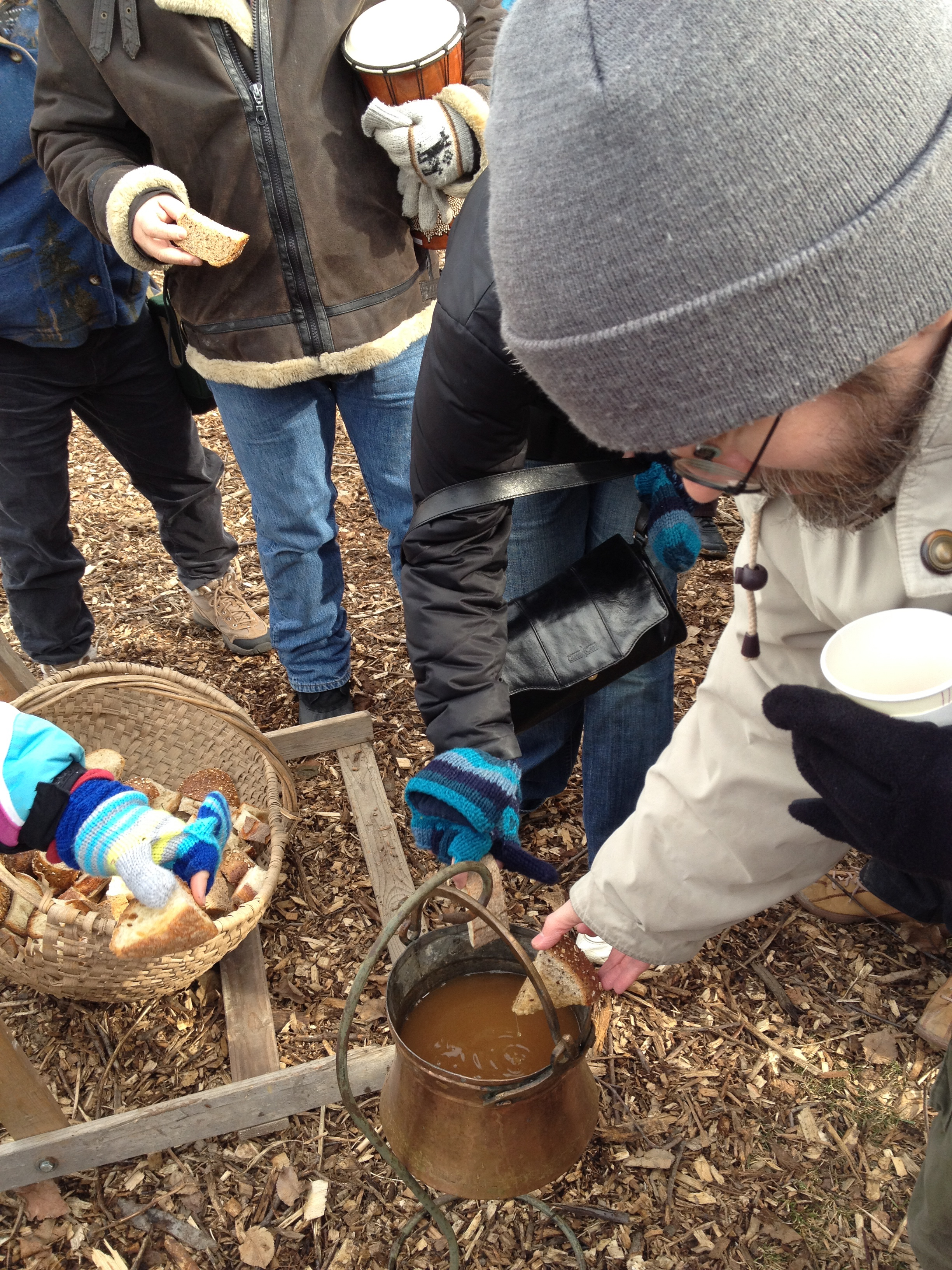
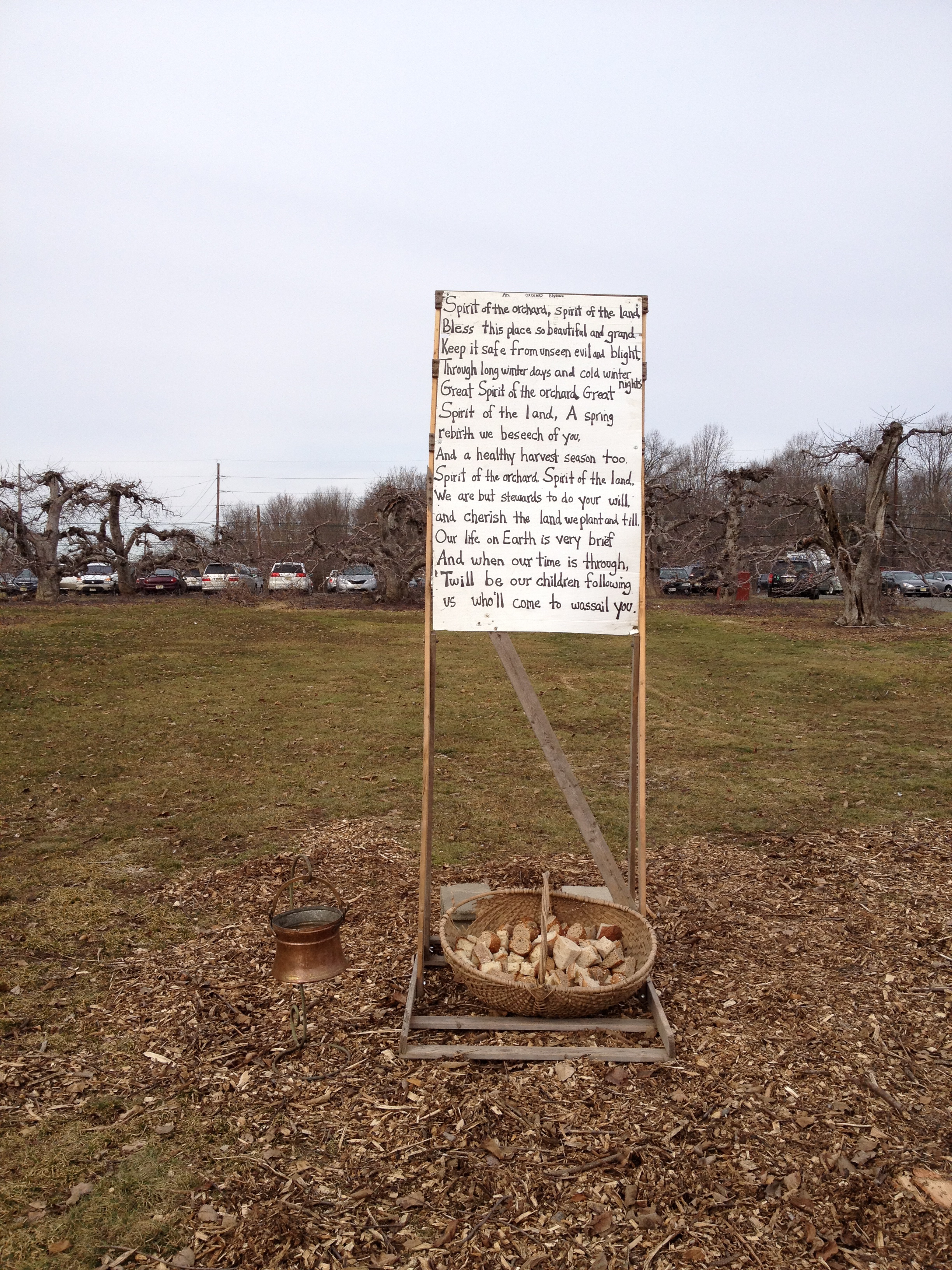
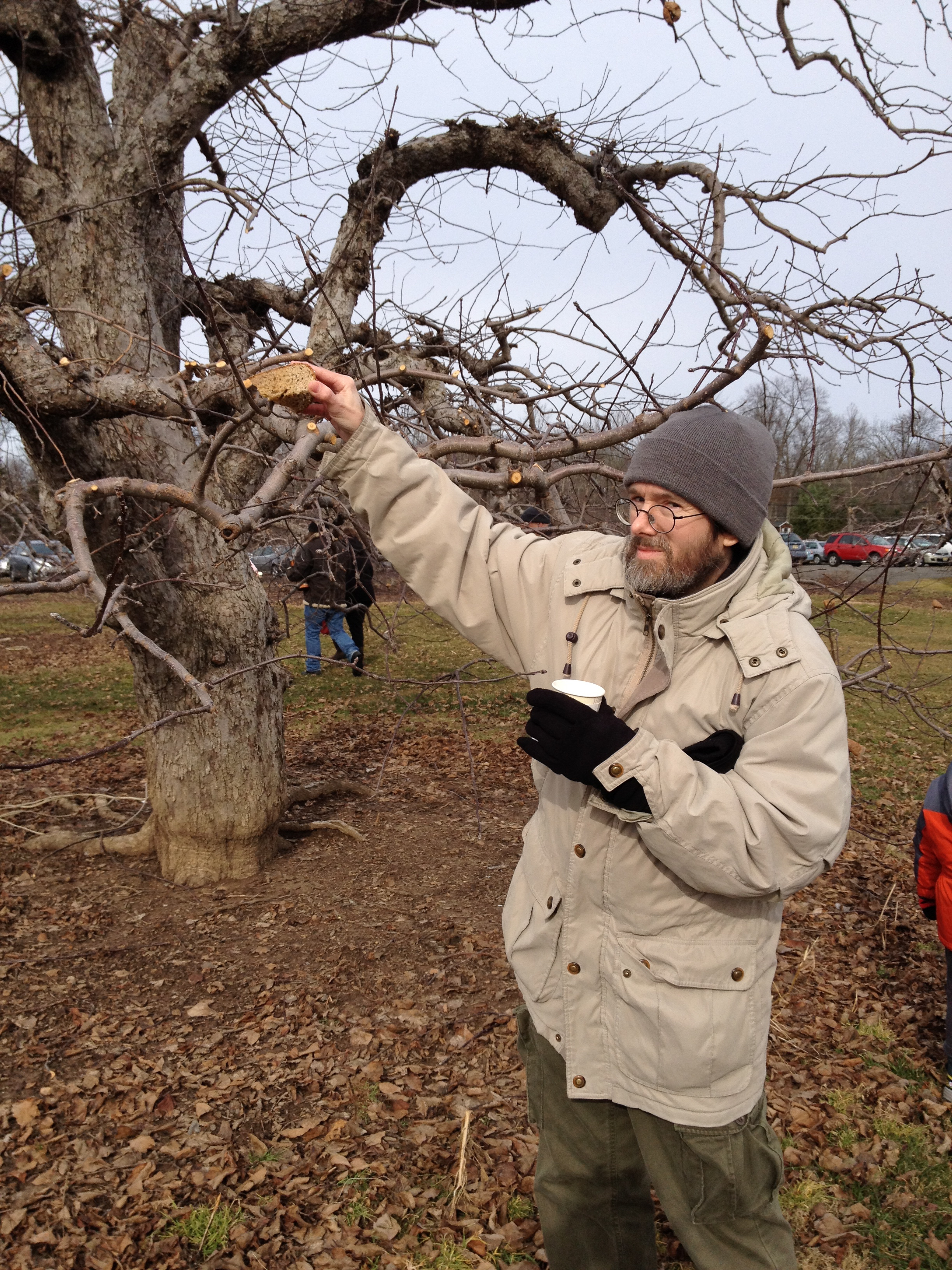
After watching the Molly dancers and sending our wishes up to the cosmos in the bonfire, one of the orchard proprietors gathered the crowd, now having about doubled to fifty, to sing the Somerset Wassail and then to make noise to drive out the evil spirits. This the crowd did with enthusiasm. We were then asked to recite the wassail prayer, printed on a signpost for all to see. Bread was passed out which we dunked in cider and hung on the naked apple trees. After a final blessing we headed to our car to preserve our own wassail. In England’s apple-growing regions, wassailing the trees is still practiced with a sincerity that marks the deeply mysterious. Some Christian sensibilities, I’m sure would be offended, but this ancient custom, like leaving a tree to stand in the midst of a plowed field to propitiate the spirit of nature, goes profoundly into human consciousness. I, for one, will lift a cup of cider and join the ancient rite to brighten a winter day.

Silent Might

Iowa is a state for reflection. For many years Christmas in Iowa was a family tradition, but living on the east coast makes such pilgrimages rare. On Christmas Eve in Ames, we drove past a Nazarene Church decked out for the holiday with a sign reading, “Jesus Came for You.” Perhaps I watch too many movies, but the images that came to mind were of Rambo and The Terminator—menacing figures who’ve sought out their victims for revenge. Coming for you was a threat rather than a promise. Who can forget Arnold’s “I’ll be back”? Was the child who came sent with a mission of punishment or of peace? To hear presidential candidates and other evangelicals tell the Christmas story, it is clearly the former—the Rambo of God who blows away the sins of the world—that we should expect. The Prince of Pieces.

That version of Christianity that likes to present itself as the default, the natural form of what the church has taught all these years, has a strong current of threat running through it. God never shows up unless there is a problem—an absentee father only too swift to remove his ample belt to begin a sound thrashing. Religion often thrives in the context of menace. Teaching that people are evil by nature and only good when under promise of Hell, such believers understand the coming of Jesus to be cause for fear and alarm. According to Luke, the angels began their message with “Fear not.”

How Christmas is understood reflects on the view of Christianity that believers choose. For the advent and arrival of an emissary can be cause for celebration or of fear. In some mangers the infant conceals a cudgel and woe to those who suggest equal treatment of all or a non-literal reading of favorite prooftexts. This time of year stands as an excellent test of what this child will grow up to be in the minds of his latter-day cohort. What arrival should we anticipate? If it is the Jesus of the politicians and evangelicals, we only have to look at the headlines to discover the answer.

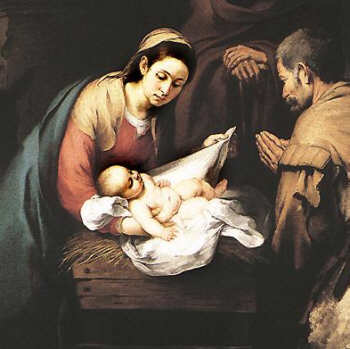
What child is this?


England’s Christian Gift

As much a part of the holiday season as Santa Claus and baby Jesus, the Salvation Army bell-ringers are out in full force. As I drop a quarter in the bucket, I ponder the strange lineage of this denomination. When the cheerful holiday shopper convivially donates spare change, few, I suspect, know that they are supporting a church. The Salvation Army is one of the bewildering number of denominations to spring from English Christianity. The Church of England, small in the United States, but imperial in much of the world, grew amid a religious unrest that spun off countless dissenters. We all know the story of Henry VIII and his not-so-merry wives. His political move to focus the official religion of England on the crown led to the Puritan resistance. Puritans left England for the Netherlands, and then on to America where they flocked to New England to develop into Calvinistic Congregationalists.

Meanwhile back in Amsterdam, some of the English Separatists evolved into Baptists. Baptists were also congregational in polity and also found the religious freedom of America to be appealing. (Now they select our elected officials.) The Puritans had helped develop the Presbyterian movement as well, with dissenters in Switzerland. Still at home in Britain, the Church of England waffled between Catholicism and Protestantism for some time. The evangelical fervor that emerged with the Wesley family led to the Methodist Church, which remained attached to the Church of England until its founder’s death. In America the Methodist Church grew rapidly. During the era of religious revivals the Adventist movement grew out of Methodism, as did the Church of the Nazarene, the Holiness movement, and Pentecostalism. All of them today are major denominations. Even the Anabaptists tip their wide-brimmed hats in the direction of the English dissenters. The Plymouth Brethren, inventors of the Rapture, were another English-derived denomination, as were the Wesleyan Churches.

What does all of this have to do with the Salvation Army? The Salvation Army was founded in London by a Methodist minister, William Booth, and his wife Catherine. The movement adopted quasi-military mythology and ranks, and soon grew into a church of its own that supported what would later become the Social Gospel cause. Known primarily for their charitable works, they are yet one more splinter from the tree of English Christianity. Perhaps the Christmas tree is an appropriate analogy for the Christianities to spring from Henry VIII’s loins. Like the pine’s many branches, each with its ornaments, Christianity in England sent its twigs in all directions. Counted together, the descendants of English Christianity far outnumber any other Protestant grouping. Just a thought to share while waiting for the quarter to drop.


‘Tis the Season

A news story last week related how a traditional park area in Santa Monica, California had been “taken over” by atheists who wanted equal time with traditional Christmas displays. The park, which houses 21 display areas generally populated by nativity scenes of one sort or another, had so many requests for space this year that a lottery was instituted—a lottery that the atheist groups won. Claiming 18 of the spaces, the atheists groups have vastly reduced the visibility of traditional Bethlehem mythology. Does anybody else feel a culture war coming on?

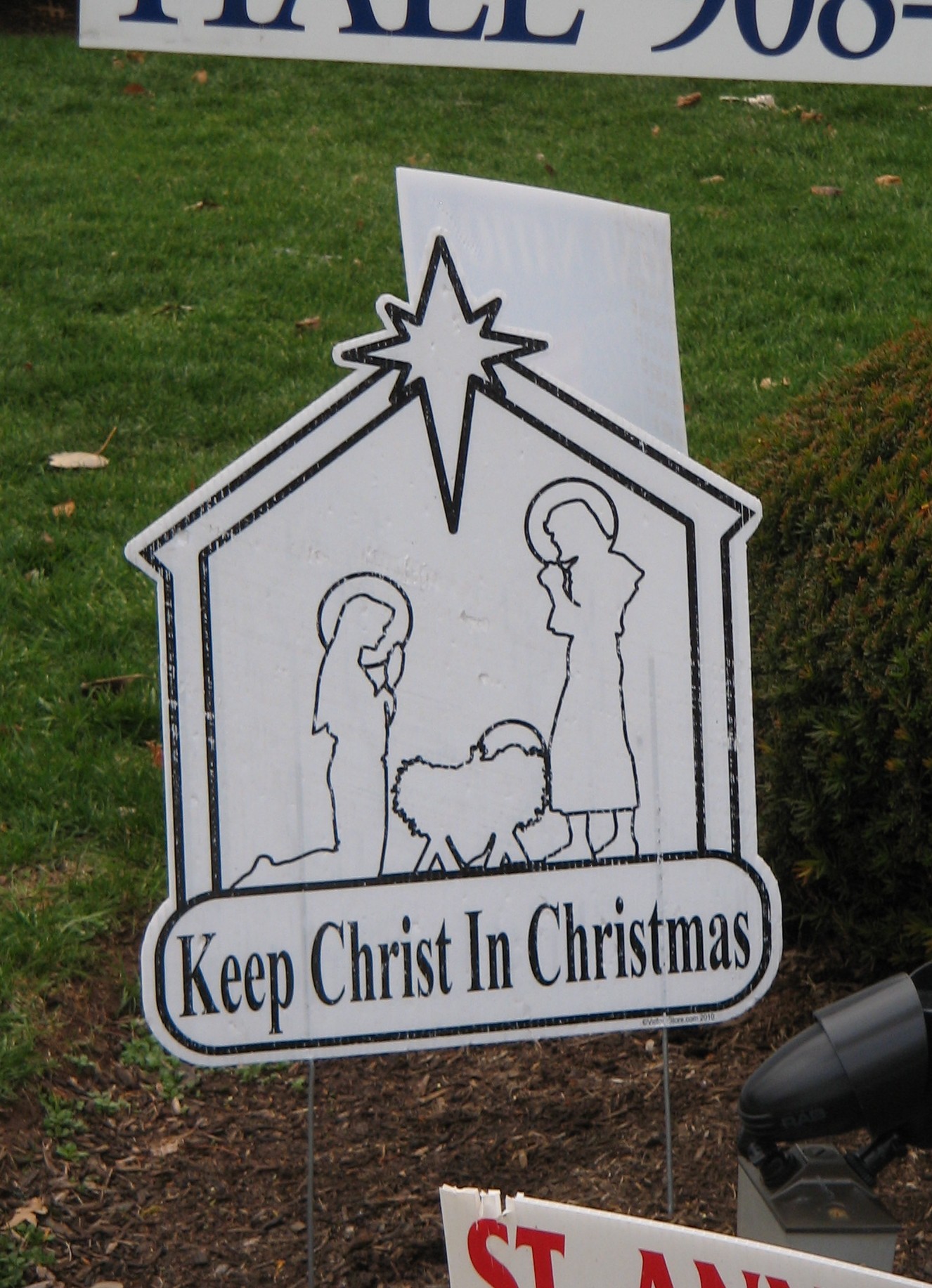
The whole “Keep Christ in Christmas” campaign that has been fermenting over the past decade or so has made many Christians paranoid. Society has forgotten, they claim, whose birthday we’re celebrating. A plain view of the facts, however, calls this assertion into question. No one bothered to record the date of Jesus’ birth. The stories about it, in the Gospels of Matthew and Luke, were written after a lifetime of reflection by people who were not eyewitnesses to any of the events. Historians of the era mention no celestial anomalies and there are no records of crazy old Herod killing babies among his own people. (His domestic affairs, however, may be quite another story.) What is absolutely clear is that the stories have grown with the telling. Many a child can tell you the names of the three wise men. Luke doesn’t even place them at the first Christmas, does not name them, and does not say there were three. No records of Zoroastrian migrations to Israel verify this story either.

The true loss is the loss of story. We live in a society that abuses the words “just” and “only.” That’s just a myth. That’s only a story. Ancient people—from the time of Jesus—appreciated the truths a story conveys. Consider the parables of Jesus. They cite not sources neither do they seek verification. They are only stories. They are also cited as the basis of many church teachings. Even atheists can be taught to appreciate the value of stories. Who could object to a myth advocating peace, harmony, and goodwill? Even if it’s just a myth.

Santa Claus might come to Santa Monica’s rescue. Yes, diehard fans of historical veracity will say there was a saint called Nicholas. We all agree that he didn’t wear red velvet trimmed in white and that he didn’t possess magical, northern latitude cervid stock. Even before the days of forced air heat he didn’t slither down every chimney in the world in one night. Few would dispute, however, the value of giving gifts of good will. Just ask any member of the Salvation Army who appear at this season every year. Instead of arguing about whom to exclude, why don’t we invite everyone to our celebration? Jesus, angels, Santa, Jack Frost, Heat Miser, and Christopher Hitchens—what a party this could turn out to be!

Is there no room in the manger?


Retrograde Hollow-days

Surrounded by the intoxicatingly ebullient aroma of balsam, it is difficult to believe that it is not yet Christmas. As 4-Hers decorate their wreathes, in November, I recall that the first signs of Christmas appeared in the stores before its unexpected cousin Halloween this year. In fact, stores hawking Christmas remain open year round. This retrograde motion of the holidays in time belies the very concept of the “holy day.” Ancients, and not-so-ancients, believed that there actually was something different about particular days. The trimmings and the trappings were secondary to the point of the day; something momentous had transpired on this very day, making it unlike any other. With the advent of industrialization and its unrelenting work ethic, holidays came to represent a kind of mini-exodus, a release from labor that falls outside the insufficient weekend. Leisure time encourages shopping. A modern holiday is born.

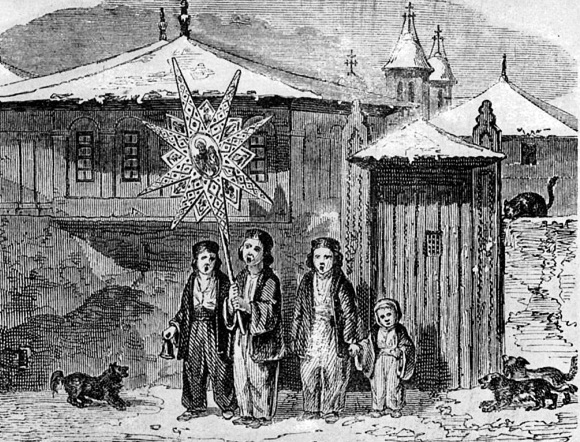
A child's Christmas in Bucharest

The increase in labor-saving devices has placed us in a twilight of leisure. Holidays can be anticipated many months in advance—gifts purchased earlier and earlier, until the holiday itself seems to pale by comparison. Moving retrograde into other seasons. The joys of the consumer holiday are hollow. It is too easily forgotten that money is a symbol, a mere medium of exchange. It has become an end in itself. Just two centuries ago nobody would have dreamed of collecting the symbolic patina of a capitalist system for a profession. Now accounting may lead to great wealth. The wealth, however, is transparent. Millionaires, like emperors, are disinclined to have the fact that their clothes are immaterial pointed out. They are, after all, where we want to be. Let the one with no dreams pop the first seam.

Holidays have the capacity to give symbolic meaning to life. They emphasize the cycles of nature and of life itself: birth, procreation, death. Removed from context, however, they lose their meaning and become just another excuse to spend too much, eat too much, drink too much. We call it celebrating. Those on the receiving end of the cash flow have the most to gain by promoting such hollow-days. Nothing is so easily exploited as child-like anticipation. The scent of balsam takes me back to a far-distant childhood this November night. The memories, no matter how dysfunctional the setting, are serene and full of anticipation. The symbolism suggests this may not be vanity after all. Until the bank statement comes, and the hollow-days begin all over again.


Epiphany Perception

Our local parks and recreation department has a Christmas tree recycling program. While trees are biodegradable, it always seems crass to me to take such a symbol of joy, hope, and anticipation and have it just thrown in the landfill. The local trees are recycled into mulch, and those who own their homes are free to help themselves to the giant pile of finely chipped pine that smells like the north woods just minutes from Manhattan. The strange part is transporting a dried, outdated tree through town to the drop-off point. Pedestrians and other drivers stare at a car with a tree strapped to the top a few weeks too late for anyone’s holiday. They may find it just a little disorienting: why would someone be taking a dead tree out for a drive? It is not how we’re accustomed to seeing it done.

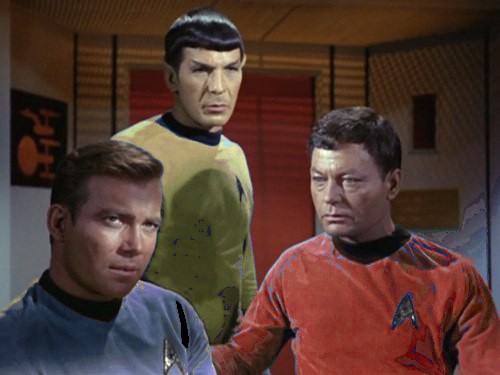
Perceptions, even if entirely artificial, see us through each day. Some continue to argue that perceptions are indeed reality. When we see something mildly disconcerting, we might ask what is happening. A familiar character in an unfamiliar costume is a trivial sort of dissonance, but it is enough to raise perception to a conscious level. We all know the accepted color scheme, so what (other than bad photoshopping) is going on when the Enterprise crew swaps shirts?

The issue is, however, a serious one. Many of the troubles we experience in society are based on fictitious certitudes. It is a strange human trait that me may not know why we believe something, but of that belief we are dead certain. From an absolute perspective, we have no way to determine which way space is oriented. If we see a globe facing “the wrong way” the dissonance drives us to correct that misperception. North, south, east, and west are relative terms. They are models that we overlay on our universe. Which way that universe actually tilts is anybody’s guess. Freshly hewn pine trees atop cars are common in December. When such things transpire in January, many people, to guess from the stares, believe their world has somehow gone askew.

Which way is really up?


Understudy Angels

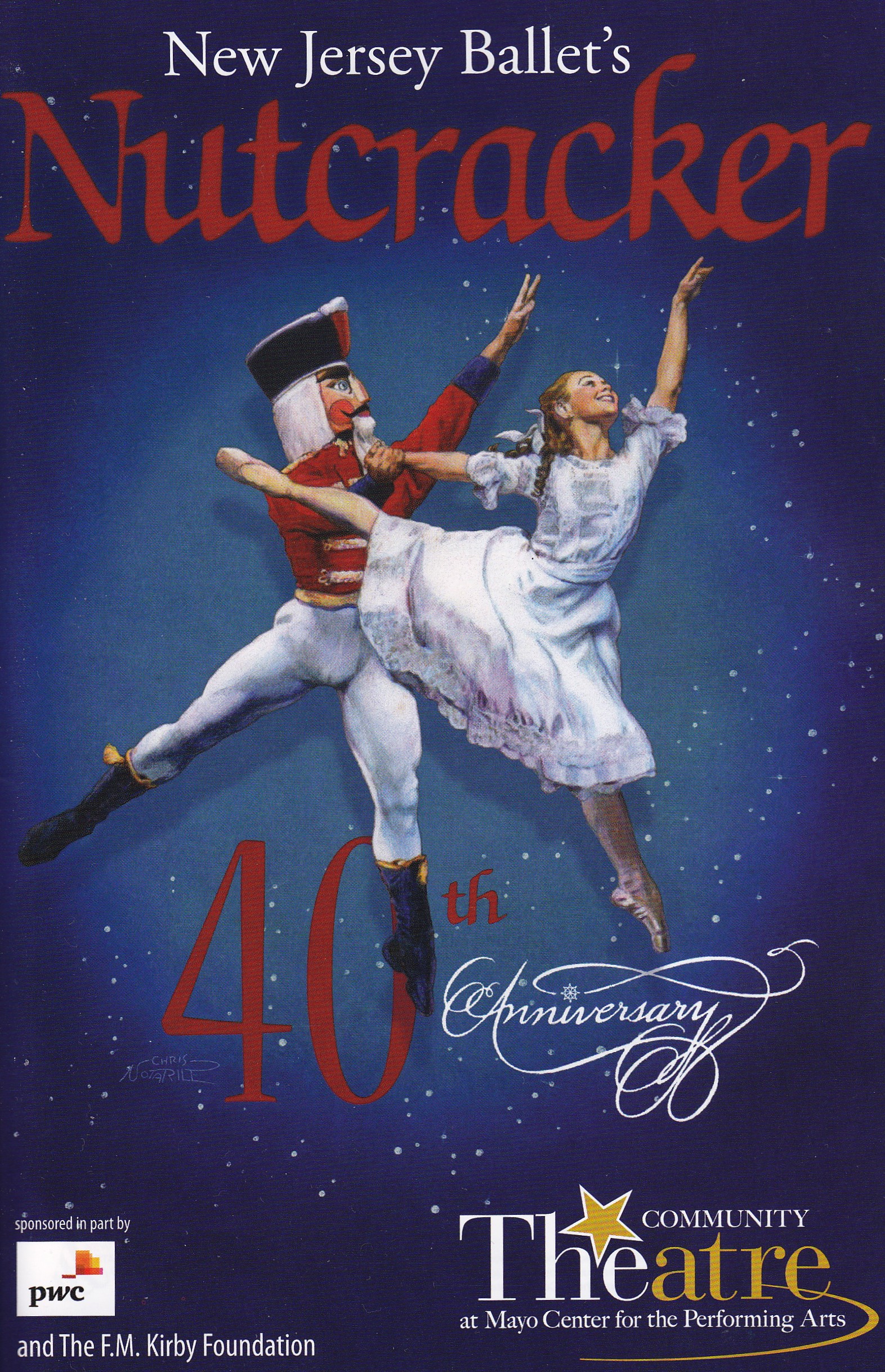
Since moving to New Jersey my family has attempted to sample as much of the vibrant arts scene as we can on our modest income. At times it feels like being a starving man locked in a fine restaurant. So we scrimp, save, and buy the cheap seats when we can. Thus it was on Christmas Eve we found ourselves in the audience for Tchaikovsky’s Nutcracker ballet. I’ve been on this planet for nearly five decades and I’ve never before seen a ballet. I knew the basic story of the Nutcracker: weird uncle gives niece an odd toy, jealous brothers soon break the toy, and the niece has a bizarre, if exceptionally graceful, dream where the toy becomes her escort. Beyond that I didn’t know what to expect. When I looked through the program, I was interested to see that there were angels, snowflakes, clowns, and mice. And there were understudy angels.

Students sometimes ask me what became of the ancient gods. In the cultures surrounding Israel, as well as in early Israel itself, polytheism reigned. Once the Exile had conceived monotheism what happened to the other gods? Did they all get absorbed, Borg-like, into Yahweh? It seems not. Many of these ancient gods continued to eek out their existence as supernatural, yet strictly sub-divinity, beings. We recognize such beings as angels today, and every holiday season they are ubiquitous in store windows and church lawns. It should come as no surprise that with so many angels a few understudies must be necessary.

In popular imagination – (dare I say it?) Christian mythology – angels derive from dead Christians. Many children are taught that if they are good, when they die they become angels wafting through the heavens. This popular doctrine does not match the official teachings of any major branch of Christianity. Angels are different in substance, essence, or whatever else a theologian might care to call it, from humans. You don’t evolve into an angel. Either you’re born one or you’re not. And so it seems we are earth-bound in our existence. No cause to mourn, however; even the gods had to learn how to be angels. We can only hope they had the benefit of many understudies to carry on the tradition.


Peace on Earth

One of the most ironic of Christmas messages is “peace on earth.” The irony comes in the means of declaring that peace. Apparently first-century angels were declaring peace to the entire world, according to Luke. The peace that we see proffered, however, often extends only to those like us. What is the harm in extending Christmas joy to all? Must one be a Christian of a particular stripe before the joy of giving can be bestowed? Over the last several years various Christian groups have sought to reclaim ownership of the holiday they borrowed from the pagan Romans, Celts, and Anglo-Saxons. Make it exclusively ours. Peace to us, and let others find their own way home.

In a season of charitable giving, understanding seems to have fallen off the list of Saint Nicholas. In his guise as Santa Claus he makes the rounds of the entire world, according to the mythology that children are told. Do we ever really picture Santa delivering gifts to those who live in Iran, North Korea, or Afghanistan? Does peace on earth apply to them? The thing about peace is, unless everybody has it nobody has it.

Can we learn to share Christmas? Those who fret over Xmas forget that first-century Christians abbreviated Christ with an X (chi in Greek), just as they represented him by a highly stylized fish. Today an empty fish on your bumper declares what an X cannot, apparently. The message is that Christmas belongs to us, not secular pretenders who just want an excuse to make their kids happy. For most of the history of Christianity, Christmas had been a low-key event, barely noticed by most of the faithful. When the possibility of material gain was added in, however, the holiday became especially holy. Should we share the doctrine but not the gain, or should we make Christmas a gift to all the world – a season when all might reasonably hope for peace?


Holiday Cheer

Christmas carols are, it seems, intended to fill holiday shoppers with good cheer. Good cheer opens wallets and purses and everybody is happy until January’s bills make their epiphany. Until then, sing songs of gladness. Princeton University, one of the few financially stable institutions of higher education, each year gives a gift to the community. Some Sunday in Advent a free university Chapel Choir concert is given in a campus chapel the size of a modest medieval European cathedral. The music varies from year-to-year, but seldom is the church not full with locals taking time out from holiday shopping or grading papers. One of the carols yesterday, was the 1914 French piece, “Christmas Carol for Homeless Children.”

Princeton, like most schools, does have a heart buried beneath its deep, cold, jobless front. Chapel choirs like to shake up the status quo by throwing in an occasional piece that requires somber thoughts and social consciousness amid the joy. The French carol dates from that fearsome first year of World War One, a time when France was especially under the gun. The wish for the world at the time was peace – material gain had not yet become the measure of God’s grace. The hymn is sober and wrenching:

We have no more house nor home!
Enemies took all we had;
all gone, all gone,
even our own little bed!
The school they burnt;
they burnt our teacher, too.
They burnt the church and also the Lord Jesus Christ,
the poor old beggar too who could not get away!

Singing it in French may take away the vinegar of the words, but wartime is not the only circumstance that finds people without sufficient means. Even unchecked capitalism will lead to the same results. Only, instead of the Lord Jesus Christ being burnt, he is sold in the markets to make a tidy profit.

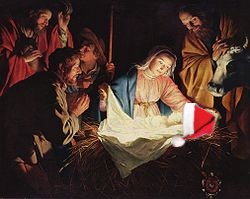
Baby Jesus says, "Bring on the gold!"


Solstice Now!

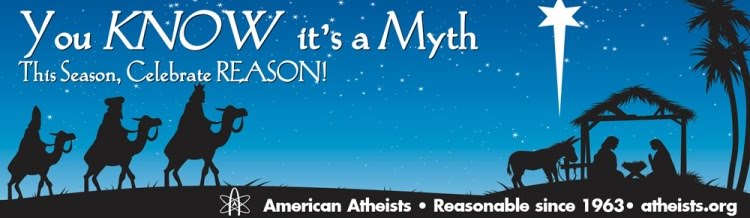
Who owns the solstice? Whoever it is, I wish we could just get it over with. The darkness falls before I step into my 5 p.m. class. It is dark when I drive home. The next morning, leaving for my 8:30 a.m. class, I drive to school in the dark. Back at Nashotah House a colleague once said his wife became “almost pagan” in her yearning to pass the winter solstice and head toward the time of year when light prevails over darkness. My wife pointed out a CNN story concerning a New Jersey billboard sponsored by American Atheists. The billboard, just on the Jersey side of the Lincoln Tunnel into New York, shows the star of Bethlehem, the manger and the wise men. The inscription reads: “You KNOW it’s a myth. This season celebrate REASON.” Naturally, motorists are up in arms. Who owns the solstice?

Before the Thanksgiving leftovers even hit the fridge, Christmas season has begun. Santa always ends the Macy’s Thanksgiving Day Parade, making it official. Since we are capitalists, we do what the red-suited captain of industry says: shop. As long ago as A Charlie Brown Christmas complaints of the commercialization of Christmas have reverberated through the media. Personal properties and billboards enjoin us to “keep Christ in Christmas” and remember “the reason for the season.” Economists tell us to spend more to assist the sluggish economy. Meanwhile the light continues to fade; the days grow darker. Why confuse the issue with religiosity? Why not just spend some money on others, feel the release of endorphins, and be thankful?

Nobody knows when Jesus was born. The church selected December to celebrate the event because the shortest day of the year, for those north of the equator, had long been a time of fervent wishes for the return of light. The first-century Christian rivals, the Gnostics, believed in the continual, literal struggle between light and darkness. When sidelined by Orthodox Christianity, the torch was taken up by those who celebrated Saturnalia, Lupercalia, Hogmanay, Yule, Sol Invictus or any number of other winter festivals. Christmas was a relative late-comer to the celebrations that welcome the resurrection of the sun. So drivers from New Jersey should take it easy. The solstice is everybody’s holiday. I just wish that whoever’s in charge would give us all a little more light.


Chris-myth

Mythology is beyond any single individual. I was reminded of this recently while discussing Joseph Campbell with a colleague. Joseph Campbell was an unconventional academic who exploded to public prominence largely through the immense influence of Star Wars, the original episode. George Lucas had famously latched onto Campbell’s Jungian use of archetypal imagery as the basis for good story-telling, and thus, by extension, good movie-making. With his books written at a level that is accessible to the average reader, Campbell assured his fame in a world starved for mythology. Others have interpreted mythology quite differently, but often more quietly. The fact is, mythology is alive and well in our culture. We simply fail to recognize it.

Joseph Campbell, mythographer

We are in the midst of the Christmas season, a period of intense mythopoeia in modern American culture. As can be seen in the Christmas Complex essay under the Full Essays section of this blog, the growth of Christmas characters and stories has been intense over the past several decades, and it shows no sign of slowing. Although not everyone will recognize Heat Miser or Zwarte Piet, many cannot imagine Christmas without Frosty the Snowman or Jack Frost, although they are not specifically associated with the holiday. This is the nature of mythology – it grows to encompass the many concomitant features of its immediate culture. Northern European and northern American experience of Christmas includes the snows of winter, so they become part of the Christmas myth.

While many this year, and every year, protest leaving the “Christ” out of “Christmas,” they fail to recognize that the snowballing Christmas myth has rolled far beyond the control of Christianity. The origins of Christmas predate Christianity, and the birth of Jesus is yet another element that has adhered to the mythology of the winter solstice. As the days grudgingly grow longer, and light begins to return into the chillingly crystalline days of January in the northern part of the northern hemisphere, mythological souls everywhere breathe a sigh of relief. Our fear of the long, dark, cold night is primal and very deep. C. S. Lewis, another mythographer, at least got it right with the Narnian concept of winter without Christmas being a kind of hell to northerners. The mythology of Christmas in the southern hemisphere is another complex mythopoeia in the making. How it grows will be an interesting exercise in the ongoing human quest for meaning as summer’s heat is just beginning.

C. S. Lewis, mythographer


O Tannenbaum

Today we put up our Christmas tree. As we drove home with it strapped to the roof our car yesterday we felt like pariahs since everyone else in New Jersey seems to have collected their tree a week or two before Thanksgiving. I have spent too long among Episcopalians to appreciate such eager chomping at the bit. At Nashotah House Christmas trees were discouraged until about Christmas Eve, since a hearty Advent celebration was considered a sign of true piety. Well, with a small child in those days, we didn’t care to deprive our daughter of the childhood anticipation of Christmas, so we received the ugly stares due to those so uncouth as to set up a tree a week in advance. Now people think we procrastinate to wait until the weekend before Christmas to set up our interior conifer.

A few years back I wrote a book on holidays for teenagers. I haven’t found a publisher yet, but I did quite a bit of research that I’d rather not waste. Sometime soon I will post the Christmas section under Full Essays. It is chock-full of traditions and facts and impressions about Christmas and what it has come to mean to us today in the United States, but since today is tree day for us, I thought I’d start out with a little of the story of the humble Christmas tree:

The modern use of Christmas trees can be traced directly back to Germany in the 1500s. The earliest written reference comes from 1570 when a fir tree was set up in guild houses and decorated with apples, nuts, pretzels, and small things for kids. On Christmas Day the kids of the guild members could come and take the hanging gifts. The apples may go back to plays in the Middle Ages with Adam and Eve; sometimes plays of the Garden of Eden had apples hung on a fir tree. A tradition says that Martin Luther, the monk who started the Protestant movement (the Reformation) was walking home one winter night when he saw the stars twinkling through the branches of the pines. He set a tree up in his house, the story goes, lit with candles, to try to recreate the effect.

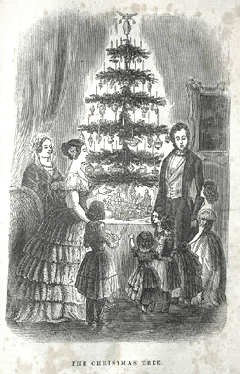
We do know that the Christmas tree (originally Tannenbaum) was a German invention. Until the 1800s it was almost completely limited to Germany. Candles were used to light the trees – talk about your obvious fire hazard! Royalty from other European countries were presented with Christmas trees as a novelty in the 1800s. Soon other well-to-do families started to set them up. An engraving of Queen Victoria in England with a tree from her German husband Prince Albert captured the public imagination and Christmas trees became the rage in England. Charles Dickens took over and the rest is history.

A Christmas Tree primer


Holidays Through Kids’ Eyes

A trite truism we are often subjected to states that Christmas is really for the kids. As I suggested earlier in this blog, adults also see the benefits in a holiday break, and many adults experience Christmas like kids. But how do children experience the holidays, really?

Two unrelated news stories this week demonstrate the breadth of childhood holiday experience. Last week an 8-year old boy in Massachusetts was sent home from school for a drawing. The teacher asked the students to make a Christmas drawing (a bit of December dilemma there!), and this boy drew Jesus on the cross. Well, that could be a simple holiday mix-up, an Easter Bunny in Santa’s sleigh. The problem arose when the boy said it was himself on the cross, with x’s for eyes. The boy’s father reported that they had recently visited a Catholic shrine with obvious crucifixes, and the boy seems to have thought Christmas was somehow associated with death.

A second story comes from Tennessee where a 4-year old boy was picked up outside, drinking beer and wearing a stolen dress from under a neighbor’s Christmas tree. After being treated for his condition, the boy was released to his mother who said that he was trying to get arrested to be with his father in jail. Christmas is family time, after all.

Perhaps the warm and cozy stories of animals placidly staring into a mysteriously glowing feed trough are the stuff of adult fancy. Maybe these children see the holidays in their unmasked guise — wish fulfillment in a world that is just not what it should be.


A Walk Around the Watchtower

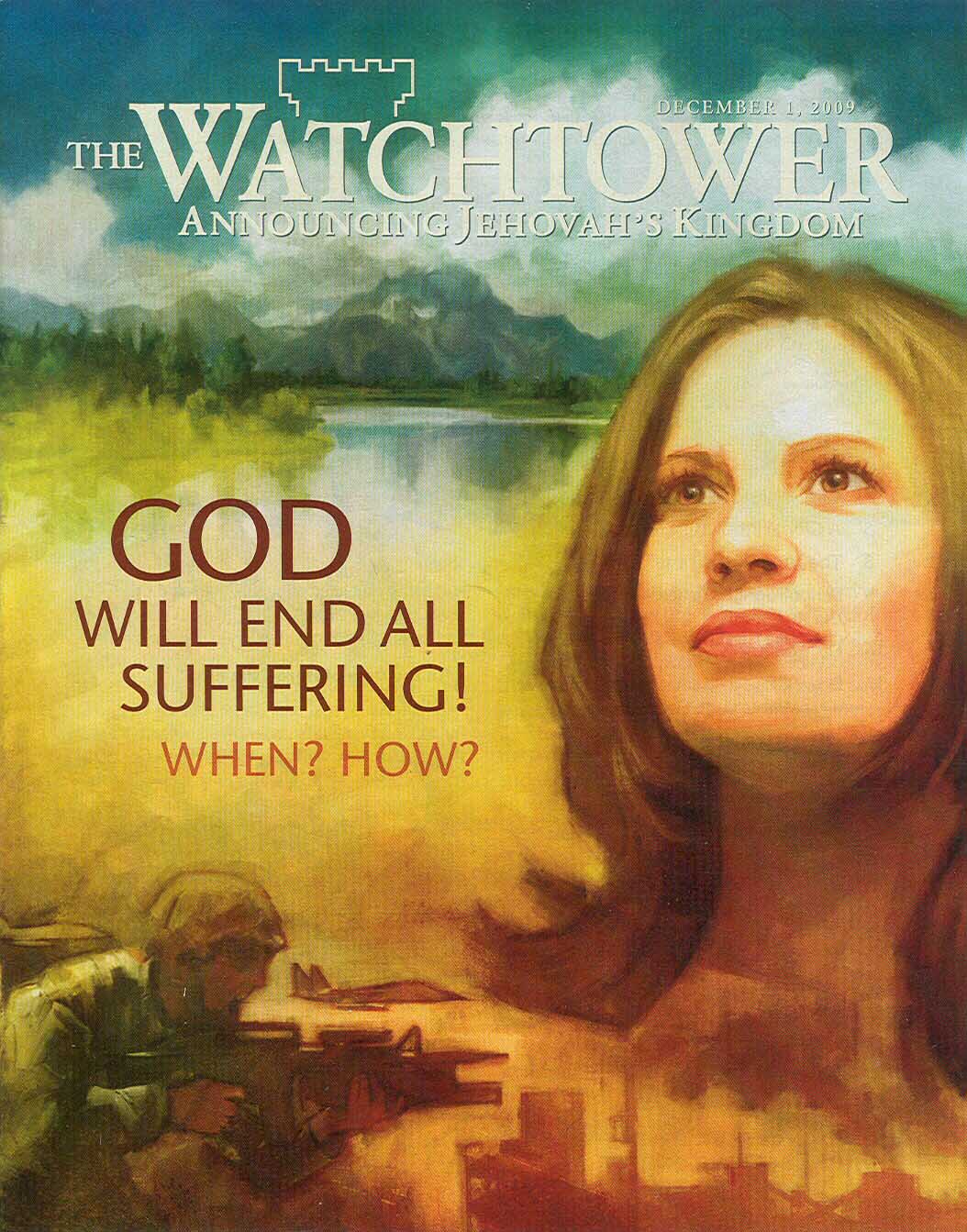
The Jehovah’s Witnesses stopped by yesterday. I never pretend not to be home, and when I’m less stressed out I like to engage them in terms of biblical exegesis — religion is all about conflict. Yesterday I was still recovering from the disappointment of not getting a job I really wanted, so I simply answered their questions and accepted their Watchtower magazine. Thumbing through it, I ran into some hermeneutical obstacles — an occupational hazard for those of us who’ve spent a little too much time with the Bible, I suppose. A story about Joshua informed me that “Jehovah wants you to succeed.” It tasted a little too much like prosperity gospel and not much like life in the present. So I flipped a few more pages.

An article on Lunar New Year (Chinese New Year, as it is traditionally called), warned against Christians celebrating it, in part because of ancestor veneration. The Watchtower declares, “the Bible show that the ‘ghosts’ and deceased ‘spirits’ are really wicked spirit creatures pretending to be the deceased. For what purpose? To mislead people and bring them under their evil control!” Now, I admit to being drawn into the Ghost Hunter fan-base, but I do recall the story of Saul summoning Samuel from the dead. The Bible doesn’t indicate that he’s evil; in fact, it is Samuel himself! If ghosts want to deceive then they need to show up a little more clearly and give more direct messages.

I then learned about King David’s remarkable musical prowess in the story about music in the Bible. It is truly amazing what can be extrapolated from a literal reading of the Psalms. The magazine informs us that King Sennacherib, emperor of Assyria, demanded male and female musicians from Hezekiah. “It seems that they were first-class performers.” This seemed a little too much like the stereotype of Jewish entertainers, and since it was extra-biblical I couldn’t accept it. The story concludes by indicating that music is not a human invention. “The Bible describes music and singing in the heavens themselves, where spirit creatures play figurative harps and sing praises around Jehovah’s throne.” As I pondered what a figurative harp would sound like, I could swear I heard the sound of one hand clapping.

Being that time of year, the issue has an Epiphany story. Well, most Christians associate the wise men with Christmas, so I’ll call it a Christmas story. Eager to be honest, the author notes that the wise men were really foreign astrologers. And although they were into witchcraft, the angel announced Jesus’ birth to them to lead them away from this abhorrent practice. Then a divine revelation came to them in a dream in order that they could avoid Herod and his wicked plan. So the astrology that led them to Jesus was bad, but the end result was good.

When the Jehovah’s Witnesses ask me if I know about the Bible, I look at my feet and kick at an invisible speck of mud on the floor as I admit that I have taught Bible for nearly twenty years. But when they ask what I believe about the Bible I tell them the same thing I tell my students — what I believe is personal and I choose not to share it. I don’t begrudge any person of their religion. I even share the Jehovah Witnesses’ hope that the future may be brighter than the present. If you want to convert a religion professor, even an adjunct one, however, it will take more than a Watchtower to do it.


Happy Whatever

Over the past couple months I had been interviewing for a position at the Tanenbaum Center for Interreligious Understanding in Manhattan. Although I did not get the position, I still recommend the center for those who are dealing with religious conflict. One of Tanenbaum’s concerns is the “December dilemma.” The month of December is dominated by the celebration of Christmas, and many people are barely hanging onto sanity awaiting those few days off near the end of the year to catch their breath before jumping back into all of it again. Yet, with the continual mixing of cultures and traditions that makes America such an interesting place, other traditions have difficulty competing with Christmas. Well, it is hard to compete with such a capitalistic holiday, one that is based around getting stuff.

There has been a movement afoot in recent years to mash the December holidays together. One such movement is the celebration of Chrismukkah, albeit somewhat tongue-in-cheek. Hanukkah naturally falls around the usual time of Christmas, and Kwanzaa was created to add yet more texture to the month. Despite all this, Christmas is still predominant. As I tell my students, the mindset of America as a whole (not demographic or even factual, but perceptual) continues to be Protestant Christian. Apart from Kennedy all of our presidents bear this out. And Protestants, although they don’t care much for the “mas”part, are big Christmas fans.

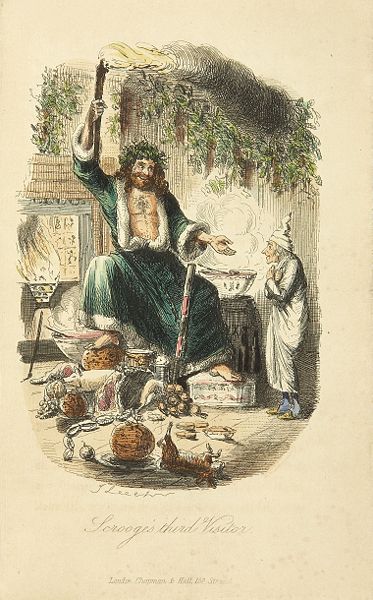
A Dickensian Christmas

A few years back I wrote a book for tweens that examined the roots and traditions of the major American holidays. (So far publishers haven’t been impressed.) One of the facts I learned about Christmas is that its celebration as a major holiday is a recent phenomenon. Before the nineteenth century Christmas was barely noted in America at all. In the wake of Charles Dickens and his influential stories, Christmas became an institution that celebrated family and home and goodwill. Eventually it grew into a major commercial holiday and everyone wanted to get in on the fun. Now we have a largely secular Christmas and other religions are eager to join in the non-confessional part of the holiday. Everyone would like to have Christmas day off work (except the clergy), and those who don’t have it feel lonely, I’m sure. I don’t see the reason for the big fuss about whose holiday it is. Christmas is symbolic of peace and togetherness, and no matter what it is called or who claims ownership, this is by far the superior path over religious fear and hatred.