Flying Sorcery

In a post on the Huffington Post recently Michael Zimmerman, founder of the Clergy Letter Project, wrote about the strange antipathy of Ken Ham to the search for extraterrestrial life. Ham, founder of a creationist museum and self-appointed spokesman against evolution, has gone on the record saying that aliens cause problems for a creationist worldview. Therefore they can’t exist. Indeed, creationists should reject aliens because of the flat earth the Bible presents. Zimmerman, with his usual unfailing reason and wry humor, demonstrates the multiple difficulties both with Ham’s understanding of science and of the whole alien agenda. The Bible doesn’t address the modern world on many fronts, which is why literalists so often find themselves out of step with the issues of the day. When the final period (an anachronism, I know) was placed at the end of Revelation, it was expected that the world wouldn’t be around much longer, tottering as it was on the underground pillars that held it up. Somehow the Roman Empire came and went without any kind of cataclysm ending it all, and literalists have been backing and filling ever since.

Ham’s angst about extraterrestrials, however, is not shared by all Fundamentalists. I recall going to a session way out at a country church as a child where the guest speaker, a firm believer in aliens, talked about the “sheep in other folds” referred to by Jesus as aliens. I recall the eerie feeling as we drove home under a dark sky with fliers depicting flying saucers and assurances that we were not alone. In college, when I discovered Larry Norman’s music, I was struck by his lyric “If there’s life on other planets, then I’m sure He must know, and He’s been there once already, and has died to save their souls.” Literalists, like Catholics, take multiple views on the question. It seems a terrible waste of space if, in this infinite universe we’re the only sparks of consciousness around. I’ll leave “intelligence” for time to decide.

What would Genesis do?

What would Genesis do?

Ironically, Ken Ham doesn’t seem to have considered the up side of aliens, at least for his point of view. If the extraterrestrials end up looking like us, that does raise some serious questions about evolution. How did it work identically on two different planets to produce such similar results? You’d think maybe Fundamentalists might welcome aliens with open appendages. Of course, some have gone far off the other end and declared that angels and aliens are the same thing. The problem of the literalist world view is that it is severely limited. The Bible never foresaw the internet or the airplane or even the true nature of our own solar system, let alone the infinite sea of space beyond. In charting a course for belief, accurate maps are necessary. As Zimmerman points out, those maps, of necessity must contain the stars. And as we continue to evolve infinite worlds of possibilities await.
Religion Embraces Science

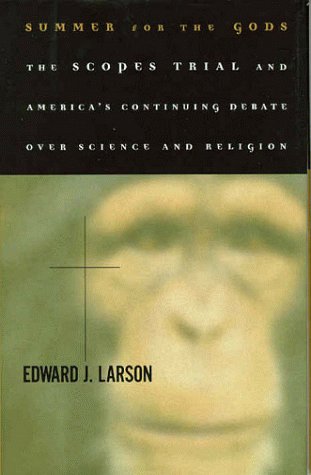
My colleague and one-time dean, Michael Zimmerman of Butler University, has brought his Clergy Letter Project to the Huffington Post. Well, he has written an online piece for the Huffington Post entitled “Redefining the Creation/Evolution Controversy.” His article is clear and to-the-point: the Creation/Evolution debate is not about religion versus science. That has been shown repeatedly for those who care to examine the history of this controversy. Evolution barely caused a ripple among clergy when it was first becoming popular among scientists. Ministers assumed it was just one of God’s mysteries and went about their clerical duties. The issue became a public relations boondoggle with the Scopes Trial of 1925. One of the best books written on that subject is Edward Larson’s Pulitzer Prize-winning Summer for the Gods.

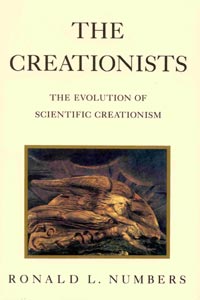
As I have stated in my podcast on this issue, Creationism is a splinter movement within Evangelical Christianity. Over the years it has drawn in members of a wide variety of Christian groups, including Roman Catholics and mainstream Protestant denominations. It has publicized its concerns so well that many people assume that this is the “Christian” viewpoint and that all other views are, by definition, non-Christian. This is the perspective that has driven a wedge between religion and science, creating a false front that has led to many confrontations between Evangelicals and scientists. My favorite history of the Creationist movement is Ronald Numbers’ The Creationists.

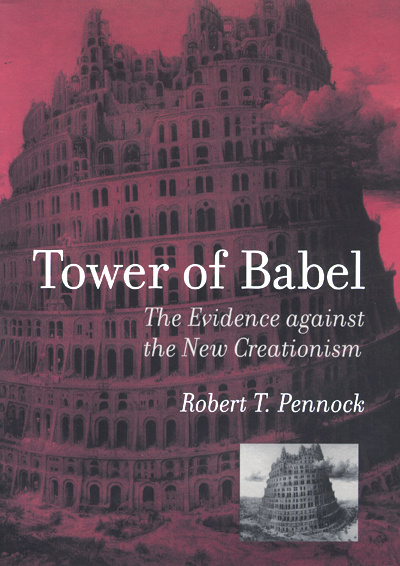
The true motivation of the movement is, without doubt, political. While many sophisticated people scoff at the apparently simplistic machinations of the Creationist movement, what they do not realize is that it is a highly organized and politically savvy alliance of special-interest groups. Robert Pennock’s Tower of Babel was an academic exposé of the inner workings of the Creationist movement. It is perhaps the most important book written on the subject. Published by an academic press, however, it has not found the wide public readership it deserves.

Do yourself a favor: read Dr. Zimmerman’s post. I believe he has framed the dilemma in the correct way: the struggle is one within a specific religion, Christianity, not one between religion and science. The more the public knows about this issue the better off we all will be in the long run.


Clergy Letter Project

A few years back I had the privilege of working at the same university as Dr. Michael Zimmerman, currently a biology professor at Butler University in Indianapolis. In my temporary stint as a Lecturer in the Religious Studies department at the University of Wisconsin Oshkosh, I discovered that Dr. Zimmerman, then the Dean of the College of Letters and Science, was the very man responsible for the Clergy Letter Project. I had read about the project before; in an attempt to demonstrate that Creationism is not mainstream Christianity (nor science, for that matter), the Clergy Letter Project was attempting to acquire a few thousand signatures from the ordained of various denominations who were willing to admit that evolution posed no threat to their religion.

As an occupational hazard of someone with my background, I know many, many clergy. I offered to solicit some help in reaching the goal on the list and spent the rest of the semester contacting various sacerdotal practitioners who rightfully saw the Creationist ploy for what it was and continues to be. Creationism is nothing short of an attempt to break through the church and state separation clause and attain federal support for a particular religious viewpoint. That particular viewpoint is not shared by the majority of informed Christians, but the population is easily swayed by Creationist rhetoric. Creationists do not deserve sympathy, for they are much more aggressive than they pretend to be. Subterfuge in the cause of truth is a contradiction in ethics.

Religion may be hardwired into human brains, but it need not seek to pick fights with factual truth as it is learned. At each stage along the progression of human achievement, various religious believers have felt that the new knowledge discovered confronted their faith with unsurpassable barriers. Faith, however, is a belief system, not a factual construct. If faith requires proof, as even the Bible itself says, it is not really faith at all. If you know any clergy who are willing to sign on for common sense and belief in the rational world in which we find ourselves, please send them this link and ask them to weigh in on the question. Nearly 12,000 clergy have signed to date. There are even separate lists for Rabbinical and Unitarian-Universalist clergy. Don’t worry about the Creationists. They will always be back for more.

An early Creationist attempt at intelligent design

An early Creationist attempt at intelligent design