The Halloween

Halloween seems especially portentous this year.  Some of us thrive in this introduction to what was a major set of Christian holidays that encompassed many pagan traditions.  The lynchpin was All Saints Day (All Hallows), which in good Christian fashion upheld its favorite sons (and a few daughters) to remind the rest of us what a sorry lot of humanity we are.  Followed by the more democratic All Souls Day where the vestments went from white to black, it was preceded by Halloween.  Through mostly Celtic additions from Samhain, the first of the three days became decidedly spooky and came to be a commercial holiday.  There’s more to it than that, of course, but we all know Halloween.
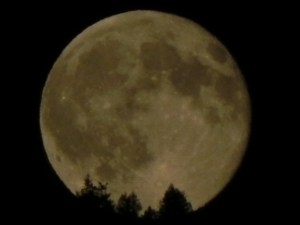
This year a number of other phenomena are converging on today.  Not only is it a full moon, but a famed blue moon—the second full moon this month.  It feel like something could happen.  And if that weren’t exciting enough the powers that be have decided to end Daylight Saving Time tonight (well, technically tomorrow morning).  And Tuesday is the most importation election day in the history of our nation, when we decide whether to retain democracy or become a monarchy.  Seems like a strange confluence of phenomena.  Meanwhile, outdoors a pandemic rages and some locations have had early snowfalls.  The last of what had been Hurricane Zeta blew through here yesterday.  Who needs Halloween to be scared?

For some years I’ve been contemplating the spirituality of Halloween.  We live in a death-denying culture while knowing full well we all die.  Halloween has become a holiday when we can think about it openly.  Pretend we’re someone/something we’re not.  Perhaps, if we’re lucky, we might learn something from it.  It has become a boon for horror films, but they’ve been successfully spread through the rest of the year as well.  There’s plenty to be frightened of in July and January too.  Still, there’s something about Halloween.  Some of my earliest memories are of this particular holiday.  Poor as we were, we always had costumes for the day.  I remember sitting on the school bus, wearing a mask, thinking that nobody knew who I was, and I could really be the hero or villain that my costume suggested that year.  Now we wear masks all the time and we’re frightened every day.  Halloween is coming along with a blue moon this year.  There must be some significance to that.

Wild God

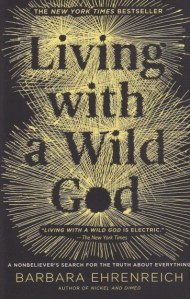
Living with a Wild God, by Barbara Ehrenreich, is one of those books I wanted to put down gently after reading it, for fear that it might explode.  Or maybe it was my head I feared might combust.  Describing it is difficult because it is so wide-ranging.  On the one hand it is an atheist’s view of religion.  On the other hand it is a spiritual biography.  On a third hand it is coming to terms with having had a profound mystical experience.  It is one of those books where, knowing my life has been so very different, yet I feel that Ehrenreich and I have had so much in common that we’d be friends if we ever met.  It is also the work of a woman who is scary smart and whose teenage thoughts were so intense that my own seem puerile by comparison.

But that mystical experience!  I’ve had many of them in my life, but I don’t know you well enough to share them here.  They’ve been recorded in an unfinished book that I may or may not try to publish some day.  (Ehrenreich was smart and took a job as a journalist, which means others assume you know how to write.  Even those of us in publishing have trouble convincing agents and others who hold the keys to non-academic pricing that we understand the craft.)  Mysticism quickly becomes a staid discipline, not at all like the life-directing experiences such encounters themselves actually are.  It’s difficult to explain without sitting down and talking to you.  It’s something academics tend to avoid like Covid-19.

The books that mean most to me are like conversations with an absent author.  Drawn in by an openness, or perhaps by the fact that we’ve lived in a few of the same places over the years, perhaps passed one another unknowingly on the street, you feel that they’ve invited you into their very head.  What you find there has a strange similarity to what is in your own head, while being completely different at the same time.  We should all strive for such honesty in our writing.  In the end Ehrenreich, with a doctorate in science, suggests we need to be open.  That kind of validation is important for those of us who’ve poured our lives into the study of religion.  She was drawn in from atheism, and I have been trying to escape from literalism all my adult life.  We have ended up in places not dissimilar from each other and I’m glad to have met her through this profound book.


Keep It Covered

I’ve seen it at last.  The cover concept for my book.  I’ve been manicly checking the Rowman and Littlefield (parent company of Lexington/Fortress Academic—a roadmap would be useful) webpage to see what it might look like.  I’ve “seen a sighting” at last.  Nightmares with the Bible seems to be actually happening.  As a writer there’s always some doubt involved with your book.  You wonder, will it really come out?  Will someone pull the plug at the last minute?  Is any of this real at all?  Those kinds of things.  I’ve mentioned before that waiting is a very large part of the process.  Publishing is a slow business and the world changes so fast.  I sincerely hope it doesn’t ever leave books behind.

My waiting hasn’t been idle, of course.  My next nonfiction book is well underway but I’m focusing on fiction at the moment.  I had two short stories published within the last month and I’m inclined to follow where some success shows itself.  Besides, fiction and nonfiction aren’t as far apart as is often claimed.  Seeing the cover of the book, however, nudges me back towards nonfiction a bit.  Since I’m no longer an academic it’s a toss-up.  A few colleagues like what I’m doing, but my fiction work is secret.  So the process continues, waffling back and forth.  It’s all in service of learning how the publishing industry works.  That’s one of the many things they don’t teach you in graduate school.

It’s October and I should be thinking about monsters.  Although I’ve gone through my closet of DVDs, there are many that bear watching again.  If only I could fabricate time!  One of the things I’ve noticed about this pandemic—and I know it’s not just me—is that time seems to have been swallowed up.  A simple walk down the local biking trail now requires masking up before and washing hands after.  Less than a minute of time, for sure, but it adds up.  And if you go after work there’s not enough light left to paint the porch by when you get back.  Such are the contradictions of this wonderful season.  You really can’t pin anything down.  The colorful trees put you into rapture then they’re bare.  The bright blue sky looms under relentless clouds.  You throw off your jacket one day and it snows the next.  And there might just be monsters lurking out there.  One of them, it’s said, will be released in November.  Given the nature of this season we’ll just have to wait and see.


October Reflections

The people are dressed in their finest.  The best food and drink available are spread on white tablecloths while rats scurry underfoot.  The feasters invite Lucy to join them.  “It’s the last supper,” they say, hoisting a glass, knowing that they will soon die of the plague.  This is one of the most powerful scenes in Werner Herzog’s Nosferatu the Vampyre.  It’s October and we’re in the midst of a plague.  The wealthy retain their fortunes while the poor die in the streets.  Do I really need to explain why someone so focused on religion and social justice finds horror films as able conversation partners?  My two books that relate to the topics don’t come outright and say it, but there are spiritual lessons to be learned here.

Genre is a convenient, perhaps even necessary, means of making sense of the vast creative output of humankind.  We write fiction, poems, and songs.  We film movies.  We produce these forms of entertainment at a stunning rate, especially when we consider the large number of pieces made that never find official publication.  Genre helps us sort through—this is like that, etc.  Still, some of my favorite pieces of literature, and movies, don’t really fit into neat genre divisions.  Take Herzog’s Nosferatu.  There are definitely horror elements here, but it is also an art film.  Some scenes, like that described above, are suffused with religious meaning.  When circumstances align correctly we can see it and say, “ah, now I understand.”  That was what came to me recently.  I haven’t seen the movie for years, but circumstances with Covid-19 brought it to mind.

October is a month of poetry and transitions.  We turned the furnace on only to find ourselves in the midst of a string of days reaching near 70.  The cerulean sky which looks so different this time of year suddenly disappeared with nearly a week of heavy cloud cover.  There’s beauty in the daytime and monsters in the night.  Outside lurks a plague.  Lacking the willpower to overcome it, people are growing weary of the restrictions.  We’re not used to being locked up.  The thing about the last supper is that life goes on even after it’s over.  Changed, yes, but October is all about change.  We’re anxious, wondering if it was indeed a vampire that bit us.  Meanwhile the leaves continue their journey from green to yellow, orange, and red, their litter becoming the food for next year’s growth.  Yes, there are spiritual lessons here.


Moral Imperative

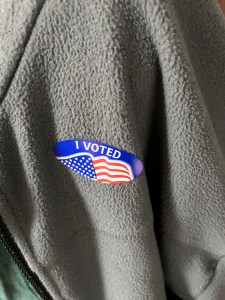
It was a walk up a long, steep hill, but it was worth it.  Last Saturday my wife and I voted.  It had the feeling of accomplishment.  The long, steep hill was also a symbol.  Wearing masks, sucking breath in through fabric in the single nation hardest hit—this great rudderless ship—we went to say “enough.”  The clearest indication of evil in the present administration (and here we’re starved for choices) is the open attempt to sabotage voting.  Some GOPers are placing fake ballot boxes in public locations while the pretender-in-chief has encouraged his followers to vote twice and has tried to prevent his “fellow Americans” from having their legitimate say.  Sometimes you have to climb a high hill, but the view from the top may just be worth all that effort.

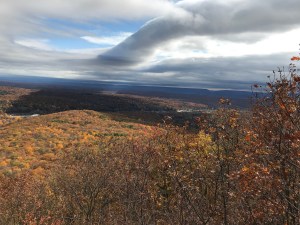
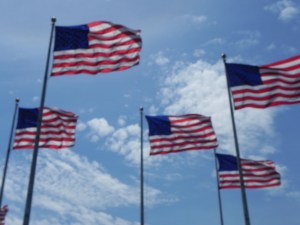
We are a suffering nation.  Not only have we become divided, that division has been stirred, and prodded, and poked by a man who knows the only way to win is to divide and conquer.  Untie what used to be the United States for personal aggrandizement.  Voting is more than a right, it’s an absolute duty.  All who do it are patriots.  In this we can be united.  Perhaps a bit winded, stop to take a look at the trees on the hills showing their true colors.  We woke up stuck in a nightmare four years ago.  We’ve lost four years of our lives.  We’ve climbed so many hills and sunk into dark, deep valleys.  Does that flag look a little tattered to you?

Back in high school we all wondered how autocrats like Hitler and Mussolini came to power.  We’ve watched it happen in a nation that was the avowed enemy of fascism within living memory.  And for what?  The right to wear red baseball caps that claim our nation wasn’t great to begin with?  Great is not the same as perfect, to be sure.  We were producing the technology (that is by definition “progressive”) that the world craved.  We were ensuring the rights of all people.  We were cleaning the environment.  What within all of this isn’t great?  How has it become better in these four misspent years of worry and weariness, bringing us to the brink of nuclear war without a thought of the incredible effort it took to build all of this.  Or the effort it took to walk up this long, steep hill.


Ode to Bookstores

The pandemic has changed everything.  You knew that, of course.  Like many people in fields of regular job uncertainty, we’ve curtailed spending as much as we can.  Never very securely established after Nashotah House, we’ve managed to get by by not thinking too far ahead.  I can’t imagine retirement (if there’s still a job left to report to).  Even more, I can’t imagine a life without books.  The only way I get through each day is by trying not to think about it.  Still, I miss bookstores.  Pre-pandemic, when jobs at least felt somewhat secure, we’d often nip into one of the many local independents of a weekend.  Missing browsing shelves sorely, we stopped into Book and Puppet over in Easton, when on a trip to buy produce at the outdoor farmer’s market.

It felt strange, the thought of going into a store that wasn’t dedicated to groceries or hardware.  Masked, of course, but would there be lots of people there, crowding the air with germs?  No.  There was maybe one other customer in the place.  I have to admit that I was a bit disoriented, trying to read over spines on a shelf, not wanting to touch anything.  I’ve tried hard to curb any spending during these highly uncertain times, but could I imagine a world with no bookstores?  Would I even want to?  Books, you see, give me hope.  My vision of heaven is October and a never-ending stack of books (and, of course, friends).  Books allow for escape and exploration.  Life will continue after the pandemic in books.

The fear has gripped many of us, I suspect.  I’m old enough to retire, but not well-off enough to do so.  Our house requires a two-person income at our level (highly educated, under-employed), and the pandemic rolls on.  I think of the Black Death—I’ve read about that too—and how history changed because of it.  In this pandemic we’re dying (all but the wealthiest) piece by piece.  The most vulnerable first, of course, but the middle class may well be in the sights.  The owner of the bookstore said he wasn’t sure how long he could hold out.  Just last year at this time I was participating in the Easton Book Festival that he’d organized.  I had a book-signing at the nearby Moravian Bookshop.  I can’t remember a time I felt so hopeful, knowing I had another book coming out, and if we survive long enough, another after that.  I really shouldn’t, but I’m in a bookstore.  I’ll buy one in hope that the future may just offer a place to keep it.


The End of Snow Days

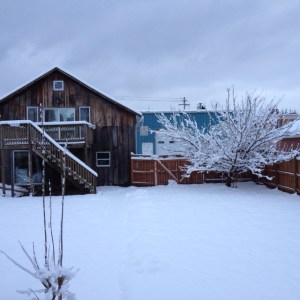
It’s a chilling thought.  An article in the New York Times said it, but we were all thinking it.  Snow days may well have become another victim of Covid-19.  No, it’s not snowing yet (but give climate change a chance!), but New York City schools have figured out that if students can learn from home then one of the truly treasured memories of our youth may no longer be necessary.  In fact, snow days ended for me when I began working remotely.  My supervisor had suggested, even before that, that I take my company laptop home daily, in case of inclement weather.  The idea of awaking, wonder-eyed, at the world covered in white—that cozy feeling of knowing you had no obligations for the day but to enjoy the pristine world out your window—is a thing of the past.

Technology has changed our lives, and some of it is even for the better.  It hasn’t made work easier for some of us, but has made it longer.  We used to talk about kids and their continuous partial attention, but now work is always at home with you and that time signature on your email says something about your work habits.  As the days are now shorter than the nights, as they will be for six more months, finding the time to do what you must outdoors (it may be cooler, but lawns still insist on growing) is always a bit more of a challenge.  And when the snow does fall you’ll still have to shovel the walk.  All time has become company time for a truly linked-in world.

The real victim here, it seems to me, is childhood.  Snow days were a reminder that no matter how strict, how Calvinistic our administrators wanted to be, the weather could still give us a smile now and then.  A legitimate excuse not to have to go to school and, if parents couldn’t get you to daycare, a day off for everyone.  The strict number of limited holidays allotted by HR had limited power in those days.  Although we all know that well-rested, happy workers tend to do better jobs than those who are constantly stressed out and who have trouble sleeping, we’ve now got the means to make the sameness of pandemic life the ennui of everyday life, in saecula saeculorum.  Thanks, internet.  At least now we work where we have a window and can look out on nature and can see what we’re missing.


The Good of Others

On a recent trip to visit family in upstate New York, the Sunday we had to leave (for work Monday is an implacable law), we decided to have lunch in a local park.  The weather was fine and there was plenty of social distancing, given the size of the grounds.  After a nice picnic and stroll, we realized it was getting late to start out in order to get home by my oddly early retiring time.  We headed back to our hosts’ car only to find it wouldn’t start.  They had a new battery and so we popped the hood and hoped to find something obviously wrong as we waited for the long response time for AAA in a rural area on a weekend.  We were a little concerned because we still had a long drive and no real way to get back to our own car, parked at our hosts’ residence.  A stranger came up and asked if we were having trouble.  Listening to the symptoms he said, “Do you mind?”  Putting his head under the hood, he said, “I’m a mechanic.”  He had our host try again and the car started right up.  He refused to take payment and wouldn’t even give his name.

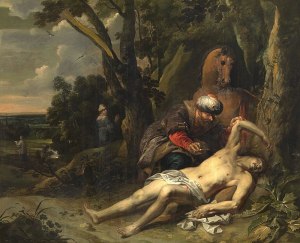
Despite the fear the Republican Party tries so hard to spread, it has been my experience that good Samaritans abound.  When I’ve had car trouble far from home, I’ve never waited long beside the road before a stranger has stopped and asked if they could help.  Technology may make us feel more self-sufficient (we have smartphones and can call for our own help), but it doesn’t always work that way.  My wife had accidentally left her phone at our hosts’ place, and I’d forgotten to charge mine so the battery was depleted.  Uber would require an active, charged phone and our hosts were using theirs to communicate with AAA.  If the stranger hadn’t stopped by we would’ve been stuck, likely for hours.

I oftenconsider how Calvinistic GOP thinking can be—assuming the “total depravity” of everyone and declaring that we must be kept in check by laws that maintain outdated concepts of both humanity and justice.  To be sure, there are dangerous individuals out there.  Would you want Trump to stop by if you were having car trouble?  What selfless behavior could you expect from that quarter?  Sucker!  In general, however, people are good.  They are motivated by what they think is right.  We’re in a pandemic.  The mechanic didn’t know us (we outnumbered him), he had no obligation to help.  Good Samaritans exist, and they are frequently found outside the yellowed leaves of Scripture.

Balthasar van Cortbemde – The Good Samaritan, via Wikimedia Commons


Hypersensitivity

Tell people you’re hypersensitive and the first thing they’ll say is “I’m sorry.”  The way I use the term is, however, somewhat literal.  Some of us experience sensory input in especially intensive ways.  Psychologists say that those of us who do often stop and assess in new situations.  We can become overstimulated and sometimes “shut down” if too much is going on.  It doesn’t mean I’m going to burst into tears if you insult my haircut.  (It’s homemade, we’re in a pandemic, after all.)  The reason I bring hypersensitivity up at this point is two-fold.  The first fold has to do with the fact that I no longer get out much, which means much of the “ordinary” now seems new.  The second fold is that I wonder if hypersensitivity had a role in leading medieval people into monasteries and convents.

Back to point one.  If sensory stimuli can overwhelm one, going back into TMI territory can be almost traumatic.  I commuted into New York City for about seven years.  Manhattan is difficult for a hypersensitive person to take.  Over time I became accustomed to it, and familiar environments are more easily navigated.  The pandemic, however, has me spending about nine or ten hours a day in the same small room at home.  Actually, working remotely had already done that, but I used to get out on weekends.  We recently took a safe weekend trip, stopping only at places with few people and staying with family.  Less than 24-hours out from home I realized I was feeling overwhelmed.  Too much interaction.  We had stopped at a town I’d never visited before.  The trees were spectacular.  I soon regained my bearings, because no matter how late I stay up, I still awake early to write.

This leads to the second point.  I suspect things moved much more slowly in Late Antiquity and the Middle Ages, but I can see why certain individuals might like to cloister themselves.  While I disagreed with the theology, I taught for fourteen years at Nashotah House, a cloistered seminary.  You saw the same people day in and day out.  The campus was suspicious about this thing called “the internet” for quite a long time.  You ordered books through the mail and waited a month or more for it to arrive.  In some ways this was a comfortable existence.  Of course, it blocked me from much of what was happening in the wider world.  The pandemic has, in some measure, brought me back to that space.  I wonder if, historically, they might be connected.  But right now it’s time to get to my ten-hour room and work.


Keep Cool

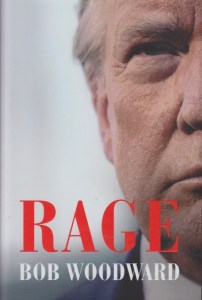
I know national secrets.  You can too!  Bob Woodward’s Rage contains them because Trump is willing to talk about anything that aggrandizes himself.  The real takeaway, and in many ways the point of Woodward’s book, is that Trump knew about and decided to downplay Covid-19.  And not because he didn’t think it was serious, but because he didn’t want to hurt his chances of reelection.  Although Woodward had no way of knowing in the middle of the summer, when the book went into production, that 45 would be infecting his senior staff mere months later, he would likely have been able to predict the results.  With the best medical attention in the world, Trump would recover and immediately downplay the virus that has now killed over 210,000 Americans.  Why?  He wants to win the election.

Many of us knew in November 2016 that this wasn’t just another Republican nominee with questionable intellect.  We knew that Trump had a long, long track record of caring for nobody but himself and that isn’t the kind of person who can lead a nation.  He had seventeen interviews with Woodward as he was writing Rage, and, as we might guess before opening the book, those interviews indicate that being president, for some, is all about bragging rights.  Knowing how serious the coronavirus is, he decided to ignore it for political expediency.  Now we see his own party’s leaders daily falling into the epidemiological pattern of the science they disbelieve.  Early on wearing masks was politicized and now we’re being told a deadly disease is a walk in the park (if you’ve got the best healthcare in the world).

I’m reluctant to write about politics.  I find it boring and intellectually stultifying.  But even under George W. Bush I believed that the president had what he believed to be the best interest of America at heart.  All that has changed in the last four years.  The Republican Party has sold its soul to the cult of Trump and those of us who’d rather just watch horror movies and write books and stories have had to become political activists simply to try to save democracy from the slide into a fascist narcissism that is intended to prop up one man’s ego.  Woodward’s book is more than a series of interviews with a dangerous man, it is a condemnation of political leaders who’ve failed their country repeatedly, without recrimination.  Of course, it is only intended for those who read, or maybe I’m just angry.


Up in the Sky

Superman stands for truth, justice, and the American way.  Or least he did when I was a kid.  One out of three ain’t bad.  Considering the many exposés that have come out about Trump in the last few weeks, many of them by intimate family or very close friends he’s recently betrayed, are a pretty amazing example of a liberal hoax, I guess.  Witness after witness after witness comes out saying that truth, justice, and the American way simply aren’t important to 45, and yet the evangelical bloc insists differently.  They can’t seem to see that those who like Superman don’t object to your garden variety Republican (although we prefer the other alternative), we object to Duperman saying he’s Superman.  When in history have we had several party members advocating that people not vote for their own party’s candidate?  And yet the true follower can’t accept the witness of closest friends and fixers that they’ve been lied to for four years.

Like many people I would rather not be political.  When it becomes an issue of destroying democracy, however, it suddenly seems like I have to add yet another thing to my already full plate.  For four years now I haven’t been able to trust the government to do its job.  Trump admits that he ignored how serious he knew the Covid-19 crisis to be back in the spring.  Six months later and we’re all still confined to our houses and businesses are suffering, and his supporters say he read this one just right.  Over 200,000 of our fellow Americans have died from a virus that our “president” won’t admit is a problem, even as the White House has taken over writing guidelines for the CDC.  Boy, are we ever great hoaxers over here on the left!

I recall Superman flying around Metropolis actually fighting crime.  Ensuring that the truth was upheld.  Justice was essential.  People adored him.  What happened on the way from Super to Duper?  We’ve come to praise a man who is a sworn enemy to justice unless there’s something in it for him.  Whose number of documented lies by any measure staggers the imagination, and yet whom “true Christians” support.  The Superman of the New Testament had quite a bit to say about truth and justice (the American way was a bit beyond his experience).  Those who lived in lies were considered friends of the Devil.  But times have changed since then.  Heck, they’ve changed since I was a kid.  We used to look up to Superman in those days.  Now we apparently prefer lies, injustice and what is apparently becoming the American way.


Kind Animals

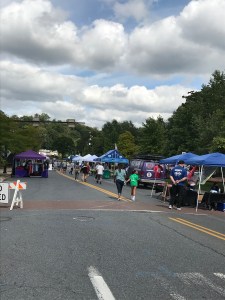
How many people could it be?  That’s the question a pandemic naturally raises.  Last weekend my wife and I ventured to a Vegan Festival in Easton.  Since we vegans are a rare bunch anyway, and since we tend to be socially conscious, there wasn’t likely to be any dangerous behavior.  That, and how many people would actually show up for what is often considered a somewhat wobbly crowd who don’t like to “rise, kill, and eat.”  It felt like a safe place to be with socially distanced kindred spirits.  Everyone was wearing masks and there was no Trump bravado going on.  For a moment it reminded me of the kind of accepting country the United States used to be.

Veganism, you see, isn’t just about not eating and not exploiting animals.  It’s about honoring the wonder of life in all creatures.  I realize some of the issues—believe me, I try to think things through thoroughly.  It’s all about consciousness.  We’re still a considerable distance from being able to define it, and some people, like philosopher Thomas Nagel, believe it might go all the way down and through the plant kingdom as well.  Consciousness is one of the great mysteries of science.  We hardly know what it is, and how are we to know where it stops?  If we assume other people are conscious (with a few notable exceptions) based on their words and actions, might we not suppose at least some of the “higher” animals are as well?  Or are you just being a fool when you talk to your dog?

You see how this naturally suggests consciousness may lessen by matters of degree, but then we learn that even some insects know how to count and can understand a concept of zero (beyond most Republicans).  We like to put insects down at the bottom because we’re bigger and therefore more important.  Veganism suggests that we stop and think about these things.  We don’t necessarily take everything for granted.  It is clear that the largest polluter and environmental problem is industrial animal farming.  Rainforests are cleared for grazing land.  Profits from big agra are staggering.  Wandering through the stalls, keeping our distance from others who perhaps think too much, we partook of the counterculture in our own quiet way.  The street festival was small this year, but I do have hopes that it might grow, along with some serious thinking about the consequences of our actions.  


Proof in the PDF

The proofs of Nightmares with the Bible are sitting right here on this laptop.  If I’ve seemed distracted, now you know why.  My life is unaccountably busy for a mere editor, and I’m afraid my September is being consumed by proofreading and index-making.  I had some fiction I wanted to submit this month, but proofs are a necessary part of writing and for those who take nobody’s word for it, reading them is important.  I have books on my shelves from very reputable publishers literally littered with typos.  I fear that.  I try to read proofs with as much concentration as a busy life will allow.  And yes, proofs come with hard and fast deadlines.  I only wish they’d been here in July.  Or June.  But still, Nightmares are on their way.

Since this was a “Halloween season” book, the goal was to have it out in September or October.  That won’t happen now, but there were a couple of things that transpired along the way: one was a pandemic.  The other was another paper shortage.  Strange as it may seem, both of my last two books came out in a time of paper shortages.  In 2018, the industry had supposed ebooks would wipe out print.  That didn’t happen, and when Michelle Obama’s Becoming took off, well, let’s just say academic books weren’t a priority.  Printing schedules across the industry got bumped and books from small publishers targeted for a specific date just didn’t match the demand.  This year the paper shortage is due to the Covid-19 outbreak.  Paper suppliers shut down for a while and, guess what?  Print came back!

In any case, hoping against hope that we can make the November publication date, I’m trying to read the proofs with record speed (and care).  That means other daily activities may suffer for a little bit.  Those of us who write think of our books as something like our children (not quite literally that high, but not far from it).  We want them to be launched into a world that will be receptive to them.  And so my morning writing (and reading) time has been dedicated to Nightmares with the Bible.  And indexing said book.  I’m not good at many things, but one talent I do have is concentration.  Until these proofs are submitted (hopefully ahead of deadline) there won’t be much else to which I can pay attention.  I’ll continue to post my daily thoughts, of course, and if you can click that “share” button on Amazon’s book page it’d be much appreciated.


Bird Land

Since I like to blog about books, my usual reading practice is to stick with a book once I start it.  This can be problematic for short story collections because often there’s one in particular I want to read.  Somewhat embarrassed about it, I have to confess that sometimes it’s because I saw the movie first.  So it was with Daphne du Maurier’s “The Birds.”  Du Maurier, the daughter of a father who also wrote horror, caught Alfred Hitchcock’s attention.  Several of his movies were based on her works.  Not all of them can be called horror—a genre that’s difficult to pin down—but they deal with gothic and thriller themes that had an appeal for Hitch.  In fact some analysts date the modern horror film to the period initiated by this iconic director.

I have a collection of du Maurier’s short stories, written in the day when 50 pages counted as a short story rather than “product” that could be “exploited” in various formats.  (Today it’s not easy to find literary magazines that will publish anything over 3,000 words, or roughly 10–12 pages.)  In any case, “The Birds” is an immersive tale.  The movie is quite different, of course, set in America with a cast of characters that can only be described as, well, Hitchcockian.  Du Maurier’s vision is much closer to the claustrophobic pandemic mindset.  A single English family, poor, tenant farmers, far from the centers of commerce, must figure out how to survive the bird attacks on their own.  The suddenly angry birds attack their hovel in time with the tides (they live near the coast) so the family has to gather supplies between attacks and try to last another night of pecking and clawing.

The story is quite effective.  Reading it suggests the importance of self-reliance and willingness to accept a changed reality on its own terms.  No explanation is given for the birds’ change of attitude.  Human intervention in the environment is supposed but how would a simple family living of the fringes of the fabric woven by the wealthy know?  Forced to react, they try to keep the kids calm while knowing, at some level, this can never end well.  The movie maintains the ambiguous ending, which is probably what makes it so scary.  Corvid or covid, there are things out there that drive us into our homes where we must shelter in place.  Although I didn’t read the whole book, this choice of story seems strangely apt for the current circumstances.


Walnuts

The walnuts are always the first to turn.  At least around here they are.  Their yellow leaves began to litter the bike path in August.  Their nuts can be quite a hazard to a jogger if it’s not quite light.  Still jacketed with their spherical rind, an unexpected foot landing on one can lead to a rolled ankle or even a fall on the pea gravel.  Such incidents led me to wait until it’s light enough to see clearly before going out for a jog.  You see, I like to exercise before starting work, so I jog at first light.  In June this can mean heading out even before five if the weather’s clear.  Since I start work around 6:30 this is a comfortable time to go.  Nobody else is on the bike path then.  And with Covid lurking, that’s a good thing.

The earliest sunrise comes about a week before the summer solstice.  By the time summer officially begins I already have to delay my jog slightly.  This is one of the great disappointments about Daylight Saving Time.  After winter’s long darkness, it starts to get light in the morning and I think to myself “I’ll soon be able to jog before work again,” but then we set the clocks back and set sunrise progress back by another month.  During the darkling months of the year I have to jog at lunchtime.  The changing walnuts always warn me that such a time is drawing near.  Already here in early September I’m getting back late for my usual work time since the sun is reluctant to throw its first crepuscular rays over the brow of the hill before six a.m.  The problem with this is that many more people are out on the bike trail at six than I ever see at five.  And often they don’t care to share.

There are a couple of older guys who walk abreast, taking up pretty much the whole trail every day now.  They hear me coming, look back, but like the marching band in “American Pie,” refuse to yield.  Single file for them is a sign of weakness.  I have to divert into the dew-soaked grass on chilly mornings to get around them with my now-wet feet.  I long for the days when I could easily jog before they even think of heading out to the trail.  The solitude of half-light.  The walnuts are the prophets of the tree world, however.  Their fruit is both nutritious and dangerous.  Scattered across the trail in the persistent dusk of a cloudy morning, they’re both a hazard and a warning.  And it’s a sign that the morning jog may already have to wait until mid-May to reappear.