Scary Television

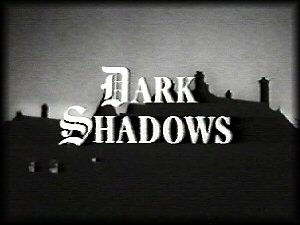
Since noting some months ago that I’d discovered Dark Shadows on Amazon Prime, it’s no surprise that I’m squeezing in an episode here and there, where I can.  Amazon begins “Season 1, Episode 1” at the point Barnabas Collins appears.  This was actually ten months into the daily, but it saves a few hundred dollars buying the DVDs.  I honestly remember little more than impressions of the soap opera from childhood.  I can’t say which episodes I saw during the initial run, but I do know that they were formative in my appreciation of horror.  It turns out that many famous people in various media were childhood fans of the show.  It certainly wasn’t the slickest production but it manages a mood that’s difficult to match.  It’s what Edgar Allan Poe called “effect,”—he felt that a short story should maintain a single effect, something that he did most notably in his macabre tales.

I recently watched, in Amazon’s numbering (and I realize Amazon didn’t come up with this, it was a rebroadcast release that someone decided should start when the show became popular) episode 22 in season one.  This particular episode surprised me in that it actually had a legitimately scary ending.  Now, soap operas are very slow unfolding of stories, as most television watchers know.  Things don’t change quickly and action-packed content requires a lot of time to set up and film, whereas daily shows simply don’t have the time to do that.  They rely on people being drawn into the story and wanting, needing, to find out what happens next.  By episode 22 the savvy viewer had already figured out that Barnabas Collins was the vampire.  Nobody had explicitly said so yet, however.

Maggie Evans, his favorite victim, has been “ill” in bed from loss of blood.  Under Barnabas’ spell, she sends away her boyfriend and Victoria Winters—the original impetus for the entire series—has come to sit with her through the stormy night.  As the two women argue about the proper care for Maggie’s condition, the storm continues, flashing lightning through the French doors in Maggie’s room.  The wind blows the doors open and a flash of lightning shows the silhouette of Barnabas standing in the garden.  I have to admit, even at my age and with my background of horror movie watching, that moment scared me.  The genius of the show is that Barnabas is such a likable character.  As the narrative develops, as it does beginning in episode 23, we come to see that Barnabas is a sad, reluctant monster.  Perhaps if I’ve time enough, I should write a book about it.  But then, I barely have a moment to squeeze in an episode now and again.


Nostalgic Shadows

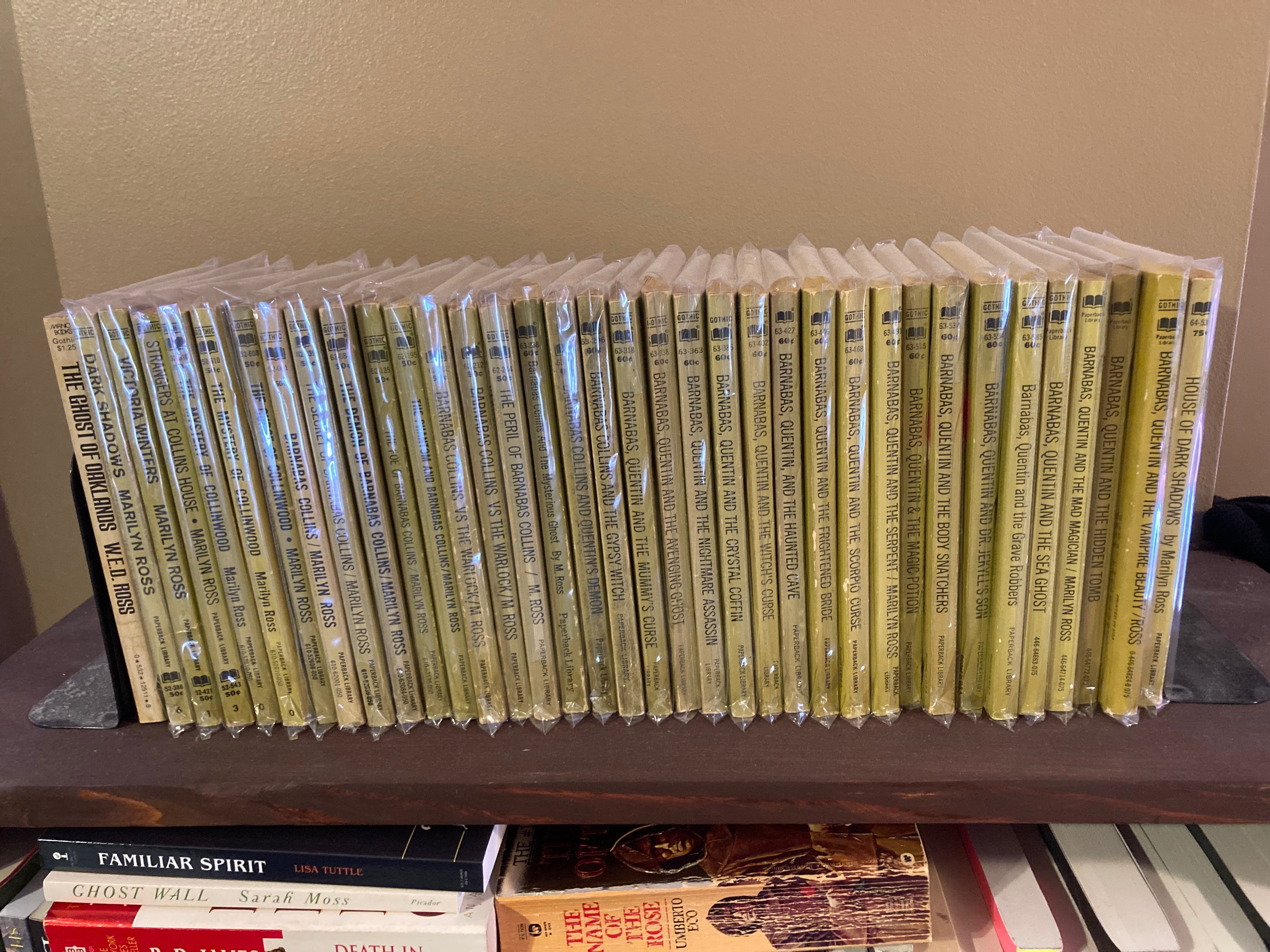
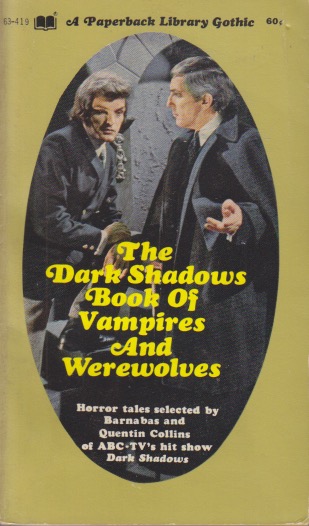
Nostalgia is a funny thing.  Although it can strike at any age, somehow after the half-century mark it’s particularly easy to get swept into it.  As I written about many, many times, I was drawn into the Marilyn Ross Dark Shadows novels as a tween.  In my mid-to-late forties, when the internet made it possible, I started to collect all the volumes from 1 through 32.  It took several years.  I had to find them via BookFinder.com and our level of income didn’t support buying more than one every few months.  Then in 2022, having difficulty locating the last of the original series, I found a seller on eBay offering up the whole set.  The price for that set was less than the least expensive final volume I could find.  I did what any nostalgic guy would do.

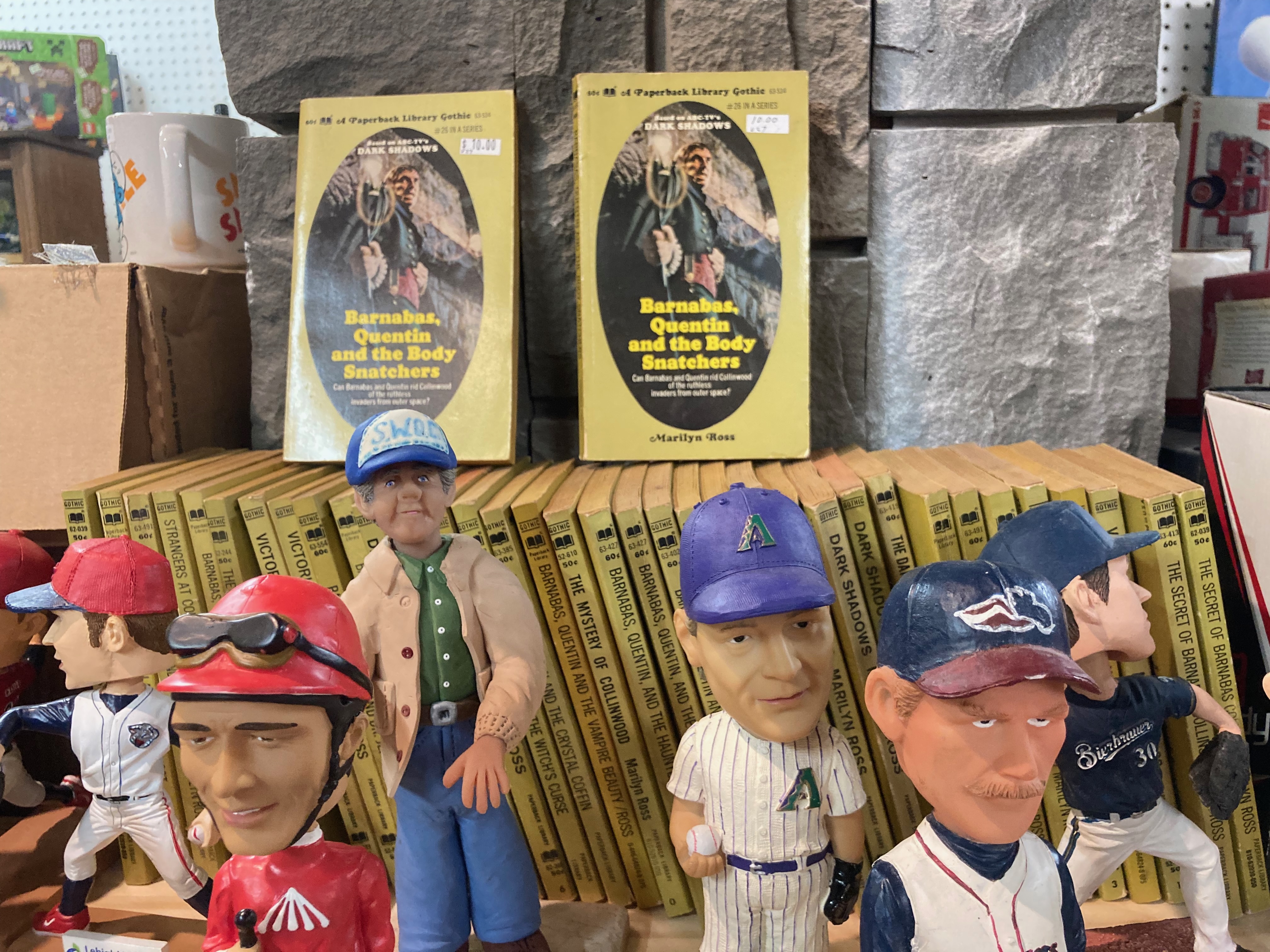
We don’t really buy antiques, but I’d been looking for an office desk (this was before the scam).  I’d been using a craft table for a desk for years and it seemed that I really needed something with a better organizational range.  This led me to stop into a local antique shop.  They ended up not having much furniture, but they did have aisles of nostalgia.  A few weeks later when it was too hot and humid to be outdoors, I revisited the shop.  This time, relieved of the burden of seeking a desk, I was able to browse at leisure.  It’s like going to a museum but not having to pay admission.  I turned a corner and I saw something I’d never seen before.  A collection of Marilyn Ross Dark Shadows books.

It wasn’t a full set, but I had, prior to finishing my own collection, never seen more than one or two together in any single place.  As a child I’d buy them at Goodwill.  As an adult, on BookFinder.  All those years in-between, I always looked for them when visiting used bookstores.  I visit said shops whenever possible.  In decades of looking I’d only found one in the wild once or twice, and always by its lonesome.  This was a completely new experience for me.  It was also quite odd to be seeing them and not having any need to buy them.  I have a full set.  The nostalgia was almost overpowering.  I couldn’t help but think of how even a few years ago I’d been pawing through to see if there were any I hadn’t yet found.  All for reliving a bit of my childhood.


Being a Fan

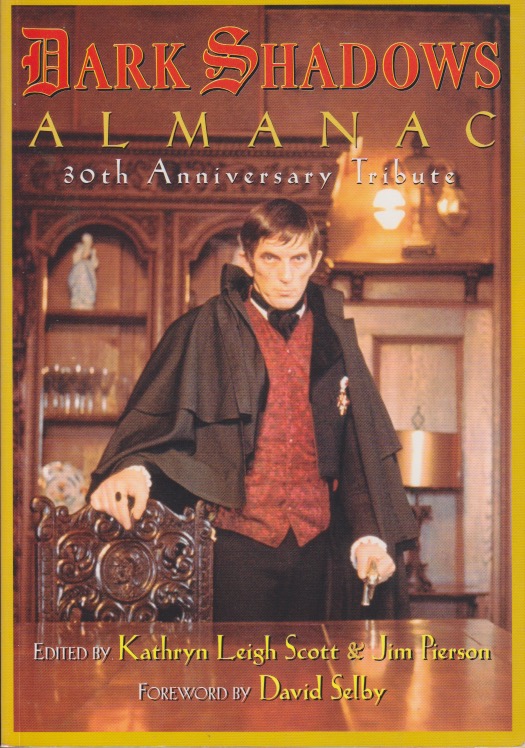
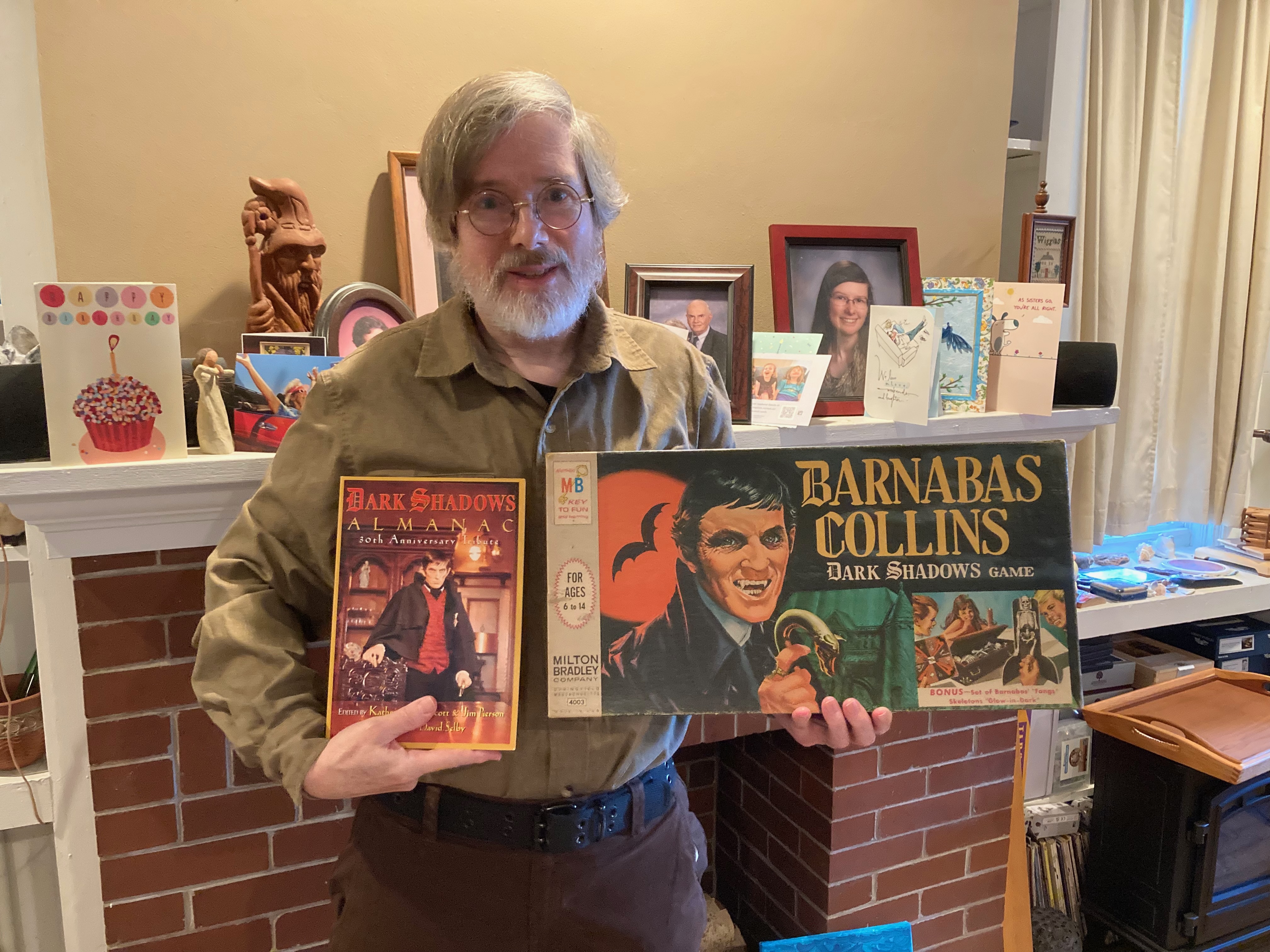
Fandom is a weird thing with me.  Having wide-ranging interests, coupled with an at times obsessive personality, my likes are intense but fall short of the kind of fan who purchases everything associated with their fascination.  A friend kindly sent me the Dark Shadows Almanac, edited by Kathryn Leigh Scott and Jim Pierson.  I try my best to read books friends  send me, and working my way through the Almanac, I realized just how far short of real fandom I fall.  Dark Shadows was likely my gateway to horror.  Watching it after school is one of my early memories.  But I was quite young at the time and beyond Barnabas, Quentin, the wonderfully gothic house, and the opening music and waves crashing into the rocks, specifics didn’t last.  Dark Shadows was one of the earliest fan-congregating shows.  Before Comic-Con, there were Dark Shadows conferences.  Kids eagerly bought all things Barnabas related.

I was about seven when the show hit its zenith.  I do remember watching it, and the wonderful, creepy feeling it gave me.  As a child I couldn’t have named any of the actors.  A lot was happening in my life at the time.  My mother was divorcing my alcoholic father.  My grandmother, who lived with us, lay bed-ridden and dying in what had been our dining room.  We lived in a run-down old apartment with very little money.  Heavy stuff for a kid.  And television also offered funny shows in the evening.  And Saturday morning cartoons (which included, yes, Scooby-Doo). I’ve always been amazed at just how much stuff there is in the world and I yearn to understand it deeply.  It was probably pretty much fore-ordained that I would try to be a professor.

Reading the Almanac not only reinforced how influential the series was, it also made me aware of just how complicated producing a television show is.  Many, many people are involved, specialists in artistic and technical fields.  Most of them make modest livings with, if they’re lucky, mentions in the credits.  The stars we know.  I think, for me, Barnabas Collins was a father stand-in.  What I noticed, even as a child, was that he was sad.  A certain type of person is drawn to sad individuals.  I always want to cheer them up because I know how it feels.  This is the part of me that wanted to be a minister.  I tried that a number of times but it never worked out either.  Reading an almanac like this isn’t really a deep intellectual exercise, but it is a learning experience.  And one of the things we might learn about is ourselves, whether a true fanatic or not.


Dangers of Dark Shadows

A friend’s recent gift proved dangerous.  I wrote already about the very kind, unexpected present of the Dark Shadows Almanac and the Barnabas Collins game.  This got me curious and I found out that the original series is now streaming on Amazon Prime.  Dangerous knowledge.  Left alone for a couple hours, I decided to watch “Season 1, Episode 1.”  I immediately knew something was wrong.  Willie Loomis is shown staring at a portrait of Barnabas Collins.  Barnabas was introduced into the series in 1967, not 1966, when it began.  Dark Shadows was a gothic soap opera and the idea of writing a vampire into it only came when daily ratings were dismal, after about ten months of airing.  Barnabas Collins saved the series from cancellation and provided those wonderful chills I knew as a child.  But I wanted to see it from the beginning.

I’ve gone on about digital rights management before, but something that equally disturbs me is the re-writing of history.  Dark Shadows did not begin with Barnabas Collins—it started with Victoria Winters.  There were 1,225 episodes.  Some of us have a compulsion about completeness.  The Dark Shadows novels began five volumes before Barnabas arrived.  Once I began collecting them, I couldn’t stop until, many years later, I’d completed the set.  I read each one, starting with Dark Shadows and Victoria Winters.  Now Amazon is telling me the show began with Barnabas Collins.  Don’t get me wrong; this means that I have ten months of daily programming that I can skip, but I am a fan of completeness.

You can buy the entire collection on DVD but it’s about $400.  I can’t commit the number of years it might take to get through all of it.  I’m still only on season four of The Twilight Zone DVD collection that I bought over a decade (closer to two decades) ago.  I really have very little free time.  Outside of work, my writing claims the lion’s share of it.  Even with ten months shaved off, I’m not sure where I’ll find the time to watch what remains of the series.  The question will always be hanging in my mind, though.  Did they cut anything else out?  Digital manipulation allows for playing all kinds of shenanigans with the past.  Ebooks can be altered without warning.  Scenes can silently be dropped from movies.  You can be told that you’ve watched the complete series, but you will have not.  Vampires aren’t the only dangerous things in Dark Shadows.


Childhood TV

It’s probably safe to say that most Americans my age were influenced by television when they were young.  Since I’m a late boomer, I fit into the “monster boomer” category and I suspect that if you gathered us all in a room you’d discover we had some of the same watching habits.  I confess to having watched a lot of TV.  I will also admit that some of it was absorbed particularly deeply.  I mean, I liked shows like Scooby-Doo, Jonny Quest, Get Smart, Gilligan’s Island, and even The Brady Bunch.  While I still quote from a couple of these from time to time, they never penetrated as deeply as a number of other early fascinations.  I saw nowhere near every episode of The Twilight Zone, but those I did see absolutely riveted me.  They still do.  As an adult I’ve read many books on or by Rod Serling.  There’s depth there.

Another strong contender for real influence is Dark Shadows.  Again, I never saw all the episodes but it created in me a feeling that no other television show did.  My breath still hitches, sometimes, when I think of it.  I watched the show and I bought used copies of the novels by Marilyn Ross.  As an adult I even collected and read the entire lot of them.  And I’ve read a book or two about Dark Shadows.  And one about Dan Curtis, the creator of the series.  Recently a good friend, aware of this particular predilection, sent me the Barnabas Collins game and a copy of The Dark Shadows Almanac.  I have to admit that it was difficult to work the rest of that day!

Probably the last very influential television show—more from my tween Muppet Show era—was In Search of…  This I watched religiously, and, like Dark Shadows, I went out and bought the tie-in books by Alan Landsburg.  One thing all three of these series (Twilight Zone, Dark Shadows, and In Search of…) have in common in my life is that I purchased the accompanying books.  Those that I foolishly got rid of when I was younger I have reacquired as an adult.  Sure, there’s some nostalgia there, but these shows were more than mere entertainment.  They have helped make me who I am today (whoever that is).  I rediscovered my monster boomerhood after losing my tenuous foothold in academia and saw that other religion scholars were writing books about these somewhat dark, and deep, topics.  So I find myself with friends ready to help indulge a fantasy and a shelf full of books that many my age would be embarrassed to admit having read.  But chances are they too were influenced by television, even if they hide it better.


Thinking about Vampires

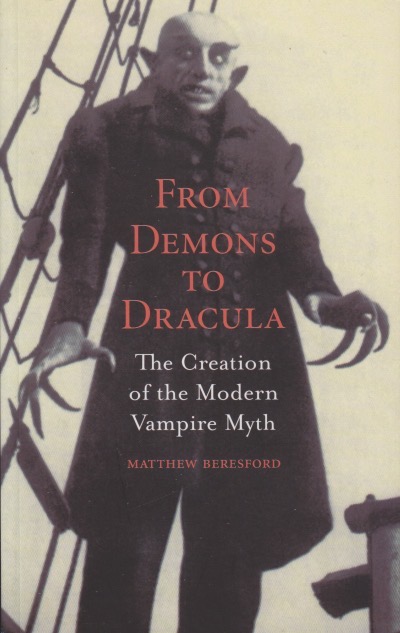
Any book on vampires has to be limited.  I first read Matthew Beresford’s From Demons to Dracula: The Creation of the Modern Vampire Myth back in 2009.  It has lots of information, but it was long enough ago that much of what I’d learned had grown fusty with age.  I began re-reading it as Halloween approached, and am glad I did.  The thing about vampires, however, is that you do have to compare sources.  Like many explorations of the vampire, Beresford’s notes that there are ancient analogues, but nothing precisely like we think of vampires today.  From my own perspective, I tend to think that our modern vampires, like our demons, come from movies.  Starting with F. W. Murnau’s Nosferatu, but more clearly from Tod Browning’s Dracula, our idea of what vampires are have been mediated by the silver screen.

This book ranges widely across time, region, and genre.  It discusses early reports that clearly considered vampires an actual threat, as well as movies made purely for entertainment.  One thing that I noticed this time around is that the author, being British, seems not to have noticed the tremendous influence Dark Shadows had on the popularity of vampires prior to Anne Rice’s Interview with the Vampire.  I suspect that soap operas were not widely known internationally, and even if they were, they were likely not taken too seriously.  Dark Shadows was different, however, and it made vampires chic in a way they simply weren’t before the early seventies.  At least in the United States, Barnabas Collins helped define the vampire.

Beresford makes the point that there is no single defining characteristic that applies to all vampires.  Early European vampires didn’t necessarily drink blood—they were revenants (they’d returned from the dead) but they weren’t always after blood.  In the nineteenth century bloodlust became the defining feature of vampires.  There are historical points on which to quibble with the argument here, but overall this book is a good overview of how ideas like vampires have been around for quite some time.  As someone who specialized in ancient literature for a good part of my life, I would not have called the various ancient analogues pointed out “vampires.”  Beresford is making the case that they lay the groundwork for what later became vampires.  And Vlad Tepes of Wallachia played his part as well.  As did the ancient Greeks.  It seems to me there’s more rich ground to explore here and this book provides a very good starting place.


More Than Dark Shadows

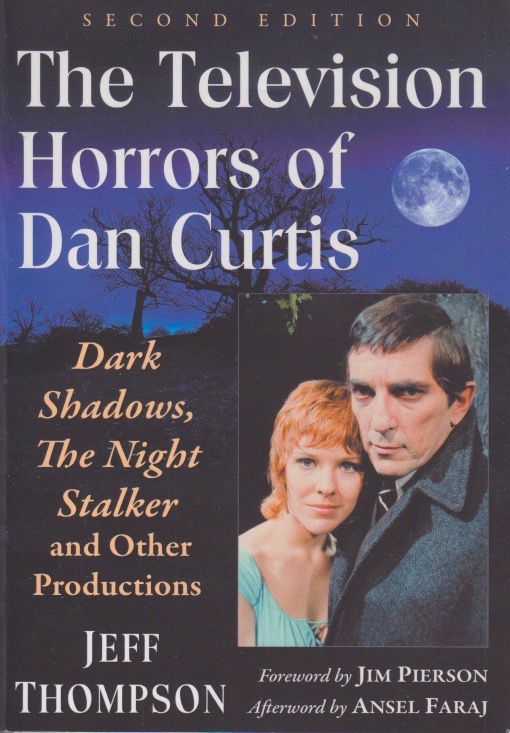
The Television Horrors of Dan Curtis is one of those books that makes me feel less alone.  Jeff Thompson is not only a true fan of Curtis’ voluminous quality output, but he knows more about Dark Shadows than might seem possible.  I knew I wanted to read this book as soon as I learned of it.  As I’ve confessed many times before, although Dark Shadows was formative for me, I’m a mere dabbler.  I saw a fair number of the original run on afterschool television, I read the novels, but I never dove in.  I was more of a wader.  Still, this book demonstrates that many people were influenced by Dark Shadows, some that you might not expect.  But the book is about Dan Curtis and his horror work (mostly).

Dan Curtis went on to a kind of fame for his war epics (considered “serious” work), The Winds of War and War and Remembrance.  Although he directed some theatrical movies (all of which I’ve seen), he mostly stuck to work in television.  One of the results of this is that he never attained the level of appreciation of a number of auteurs who focused on Hollywood.  And it’s also clear that Curtis was interested in more than just monsters.  I personally dislike gangster and war movies (although my great-uncle Melvin Purvis was one of his interests).  Curtis found them worth of his considerable talents.  As Thompson makes clear, however, even as his own death was approaching, Curtis knew that, like Washington Irving, his early work would be that for which he was remembered.  That’s because Dark Shadows went where nobody else dared to go, and it’s memorable even today.

I learned a lot from this book.  Enough to know that Curtis was an enigma.  He remains less recognized as a director and producer than many Hollywood personalities that are household names.  Still, if pressed, a number of people even today would recognize some of Curtis’ work, whether or not they associate it with him.  Dark Shadows went through a short television reboot, for instance, and a second reboot attempt before being made into a movie by Tim Burton.  This book, however, made me watch some movies I had only known vaguely before.  And it has inspired me to watch others as well.  Curtis was an incredibly hard worker, and a man with definite opinions.  It’s perhaps a bit surprising that he never really attained the kind of fame that other “content producers” did.  Even his Wikipedia article is brief.  This book helps uncover a large amount of information behind a person who influenced many people without the glamour associated with that level of impact.


Dark House

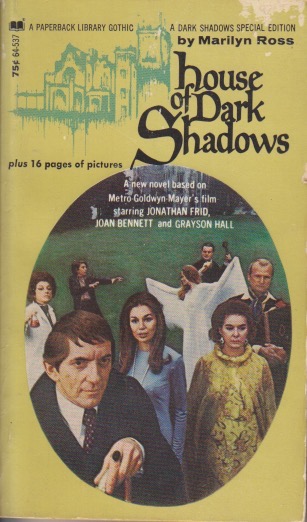
Last year I completed an odyssey that began over a decade and a half ago.  I finished reading the Dark Shadows serial novels by Marilyn Ross.  Not because they were great literature, but because they were an important part of my childhood.  Slowly, over the years, I regathered the books and read them until the whole series was done.  One of the used book sellers was offering a collection of the books, and although the collection had some duplicates of what I’d already found, it contained some of the more difficult to locate titles.  When it arrived, I found it also included House of Dark Shadows.  This novelization wasn’t part of the series, and like most things in my life, I can’t claim to know everything about Dark Shadows.  As a child I didn’t know there had been a movie, let alone a novelization.  (I bought the books as I happened to find them, at Goodwill and watched the TV show.)

In the present, I’d just finished Octavia Butler’s Parable of the Talents and felt that I needed something lighter for my next fictional project.  House of Dark Shadows proved a better read than most of the series books, perhaps because it was based on a movie script written by the screenwriters.  Marilyn Ross was actually William Edward Daniel (W. E. D.) Ross, and he wrote more than 300 novels.  His Dark Shadows oeuvre became repetitious in its dialogue, across the series.  His characters always seem to say “at once” instead of “immediately” or “right now.”  I’m pretty sure the word “mocking” appears in each of them—certainly the latter ones—multiple times.  Having the script must’ve really helped keep those trademarks to a minimum.

Of course, now that I’ve read the novelization I need to go back and watch the movie again.  It’s been almost two years and some of the details escape me.  It’s largely because the movie goes “off script” from the long-running daily show (and the other novels).  I also realized that Tim Burton’s Dark Shadows movie was really a kind of reboot of House of Dark Shadows, unfortunately screen written by Seth Grahame-Smith as a comedy.  I’m no expert on Dark Shadows, just a reasonably enthusiastic fan in search of a lost childhood.  The movie makes the premise of the series untenable—both can’t exist in the same world, so it’s kind of a Dark Shadows multiverse, rather than a simple universe.  And it’s very complex.  I’d need to start again at childhood to become an expert in it, but at least now I’ve read all the books.


Wild Moose Chase

I don’t remember the details, but I’m pretty sure we didn’t ask permission.  It was summer and a seminary friend and I were going camping in Maine.  You see, Maine has always been my favorite state.  Not only does it have dramatic cliffs over the gray north Atlantic, it’s also home to moose.  I always wanted to see a moose in the wild.  So I talked a friend into camping in Maine so we could see a moose.  He was from North Carolina and hadn’t ever seen one either—moose are limited to the very northern states in the US, those that border Canada.  Like many seminary students, I worked during the summer, but weekends were made for Maine.  We trundled up into the wooded part (the largest part) of the state, and drove up an old logging road that looked like it hadn’t been used for quite a long time, and set up a tent.  We didn’t see any moose, though.

A few weeks later I was able to persuade my friend to try again.  This time we drove to Mooselookmeguntic Lake.  We stayed at a proper campground.  The very name of the place means “moose feeding place.”  We saw no moose.  The next morning we asked the park ranger if they we around that area.  “I saw two on my way home last night,” he said.  So it often is in life.  Things abundant to the locals are exotic to those from elsewhere.  I never did see a moose in Maine until my honeymoon many years later.  They are elusive creatures, large but shy, particularly around those “not from around here.”  Eventually my path crossed those of the majestic moose.  Mostly in Idaho.

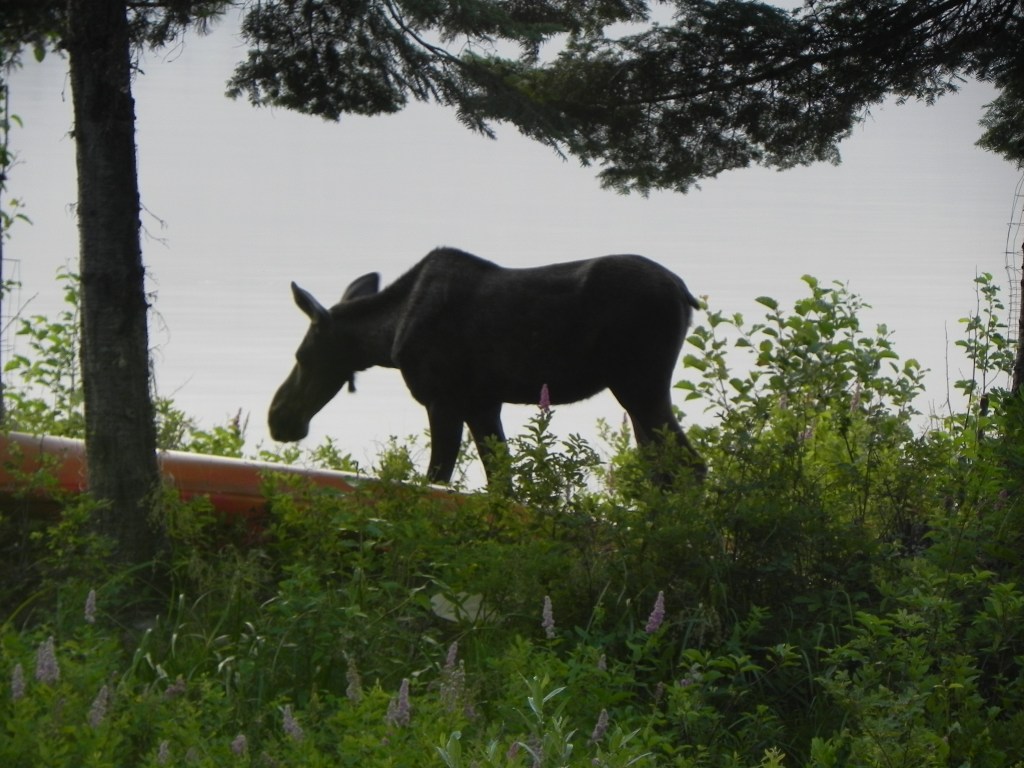
An Idaho moose

What’s behind my moose obsession?  I can’t really say.  I first became consciously aware of moose as a teenager and I knew that we didn’t have them in Pennsylvania (there are still, however, a few elk left in the state).  And besides, Maine was my favorite state.  That was because of childhood reading—there was no internet, and books are amazing for the imagination.  I suppose my love of Maine with its Dark Shadows and rocky coast may have spurred my desire to witness a moose in its chosen habitat.  There are giants in the woods of Maine.  They walk silently through the night.  For those fortunate enough to live in the state, they may be common.  For some of the rest of us, at least, they are transcendent.


Small Bits

A doctorate in the humanities involves learning as much as possible about a limited subject and being able to demonstrate that you know it intimately.  Interestingly, unless you continue the rest of your life in that vein, you’ll realize that you know things only in bits.  Let me use some personal examples, since they’re the kind I know best.  One of my favorite musical artists is Alice Cooper.  To this day he’s the only secular rock act I’ve seen in concert.  I thought I knew Alice, but Spotify taught me that I knew only a very small bit of his oeuvre.  My sense of him as favorite was based on a fragment of what he’s done.  The same applies to fictional characters.  I was a young fan of Barnabas Collins without having watched nearly all Dark Shadows episodes (and neither of the two series related movies), and having read only a handful of the novelizations.  Still, I felt I knew Barnabas.  I suspect I could go the rest of the way through the alphabet with no difficulty.

As facetious as it may be, the “million hour rule” has a grain of truth in it.  That axiom states that to be a true expert in something you have to spend a million hours doing it.  Simple mathematics reveals that means well over a century doing nothing but one thing would be required to fulfill the time.  In other words, no-one is a true master of anything.  We’re all practitioners.  I feel a little better about my recognition that my knowledge, such as it is, is based on small pieces.  What I write in my books are simply entries into conversations started by others.  This is true even if they remain unread.

I’m always encouraged by the neophyte that sets the experts back on their heels.  It’s beautiful to watch knowledge progress that way.  Our institutions are important, but they all become prisons when we suppose they represent the only way to do it.  Life has so many fascinating elements that the truly curious can’t possibly be an expert in them all.  The big picture benefits from stepping back once in a while and considering the small bits that make up the whole.  I can’t claim to be an expert on this, and my knowledge—such as it is—only comes in small bits.  But small bits, when there are enough of them, add up.  The whole picture, however, will never be completed by those of us with only small bits of it.

Photo by Hans-Peter Gauster on Unsplash

Beautiful Vampire

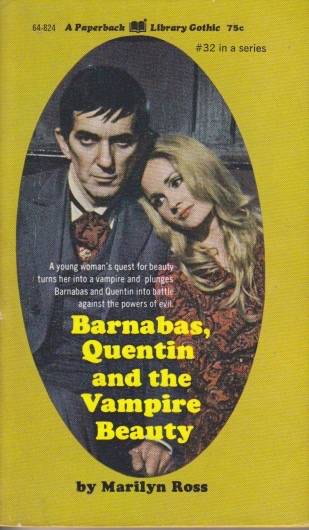
It’s been a quest years in the making.  I first found the Dark Shadows novels by Marilyn Ross at the Goodwill Store in Seneca, Pennsylvania.  The series had recently finished its television run and, as this was a used book bin, and limited in size, you could never tell what you might find.  My teenage self, fascinated by vampire lore, eagerly read those I could find.  I got rid of the volumes I had when I attended college and began to miss them when I was old enough to admit such things.  It took at least fifteen years to locate all of them, and now, for the first time in my life, I have read the entire series.  Barnabas, Quentin and the Vampire Beauty isn’t always easy to find.  I certainly hadn’t read it before.  Not that it’s high art—the campiness shows through the gothic setting from time-to-time—and yet it’s an accomplishment.

This particular story again shows some development from what had gone before.  The vampire beauty is a young woman tricked into having weight reduction surgery in Switzerland.  The surgery, naturally enough, transforms her into a vampire.  She needs help so she seeks out Barnabas Collins, which leads her to Collinwood.  From there a set of adventures head toward the typical climax of this series of books.  Nevertheless, W. E. D. Ross seems to have shown some improvement over the thirty-two novels in the series.  This story seems less similar to others in the series as a whole.  Quite a bit of effort is spent on trying to find a vampire cure, but for Adele Marriot rather that Barnabas Collins.

I have to wonder if Ross knew this would be the last Dark Shadows book he would write for the series.  He did write other gothic fiction, and even a novelization of the movie, House of Dark Shadows, but the initial series ends with a kind of knowing that we’ve reached the end of something.  Was he told by someone at Paperback Library, “Hey, we’re pulling the plug on the series” or did he simply run out of steam?  The daily television show ran for about 1225 episodes.  This original novel series had far fewer.  Still, the thrill of hunting all of them down, lining them on my shelf, and then reading them in order was a rare pleasure.  It was a recapturing of, perhaps even a completing of, part of my childhood.  It may have taken decades to accomplish, but an accomplishment is an accomplishment.


Hidden Improvement

I believe in improvement.  Even for a journeyman writer like W. E. D. (Marilyn) Ross.  At least in his Dark Shadows books.  For much of the series the plot is largely the same: a young woman is threatened and finds herself in Collinwood.  Often the threat comes in the form of a mysterious stranger.  The woman falls in love with Barnabas Collins, but in the end it doesn’t work out.  The bad guys are stopped, however, whether they’re supernatural or not.  In Barnabas, Quentin and the Hidden Tomb things have moved on somewhat.  The main female character, Ellen, a southern belle from just after the Civil War, doesn’t fall for Barnabas.  She is attracted to him, of course, but not really in love.  That’s a plus.  And Barnabas is temporarily cured of his vampirism in this story.  Quentin is, despite earlier story lines, really pretty good, if misunderstood.

This installment begins in the Hudson Valley where Ellen’s intended lives.  Unbeknownst to her, her fiancé has died and has been substituted with his identical twin vampire brother.  This northern family lost their fortune during the war and need the marriage to bring Ellen’s cash into the coffers/coffin.  Ellen is rescued by Barnabas, who is a family friend.  He takes her to Maine, figuring she’ll be safe there.  Unlike other women in the series, she has already fallen in love with someone other than Barnabas, so the tension is focused elsewhere.  The disguised enemies come, of course, but this story feels a bit less formulaic.

As I’ve confessed numerous times regarding this series, these are guilty pleasure books from my childhood.  I don’t read them expecting belles lettres, but rather a rush of nostalgia.  They seldom fail to deliver on that front.  There are a limited number of them.  They hearken to a different time when the ability to crank out book after book (Ross published at least 24 novels the year this one appeared—that’s the rate of two per month) didn’t hurt your ability to find a publisher.  Some of his fiction, I’m told, is quite good.  Others, such as the Dark Shadows books, are of a different purpose.  They were meant to supplement the income on an unexpectedly successful soap opera that would go on to become a cultural icon.  It will be no surprise that Barnabas and Ellen prevail in the end.  The enemies are unmasked and, strangely for the series, the vampire is destroyed.  And the legend lives on.


The Goodreads Zone

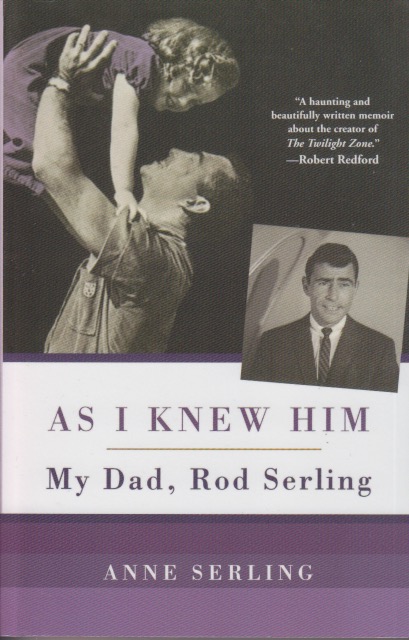
It happened on Goodreads.  I suspect she had no idea how much that simple “like” meant to me.  Social media is too big to be everywhere, so I primarily engage with those who reach out to me (without trolling), on Twitter, Facebook, YouTube, and Goodreads.  Even with my activity on these venues, comments are rare.  Likes a bit more common, and always appreciated.  Several months after I posted a review of her book, As I Knew Him: My Dad, Rod Serling on Goodreads, Anne Serling liked it.  That may not seem like much, but this was the actual daughter of Rod Serling himself, liking something I wrote.  If you feel the way I do about The Twilight Zone this will be a personal brush with greatness.  Almost as if Serling himself approved.

I’ve met a few famous people in my time.  Mostly they are ordinary people and act like ordinary people.  Only those of us around someone famous know that millions of people have heard of one of us.  Heard of and admire.  The rest of us manage to get along, but we do so without notice.  Unless someone “likes” what we do.  It’s kind of like having someone famous blurb your book.  In any case, my childhood consisted of many snippets of things that made me who I am.  One of those snippets was The Twilight Zone.  I watched a lot of television growing up.  We were not a reading family (neither parent finished high school), so the television was the item of choice after work/school.  Much of what I watched washed off.  Not The Twilight Zone.

Like reading through the Dark Shadows novels, I’ve been slowly watching my way through The Twilight Zone alone.  Nobody else in my family cares for it and since I don’t have much free time I only get to it on rare occasions.  Now that mowing time is here, those occasions are even fewer.  I guess I feel that I have to justify why I’ve come around to writing about horror as an adult.  You don’t get to be an adult without having some kind of childhood first, and mine involved The Twilight Zone.  Anne Serling’s involved being raised by the creator of The Twilight Zone.  To me, that’s a validating kind of fame.  To be seen by someone who could, if she wanted, have an instant and ready-made audience.  A reverie, started by something that happened on Goodreads.


Young Reading

It was more the lede line than the story.  Melissa Kirsch’s “The books we read when we’re young help shape the adults we become in ways we don’t always grasp” caught my attention.  My own current rereading of Dark Shadows books certainly reflects that.  As my You Tube video on Dark Shadows considers, it was the books more than the television show that shaped my young mind.  Consciously, I know that’s probably the main reason I’ve always wanted to live in Maine.  It may seem strange to some to want to move where a vampire frequently visits, but there was more going on in those stories than I realized.  It would be enough to make me tremble were I a young persons’ fiction writer.  They have so much influence.  Spending my younger years searching for a father took me some strange places.

My other young reading was, naturally, the Bible.  I can’t remember how young I was when I began to try to read through the King James.  Eventually I did get through, and then I started all over again.  Clearly my entire life has been impacted by that early fear of Hell that drove me to the Scriptures.  Perhaps that combination of Bible and Dark Shadows novels led to Holy Horror and its aftermath.  In other words, my youthful reading led to what has become a vocation, of sorts.  That elusive university, or college job in Maine never came to fruition.  I tried many times to get a toehold there, Bible in hand.  I’ve ended up back in Pennsylvania, where I started.  And I’m still reading.

I’ve read a good number of good books, but it has been some time since one set my life off on a different trajectory.  Some books have lead me to write books, and books I read often suggest even more books.  Whether I die today or thirty years from now, books will have defined my life.  I grew up reading them and wanting to write them, with no real idea how to do the latter.  One of those childhood books convinced me that a career outside the church was one not worth having.  Indeed, were I clergy now my enjoyment of horror would certainly garner more attention than it does in my current role as “some guy.”  I am, however, that person who grew from a worried-looking kid who’d not yet figured out that my reading choices would lead to a life measured by books.

The ultimate adventure…

Insane Illusionist

The Dark Shadows novels supplemented my early watching of the television series.  It’s funny, but when I remember watching the show, in my mind I watched it alone.  During a conversation with one of my brothers recently, he assured me that he had watched the show too, pointing to the selectiveness of memory.  What I do know is that I was the only one who read the novels.  I bought them when I could find them used, and I kept them in an old pasteboard suitcase (we had no bookshelves and my parents didn’t read).  I didn’t have the entire collection by a long shot and I can honestly say I don’t know which ones I read back then.  I am now, however, two novels from finishing the entire series—a project I began around 2006.

Barnabas, Quentin and the Mad Magician follows the usual formula, although this time around Barnabas is temporarily cured of his vampire curse and Quentin doesn’t turn into a werewolf at all.  They are on friendly terms and both are being set up by the rather obvious antagonist, the mad magician.  I guess you can begin to see the series winding down.  Most of the thirty-two stories are broadly similar and the writing is that rushed, breathless kind that seems characteristic of those who make a living delivering pulp fiction.  There have always been people like me who will buy it.  That’s the reason I typically use the phrase “guilty pleasure” when describing these novels.

As I note in my YouTube video on the phenomenon, Dark Shadows was quite popular in its day.  It’s what we might now call a cultural meme.  Television series, novels, two movies, comic books, lunch boxes—the whole coffin.  The monsters were likable.  That was true of some of the greats—you felt sympathetic toward them.  As horror began to “grow up” the monsters often became entirely reprehensible, with no redeeming qualities.  So as Barnabas and Quentin do their best to expose the true monster, their supernatural powers currently on hold, they have to rely on their money and connections.  Even at the end the “confession” is made suspect by the longer tacked on ending.  If you’ve read enough of these, you grow suspicious when there are ten pages left after the antagonist dies.  Stories such as this aren’t great literature, but they do fill a gap in the world of monsters that nostalgia leaves for those who knew Dark Shadows in the late sixties.