Not Schrödinger’s

It’s quite a dilemma.  It’s Schrödinger’s cat without the box.  Well, it’s a dead cat in my yard.  It’s not my cat and I only know about it because the next-door neighbor saw it while out mowing.  (It’s on the thin strip between our houses and we seldom make our way over there.)  Death is always a problem.  I don’t want to bury it since it looks like it was a pet.  Said neighbor is the only one I know around here but I know some pets have tracers/implants to help owners know if something happens.  So I tried calling the local animal control companies.  They don’t deal with cats.  There is a county service, in the next town over, but we’re across the border in a county that doesn’t deal with cats or dogs.  The DOT won’t get involved unless they’re on the street.  The local municipality also handles them only on the street or sidewalk.

Now, I own a shovel and I’m not afraid of hard work.  I am a bit squeamish, though.  I’ve handled half-squirrels from some hawk with eyes bigger than its stomach.  I also have to take care of dead birds and squirrels that get into the garage.  This is a bit bigger than I’m used to.  I’m not even entirely sure if it’s a cat, really.  Once an opossum got into our compost bin and the fur looks like it could be an opossum.  It doesn’t smell bad, though, and possums don’t have the most pleasant bouquet even when they’re alive.  The flies seem to like it okay, however.  The space between our houses would be challenging for the turkey vultures I see around daily.  They must be mad with frustration circling up there.  If it’s somebody’s pet I’m sure they’d like to know, but it’s looking like I’ll be digging—but you’re supposed to call Angie first, right?  In case of buried cables?

Death is entirely natural.  Ironically, I live two blocks from a pet crematorium.  I wonder if they make house calls?  Then again, it wouldn’t be cheap.  We expose ourselves to loss when we bring pets into our families.  My own beloved childhood beagle was hit by a car.  Meanwhile, I know that we shall all meet on that beautiful shore, by and by, and when we do I hope someone recognizes their cat from this side of the vale of tears.  Or at least outside of Schrödinger’s box.

Image credit: Greudin, public domain, via Wikimedia Commons

Call Me AI

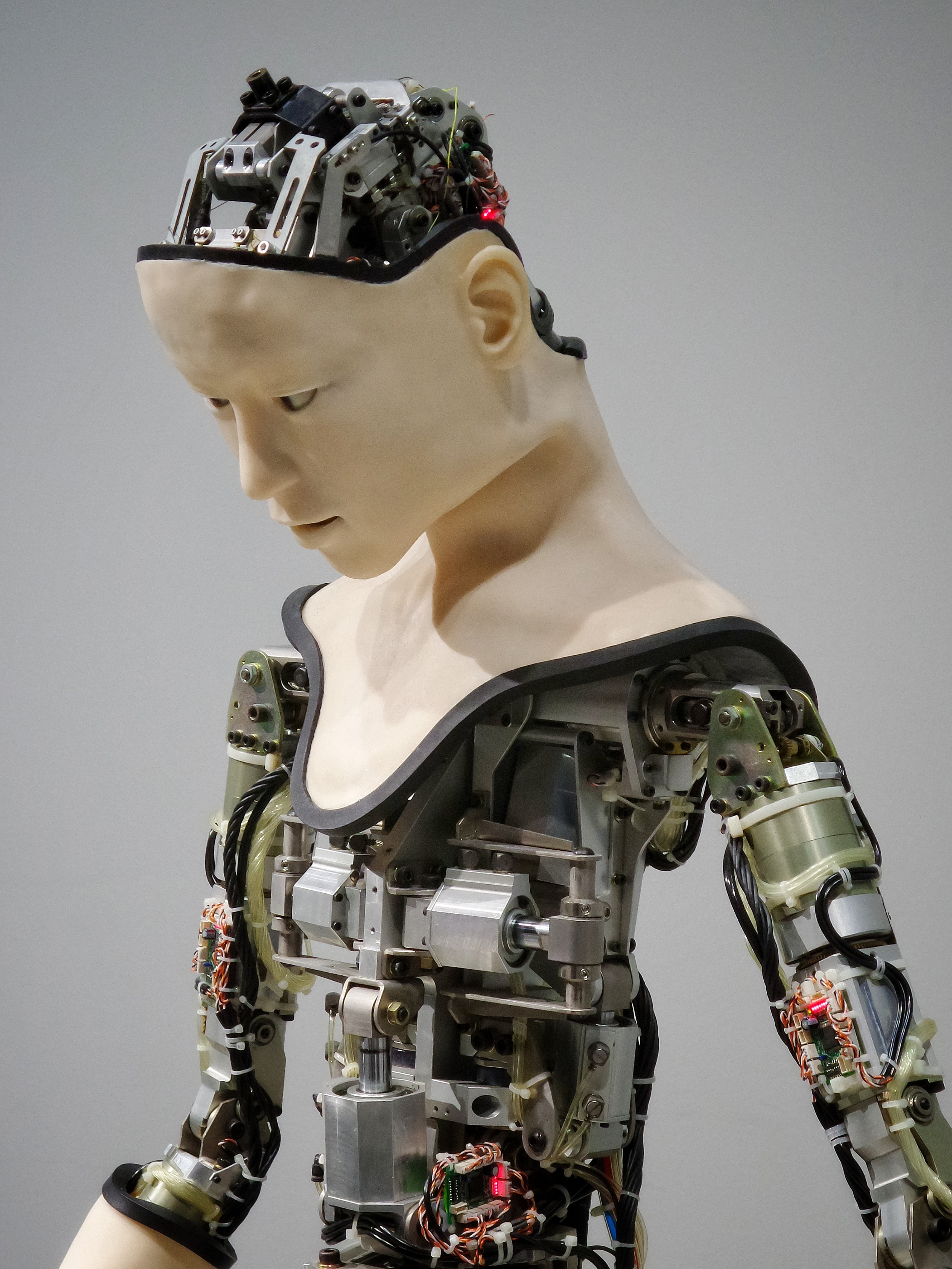
Okay, so the other day I tried it.  I’ve been resisting, immediately scrolling past the AI suggestions at the top of a Google search.  I don’t want some program pretending it’s human to provide me with information I need.  I had to find an expert on a topic.  It was an obscure topic, but if you’re reading this blog that’ll come as no surprise.  Tired of running into brick walls using other methods, I glanced toward Al.  Al said a certain Joe Doe is an expert on the topic.  I googled him only to learn he’d died over a century ago.  Al doesn’t understand death because it’s something a machine doesn’t experience.  Sure, we say “my car died,” but what we mean is that it ceased to function.  Death is the overlay we humans put on it to understand, succinctly, what happened.

Brains are not computers and computers do not “think” like biological entities do.  We have feelings in our thoughts.  I have been sad when a beloved appliance or vehicle “died.”  I know that for human beings that final terminus is kind of a non-negotiable about existence.  Animals often recognize death and react to it, but we have no way of knowing what they think about it.  Think they do, however.  That’s more than we can say about ones and zeroes.  They can be made to imitate some thought processes.  Some of us, however, won’t even let the grocery store runners choose our food for us.  We want to evaluate the quality ourselves.  And having read Zen and the Art of Motorcycle Maintenance, I have to wonder if “quality” is something a machine can “understand.”

Wisdom is something we grow into.  It only comes with biological existence, with all its limitations.  It is observation, reflection, evaluation, based on sensory and psychological input.  What psychological “profile” are we giving Al?  Is he neurotypical or neurodivergent?  Is he young or does his back hurt when he stands up too quickly?  Is he healthy or does he daily deal with a long-term disease?  Does he live to travel or would he prefer to stay home?  How cold is “too cold” for him to go outside?  These are things we can process while making breakfast.  Al, meanwhile, is simply gathering data from the internet—that always reliable source—and spewing it back at us after reconstructing it in a non-peer-reviewed way.  And Al can’t be of much help if he doesn’t understand that consulting a dead expert on a current issue is about as pointless as trying to replicate a human mind.


Consciousness Conscience

Not so long ago—remember, I read old books—living to 60 was considered a full life.  I’ve passed that and while I’m in no hurry to shuffle off this mortal coil, I often think of how improved medical practice has prolonged many lives.  This is a good thing, but it does make death a more difficult fact to deal with.  If there is any good that came from my Fundamentalist upbringing, it was that it taught me early on to think about death with some frequency.  I’m not a particularly morbid person, but since we all have to face this, avoidance seems to lead to grief, shock, and acute mental pain.  I tend to consider watching horror movies a spiritual practice.  Little reminders, in case I forget to consider my own mortality today.

Our faith in science is a little bit misplaced.  Sure, it helps enormous numbers of people live longer, healthier lives.  But it may also detract from the necessity of attending to our spiritual lives.  I don’t care if you call it consciousness, your soul, psyche, or mind, but we have a life we’re accountable to, and it’s not all physical.  Since consciousness feels neutral enough, let’s go with that.  We don’t know what happens to our consciousness after death.  There are plenty of theories and ideas about it, but no certain knowledge.  There may be faith, and there may even be some evidence, but it is always disputed.  It does seem to me that facing death squarely on may help take care of at least some of the anxiety.  Fear of the unknown is probably the greatest fear our species possesses, so pondering it may take the edge off a bit.

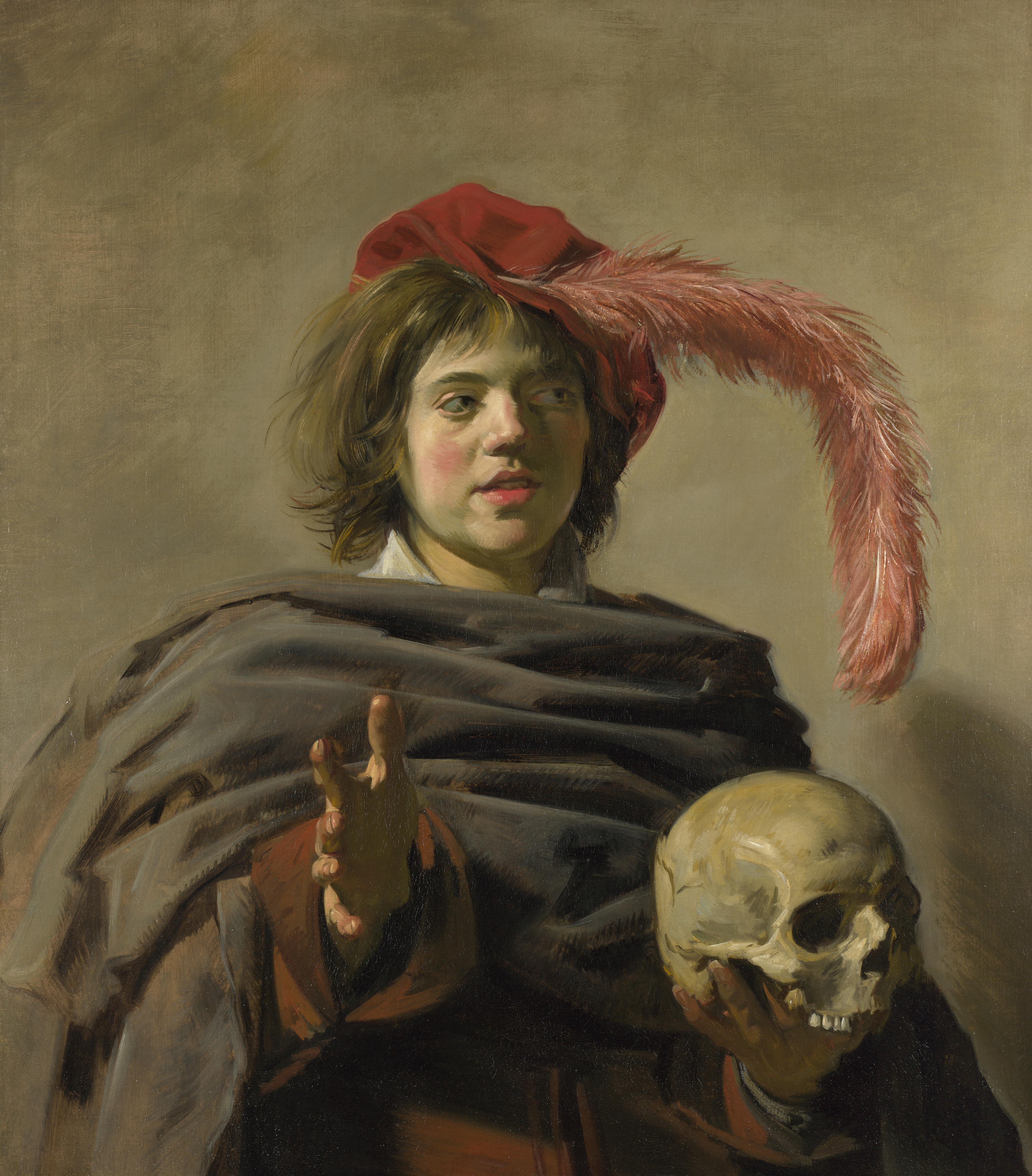
Some people claim to remember past lives.  Sometimes I wonder if they might be tapping into the great unknown: consciousness.  Perhaps consciousness survives without a physical body.  Perhaps it’s large—expansive—and encompasses far more than we can imagine.  Maybe some people can access part of that consciousness that includes the past lives of others.  We have no way of knowing, but it seems worth thinking about on this All Souls Day.  Of course, I have the advantage of having lived what used to be considered a full life.  In it I have set aside at least a little time each day to consider what happens after this.  Do I have a definitive answer?  No.  I do have faith and I do have beliefs.  And I’m always reflective on All Souls Day.

Frans Hals, Young Man holding a Skull (Vanitas), public domain via Wikimedia Commons


The Gift

Each day, each hour is a gift.  With my mother’s passing two months ago, I’ve been struck by the sheer number of colleagues that have died this year.  Not all of them older than me.  I wrote some months back about Michael S. Heiser, a blogging buddy from days past.  An email about a potential author just yesterday sent me back to the Society of Biblical Literature necrology.  This author had died unexpectedly the day before.  Glancing over the top of the list, I saw that three people with whom I’d worked died in November.  This was quite a shock since two of them were younger than me and the other not much older.  The thing about professors is that you kind of expect them to grow old.  To be old.  Life is a gift, and it’s sometimes easy to forget that.

Both tenacious and tenuous, life is a mystery.  Perhaps it’s perverse, but this makes Shirley Jackson’s “The Lottery” seem like a metaphor.  In fact, those of us who read and watch horror generally do so with a purpose, consciously or not.  It helps us face difficult things.  Five colleagues in one year sounds like a lot.  Someone in my family, younger than me, had six funerals to attend this year.  Life can feel difficult at such times.  Horror can be a coping mechanism.  At least for some of us.  It can be profoundly hopeful.  The meaning of life can be elusive, which is why, the existentialists conclude, we must make our own.  Existence precedes essence, as they say.

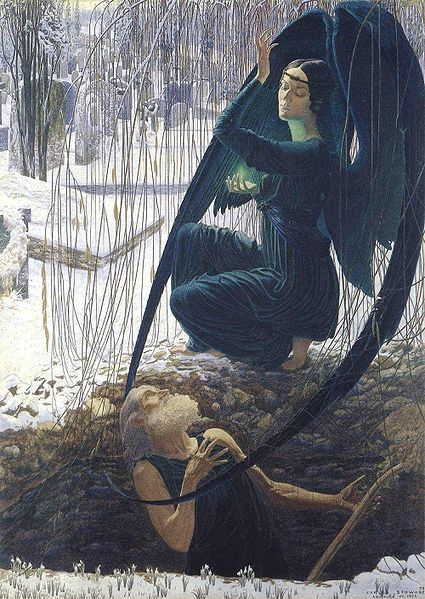
Carlos Schwabe, Death of the Undertaker; Wikimedia Commons

Other than profession, one of the few things these five fallen colleagues had in common was my perspective on them.  I don’t think they knew each other.  Had I not been an editor I likely wouldn’t have known three of them at all.  We live in a web of interconnection.  And I don’t mean the world-wide web (does anyone even use that term any more?).  Lives are gifts and gifts cross paths with other gifts.  Such information, all at once, can be difficult to process.  It makes me wonder why we allow wars.  Why we don’t think of consequences before we vote autocrats to power.  Instead, if we focus on that ephemeral gift we have, and how we might share it with others, appreciation rather than hatred grows.  To this lonely existentialist who watches horror for meaning, that just makes sense.


Personal Psalms

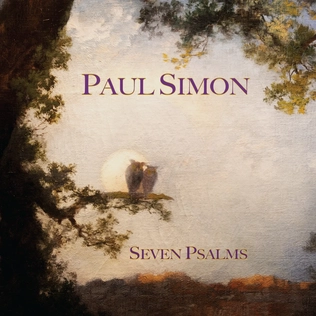
I haven’t heard it yet, but a New York Times article encourages me to.  Paul Simon has joined the ranks of those aging music stars to record albums presaging their deaths.  The article was about Simon’s latest album, Seven Psalms.  And, yes, the religious reference is pretty hard to miss.  Like most kids from the sixties, I grew up hearing Simon and Garfunkel on the radio.  We didn’t have money for albums, but I always liked their songs when I heard them.  After their breakup I really didn’t pay much attention to Simon until Graceland, and since then I’ve listened with half an ear.  You see, I’m wired in such a way that I can’t listen to music while I write.  Or read.  My mind grips one thing at a time.  That means I don’t listen to background music much.

That doesn’t mean I don’t appreciate music.  I do.  Almost religiously so.  On occasion I come back to Simon, with or without Garfunkel.  I posted about his song “Werewolf” some years back.  I eventually listened to that album, and I’m not sure I got it.  Artists are that way.  Some pieces you like, others are just okay.  I am curious about Seven Psalms, though.  I’ve posted about David Bowie’s Blackstar, Leonard Cohen’s You Want It Darker (both discussed in the Times article), and Bruce Springsteen’s Letter to You.  No longer young myself—these guys were young when I was a kid—hearing them reflect on death is powerful, and, if the mood is right, peaceful.  We fear death because it’s unknown.  And also, we all know, deep down, that we’re flawed.

Psalms aren’t necessarily biblical, of course.  Sinead O’Connor’s “Take Me to Church” is a psalm.  So is “Sounds of Silence.”  Artists have been writing psalms for as long as they’ve been writing songs.  The biblical psalms are among the most quoted bits of literature in the western world.  They were likely originally sung as well, but we can only guess what they may have sounded like.  We know that across the world people turn to song to express strong emotion.  I’m not sure what Paul Simon’s Seven Psalms might be, but it seems that thoughts of mortality go naturally enough with emotion.  I don’t write much about music because it’s so deeply personal.  I try to be intellectually honest on this blog, but if you want to talk music you really have to get to know me first.  Then I’ll reveal my psalms.


Beyond Natural

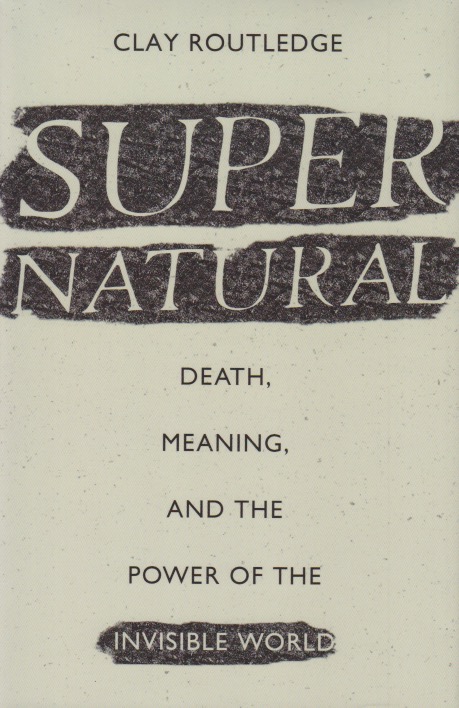
I’ve read quite a few books about the supernatural.  Often these books, which are mostly written by scientists, tend to show the problems with supernatural thinking.  Clay Routledge, it seems to me, has a healthier approach.  Supernatural: Death, Meaning, and the Power of the Invisible World isn’t an apology for the supernatural.  In fact, Routledge is a psychological scientist.  An open-minded one.  The book isn’t an apology, but it does show how natural supernatural thinking is.  This engagingly written study isn’t always easy to read—you have to be prepared to think about death a lot.  But also meaning.  Routledge makes a good case that the human search for meaning is related to our awareness of our own mortality.  We know we’ll die, and we don’t want to believe our existence has been for naught.  That doesn’t make all of us religious, but it does, perhaps, open us to the supernatural.

One of the main takeaways for me is that people misunderstand the power of religious motivation.  Especially in the context of our current political climate.  Many people can’t believe that supreme court justices would decide against laws that slow global warming.  Survey after survey, however, indicates that strong belief in religion means having little or no concern about the world ending.  In fact, for many it is a culmination devoutly to be attained.  You don’t need surveys to learn this.  You just need to talk to Fundamentalists.  I grew up believing this world was a sinful, corrupt place soon to be destroyed.  Further reflection on religion convinced me that this view was wrong, but I certainly understand it.  Too often those trying to find solutions to such problems simply dismiss religion as a motivating factor.  That’s a fatal error.

This is an insightful book.  Although based on science it is neutral toward religion.  Or I should say, the supernatural.  Routledge demonstrates that even scientists, when tested in controlled circumstances, subscribe to some supernatural beliefs.  They may be more abstract, such as the idea that things happen for a reason, or that we’ve been put here for a purpose (the teleological argument), but they are nevertheless present.  To be human is to be a meaning-seeking creature.  We may not be the only ones.  Whether or not that’s the case, our drive for making sense of all this tends to move us toward the supernatural.  Routledge ends with a plea for us to listen to one another.  Pay attention, and care for, those who believe differently.  We have a lot more in common than we have views that separate us.


Are Ghosts Monsters?

It’s a question as old as my interest in horror.  As a child I kept ghosts distinct from monsters.  Ghosts may be scary, yes, but they’re people who’ve died.  Then zombies came along.  I was too young to watch Night of the Living Dead when it came out (I was only six).  Depending on how far you want to go with this, among the classic monsters they’re pretty much all human.  Dracula is undead, but originally human.  Frankenstein’s creature is dead folks stitched together.  The mummy is a person reanimated.  The invisible man is, well, a man.  So is the wolf-man.  The latest of the Universal line-up, the gill-man was more a human-like reptile with gills.  To add a few other favorites, Mr. Hyde was Dr. Jekyll.  Witches were magical women.  For sure, there are plenty of non-human monsters (Godzilla, the blob, and those various giant spiders) but it seems much of what we fear is warmed over human.

So ghosts—are they monsters?  I still have a difficult time sorting that out.  They seem different from other revenants, don’t they?  Uncle Joe or Aunt Sally don’t really pose an existential threat, do they?  (Unless one of them was a psychotic killer or something.)  Yet we still fear ghosts.  Many horror movies and novels feature them.  It seems more because they represent the unknown in a kind of ultimate way.  We can’t die to find out and then come back.  Although, it seems, that’s just what ghosts do.  That liminal line, or terminal line in the sand is the point of no return for the human imagination.  Yet on a dark night in a creaky old house it feels like more than just imagination.  Of course, other monsters could be lurking in the dark.

Image credit: Henry Justice Ford, public domain via Wikimedia Commons

The thing about horror is that it holds up a mirror.  We see what really does scare us and what we see reflected back is human.  We all die and most of us don’t like to think about that.  Ghosts force us to.  They make us confront perhaps the most primal of fears.  There are, of course, bad ghost—dybbuks and hungry ghosts and whatnot.  Of course they’re monsters.  But considering the garden variety, or perhaps haunted-house variety ghost suggests maybe our fears are misplaced.  Monsters can be scary.  Ghosts don’t have to be.  We classify them all together as horror, but that may be a hasty judgment.  As least for someone who used to be, and maybe still is, simply human.


After This

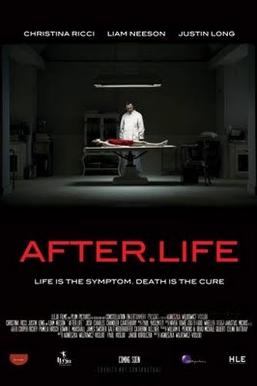
It didn’t rock the critics, but it is distinctly creepy.  After.Life came out in 2009 and quickly fell from sight.  It’s an interesting movie nevertheless.  Any film that features an undertaker, for one thing, gets edgy.  The story of a young teacher who never really felt loved and who is killed in a car crash sounds tragic enough.  Then she finds herself conscious in the preparation room where the funeral director, Eliot Deacon, talks to her, assuring her that he can speak with the dead.  As the movie progresses we begin to wonder if Anna, the teacher, really is dead or if she’s being killed by Deacon for having given up on life.  His name is suspiciously religious, fittingly for a film that deals with such a topic as the afterlife.  Overall, however, it’s pretty bleak.  One of Anna’s students also sees her after she dies and Deacon befriends him, offering to teach him his trade.

Although the critics didn’t like it, it is spooky on many levels.  Not the least of which is the question never satisfactorily answered of how to know when you’re really dead.  The movie presents the soul as a fact, and even dead bodies can move around when the situation merits it.  Death is one of those areas that religion generally enters.  Some secularists maintain their lack of religious thought even in this situation, but many people find religion helpful at this ultimate transition and the soul seems entirely natural then.  It’s unclear in the movie whether Deacon is good or bad.  He’s certainly obsequious, accommodating the wishes of families even when unreasonable.  With the dead, however, he takes a firmer stance, having to convince them that they’re no longer living.  The movie’s a bit confusing in the case of Anna—we’re never really sure if she’s dead or not.

Even with commercial interruptions (it’s free to watch that way) I found myself getting caught up in the story.  Deacon kept asking what it is the living really want.  He’s shown throughout doing the work singlehandedly, from picking up the bodies, to embalming, to even digging the grave.  His loneliness is ameliorated by his ability to speak to the dead, each of whom he photographs and puts on his bedroom wall.  Religion may be behind the soul, but no obvious religious talk pervades the film.  I have to wonder if this might not be the reason it fails to frighten its many critics.  Horror that uses religion effectively often becomes successful.  Those that avoid religion like, well, death, often fail to convince even secular critics.


Thy Sting

“It’s hard to imagine a more alarming sign of a society’s well-being than an inability to keep its citizens alive.”  This quote is from the New York Times’ The Morning team yesterday.  Life expectancy in the US has been dropping.  Not coincidentally, the article notes, so has the wealth disparity in the country been rising.  And guess whose lives are shorter.  Isn’t it often the same people who vote for those whose wealth keeps them (the candidate) alive longer, and in luxury?  This story struck me as poignant.  Have we lost our national will to live?  We see politicians who give no mind to what the people want getting themselves elected to further their own means.  People know they’re not being cared for.  That they’re being lied to.  Perhaps it’s working its way into our national mortality rates.

I think quite a bit about mortality.  Death is a natural part of life and we seem to have bought into the capitalistic idea that more is always better.  The debates in ethics classes were always about such issues of quantity versus quality.  Is a good life better, even if it’s shorter?  Improving the lot of others increases, we hope, the number of good lives.  Not everyone wants to be rich.  Part of the problem with our current system is that we’re narrowing it down to one way of existing—the way of earning more money.  Those occupations suffused with meaning are disappearing because they’re not profitable.  Does the will to keep on living grow when money is substituted for meaning?

Books on “the good life” sell well.  Whether it’s stoicism, Buddhism, or feel-good Christianity, people want to read the answers.  In a capitalistic system only so many can be rich.  They accumulate power to themselves and many have nothing beyond this for which to strive.  How many classes are available for finding meaning in life?  As universities continue their march towards the status of business schools, the philosophy and religion departments struggle.  They don’t bring in money, but they do, I suspect, discuss the systems that give meaning to people.  That could instill the will to press on.  The article makes the point that although Covid-19 has led to a good part of the decline, it isn’t the only factor involved.  We’re all so busy that we don’t have time to think about it and yet, finding a reason to continue to improve might give us what we need.  Maybe slowing down a little and pondering things would help.

Carlos Schwabe, Death of the Undertaker; Wikimedia Commons

Time To Think

Although I’m not Roman Catholic, I often thought about joining a monastery as a teen and twenty-something.  The idea of spending all my time devoted to contemplating the ultimate reality still has a strong appeal.  I know quite a few rationalists who have no time for spirituality, but it seems to me that we all need it for facing death.  Most people, I know, avoid the topic if at all possible.  Contemplatives, on the other hand, spend quite a bit of time preparing for it.  Since it’s inevitable that makes sense.  I often wonder why people consider the most common thing in human experience with such trepidation.  If it’s a source of anxiety, shouldn’t it be confronted?  That’s not to say we need to look forward to it, but it does mean we shouldn’t run from it either.

Carlos Schwabe, Death of the Undertaker; Wikimedia Commons

The combination of Christianity and rationalism, it seems to me, lead to this terror.  Christianity because it views death as an enemy, and rationalism because it has no comfort to offer.  I’ve been reading about how pre-Christian cultures thought of death.  They didn’t display the fear that Paul seems to have introduced into the equation.  Since American culture is so heavily influenced by the Bible (as was European culture before it), we have adopted the scriptural view that death is a problem.  The Hebrew Bible, in which there was no real afterlife, was less concerned with making sure you avoided Hell—they had no Hell to avoid.  The anxiety seems to have been introduced by, ironically, the concept of resurrection.

I’ve noted on pieces I’ve written for other websites that resurrection is among the favorite themes for horror films.  One of the reasons is precisely this discomfort in taking death at face value.  Our religions keep us aware of the spiritual side of our nature.  They have developed around the world in different forms and all of them address death in some way.  Most without a profound sense of anxiety.  There is some irony in cultures that adopt resurrection as a theological tenet are among those that try to avoid death most assiduously.  It plays into those cultures’ views on abortion and capital punishment.  As well as their performance of social justice.  While Paul asked death where its sting was, and seems legitimately not to have feared it, in the centuries following his position seems to have eroded.  There seems to be plenty to contemplate here, if only secular society had monasteries.


A Nightmare or Two

Some books are complex enough to require a slow reading.  Alan E. Bernstein’s The Formation of Hell: Death and Retribution in the Ancient and Early Christian Worlds is such a book.  For those of us raised in a faith primarily geared toward avoiding Hell, the concept becomes a lifelong nightmare.  It doesn’t help that, depending on your clergy you’re taught different, sure-fire ways of achieving that avoidance.  Often it hinges on “believing” the “right” thing.  Fundamentalists tend not to call it “doctrine” since that sounds rather Catholic, but the idea’s the same; it’s a tenet of faith.  As Bernstein shows, however, Hell is an idea that developed over a very long time with several different views of what happens after death.  There’s no single, linear progression, but rather a conglomeration of ideas from a variety of sources.

No single volume can cover all the background to Hell.  Bernstein focuses on Egypt for the early material, as well as Babylonia.  These early civilizations demonstrate that people have always wondered what comes next, and what happens to those who oppress others—the bullies of this life who don’t deserve the same eternal rest as the rest.  Usually some form of punishment awaits, but not always.  In the Hebrew Bible one of the great issues was the fact that everyone goes to Sheol, good and bad alike.  As in classical Greece and Rome (on which Bernstein spends a great number of pages) the concept of the netherworld is gloomy, but not torture.  Except in exceptional cases, of course.  The Greeks had Tartarus as a place for those who dissed the divine.

Even early Christianity didn’t have a uniform view of it.  The New Testament is decidedly divided on the topic.  Revelation seems to be the last word, but it’s not.  Later thinkers such as Origen and Augustine (who came to different conclusions) weighed in.  Catholic Christianity lavished great love on the latter and Augustinian views became disproportionately influential.  Reading his lack of compassion can cause nightmares, although he justifies it theologically.  The one thing I missed in Bernstein’s lengthy treatment was the Zoroastrians.  This religion of ancient Persia introduced a distinct dualism into the biblical world; it perhaps represents the first relatively developed concepts of Hell and Heaven.  Zoroastrianism suffers from lack of documentation, however, and it is difficult to parse it as meticulously as Bernstein does the other cultures covered.  This book requires much pondering as it’s read, and if you were raised believing this kind of thing it’s sure to bring back a nightmare or two.


Slow to Travel

A family friend recently died.  I was in New York City when I received the news, and I mused how recent a phenomenon this speed of information is.  The news wasn’t necessarily a shock—this friend had been experiencing failing health, he was a close friend of my grandfather—but for some reason Samuel F. B. Morse came to mind.  The story goes that Morse invented the telegraph because of his experience of being away from home when his wife died.  By the time he received the news and was able to get home by the conveyance of the day, she’s already been buried.  He set his inventive mind to improving the speed of communication over a distance.  In these days of receiving texts mere seconds after something momentous happens, it’s difficult to imagine that for the vast majority of human existence, personal news traveled slowly.

Feeling in a reflective mood I recalled how when I was in college I wrote letters home.  Yes, the telephone existed by then—don’t be so cynical!—but long distance bore a cost and college students find ways to save their money for girlfriends or spending a weekend in Pittsburgh.  News traveled more slowly.  Back before Morse, the swiftest option was the letter.  The death of a friend might take days or weeks to reach those close.  Distance in time, as well as space, may not have lessened the shock, but the immediacy of a text wasn’t there.  The death had occurred days or weeks ago.  There was nothing left to do but grieve and get on with life.  Like Samuel Morse—perhaps the only point of comparison between us—I was unable to get away immediately.  New York City isn’t easy to escape quickly.

We move swiftly and slowly at the same time.  I know news moments from the event, but this physical mass I inhabit is sluggish takes some time to get around.  Manhattan’s an island, and although it’s not Styx we’re crossing, the Hudson creates barriers enough.  Now my journey includes crossing the entire state of New Jersey before I can even reach home.  Were I to drive back to my original home, it would add another five hours at least in the car.  Sometimes I wonder if the immediacy of knowing is a blessing or a curse.  The shock is immediate and visceral.  But like an injection, the sharpness is quickly over and the dull ache sets in.  Our family friend had been suffering for some time.  Now he’s at peace.  I like to think he’s with my granddad, and that the two of them together won’t judge me too harshly for moving so slowly.


Not Final Words

When death’s not the final word, it’s hard to argue.  This is such a basic level of disagreement between religions and culture that it may be impossible to avoid conflict.  Not that I condone it, but a couple in Oregon, members of the Followers of Christ Church, let their newborn die rather than seek medical attention, according to a Washington Post article.  I have to admit that the Followers of Christ is a sect of which I’d never heard—there are thousands of such groups—but I’m guessing that at the base of their refusal to seek help was a deeply held belief in the afterlife.  Almost impossible to comprehend unless you’ve accepted it profoundly yourself, this single teaching is a game changer.  The child who dies, although tragic from our perspective, has not, in the eyes of a religion transcending death, lost anything.

It’s sometimes difficult for us to to realize just how radical a teaching Christianity was in its early days.  The myth of the martyrs may well have been overblown, but the fact is here was a sect that didn’t fear death like the vast majority of people do.  Resurrection is a powerful concept.  Those who truly believe in it have nothing to fear.  Modern-day sects that take this seriously may respond quite differently to crises than “normal” religions.  In a situation Niebuhr would’ve recognized, this “Christ against culture” outlook is never easily resolved.  True believers will accept punishment on the part of secular authorities as a form of martyrdom.  The fear of death on the part of the vast majority of people outweighs, I suspect, professed belief in the afterlife.

Place the current political climate into the mix and the colors will become even more vivid.  Extremism is the flavor of the day.  Mainstream Christianity, for all of its problems, has sought a balance between accepting the benefits of medical science—the social acknowledgment that taking an infant’s life is inherently unfair and unjust—and an official belief in an afterlife.  It allows for a fairly comfortable existence of accepting belief without becoming the radical threat to a materialistic society that more extreme sects represent.  In a nation where no controls exist because of the power of office favors those who believe in nothing so much as themselves, and even the rhetoric of right to life becomes meaningless.  Sects and violence, to go back to my roots, sleep peacefully side by side.  And when awakened, the right to be conceived can’t be extended to life beyond the womb for those who believe death’s not the final word.


Eternity, Technically

When the robot uprising comes, we have a factor in our favor, we biological beings. That is our parts, although they do break down, generally heal themselves. I write this as kind of a forecast, because I’m not at home due to the holiday weekend, and neither is the internet at my home. You see, our internet service (which is not cheap) has been going out from time to time. Our service provider thinks it may be old parts. The box was installed in our basement over a decade ago and when the technician sent me down amid the cobwebs before leaving town I had to report to her that all cables were hardwired into the box. No clip and slip here. She thinks the cable has gone bad.

The cable just sits there. It never gets moved or jostled. How it could fail I don’t know. But the consequences are two. There may not be posts on this blog for a while once I return home. I’ve posted every day, holiday and secular-day, for years now. Technology, however, is a jealous deity and will not permit humans taking it for granted. The second consequence is more optimistic; when the robots rise up against us, their parts will wear out and they won’t be able to regenerate them organically. They’ll need to order them and hope they can find a delivery system even more efficient than Amazon’s. Good luck with that! I ordered a book the other day and less than 24 hours later it was at my door. That’s service.

I decided to post this advance warning so there may be no weeping and gnashing of teeth (please—dental work is expensive!) on Monday or Tuesday when no new post appears on this blog. It’s not that I’m not thinking of you all, it’s just technical. Robots may run system tests, but can they feel it in their bones when something’s about to go? Do they indeed sing the body electric? Can they feel the poetry they write? To be human is to think with our emotions and to reason ourselves out of irrational angst. I see the slaves to technology putting on weight as they rely more and more on labor-saving devices to make their lives automated. I’m guilty too. As I sit here many miles from home, however, I worry about the internet back there. Is it sick? Is it dying? And if so, to which mechanical god should I pray to save its technical soul?


Frankenfear

While re-reading Frankenstein the uncomfortable thought kept recurring that our tendency to save lives leads to undiscovered fears. I’m not suggesting that we should just let people die, but even from my own experience of doctors, the sense of personal agency has become somewhat eroded. You go to the doctor and s/he tells you, “You should have this done.” I’m still too busy trying to figure out what this box that’s attached to my TV should be called, so how am I qualified to assess a professional opinion about my health? We mend bodies with plastic and metals and chemicals. Some modifications, like fillings and glasses, seem no brainers. But what about plastic tubes and computers to regulate body functions? They’re all good, but have we thought this through, I can hear Mary Shelley asking.

Religion, which is now also eroding, was a traditional way of coping with the fact of our own mortality. Everyone dies. From the beginning of the world, with the possible exception of Elijah—and even he had to come back—everyone has died. Religion traditionally said that it wasn’t the last word. The body wears out, and in a materialist world there’s nothing that can be left. Technology can prolong life, but some may not want it to be prolonged beyond a certain point. I’m not being morbid; I just don’t like arguing with what can’t be changed. Religion, it’s easy to forget, is about finding peace. Some people misunderstand that, for sure, but that doesn’t change the facts.

Did Prometheus overstep his bounds? Mary Shelley seemed to think so. In her recollections the story was intended to scare, not to predict. Victor Frankenstein creates the monster simply because he can. He does it alone, without thinking through the consequences even with a convenient Igor. Religion has often been cast as that annoying, moralizing sibling to science. (Philosophy could well join the ranks too, as some prefer it to religious thinking.) Without that sibling, however, how can we make informed decisions? Science, by its very definition, can’t tell us what should be done. The only values it knows are quantifiers. We live in a piecemeal world where some parts have been removed while others have been added. We don’t know if this is right or wrong since religion is one of the pieces excised without being replaced. Prometheus, ironically, translates to “forethought.” The problem with Frankenstein is precisely that Prometheus is missing.