Hydrofracking

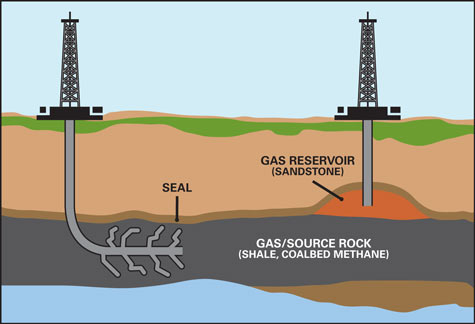
HydrofrackingGenies can’t be put back into bottles, I’m told. They are one of the many things that once done cannot be undone. I had that sense throughout my reading of Alex Prud’homme’s Hydrofracking: What Everyone Needs to Know. Prud’homme does an admirable job in attempting a dispassionate, fair treatment of a subject that is divisive by nature. And destructive. Fracking, once done, cannot be undone. Those who are already against fracking will probably come away from this little book with a sense that ex cathedra statements are slightly more difficult to sustain. The further you read, however, the darker the palette becomes. Yes, fracking provides domestic, fairly clean fossil fuels, reducing dependency on foreign oil. It also has long-term results that remain unknown, with indicators pointing to the worrisome side of the dial. Enough negative correlations exist to give us pause for rumination. Is fracturing the shale a mile underground really a good idea? What about when we run out of shale? And the tremendous waste of water.

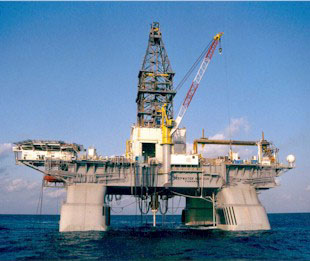
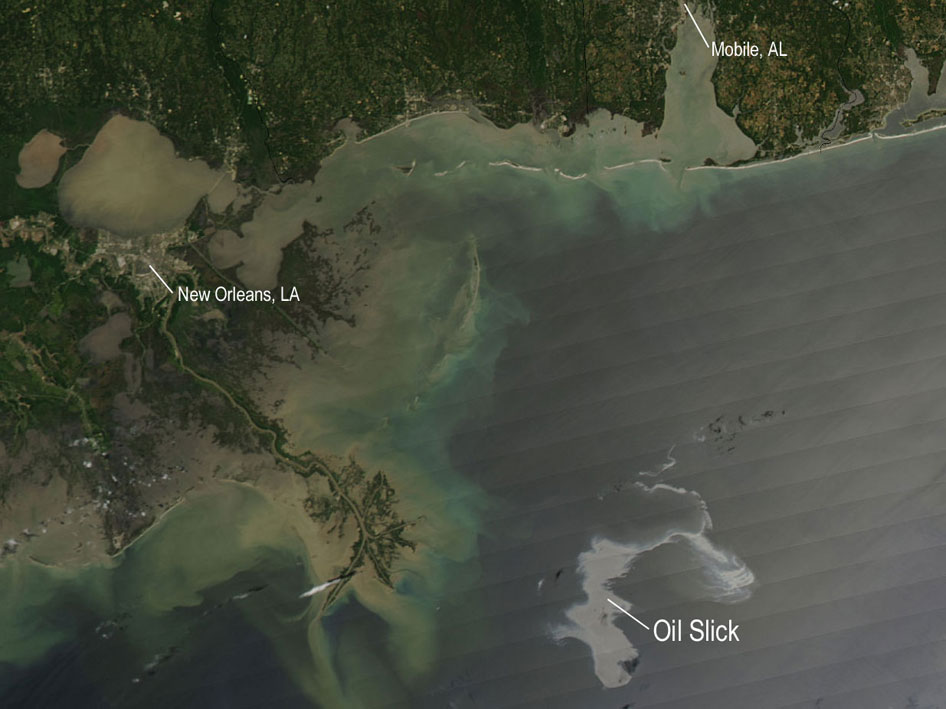
Environmental concerns are, by definition, ethical issues. What we do to the environment effects others, and when we effect others ethics is involved. Or should be. One of the startling facts about fracking is that it has been around for a long time. Since the 1940s. Growing up in fracking-friendly Pennsylvania I had no idea that oil companies could move in, break up the ground under my feet, and siphon out the gas and oil they found. It is an industry without strong federal regulation. In fact, due to Dick Cheney’s influence, oil companies are not required to declare what chemicals they are releasing into the environment. Trade secrets can be deadly. It feels like awaking to find Deepwater Horizon in your back yard, not having been aware that the technology to do such massive operations even existed. Who granted permission? The mighty rex lucre.

Prud’homme points out that fracking is not about to go away. Too much money is at stake. Once we’ve learned how to build atomic bombs, incendiaries will ever after seem quaint. We can’t unlearn how to frack, even as we can’t undo the process once it’s done. We have, however, abundant sources of renewable, sustainable energy, but not the will to harvest them. Our economic thinking embraces the myth of excelsior—ever upward! Fracking may not be as dirty as coal or as scary as nuclear waste, but it does leave scars forever beneath the surface. Its genie has escaped its bottle and it is far too capitalist an idea to be suppressed once it has tasted opportunity. Prud’homme’s book is rightly subtitled What Everyone Needs to Know. That which you don’t know can indeed cause harm on a scale we can’t even calculate.
California State of Mind

California, it is sometimes said, is a state of mind. I leave today after a few days in Santa Barbara with a bag of mixed impressions of one of our nations great schools. My first impression on the University of California Santa Barbara campus was almost a physical one. Literally. I had no idea of the bicycle culture and nearly stepped into a bike lane with the flow of a New Jersey storm drain during a Nor’easter. California is a culture of wheels. I’d never been to a campus before that has four traffic lanes for non-motorized travel: two bike lanes going opposite directions, a skateboard lane, and the humble pedestrian walkway. There are so many skateboards here that the counter-culture has become conformist. Sorry, Bart, it’s true. And concern for the environment is palpable. Reclaimed rainwater feeds the lush plant life, every possible recycled item is sorted and sent to the correct facility, students bicycle instead of drive, smart cars are very evident for the two-wheel impaired, and almost nobody smokes. And as I ate my supper alone in the student union two separate groups of Christian students were having very vocal conversations about their faith. Free spirits not realizing that they’re trapped.

One conversation with a Native American specialist stayed with me. She spoke of how missionary work has damaged indigenous cultures irreparably. I listened in fascination as she told me about the local history. How an historic Spanish mission was publicly adorned with the skull of a murdered Native American and how it took years of persuading to get them to take it down, even in the late twentieth century. Across campus students are praying to Jesus for the courage to continue witnessing. In Newark, I suspect, a couple of guys are still laughing.

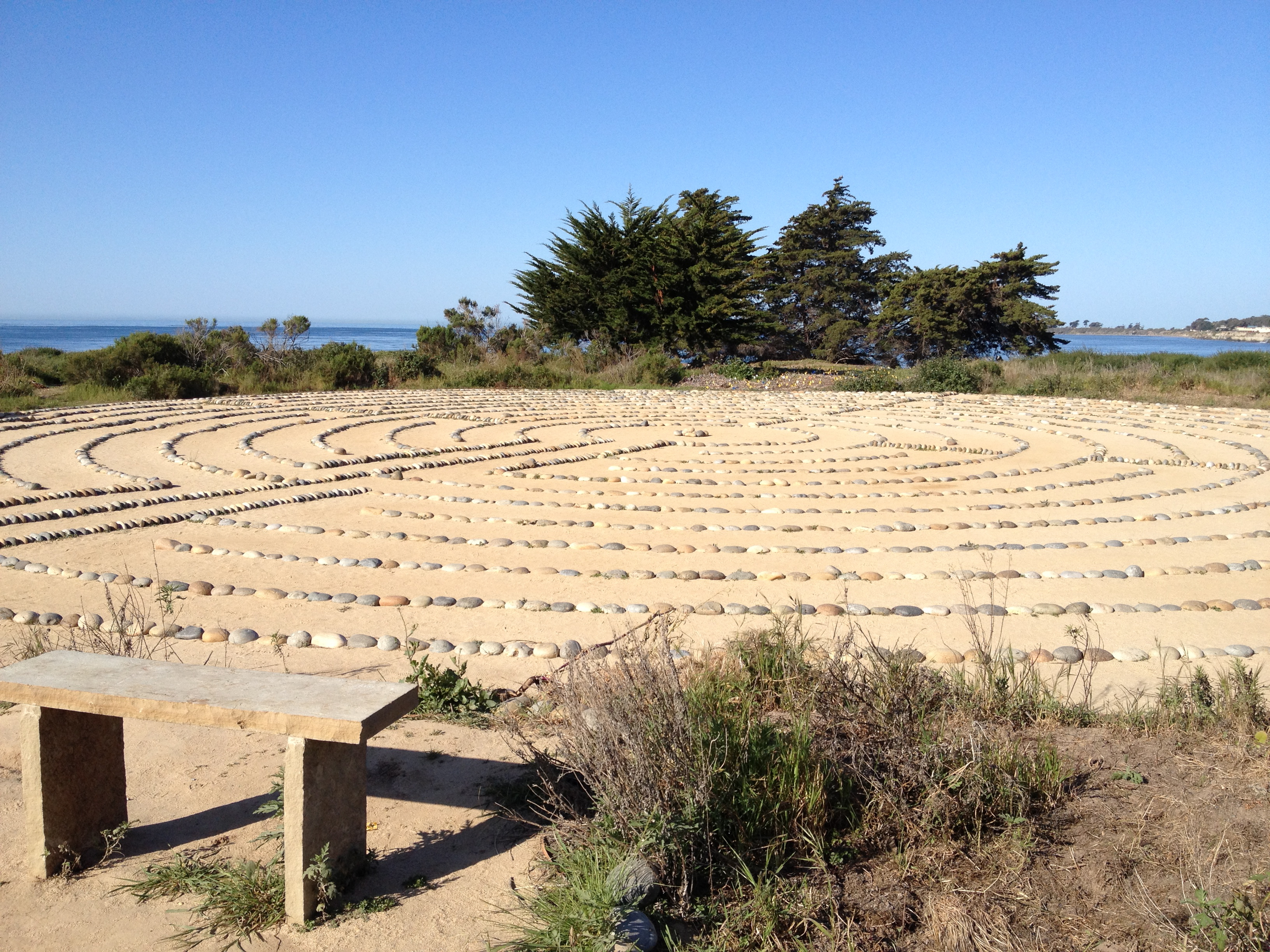
On a brief respite from my busy day of meetings, I walked the Lagoon (sorry, I can never see or say that word without thinking of Gilligan’s Island) Trail. Emphasizing the environmental features of this wetland habitat, the trail leads down to the ocean where flocks of pelicans and egrets fly overhead, unperturbed on the shores of the vast Pacific. In 1969 what had been to date the worst US waters oil spill took place from Platform A, still visible in the distance from the beach. My thoughts turn from Gilligan’s Island to Deepwater Horizon. My laughter to tears. The Lagoon Trail winds through the headland to a labyrinth. In today’s resurgence of interest in the labyrinth, it is viewed as a spiritual journey. Labyrinths appear in churches as early as the Roman Empire, but nobody knows what they mean. I silently stand beside the maze. What does it mean? Platform A leers from the ocean. Christian undergrads look to convert the world. And under the cross is not the skull of Adam, but that of an anonymous Native American. What does it mean?


Don’t Let Them Frack You

One of the consequences of having been born into a post-industrial society is the sense that others have managed to set the parameters even before I became aware of them. In the summer of 2010 I learned about the Deepwater Horizon accident. Prior to that, I had no idea that semi-submersible, deep-water drilling was even possible, let alone already happily lining billionaires’ pockets. I felt violated. This is my planet too. That same year, while attending a FIRST robotics competition in Trenton, the high school kids were greeted after the event by a lone protestor wearing a sandwich board warning of the dangers of fracking. In New Jersey it is very easy to find people protesting. Sometimes their nemeses are purely delusional. “What’s fracking?” I asked one of the kids (all of whom are arguably smarter than me). He didn’t know. I looked it up once I got home, and once again had the feeling that somebody was messing up my planet without me knowing.

Sure, human habitation has a tremendous impact on the environment. It is part of the curse of consciousness. Nevertheless, at some level we must know that our actions threaten not only other species, but also our own existence as well. A story on CNN about fracking, back in my own oil-industry state of Pennsylvania, demonstrates the dangers all too clearly. I grew up in the shadow of a petroleum refinery—Pennsylvania is where the oil industry began. Unfortunately it also has a history of poisoning its own environment. The CNN story highlights the dilemma of Dimock, a tiny town with water contamination caused by fracking. Not even a hundred miles away to the south lies Centralia, still slowly asphyxiating from its fifty-year old mine fire. Our lust for fossil fuels—and more importantly, the wealth they bring—has bankrupted our sense of responsibility to our planet and to each other.

I am certain free-market entrepreneurs would characterize what I sense to be injustice as mere complaining. But there comes a point at which we have to ask if the extra energy is worth the cost. Maybe we could do with a little less. I know that’s blasphemy in capitalist ears, but it is a truth whose scars scrawl across the landscape of this nation. Just about 150 miles southwest of Dimock lies Three Mile Island, a testament to our love of power. Over on the western edge of the state sits the ghost town called Pithole. An oil boom town, it ran out of steam when deeper pools were discovered elsewhere. When I stand in its deserted streets, returned to nature after the many decades of neglect, I realize that it is a silent symbol of human ambitions. We should not give up on our earth, lest it give up on us. It is not too late. Yet.

Borrowed from the National Fuel Accountability Coalition


Good Earth Friday

In a rare superimposition of holidays, today marks both Earth Day and Good Friday. These two special days are a study in contrasts, yet both are holidays that look forward and hope for salvation. Good Friday, the culminating drama of Holy Week, is often paradoxically treated as a day of mourning. If Christian theology be correct, humanity would be Hell-bound without it. Yet many of the faithful weep as if for Tammuz, knowing that resurrection is just two days away. Earth Day, much more recent in origin, is much more ancient in importance. Biology as we know it, whether human or divine, would have no place to call home without Earth. Earth Day began in 1970, but every day is an Earth day for most of us.

Still buzzing with 1960’s activism, on the first Earth Day 20 million demonstrators got involved and helped lead the way to the Clean Air Act, the Clean Water Act, the Endangered Species Act, and the founding of the Environmental Protection Agency. People cared. This was before fashionable complacency set in. Whatever. Today citizens of the United States get stirred up about very little. Good Friday may represent a school holiday for some, others may even go to church although it is not Sunday. But get worked up? Hardly. Legislators in our country drag their feet like spoiled children when it comes to reducing emissions (many politicians positively treasure their emissions) or paying for cleanup of what we’ve done to our planet. Let our children inherit the dearth.

While bully governors seek to slash and burn, it is the responsibility of more reasonable individuals to try to repair the damage their leaders do. This is the spirit of Earth Day. Our leaders make the mess, those of us who care try to do something about it. Good Friday shows what happens when an idealist challenges the imperial status quo. Long-haired liberals get nailed, and guys in expensive suits cut themselves bigger and bigger checks while orphaning those who get in their way. Gaia was never crucified, but that doesn’t stop Neo-Cons from trying to rape her. Just a year on from Deepwater Horizon and oil companies argue they are legally within their bounds not to permanently seal off caps that “meet regulations.” Their friends the politicians politely look the other way. If things are going to get better I suggest that we leave official policy hanging on a cross and do our own best effort to save our mother’s life.

Careful, it's the only one we've got.


Two Roads Diverged

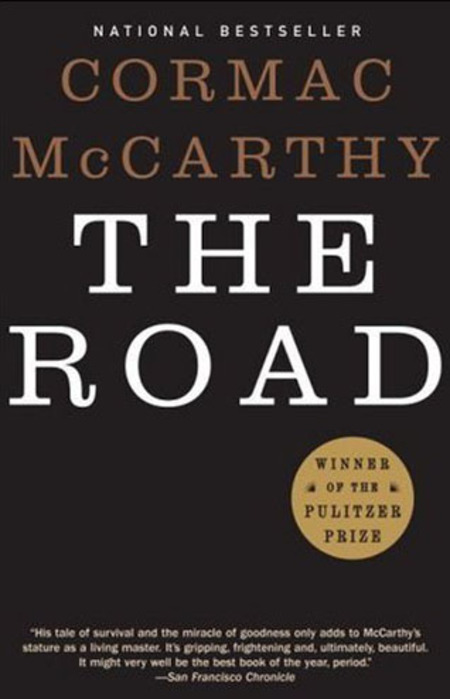
Back in my Gorgias Press days one of my co-laborers (BU) suggested that I might enjoy reading Cormac McCarthy’s The Road. Since then it has come out as a movie, and further apocalyptic events have occurred – the Deepwater Horizon disaster and the election of Chris Christie come to mind – so I finally got around to reading it. It is a harrowing book for any parent to read and I doubt I have the heart to see the movie. Already the book is spawning internet quotes and quips, but I was particularly interested in seeing how this post-apocalyptic novel handled God.

Since the Bible, via Zoroastrian influence, gave us the religious concept of the apocalypse, it is fitting to see how religion fares in its unhallowed progeny. Mostly God is absent. When the man and his son mention God, the language is spare and laced with betrayal. “There is no God and we are his prophets,” the old man declares after the man and his son leave the bunker. A few paragraphs later he states, “Where men cant live gods fare no better.” The value of the apocalyptic metaphor is that it forces us to face life as we find it: raw and uncompromising. In the fictional apocalypse it is permissible to utter aloud implications of life’s callous lessons.

My career has had its share of jagged edges. The lacerations I’ve personally received have been at the machinations of Christians eager for self-justification. Self-congratulatory individuals and collectives that suppose God has specially favored them. “There is no God and we are his prophets.” It is like reading Camus in slow motion. One of the lessons both Nashotah House and Gorgias Press taught me was that it can always get worse. Reading McCarthy’s sad yet true tale of the woe we bring upon ourselves, the lesson for those eager for the apocalypse is that they have only to open their eyes.


Corporate Kindergarten

Ever since the Deepwater Horizon catastrophe, Tony Hayward, CEO of BP, has been under pressure not unlike the oil well itself. He has had to announce his resignation, having become the public face of the oil spill. Not an image anyone wants. Musing on the fact that he is being forced out as the head of one of the world’s largest corporations (which earns billions of dollars of profits each quarter) Hayward has stated that life is not fair. Welcome to Kindergarten, Mr. Hayward. Ask any of those millions of poor who’ve never been given a chance at a decent life and they will tell you. The lamentations of the rich are more annoying than jock itch. These guys have had it so good for so long that they’ve forgotten what it is to participate in the struggle for existence.

Not content to lament the fact that he still has an exorbitant salary within the company – being sent to Siberia is a great hardship, even if you have a mansion there – Hayward also stated that BP’s response to the tragedy is “a model of what corporate social responsibility is all about,” according to the New York Daily News. His words ring truer than he realizes. This is indeed a model of unbridled greed and utter disregard for either the planet or those who get in the way of corporate acquisitions. Yes, the response reveals what truly drives the corporate world. If the rich are left alone, they will allow life to remain just tolerable for those on the bottom.

Having learned very early that life is not fair, I have watched the response of the uncivilized wealthy to their various slings and arrows with a slurry of bemusement and rage. What separates those on top from others is their ruthlessness, not their intelligence, or, please!, their worthiness. Experience is the best teacher. I worked my way through three degree programs and earned exceptional teacher ratings for over a decade before being thrown in the unemployed slush pile. I routinely watch colleagues earn far more for doing far less while future prospects grow blacker and blacker. Oh, my heart goes out to Mr. Hayward. It is obvious he missed Kindergarten. Maybe the second-floor maid will be able to fill him in some day.

Soaring ever higher


When Dinosaurs Will Rule

Just about all of us begin life as budding paleontologists. What kid doesn’t adore dinosaurs and their paradigmatic story of planetary rule followed by inexplicable decline? The mystery and drama only add to the fantastical nature of the beasts themselves – creatures towering over houses and trees, predators the size of school buses. When my daughter hit dinosaur age, my latent paleontologist experienced a profound resurrection. Sure that she’d become the next great dinosaur hunter, I relearned all the old species names and added dozen more from creatures discovered since my interest went underground. While my career was spiraling downward at Nashotah House, I contacted the paleontology program at the University of Wisconsin to see about retraining. I even started to teach myself calculus.

Life delights in playing funny tricks on people. Once again my career in religious studies spirals downward and the specter of the dinosaurs rises. Literally. A former student of mine pointed out an article on Helium.com that spells out some possible implications of the Deepwater Horizon fiasco. The first sentence reads: “Ominous reports are leaking past the BP Gulf salvage operation news blackout that the disaster unfolding in the Gulf of Mexico may be about to reach biblical proportions.” The Bible is our standard measure for disaster; no crisis can not be made worse by throwing in the adjective “biblical.” If Terrence Aym is correct, however, even the Bible won’t save us now.

Apocalypse now?

Basing his analysis on Gregory Ryskin’s thesis that immense methane bubbles from under the ocean led to several past mass extinctions on our planet, Aym suggests that all the signs are present that a true doomsday scenario is unfolding in the Gulf of Mexico. I have seldom been impacted by doomsday predictions, but Aym’s article is perhaps the scariest thing I’ve read in years. I’m not enough of a scientist to assess the danger, and the media blockade only makes the speculation worse. Could it be that the decay from all those dead dinosaurs, their cohorts and predecessors, their flora – the very source of fossil fuels – is rising to deal yet another mass extinction on our planet? The reader will need to decide. For me, I regret that I didn’t stay with the dinosaurs, for they still rule the planet.


Hell on Earth, Part 2

Some time back I wrote a post on the Peshtigo, Wisconsin fire of 1871. That fire, one of the worst natural disasters on American soil, must have seemed like Hell to the residents of the small frontier town. Peshtigo regrew after the fire and is a thriving community today. On the way to a family wedding in Ohio, we stopped in Centralia, Pennsylvania yesterday. Centralia is its own variety of Hell on Earth. In 1962, a fire in a trash heap set an exposed coal seam on fire. The fire spread into a coal mine and has proved impossible to extinguish. The fire burns deep underground today, nearly fifty years after it started. Some analysts suggest that there is enough fuel in this anthracite-rich area to keep the fire burning for a thousand years.

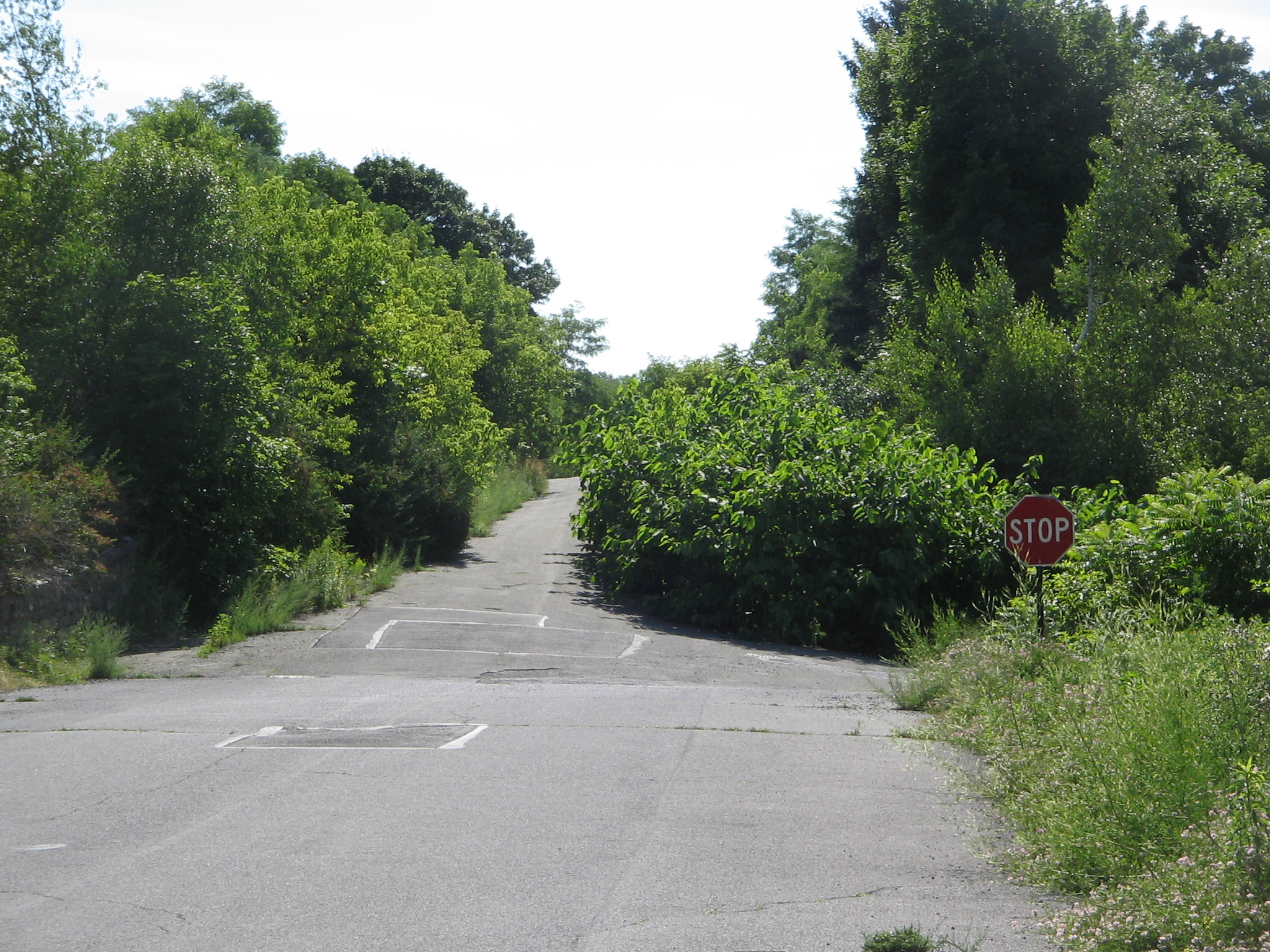
Today Centralia is a ghost town. Toxic fumes, sinkholes, and at times unbearable ground temperatures have driven many away. The federal government bought out the remainder; however, fewer than ten people still live here, refusing to leave their homes. When I learned that we’d be stopping in a nearby town for the night, I diverted our route to Centralia. There is really nothing to see. Two houses were all that I counted, and abandoned roads run into the untrimmed bushes like Life After People. While I attempted to get a feel for the place, my family spotted another car cautiously driving the abandoned roadways, looking for some ineffable handle on this man-made natural disaster. While not to the scale of the Deepwater Horizon spill, it is another example of the lust for fossil fuels and what might go wrong when these volatile substances accidentally escape human control.

Centralia, Pennsylvania

I couldn’t find the perfect picture of Centralia. There is no perfect picture here. Wary of sinkholes and reports of hostile locals, I pulled aside to take in the overall scene. On a hillside not far away, giant wind turbines lazily spun in the summer air. This clean energy alternative felt almost like an apology for setting the earth aflame below the feet of a town inhabited by mostly ghosts and less than a dozen living souls. In my head I knew that the temperature was 1000 degrees Fahrenheit well below, that 1000 people had been relocated, and 1000 years from now the fire may still be burning. Who needs a metaphorical Hell when human beings are so good at creating their own physical perditions?


Misappropriated Prophets

There seems to be a can of worms lying open on my desk, released by the comments yesterday’s post engendered. I thank all my readers and commentators. The issue most pointedly thrust among the worms appears to be that of prophecy. Teaching about prophecy constitutes a large part of my meager income. And since prophecy plays a large role in many Evangelical associations not only with the Deepwater Horizon disaster, but also Hurricane Katrina, 9/11 and just about any other major catastrophe, it is worth exposing. In the Bible prophecy is not about predicting the future.

Prophecy was a widespread phenomenon long before Israel appeared on the scene. One of the roles prophets shared in ancient times was the declaration of outcomes to momentous events. Unfortunately that aspect of their duty easily became equated with predicting the future. Its actual milieu, however, was that ancient people believed prophets to be “effective speakers.” When a prediction came true it was not because a prophet could “see the future,” but because the spoken word of the prophet participated in the reality of the world. The belief was that the effective word came from God/a god, and therefore would be true by definition.

Apocalyptic, the familiar literary form of Daniel and Revelation, is not prophecy. Zoroastrianism, the religion of ancient Persia, had influenced many ancient religions, including Judaism. Apocalyptic, like prophecy, has a predictive element. Like prophecy, however, apocalyptic has a different purpose. The books most heavily farmed for future predictions by Evangelicals, Daniel and Revelation, are both thinly veiled accounts of contemporary events of the authors’ own days. Daniel consoles Jews persecuted by Antiochus IV Epiphanes and Revelation consoles Christians persecuted by one of the early Roman emperors (the jury is still out on precisely which one). Neither book predicts the end of the world. Both, however, declare the comeuppance of the arrogant oppressor. It is here, perhaps, that the true relevance of the Bible speaks to the scars human beings inflict on their own planet and on each other.

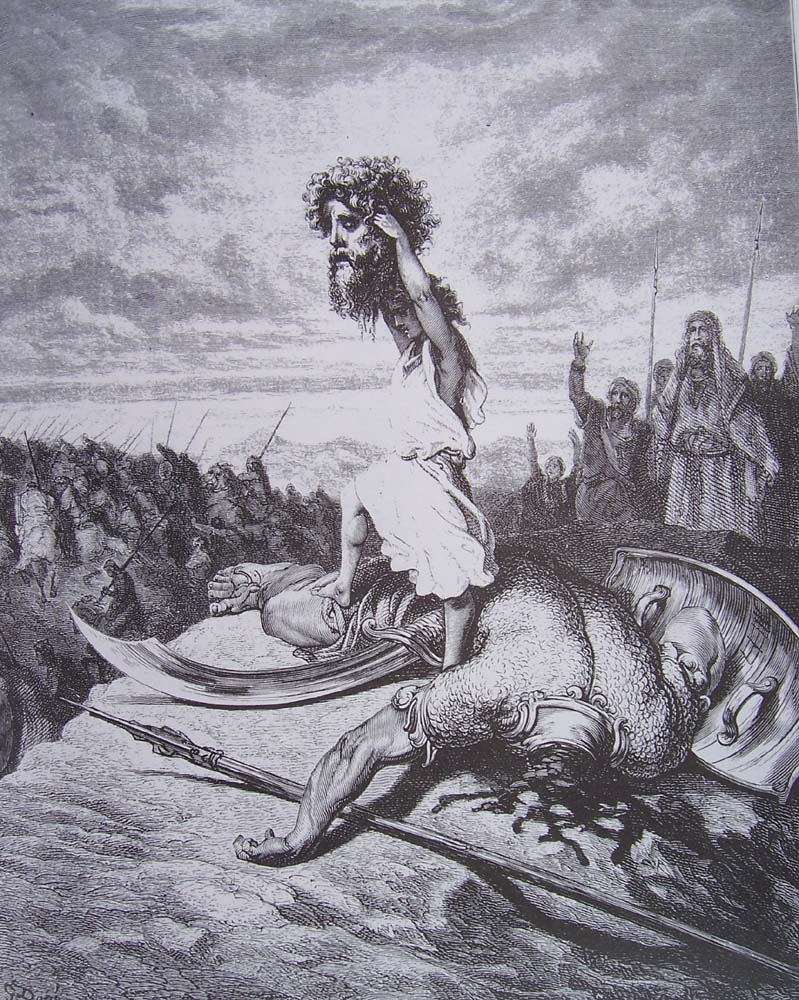
sic semper tyrannis


Oil’s Well that Ends

Greed has been on my mind quite a bit lately. I like to think it isn’t petty personal greed, but the insatiable corporate variety of greed. Friends send me links to sad commentaries on the Gulf Oil Spill, an event that severely amplifies the cruelty already inherent in nature, but an event that would have been preventable were it not for greed. My friend James from Idle Musings sent me a compelling story from the UK Guardian that poignantly demonstrates how a shift of worldviews has bestowed divine approval on the rape of our planet. The very religion that began as animism, the belief in the ubiquitous divine in nature, has evolved into a Neo-con Christianity that supports free markets as surely as it believes in resurrection. If a few million animals have to die, well, their invisible, loving God sees far more than our limited sight.

Nowhere is this more evident than in the video link my wife pointed out to me last night. Here an advocate for biblical “prophecy” points out that it can not be coincidence that the day after the United States withdrew unilateral support for Israel in the United Nations Security Council was the very day that Deepwater Horizon exploded. No, the pundit declares, do not be fooled. God is punishing the United States for withdrawing support from Israel. This idea, unfortunately, draws on a morass of sloppy theology that can be historically traced to an evangelical death-wish for the planet. Barbara Tuchman, one of the most respected historians of the last century, objectively traces the story in her classic Bible and Sword. Political support for Israel was perceived as a means of forcing God’s hand into releasing the second coming. So much for human sympathy.

Coincidences continually occur. April 19 is the day that Cardinal Ratzinger was elected Pope just five years ago. It is the day Grace Kelly married Prince Rainier of Monaco. It is the Feast of Saint Aelfheah of Canterbury. It is Patriot’s Day in New England. It is the day The Simpsons premiered. Whether to see God’s hand in any or all of this is a matter of perspective. As is the motivation behind supporting Israel, big oil, or the second coming. If there is any name other than greed for offering political support for a nation of sacrificial lambs and spilling oil in order to hasten the apocalypse, I simply do not know what it might be.

And this was only April