Rite and Wrong

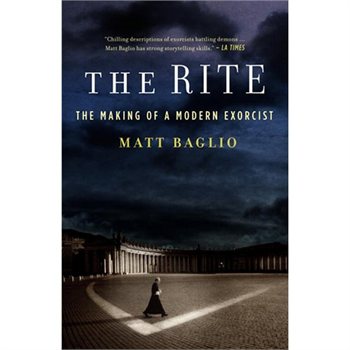
Anyone who’s never had anything very weird happen to her or him, raise your hand. Hmm, I thought so. Strangeness, whether prevalent or simply a unique event, is part of life. It is when we turn to explanations that the religious side of the equation suggests itself. Now I have a confession to make. When Borders was going out of business last year, I was in mourning. Those last poignant hours in my favorite bookstore I wandered the aisles picking up the books left behind by others, many of which I would not have otherwise purchased or read. One of those books was The Rite by Matt Baglio. I had seen the hype for the movie, and although the idea of possession terrifies me I’m not sure there’s anything here that can’t be explained by the likes of Carl Sagan’s Demon-Haunted World. Still, riding through the flickering lights of the Lincoln Tunnel on a bus on a gray and rainy morning, literal shadows of doubts creep in.

There is no doubt that events happen to us that seem to defy explanation. There is also no doubt that the enormous wealth of Christian mythology taken literally by Baglio defies all but the most gullible of readers. The problem is the black box. Nobody sees what goes on inside the locked chamber where the exorcist practices his art. Yes, it is a manly enterprise since the Catholic Church won’t admit of women priests. This was one books that left me tottering between what I know to be true and that shadowy place where doubts dwell. It is utterly certain that our perspective helps to determine what we see. A priest in a stuffy or chilly closed-off room believing a demon lurks therein will see the signs in the behavior of the victim. Throughout the book I kept pondering how so many possessed people lived in heavily Catholic Rome while in locales with more mixed religious traditions the phenomenon is rare.

Perhaps the most disturbing part of the story is the fact that Baglio readily admits: most of the possessed are women. In a religion where women have been marginalized as a matter of course from the early days, can this really be a surprise? And when the exorcist, a celibate priest, experiences sexual arousal how else can he interpret it but as demonic? The human mind is a fascinating system, capable of launching a body into stunning, adrenaline-induced feats of strength and endurance. It conjures gods and demons. And it can make a grown man cower on a dark and windy night with stories of possession racing through his head. I had a difficult time believing much of what I read in The Rite, but I do think perhaps it is now time to make a date with Carl Sagan. Lighting a candle in the dark is a very human thing to do.


The Evil Living

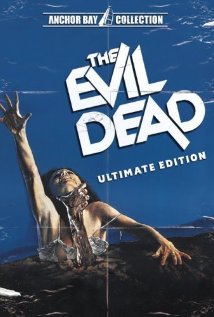
Returning home from my campus visits, I needed some brainless relaxation. Since we don’t have any television service at home, this means watching movies. I’d heard quite a bit about The Evil Dead over the years—a movie that was scary back in the 80’s when it appeared. Improvements in special effects and the intensity of engineered sound are capable of drawing a person into an alternate reality for a couple of hours these days, and the endless reiteration of earlier movie effects somehow robs the early thrillers of their impact. The Evil Dead, however, capitalizes on confusion about the menace and teeters on the brink of morality for the entire 85 minutes. Naturally, when looking for a source of fear, it seeks a religious agent. The source of the evil in the woods is narrated in a voice-over of the presumably dead scientist who has discovered Sumerian texts that release demons in the forest (mostly in the form of falling trees).

Sumerian is always a safe bet if you want a language that your viewers will not be able to identify. The earliest known recorded language, Sumerian is still difficult even for experts, and it conveys all the strangeness of long ago. We do know that the Sumerians recorded myths that involve what we might call “demons” today, but the possession of humans was a much later development—probably a pre-scientific way of explaining epilepsy. As our five students seek a weekend getaway in the woods, they become possessed and face the moral question of just when a person ceases to be human. At what stage does someone have the right to kill someone else? Perhaps unintentionally, the movie gives us the answer, “Never.” This kind of morality has a place in America, one of the very few “first world” nations in which the death penalty is still legal. Often promoted by those dead-set against abortion. Where do we draw the line saying a person has crossed over into the unforgivable other?

The Evil Dead has become a cult classic over the years. Its relatively low budget of less than half-a-million dollars brought an astonishing box office return on the investment. The gore, tame by more modern standards, does not mask that what is really at issue here: the question of right versus wrong. What is truly evil? Sumerians aside, what possesses people and drives them to destroy one another? The Evil Dead, like many horror films, reaches for a religious answer. As the supernatural fog begins to clear, however, we might not like what we see in the clear light of day. Religion may be an excuse, but the assaults upon one another are what Nietzsche famously called “human, all too human.” The sooner we clear our vision and pay attention to what is actually happening, the sooner we can combat the horror.


Persistence of Demons

Although released in April, Insidious is a film for the long nights of winter. At least with my schedule of keeping up with a culture that is moving too fast, this feels like a reasonable rationale for having just watched it. I tried not to read reviews of the movie when it came out since I prefer to experience the thrills first hand when I watch a film. Like many horror movies, Insidious revolves around the supernatural. Specifically, Insidious takes on the specter of the afterlife. Unlike The Exorcist, the demon in Insidious is not expelled by a priest, but by a psychic, borrowing a few celluloid feet from Poltergeist. Adding a couple of ghost hunters to the plot reinforces the idea of the secular demon that so often appears in the learned discussions of the TAPS team as they tilt with unseen entities on SyFy.

In an increasingly secular society, the fear of the dead is very much alive. Even a casual stroll through Barnes & Noble (the only show in town now) will demonstrate the popularity of the paranormal. Somehow sitting in pews listening to a sweaty orator go on about what he (sometimes she) thinks God is wanting us to do has disconnected us from the realm of the dead. Paul Tillich famously declared that God is a person’s “ultimate concern.” In an age when technology is hovering on the edge of keeping consciousness alive forever, people wonder what happens to the self when the body dies. Call it soul, consciousness, mind, or personality, we can’t deny—no matter how secular—that something inside makes each of us unique. The myth of flying about with angels playing harps doesn’t match everyone’s expectation of an afterlife any more. At least some of us hope for electric guitars.

Insidious opts for a realm like Limbo known as “the Further.” This is a place we have been before. The hopelessly corny The Seventh Sign gave us “the Guf” as a now empty federal reserve of souls. The Greeks gave us Tartarus and the Zoroastrians “the place of worst existence.” No matter what we call it, our brains like to believe there is some place out there that we go when the biomass we drive each day finally hits the wall. Increasingly it has become a negative place where darkness reigns. Insidious’s “the Further” is a hopeless realm of the dead, acting out their evil intent. There are no angels, but demons abide. It seems that we’ve outgrown the concept that angels are watching over us, but we can’t escape the creeping sensation that diabolical entities are peering at us from the shadows. During these long nights of winter, Insidious invites us to take a journey to where there is no heaven, but hell is surely not hard to find. All we have to do is close our eyes.


Nightmare Behind Holidays

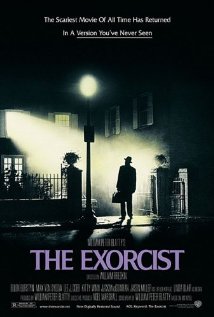
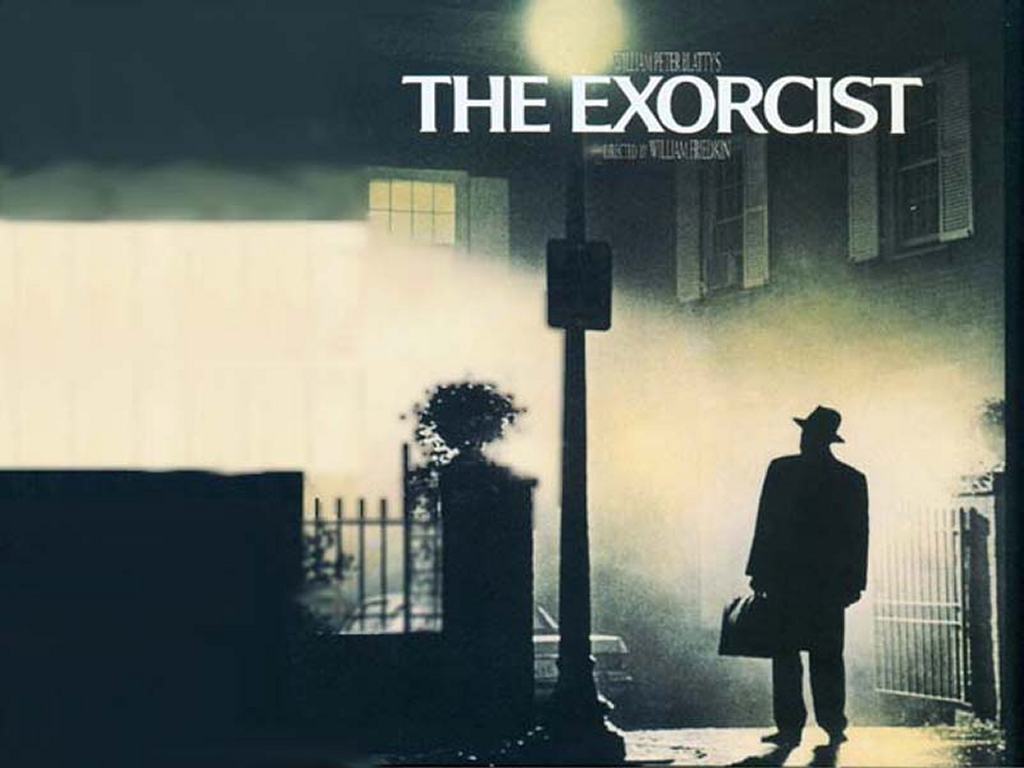
Among the first mythical creatures to go extinct when the early rays of the Enlightenment began to filter through the blinds of superstitious antiquity, were demons. It was recognized that the activities attributed to demonic possession closely resembled epilepsy and psychological illness and that Occam’s Razor would remove any unseen entities with its no-nonsense straight-edge in one deft pass. And yet they remain. Among the ghost hunting crowd, demons have been recategorized from fallen angels to entities that have never been human. Their reality is assumed, and results of investigations, not surprisingly, support that assumption. It was, however, a Dirt Devil advertisement that created a desire to watch The Exorcist now when darkness comes early and the leaves have fallen from the naked branches and a chill has permeated the air.

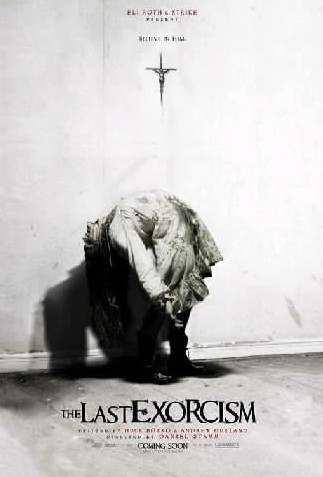
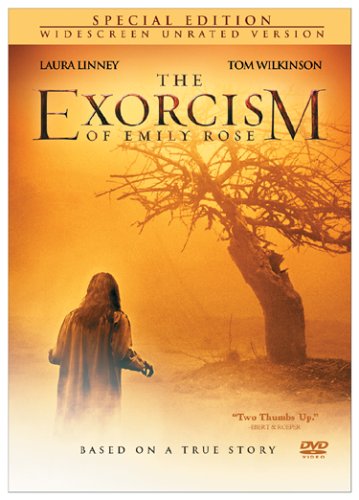
As I watched the still disturbing film, I realized that I had also watched the Exorcism of Emily Rose and The Last Exorcism within the past few months as well. I am no fan of demon movies; even with no demonic forces out there, inevitably young women are tormented by what ultimately turns out to be a male establishment. My threshold for watching the suffering of others, even if only acted, is minimal. Movie makers—and often horror writers—know and exploit this, bringing us to face the real demons, the shadowy regions of our own minds. The Exorcist is particularly effective in this since it is Fr. Karras’s demon that ultimately wins out. Having never read the novel, I’m not sure whose idea it was to make the demon Pazuzu, but once again the origins of demons does not fit modern media’s expectations.

Pazuzu was a Mesopotamian “demon.” Akkadian doesn’t have a proper word for what the Judeo-Christian tradition would introduce as a fallen angel. Demons were simply a way of explaining profound misfortunes such as droughts, pestilence, or the Bush administration. Eventually such misfortunes became personified and took on the ability to possess a human being. Here is where psychology and neurology have come to banish demons. Part of the terror of The Exorcist is that such scientific explanations are laid flat in the face of real supernatural power. The lessons of over-consumerism, as evidenced in Black Friday eclipsing Thanksgiving for many (the lines were formed in many locations well before midnight, cutting into family time in order to get first crack at the bargains) show the demon more clearly. Holidays are measured in importance by the amount of money spent. Perhaps it is no wonder that Halloween’s demons have lingered through November and even to the end of the year.


Demonic Beginnings

A friend recently asked me what seemed like an innocuous question: what is the origin of demons. I typed out an answer on the basis of my outdated reading on the subject only to realize that this is a very complex question indeed. While teaching my Ancient Near Eastern religions class over the past three years I regularly told students that there is no regular word for “demon” in Akkadian, the language of ancient Mesopotamia. Mesopotamian religion was the dominant system of belief in sheer size of area and antiquity in the Ancient Near East. There are characters recognized as demons: Pazuzu of The Exorcist fame among them. Their origin, however, is murky. In Mesopotamia demons are generally a mix of human and animal components supposed in some way to be responsible for misfortune. They are not evil, but they carry out the punishments decreed by the gods. In the first millennium BCE demons were understood to inhabit the Underworld, paving the way for Hell, once Zoroastrianism contributed the necessary duality for the region.

The Hebrew Bible contains no uncontested word for “demon” either. The words generally translated that way do not indicate evil spirits in the sense that the Christian Scriptures seem to depict them. In the Hebrew Bible they appear to be associated with the worship of “false gods” and the inhabitants of deserts and wastelands. In neither the Mesopotamian nor Israelite concepts do demons appear to “possess” people. By the time of Christianity, with its Zoroastrian-fueled dualism, we have an anti-God (the devil) and his anti-angelic minions (demons). One purpose here seems to have been to clear the monotheistic God of charges of originating evil. If there is only one God where does evil come from? Better to posit a devil than take that one where logic leads.

Back in the days when I was still in school, demons were regularly cast as the explanation for various mental illnesses and epilepsy. In a society that had trouble understanding the sudden onset of an epileptic fit or a sane individual growing insane, such misfortunes could appear supernatural. In a supernatural realm where evil is mediated by the devil, demons naturally volunteer for their old role as purveyors of divine punishment. Eventually the mythology of a revolt in the world of the gods emerged, probably based on the dualistic outlook of Zoroastrianism, and we soon have verses referring to the king of “Babylon” being reinterpreted as literal episodes on a spiritual plane. Once Jesus utilized this language to describe the suffering souls of his day, it became heresy to think of demons in any other way than as physically, or at least spiritually, real. In the modern day they are still with us as “spiritual entities that have never been human” according to Ghost Hunters. They do, however, resemble people in significant ways more than they resemble their mythic forebears. Where do they come from? The dark recesses of the human psyche. Their mythic origins, however, remain obscure.


Parsing an Exorcism

The latest in my spate of scary movie viewings is The Last Exorcism. The press when it was released last year made claims of extreme fright, but my impression was that I’d seen it all before. The “found footage” fantasy is difficult to maintain—although the camera work in the film is good—and the premise of demonic possession is frightening if the viewer is a believer. The hook for this movie, however, is that the exorcist himself doesn’t believe and becomes a victim of his own unbelief. The pattern overall follows The Exorcist, but without the creepy soundtrack and staged lighting effects, The Last Exorcism relies heavily on the viewer’s willingness to believe. The demonic possession is presented as extreme contortionism and self-destructive behavior, as well as the uncharacteristic violence by the victim. When Nell Sweetzer gives birth to a demonic child, a la Rosemary’s Baby, the role of good Christian gone occult feels a little hackneyed.

I’ve tried to analyze what scares so many people with movies of demonic possession. The core fears seem to come down to two: belief in the reality of demonic possession and the fear of being out of control. Historically the concept of possession was originally relegated to the gods with demon possession apparently arising as a pre-scientific attempt to explain epilepsy. The fact that most Christian denominations no longer recognize physical demon possession (a fact exploited by The Last Exorcism) makes it more frightening still. For a generation of media-saturated viewers convinced that cover-ups are common the credibility of the church, struggling with its own metaphorical demons, is suspect. Perhaps demons are out there—a common enough assertion on the reality show Ghost Hunters—and the church has lost control over them. When Jason and Grant explain what demons are, however, they are pretty far afield from Legion being cast into a herd of swine.

If the Internet is any kind of reliable measure of people’s fears, zombies and demons appear to be nearly on a level when it comes to belief. Both are supernatural and neither stretches credulity to the point of humans growing fangs or matted fur. Both participate in the idea that there is more to be feared beyond death. Both fail in the court of science. The Exorcism of Emily Rose raised the ambivalence of demonic possession to the level of the courtroom. One thing I learned on jury duty last week is that the truth is measured on the basis of the judgment of a quorum of rational individuals. The implications of this are frightening indeed: those who accept the reality of non-physical monsters (the jury is still out on ghosts) are fully capable, in a legal setting, of deciding the truth of the matter. The only corrective to witch-hunts and state-sponsored exorcisms would seem to be education. Today education comes via the media where zombies and demons freely roam.


Religious Reflections

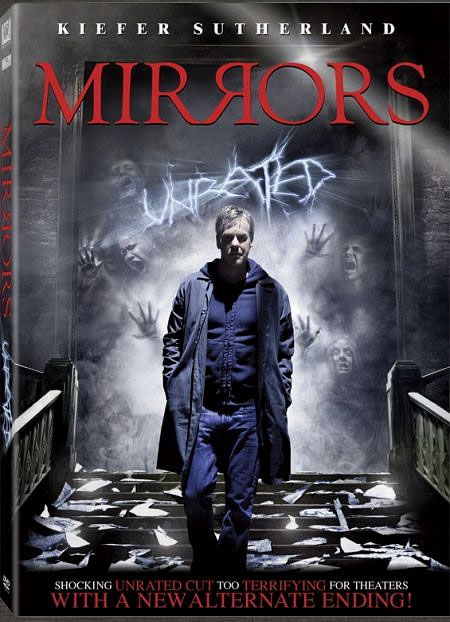
In a stunning display of alacrity, over the weekend I viewed the movie Mirrors only three years after it was released. Since I watch horror films with a view to how they portray religion, I was preparing myself for disappointment when well over halfway through no overt, or even subtle references seemed to have been made to any holy topic. As Ben Carson, security guard, discovers that the mirrors of his night-watch building are haunted, the story seemed to be evolving into the standard ghost movie. When the missing character of Anna Esseker was finally found, I breathed a sigh of relief—she was living in a convent (because there were no mirrors there). What I supposed was a ghost movie was really a demon movie, and I found yet another example of how fear and religion interact.

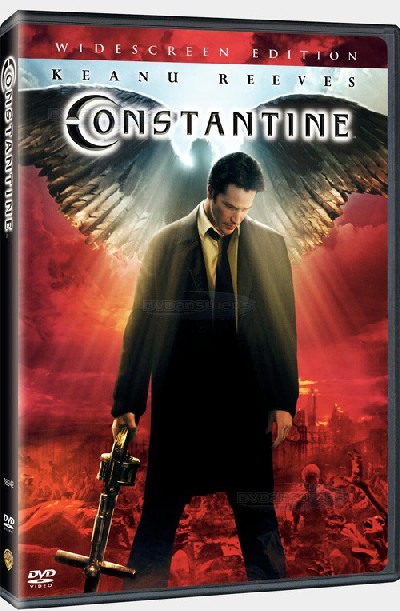
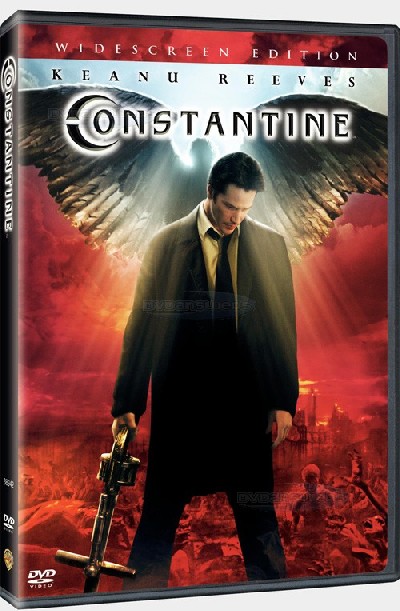
Since I’m currently preparing a program for a local church on the way that Christianity is represented in the movies, I’ve been rewatching a couple of standard films to gauge the scope of this interaction. So this weekend I also watched Constantine. This has never been one of my favorite movies, but as imbued as it is with Christian mythology it cannot really be ignored. When Gabriel is explaining to Constantine why he is bringing the devil’s son into the world, I realized that the reason coincided with some of my observations. Gabriel notes that humans need fear to appreciate God. By bringing fear into the world, Gabriel will force humans to become more pious. Intertextuality in the movies.

If I might indulge in some theological (that word makes me shudder) speculation that may not have been intended by the writers/producers, both of these movies utilize the concept that demons are trapped by mirrors. This may be a reflection truer than ever intended—we are our own demons. Mirrors reflect the vanity of visual appeal; our looks fade and our true self remains. Is that self an angel or a demon? Christian tradition states they are one and the same. Demons are only fallen angels. I’ve seen enough horror films to know that religion is not a universal element, but it often does appear in the role of producer of both good and evil. In this sense, at least, the movies are very honest.


Silver Scream

Only within the last couple of decades have movies begun to be taken seriously as expressions of the Zeitgeist. An art form not even 150 years old, commercial movies have been seen primarily as an entrepreneurial exercise—money-making ventures with little serious thought. Now students of society recognize that where our wallets are, there our hearts are also. Even in the depths of recession the entertainment industry maintained its draw. The unemployed could at least watch movies cheaply at home. Yesterday’s newspaper contained an insightful entertainment piece on horror movies by film critic Stephen Whitty. Noting that the film industry began when the Production Code largely mirrored pre-1950’s American cultural values, Whitty observes that clergy were left out of movies, or when they appeared they were strong role-model characters. Then, beginning with The Exorcist, the demonic became a huge theme in movies. As Whitty concludes, “Certainly it’s partly a reflection of a growing fundamentalism” that indicates why such movies are now so popular. Many Americans believe in angels and demons and turn to them to explain the serendipitous or contretemps.

Scary, but not necessary.

Social attitudes help to explain what we see on the big screen. Almost from the beginning religious leaders have castigated the entertainment industry as an unholy counterpart to sanctified living. Theater was earthy and evil, movies immoral, and even the desire to be entertained took away from the struggle for salvation. Ironically, however, movies tend to reflect conservative values. At least when it comes to demons. In the current glut of demonic films—which most Americans rate as the scariest kind of horror movie—the church-sanctioned hero is often the only effective tool against evil. A mythology of a Manichean dimension reigns: good struggles against evil and good will prevail. Unfortunately, this Hollywood scenario falls on the side of simplistic solutions to complex problems. Evil is our own doing—we need no demons to tell us how to be bad. Likewise, help often fails to come from on high.

Over the weekend I watched Dogma once again. Severely criticized as immoral and trashy, the overall message is, however, one of faith and hope. No fundamentalist, Kevin Smith certainly takes his pot-shots at Christianity, particularly Roman Catholicism, but in the end God and angels are real, and demons are defeated. Yes, this comedy is intended to be entertainment, but the audience that views it probably agrees with its core values. As Whitty demonstrates, the past decade has flooded the market with Hell-born foes, and there seems to be no imminent slacking of the pace. People are afraid. Our efforts at free-market Heaven have turned out to benefit too few while too many are still without work or adequate security. No, we need no demons to instruct us in the ways of evil. We are fully capable of initiating our own.


Gods and Demons

In ancient times people were sometimes possessed by gods. They were called “prophets” and they gained a breed of knowledge hidden from most other people. Demons were believed to exist, but they did not possess people. Instead, demons were used as explanations for misfortune, whether malevolently premeditated or not. Demons reflect, in today’s society, the concept of pure evil. Fr. Vincent Lampert, one of America’s 24 official exorcists, visited Montclair State last night to discuss evil, and according to the New Jersey Star-Ledger, he believes evil is a reflex of how people treat one another more often than a “figure with the hooves and horns.” No doubt there is a public fascination with demons, but few people understand their religious pedigree or what other explanations may be used to categorize them. According to the paper, Italy claims 300 exorcists – demonstrating that demons show culturally determined characteristics.

The 2005 movie The Exorcism of Emily Rose, lays out how science and religion differ on the issue of the demonic. Anneliese Michel, a young German woman, died in 1976 after being subjected to a prolonged treatment of exorcism. Her story was the “inspiration” for the film, and it raises the question of the reality of the demonic in the physical world. Fr. Lampert is more circumspect, noting that real life exorcisms are not as dramatic as those shown in the movies. He does, however, recall having seen a person levitate, but not during an exorcism. The human behavior he’s seen while on duty may all be readily explained by mundane physical and mental phenomena.

What does seem certain in all of this is that demons are not the behooved and behorned antagonists of films like Constantine or countless other graphic-novelesque portrayals of evil. Their Pan-based characteristics hearken back to the days when Christianity had to make plain its dismissal of foreign gods. In the ancient world hooves and horns were symbols of strength generally associated with powerful, if sometimes capricious, deities. In other words, what were one culture’s gods have become another culture’s demons. Movie makers understand the simultaneous revulsion and draw of the demonic character, but it seems that Fr. Lampert strives for a more balanced perspective. Evil has many faces, and most of them do not conform to Hollywood standards. Perhaps if all religions were respected demons would lose their power to torment and people would learn to get along with each other.


The Problem with Demons

One of the perks to life among a university community is the special programs that come to campus. As an adjunct instructor with a schedule so confusing that even Escher would get lost, however, I do not often have the opportunity to take advantage of such programs. More’s the pity since next week Montclair State University is hosting an event called “The Real Exorcist.” One of the very few authorized exorcists of the Catholic Church will be speaking on campus. The event overlaps with a previously scheduled class at Rutgers.

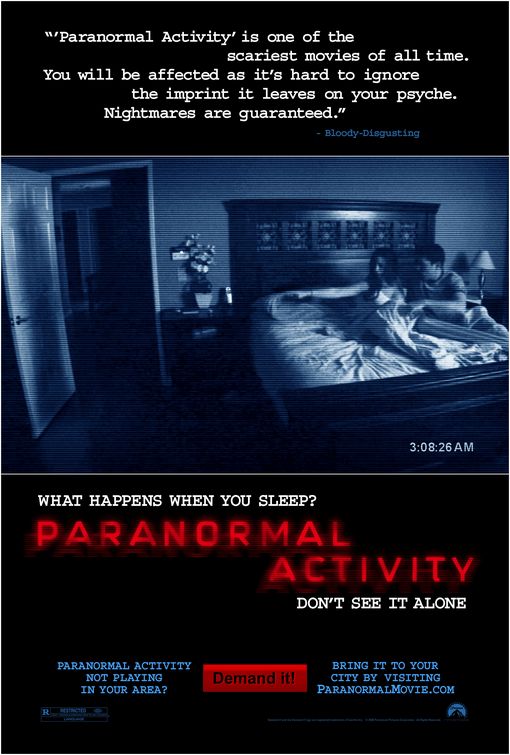
A little disappointed, last night I sat down to watch Paranormal Activity, the indie movie that made such a splash last year. Assuming it was a ghost story, I wasn’t too concerned about watching it alone on an October night. When I discovered it was a demon story, however, I wasn’t sure watching it alone was such a good idea. You see, in the hands of paranormal investigators the demon has undergone a transformation. Ancient Mesopotamians believed in a set of lesser gods who caused misfortune, although they don’t seem to have been pure evil and they didn’t call them demons. By the time we reach nascent Christianity, demons are cohorts of the Devil and are utterly malign and capable of possessing a person making them do the bidding of their dark lord. That’s where they remained on the divinity scale until modern day investigators using scientific equipment found them. I confess to having watched Ghost Hunters a time or two. Here the demon has morphed into a non-human disembodied entity – the very antagonist of Paranormal Activity.

Being aware of the origin of concepts is often a comforting place to be. When I realize that no special revelation has suddenly validated the existence of a baleful creature set to do me serious harm, a relief encompasses me. The problem with demons is that they don’t evaporate so easily. “Invented” by the Mesopotamians to explain misfortune, by the change of the era they had evolved into (largely) an explanation for epilepsy and mental illness. Now today they are back as haunting entities that have no human sympathy since they were never human. Paranormal investigators take them very seriously, despite their checkered theological pedigree. I guess I side with Shakespeare on this one: “there are more things in heaven and earth, Horatio…” After all, it is October and the nights are growing noticeably long.


Dark Side of Religion

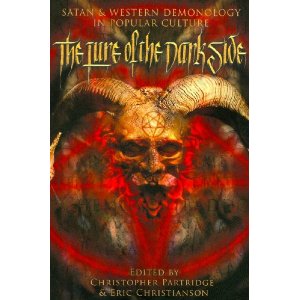
Back in August I received a book to review for Relegere, the new online journal for Studies in Religion and Reception. The volume I received was The Lure of the Dark Side: Satan and Western Demonology in Popular Culture, edited by Christopher Partridge and Eric Christianson. I found this assignment to be a felicitous one for many reasons: the book was very interesting, the topic is intriguing, the authors are scholars who take popular culture to be worth serious study, and it exposes the roots of many perceptions of Satan and the demonic in western society today. While I cannot present the whole review here – I would encourage interested readers to explore the appropriate issue of Relegere when it is published – I would feel remiss if I didn’t at least mention a few of the highlights here.

Scary cover

First of all, the book is a collection of essays that cover the media of music, film, and literature. Many of my students like to point out the propensity of death metal bands for choosing ancient Near Eastern gods and themes for their band names and songs. The first two essays in this book explore black metal and its self-proclaimed Satanic intent. What is interesting here is that what many black metal bands declare as their “religion” does not, in fact, fit with mainline Satanism at all. This aspect of the book is worth reading just to see how religious ideas, both unholy and holy, easily become distorted when transformed into an artistic medium. By far my favorite essays, however, were those that analyzed horror films according to religious themes and concepts. It was refreshing to see serious scholars discussing vampires without flinching, noting how they are part of the same fabric from which religion is cut.

One of the recurrent criticisms of academic writing is that it generally reaches only academic audiences. Certainly at the prices common at academic presses the average layperson would need to be exceptionally motivated to pay out the cost to read what are admittedly generally dry and technical books. Equinox has fortunately released an affordable paperback version of this volume, making the price less of an issue. The content is, for the most part, readily accessible to the general reader. The cover is a tad lurid; when I took it along to the DMV to renew my driver’s license I felt a bit self-conscious in the waiting room. Beyond that, this was a rare academic book that should find a wide readership. For me, the bibliographies and filmographies demonstrated my own deficiencies in keeping up with popular culture. I would recommend it for those with a sturdy constitution who want to know the correct way to dispatch a vampire in the twenty-first century.