Old Deuteronomy

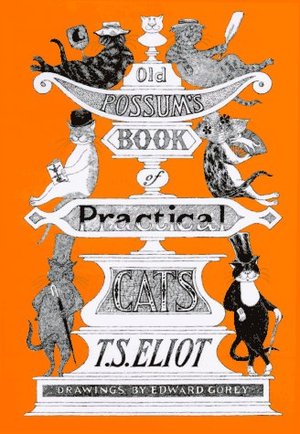
Last night my family attended a performance of CATS. We can seldom afford shows, or even movies for that matter, but when CATS comes to town it is non-negotiable with my daughter. It is a must-see musical. Anyone who has seen the show knows it is all just for fun with only the thinnest of plots and the most colorful of non-religious characters (they are, after all, cats). T. S. Eliot and Andrew Lloyd Webber, however, were/are solidly C of E, and that orientation comes through in both some of the characters from Old Possum’s Book of Practical Cats and the arrangement of the poems into the lyric of CATS. The basic message of the show is redemption, but the angle that I particularly noticed last night was the mosaic aspect of Old Deuteronomy.
Old Deuteronomy, the patriarch of jellicle cats and father of many of the cats in the junkyard, is a hobbled, old character who assumes the aspect of a law-giver to the younger generation. He has been to the Heavyside Lair and knows the path there. He leads Grizabella to her rebirth with the Everlasting Cat. Even his name suggests his association with the Torah, famously summarized in the book of Deuteronomy. When he is kidnapped (cat-knapped?) his return leads directly to the culmination of the show, the return to Mount Sinai.

No one would claim that CATS contains a profound religious impact, and yet the show conveys an unexpected emotional power. T. S. Eliot was not particularly known for his religious poetry, yet his personal beliefs permeate the children’s poems that form the basis for the show. His Moses is non-judgmental, a cat who was quite frisky in his younger years and who knows the value of a life well lived. A cat that believes in second chances. That simple message kept audiences returning to Broadway to see CATS on its incredibly long run. For those of us whose careers have run aground in mid-course, a Moses more like Old Deuteronomy would be a hopeful religious leader indeed.

Redemption through work

Lost Apocalypse

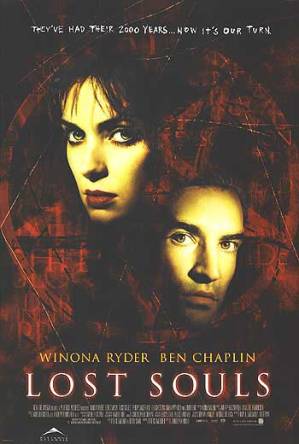
The Bible has many eminently quotable passages. I suspect that is one of the reasons it has the staying power that it does. Many critics of the theologies spun off by the Good Book have turned their vitriol toward the Bible itself, but I believe such hostility to be misplaced. Not everyone enjoys reading the Bible – that much is true for any book. The Bible, however, is foundational for not only our society, but the entire western literary tradition. Its influence on Shakespeare alone, who has, in turn, influenced just about every writer since the seventeenth century, underscores its literary importance. That’s why I’m always surprised with film-makers use concocted verses from the Bible when actual passages would produce the same effect. Granted, few Bible scholars comprise movie audiences and producers and directors seldom worry about writing the story for them. Last night I watched the “horror” film, Lost Souls, released in 2000. I’d read about the movie in Douglas Cowen’s Sacred Terror, so I wanted to see how it rated.

The movie begins with a false Bible quote: “… A man born of incest will become Satan and the world as we know it, will be no more. Deuteronomy Book 17.” Now granted, the movie failed to rock the critics, but the sheer weight of errors from pre-scene one should be the first warning to start from a better script. Beginning with an ellipsis for dramatic effect may be acceptable, but it serves no purpose – and what’s with the misplaced comma? A man born of incest in Deuteronomy is a non-starter because his potential parents could only be found dead, crushed together under a pile of hurled stones before the unfortunate could even be born. Satan as a devil is never mentioned in the Hebrew Bible, let alone Deuteronomy. Deuteronomy is almost never quoted by apocalypticists since it does not predict the end of the world, and Bible books are divided into chapters, not “books.” Well, the biblical illiteracy of Hollywood may be overlooked for a good story, but this is no such thing.

Lost Souls fails on the premise that a biblical “literalism” (and that is only if certain Evangelical interpretations are given unwarranted credence) about the coming of an Antichrist should be shored up by a fabricated quote from the Bible. I’m not trying to be a movie critic here, but a cultural one. The whole “end of the world” scenario held by many Evangelicals is a hodge-podge of biblical verses brought together by clever nineteenth-century clergy with little exegetical training. It is like trying to connect the dots while having to change pages constantly. The idea caught on amid the discarded lives left behind by advancing industrialism and the perceived threat of evolution. Apocalypticism has become its own industry as some otherwise unknown writers can attest. Movies like Lost Souls, or even The Omen, however, pale when compared to the antics of religiously motivated apocalypticists in the real world. Some of the rules in Deuteronomy itself are more frightening, if better written.