Thinking of Home

The earth, and even life on it, will, I’m confident, outlive our petty desires for money and being the king of the hill.  Scientists are getting tantalizingly close to demonstrating something that many of us already know—life exists elsewhere.  Chemical signatures of life appear as close as Venus and as far as K2-18b.  I suspect our universe is full of life.  And life is more than just rationality.  We’re creatures driven to survive and that level of will appears to be universal.  As Ian Malcolm says, “Life will find a way,” or something similar.  Earth Day should be a celebration but under too many Republican presidents it has become a plea to please stop intentionally harming our planet.  I grew up in that distorted religion known as Fundamentalism.  I learned that the destruction of the world was necessary to force God’s hand with the second coming.  The planet was here to exploit and waste since he’ll be back any day now.

Unlike many of my cohort, I decided to learn more about that perspective.  The more I learned the more shocked I became.  A warped and twisted message had been passed along as Gospel truth, and that the care the creator bestowed upon creation was merely a smokescreen to hide Jesus’ return.  I still believe we are not capable of completely destroying the planet.  Life will continue with or without us.  Life is persistent and hopeful.  That doesn’t mean we shouldn’t take care of it.  Earth Day has become a rallying point for those who see the world sensibly.  We have so much wonderful life on this planet.  In our arrogance and in our tendency to take mythology literally, we have assumed the worst.  Why not take care of what we were given?  Jesus may not come back, but perhaps the Lorax will.

There are ways to live sustainably on this planet.  It does mean that some of the richest will need to surrender some of their wealth and power.  We need to learn the habits of requiring less and appreciating more what we have.  Like most people born into the world in this era, I struggle against the desire for new things.  Novelty is natural to such curious creatures as ourselves.  But there are other such curious creatures too.  They have a place here, even as those which seem to have no curiosity do.  It’s a planet big enough for all of us.  We just need to be sensible about it.  And remember the earth today and be thankful for our home every day.
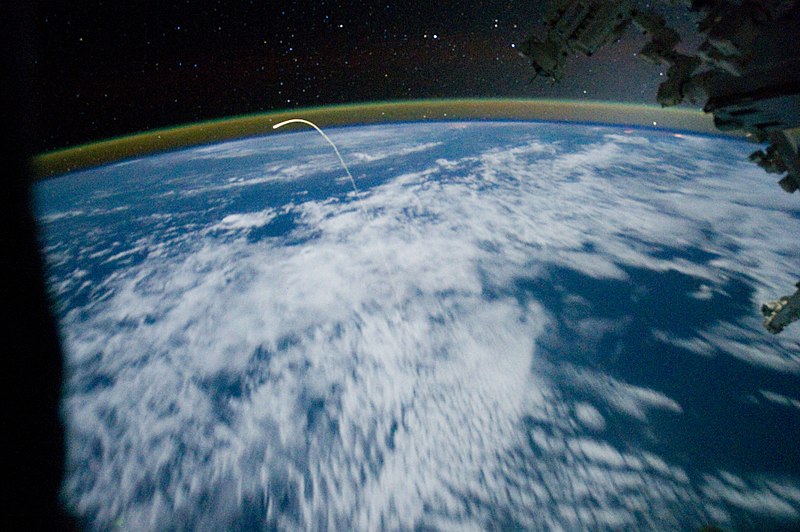
Image credit: NASA/ISS Expedition 28, public domain from Wikimedia Commons

Planetary Thinking

It’s Monday, and I’m feeling like a holiday.  Good thing it’s Earth Day.  Many businesses (who still don’t consider Earth Day important enough to make it a paid holiday) are emphasizing being green these days.  Really, with global warming proving itself no myth it’s just good business to try to adapt to sustainable practices.  Those of us who are vegan find more and more companies offering animal-free options—our dependence on beef is a major environmental hazard.  It’s still a challenge finding shoes that aren’t leather based, but things are improving.  And more and more hybrids and electric cars are on the roads.  We are making progress.  We still haven’t, however, gone so far as to declare a day dedicated to preserving our home an official holiday.

I’m not jaded or capitalistic enough to think our only hope is to find off-world parking.  To raise the future of humanity elsewhere.  It’s just that people fall in line after bullies and bullies only think of themselves.  And who, thinking that an afternoon on the links can be counted as work, would consider giving mere employees a day off?  A day when we might shut down commuting schedules to save power?  A day to rest from the brutality of constant commerce.  After all, a typical weekend consists of a day for chores and a day for church.  (Still, that is, for many people.)  And then back to the office not really feeling refreshed but knowing that you can’t long survive in a pandemic-ridden world without more cash coming into the coffers.  Inflation may be going down but grocery prices aren’t.

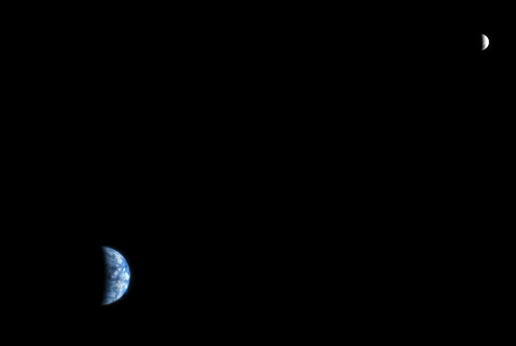
From NASA’s photo library (public domain)

A day to celebrate home seems like a no-brainer.  Especially when it comes on a Monday or Friday.  Ah well, we’ll do our best to celebrate it around work, shall we?  We’re moving late into April.  There’s been a bit of sun mixed in with April showers, as is typical around here on this planet.  Days are growing longer and the trees are leafing out.  Spring welcomes us back to the outdoors (after work, of course) where green now predominates over brown and gray.  While we may not have the day off, we can at least take a moment or two to consider how we might be better to our planet.  How we might drive less, use less electricity, generate less waste, spare a few cows.  Who knows, it might become a habit?  If that were to happen maybe every day would become Earth Day.


Day of Earth

One of the questions thoughtful and mission-based publishers ask is why books on environmentalism don’t sell.  Since it’s Earth Day (by the way, Happy Earth Day!), I thought I’d ponder it here.  My own amateur sense, as a personal eco-warrior, is that younger people are very focused on fixing environmental issues.  In fact, it is often THE issue for them.  And honestly, reading books about our many, many failures to sustain our environment is downright depressing.  I’ve read several, and seldom do I put the book down without a profound sense of grief and hopelessness.  Many of us do what we can while watching others thoughtlessly carrying on as if our modern lifestyle is normal.  I don’t advocate getting out of the matrix and hunting mammoths with spears, but I do wonder how to get through to those who don’t think about it.

I’ve been on the “Green Committee” at work for many years.  I sense the hopelessness there as well.  Our business has gone about as green as it can but unless you can convince other, less concerned industries to reduce their footprints too, we’re all still walking through the new carboniferous age.  Little things matter.  Some of us may not be able to afford an electric car, but hybrids are somewhat reasonably priced (in as far as car prices are ever reasonable).  LED lightbulbs have dropped from over $10 a pop to two for a buck.  And why are we still using natural gas when electricity can be produced by wind?  My young next-door neighbor has been encouraging us to get solar panels.  We would, but we have to get the garage roof fixed first.  And so it goes.

Caring for the environment is a big job.  These days, however, we also have to keep an eye on politicians who get elected to serve only themselves.  And Supreme Court justices who do things that would get many of us fired for bribery.  Here’s the thing: justice doesn’t work unless it applies to everyone.  We share this planet.  It’s difficult to build forward momentum to save our home when corruption is so deeply entrenched among those who control budgets and who have so many unthinking followers.  Even so, we as individuals can do what we’re able.  We may not be able to afford to repair that garage roof yet to get solar panels installed—it really is in a prime location with uninterrupted southern exposure—but we can compost.  And be conscious of our energy use.  And even, if we’re brave enough, read some books on how to help make things better.  The earth, it seems, is something worth saving.

Image credit: NASA

Wasting Waste

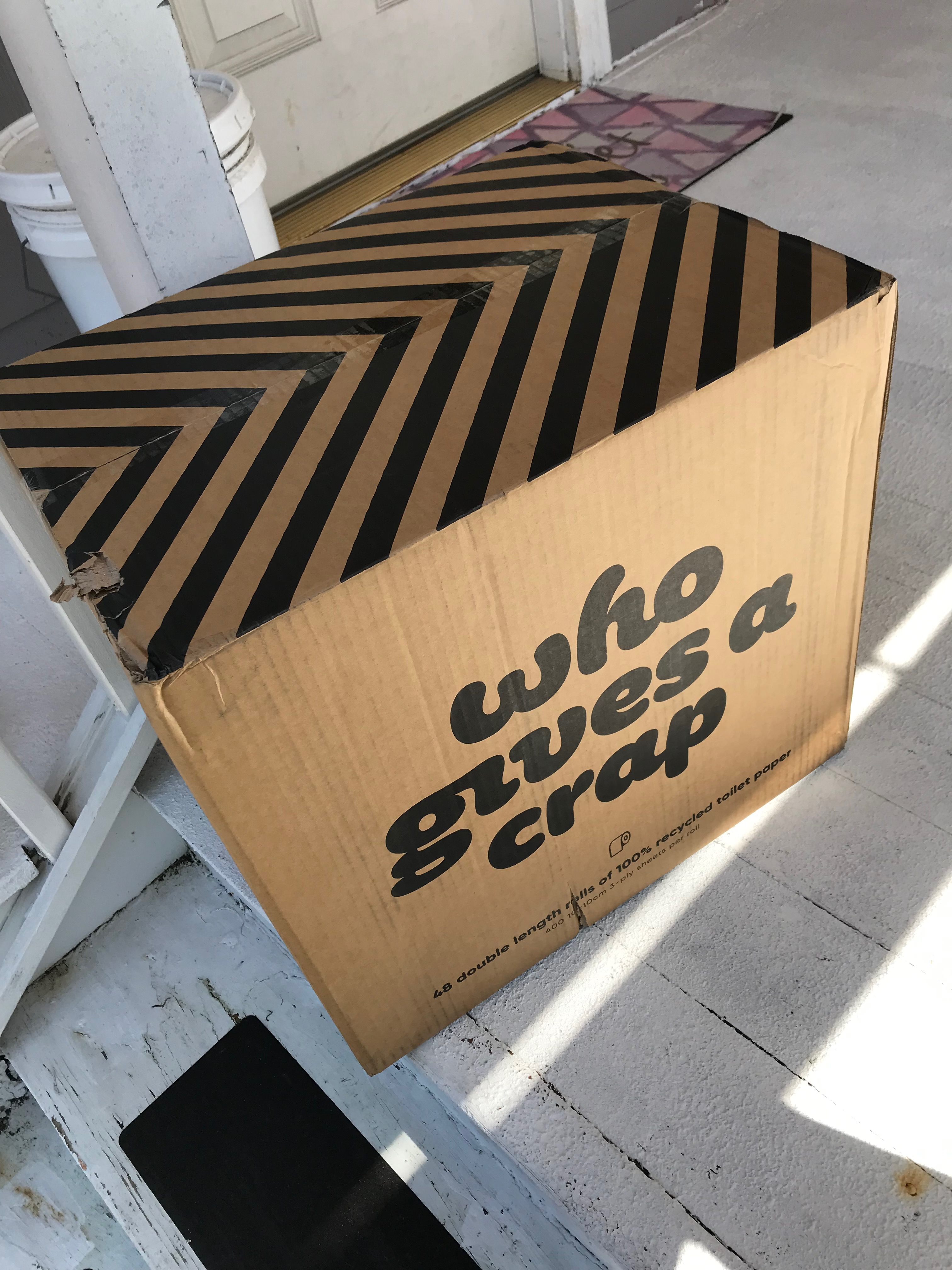
So I’m thinking about toilet paper.  Just two years ago it was a scarce commodity.  If you could find a four-pack you were blessed.  Supply-chains aren’t the boon that economists tell us they are.  Well, now it seems the shelves are well-stocked.  We’re ready for the next major crisis.  So why are my thoughts in the gutter again?  It started with Earth Day.  I was on a website that was advertising for environmentally friendly products.  We try to live as lightly as we can—we compost, we have ordered a heat-pump dryer, we don’t eat meat—but toilet paper is a big waste.  Besides, the name “Who Gives a Crap?” is eye-catching.  Recycled toilet paper, a little less expensive than bamboo, makes sense.

You see, we’ve used Scott for years.  This started back when we lived at Nashotah House and didn’t have to pay rent or utilities.  We used to buy it recycled back in Wisconsin.  Somehow that’d translated in my head to believing that all Scott is recycled, even though they no longer advertise it.  No, I was wrong.  And it’s not just Scott.  Every day 27,000 trees are cut down to make toilet paper.  That’s a lot of trees.  To break a chain it’s best to concentrate on one link.  Recycled toilet paper seems a no-brainer.  I thought we were already doing that.  Hopefully there’s no supply chain breakdowns when another crisis rolls around.  One of the problems with living in a culture disposed to dispose of things is that we end up in a mess like we’ve got now.

The thing about saving the planet is taking small steps.  Our capitalist system works against environmentalism because the former is based on consumption.  And consumption is handled on a matter of scale—the more you can sell the cheaper the unit cost.  Environmentally friendly lifestyles cost a bit more than other lifestyles.  I’ve always looked at this as a moral issue.  We’re not really high-earning people but we can afford a bit extra to try to save the world’s resources.  We can’t quite afford bamboo toilet paper just yet, but we can work our way in that direction.  Saving the planet is the long game.  Up until the 1960s we blithely lived as if we could go on forever wasting and throwing away.  Now we know there are islands made of plastic in the Pacific and our ice caps are melting.  If you decide you’d like to take the plunge—toilet paper gets thrown away, by definition—here’s a link for a discount on your first order.  Let’s let the trees grow.


Love Your Mother

It’s not exactly a birthday, for we don’t know when exactly she was born.  We choose April 22 to think of our mother—the mother of us all.  For many of us concerned about the environment, not only is today Earth Day, but April has become Earth Month.  To me one of the saddest aspects of our environmental crisis is that certain sects of Christianity are largely responsible for it.  Religion working against the betterment of humankind.  So it was in the beginning, is now, and hopefully we won’t have to finish the triad.  Granted, religions help us to keep our mind on spiritual matters.  The problem is when such things become dogma and the real needs of real people are ignored so that a fervently desired fantasy can be lived out by destroying our planet.

In response there are what have been called “deep green” religions.  It’s difficult to gain a critical mass, however, when many of those who think deeply about the environment have left religion out of the equation.  It seems to me that we’ve got to make peace with our evolved tendencies toward religion in order to have any meaningful discussion about this.  Meanwhile global warming continues.  It does so with the blessing of a kind of Christianity that sees this world as expendable and exploitable based on an idiosyncratic reading of Genesis.  Even though all the evidence points in the opposite direction, we have networks (here’s looking at you, Fox), owned by billionaires who know you can sway Christianity simply by kissing your hand to the moon.

It’s my hope that this Earth Day we might start to think about how to integrate some deep green theology into the kind that sees no room for green in the red, white, and blue.  The self-convinced have no desire for conversation about this and those already certain that religion is nothing but superstition tend to agree.  Since antiquity, however, the wise have realized that progress comes from the middle ground.  Politicians, in their own self-interest, have stoked the fires of division and hatred, knowing that they get reelected that way.  Mother Earth, I suspect, is rolling her eyes.  She will survive even if we succumb to our own mythologies.  We need to learn to talk to one another.  We need to accept that we evolved to be religious.  We need to look for middle ground while there’s still dry ground on which to stand.  It’s not exactly a birthday, but it is a holiday that should be taken seriously. It’s only right to love your mother.

From NASA’s photo library

Well Grounded

Earth Day feels like it’s actually Earth Day for the first time in four years.  Many of those with more common sense than gullibility know that we have only one planet.  Even as we have achieved flight on Mars, any hope of going elsewhere (and some of us would rather not) is many years away.  Earth is our home and we can live on our planet without destroying it.  Other animals also change the environment, of course.  The problem arises when one species becomes unchecked and begins changing things for their benefit only.  Or what they perceive as their benefit only.  Life evolved on this planet deeply integrated.  The more we study nature the more we see how interconnected it is.  Thinking ourselves special, we’ve placed a wall between humankind and everything else.  It’s an artificial wall.

If you read about nature you’ll be amazed.  Trees, perhaps the true heroes of this planet, make our life possible.  They couldn’t exist without the fungi that partner with their roots in a symbiotic relationship.  If there had been no trees our ancestors would’ve been easy prey to larger predators and would likely not have survived.  Large industrial corporations destroy trees as if they’re a nuisance.  They are our life.  Even as governments with “strong men” leaders destroy the forests in “their” countries, we are losing the very biodiversity that makes life possible on this planet.  There’s room for humans to get along here without destroying the environment that supports our very life.

One of the hidden motives in this scenario is a strange development within Christianity.  A literalism that would’ve shocked even old Augustine developed around the turn of the last century.  That literalism was used by corporations that saw the earth as a resource to be exploited and claimed that we, unlike animals, owned the planet.  If you own a home would you destroy it just because you could?  What good would it do?  No, this Earth Day let’s take the time to consider our religion and its implications sensibly.  The Bible does not advocate destroying what God created.  It may have been written too early to comprehend evolution, but that was never a problem for early theologians.  When fused with capitalism, however, this religion provided everything greedy businesses needed to exploit the planet for its own purposes—the god Mammon.  Just this week we flew our first flight on an inhospitable planet far away.  Today let’s think of how we might protect the only home we have under our feet. 


Thoroughly Earth Day

It’s difficult to say, since I don’t get outside much, but reports have come in that the earth is healing itself while we’ve been sequestered.  Rivers usually polluted have begun to run clean.  Smoke-smuggered skies have turned blue.  Animals have begun to explore human-made environments abandoned while we all shelter in place.  Could there be a more poignant statement about the reason for Earth Day?  If our worst behaviors are ceased even for a little while, the damage we do to our home planet begins to come undone.  To me that has been the most profound hope brought to light by this crisis.  Living more simply might be a virtue after all.

From NASA’s photo library

Going without can be difficult.  Every time the fleeting thought comes that I need to run to the store for this or that—and I’ve been taught that shopping is normal and natural and good for everyone—I have to stop and weigh the options.  Do I really need whatever it is?  Can I do without it?  Even bank accounts, for those fortunate enough to be able to keep working, have started to recover.  The frenzy we normally live under—earning money to keep buying things we don’t really need—is suddenly cast into perspective.  Times like this Earth Day I think of Henry David Thoreau.  Sometimes we like to laugh about our American saints, but his desire to live more simply does have appeal.  

Like many students who find themselves in Boston, I once made pilgrimage to Walden Pond.  The day I went there with some friends I believe we were the only car in the lot.  We lived simply in the way that grad students do, being under the sword of educational debts and loans, but we had come to see the place where nature had called one harried philosopher to solitude.  I knew, even as I stood by the marker of the cabin site that we couldn’t all live like this and still enjoy the benefits of medical science and technology (such as it was in the 1980s).  Perhaps it is possible, however, to reflect on better ways of living now that we’ve all been placed in a kind of enforced solitude.  I’ve begun reading more poetry.  I’ve started painting again.  Life has, in the midst of a pandemic, begun to feel more healthy.  It’s Earth Day.  Normally I’d be looking for an opportunity to join a community cleaning event, or even to go out and pick up trash on my own.  Since these are ill-advised, I stand before my bookshelf and reach for Walden instead.


Sustain Chapel

It seems that holidays come thick and fast in the spring, especially when Earth Day follows directly on the heels of Easter.  Given the hard time mother earth has been having with too many Republicans waging war on her, it’s worth taking a few minutes to consider finity.  Our planet is not infinite.  The resources with which it came loaded out of the showroom are all of limited supply.  Somehow we’ve managed to convince ourselves, at least in this hemisphere, that there’s always more where that came from.  Unless, of course, you’re referring to the degrees that contribute to global warming.  Of those, the GOP narrative goes, there really aren’t any.  No credible scientist doubts climate change, although those who are already old and who are benefitting from it will claim otherwise.  Any story depends, of course, on the teller.

Over the holiday weekend I was out of town.  Driving home a few hours I was distraught at just how much litter lines our otherwise scenic highway system.  Stuff falls off of trucks and, despite advertising against it, out of car windows.  The few trash bags piled for pickup by the earth-conscious can’t keep up with the cast-offs of a throwaway culture.  We desperately need to take the narrative back from those with the loudest, and most incoherent mouths.  We all rely on this same planet and the power we cede to the wealthy is due to our complicity in their claims of ownership.  They’ve proven themselves, should I dare to be biblical, unfaithful stewards.

The earth, it is true, is a place of immense beauty.   It’s not aesthetics alone, however, that motivate us.  We simply cannot survive without this biosphere in which animals, plants, microorganisms, and minerals coexist.  We evolved in it.  The mythical narrative of special creation unwittingly played into the hands of those who will claim it all for themselves if the rest of us don’t deny that they had indeed “earned” the right to be considered the most prestigious.  Our societal sin of rewarding bad behavior has led us to this crisis.   We pollute far beyond our needs.  We “speculate,” hoping that “development” will lead to “growth.”  The wealthiest build rockets to escape our planet, but there’s nowhere to go.  Might it not be better to invest in this gift that we already have?  To learn the lessons of nature?  To become students in the classroom of Mrs. Earth?  There have been many holidays lately, but this may indeed may be the most important of them all.


A Parable

Once upon a time, in a land far, far away, there was a holiday known as Earth Day. Now, Earth Day was a poor holiday. She didn’t prostitute herself to commercialism, she wasn’t attached to any religion, and people didn’t even get the day off work. Still, she was an optimistic holiday. One of her prophets was a woman named Rachel Carson. A science writer who could see that our rampant greed and fatal shortsightedness were leading to environmental catastrophe, Carson wrote books of warning. People began to take heed. An ecology movement was born. New concepts like “sustainability” and “stewardship” and “moderation” became part of national consciousness. Other nations joined in. Earth Day was born. She was a happy child.

But there were demons in this land. Huddled in filthy holes in the ground, these demons cared only for owning as much of the earth as they could. They wanted to heat the planet so much that Earth Day couldn’t survive. They would drown her in the waters of her melted ice caps—her very tears. These demons couldn’t do it alone. They lived in the dark and since they cared for no one else, they had to find a Devil among them. A Devil who could quote Scripture. Such a Devil, they reasoned, would make the followers of the dead God join them. The followers of the dead God were like sheep without a shepherd. And the demons had all the money in the world. So they decided to kill Earth Day. Nobody would stop them.

With Earth Day gone, the weather went wild. Winds constantly blew. Hurricanes of new and intense savagery emerged year after year. The demons laughed, for when the people’s things were destroyed they would have to buy replacements. The demons would become even richer. The followers of the dead God clapped their hands in glee. But the demons and their Devil didn’t know that Earth Day couldn’t die. They did as they pleased, taking what they wanted from the what they supposed was her corpse. Then the weather, Earth Day’s dearest friend, began to do what it would in its rage. The demons awaited summer when they might feel hot again, but summer only comes after Earth Day. Oblivious, they lived their lives of plunder and greed until the followers of the dead God were all gone and they had no one left from whom to steal. Rejoicing in their acquisition of all the earth, they failed to notice the storm. Earth Day was returning and all their wealth could not save them.


Earth vs. the GOP

They used to call her “Mother Earth.” Now she’s simply a commodity to be liquidated into cash at the country club where rich white men play. That’s why I’m spending Earth Day on my third protest march of the year. Of all the things the Republican Party has done to show its true colors the clearest has been to participate in the destruction of the world we all share. There’s only one word that answers the question “why,” and it used to be considered one of the seven deadly sins. Greed. These acts of planetary terrorism are carried out by men who believe lining their own pockets is the highest possible good. Even moderate Republicans have locked in their goose step to keep in the good graces of madmen who want to cram as much lucre into their coffers as they can before they die. When the planet’s a smoldering ruin their grandchildren will surely thank them.

Son, behold thy mother.

Don’t knock tree-hugging unless you’ve tried it. Trees tend to be much better company than Republicans anyway. Never have I had the feeling that I’ve had to celebrate Earth Day with such a blend of angst and anger. That one that your teacher always warned you about—the one who ruins it for everyone—now has control of the country. Immediately he insisted we start dumping coal waste into our streams and rivers. Burn more coal so he can play a few more holes with what passes for a clean conscience in a filthy soul. I march because I must. We can’t sit silently and let the darkness fall. If you can see through the coal dust you’ll understand that the planet weeps. It’s her that we celebrate today.

Matricide used to be considered a heinous crime. Now it’s just good business. If we were an honest species we’d admit it’s been bad business from the beginning. We’d never elect a businessman with inherently conflicting interests to the White House. The goods of the few outweighs the good of the many. The commodification of nature is the worst kind of unnatural selection. Here science and common sense agree—in order to survive we must preserve our planet. I confess that I’m unapologetic in this regard. So, although I’ll be spending this Earth Day in the artificial environment of Manhattan, marching in the cause of science, and if push comes to shove I’ll be the one hugging a tree.


Mother Earth

Son, behold thy mother.

Behold thy mother.

As a planet-locked earthling, I’m thinking about Earth today. Such a quotidian planet. While I’ve been to others in my mind, this is the only one on which I’ve ever been or am likely to be. And yet there are no laws protecting it from my own species. Corporations are treated as individuals, legally. Only they’re much, much bigger and have lots more money. They can drill and dig and spew and slew all they wish. I can mutter a feeble, “Hey!” but they legally have to pay no attention. It’s like that guy with a loud device on a quiet bus. Or someone smoking too close to the door. They invade the little space you occupy and there’s nothing you can do about it. We look to our politicians to learn how to be better bullies. Our corporations look past us to the bottom line. When the planet dies, that will indeed be the bottom line.

We tend to make fun of those who believe there’s other life out there. Whether sci-fi nerds or gullible believers in conspiracy theories, we tell them all intelligent life is located right here. In your bank account. Your net worth. The contribution you make to the GNP. It all comes down to numbers. As if there weren’t something magical about walking in the woods. As if all of this is just dress rehearsal for the play of getting rich. The beasts we had to fear used to lurk in the jungle. Now they brazenly drive through our cities in expensive cars with tinted windows. They build towers to defy the spacemen to come down. “Don’t worry,” they seem to say, “our money is great enough that we can come to you.” And yet, we are still left with only one planet. And it seems to be getting quite stuffy down here.

I worry about our throwaway culture, because there’s nowhere else to go. You can’t prevent me from fracking the very ground beneath your feet. Or like Martin Luther, prevent me from flying over your head. You don’t like my loud music? You don’t like my noxious fumes? I can blow my vape into the shared, public airspace if I want. Ownership is a funny concept. Our species has been on this planet for a geologic sneeze and yet we plant our flags and bray our allegiances. It takes treaties and accords for us to act like civilized people. We won’t call it “global warming” because that offends those big people called corporations. If it feels a little warm in here to you, turn on the air conditioner. If we use up this planet, we can always buy another one.


Worth Saving

Once we speed past Easter/Passover, holidays start to fall by the wayside as we try to get back to the serious business of either finishing up school for the year or, in a more pedestrian view, just plain business. Holidays interrupt the flow. Break the continuity. Stop and start. That’s why those of us on the working end of the spectrum appreciate them so much. Nevertheless, what should be the most important sacred day of them all is just another work day. Today is Earth Day. Recognized by no major religion (what religion wants to shake the status quo of business that brings in lucre?), Earth Day is a chance to pause and think about the undermining that we dole out to our long-suffering planet. We are nearing the point, many scientists warn, where climate change will become unreversible. We’ve had years, indeed, decades of lead time, during which the wealthiest nation in the world has been digging the grave the fastest. Even the popular media has been sending its subtle hints: anybody wonder why flood stories predominate in this climate? Think about it.

Reading books about environmental degradation is a depressing exercise. The size of the task is overwhelming and we’ve lost the ability even to reach our own government officials who are nevertheless impotent before big business. We can try to plant a tree, pick up trash, or recycle our plastics, but the destruction is taking place on an industrial scale. Ironically, as we go about making our own planet uninhabitable, scientists are beginning to believe that there is life on other planets. Some of us have suspected that all along. And if they come here that must mean we have something worth preserving. My guess is that it is nothing big business can provide. We can be so much more than consumers.

IMG_3528

Businesses are like all of the selfish motives we’ve had to suppress congealed into an anonymous venture in which none have the ultimate responsibility. Driving at night with the headlights off. I have worked for companies that have wanted to be seen as environmentally friendly. None of them, however, have taken the step of making Earth Day a recognized holiday. A moment of silence. A requiem for a dying planet. The draw of profit is just too strong. The old adage is that if a business is not growing it’s not healthy. Instead of ensuring that the only planet we can reach will be able to sustain us for a few more years, we want to go out with our pockets full. And where, I wonder, to we plan to spend all that money?


Chick Trick

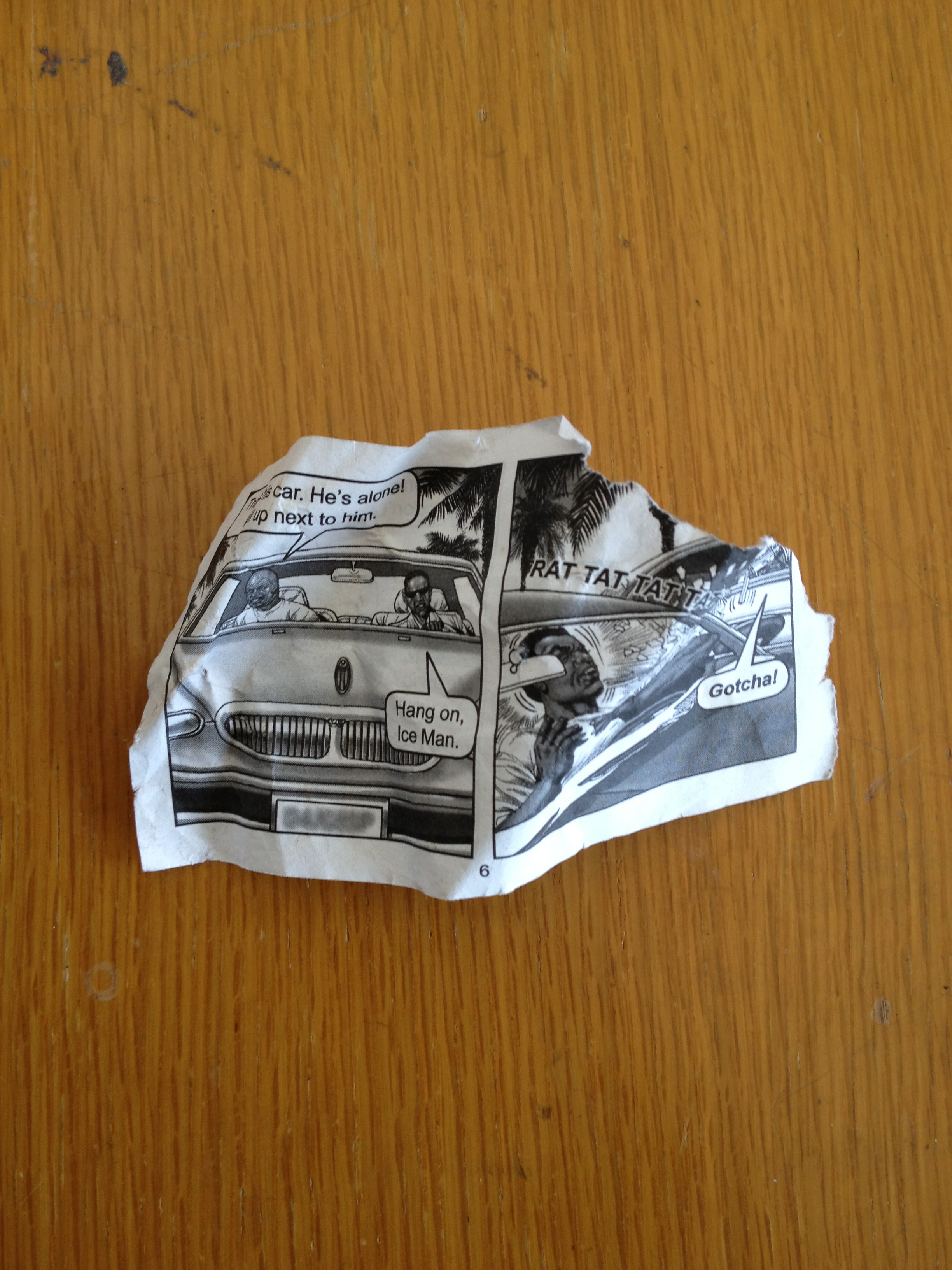
Yesterday was our local town’s Earth Day clean-up day. I have always thought we lived in a clean town, and generally it’s true. When you look closer, however, the litter becomes all too obvious. Now, I know the purpose of this exercise is to get rid of pollution—my family filled five trash bags in the morning’s jaunt. As I reached for a bit of paper, I instantly recognized that I had found a half-torn page of a Jack T. Chick tract. Jack Chick is an old school Fundamentalist who draws some of the scariest cartoon evangelistic tracts imaginable. He is personally responsible for many of my childhood nightmares and phobias. Even as an adult, I still find myself believing, at some level, the tripe he serves up at the food of salvation. Children, you see, are extremely vulnerable to suggestion. Chick unremittingly claims we all deserve to burn in Hell, literally, and that only those who buy his version of Christianity can avoid it. He scares me. Instead of putting the torn comic strip in the trash, it went into my pocket. I needed to exegete it.

As a child I purchased every single Chick tract available from our local Christian bookstore. I was terrified of Hell and absolutely wanted to make sure I had double-covered every single base. A Chick tract can be read in a matter of minutes, but they can stay with you for decades. The one I found yesterday was one I’d never read. It consists of part of pages 5 and 6 of a black-on-black violence story involving a seriously looking tough guy called Ice Man. As the story opens, in media res, a photograph of “the preacher’s boy” is on a cell phone. Ice Man is seriously pissed off, and on page 6, in a drive-by shooting with an assault rifle, blows the young man away. His death, as in most Chick tracts, is violent, but bloodless. Chick spares most of the blood for the cross, where, sometimes it trickles eerily down over the repentant sinner.

IMG_0669

If I might be forgiven for some textual criticism, in which I might be guilty of a modicum of eisegesis, let me guess that the preacher’s boy had been suggesting that Ice Man change his sinful ways in the previous lacuna. In a fit of Icy rage, the PK becomes a sacrificial victim. Most likely, by the end of the pamphlet, Ice Man will have come to realize the evil of his ways and will end up on his knees. Depending on Chick’s mood that day, he may even end up dead. One thing is certain, the story will attempt to scare a youngster to a life of righteousness. The area where we were gathering trash is on the relative “wrong side of the tracks” for my little town. Some real violence does occur here, but it is mostly out of sight. Having grown up with Chick tracts guiding my every thought, I wonder if somebody got the message before it was too late. I see this torn page as a small sign of hope.


Honor Thy Mother

Earth Day should be an international holiday. Perhaps the most disturbing attribute of some varieties of Evangelicalism is their tendency to read the “Be fruitful, and multiply, and replenish the earth, and subdue it” of Genesis 1 to be a mandate not tempered by a literal reading of Genesis 4. As I noticed when tweeting the text yesterday, Genesis 4.11 has God say to Cain, literally, “And now art thou cursed from the earth, which hath opened her mouth to receive thy brother’s blood from thy hand.” Her mouth? What is this if not a biblical affirmation of Gaia? The earth, according to Genesis 2, is literally the mother of Adam. Yahweh is the male element, the fingers molding the dirt (those who have ears, let them hear), while the womb of this bizarre conception is the earth itself. She has a mouth to receive the blood of Abel. The planet beneath our feet, according to the Bible, has not only a mouth, but also hands (Psalm 89, for those who doubt). It is our duty to grasp these hands and save our mother from ourselves.

In the spirit of the day, I decided to fix that pesky leak in the bathroom sink yesterday. We rent, of course, and our landlord—the nicest I’ve ever known—can be a bit slow when it comes to non-emergencies. I fixed the kitchen sink a year or two back, so I stuck my head under the cast-iron monster, baptized by the drips that continued to appear above my head from pipes far older than Methuselah, to see what I could do. After trips to every hardware store in the area, watching bemused DIY experts scratch their heads at photos on my phone of the Byzantine arrangement under my sink, I finally had to admit defeat and reassemble the old faucets again. The drips that fall are Gaia’s tears.

When I was in college I learned of Pascal’s wager. A philosopher who liked to hedge his bets, Pascal deduced that if God exists then our eternal fate relies on our obeying him (always him). If God does not exist, we have lost nothing by behaving ourselves, Pascal concluded. While many Evangelicals find that reasoning attractive, they do not apply it to their mother planet. If God is not coming back any day now, we’d better take care of the planet that sustains us. If God does show up, against all odds, what have we lost? Watching the plants burst back into life after a gray and dank winter, who can help but wonder at it all? Literal or not, the earth is so maternal that we should all pay her the reverence she is owed. Even if it means being a literalist for a day.

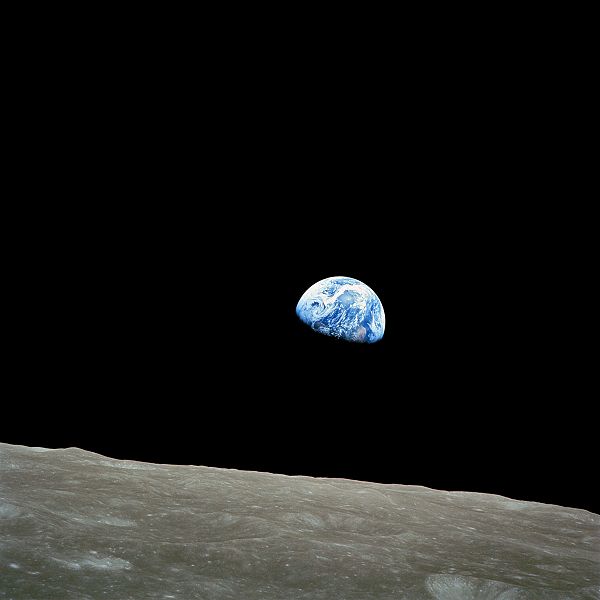
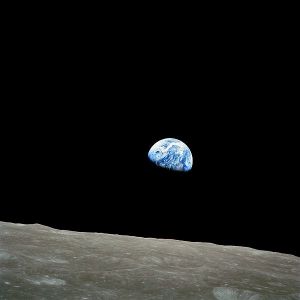
NASA's picture of our mother.


Conscious Cats

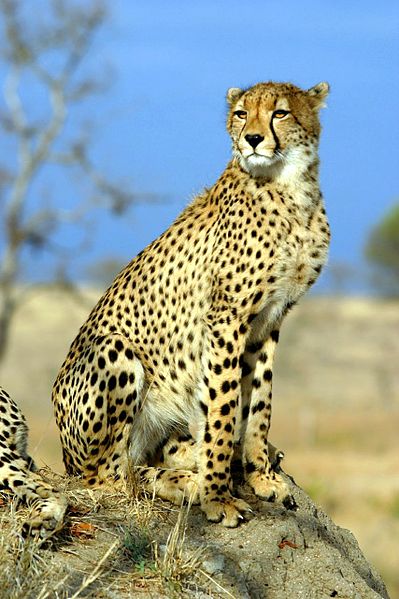
To pass yet another rainy Saturday, and to celebrate Earth Day, my family went to watch Disney’s African Cats yesterday. An avowed nature-film junkie as a child, I watched Mutual of Omaha’s Wild Kingdom on a weekly basis and have supplemented that fare with nature films throughout my life, when possible. It disheartened me a little to learn that some of the adventures were spliced together from different filmings, but I always believed every word avuncular Marlin Perkins said. After all, the show ran on Sunday nights, and who’d dare lie on a Sunday? Noting the humor even as a child when Marlin Perkins would stand back as Jim Fowler wrestled the anaconda or outran the crocodile, I could not get enough of authentic nature footage. As a child, wildlife sightings were limited to squirrels and rabbits, a number of birds that looked disconcertingly similar, and many, many bugs. Once a king snake slithered down an alley down the street, and we felt like Marlin Perkins, keeping our safe distance.

A trend in recent years has been to anthropomorphize animal films to engage children’s interests. So it was with African Cats. Each lion and cheetah family was described in human terms with human motivations, longings, and emotions. It is clear from watching many, many episodes of Zoboomafoo with my daughter (we even saw the Kratt Brothers live at a New Jersey Greenfest a couple years back) that animals genuinely do experience emotions. Anthropomorphizing them, however, has always disturbed me. I’ve been a vegetarian for well over a decade now, believing that animals have the same right not to be eaten that I fervently hope they respect in me. But placing them in the same level of consciousness as humans increases the suffering in our world a little too much. Both lions and cheetahs die in this G-rated movie. That is the unfeeling course of nature. Suffering comes at the level among humans of being aware of this misfortune, and taking it to heart. Theodicy is among the most intractable of theological problems.

Today as millions of Christians celebrate resurrection, my thoughts are with the animals. African Cats shows incredible footage of millions of wildebeest migrating, but packages them as mere prey for the hungry lions. What of the inner life of the wildebeest? In our society where the few lions demand the best while countless prey animals go about their daily grind, eking out a living from an unfeeling earth, the subtle message was almost overwhelming. Yes, the vast wildebeest herd can spare a member or two to predation. What if that member is you or me? It is the trick of numbers and the curse of consciousness. I respect and admire our animal co-inhabitants of our planet, but without the myth of resurrection isn’t giving them consciousness just a little bit too cruel?

James Temple's cheetah from Flickr, via WikiCommons