Dark Academia

Dark academia is the new gothic.  It’s all the rage on the internet, as I found out by releasing a YouTube video on the topic that quickly became my most popular.  Still, I was surprised and flattered when Rent. asked me my opinion on the dark academia aesthetic.  You should check out their article here.  What drew me to dark academia is having lived it.  Although the conservatism often rubbed me the wrong way, Nashotah House was a gothic institution with skeletons in closets and ghosts in the corridors.  Tales of hauntings were rife and something about living on a campus isolated from civilization lends itself to abuses.  An on-campus cemetery.  Even the focus on chapel and confession of sins implied much had to be forgiven.  The things we do to each other in the name of a “pure” theology.  Lives wrecked.  And then hidden.

I entered all of this naive and with the eagerness of a puppy.  I was Episcopalian and I had attended the pensive and powerful masses at the Church of the Advent on Beacon Hill in Boston.  I was open to the mystery and possibilities even as I could see the danger in the dogmatic stares of the trustees.  It was a wooded campus on the shores of a small lake.  A lake upon which, after I left, one of the professors drowned in a sudden windstorm.  I awoke during thunderstorms so fierce that I was certain the stone walls of the Fort would not hold up.  Disused chapels full of dead black flies.  Secret meetings to remove those who wouldn’t lock step.  This was the stuff of a P. D. James novel.  Students at the time even called it Hogwarts.  They decided I was the master of Ravenclaw.

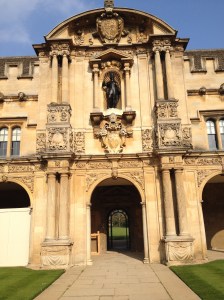
Fourteen years of my life were spent there.  I worked away at research and writing in my book-lined study painted burgundy.  Is it any wonder that I find dark academia compelling?  I’ve often written, when discussing horror films on this blog, that gothic stories are my favorites.  Even the modern research university can participate.  Professors, isolated and often unaware of what’s happening outside their specializations, still prefer print books and a nice chair in which to read them.  And, of course, I’d read for my doctorate in Edinburgh, one of the gothic capitals of Europe.   Even Grove City College had its share of dark corners and well-kept secrets.  What goes on in that rarified atmosphere known as a college campus?  The possibilities are endless.  On a stormy night you can feel it in your very soul.

That article again: Dark Academia Room Decor: Aesthetic Secrets Revealed


Hard to Say

There’s no easy way to say this, so I probably shouldn’t try at all.  Still, I feel compelled to.  You see, I’ve sat on admissions committees and I’ve written my fair share of letters of recommendation.  The former (admissions committees) have a difficult kind of calculus to compute.  Schools need students and their tuition money—this is, after all, the capitalist way.  (Yes, there are alternatives, but boards of trustees have severe deficits of imagination.)  Some schools get around this by being elitist.  Generally they have endowments of very old money and can weather all but the most severe of storms.  Such universities are in the minority and so the rest, and various small colleges, need to compromise from time to time.  Money or integrity?  You cannot serve both God and mammon.

At the graduate level this becomes even trickier.  Grad students bring in more money, and getting into grad school used to (and here’s the difficult part) require what some admissions folks secretly call “special intelligence.”  The paperwork and in-person interview reveal it clearly—this candidate (not always from a privileged background) displays a canniness that suggests they might really have a truly unusual ability to reason things out.  This is someone who should be admitted for advanced work.  But if you apply that principle not only will you be called “elitist,” you’ll also run out of lucre.  The solution is simply economic—let those who don’t have this kind of special intelligence in.  I have seen Ph.D.s after names from schools that I had no idea offered doctoral-level research.  And they legitimately call themselves “Doctor.”

When choosing a grad program—go ahead, call me elitist, but then interview me and see that it’s not true—I knew it had to be at a world-recognized research institution.  I ended up at Edinburgh, and my bubble was already deflated when I told family from western Pennsylvania and they supposed I was going to Edinboro College (now Edinboro University of Pennsylvania), located maybe 50 miles from where I grew up.  I had been accepted at Oxford and Cambridge, however, neither of them could offer scholarships to a penniless Yank, but the famously frugal Scots were far more generous.  And let’s face it, Scotland is more exotic than England.  You have to admit that much.  Of course, the deciding factor was, in my case, money.  You have to wonder if there’s any possible way of escaping it.  From all appearances, mammon wins.


Library Respect

I didn’t know what to do.  All my life I’d been told “library books aren’t your books—treat them like they belong to somebody else.”  And here I was with a checked-out library book with uncut pages.  This was in Edinburgh, and to make matters more interesting, it was an interlibrary loan book.  What was I supposed to do?  Finally I found the sharpest butter knife in the drawer and carefully cut the edges.  (This was before uneven pages became trendy again.)  Then, some time later I was reading another library book and I found writing in it.  Writing!  Who did this borrower think s/he was, writing in a book that belonged to someone else?  And what was more, the writing was done in ink.

Perhaps some readers get so caught up in a book that they forget it’s not theirs.  As for me, I’ve never been so bold as to think others would want my thoughts in a library book.  That’s what notebooks are for.  Of course, since that experience I’ve found many library books with writing in them.  These days when I have to buy books for research, not being affiliated any more, I tend to get them used.  From libraries often.  I look for the designation “very good” in the description since this specifies “clean” interiors, generally since they were library books.  I’m guessing that those who classify used books operate under the same delusion that I used to—people don’t write in library books.  The most recent three or four ex-library books I’ve ordered (all “very good”) have had ink writing and underlining in them.  You can see this at a glance.

The most recent one arrived the other day and on my initial thumb-through I found the now expected ink markings, but also two pages stuck together by a wad of gum.  This passes beyond the realm of unthinking behavior to criminal, at least in my mind.  Who sticks chewed gum between the pages of a book?  A book they don’t even own?   I did what anyone would do: I checked the book out on Internet Archive and wrote, in ink, the obliterated words in the margin.  I’m the first to admit I’m sensitive about books.  When I buy a new one I try to finish it with no sign that it’s even been opened.  No creases on the spine, no banged edges.  When I fail in this I feel badly, like I’ve hurt a friend.  At least I don’t have to worry about cutting the pages.  And even if I do, I know that it’s a trendy look these days.


Ode to Auld Reekie

Edinburgh is a sizable city, although not large like New York, more like Boston, but smaller.  Like Boston, it has had an outsized influence globally, even apart from its world-class research university.  I think of the creatives that are from, or spent considerable time there (J. K. Rowling, take a bow) and the many great thinkers who’ve called it home.  Our three years there went by too quickly, but money being what it was (and is) and laws dictating how long we could linger, we had to leave it in 1992.  If you’d have asked us when we were there we’d have told you we’d’ve stay if we could’ve.  We had no money, no car, no television, but we had Edinburgh.  Somehow that seemed to be enough.

Places have great significance to people, but it’s not reciprocal.  I occasionally find out a famous person was from Edinburgh and say “I didn’t know that.”  Having spent three years and the cost of a doctorate there, I was a mere drop in the Firth of Forth.  I’m frequently in contact with faculty members at the Divinity School for work.  None know that I studied there—I suspect most university folk don’t sit around talking about long-ago post-grads.  Indeed, there may be no faculty left from the time I was there.  New names, new faces, new research agendas appear.  Indeed, you wouldn’t choose Edinburgh as a place to study Ugaritic now, even though there was once an “Edinburgh school” of thought in the discipline (and I can footnote that).

Still, when I hear “Edinburgh” my ears prick up like those of a dog who’s been called.  It is a part of me.  I’ve only been able to return once since our original stint there.  It was a strange sort of homecoming.  Familiar and foreign all at the same time.  Some shops were right where we’d left them, others now merely ghosts in our memories.  Fortunately Edinburgh hasn’t had the building mania that often causes old cities to try to reinvent themselves.  It was already great to begin with.  More and more I hear about the Edinburgh Festival, and the Fringe.  People are starting to notice this jewel in the crown of the United Kingdom.  On a molecular level there may still be a little bit of me there.  We’re constantly shedding, I suppose.  And someday perhaps we’ll be able to return.  It may not remember me, but I can’t forget her.


Socks and Books

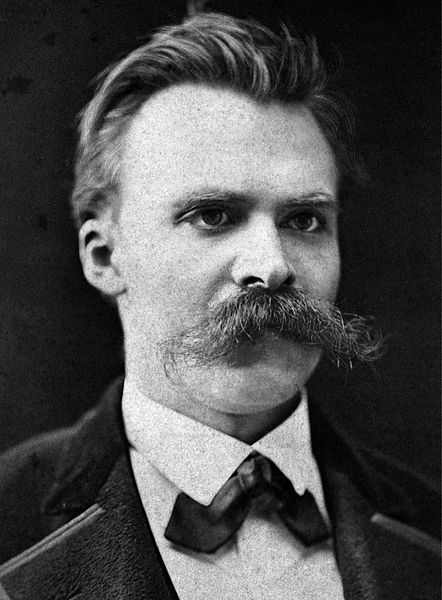
The other day I was thinking about my annotated copy of Friedrich Nietzsche’s Thus Spoke Zarathustra.  I read this in seminary and took notes in the margins.  It was part of my permanent collection.  After a couple of moves from Boston, finding myself in Illinois, I couldn’t find it.  Like socks in a dryer, it had simply vanished.  Socks, of course, sometimes fall out of a sweatshirt or some other garment some time later—a piece of clothing with which they shared the carnival ride of the tumble dry.  The book, however, stayed vanished.  I often wonder where it went.  Prior to Nashotah House, mostly my wife and I kept our books in boxes.  Even now with a house many of them are still in boxes.  But I’ve never knowingly left a book behind when vacating an apartment.  Where is Nietzsche?

Wherever he is, he’s not alone.  This has happened before.  While attending Edinburgh University it seemed like a good idea to get out a bit.  Travel is an excellent form of education.  My wife and I, both interested in history, joined Historic Scotland.  Membership came with a guidebook describing all the properties and we used this as a record of which sites we’d visited and when.  (We used to keep extensive travel diaries, but epic trips are few these days now that we’re no longer academics.)  In any case, when we moved back to the United States, that guidebook was a treasured possession.  Yes, we kept it with the other books but in those days they weren’t so many as they’ve become now.  When we were unpacking things in our apartment in Illinois, we noticed it was missing.

Our flat in Edinburgh was small—really only three rooms.  Nothing was left behind there.  Where, then, did our book go?  Where’s Nietzsche?  What other items have we lost that we haven’t discovered yet?  And where do the socks go when they’re lost in the dryer?  It’s almost enough to make me believe there are little wormholes scattered around our planet, particularly attracted to socks and books.  Well, phones, wallets, and car keys too, I suppose.  The biggest mystery, for me, is the books.  We’ve unpacked nearly all of them now that we have a house.  Those still in boxes have been taken out and returned, no box remains unopened.  Our Historic Scotland guide and Also Sprach Zarathustra aren’t among the books we have.  They’re out there with the many things we treasure and misplace over time.  Perhaps some day we’ll stumble upon that place and be amazed.


Dark Academia

Genres can be slippery things.  Those of us who dabble in fiction sometimes find it difficult to describe what we do.  Writing is individual expression and it may have elements of this and that.  Given my disposition, much of my fiction has some horror features but I tend to think of it as something else.  My wife recently sent me an article on Book Riot about the genre Dark Academia.  The piece by Adiba Jaigirdar begins by asking the question of what exactly dark academia is.  The label conjures up books about something untoward happening in the halls of learning, and that certainly qualifies.  It’s difficult to be more precise because it’s different things to different people.  Some of my fiction, in my own mind, falls into that category.  Things go wrong in higher education all the time.  Why not preserve it in fiction?

I’ve attended, and worked at some gothic places.  The contemporary university, such as Rutgers—although it’s old by American standards—has continuously modernized and although I don’t know it’s history well, I suspect gothic was never its aesthetic.  The same is true of Boston University where I went to seminary.  Edinburgh University, while also modernizing, has retained much of its gothic feel.  That’s certainly true of New College, where I studied, in the heart of the medieval old town.  There’s a gravitas to such dark settings.  They invite strangeness.  My first teaching job was at the intentionally gothic Nashotah House.  Although I didn’t agree with the politics I loved the setting.

I seem to have slipped from Dark Academia into Gothic Academia.  Indeed, it’s difficult to keep the two distinct in my mind.  When I taught I maintained the tweed jacket and somewhat disheveled look of someone who has something else besides grooming in mind (this is entirely genuine).  Indeed, that’s one of the great charms of higher education.  You need not constantly worry about each hair being in place—they’ll take care of that when they shoot the movie.  Not many people, and probably a diminishing number given the state of things, experience full-time life in academia.  It can be well lit and modern.  If done right, however, it should take you into odd places.  Discovery is generally messy.  Perhaps that’s part of the dark of dark academia.  When we use our brains we end up in unexpected places.  I’m not sure I understand dark academia, but I have a feeling that I’ve lived it even without my fiction.


Rebranding

Established in 1583, Edinburgh University has been a world-class research institution for centuries.  It appears in pop culture as a place of great learning and innovation.  While the newest of Scotland’s four (in contrast to England’s two) ancient universities, it has risen to the point of greatest name recognition.  Even as a kid in rural western Pennsylvania, born into an uneducated family, I’d heard about it.  Little did I dream that I’d actually attend it one day, skulking its time-honored halls and walking the same streets as so many worthies that I couldn’t count them.  It was an inspirational place to live and learn.  While it may not get you a job, a doctorate from it will keep you curious for the rest of your life, and that’s a fantastic gift.

Just as I was preparing to graduate that venerable institution announced it had decided to rebrand.  Wait, what?  A four-centuries’ old university known world-wide felt it had to have a brand?  At great expense, they hired a consulting firm to make them more modern looking while retaining the trusted tradition stretching back to the late middle ages. It wanted to attract “modern” students (since this was in the early nineties those modern students are now adults).  I felt crushed under the commercialism of it all.  Branding?  If a kid from remote foothills of the Appalachians can know and dream of a place, why does it need to get the word out about itself?  Ah well, these wee bairn be wantin’ somethin’ flashy.

I’ve lived through other corporate rebrandings.  They seem to me a waste of good money, especially if you’ve been around for a long time.  Some people, I suppose, look at an old logo and say “looks outdated, not with it.”  Others of us fall down and worship.  You see, staying power is something rare these days.  Corporations come and go.  Even higher education institutions sometimes close down, but the old ones keep on.  You can pick up a book from 1600 and read about Edinburgh University.  It won’t have the new logo—in fact, it may not have a logo at all—but it will still be around four centuries later.  If you get something right at the beginning, why do you need to change it to impress those who think present-day branding (which will only have to be rebranded again at some point in the future) is superior?  Perhaps our ancient institutions need to learn that old lesson—trust yourself.


Learned Ghosts

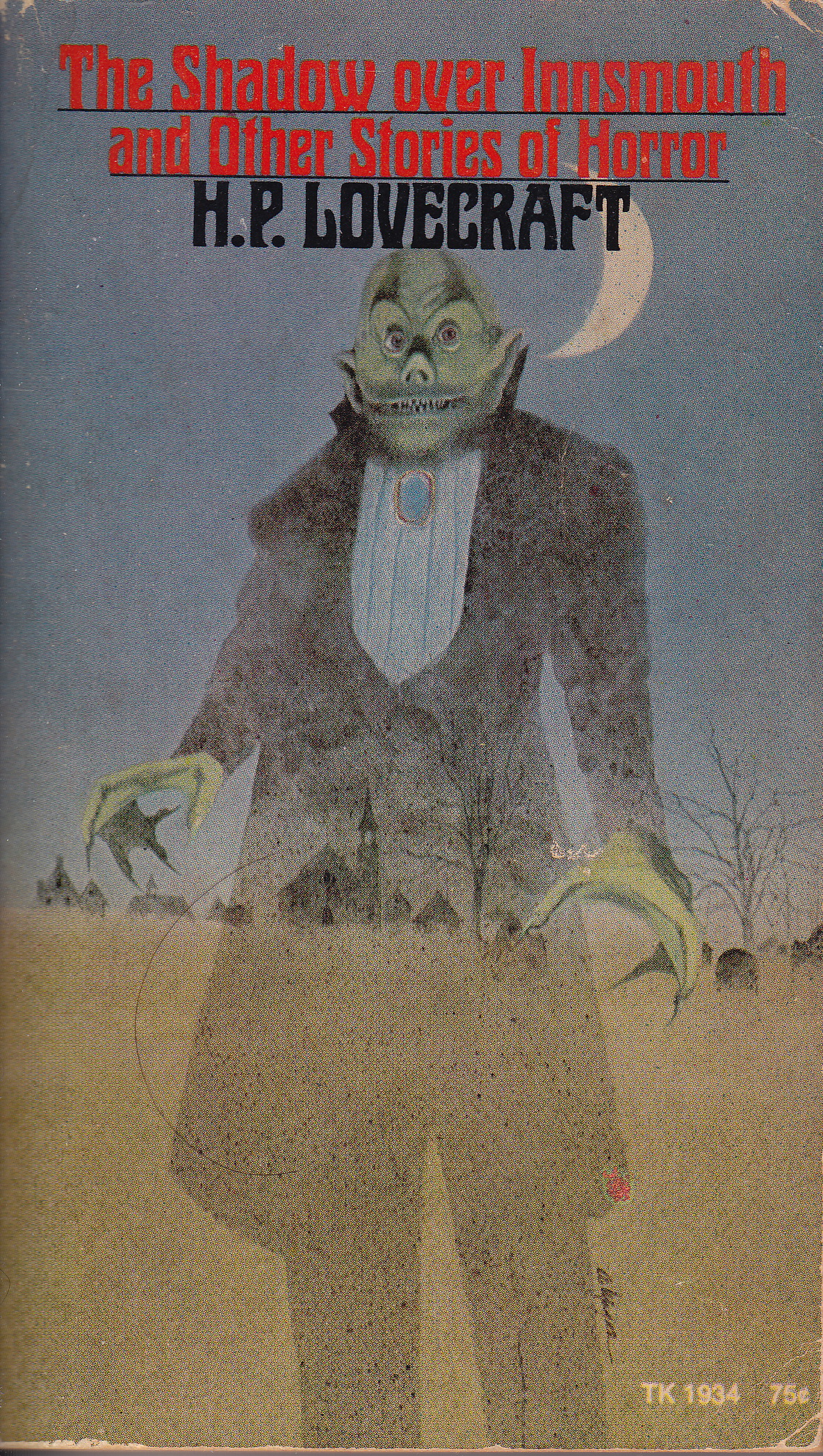
For one memorable year of what I call a career, I taught at the University of Wisconsin Oshkosh.  One in a series of near misses, this came close to becoming a full-time job.  Apart from a couple of rather humorless colleagues, the department was welcoming and an enjoyable place to be.  I even got to know the dean, now elsewhere, and planned on working on a project with him.  It was a memorable year in many respects.  One was its inherent strangeness.  I was living away from home while teaching there, and saw some odd things on my drives through the Wisconsin countryside.  It also happened to be at Oshkosh that I first discovered H. P. Lovecraft, so the weirdness was, in a word, enhanced.

Students like to tell ghost stories.  A recent article by Jocelyne LeBlanc on Mysterious Universe caught my eye because it tells of students in Oshkosh that live in a haunted dorm.  These kinds of stories are ubiquitous and Oshkosh is in no way singular here.  Students, whose brains haven’t yet ossified, are often open to new experiences.  Most of them, however, don’t possess the research skills to get behind the origins of some such tales.  Sometimes there’s an explanation.  Other times there’s not.  At Grove City College, when I was there, students told of a haunted playing field.  It was the site, it was said, of a former gymnasium.  What made it haunted was the death of a basketball player who’d smashed through a glass gymnasium door during a game and bled out before help could arrive.  It sounds improbable and I never had time to research it.

We all, I suspect, have a longing for the supernatural.  We want to believe that there’s more to this world than physics and earning money.  And strange things do happen.  I never saw any ghosts in Oshkosh, but the things I did see helped to make up for that particular lack.  Edinburgh, where I studied for my doctorate, is widely rumored to be among the most haunted cities in the world.  Although I saw no ghosts there, people flock to the ghost tours.  In fact, one stopped right below our first apartment’s window every night during the tourist season.  By the time we moved out we had every word memorized.  The haunted dorm story is a revered tradition.  Thinking about it makes me wish I could afford to be a student again.


Contains Cookies

In the early days of this blog I used to get regular reactions from other bloggers.  This was back before I started the long commute to New York City and when I actually had a little spare time on my hands.  I always enjoyed the interactions, but followers eventually dropped away and I now often get no responses to my posts at all.  That’s why I was thrilled when two recent posts came together with a response one of my faithful readers sent.  I’d written about keeping books neat, along with a piece related to ancient food, when a friend pointed me to the story of a cookie found in a 1529 Cambridge copy of Augustine.  According to the piece on Delish, the cookie was left in the book about half a century ago and had only now just been discovered.

Photo by Mae Mu on Unsplash

Now, like most readers of religious studies, I have opinions about Augustine that aren’t pristine.  Still, I respect books.  I suspect all the bakery jokes necessary have been made about this particular bookmark, but what strikes me as odd is that nobody discovered a cookie placed in a book when I was less than ten years old, until now.  Let that say what you will—Augustine still sells wildly in translation, of course.  Not too many individuals go back to the source, however, at least not reading as far as the cookie.  I don’t know about Cambridge, but Edinburgh used to have books from the seventeenth century on the open stacks in the New College library.  I’m sure the older volumes weren’t frequently consulted.  And I’m not the one to point a finger; I have no catalogue of my own books so I have to remember what I already have.

Books aren’t a great investment, financially.  I remember back when Antiques Roadshow was all the rage.  Every episode I saw where someone brought a really old book led to certain disappointment.  No matter how rare, the value was measured in hundreds of dollars rather than thousands.  Those of us who invest in books do so for different reasons.  Our money is being exchanged for knowledge, learning, and thinking.  Back when Amazon used to give out bookmarks with each purchase one had a quote from Erasmus, “When I have a little money, I buy books; and if I have any left, I buy food and clothes.”  We are kindred spirits it seems.  Buy books and you’ll grow in wisdom, but you may go hungry.  That’s the way the cookie crumbles.


Indexing Life

I’m thinking about indexing my life.  It might help to keep things organized, don’t you think?  One of those odd disconnects that a biblical studies editor faces is the discipline’s love of indexes.  I have volumes on the shelf behind me right now that have five or more indexes.  You can look up subject, author, biblical citation, non-biblical citation, and even for some, places mentioned.  The thing is such books were produced before the internet.  If you’ve read a few of my posts you know that I’m no fan of ebooks.  I like a book in my hands, and a book, in my definition, is made of paper.  Still, I do occasionally look things up in an index.  If at all possible, however, I try to find an electronic copy so I can type what I’m looking for in the search box and come up with the exact reference.  In this I’m not alone.

A great deal of my editorial time is spent trying to explain this to other biblical scholars.  In the post-Covid world academic libraries are going to be closed for quite a while.  They’ll likely increase their electronic holdings while cutting back on paper books.  When someone wants to look something up, they’re not going to scroll to the index and scroll back through countless pages to find it.  They’ll use the search function.  That’s what it’s for.  So it goes.  When I index my life, the early part will be all about looking things up manually.  The latter years will be searchable.  To be fair, I would’ve never come to know this if it hadn’t been for working in publishing.

Indexing points to milestones.  Earning a Ph.D. from Edinburgh was one, I suppose.  For a guy who grew up with ambitions to be a janitor, that’s something a little different.  Some things I’m not sure how to index.  The abrupt transition from professor to not-professor, for instance.  What are the keywords you’d put down to search for that?  Or the part about being treated like a lackey by former colleagues?  I guess that’s not really a milestone anyway.  Besides, it’s in the internet half of life, the searchable bit.  The earlier years, many biography readers note, are the most interesting.  They set us on a trajectory that we type up in our curricula vitae.  When I write my fiction the characters are often janitors.  Unless I put my pen-name in the index nobody will ever know.  Of course, I haven’t got to the last chapter yet.


Leg Up

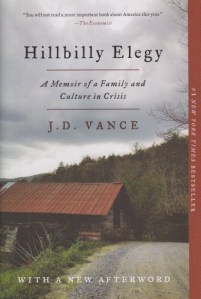
It’s amazing how often J. D. Vance’s Hillbilly Elegy comes up in conversation.  The book struck a nerve.  Reading it wasn’t easy because there were so many shades of my own childhood that I felt uncomfortable at several points.  Not from the same circumstances as Vance (his family seems to have been better off than mine, from the descriptions), I was more a hillwilliam (shoutout to the author of Verbomania for the portmanteau) than a hillbilly.  We weren’t educated people, but my mother’s family wasn’t as poor as the one she married into.  We were socially mobile alright, but in the wrong direction.  Anyone who hasn’t come home from school to find carp swimming in the bathtub simply can’t understand.  The way of the poor is inscrutable, but something Vance gets spot on—it is almost impossible to improve yourself without a leg up.

The chapter where this really hit me was as he was describing how easy his life was after being admitted to Yale Law School.  He made connections and learned to work them.  That part never came in my case.  Like Vance I grew up without a father.  Unlike him, I didn’t have grandparents to come to the rescue.  It’s a long story, but when I left home my life became a search for a father figure only to discover than nobody really wants to help somebody else’s kid.  Although I was accepted into the high profile schools, I had no one to coach me to go there.  Even now people barely recognize Edinburgh for the wonder that it is.  It didn’t connect me the way Yale Law apparently does.  My career has been in freefall a time or two because of this lack.  As Vance explicitly notes, when you grow up poor you don’t have the training or family experience to know what to do.

Many people, I realize, are much worse off than I was growing up.  What Hillbilly Elegy, written by a Republican, shows is that the government simply does not care for the poor.  In what used to be the wealthiest nation on earth there is a tremendous amount of poverty.  Vance has a keen analysis of what the abnormal psychology of want does to people.  I grew up more of a Pennsylvania redneck than a full-blooded hillbilly, but many of the same lessons apply.  While some of us can muster the willpower to escape, we know we are in the minority.  We learn as adults that others don’t share our concern for those who struggle daily to get by.  This is an important elegy, and if only it were read seriously by those able to make policy there might be some glimmer of light in these dark hills.  The right leg up can do wonders.


Begging Your Question

I still remember when I first consciously heard it.  The phrase “begging the question,” I mean.  I was a doctoral student at the time and one thing you do in grad school is ask a lot of questions.  I asked my advisor what the phrase meant.  “Asking a question when you’ve already assumed the answer,” he replied.  I’ve been writing quite a lot about feedback loops these days, and this was yet another of them.  Begging the question, in other words, is a fallacy where the asker isn’t seeking an answer, but is attempting to persuade another of a pre-decided outlook.  The concept is subtle, but important.  That’s why it disturbs me that most academics these days use the phrase “begs the question” when they mean “asks the question.”

I’m afraid I don’t have statistics here, but I read academese all day long—it’s my job.  I can’t footnote where this occurs but I can attest that it happens all the time.  Whenever I read “begs the question” I stop and reason it out.  Does the author mean “begs” or “raises” or “poses” or “asks” the question?  Begging a question isn’t the same as raising or posing or asking it since the latter three indicate an answer is being sought.  Precision in thinking is difficult work.  It can give you a headache.  We all fail sometimes.  Perhaps that’s why we eschew it, as a society.  It’s much easier to beg the question.  Still, doesn’t that mean this valuable concept is in danger of losing its, well, value?

I realize that posing such a question makes me sound like one of those old guys who says, “back when I was a youngster…” but the fact is the educational system in the United Kingdom made you ask lots of questions.  In a way that’s unheard of over here, where money assures your credentials, I knew two students who failed out of the doctoral program at Edinburgh when I was there.  One of them an American.  It wasn’t just a matter of laying your money on the barrelhead and walking out the door with a diploma.  I’ve read certified copies of dissertations (not from institutions in the United Kingdom) where Zeus was spelled “Zues” (throughout) and the biblical seer was called “Danial.”  Now, I suppose that raises the question of the value of degrees where you don’t even need to spell your subject’s name correctly.  Begging the question is a fallacy, not a synonym for asking.  And I know that if your thesis begs a question then you’re barking up the wrong tree, but that won’t stop you from landing a job in the academy.


Merch

I recall the time I first heard the word “merch” used as a verb.  I was with some wonderful ladies on the second annual Women’s March, in New York City.  We had to leave fairly early to get there from Jersey and as we made our way to the march route, we saw the goods.  Vendors had all kinds of things on sale, from the ubiquitous tee-shirt to refrigerator magnets.  One of the women in the group said, “I guess you can merch anything.”  And so you can.  People will buy all kinds of identifying marks.  It’s a craze I personally don’t get into.  I buy plain clothes, having more of an Amish aesthetic.  Still, I was a little surprised to notice that the Society of Biblical Literature is now merching itself.

Now, who can blame a non-profit for trying to score a little on the side?  We all know what that’s like.  What I find myself most curious about is who would want to advertise that they’re working on a degree that will, in all likelihood, find them on the breadline when it’s all over?  I’ve known many who’re proud to be nerds—they’ve got employment to give them creds.  Those of us tormented by the meaning of it all, not so much.  My decision to go to grad school was accompanied by the blessed assurance that there’d be plenty of opportunities, but there was no merch.  Indeed, I was two years into my doctorate before  I even found out what the SBL was—the great connector whence came jobs.  At least in theory.  I found my post at Nashotah House because a friend told me about it.  I still have some of their merch.

Knowing what I do now, would I have done it any differently?  It’s difficult to say.  Who can recall the frame of mind of his younger self with such clarity as to know his choices?  Having studied Bible I was curious whence it came—to turn back even further the pages of history.  As I sit here in the early morning I have on my last two remaining pieces of Edinburgh merch.  My moth-eaten woolen divinity scarf and my blue alma mater sweatshirt.  I try hard not to think how close to three decades ago it was.  I was so sure I’d find a job with that rare Scottish degree, imprint of John Knox’s breeches still fresh upon my head.  Instead the merch of my current employer—a coffee mug—stands before me, reminding me that work alone awaits.


Reading Education

Perhaps like me you’re afraid of the news.  Not because it’s fake, but because it’s real.  Then every once in a while curiosity gets the better of me and I uncover my eyes.  Sometimes you can’t help but see.  With the utter mess we’re in over here, it’s difficult to keep up with news from other countries we know.  I’ve lived in the United Kingdom and I’ve worked for British companies.  Needless to say, I wonder what’s going on over there from time to time.  Lately I’ve been getting auto-replies to my emails to British colleagues stating that they’re on strike.  I asked a friend in the UK about this.  It used to be the professorate was treated with some regard in Her Majesty’s domain.  Not being a financially minded person, I haven’t been aware of how deep or devastating our capitalism-induced recessions and depressions are.  Apparently they’ve been bad enough to derail even British higher education.

Compensation for the professorate has been eroded away.  Their pension plans have been depleted.  Knowing the problems we have over here with professors refusing to retire, I was surprised to learn the UK has the opposite problem—professors unable to afford to retire.  Now, lecturing isn’t physical labor, but class preparation (and committee work) take a considerable amount of effort.  I could see not retiring if it meant lecturing only, but with everything else required, not retiring would be, well, exhausting.  As over here the root of the problem is that higher education is the route into which many smart people are steered.  You’d think it’d be a wonderful problem to have too many highly educated people.  It’s not.  With advanced study comes advanced debt.  And limited employment prospects.

There are nations in the world where higher education is deeply valued.  Where educated people are respected.  Ironically, the nations enamored of capitalism aren’t those places.  The only learning that’s required is how to get money from someone else.  Beyond that, the rest is commentary.  British higher education has fallen on hard times since I read for my Edinburgh doctorate.  Schemes have been put in place to ensure faculty are being productive.  Yes, there are some lazy ones.  The majority, however, pull their weight and then some.  And now they’re being told they must do so until the grave.  No retired professor wants to spend her or his old age bagging groceries at Sainsbury’s.  And so they’re going on strike.  If only the world valued knowledge more than money there might be some news worth reading.


Conservation?

I am not a conservative.  There, I’ve said it.  You have very little control over who your parents are or how they raise you.  As I confessed here many times, I was raised in a conservative Christian home of the fundamentalist stripe.  Like most kids scared of Hell I took it all very seriously.  It is the reason I followed the career path—or perhaps career swamp trek—that I have.  In any case, the other day I was looking through a Baker Academic catalogue.  Baker, in case you don’t follow the high drama of the publishing industry, is one of the many Christian publishing houses with roots in Grand Rapids, Michigan.  Like most publishers in that collective, it tends toward the conservative end of the theological spectrum.  As I flipped through I noticed bio after bio of authors with Ph.D.s from Edinburgh, Cambridge, and other prestigious universities in the United Kingdom.

I hadn’t been warned, you see.  Many conservatives who want a doctorate study in the UK because they can do so without taking all those classes that will make them examine the Bible critically.  That’s not why I went to Edinburgh, but I can see how it might look like that from the outside.  I went to Grove City College—a bastion of conservatism.  (I was raised that way, remember?)  My next educational move should give the lie to my attempt to remain conservative; Boston University School of Theology was considered the most liberal United Methodist seminary in the pre-Internet days.  I attended for that very reason.  Edinburgh, my true alma mater, was selected because they offered a scholarship that made it possible for a poor kid to finish a doctorate.  I wasn’t conservative when I went, and I wasn’t conservative when I came out.

I didn’t get the memo, I guess.  The sneaking suspicion that I might be conservative has dogged my career.  My dissertation can be read that way, but it’s not a conservative argument.  I merely suggested the decision to marry Yahweh off to Asherah was a bit hasty, based on the actual evidence.  I’m all for married deities—they tend to be less frustrated toward humanity.  Maybe the Almighty could speak to Mrs. God about correcting these worries about what I “really believe.”  I went to a conservative college to learn—there were a fair number of attempts to indoctrinate there, but if you thought about things you could see through them, even with a fundie upbringing.  But as I thumb through the catalogue I can see how perceptions can work against you, especially when your first job is at a conservative seminary, eh, Mrs. God?