Editing Sheep

Many academics I know dismiss editors as just another species of laity put on earth to serve the guild. There’s perhaps some truth to that. Without people to write books—and few beyond the professorate are granted the time and leisure to do so—we’d be without a job. One of the more hidden aspects of being an editor is, however, its prophylactic role. One thing that those of us who’ve written books know is that we get pretty close to our subject. We have to. Writing a book while viewing your topic from a distance is possible, but not desirable. Being too close to your subject, however, often leads to extreme myopia. Many are those who are quick to dismiss editorial suggestions wonder later why their books didn’t do better. Think about it. Editors, by definition, read all the latest stuff.

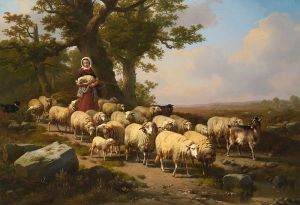
We’re kind of like shepherds, my fellow editors and me. We try to keep the ideas in order. We’re not the owners—the authors are—but without an able shepherd you soon find yourself lacking the sheep that make you wealthy. The benefit of an editor is having dispassionate eyes—often knowing eyes—viewing a nascent book without the love of a parent. Don’t get me wrong—we often have great fondness for those books we didn’t write. We can tell the author something s/he is too attached to the text to notice. We can help the writer avoid mistakes. Not that we’re perfect, but we are critical because we’re rooting for you. Facilitators.

It used to be common for editors to be authors. With the growing atomization of specialization, however, this is fairly rare these days. As a colleague of mine once put it, editors are more like deans than faculty. We look at book budgets and statistics. We face the harsh realities. And some of us were once faculty. I receive dismissive notes now and again, supposing that I’m an English major who made it good. Unlike many editors, however, I write. I’ve sat on both sides of this desk and when I offer advice it’s for your own good. Academics and publishers need each other. For one, without books there’s no promotion. Without books, for the other, there’s no paycheck. Like any shepherd, however, we know that the sheep are the important assets. We shepherd ideas into books. But you have to trust the shepherd to do the job.
The Labyrinth of Copyright

Here’s another post originating from my daily work as an editor. (As an editor you tend to assume nobody’s really interested in what you do all day, but I’ve been told this isn’t so.) What is copyright? And do I have it? First of all, a caveat: I’m not a lawyer. Copyright is complex and, to answer my second question first, yes, you do have it! So what is copyright? Essentially it’s the protection of intellectual property. As long as that property remains in your head, it’s yours alone. Once it’s expressed in writing, art of any kind, music, or even as a chart, it is automatically covered by copyright. If you want to use something someone else wrote, or produced, in your book, you need permission. Small quotes are generally considered fair use, but don’t push that doctrine too far! Fair use is listed as just that, a doctrine.

What many authors don’t realize is that your book contract is an exchange—you’re selling your copyright to the publisher for their services (they publish your book, promote it, register the copyright (it already has copyright, but registering helps to protect it legally), and handle the financial aspects of selling your book). You can’t publish your own work again without permission of the publisher. Sometimes I’ve had people ask me to use my artwork (from my own published articles) in their work. I don’t mind, of course, but I don’t own the copyright! If I published my work, the publisher has taken that copyright and I remain simply the author. If I want to publish my own published work somewhere else, I have to ask permission. Copyright, however, doesn’t last forever.

The only safe date before which material can be used without fear of infringement is 1922. Works published before then are in the public domain. Right now new works (such as this blog) are covered by copyright for the life of the author plus 70 more years. After that, unless the law changes, you don’t need permission to reuse these idiosyncratic musings. Not that that’s ever been an issue. I’m not a litigious person, but I do like to be cited. (Who doesn’t?) In any case, if you’re working on an academic piece, and you want to reuse somebody’s drawing, or an extended piece of writing, or even a tiny bit of a poem, you must have permission to do so. That’s what copyright does for you. The “fair use doctrine,” like most doctrines, doesn’t hold up well in court. If in doubt, just ask. Before you do, though, you might want to consult a copyright lawyer, just in case.

All opinions my own.


The One Who Seeks

Academics and social media are, at times, an uneasy fit. In my work as an editor I come across many of the professorate who have virtually no web presence at all. If you’re wanting to write a book these days and you aren’t yet famous, you need what they call a “platform.” That is to say, you need to be easily found on internet searches, you have to have “followers” on various social media, and people have to know where to look to find information about you. A starter site that does fairly well is the for-profit venture called academia.edu. Because of that final “edu” extension, many suppose this is an educational site with no money in mind, but that’s not really the case. Still, it’s free to post your academic papers there and many intellectuals, public and otherwise, have vested some of their effort on getting academia followers.

J. C. L. Gibson, someone, and Nicolas Wyatt

My own profile on academia, which has copies of most of my papers available for free downloads, at one time was in the top 2%. I felt so special. Being kept out of academia for so many years, one does begin to wonder. In any case, one of the features of the site is that when someone lands on your page you receive a notice telling you how they found you. More detailed information is available for a fee (this is one of the not not-for-profit aspects I was mentioning). Sometimes they will provide you with the search terms used and the paper found. My site has quite a bit about Asherah. I wrote a book on the goddess, still largely overlooked, and several discrete papers. The other day I received a notice that someone found my page with this notice of how:

Someone from India found “A Reassessment of Asherah:…” on Google with the keyword “sex photos hd com R A N ilaku.”

I have the feeling someone left my site keenly disappointed. Although my book does discuss sexuality a little—you kind of have to with Asherah—I did wonder about the “photos” and “hd” and “ilaku” parts of the equation. You must be pretty desperate in your pornography quest to stumble across my academia page. Not that I’ve replicated the search, but I must be thousands of pages down in the results. Still, someone found my first book that way. And that’s the lesson—an internet platform may bring your work unexpected fame. Whether or not that fame is ill, will, however, remain an open question.


Identity Crisis

It’s starting to feel like Groundhog Day. The movie, I mean. As a child I was taught never to talk to strangers, but that’s a little hard to maintain in New York City. You’re never really alone there. Standing in line for the bus, I read. The Port Authority Bus Terminal is a crowded place around rush hour and I try to spin my literary cocoon so that I can get some reading done and so that I can have a little alone time. Introverts are like that. When the guy standing in front of me is confused, however, I like to help. There are three different bus lines that get mixed at my gate, and since I do this nearly every day I usually have a pretty good idea where to stand. I pointed this young fellow in the right direction. “Thanks,” he said. After a pause he asked, “are you a teacher?” I get this a lot, actually. By everyone but deans and search committees.

The writing on the wall.

The writing on the wall.

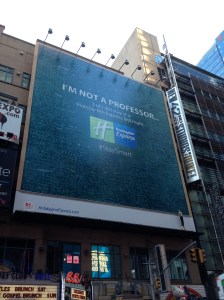
I was out for a walk in a city I’d only been to once before. Some guys were setting up for an outdoor function (the city was in the south). I was actually using my phone for geocaching, so I wasn’t paying too much attention to what was going on around me. One of the guys stopped me and said, “Excuse me—are you a professor?” Some might accuse me of cultivating the look—glasses, beard, slightly puzzled expression most of the time—but the reality is the look is simply who I am. There are those who are professors because they want to be. There are those of us who should be because we can’t help it. I read as if books were food. When somebody asks what the weather’s like, I’m wondering if this world is reality at all. Thing is, academics too are busy finding jobs for their friends to care.

“I’m sorry to disturb you,” he went on. “I mean, I’m a complete stranger.” Actually he’s not. He’s a student. I don’t know him. I’ve never had him in class, but he needed some information I had readily available. I shared it with him. No, the fact is I’m not a professor. Professors are paid (much better than editors) for dispensing what I’m glad to give away for free. A teacher, you see, teaches. The best teachers I ever had were those who continued the lifestyle outside the classroom. They were never arrogant or privileged. They simply shared. Every day, in this situation, begins to look like the one before.


Retire Me This…

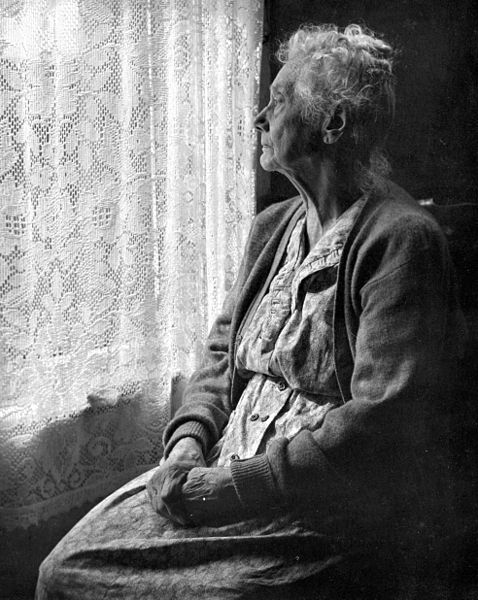
We’re all getting older.  My daily, grudging glimpse in the mirror reminds me that my beard wasn’t always gray, and there was a time *gasp* when no beard grew at all.  One of the realities of the brave new world we inhabit is that career stability has become a myth.  My father, in the brief time I knew him, worked as a house painter.  My stepfather worked in a sewage plant for a small town and drove a snowplow in winter to make ends meet.  These utilitarian jobs seemed never to end.  I made the mistake of going into higher education, not realizing that the risks were much higher and that I would make more money working in a sewage plant than I have ever made in my professional career, PhD in hand.  So it rankles me when I hear professors complaining about being too busy in retirement.  Retirement: what a concept.  When the guy who has custodianship of my minuscule retirement account from Nashotah House, after his gentle awaking from the defibrillator, looks at my records he always informs me, “you’re not well placed for retirement.”  Talking to my big brother we agree—our retirement plan is to die on the job.  So, when someone asks you to write another book, remember maybe it is some guy your own age who is trying not to starve.

As a society we’re aging.  Those who managed not to be fired by Fundamentalists have had a secure, tenure-ridden ride through the occupation that some of the rest of us were denied.  Busy in retirement?  Some of us will never have that privilege.  Funny thing is, it’s not funny.  I sometimes lean back in my editorial chair and realize, if this hadn’t happened to me, I would probably look at it the same way.  I would have published that second, third, and fourth book, and people would actually think my opinion mattered.  I would’ve become a resource to be tapped rather than a dancing monkey who hopes for anything shiny.  Is that another gray hair?

I don’t belittle the hard work of higher education—it’s not an easy profession. But writing books? That’s the fun part! Privilege induces blindness. How rare an opportunity it is to teach! While we as a nation devalue it, in many parts of the world those who shape future minds are revered. Yet elsewhere in the world there are those who are far worse off even than an editor—those for whom life is constant suffering and surviving another day is not reasonably assured. How easily I forget this as I neglect to balance my checkbook for fear of what I might find. We shouldn’t complain when someone asks us to give back, even in retirement. Those of us capable of writing books sometimes lack only the bona fide of a college or university position to do so. Otherwise I might hope to retire as well some day.

"Photo by Chalmers Butterfield"

“Photo by Chalmers Butterfield”