Charlie Hebdo

With the tragic news coming out of Paris, a predictable set of recriminations are about to begin. Because of the actions of some extremists, “religion” will be labeled a danger to civilization and the sad loss of life at Charlie Hebdo will be chalked up to secular martyrs in the cause of reason. The reality, however, is not so simple. Fundamentalism, as one of my influential teachers used to say, is not a theological position—it is a psychological problem. Indeed, religion does not cause Fundamentalists to become violent, it is rather that religion is used as an excuse by Fundamentalists to act out their aberrations. The religious impulse, no matter how rational we become, will never go away. Those who fear that civilization will collapse might do well to reflect on the fact that religion is one of the earliest defining characteristics of civilization. It is a formalized expression of a deeply felt need, widely shared.

At times it feels as if we’re caught on a possessed merry-go-round. We weaponize our world without stabilizing economies or opportunities. (I know I’m oversimplifying here.) People turn to religion for consolation. Religions give some people the strength to deal with their difficulties. Others will use their religion to justify their hatred and fear. Weapons are nearly as easily found as sacred scriptures. One, however, is much easier to use than the other. Twelve people lie dead for trying to make the world laugh. Three others are surely feeling justified by the extremity of their faith. There is truth in the concept of weeping clowns.
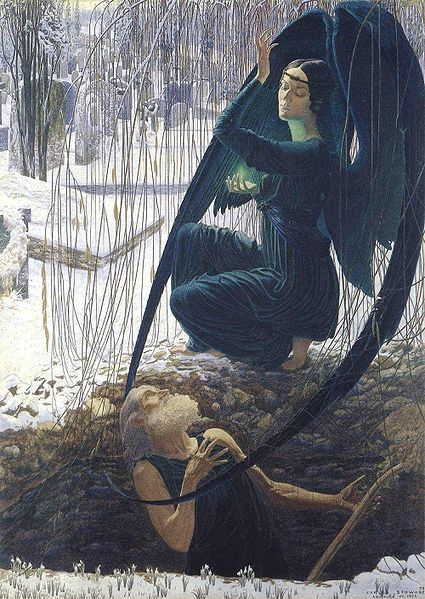
Carlos Schwabe, Death of the Undertaker

Carlos Schwabe, Death of the Undertaker

Ironically, in a world where pundits and experts refuse to give any credence to religious beliefs, and do not support the study of religion and its offshoots, multiple times each year we find the press asking why this happens. I’m not suggesting that those of us who study religion have an answer, but I am suggesting that we might have some insight. Instead of the knee-jerk reaction of claiming that “religion” has claimed more victims, we need to realize that criminals have claimed victims, both human and abstract. The shooting at Charlie Hebdo is a sad reminder that simple answers are seldom correct ones. My plea has, however, never been complex: supply education, not assault rifles. That’s something in which we can believe.

Daydream Believer

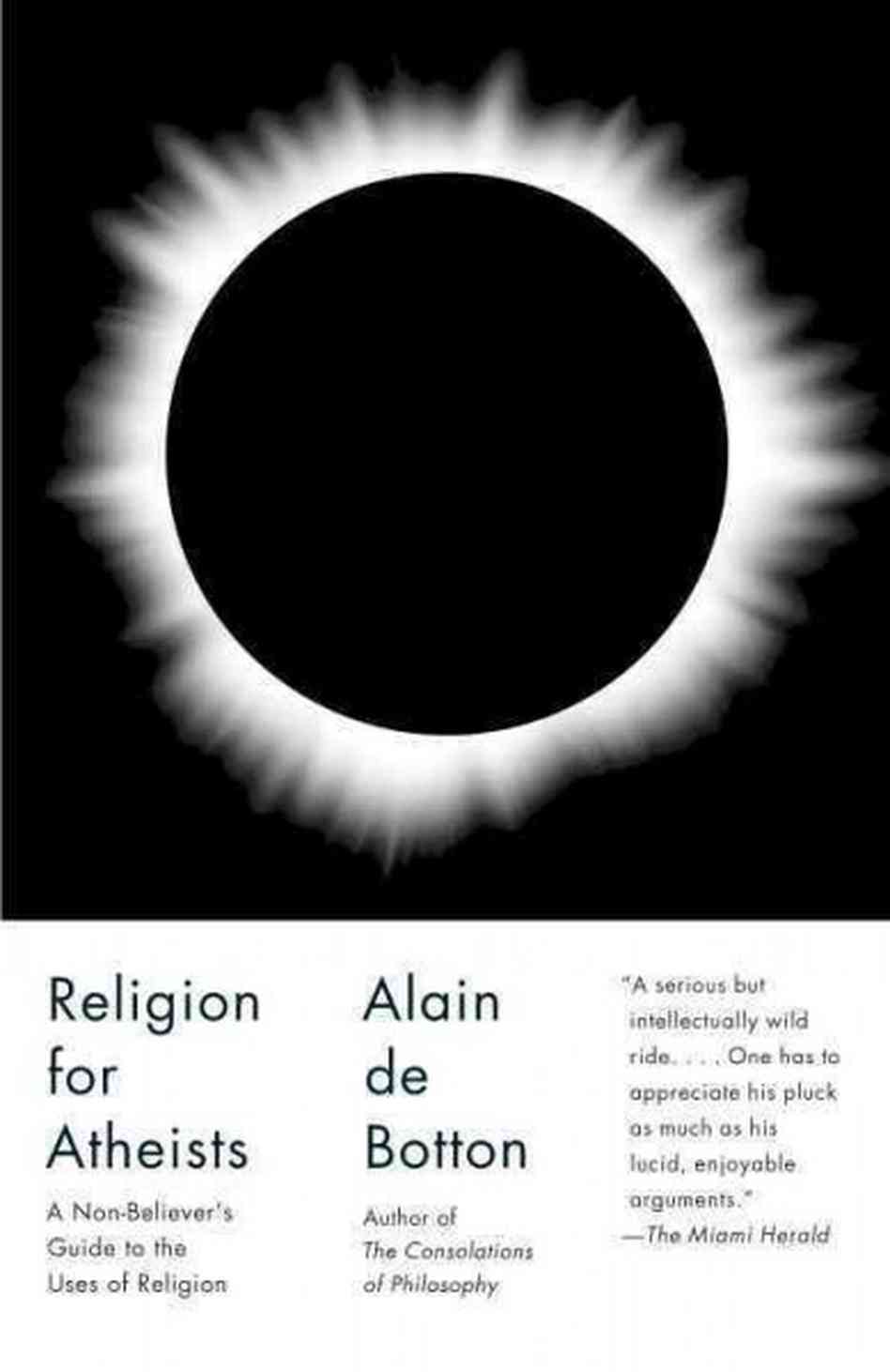
ReligionForAtheistsI have finally found a book that will sit next to my copy of Marcus Aurelius’s Meditations. In this disjointed age of angry Fundamentalists and even angrier atheists, where people bowl alone and don’t sleep well, Alain de Botton has shined a ray of hope. Well, pessimistic hope, but still, I felt more invigorated by Religion for Atheists than I have by a book for a long time (search my category “books” and you’ll see what I mean). Raised as an atheist, de Botton doesn’t share the rabid fury that converted atheists often exhibit. More importantly, he recognizes that, despite its supernatural teachings, religion got a lot of things right. Basic issues such as kindness and compassion have little place in a society that is built around acquiring as much for yourself as you can. Even his chapter on pessimism rang true.

Subtitled A Non-Believer’s Guide to the Uses of Religion, some might consider the book opportunistic, but de Botton approaches religion from a purely practical and openminded angle: it often works. Religion supports (or supported) education. Numerically most of our colleges and universities in the United States have (or had) religious beginnings or affiliations. Religions also supported beauty in art, architecture, and liturgy. The religious culture provided places to meet others who thought like you, and where you felt safe. It was not afraid to be blunt about values. Many would dispute these positives, tending instead to focus on suicide bombers and child abusers. No doubt these evils also exist, and probably draw their inspiration from skewed religious views. Still, as a sincere outsider can see, religion offers much that society has no backups in mind to replace in this secular age.

In a pointed discussion of influence, de Botton mentions the power of institutions. Secular society has demonstrated repeatedly that it lacks the will to finance higher education. Secularists are terrible at organizing themselves. Reading de Botton’s suggestions for secular institutions, I almost rose from my bus seat and applauded. If Bill Gates or Jeff Bezos would put up the money for an institution on de Botton’s model, I’d be first in line to apply for a place in the Non-Religion Department. (A disclaimer here—although I met Jeff Bazos once, I can’t pretend to know his or Bill Gates’s religious outlooks; I only recognize success when I see it.) In any case, until we learn that one voice alone—no matter how many books s/he sells—cannot change anything substantial, we will be mired in impotence. To influence social change you need the combined resources of an institution. And, choose to like it or not, history tells us that in the long run the most successful institutions have been formed by religions. Alain de Botton has, I believe, given us something to believe.


5 Ways to Protect Women from Exploitation

Please enjoy this guest post by Daphne Holmes:

Women’s roles in society vary from region to region, with some states exhibiting greater equality than others. In the United States, for example, shifts continue to alter women’s place within social and work culture, so American society appears to be moving in a positive direction for many women. Unfortunately, women’s rights and social justice are not always promoted elsewhere, so realizing their potential is an upward struggle for most women worldwide.
Protecting women from exploitation is a moral imperative that sets progressive societies apart from others that do not share a commitment to equal treatment for all members. The following approaches help women’s causes by addressing some of the unique issues they face and supporting a fundamental guarantee of equality.

Remove Systematic Injustice

In order to protect all members of society from exploitation, social structures must be in place to accommodate each group equally, regardless of race, color, gender or creed. Government, for example, must reflect a stance that protects women equally, supporting laws that facilitate their advancement and punish those standing in their way.
A culture of respect instills and perpetuates the correct values, so adopting tolerance for diversity is an essential first-step for raising women’s profile in society. Patriarchal societies, on the other hand, leave the door open to exploitation, because women are deemed insignificant, and their right to excel is not guaranteed.

Ensure Essential Needs

Surviving as a woman in a culture that does not acknowledge equal rights can mean diminished access to basic elements of survival. To elevate women’s position in society and protect them from exploitation, fundamental needs like food, health care services, water and shelter must be available to furnish the cornerstones of personal development.

Educate and Enlighten

In many cases, ignorance and outdated thinking are behind exploitation, so education is a powerful tool for protecting victims. The benefits of education are seen in two distinct ways. General knowledge about women’s causes and education about the difficulties they face are enlightening to members of backward societies, opening their eyes to an entirely different standard of equality. And women’s education is also an important feature of equal societies, furnishing vital information that helps women rise-up from oppression. With inroads in both areas, exploitation can be seen for what it is; increasing the likelihood women will escape its ill effects.

Stop Sexualizing Women

For specific progress to occur, general changes must be made to the way women are characterized. Movies and other media, for example, sexualize women with graphic imagery and unflattering portrayals that diminish the progress women make in real life. Valuing women for reasons other than their appearance and sexuality increases their mobility within society. By recognizing their achievements and potential, women enjoy greater opportunity for advancement and suffer less at the hands of exploitation.

Increase Accountability

Women face a number of forms of exploitation worldwide, including sexual trafficking, labor mistreatment and other abuses. Unfortunately, cultural imperatives and other influences prevent most abusers from being held accountable for exploiting women. For lasting reforms to take-hold, consistent punishments must be applied to offenses against women, establishing consequences that curb abuses. And demand must also be slowed, in order to remove the incentives for trafficking and sexual exploitation. Stiff penalties for abusers and access to justice are key features of a system committed to protecting women.

Protecting women from exploitation starts within a culture of respect, acknowledging women’s valuable place in society. Through education and programs supporting women’s rights, even regions slowed by backward thinking and outdated social structure can make positive strides protecting women’s rights. And by changing views and values about women, and enforcing penalties against exploitation, society contributes to constructive outcomes, rather than turning a blind eye to harmful practices.

Author:
Daphne Holmes contributed this guest post. She is a writer from www.ArrestRecords.com and you can reach her at daphneholmes9@gmail.com.


Adjunct Values

Well, the internet seems to have discovered adjunct Hell. Naturally, I’m too late to be part of the statistics, but I never rule that out as a future fate. This week I’ve seen several stories, some of them on major news network sites, shocked and indignant about the conditions under which adjunct instructors live. There’s quite a lot of hand-wringing and finger-pointing, but journalists and academics alike are tip-toeing around the blue whale in the room. Our society does not value education. Yes, we insist on educating children to the point of basic competency, but do we really, as a society, value that education? Ask just about any teacher. These people pour out their talent and efforts to give other people’s children the boost they need to get along in life. And many of them have to work second jobs just to make ends meet. Do we expect any less of higher education? We want it cheap and dirty with guaranteed jobs when it’s done. Universities want star faculty who publish all the time. You can’t do that when you’re busy teaching all the time. And we’ve got a glut.

The glut is PhDs. We’re cheap. More accurately, we’re broke. One of the things they don’t tell you when you apply for doctoral programs is that you are signing up to be ungainfully employed for your best earning years. Universities won’t tell you that because they need the money that graduate students bring with them, mostly in the form of student loans. News flash, America: education is not cheap! Another news flash: we are fast falling behind other cultures where teachers are respected, well paid, and even venerated. Gasp! Do such fantasy lands exist? Yes, they do.

Try a little experiment: think where you would be without your teachers. You certainly wouldn’t be reading this blog, and probably not reading at all. Your employment would likely be manual labor. Your math skills would be such that you’d be easily cheated of your wages. You would probably believe in a myth about the earth being created in six days and think that was science. When I read about the societies advancing the swiftest, America does not top the the list any more. When I learn more about those societies where the cutting edge is measured by Singapore or Beijing, I find out they highly value their teachers. They are paid well. They are respected. Here, in the US, chances are that the person teaching your kids in college makes a poverty-level salary and may be surviving by food stamps. Three quarters of our higher education teaching force consists of adjuncts. Three quarters. And these people are no slouches. They’re simply the victims of a society that doesn’t want to pay for education. Listening to administrators attempting to justify their decisions makes me squirm. How much did you say that Greg Schiano, Brady Hoke, or Bo Pelini “earn(ed)” in a year? Where your treasure is, there will your heart be also.

Any old school will do

Any old school will do


Witnesses All

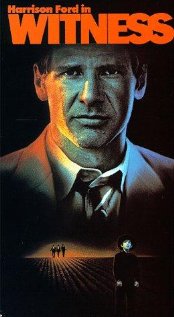
Witness“Only the bad man. I see. And you know these bad men by sight? You are able to look into their hearts and see this badness?” The words of Eli Lapp in one of the most memorable scenes in Witness often come back to me. While the lifestyle of the Amish strikes me as somewhat extreme, I have always admired their conviction that a simple life is a better life. The finer points of Anabaptist theology don’t always agree with my Weltanschauung, but their pacifism is the closest thing to Jesus’ Christianity that I can imagine. So as the NRA pulls out its big guns, arguing that the solution to children being massacred is to provide even more guns, I say they should watch Witness.

The year is 1985. In the movie Samuel Lapp witnesses a murder and when detective John Book finds out, he is chased to the Lapp’s Amish community where he hides out. One day young Samuel finds his gun and the camera angle is so oblique as the weapon in the foreground fades out to his grandfather Eli’s face, that you sense some violence has already been done even in the smelting of the metal to cast the revolver. “This gun of the hand is for the taking of human life. We believe it is wrong to take a life. That is only for God. Many times wars have come and people have said to us: you must fight, you must kill, it is the only way to preserve the good. But Samuel, there’s never only one way. Remember that. Would you kill another man?”

At this point all the fuss is only about limiting assault rifles. There is no sane reason that private citizens (my convictions go even further, but let’s not be too idealistic here) should have assault rifles. Not even a grizzly bear attack would justify it. The only effective weapon against violence is education. But look at one of the first budget items to get slashed when times get tough. Imagine a world where people were taught to solve their differences with discussions rather than violence. Even most crime, I suspect, would vanish if people didn’t feel themselves unfairly disadvantaged. Our violent legacy may go back to our common ancestor with the chimpanzees, but we like to imagine we’re better than they are. Are we?

“I would only kill the bad man.” So Samuel says with the conviction of a child. Badness is a fraught concept. It is often one of those qualities that we are not fit to judge in others, because we all know the directions our own thoughts take from time to time. Eli’s grandfather is a voice of wisdom here. But Samuel has the last word in this poignant scene, “I can see what they do. I have seen it.” If we exegete this just a little, however, I think we may be surprised at just who the bad really are. Think about it.


Robotics FIRST

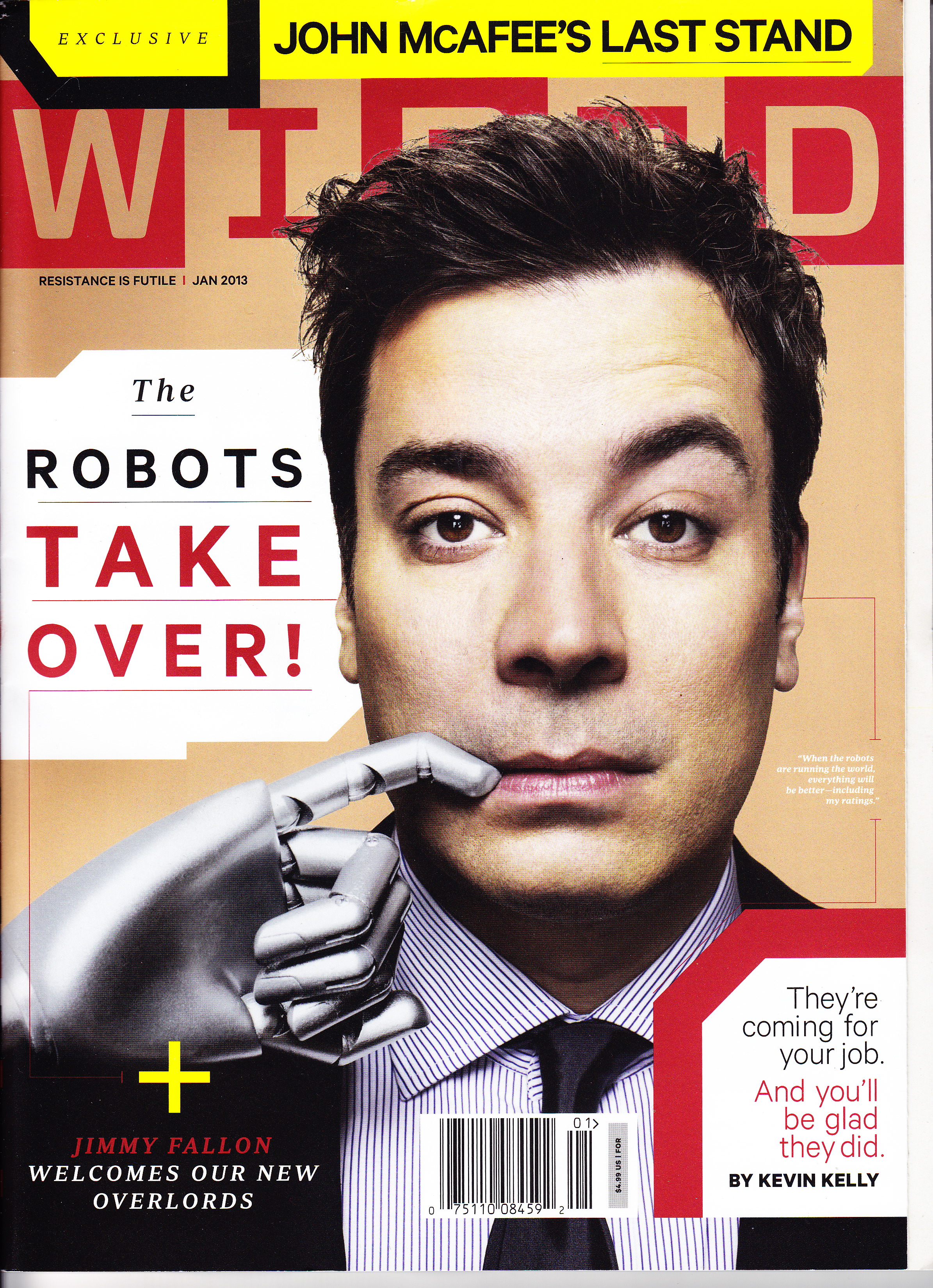
Wired

I knew it! It was right there on the cover of Wired magazine. “The Robots Take Over.” And it is also the very day of the FIRST Robotics kickoff, the day when Dean Kamen and his team announce to thousands of high school kids, teachers, engineers, and interested parents, what the 2013 FIRST robotics competition will be, spurring us into six frenzied weeks of designing, planning, and building a robot to take to competitions. First Atlanta, then the world! It must’ve been their plan all along.

The article in Wired, by Kevin Kelly, does have hints of cheekiness throughout, but for the most part is on target. How many of us already use computers or some kind of robotic devices to complete our jobs? Kelly points to the inevitable: robots can do it better. The upside is that when robots take away jobs they create new ones, like Charlie Bucket’s dad getting a job repairing the robot arm that took his job away at the toothpaste factory. If you don’t want a tech job, too bad. That’s what the new definition of work is becoming, since labor is already being taken over by robots. Those who can look far enough ahead can see robots doing, as Kelly puts it, any job. What makes this sound apocalyptic to me is the fact that we, as a society, undervalue education. What will the undereducated do? Their jobs are the first to go. I feel the tremors of a revolution that hasn’t even started yet. People need something to do.

It is apparently without irony that Kelly suggests that any job people do, including in the service industry, can be done by robots. I am an editor. A robot may be able to find grammatical errors (Word and Pages already do this), but they can’t capture the soul of a writer. We write for the enjoyment of other people who experience being people in the same way that we do. There is an inherent arrogance in the Artificial Intelligence movement that believes (yes, it is a belief) that intelligence and mind are the same thing. There is no room for a soul in this machine. Many biologists would agree: we’ve looked, no soul. But even biologists know that they’ve got an identity, aspirations, contradictions, and emotions. It is the unique blend of these things that make, what we can for convenience call, the soul. There are entire industries built around the care for that soul.

Many scientists are still betting on the end of religion, the ultimate repository of those who believe they have souls. Religion, however, is not going away. When we see robot psychiatrists, robot social workers, robot clergy, robot writers and artists, and robot Popes, we’ll know the apocalypse has truly transpired.


Silent Fright

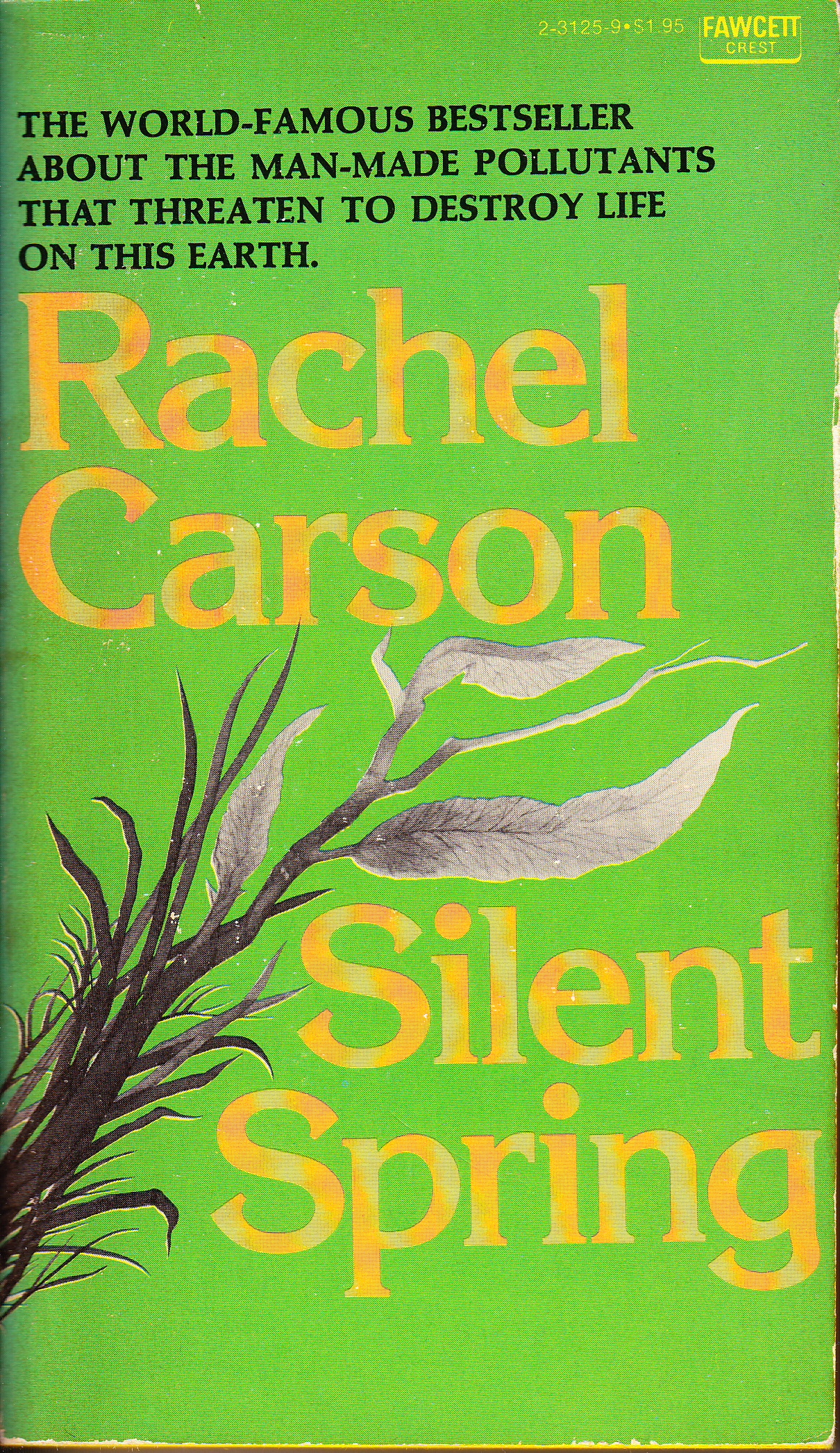
“[A] sight to be endured with one’s mind closed to thoughts of the sterile and hideous world we are letting our technicians make,” is how Rachel Carson described the indiscriminate use of herbicides fifty years ago. Silent Spring, although clearly dated, remains a chilling book for a number of reasons. One of the most obvious is that although the book is half-a-century old, the breakdown of some of our toxins released into the environment before it was written is still not complete. And perhaps more frightening still is the fact that we continue to stumble forward without giving enough thought to where our actions against our planet might lead. The quote above presses urgently at the heart of the matter: those with the destructive interests are almost always those who set the agenda. As Carson noted fifty years ago, the right of the nature lover to enjoy an unspoiled part of nature is just as valid as the right of the greedy to rape the landscape for “resources.” But we all know who eventually gets their way.

On a finite planet with finite resources, one of those that cannot be replaced is the beauty that nature has spent billions of years evolving us to appreciate. Desire for beauty reaches down to our most primal and basic levels. In the United States how many people drive hundreds or thousands of miles just to see Yellowstone every year? And yet, last time I was there I spied an empty can carelessly tossed into one of the stunning blue hot pools that require a delicate balance of nature to maintain. Those who appreciate the glory must always be those who pay the price. The fancy name for this is aesthetics, and some writers have suggested that the violation of beauty is a deeply disturbing problem on a philosophical or theological level. The basics are easily comprehended: we mar the planet at the cost of not only our own, but of every future generation.

Silent Spring warned those empowered to make laws that a dangerous road had already been selected. The radioactive fallout from bombs detonated to indicate national superiority continues to render some locations uninhabitable, and all of us carry traces of toxins that others have spread in our bodies. Humans, as Prometheus represents, have the ability of forethought. It is not always easy; in fact, it is often very hard. Somewhere back in a cave somewhere, long, long ago, even before our species emerged, future humans realized how. We teach. We teach our young of the dangers we’ve discovered, and instruct them to avoid them. As society evolved, money—the ultimate poison—crept into the environment and education became devalued. Even now, higher education—established for the joy of learning—has become economically driven job training. And people we’ve never met, and companies we’ve never heard of, pay off those who make laws, and another piece of our pristine environment disappears. Silent Spring remains in print, but how can we convince the disinterested to read it?


Queens and Playmates

Once upon a time, theology was queen. I’m no theologian, but then, I didn’t make up the phrase. A recent article in the Chronicle of Higher Education discusses how some scientists say there is no longer a need for philosophy. In passing the piece mentions that theology had, long ago, been considered the queen of the sciences. According to medieval thinkers, philosophy was her handmaid. Antiquated archaisms apart, I sometimes think back on this whole venture of education. Few today acknowledge, and most probably don’t know, that education began as a religious exercise. Writing, and reading, were overseen by the gods. Even in the modern world the earliest universities were founded to teach theology and law. Many of the ivy league schools, including Harvard, Yale, and Princeton, began as training grounds for the clergy. How quickly our forebears are forgotten.

It’s not that I think religion deserves a privileged place in the academy, but I do believe it deserves a place. Science has a long track record of spectacular successes. Not only that, but the advances in science often capture the imagination—and here we are back in the realm of the humanities, that place where feeling and possibility are unlimited. Many of those of us in religious studies—apart from creationists and their kin—gladly award science its deserved paean to successfully unpacking the intricacies of the material universe(s). As the Chronicle article demonstrates, some on the science side of the circle want to claim all the marbles and go home. Some of us want to keep the game going well after dark.

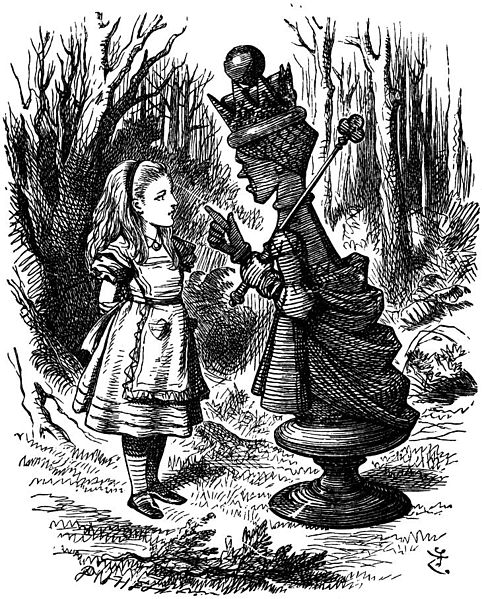
Maybe that’s a very wide metaphorical shift—from queen to playmate—it may be presumptuous. After all, what has religion, or philosophy for that matter, got to claim? What shiny Nobel Prizes to display gracefully, or great advances of which to boast? The benefits religion can claim are somewhat less tangible, but important nevertheless. While some people declare that meaning is a chimera, deep down, as a species, we know that it is important. Even more than that, the fact that you’re reading this right now owes its ultimate origin to religious thinking. Writing was the brainchild of the gods, an activity we learned in imitation of the divine. I will always find science fascinating, but I will always do so with a book held in my hands. “Now, here, you see, it takes all the running you can do, to keep in the same place,” in the words of another famous queen.


Brother, Can You Spare a Term?

Last Friday the Chronicle of Higher Education had a blog post asking how NTT (Non-Tenure Track) faculty pay the rent. In the light of recent news stories about the nascent gathering of data on the forgotten generation of scholars, universities are finally starting to scratch their heads and wonder, like Frankenstein, what they’ve created. Well, the article asked a question and invited responses. I couldn’t help myself—six scary years of my life were spent in that dark chasm of no security—and since I offered a few sentences about my experience, email reminders popped up for the next several hours when other comments were added. It made for a depressing day. All day long stories appeared of women and men with PhDs who live on food stamps, fall behind in their rent, and even cancel the classes the unsuspecting parents pay so much for because they can’t afford gas for their cars. Meanwhile, let’s build a new stadium.

Education is the most important invention of all time. Without it we’d still be warming our toes around the fire in our cave, wearing smelly animal skins. The natural enemy of education is sometimes the institution. Institutions, especially those that continually turn an envious eye towards corporations (often among the least enlightened of human ventures) as a model for emulation, are steering a sinking ark. Both church and university have become poster children for the corruption that creeps so insidiously into organized structures that have lost the way of pure intentions. The call of the wealth is far more savage than the call of the wild. The wolf pack does not devour its own.

Well-paid industrial analysts, I’m sure, are being offered handsome sums to figure out how to make universities more efficient. University presidents and sports coaches drawing down six-or-seven figure salaries shrug their flummoxed shoulders—what could possibly be the problem? Perhaps we need even more upper-level administration to sit and think this out. Meanwhile parents stressed to their financial wit’s end are slowly beginning to learn that the ones teaching their daughters and sons are the adjuncts who now make up well over half the teaching force in higher education. I would not presume to guess which direction higher education is going. It does seem entirely probable, however, that when the wolves are done with this meal, a scattering of bare bones will be all that’s left. After all, in the wild a lone wolf is a dead wolf.

The corporate emblem.


Ashes to Ashes

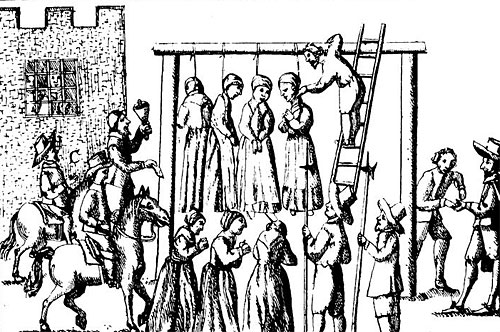
It was just a small blurb in the paper. Down at the bottom of page 17, it could have been easily overlooked. “Alleged witch killed by being set on fire” the small headline stated. And the date was 18 February 2012. This sad incident took place in Nepal. The story notes that “Each year hundreds of women in rural Nepal are abused after being accused of being witches.” Just last week, to the scorn of many, Cologne, Germany reopened the case of Katarina Henot, a woman burned as a witch 385 years ago. Katarina Henot was declared innocent because of the efforts of a priest to raise awareness of the persecution of women around the world. Five days after the story hit the news, Theganidevi Mahato was burned to death in Nepal. Although some called the action in Cologne a publicity stunt, it was anything but. We need to put names on those we continue to allow society to brutalize. Katarina Henot and Theganidevi Mahato, separated by 385 years and many, many miles, both died for the insanity that equates tragedy with women.

How blithely the word “witch-hunt” spills off the tongue. Each time we invoke it, the very phrase trails the ghosts of many thousands of women made to pay the price for society’s paranoia. The answers to why such tragedies occur may never be fully understood, but the events are preventable. The key is education. Even in the most advanced culture in the world, as we like to style ourselves, we heap contempt upon education, claiming that teachers barely work and that professors get paid for doing nothing. We have fallen into the fallacy that one size fits all—not all jobs can be measured by the wicked, black dip-stick of the oil industry, or the quick-cash-and-crash of the stock exchange. Education is a lifelong process, and as the political ridiculousness we constantly hear reminds us, lessons must be endlessly repeated until they sink in. Too many people think it is just easier to burn witches.

Witch-hunts arise when societies are stressed. Scapegoating is one of the most unfortunate legacies religion has left us. Evidence points to the scapegoat as being earlier than the Bible, although it takes its characteristic form there. We hear how the sins of the people were transferred to the goat on a day not so different from Ash Wednesday, to be symbolically born away where the animal would die instead of us. Somehow we’ve come to believe that burning the representative of our neuroses will somehow cure our society. Does it? Has it ever? This day as millions of Christians contemplate their sins and wear ashes on their heads, I suggest that we think of the women whom religion has allowed to become its victims. Whether due to the superstition of a remote village in Nepal or the irrational fear of “civilized” Europe with the blessing of the church, we’ve let scapegoating go too far. And those who’ve been killed are not the nameless females of forgotten times, but are the Katarinas, Theganidevis, Marys, and Rebeccas who were just as human as their neighbors.

What are their names?


Science of the Bible

It should be a local decision. Science, that is. This straight from the mouth of America’s darling Chris Christie. New Jersey’s governor does not wish to weigh in on this one. His children attend private school. Yes, even New Jersey is under the anti-evolution gun. In the light of the inevitability of Creationism trumping real science, I’ve been working on a sample syllabus for high school science teachers. The way I see it, this new focus in American education should teach science the way the Bible does – no holds barred, no punches pulled. No picking and choosing like Creationists do – Hey! Put that cell phone down, it is a device of black magic! (This will need to be followed up, supernaturally, by a course on how to handle witches in the classroom.) My proposed syllabus looks something like this:

Astronomy: study of that mysterious dome that encircles our earth. It seems to have holes poked through it, or so it looks at night. Science can change depending on the time of day. The sun and moon live in that dome as well, as our astronauts can attest. (Their views that the earth is round, without four corners as the Bible instructs, are, of course, heretical.)

Meteorology: study of the windows of the dome. When God opens these it rains. When God is angry he sends fire down from the dome. The loud sound that follows that is his angry voice. So play nice!

Geology: study of the very center of the cosmos. Our flat earth home, with its four corners and steady pillars reaching down into Sheol, is the exact center of everything. There are no such things as dinosaurs (or cats) since they are not mentioned in the Bible. The layers that you see here and there were all caused by the flood in a matter of about 150 days. The whole thing took only 6 days to make.

Biology: study of the separate kinds God created. Let’s be honest here: the chihuahua and the mastiff share a common ancestor? Preposterous! God made each kind separately and they’ve stayed that way for the past 6000 years. Oh, and yes, animals have telekinetic abilities – that’s how they knew to show up at the ark on time. And when the flood was over the marsupials all knew to swim to Australia. Koalas are surprisingly strong in the breast-stroke category.

Humanology: study of human beings (which are not animals). We were created after the animals (unless you read Genesis 2, where we were created from dust before the animals) and are therefore superior to them. Our natural lifespan is about 600 years, but if you are really wicked you might make it almost to 1000. Reproduction is by means of men planting seeds in women. Females contribute nothing to new children except a womb of their own. We teach these new generations by using the science of miracles, and since there are no schools in the Bible, what are we doing here anyway?


Doubts Creep In

What between Snooki at Rutgers and Mel Gibson’s Passion played at Montclair, I seem surrounded by university controversy lately. A recent article in the New Jersey Jewish News addresses once more the pre-Easter screening of The Passion of the Christ on Montclair State University’s turf. Education is bound to be embroiled in controversy since learning is seldom comfortable. I suspect that is one reason bully governors and the occasional president go after higher education. Few adults like to have their assumptions challenged, their values questioned. I am reminded how blindly many educated clergy accepted the version of the faith story by a disgruntled actor rather than by scholars who actually know what they’re talking about. It is difficult to dismiss the truths of the big screen.

The fact that the wounds opened by this screening are still bleeding weeks after the event demonstrate just how vital open dialogue is. Not only open dialogue, but frank discussion of religion. Many, if not most, religious believers carry on the tradition in which they were raised. Parents begin religious instruction early, and with the threats of a fiery Hell and an enraged divine father overhead, children are shunted toward Heaven everlasting. Not all religions use the same stick and carrot, but no matter what the bludgeon or the vegetable, religions give the faithful reasons to stay in line. Best not to discuss it too much, otherwise doubts might creep in. Educating students in religion is controversial, but necessary as long as people continue in practicing it.

As the article notes, the objection to the film revolved around the fact that no educational component was included. This was one of those “think with your guts” kind of moments, as if feeling sorry for the fictional portrayal of Jesus might somehow make one a better Christian. Educational institutions are duty-bound to teach critical thought when it comes to matters of belief. Emotion is a fantastic motivator, but as history has repeatedly demonstrated, it tends to act without thought. Universities should be open to such constructive criticism, although, it is doubtful that many minds are likely to be changed when the draw at the box office is too great to ignore.

Entertainment or education?


Playing Doctor

Science, religion, humanity. People are a conundrum. Medical professionals have the unenviable task of sorting out what is wrong with this jumble of organic biological systems and also attempting to address the uniquely human aspect of their subjects. As far as life forms go, although we may not be on top of the evolutionary ladder, we are suitably, impressively complex. We haven’t yet sorted out how mental states figure into physical processes: a number of cases of “faith healing” seem to have been verified, but the mechanism remains unknown. Praying has been demonstrated to improve some physical conditions with the believer saying God is doing the work and the skeptic suggesting it is the healing aspect of our own minds. How do you treat a creature that may not even agree with you on the ground-rules?

A story in yesterday’s New Jersey Star-Ledger revealed that New Jersey hospitals are experimenting with human subjects. The subjects, however, are doctors, not patients. In an effort to bring science and the humanities together, several hospitals are sponsoring reading groups for doctors. Like a garden-variety Oprah reading club, the physicians read a novel and discuss the human elements with each other. The theory is that it may help them understand the softer side of the science – how to touch the human reality of a field of study that has become very scientific. Specialists in the sciences and humanities have grown apart.

The humanities have long been assigned to the “less necessary” side of both university programs and the job market. Ironically, among those who are most famous in our pragmatic, make-a-buck world are musicians, actors, film-makers, best-selling novelists – in short, masters of one of the humanities. A darker side exists here as well; even celebrated humanities specialists can turn on one another. Contradictions and conflicts are part of human nature. Religion, one of the humanities, is a stellar example of the heights and depths of human behavior. As physicians attempt to discover what really makes us tick, reading novels is a good place to start. Attending religious services may be a bit more chancy, but like any human endeavor, one might get lucky and make a truly groundbreaking discovery. Did Rasputin write any novels?

Playing doctor, once upon a time.


Budget Bombs

Budgets are measures of what we value. For a nation that likes to tag itself repeatedly as “Christian,” our priorities belie that claim as surely as the lives of our leaders. Over the past few months, those of us involved in education have watched in horror as governor after governor has attacked education as a pork-belly society simply can’t afford. Considering the salary differences between politicians, CEOs, and teachers, there is no comparison. Many teachers I know must work second jobs to make ends meet: they too have kids to send to college. The problem, however, is not endemically a Republican one. My political leanings are well known to those who read this blog, but a colleague at Montclair State University recently sent me this quote from a 1953 address of Dwight Eisenhower that makes the point clearly:

An unlikely prophet

“Every gun that is made, every warship launched, every rocket fired signifies, in the final sense, a theft from those who hunger and are not fed, those who are cold and are not clothed. This world in arms is not spending money alone. It is spending the sweat of its laborers, the genius of its scientists, the hopes of its children. The cost of one modern heavy bomber is this: a modern brick school in more than 30 cities. It is two electric power plants, each serving a town of 60,000 population. It is two fine, fully equipped hospitals. It is some fifty miles of concrete pavement. We pay for a single fighter plane with a half million bushels of wheat. We pay for a single destroyer with new homes that could have housed more than 8,000 people. This is, I repeat, the best way of life to be found on the road the world has been taking. This is not a way of life at all, in any true sense.” (President Eisenhower’s address “The Chance for Peace,” Delivered Before the American Society of Newspaper Editors, 4/16/53)

The largest slice of our national budget goes toward military spending. Christianity teaches that we need not fear death – that’s what Easter’s all about, is it not? – and yet we pay astronomical amounts to keep ourselves safe. Do we really practice what we preach?

Since Eisenhower’s day we’ve seen an increasing inflation of self-centered motivation and self-importance taking precedence in politics. Republican politics allied itself with extreme right-wing evangelicalism and soon we were being told that Jesus was a free-market economist. The values of one sect hijacked a political party, and indeed, a nation. The force of this movement is so strong that, with some obvious differences, the policies of President Obama are not so far from those of Bush. No forward progress is to be made: backward, Christian soldiers! Our nation is in full retreat from facing square-on the very real problems of social injustice, unemployment, and lack of adequate schooling for many of our children. Those who know no better sit by and say, “well, the Christians are in charge, everything will be fine.” I don’t believe in a divine apocalypse, but then again, I don’t believe we will need one. Unless people wise up, we will be perfectly capable of creating a home-grown apocalypse all on our own.


Born to Shun

Being of rather slight build, I have always held a natural antipathy toward bullies. I’ve always liked to believe that, were I in any position of power, I would care for those under my authority. Emulating this ideal as much as possible in the classroom seems to have made me a popular teacher. The message we send our young, however, shouts at decibels I cannot hope to achieve that throwing your weight around is the only proper way to govern. And some governors carry considerable excess weight. New Jersey used to pride itself on its educational system, a system that is currently being gouged in nearly every possible way by an insatiable governor. And now he is taking shots at Bruce.

I seldom write about my admiration for Bruce Springsteen because it is a very personal matter with me. Having grown up in a working-class family, I discovered Bruce at a fairly young age and I suspected his concern was authentic. That suspicion has grown over the years as he has campaigned for the common worker, never forgetting where he began. Now Chris Christie is attempting to besmirch the Boss. Using the newest entry in the Neo-Con lexicon of swears, Christie has leveled the “L-word” at New Jersey’s native son. Seems liberal is always a bad thing. Good thing Jesus – the original liberal – isn’t here or the Neo-Cons would nail him as well.

I'll see you after school

The Neo-Con movement delights in out-shouting the competition. Shut down National Public Radio because if reason is broadcast on the airwaves some people might end up looking ridiculous. Let us have no dissension here! If you leave the wealthy alone, they will leave you alone. Seems that “conservative” social responsibility was crucified some two millennia ago. Instead of Christ we now have Christie. The devil himself, however, would make a more compassionate governor, if we could ever get him away from the endless tea parties of perdition that occupy all his time.