Doubts Creep In

What between Snooki at Rutgers and Mel Gibson’s Passion played at Montclair, I seem surrounded by university controversy lately. A recent article in the New Jersey Jewish News addresses once more the pre-Easter screening of The Passion of the Christ on Montclair State University’s turf. Education is bound to be embroiled in controversy since learning is seldom comfortable. I suspect that is one reason bully governors and the occasional president go after higher education. Few adults like to have their assumptions challenged, their values questioned. I am reminded how blindly many educated clergy accepted the version of the faith story by a disgruntled actor rather than by scholars who actually know what they’re talking about. It is difficult to dismiss the truths of the big screen.

The fact that the wounds opened by this screening are still bleeding weeks after the event demonstrate just how vital open dialogue is. Not only open dialogue, but frank discussion of religion. Many, if not most, religious believers carry on the tradition in which they were raised. Parents begin religious instruction early, and with the threats of a fiery Hell and an enraged divine father overhead, children are shunted toward Heaven everlasting. Not all religions use the same stick and carrot, but no matter what the bludgeon or the vegetable, religions give the faithful reasons to stay in line. Best not to discuss it too much, otherwise doubts might creep in. Educating students in religion is controversial, but necessary as long as people continue in practicing it.

As the article notes, the objection to the film revolved around the fact that no educational component was included. This was one of those “think with your guts” kind of moments, as if feeling sorry for the fictional portrayal of Jesus might somehow make one a better Christian. Educational institutions are duty-bound to teach critical thought when it comes to matters of belief. Emotion is a fantastic motivator, but as history has repeatedly demonstrated, it tends to act without thought. Universities should be open to such constructive criticism, although, it is doubtful that many minds are likely to be changed when the draw at the box office is too great to ignore.
Entertainment or education?



Playing Doctor

Science, religion, humanity. People are a conundrum. Medical professionals have the unenviable task of sorting out what is wrong with this jumble of organic biological systems and also attempting to address the uniquely human aspect of their subjects. As far as life forms go, although we may not be on top of the evolutionary ladder, we are suitably, impressively complex. We haven’t yet sorted out how mental states figure into physical processes: a number of cases of “faith healing” seem to have been verified, but the mechanism remains unknown. Praying has been demonstrated to improve some physical conditions with the believer saying God is doing the work and the skeptic suggesting it is the healing aspect of our own minds. How do you treat a creature that may not even agree with you on the ground-rules?

A story in yesterday’s New Jersey Star-Ledger revealed that New Jersey hospitals are experimenting with human subjects. The subjects, however, are doctors, not patients. In an effort to bring science and the humanities together, several hospitals are sponsoring reading groups for doctors. Like a garden-variety Oprah reading club, the physicians read a novel and discuss the human elements with each other. The theory is that it may help them understand the softer side of the science – how to touch the human reality of a field of study that has become very scientific. Specialists in the sciences and humanities have grown apart.

The humanities have long been assigned to the “less necessary” side of both university programs and the job market. Ironically, among those who are most famous in our pragmatic, make-a-buck world are musicians, actors, film-makers, best-selling novelists – in short, masters of one of the humanities. A darker side exists here as well; even celebrated humanities specialists can turn on one another. Contradictions and conflicts are part of human nature. Religion, one of the humanities, is a stellar example of the heights and depths of human behavior. As physicians attempt to discover what really makes us tick, reading novels is a good place to start. Attending religious services may be a bit more chancy, but like any human endeavor, one might get lucky and make a truly groundbreaking discovery. Did Rasputin write any novels?

Playing doctor, once upon a time.


Budget Bombs

Budgets are measures of what we value. For a nation that likes to tag itself repeatedly as “Christian,” our priorities belie that claim as surely as the lives of our leaders. Over the past few months, those of us involved in education have watched in horror as governor after governor has attacked education as a pork-belly society simply can’t afford. Considering the salary differences between politicians, CEOs, and teachers, there is no comparison. Many teachers I know must work second jobs to make ends meet: they too have kids to send to college. The problem, however, is not endemically a Republican one. My political leanings are well known to those who read this blog, but a colleague at Montclair State University recently sent me this quote from a 1953 address of Dwight Eisenhower that makes the point clearly:

An unlikely prophet

“Every gun that is made, every warship launched, every rocket fired signifies, in the final sense, a theft from those who hunger and are not fed, those who are cold and are not clothed. This world in arms is not spending money alone. It is spending the sweat of its laborers, the genius of its scientists, the hopes of its children. The cost of one modern heavy bomber is this: a modern brick school in more than 30 cities. It is two electric power plants, each serving a town of 60,000 population. It is two fine, fully equipped hospitals. It is some fifty miles of concrete pavement. We pay for a single fighter plane with a half million bushels of wheat. We pay for a single destroyer with new homes that could have housed more than 8,000 people. This is, I repeat, the best way of life to be found on the road the world has been taking. This is not a way of life at all, in any true sense.” (President Eisenhower’s address “The Chance for Peace,” Delivered Before the American Society of Newspaper Editors, 4/16/53)

The largest slice of our national budget goes toward military spending. Christianity teaches that we need not fear death – that’s what Easter’s all about, is it not? – and yet we pay astronomical amounts to keep ourselves safe. Do we really practice what we preach?

Since Eisenhower’s day we’ve seen an increasing inflation of self-centered motivation and self-importance taking precedence in politics. Republican politics allied itself with extreme right-wing evangelicalism and soon we were being told that Jesus was a free-market economist. The values of one sect hijacked a political party, and indeed, a nation. The force of this movement is so strong that, with some obvious differences, the policies of President Obama are not so far from those of Bush. No forward progress is to be made: backward, Christian soldiers! Our nation is in full retreat from facing square-on the very real problems of social injustice, unemployment, and lack of adequate schooling for many of our children. Those who know no better sit by and say, “well, the Christians are in charge, everything will be fine.” I don’t believe in a divine apocalypse, but then again, I don’t believe we will need one. Unless people wise up, we will be perfectly capable of creating a home-grown apocalypse all on our own.


Born to Shun

Being of rather slight build, I have always held a natural antipathy toward bullies. I’ve always liked to believe that, were I in any position of power, I would care for those under my authority. Emulating this ideal as much as possible in the classroom seems to have made me a popular teacher. The message we send our young, however, shouts at decibels I cannot hope to achieve that throwing your weight around is the only proper way to govern. And some governors carry considerable excess weight. New Jersey used to pride itself on its educational system, a system that is currently being gouged in nearly every possible way by an insatiable governor. And now he is taking shots at Bruce.

I seldom write about my admiration for Bruce Springsteen because it is a very personal matter with me. Having grown up in a working-class family, I discovered Bruce at a fairly young age and I suspected his concern was authentic. That suspicion has grown over the years as he has campaigned for the common worker, never forgetting where he began. Now Chris Christie is attempting to besmirch the Boss. Using the newest entry in the Neo-Con lexicon of swears, Christie has leveled the “L-word” at New Jersey’s native son. Seems liberal is always a bad thing. Good thing Jesus – the original liberal – isn’t here or the Neo-Cons would nail him as well.

I'll see you after school

The Neo-Con movement delights in out-shouting the competition. Shut down National Public Radio because if reason is broadcast on the airwaves some people might end up looking ridiculous. Let us have no dissension here! If you leave the wealthy alone, they will leave you alone. Seems that “conservative” social responsibility was crucified some two millennia ago. Instead of Christ we now have Christie. The devil himself, however, would make a more compassionate governor, if we could ever get him away from the endless tea parties of perdition that occupy all his time.


Jane Who?

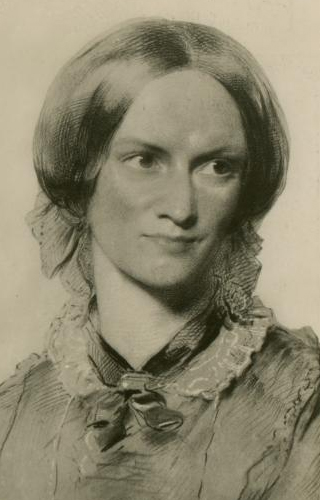
“Conventionality is not morality. Self-righteousness is not religion. To attack the first is not to assail the last.” So states Charlotte Brontë in the preface to the second edition of Jane Eyre. I am inclined to believe that the lines were widely ignored by clergy and politicians, for public leaders in nineteenth century Britain were not likely to take the advice of a young lady who only had one real credit to her name. Politicians and clergy of twenty-first century America can hardly be expected to have read Jane Eyre, for how would this woman know the harsh realities of how to assert one’s own will on the masses? In the stewing tea pot of the Religious Right, conventionality is morality. Self-righteousness is religion. George Santayana might well have saved his cramped fingers from writing, “Those who cannot remember the past are condemned to repeat it.”

As politicians oil their moving parts in preparation for next year’s great race, they know that many constituents will gladly accept conventionality as morality without asking about the origins of such practices. Schoolyard bullies who seek their own aspirations praise the great darkness that has settled over New Jersey where education is simply a commodity with which to bargain. Jane Eyre? Who’s she? If she’s a constituent, I’d better spin this slashing of education funds to her liking. Without an educated public, it is much easier to bolster one’s personal authority.

For years educators have been watching in dismay as other developed nations soar past American expertise in science, math, and even geography. Our response: let’s cut education funding. Conventionality is morality. Education teaches children to think for themselves. Is it not better to show them that self-righteousness is religion? We can put other religions on trial (thank you, Mr. King), while conveniently forgetting our founders were largely religious dissenters. To know that, however, you have to read a little history. We are far too busy plotting how to shortchange our future in order to feather further already overly plush nests.


Escanaba in da Moonlight

My daughter was ill at school recently and I went to pick her up. It has been a few years since this has happened, so I guess I’m a little out of practice. In the school office there is a Star-Trekish device poking up through the counter where visitors check in. I was instructed to put my driver’s license on the device and an eerie glow emerged from it as they scanned my card. You are not allowed to leave with your own child, even if the school calls you, without being scanned. A New Jersey license is a real hassle to acquire with multiple forms of ID required – this isn’t the Midwest where you just turn in your expired license and they hand you a new one. Every four years you have to prove you are who you say you are. As we climbed into the car, I was glad for the school security, but I couldn’t help remembering.

I grew up in western Pennsylvania where deer worship was the dominant religion. The first day of buck season was a school holiday; I can’t recall if doe opening day was just a half-day or not. We could not graduate without passing a course called “hunter’s safety” which involved detailed instructions on how to shoot rifles and shotguns. My high school – God’s truth – had a rifle range in the basement and you were allowed to bring your rifle to school as long as you checked it in the principal’s office. When I tell others about this they don’t believe me, but when I ask my high school friends they all remember it that way too. Now that my stupidly smiling driver’s license image is floating around the school mainframe as a potential kidnapper for picking up my own daughter, I think about the difference in times.

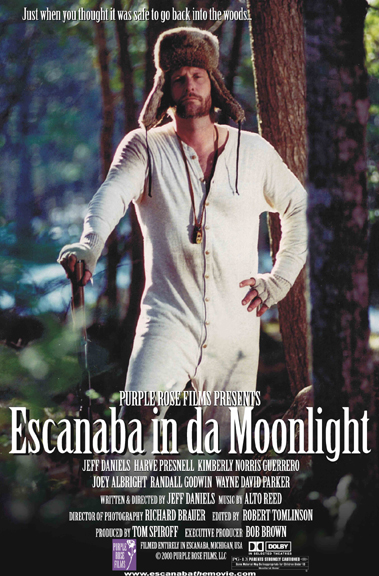
Kids had guns in my high school in the late 1970s, but they knew that it was wrong to shoot other students. It was a small town, but we were all taught the rules of engagement and we knew that other human targets were outside the scope. Every year there were accidental hunting fatalities (Dick Cheney would have felt right at home), but the schools were used to address that issue. Today I see wind-bag politicians trying to cut back on education as much as possible and I see kids who don’t know any better killing their fellow students indiscriminately. No, I’m not nostalgic. I do not own a gun. It is my belief that children learn from adults, and when politicians say through their words and actions that looking out for number one is all that matters and that bullying (yes, Mr. Governor) is appropriate for getting what you want, I think it is no wonder we find ourselves with children who can’t tell right from wrong. I’m ready to watch Escanaba in da Moonlight and pray to the god of the deer.

Deer God...


Bibles and Freedom

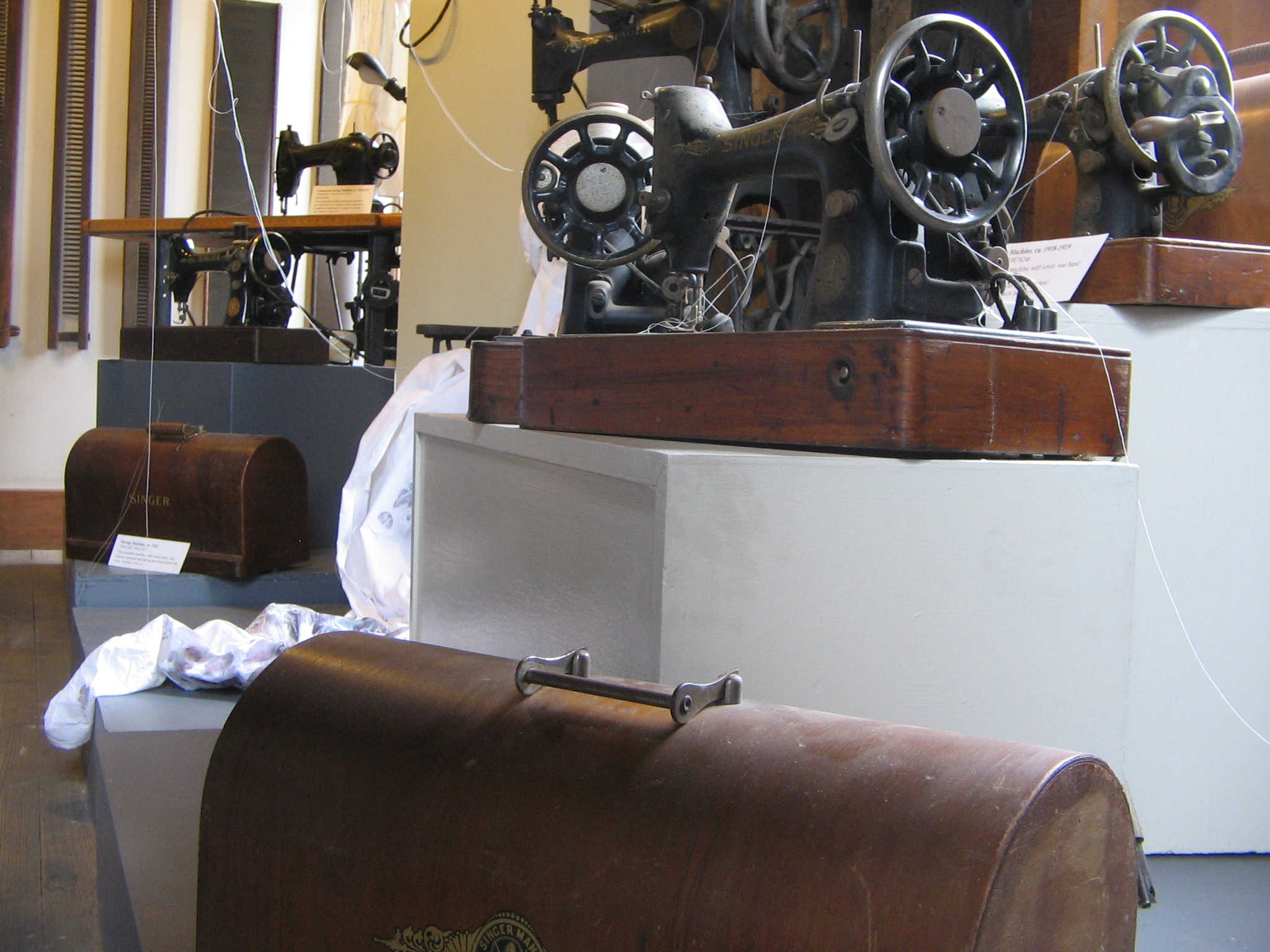
Visiting the Red Mill in Clinton, New Jersey is always a worthwhile experience. Yesterday, a gloomy, gray September postcard, was perfect for such a visit. In addition to the many buildings on the museum grounds that retain an atmospheric feel year-round, the Mill is supposedly haunted and is frequented by a number of ghost hunting teams. With its long (for America) history and its picturesque beauty, the museum is a popular spot with tourists as well as ghost hunters.

One of the buildings on the grounds is an old one-room schoolhouse. As a family we have visited a number of these, although none of us qualify as having been actual pupils at one. A frequent blandishment at such institutions is the rules by which school teachers had to live in the nineteenth century, usually posted on the wall. Yesterday as we read the obligatory list, one “commandment” stuck out from the 1872 code of conduct: “After ten hours in school, the teachers may spend the remaining time reading the Bible or any other good books.” While many of the rules were condescending in their moralizations, this one carried a perfect example of how a nation, naively short-sighted, was already giving preferential treatment to one religion, Protestant Christianity.

As a nation founded as a haven for religious freedom, the colonists and settlers simply had narrow exposure to religions of the world. Freedom seemed an ideal worth dying for, but usually it meant freedom to be whatever (Protestant) denomination you wished to be. Catholicism was associated with the old powers of Europe, and the religions of the east were barely known. The Protestants were the ones who promoted Bible reading in those days, and while the rules allowed for other good books, there is an unstated superiority given to the Good Book in its pride of place. Once the colonials became nationals, it was still fair to taunt Quakers, Unitarians, and others who didn’t seem to fit the mold. We didn’t see any ghosts at the Red Mill yesterday, but it did seem that a haunting memory of true religious liberty hung about the place.

Clinton's Red Mill sews freedom