Voting Belief

No one knows the origins of religion. Before the advent of writing we can only guess, based on artifacts. Even in the era of scriveners, nobody jotted down the origin of belief until modern times, long, long after it began. Once writings about religious practice become reasonably clear, we find temples in the service of palaces, and vice-versa. Monarchs needed the validation of deities and priests required the support of the crown. Together they brought the two swords together and managed to keep the unruly masses in check. This isn’t cynical, not necessarily, since it reflects, the best we can reconstruct, how western organized religions began. Power was always part of the picture.

A recent Washington Post story, “The stark racial and religious divide between Democrats and Republicans, in one chart,” by Christopher Ingraham, shows the diametrically opposed pie-charts of self-identified white Christians (Republicans) versus non-white or non-Christian (Democrats) Americans. Such survey results tell us much about ourselves. We vote with our faith (or lack thereof) and not with our rationality. This has long been the piece of the political puzzle that Democrats have failed to comprehend. Not to take away from Barack Obama’s charisma, but people were afraid of Mormon Mitt Romney in 2012. Although conservative, white, and evangelical, Mormons have long been questioned as to their Christian identity by other evangelicals. It would seem, in the light of present circumstances, that understanding the “white Christian” mindset might be the only way out of the morass.

Typically self-defeating, academic institutions have shown little interest in understanding religion among hoi polloi. Long ago they bought into what Peter Berger admitted was his biggest blunder, the idea that religion was dying out. By the time he made that admission, academics had ceased to pay much attention to religion. It has, of course, come back as the ghost that haunts us. Or is it a zombie, once dead and now back to life? The fact is religion was never dying. It is as much of being a human as is driving a car or owning a cell phone. When times are uncertain, we turn to what is perceived as unchanging—religion. In truth, religion is constantly evolving to fit outlooks influenced by science, technology, and social progress. Worldviews change. Our culture is becoming more diverse. Republicans have a natural voting bloc that identifies itself by race and religion. Information about the former is readily available. You’ll need to look a bit harder to find quality information about the latter, no matter how important it may be.


Overlooked Scripture

In this great Trump Tower of capitalism in which we all live, I often wonder about the overlooked Bible. Fundamentalist Trump supporters certainly know how to thump it, but do they know how to read it? This thought occurred to me as I was rereading the story of Ananias and Sapphira in Acts 5 recently. The narrative isn’t hidden or obscure. Here’s how it goes: the earliest Christians were communists. Literally. Peter himself was involved. After Jesus’ ascension, his followers pooled their resources and divided them up by how much each person needed. Ananias and Sapphira, a husband and wife duo, sold their property and presented the money to Peter and the collective. They held a little back, though, just in case. The result? Peter saw through the lie and they died instantly. The point was pretty clear—Christians don’t hold anything back for themselves. They live communally.

Obviously, this didn’t last very long. Let the one without a savings account cast the first stone. In fact, by half-way through Acts the holy experiment is already forgotten. Nevertheless, it was the ideal. Christians were people who took care of one another, especially the poor. By the time communist governments (which didn’t work because people are people) took hold, Christians were dead-set against them. Okay, well, they were godless—but the idea behind them was biblical. Today any form of socialism is soundly condemned by most evangelicals. Apparently they don’t read the book of Acts any more. There was no moment when this commune was castigated in Holy Writ. It simply vanishes without a whimper to be condemned as utterly evil in these latter days.

The wedding between capitalism and Christianity has proven an enduring one. Capitalism allows, indeed pretty much mandates, selfishness. It’s difficult to live in such a system and not feel entitled to more than you already have. Who ever says, “No thanks, I don’t need a raise. I have enough”? Those who attempt communal living are generally called “cults” and the suspicion is omnipresent that the leader isn’t holding (usually) himself to the same standards as the pedestrian members. The story in Acts 5, however, is even more extreme. After Ananias lies to Peter and dies on the spot, his wife Sapphira comes in just as those who buried her husband are returning. Peter baits her with a question about how much money they received for their property and when she concurs with her late husband, the undertakers have a second job for the day. This is a faith taken seriously. It was bound not to last.


Apocalyptic Dreams

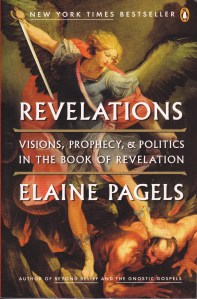
Words. They can be slippery sometimes. Take for example the word “revelation.” It can be secular or sacred, and if the latter, general or specific. Many recognize it as the title of the final book of the Bible, and some can’t even get enough of it and make it plural—Revelations. “Revelation” is actually a translation of the Greek word apokalypsis, the “original” title of the book. It has been a source of contention as well as fascination just about since John—whoever he was—put quill to parchment. Elaine Pagels, whose work is always rewarding to read, plays on the singular/plural convention that raises the ire of many a biblical scholar. Revelations: Visions, Prophecy, and Politics in the Book of Revelation is a refreshing change from what I read in college and seminary. No book exists without a history and that of the Apocalypse is colorful indeed. And it revolves around what has been traditionally taught about “revelation.”

The current final book of the New Testament presents itself as a revelation. It isn’t, however, the only book from this time period to do so. Many revelations existed, as did many gospels, in the first couple centuries of the Common Era. Some early leaders of the Christian movement who became inordinately influential decided that John’s revelation would be okay to keep but the rest should be destroyed. And they very nearly were. Some were recovered by the fortuitous discovery of the Nag Hammadi library in Egypt. These texts have preserved some of the other gospels and revelations that rivaled those of the current canon. It is in her close observations about their continuities and the motivations behind the politics of early Christians that Pagels sheds fascinating light on how Revelation became a tool of manipulation in a power struggle, primarily for centralized religious control of Egypt. Looking at headlines even now we know that it never really worked.

Revelation very nearly didn’t make the canonical cut. Many church leaders of the fourth century believed it spurious and not entirely helpful. It has, however, arguably become the most influential book of the Bible. Evangelicalism is hard to imagine without some kind of end times dispensational viewpoint that owes its existence to John of Patmos. Reformers, while not caring for the book, saw Revelation’s usefulness as a cudgel to strike at Rome. The papacy likewise saw it as a vivid threat against reformers. Those who took sola scriptura a little too literally used Revelation as the focal point of their hope and practice. Today we’re left with Left Behind and the Rapture and the Antichrist, whether they occur in Revelation or not. (They don’t, but who’s counting?) Pagels will give anyone plenty to think about here, and she’ll do it in surprisingly few words.


The Price of Worship

The wind resistance alone must drive the cost of gas up considerably. Of course, with Yahweh on your side you don’t need to worry about pocket change. We were driving through a sleepy town in the Poconos. A light rain was falling. We came upon a truck advocating not for the usual and expected Christ, but instead for Yahweh. Promising “dramatically affected” lives for those who do so, the implied message on this portable billboard is somewhat ominous. We are apparently being restrained by “non-mortal, non-native beings of ill-intent.” The grammar of the placard confuses things a bit since it seems to suggest that calling on Yahweh will “release restraints on” said non-mortals, and that’s hardly a good thing. I suppose they can’t reveal the nature of these entities without giving away spoilers for drawing the curious in.

This vague, supernatural world presided over by the personal name of the deity seems just a little out of place in Bible country. There’s a kind of literalism about Pennsylvania that I find strangely comforting. It is where and how I grew up. I never encountered God’s personal name—at least not with first-person familiarity—until I attended college. Even then we were encouraged to be careful with its use. The commandment about taking the divine name in vain is just a bit disconcertingly unspecific, considering that it isn’t spelled out in more detail. And who exactly are these beings of ill-intent? They’re all the more frightening for not being named. Demons, I must suppose, but I don’t recall the Good Book saying anything about their restraints being released. This is a new kind of apocalypse maybe.

The thing about the Bible is that it’s everybody’s book. Some modern translations use Yahweh rather freely, opting for the admission that translating it leads only to more questions and “Lord” is obfuscation. Still, it seems awfully familiar. The need to air one’s personal beliefs, in some quarters, is very intense. There’s a passion behind this proclamation that I can’t help but admire. People stop and stare. Some, like yours truly, will want photographs of your vehicle. I suppose that’s the point, nevertheless, not too many people like being stared at. Evangelical culture demands it, as I recall from my youth. Putting your personal beliefs out there comes with a price. Part of that may be reduced gas milage and, consequently, pocket change.


The Preacher

Ecclesiastes, I used to tell my students, is one of the most unusual books of the Bible. And that’s saying something. When we think of the Good Book we think of pious thoughts and lofty feelings—you know, the white-shirt, evangelical sort. The Bible, however, isn’t what most people think it is. Ecclesiastes, nestled right there near the geographic center of the Protestant Bible (and there’s more to say about this) is a book unlike any other. It is philosophical, weighty, and somewhat gloomy. It is a book where God can’t be relied on to help you and the world may very well be against you. It honestly admits that things just aren’t as they should be. “The quiet words of the wise are more to be heeded than the shouting of a ruler among fools,” it says, “Wisdom is better than weapons of war, but one bungler destroys much good.” (That’s 9:17-18, in case you want to check me out.)

America used to be known around the world for its pragmatism. Now it’s being laughed at as the master of irrationality. I remember when elections were matters of gravitas and serious consideration of the issues. They’ve now become high school popularity contests, even including the locker-room talk. Trump insults his own party and they kiss up. We have a president more impressed by kid’s toys in Saudi Arabia than by the top-notch research universities in his own country. I turn to Ecclesiastes for consolation. It’s a good book to read when everything’s going wrong. “For there is no enduring remembrance of the wise or of fools, seeing that in the days to come all will have been long forgotten.”

My white-shirted friends will surely object. I’m taking verses out of context—prooftexting, it’s called. But, my evangelical friends, you say Scripture is the word of God. Fully inspired and inerrant, is it not? How can you dismiss the wise, wonderful, woeful book of Ecclesiastes? The world is a complex place. Those who seek office as public servants should at least be able to distinguish the servant from the master. They lay their hand upon the Bible to take a sacred oath of office. Beneath that withered hand lies the book of Ecclesiastes, forsaken among its more cheerful siblings. Do not forget Ecclesiastes. It is the book that best makes sense of our day. “Better is the end of a thing than its beginning; the patient in spirit are better than the proud in spirit.” Herein lieth the truth.


Good Newsists

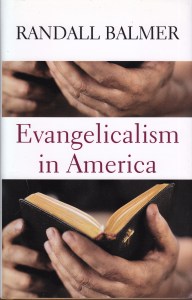
In the interest of avoiding conflict thereof, I cannot yet give a review of Randall Balmer’s Evangelicalism in America. Since I’m writing a review of it for Reading Religion, I’ll use it as a springboard into a topic that should concern all who believe in religious freedom. One of the resounding themes of Balmer’s treatment is that Evangelicalism, after it wedded to the Religious Right, lost its soul. Those are my words, not his, but the sentiment’s about right. For anyone who wasn’t politically aware in the 1980s, it may seem a surprise that religion didn’t enter into politics before that decade. With the exception of the fear of the Catholic in the case of John F. Kennedy, religion wasn’t used as a political wedge until the presidency of Jimmy Carter. The Religious Right, unhappy with the born again Southern Baptist in the White House, moved to solidify the Evangelical bloc.

Evangelicals had been an underground movement for half a century. Many had no idea what being “born again” meant when Carter first claimed the sobriquet. Balmer points out that it was the threat of the withdrawal of tax-exempt status to discriminating Christian schools that led to political action. Bob Jones University, fearful of racial intermarriage, didn’t admit African American students. Leaders of the Religious Right saw the loss of tax-exempt status as a move against their sacred segregated culture and a push that required a shove. Coopting the abortion issue (historically Evangelicals had supported women’s rights, including the right to abortion in many cases), they nailed together a platform for political activism which put women “back in their place,” kept racial “purity,” and romanced a total aberration in Christianity—the “prosperity gospel.” All of this is well documented. And well hidden.

Looking at Evangelical politics today, abortion—the control of women—has become THE issue. It’s hard to believe, as Balmer amply illustrates, that Evangelicalism used to be allied with the Social Gospel. It was a religious view with a conscience and it supported issues that are now polarized as “liberal” and leftist. This shift came about gradually, but not accidentally. There were political players—Balmer names names—who had one goal in mind, and that goal wasn’t Jesus or what he’d do. It was the sweet prize of political power. Evangelicals, you see, are born followers. A leader with a strong voice can lead them just about anywhere. Many Evangelicals today would deny their more liberal history, but it is right there for anyone who’s willing to learn something about who they once were.


Do unto Yourself

Selfishness goes by many names. One of the strangest is “Christianity.” I wouldn’t presume to define a religion, but some time back my wife sent me a story about the prosperity gospel. Written by Michael Horton, himself an evangelical, the pre-greatest inauguration of all time piece is called “Evangelicals should be deeply troubled by Donald Trump’s attempt to mainstream heresy.” Horton goes on to describe the belief system of the prosperity gospel that includes people becoming gods and the idea of positive thoughts drawing good things to you. Quite apart from completely ignoring most of what Jesus is recorded to have taught, the prosperity folk tend to think the Almighty wants them to be, of all things that most shallow, wealthy. “More for me” also goes by many names. The most common is “selfish.”

I grew up evangelical as well. One of the messages drilled into my malleable head was that Jesus taught putting other people before yourself. “Do unto others” was the least you could get away with and still call yourself “Christian.” Part of the disconnect here is that nobody has the authority to define a religion. Not even the Pope can say unilaterally what Christianity is. Protestants aren’t obligated to agree. And with prosperity gospelers with their enormous cash flow telling us that it’s God’s will, well, heresy looks mighty attractive. We’ve come to see the error of heresy, however. Nobody can claim their brand alone has the answer. It’s a theological anything goes. I suggest we go old school and call a cad a cad. Selfishness by any other name would smell as bad.

It’s poor taste to claim your own self-gain as a benefit to society. I, of all people, would handle my wealth properly so that nobody suffers. Except those I don’t like. Doth not Scripture saith, “ I have said, Ye are gods”? Yet earlier in the same Psalm come those easily ignored words, “Defend the poor and fatherless: do justice to the afflicted and needy.” Missing are “build a wall across your southern border,” and “speak untruths when it is convenient to do so,” and “distrust those who speak a language not your own.” Oh what the Bible would say if only we could write it ourselves! But fear not, for we have many who believe the prosperity gospel. And they’ve already got the task well in hand. And their lexicon doesn’t even include the word “selfish,” so you need not worry about such uncomfortable thoughts. Get rich and all will be well.

Photo credit: Kriplozoik, Wikimedia Commons


An Apple a Day

Have you ever bitten into a piece of rotten fruit? I suspect most of us have had the unpleasant experience. From the outside the apple looks fine but that first bite sinks into a brown and corrupt interior that turns your stomach. There’s no rehabilitating it—once fruit’s gone bad it’s bad. Jesus is once said to have said “by their fruits you will know them,” them being the righteous. Over the last several days we’ve watched, not exactly surprised, as the news revealed Attorney General Jeff Sessions lied under oath—what used to be a very serious crime—about consorting with the Russians. The difference between that and the apple I described is that this one didn’t look so good from the outside either. Eve, I think, would’ve chosen a different piece.

The strange thing about this is that evangelical Christians of the sort that voted for Trump should know about the fruits passage. Not the Eve one, the other one. Growing up in a Fundamentalist context I frequently heard about knowing others by their fruits. People are capable of deception, even under oath. That’s why we have a name for it. Thing is, we expect better from those who hold the highest offices in the land. And we’d expect honesty on the part of the evangelical crowd. Once you’ve bitten into that apple there’s no turning back. Ideology trumps theology, it seems. Even the Bible. That’s one of the great mysteries of our time—those who loudly proclaim they live their lives by the Bible count on others not having read it. Kind of embarrassing to be caught with your bias showing. Those whose sins you’re willing to overlook in the name of principle.

As the rogue’s gallery that we now recognize as the presidential cabinet was being nominated, many in this nation suffered shock wave after shock wave of incredulity. Steve Bannon later admitted that their role was to dismantle the agencies they’d inherited—so much for the meek inheriting the earth bit—while power-blinded Republican leaders followed like, well, sheep. The evangelical crowd, ignoring that troublesome leather-bound book they love, refuse to criticize. Who hasn’t forgotten meeting with the Russian Ambassador from time to time? I’m old fashioned enough to believe there’s a difference between biting into an apple that to all appearances is fine and one that’s obviously rotten from the start. In one case you end up disappointed. In the other you get what you deserve.


Cheap Faith

“If I see a madman driving a car into a group of innocent bystanders, then I can’t, as a Christian, simply wait for the catastrophe and then comfort the wounded and bury the dead. I must try to wrestle the steering wheel out of the hands of the driver.” Many of my conservative Christian friends may be surprised to learn that these are the words of Dietrich Bonhoeffer. Evangelical hero and firm believer in costly discipleship, Bonhoeffer lived, and died, during the Nazi takeover of Germany. A promising young theologian, he escaped Germany to come teach at Union Seminary in New York City. Increasingly disturbed by what was taking place back home, he forsook safety and returned to Germany to try to wrench the hands of Hitler from the steering wheel. Bonhoeffer didn’t write empty words.

The above quote comes from a letter he wrote to his sister-in-law Emmi. Bonhoeffer’s book, The Cost of Discipleship, well deserves its status as a classic. In it Bonhoeffer declares that a cheap faith is not a faith worth believing in. The Prosperity Gospel would have made him ill. You see, Bonhoeffer believed that the religion preached by Jesus didn’t allow for shirkers. Those who get rich and claim God helped them to it. There’s a reason some people say Mammon is a demon. This was in the days when Christianity still had a conscience. When leaders of religious movements weren’t afraid to speak out against accommodating with evil when that was the more comfortable course to take. And his wasn’t empty rhetoric.

Bonhoeffer was arrested back in his native land. Sent to Buchenwald and then to Flossenbürg, he was hanged on April 9, 1945. He was 39 years old. Two weeks later the Allies liberated the camp. Bonhoeffer knew evil when he saw it. Now, some seventy years later our vision has become blurred. We live in a country that declares itself “Christian” but, unlike any religion Jesus taught, declares itself to be first. “America first,” we’re told. Flipping through the pages of the Gospels my eyes fall on a forgotten verse. “The first shall be last,” it reads, “and the last shall be first.” Scholars argue over the authentic words of Jesus, to be sure. What we do know is that he too was executed by his government before he reached 40. And they killed him for the radical message that what God requires is loving your neighbor as yourself.

Photo source: Bundesarchiv, Bild 183-R0211-316 / CC-BY-SA 3.0, Wikimedia Commons

Photo source: Bundesarchiv, Bild 183-R0211-316 / CC-BY-SA 3.0, Wikimedia Commons


What Rapture

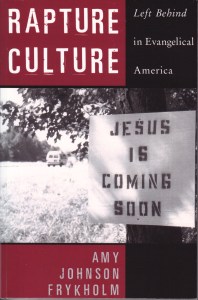
rapturecultureEvangelical culture must be an endlessly fascinating area of study for sociologists. So pervasive that many people who aren’t religious buy into aspects of it, this social movement has shaped American thought in often unexpected ways. Take the rapture, for example. Here is a non-biblical concept, invented in the late nineteenth century and so thoroughly disseminated that most people simply accept it as standard Christian belief. It’s not. Amy Johnson Frykholm pieces part of this puzzle together by focusing on the Left Behind series. Rapture Culture: Left Behind in Evangelical America is one of those books where you find plenty of food for thought as you go along. Not that the novel series itself is profound, but the impact that it has is.

The origins of the rapture go back to a way of thinking called dispensationalist premillennialism. That alone could be why so few people know about it! All this phrase means is that some Christians believe history is divided into distinct periods (dispensations), one of which is the end of the world. Among dispensationalists, there is disagreement on when the rapture will come, and those in the majority believe it will happen before the millennium (not the Y2K millennium, but the millennium of God’s reign on earth before the world ends—the next dispensation). These are the premillennialists. It’s easy to think that since this system is pure mythology it must be simple. It’s not. This is a complex mapping of the future based on an intimate knowledge of obscure verses from the Bible. The Left Behind series, written by Jerry Jenkins under the guidance of the finally departed Timothy LaHaye, brought this idea into mainstream culture. There was even a movie.

Many educated citizens don’t realize that Left Behind has a Harry Potter-like following. Sales of the series are into the millions of units and many of those who read them take them somewhat seriously. Frykholm interviewed such readers to find out what they actually thought about the series and whether it was something they believed in. As might be expected, answers differ considerably on these points. For me one of the real takeaways is that we ignore evangelical culture at our own peril. I learned about the rapture form Chick tracts—I’ve posted about them before—that I read in my childhood. By the time of Left Behind I’d been through enough courses that I knew it was all based on a fictional event. But many don’t realize that. And many of them showed up in the last presidential election.


Look Both Ways

Like many kids of the sixties I grew up watching Batman. I mean Batman—the campy, goofy, live-action version of the caped crusader that was must-see TV for young boys and other hero wannabes. This was all hung upside-down, as it were, by Tim Burton’s reboot of the troubled crime-fighter. Then came Christopher Nolan’s canon. The Dark Knight remains one of my favorite movies as it seems unstintingly honest. We are all part Joker and part Batman. Neither is ideal. More than that, this movie was my first introduction to Harvey Two-Face Dent. You see, I didn’t grow up reading Batman comics, and the television adventures never featured him. At least not as far as I can remember. Two-Face is a fearful foe because you can never tell when he’s telling the truth. That can be very scary.

The other day I asked my mother about someone I remembered from church growing up. This was a woman I hadn’t seen since the Nixon Administration and I was curious how she was doing, and even if she was still alive. My mother told me she was still around, but she doesn’t talk to her any more because the friend is “two-faced.” Among evangelical Christians this is one of the most feared of epithets. Telling different “truths” to different parties is a certain way to demonstrate want of moral fiber. Hypocrisy. It’s also a non-refundable ticket on the bus heading south, if you get my meaning. Christians want to be thought of as honest, if nothing else. Harvey Dent would’ve had real trouble being an evangelical (with some noteworthy exceptions).

JanusVatican

Businesses, however, are disciples of Janus. I often ponder the sheet number of items that companies classify as “public facing.” What, I wonder, is the antonym? I’ve even heard of corporations that will take legal action against former employees who honestly admit how business is done. No one is permitted to speak of what happens in the entrepreneurial boudoir. Corporations, under the law, are persons. They are afforded the secret inner life of real individuals. There was a “naked business” craze in early in the millennium, but that petered out. We have a public facing face and a reality that no one is allowed to know. Trade secrets. Information that only one corporation may have. Over in Gotham, Two-Face slips into a dark alley and escapes. In little white churches across the country, those who speak different truths are shunned. In the corporate high-rise, businesses are now people. They are, however, two-faced. I miss the Batman of my youth.


Taking God to Bed

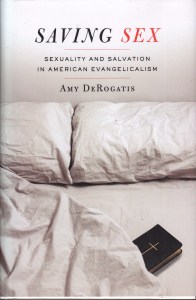
SavingSexThere are varieties of evangelical experience. It is so convenient to put people into neatly labeled boxes that we tend to forget religious experience can be very different, even to conservatives. This point is made very clearly in Amy DeRogatis’ Saving Sex: Sexuality and Salvation in American Evangelicalism. The title of the book requires some further disclosure. DeRogatis is offering an academic study of evangelical sex manuals and teachings about sexuality. If you’re anything like me, the very concept sounds strange. I grew up in an evangelical household and we would’ve been scandalized to learn that such things as godly sex manuals existed. In fact they did, but we didn’t know about them. Although evangelicals share a common idea that there are appropriate and inappropriate varieties of sexual experience, they disagree, according to the evidence, over what some of those boundaries are.

DeRogatis’ book offers some fascinating insights even within this circumscribed field of study. For example, some writers of such manuals give rather permissive instructions as to what might happen in a heterosexual, Christian boudoir, while others keep to the basics. Some suggest that the very practice of sexuality opens its participants to demonic infestation, so much so that they consider STD to be Sexually Transmitted Demons. This is an intriguing and frightening world to enter. Many of the writers of such books suggest that women should indeed be under the authority of their husbands in all things. No room for Lilith there! Others, however, are surprisingly broad minded. More so than some Episcopalians I’ve known.

This brings me, as a former evangelical, to my concern about academic studies of such groups. It seems to me that to truly understand what are undoubtedly irrational beliefs, you must have had the experience of truly believing. If I might be excused of the pun, are you experienced? As much as we wish it were, evangelicalism isn’t a neat packet of propositions that people simply accept. It is a complex, emotional, and, in its own universe, logical response to the belief that the Bible is the owners manual. Sola scriptura gone wild. How individuals deal with this impossible truth is widely divergent. We’re taught not to discuss sex in polite company, but we just can’t help ourselves. For some that’s good news indeed. For others it is the very definition of wickedness. As Saving Sex shows, there is more than one position to be taken.


Anabaptist Higher Education

There’s strength in numbers. This is a biblical concept as well as a folk saying (although it is worded differently in the Good Book). The power of conviction grows in a group, and that’s a reason that governments fear mobs, particularly angry ones. As biblical fundamentalism began to develop at the turn of the last century, those who opposed modernity found like-minded believers and gathered themselves together to stand on the same side of multiple causes. Not only fundamentalists, but all different religious outlooks—evangelical groups especially. The more “mainstream” and liberal groups, lacking the conviction of feeling like they’ve been left behind as society moves ahead, have felt less need to organize together. This is something the Democratic Party has felt ever since the Religious Right wed the Republican Party. It is an interesting dynamic. Banding together makes you feel like you’re not alone. So it was that the Council for Christian Colleges and Universities was founded. Higher education, which began in the church, had gone directions that made evangelical groups uncomfortable, so their institutions formed a coalition.

A story in the current Christian Century two Anabaptist member schools have caused waves of protest because they have decided that it is permissible to hire same-sex married faculty. Eastern Mennonite University and Goshen College, sponsored by groups known for their primitivism, have surprised the CCCU with their surprisingly open stance. When is the last time the Mennonites made the news? In response, according to the Century, Union University, an evangelical school in Tennessee, has threatened to withdraw from the Council if this infringement is permitted. This is a perfect example of the dilemma faced by those who support higher education, but hold it to evangelical standards.

Homosexuality, over the past few decades, has become recognized as a basic form of human sexuality. As the stigma has begun to evaporate in the light of scientific, psychological, and sociological studies, the consensus has begun to shift in the wider world. With the Supreme Court decision in June (the first decision autosuggested as one Googles “supreme court”) rightfully following the evidence, any government barriers to same-sex marriages was pulled out from under the evangelical camp, and thus the CCCU. Eastern Mennonite University and Goshen College have decided this presents no problem to their educational mission. Some members of the CCCU, it seems, disagree. The Century blurb asks if this is the beginning of the end of the Council. Probably not. Prejudice finds any hidden corner or recess that it can in which to hide and grow, like any fungus. Groups that identify by what they hate are loath to change, no matter how bright the sunshine. Rain encourages the mushrooms into the open, but the sunlight afterwards creates rainbows.

IMG_2363


Ever on a Monday

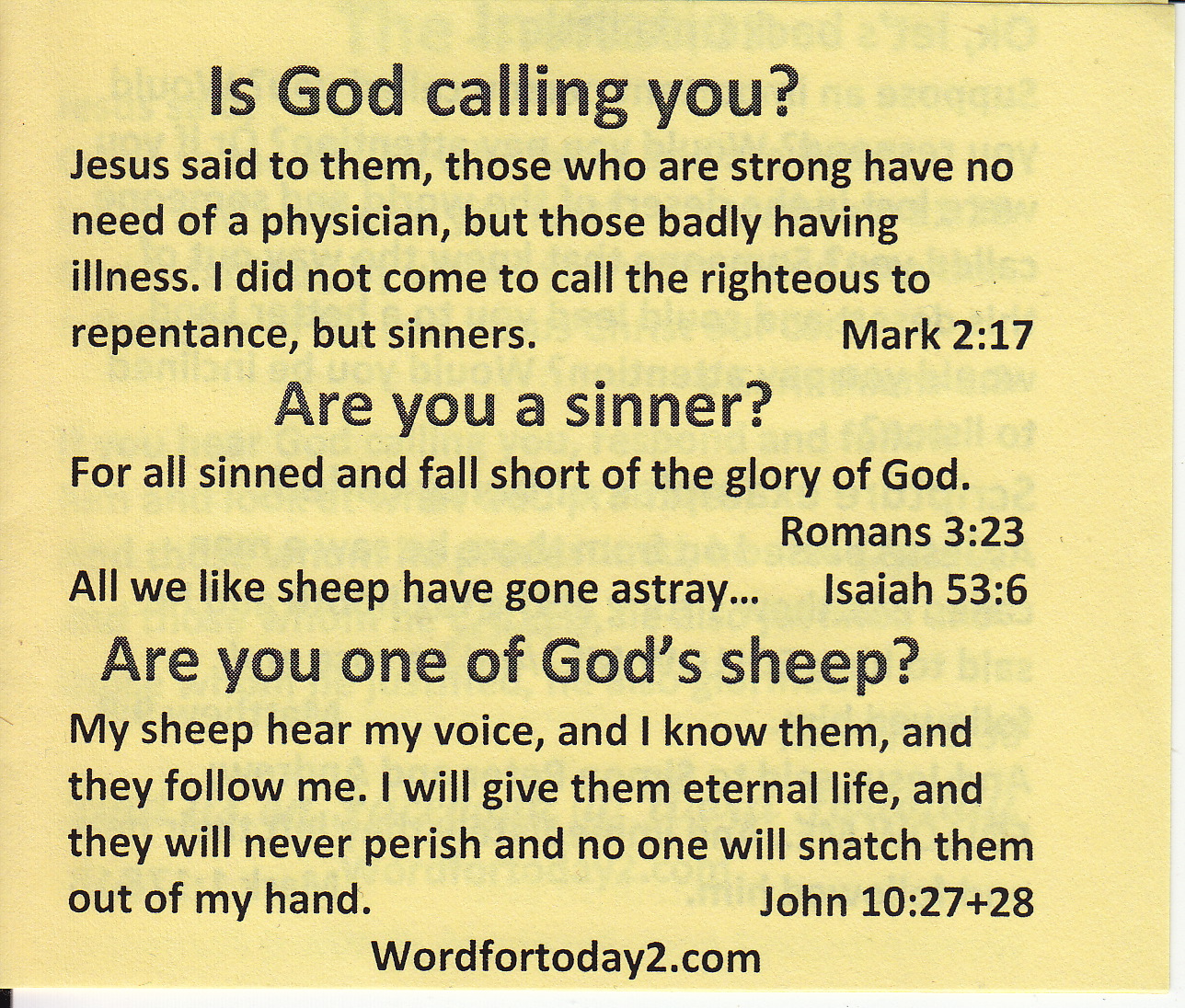
No matter how early you go to bed on Sunday night, Monday morning comes too early.  The only thing that makes my long, penitential commute survivable is the book that will take me away for an hour or more on the way to the city.  At the Port Authority Bus Terminal it’s pretty obvious that people are in no hurry to get to work as they shuffle along at a speed that says, “I’m taking the subway, so why rush?”  The subway doesn’t go near where I’m headed and it is a small hike in the concrete forest.  Actually, parts of Midtown smell more like a zoo on a Monday morning.  I try to get through as quickly as possible.  So when I guy steps in front of me I try to dodge around to catch the light across 8th Avenue.  He doesn’t move, but hands me a slip of paper and recites, “I believe in Jesus Christ.”  First thing on a Monday morning.  He got out of bed to tell frustrated commuters his personal credo.  I stuff the yellow paper in my pocket and try to avoid kamikaze taxis all the way across town.

Word4Today_0002
 
I’m always curious about those who brave the crowds of New Babylon with the news that they have the truth. I pull the paper from my pocket.  I decided to check out the website on the cheap tract.  It seems that the Church of Bible Understanding (it seemed to be all in small caps) has formed a splinter group and is wondering why, despite the grace of God, it isn’t growing like in New Testament times.  I did notice that I was visitor 2429, according to their web counter.  There seemed to be a lot of complicated history to wade through and this was a Monday morning, after all.  The main point seems to be that you don’t need all this churchy stuff, but just belief in Jesus.  Over this, it seems, churches split.
 
I have to wonder about the constantly splintering composition of the Christian tradition.  Recent scholarship suggests that there was no unity at the very beginning.  According to the Bible even Peter and Paul didn’t always agree.  Although there may have been a very roughly unified church under Constantine, the outer-lying reaches started developing ideas that didn’t always sit well with Rome.  And this was well before the Reformation.  Since Luther’s theses, the number seems to have grown exponentially.  Well, maybe not exponentially, but I am concerned for the spiritual well being of my fellow hive animals on this island made of schist.  It might be easier, though, if we agreed to disagree.  Nobody has the truth that will convince all others.  And for evangelization purposes, getting in somebody’s way on a Monday morning may not be the best proselytizing technique.


Hot Pants

Over a decade ago now, the populace was buzzing about Stella Liebeck’s suit against McDonald’s. You may remember the case. Liebeck was handed very hot coffee through a drive-up window in one of those flimsy cups, and suffered second-degree burns when it spilled in her lap. The incident spawned a documentary movie and even a New York Times retro report a couple of years ago. No doubt the injury was serious enough to cause medical treatment including skin grafts, and McDonald’s does, as we all know, process its customers just like it processes everything; you can’t serve over 100 billion burgers and be the world’s second largest private employer without process. Food injuries in a world of business feeding can be serious. “Eating out” is a way of life for many and when people eat out they take their religion with them. That’s why Hiram Jimenez’s case is so interesting.

According to the New Jersey Star-Ledger, Jimenez decided to bow in prayer over a plate of sizzling steak fajitas at Appleby’s. For those who’ve never witnessed fajitas being served, they are an attention-demanding dish, served loudly steaming and popping with smoke rising up forever and heads being turned. I suspect that’s part of the appeal. According to the paper, Jimenez bowed over his food and the grease popped, burning his face, causing him to knock the plate of food onto his lap. None of the burns left scars, and a Superior Court here in New Jersey found the restaurant not negligent as the danger was “open and obvious.” What makes this story so interesting is not the injury but the cause behind it. Food being hot is somewhat universal. Praying in restaurants, however, is an evangelical cultural practice.

Growing up with evangelical friends, I learned to pray in restaurants. (My family was of rather humble circumstances and we didn’t eat at restaurants.) Partly it was in actual thankfulness, but clearly it was partly also in show. We were witnessing by invoking our gustatory gratitude. For being literalists, we didn’t take Jesus’ injunction to go into the closet and shut the door before praying too seriously. The culture around public prayer involves bowing. The bow is a mammalian display of submission. Thy will be done. In the biblical world being thrown into a blazing furnace for public displays of faith didn’t lead to lawsuits. Everyone knows infernos are hot. I can’t help but wonder whether a martyr complex is at play here. A praying customer is doing what his religion demands and gets burned for it. Yeah, I know what that feels like. And, I suspect, so do countless others who find no hearing in courts at all.

Photo credit: Bryan Hong (Brybry26), Wikipedia Commons

Photo credit: Bryan Hong (Brybry26), Wikipedia Commons