Mothers’ Daze

Washington’s war on women has made this Mother’s Day especially poignant. As hard as it is to believe, Paul Ryan and Mitch McConnell had mothers. I can’t comprehend any male being anything but grateful and humble in a woman’s presence. Don’t accuse me of idolatry—I know women aren’t perfect. Neither are men. Especially not men. Mother’s Day isn’t an excuse to treat our moms as less-than-special other days of the year. We sometimes forget that life is a gift. And we should always say “thank you” to those who give. Pregnancy isn’t easy on a woman’s body. Indeed, until recent times childbirth was the number one killer of women. At some periods in history female life expectancy was only into the twenties. Giving birth is a self-sacrifice. We would do well to remember that daily.

Social organization outside the home was conveniently male early on, but not necessarily so. Without our mothers none of this would’ve been possible at all. Why do we fail to give back when we’ve been given so much? Yes, our moms are special to us, but women everywhere are mothers, daughters, and sisters to all of the men out there. To be human is to be both female and male. How could we ever forget that? How is it possible to use woman as political bargaining chips as if one person has any kind of right to tell another how to use her body? When we look at mom do we see only a physical body? Do we not see a mind? Emotions? Love? How can we look into the face of all that and claim that men are in any way superior or deserving of more than their share of power and prestige? Mother’s Day should be a revolution.

I don’t mean to be combative, but I’ve been pushed into a corner. From my earliest days I’ve felt women were stronger than men. Being raised by a mother on her own can be a revelatory experience. I emerged with nothing but gratitude for the sacrifices one woman had made to be called a mother. If any men have forgotten that lesson, use this Mother’s Day to repent. If you’re alive to read this, or to share it, you have a mother to thank. And tomorrow’s no excuse to forget that and act as if this one day were enough to show gratitude to those who have taught the human race to love. It’s Mother’s Day, but so should every day be.


See Around Us

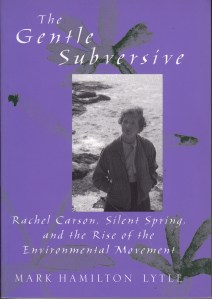
There aren’t too many people that I consider personal heroes. Those that I do have earned the sobriquet in odd ways, I suppose. That makes them no less deserving. Rachel Carson became a hero because of The Sea Around Us. Published over a decade before I was born, it was a book that I treasured as a teen—or even as a tween, had the word existed then. I was no literary critic, but her style and lyrical writing drew me in and my own love of the ocean I’d never seen was kept alive through her words. Mark Hamilton Lytle, I think, shares my evaluation of Carson as a hero. The Gentle Subversive: Rachel Carson, Silent Spring, and the Rise of the Environmental Movement brought out much of what I admired, and still admire, about her. A woman in a “man’s world,” she became a scientist with a gift for literary finesse. She struggled, she believed, and she died far too young.

Lytle’s book builds up to the publication of Silent Spring, which appeared just two years before Carson’s untimely death. I picked up Silent Spring as a tween as well, but only read it within the last few years. I knew this book had nearly singlehandedly launched the environmental movement, but as the shame of modern life constantly reminds me, I’d been too busy to read it. Born the year it was published, and not terribly far from where Carson herself was born, I had an affinity with the book that strangely kept me from it. It isn’t easy to read, even today. Especially today. With a government ignorantly rolling away all the environmental safeguards that six decades of careful thought have put into place, we need Carson now as much as we did in the 1960s. Her modern critics, as might be expected, tend to be men.

Carson showed that a woman can change the world. Those who disparage her stunning work claim that her following is a religion, not science. Carson was a rare scientist who saw that everything is interconnected. There may be some mysticism to this, but for those willing to admit it, we feel it to be true. On the eve of environmental degradation that will, in a perverse kind of justice, possibly wipe us out, we need to return to the fine words and clear thinking of one woman who took on industrial giants to give a voice to the people. We do have a right to determine what happens to our planet. Lytle makes the point that Carson was like a prophet. For me the comparative preposition can be removed altogether.


By Any Other Name

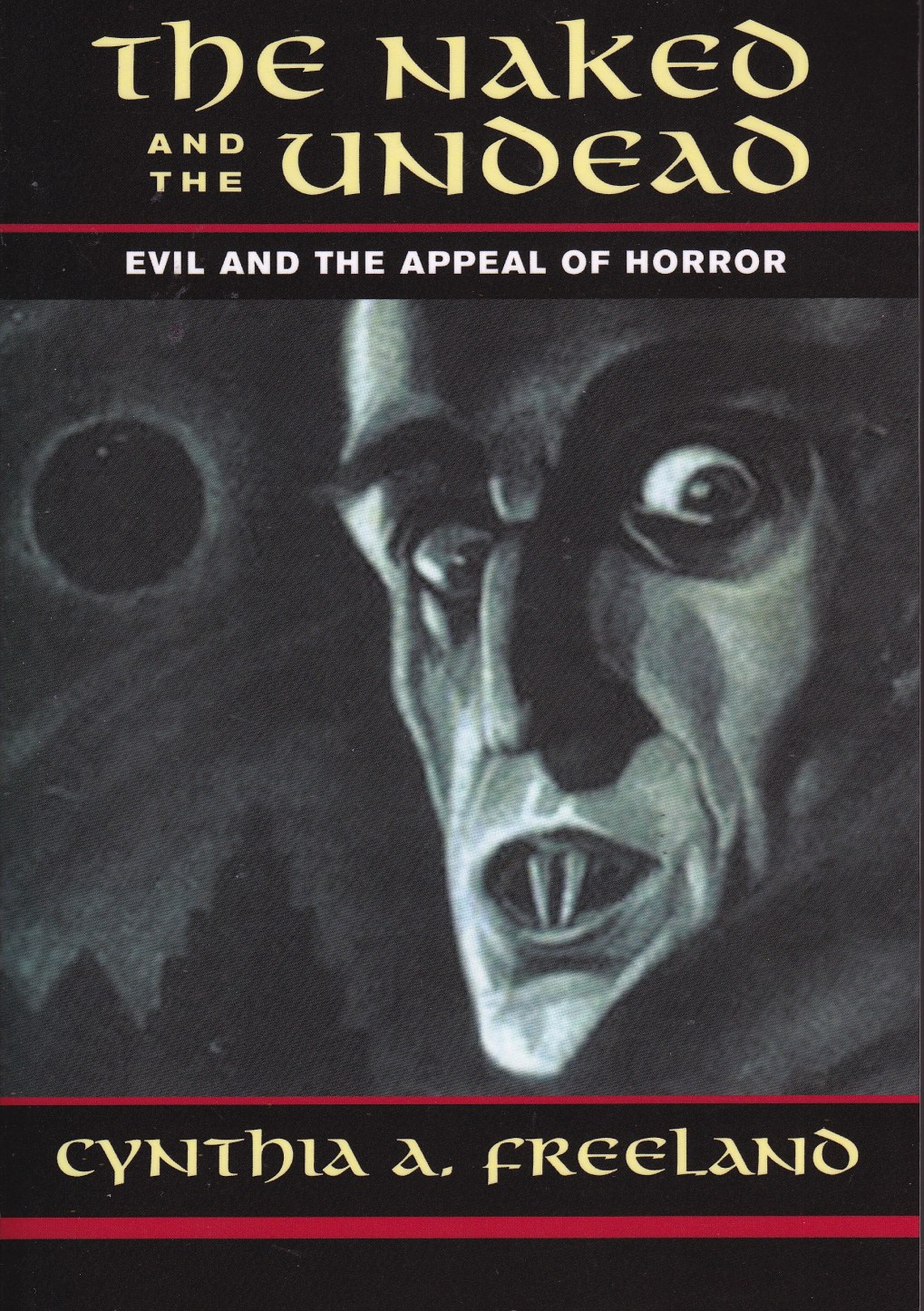
nakedundeadGood and evil. Well, mostly evil, actually. No, I’m not talking about Washington, DC, but about horror movies. Cynthia A. Freeland’s The Naked and the Undead: Evil and the Appeal of Horror is a study that brings a cognitivist approach to the dual themes of feminism and how horror presents evil. It’s not as simple as it sounds. Like many philosophers Freeland is aware that topics are seldom as straightforward as they appear. Feminists have approached horror films before, and other analysts have addressed the aspects of evil that the genre presents, but bringing them together into one place casts light on the subject from different angles. Freeland begins this process by dividing her material into three main sections: mad scientists and monstrous mothers (which allows for the Frankenstein angle), from vampires to slashers, and sublime spectacles of disaster. Already the reader can tell she’s a real fan.

One of the simplistic views of horror is that these kinds of movies—particularly slashers—are misogynistic by their very nature. Feminists, including Freeland, question that assumption. Horror is a genre with a decidedly checkered history. Some films do feature mostly female victims to male monsters. Not all do, however, and even those that do may be saying something other than the obvious. Looking for the locus of evil in these movies provides a lens that focuses the meaning somewhere other than the surface. This is one of the benefits of philosophy—probing questions may be asked and unexpected answers may result. Along the way you can have a lot of fun, too. Especially if you watch horror movies.

A large part of the criticism probably arises from the fact that film making was, for much of its earliest history, run by males. That’s not to say women couldn’t do the same thing men were doing, but the opportunities simply weren’t there. Most film makers, I expect, have trouble getting out of their heads to think about how someone of a different gender might perceive this kind of movie. Fear, we are told, is “coded” feminine. It seemed natural to such film makers to put the female in peril since both women and men would respond to it. Since then it has become clear that fear isn’t coded for gender. Indeed, one of the hallmarks of modern horror is that we all have cause to be afraid. Fear is no respecter of gender. Freeland’s analysis, now getting on in years, correctly looked ahead in many respects. Especially concerning the ongoing presence of evil.


The Wicked Man

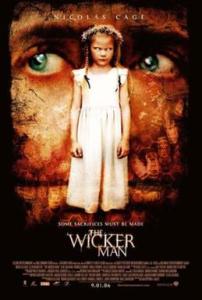
I confess, it was a moment of weakness. Or I could say that it was dedication to research. In either case, I subjected myself to watching the remake of the 1973 classic, The Wicker Man. The reviews that I’ve read over the past decade since its release had warned me not to subject myself to it. Not only did I, but I had my wife gamely watch it with me. If you plan to watch the flick but haven’t, I’ll first of all beg you to save your time and secondly warn you of spoiler alerts. So here goes.

By Source, Fair use, Link

By Source, Fair use, Link

In a movie that may be either pro-feminist or misogynistic, depending on which way you look at it, this version of The Wicker Man takes place in the United States. We’ve got all kinds of New Religious Movements in this country, so that much is believable. The film has a group of women who mute, deafen, and enslave their males moving from Salem, Massachusetts, across the country to Puget Sound where they can find an island to be left alone with their rituals. Superfluously adding an “s” to the original’s Summerisle, they come up with the sloppy-sounding Summersisle where they can raise bees. They worship the great mother-goddess, which is cool enough, but their religion appears to be cobbled together in a way that suggests those responsible for the movie didn’t do their homework. Although Sister Summersisle (five “s”es—count ‘em!) claims this to be a Celtic religion there are merely the weakest echoes of such.

To make matters worse, Edward Malus goes around beating up women when they get in his way. Yes, he is the unwitting victim—we’ve seen the original and know how this plays out—but it makes the viewer uncomfortable watching this unsympathetic protagonist punching, kicking, and even bicycle-jacking with a gun, the women of the island. A man comes ashore and the first thing he does is try to take over. Were there evidence of a deeper plot here it might suggest that this was intentionally written into it. As it turns out, however, as we enter a fearful era of the rich white man’s revenge, such scenes only suggest that Mr. Malus had it coming. Perhaps the movie is prophetic after all.

I really don’t recommend spending your time on the remake of what has become a horror classic. If you’ve seen the excellent original, you already know how it ends. And despite his brusque manner Neil Howie didn’t shout invectives at women or punch them in the face. In short, he took his fate in what might be a way that is also prophetic.


True to Nature

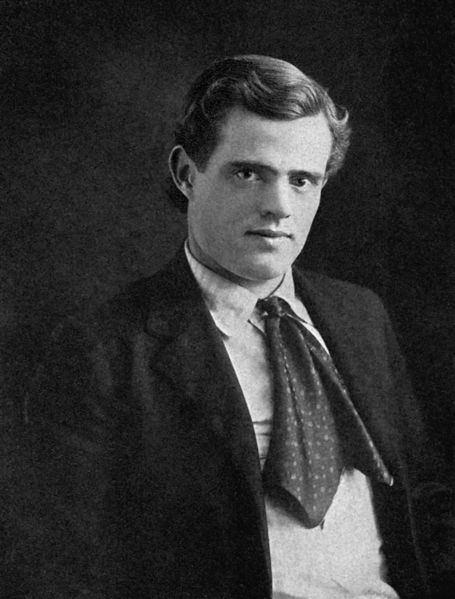
A friend recently sent me an article on Jack London from smithsonian.com. As the article by Kenneth Brandt makes clear, London is an author for our times. Someone who might truly be called a populist, London, like many of us born in the working class, had an epiphany. Perhaps his came earlier than many, but at the age of 18, while working laboring jobs, he noted that he “was scared into thinking.” He decided, before the idea of sending all kids to college had caught on, that he should acquire an education. In the words quoted by Brandt, he wanted to become a “brain merchant.” Certainly London’s works need no introduction from a guy like me. Robust and masculine, his stories are those of man pitted against a nature that is often out to crush, freeze, or starve him. Today we need to loosen up those pronouns a bit. Women, who’ve arguably had it tougher than men for all of biological history, have had to struggle for survival too. In the current political climate we all need to remind those who substitute testosterone for brains that we all share human rights.

455px-jack_london_young

The Religious Right, or “alt-right” as they seem to prefer these days, wasn’t always a fetus farm. It has been historically documented that it was Francis Schaeffer, erstwhile hippie and free thinker, who when he got abortion stuck in his craw, decided that men had to protect the unborn from women. He seemed to have forgotten whose gonads planted that seed in the first place. Prior to Schaeffer Christian saints tried to avoid sex all together. Among the original “abstinence only” crowd, some of the more zealous put their money where their testicles were and castrated themselves. Ah, men were real men in those days. Today masculinity means ganging up on women and grabbing them by the Call of the Wild, apparently.

Like London, I think we all need to be scared into thinking. We’ve let a wildly distorted view of humanity—one-sided and with dangling evidence of gender loyalty—to steal the White House from the woman who thoroughly won it from the vox populi. Where is Buck when we need him? London knew, as evolution repeatedly teaches, in Brandt’s words, “abusive alpha males never win out in the end.” I say that “swing states” should look carefully at that hanging chad. In the meantime, while the fat cats bicker and argue over the best way to suppress females to make themselves look bigger, I think we should all read again about what happens when Spitz meets Buck. If you haven’t read The Call of the Wild before, it’s time to do so now.


By Their Love

One of my high school teachers—I don’t have to say who; if you attended my high school you’ll already know and if you didn’t you won’t know him anyway—wrote in my yearbook, “I hope you get what you deserve.” I wasn’t very good in this teacher’s class, but he explained to me, “I sign everyone’s yearbook the same way. If you do well, I hope you get rewarded. If you don’t do well, I still hope you’ll get what you deserve.” This teacher had a reputation for being somewhat of a philosopher, and his words have struck me as particularly appropriate for this moment. We, in the cosmic scheme of things, get what we deserve. As a nation I guess we deserve a First Lady, in an example to young women everywhere, has appeared naked on the internet. Her husband married her after two previous women and has made his views on gender perfectly clear. My conservative friends went to the polls knowing that. I hope they get what they deserve.

The problem is the rest of us are stuck with him too. I’ve lived through bitter, spiteful campaigns before. The genteel art of campaigning is thoroughly deceased. 2016, however, is the first year that I saw pure hatred as a political platform. And it wasn’t on both sides. Trump made of virtue of hating one’s neighbor and claimed the election was rigged until he won—then it was, of course, impossible that it would’ve been rigged. Former First Lady Hillary Clinton, who kept her dignity throughout, never stooped to inciting hatred of fellow Americans. It likely cost her the election. To the people now saying this is just politics and stop complaining I say we have all been victimized and we all ought to feel very ashamed. This election wasn’t about money. Or financial positions. Or foreign policy. It was about hate.

DSCN4694

Hate can only be counteracted by love. I have seen many women responding to a man who considers them mere sexual object by reaching out in kindness to strangers. Women organizing to try to make this country a more positive place. Meanwhile, I hear men I know saying at last we have a strong leader who will bring them prosperity. If money is what you care for, you have my pity. This country is about freedom, equality, and fairness. All of that was jettisoned last Tuesday. Even those saying “get over it” are doing so with a smugness that is a thin veil over intolerance. I’ve never carried on with frustration so long after an election before. That’s because never before has an election—no matter which party triumphed—been won by a platform of evil intent. My grandmother, a Teutonic matron of occasional Valkyrie disposition, used to sum it up well when we boys were getting out of hand. “Schäme dich!” she used to scold. I know a country that could use her words right now.


Viewpoints

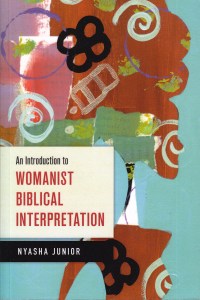
WomanistI first heard of feminism in seminary. Growing up as a poor, uneducated fundie in a small town, where would I have learned about it? I came to it naturally, though. Being raised for several years by a single mother I knew that women were just as smart and resourceful as men. I guess I was surprised to learn that others didn’t see it that way. This was in the eighties and angry feminism was around—I was occasionally attacked in class for my naiveté. After all, I had attended Grove City College not because of its conservatism but simply because I didn’t know any better. This is a lengthy preamble for a book that would’ve helped me a lot as a youngster, although I wouldn’t likely have known to read it. Nyasha Junior’s An Introduction to Womanist Biblical Interpretation is a very useful guide to those who don’t really know what womanism is.

I’ve been in biblical studies long enough to know that I really don’t know much. There are critical approaches to the Bible I’ve never even heard of. Not too shabby for a field that has already been written off as moribund by the academy. In any case, the title “womanist” doesn’t really say much beyond an implication of gender. Junior’s book explains that. Womanism didn’t really grow out of academia as much as it did out of African American women’s experiences. I admit that it took this book to teach me that. What is really being addressed, however, is how womanism is becoming, or is starting to become, an interpretive school. The Bible is in the public domain. It’s anyone’s book. Indeed, it strikes me as odd that translators copyright their work, especially if they believe it is the word of God. The word of God comes with a price tag, I guess. African American women have long been readers of the Bible. What, though, characterizes this method?

That’s the question with which Junior wrestles in this informative book. Just as being female doesn’t make a scholar a feminist, she notes, being an African American woman doesn’t make one a womanist. And we all approach texts with a method, explicit or not. “Objectivity” doesn’t really exist and even literalism is an interpretive approach. Junior traces the history of both feminism and womanism, especially in regard to biblical interpretation. Her struggle should reflect that of any scholar—how do I regard the text regardless of my demographic? While many churches have slumbered in doctrinal dreams, progress in reading the Bible has marched forward. The real danger often comes in the form of labels. This book, written just as a method is starting to be formed, is a trustworthy guide to both the history and to the larger questions.


Spirit of Equality

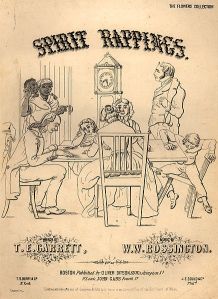
A few weekends back I watched the new Ghostbusters in the theater. Since tuition bills loom larger than life, it takes a powerful draw to get me to spend the money to see a movie in its natural setting. As my regular readers know, I loved it. Critics have tended to, well, criticize the movie, largely for its main drawing feature—the female leads. A thoughtful piece in by Colin Dickey in New Republic points out some of the unusual dynamics at play here. Looking at the history of Spiritualism as the basis for the modern interest in ghosts, Dickey suggests that women have been involved in the long-term fascination with the dead from the beginning. Their motive, however, was generally communication. Women wanted to relate with ghosts to make a connection. The original Ghostbusters movie represented a male, rationalistic approach to ghosts. As Dickey points out, instead of communicating, the men hunt and trap rather than trance and rap.

436px-Spirit_rappings_coverpage_to_sheet_music_1853

Ghostbusters, in all three cinematic presentations, is for laughs. Sometimes classified as supernatural comedy, the film is meant as humor while, admittedly, leaving the door creaking open for some serious thought about the implications. In a reductionistic world there’s no room for ghosts. It’s not possible to say, scientifically, what they might be. From the perspective of traditional belief, however, ghosts are the lost spirits of the departed. Traditional Christian theology places the dead squarely in Heaven or Hell, and they shouldn’t be wandering around down here. That hasn’t stopped people from reporting ghosts. They’ve been recorded almost as long as there has been writing. Today “Ghosthunters,” arms defiantly crossed, use “science” to try to prove the entities exist. This is lightyears from the traditional seance. A ghost under a microscope isn’t very scary.

One of the reasons I found the new Ghostbusters so compelling is that it managed to tiptoe that line between science and spirit that is so rare in the real world. The women, downgraded though they are in the story, are academics. They know, and experience, the dangers of taking haunting seriously. The movie is seriously funny. Like most truly funny efforts, there is a great deal of truth hidden in the humor. Dan Aykroyd’s cameo is one of the scenes that plays on its own loop in my head. “I ain’t afraid of no ghosts,” he says before he drives off toward Downtown. Women, in the film, have a healthy respect for the departed. Not exactly afraid, but not exactly unafraid, they handle ghosts as persons. This may be one of the points Dickey is making in his article. To understand a human one must be human. Spiritualist or Ghostbuster, women have always been superior guides to what is truly important. If only men could learn to listen.


Equal Frights

Ghostbusters_2016_film_poster

Working in Midtown Manhattan, it’s rare for a week to go by without passing through a street that’s set up for a film or television shoot. New York isn’t the largest city in the world, nor does it have the tallest buildings, but it is a city instantly recognizable at a glance. It is also a haunted city. The original Ghostbusters was a New York movie, but the reboot may be even more so (although largely shot in Boston). I’m having difficulty remembering the last time I enjoyed a movie so much. I laughed until the tears came, and the theme of spirits loose in the city appealed to that part of me that loves the strange and unusual. With several nods to the original, and cameos from the surviving cast, this is a child of love that outshines its parent. It’s almost as if it makes the original even better than it was to begin with. This is a movie with a mission.

Clearly one of the factors in making the film so good was the fact that women were the leads. They show at once the empathetic, and funny, intelligent, and challenging—roles that women routinely both possess and face. The characters have trouble being taken seriously by the males around them, yet they are fully as qualified as and indeed, know more than the establishment. Discouraged and downtrodden, they press on, saving New York City. This may be the first time women have been envisioned is such a salvific role. They are scientists, scorned for their brains and for their gender, and yet they overcome.

Sure, there’s fantasy involved here, but fantasy with a message. I applaud this movie that not only entertains, but also makes profound statements at the same time. It gives a rare glimpse of what the world would be like if men were treated with the demeaning outlooks that they already frequently give to women. It is a feminist movie, but not an angry one. I left the theater genuinely elated. Of course, I loved the first Ghostbusters, despite all the cigarettes and sausages. Still, those who made the movie had the grace to bless this new venture that takes viewers into a world where we rely on women to solve the problem. Once it’s solved, however, they are shoved into the background so that the powers that be can take the credit. It is a movie for our times. I would’ve gone to see it for the ghosts alone. I came out, however, knowing that I had seen something not only enjoyable, but which might, if taken seriously, begin to change attitudes and prejudices which haunt us to this day.


Being Humanity

KindnessOfStrangersWhat do you want to be when you grow up? The question kept recurring as I read The Kindness of Strangers. The name Kate Adie may be more familiar to readers from the UK than to those from the US. While spending three years and a bit in Scotland, my wife and I grew accustomed to hearing her name as a reporter with the BBC. I’ve just finished reading her memoir and it brought to mind several points that hit quite close to home. Apart from being engagingly written, her biographical essays highlight the difficulties women still face in much of the world. As a journalist, Adie traveled to many vexed locations where some expressed surprise that a woman would have such freedom as to run around with men, investigating, reporting, and being seen by many, many viewers. Meanwhile, those she sojourned among had to deal with oppressive regimes, low standards of social justice, and, not infrequently, the fear of rape. It is a poignant and at times maddening account. Men the world over seem to share a horrid, deeply ingrained and reinforced concept that women are somehow there to serve them. Here we are in the twenty-first century and we’re still struggling with basic biology.

If I might tear myself away from that particular observation for a moment, I also found Adie’s firsthand accounts of the atrocities she witnessed deeply troubling. In this day of Holocaust awareness and the belief in human dignity, it is distressing to see how cheap life is under many governments in the world. How humans can be so inhumane boggles the mind of those with any sense that we’ve somehow evolved. Often the hatred is based in differing religious outlooks, but often religion is only an excuse. The offending religions that are touted almost all teach the descent treatment of your fellow human beings. Sadly, nothing appears to have been learned from the all-too-intentional violence of the past century. The real issue, reading between the lines, is power, not faith. It is easy to have a scapegoat, and some analysts (not Adie, I would emphasize) like to suggest a simple solution by placing their hands on the head of religion and confessing the deadly sin of being human over it.

The book, I should add, is not all gloom. Adie is witty, sophisticated, and a charming writer. One of the positive takeaways I had from her life story is that the question “What do you want to be when you grow up?” is all wrong. Adie never wanted to be a journalist, but through a series of circumstances eventually found herself one. A much decorated and honored one, no less. This is a lesson for our time. The old stabilities of choosing a career and staying with it seem to have eroded from beneath us. It is increasingly difficult to plan ahead for an uncertain future. Adie is a fine example of how to adapt along the way. More than that—and men pay attention here—she’s an exceptional example of what it means to be human. This is what we should all strive to be when we grow up.


Mother Divine

GoddessReligions, by nature, exercise a distribution of power. That power is perceived to be on several axes at once, the “vertical” is intended to represent the power of deities over humanity, and the “horizontal” is that of humans over humans. Historically all we can know is the latter dimension, and during the time of written records, that has been a male-dominated plane. Several years ago a theory developed which would be wonderful, were it true. The goddess hypothesis suggested that before male dominated civilizations took over, culture was run in a more egalitarian way and the goddess was the main deity. Since this theory sets itself before recorded history, artifacts had to be interpreted as evidence, and certainly such bits and pieces of past times have emerged. The goddess interpretation has, however, has faced severe criticism, and not just from male scholars. There are still those who find it tenable, and one such pair is David Leeming and Jake Page. Goddess: Myths of the Female Divine was a book intended to demonstrate the commonality of goddesses, but it didn’t always rise to the challenge.

No doubt, the motivation behind the book was noble. It is important to show that goddesses have been just as important as gods in the history of mythology. The problem emerges when the evidence is forced into a mold it doesn’t fit. “Goddess” is not a singular figure, any more than “woman” implies that all women are the same. Each chapter retells stories of various goddesses, and again this is problematic. Specialists in any one tradition are sure to spot errors and oversimplifications that suggest descriptions of other goddesses may not be completely trusted. There’s an overcompensation here. Men, at least some men, wish to show their support of women by suggesting that women once held esteemed places in the cult as well as in the throne room. What we know of history, however, gainsays this concept since, in one form or another, might has always made right.

Goddess is one of those little reference books whose main value lies in bringing previously disparate characters together to show some commonality. There is utility in placing goddesses side by side to form a phalanx of resistance to a hierarchy that has established itself as normative, backed by a more powerful male deity (or deities) in the sky. Goddesses have been part of religious thinking from the beginning. The early abstractions of natural powers, reason would seem to dictate, would have involved both masculine and feminine powers. We don’t know how such societies were organized, but the divine female was clearly present. By consciously acknowledging what we know, and creatively applying such knowledge, there may be a hope for the future of religions that is far more certain than a reconstructed past.


How God Became Male

GodsDoodleWhat is gender? Okay, we all know about the mechanics of the thing, but gender is more than just sex. Indeed, it is a psycho-social construct that is difficult to pin down. Sexual reproduction is very common in nature, but we don’t really speak of gender among our fellow animals. Perhaps the decisive factor, in the human realm, is religion. Clearly religion is not the only element, but I often wonder if gender-based commandments didn’t lead many cultures into their current arrangements. The thought occurred to me as I read Tom Hickman’s God’s Doodle: The Life and Times of the Penis. As I informed students in my classes, religion has always shown an interest in sexuality, particularly on providing limitations for it. A recent issue of Christian Century has a cover story about marriage, noting that the widespread prohibitions about homosexual matrimony come from a religion that forbids it. When your stakes are eternal, many people won’t argue.

But I wonder if it goes deeper than that. Gender roles have traditionally been regulated by societies, often on the basis of their religious outlook. Meanwhile, biology, as Hickman reminds his readers, is somewhat more ambiguous. The line between the genders is somewhat of a line in the sand, easily erased. Humans come in a continuum of orientations and biological equipage. Those who don’t match the defined parameters have difficult questions to ponder with a male deity who could think of only two genders. What is a male without a female? Can a male deity exist without a goddess? What, otherwise, is the purpose of a deity’s gender? Wouldn’t a inter-sexual creator may more sense?

Male social behavior has often drawn its entitlement from a bad theology. When feminists first began to raise questions, the orthodox were quick to point out that Jesus was clearly male. As Hickman notes, however, representing him naked on the cross (as crucifixions were historically done) is still rare. Sounds like an effort at keeping the status quo tipped in the favor of one gender that doesn’t want to admit that it slowly morphs into another. We all begin life female, as biologists now understand. Some retain their original gender while males evolve into something different. And with that evolution they tend to make many unsubstantiated claims about the right to make decisions for the other half of the human race. Gender is a lot more complex than many religions would have us believe. Until we learn to treat all people as people, we will still have to ask, and will never adequately answer, how God became male.


Theatrical Desert

LawrenceOfArabia

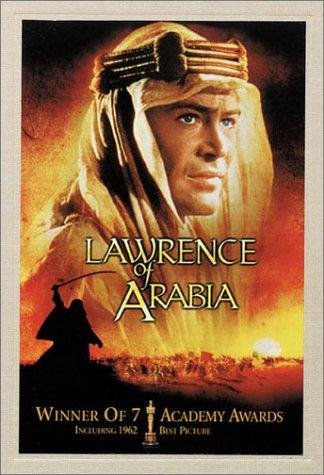
While the appellation T. E. Lawrence may leave many scratching their heads, “Lawrence of Arabia” will still garner nods of recognition. Of course, having a major movie made after you is a pretty good way to retain currency. Being a student of the history of religions, focusing on those of ancient West Asia, I read about Lawrence as I was doing background reading on what would eventually become known as the Middle East—another contrived name. Lawrence, who apparently disliked being called, “of Arabia,” along with Gertrude Bell, played a formative role in what would become a theater of European entanglements that continue to cause trouble to this day. The First World War gave opportunity for colonial interests to play out in the tribal polities that had worked in that part of the world for centuries. The fact that many of these countries are oil rich didn’t hurt.

Yesterday, starting very early, my wife and I settled in to watch the movie Lawrence of Arabia. Since it was released the year that I was born I might be forgiven for missing the first run in theaters, but I really hadn’t had the opportunity to see it before. Sure, you can pick up the DVD in many bargain bins at video stores—now also becoming rare—but a day with four free hours to watch a movie is also an endangered species. What struck me the most about the movie, after the commitment it takes to spend so long watching it, is that the few women who appear in it have no lines. Or lives. No woman speaks for this entire film. Although the portrayal of the Arabs is positive, the utter invisibility of half of all people on the planet is somewhat bewildering. Although not shown in the movie, Lawrence was known to be able to pass himself off as a woman, it is said. Yet the real women are missing, as if their stake in the world following the war just didn’t matter.

It may have been intended as a man-cave of a film—fighting scenes (although mild by present-day standards), things blowing up, and an awful lot of masculine bravado make up much of it. Still, men are not known for sitting patiently while minutes and minutes of visually lush desert scenery and blur shots of the sun take up so much of their weekend time. Yes, women did not fight in the field during the war, but they were an important part of the story. Gertrude Bell, as I mentioned, was a key figure in the drawing up of the boundaries of the Arab world. The movie isn’t about her, nevertheless the women show up in numbers only twice, once to wave goodbye the to army off to take Aqaba and then as nurses to help the overflowing hospital in Damascus. In neither scene do they talk. Perhaps it is intentional, but such a tactic made the desert seem very barren indeed. War has victims of all genders.


What I Mean

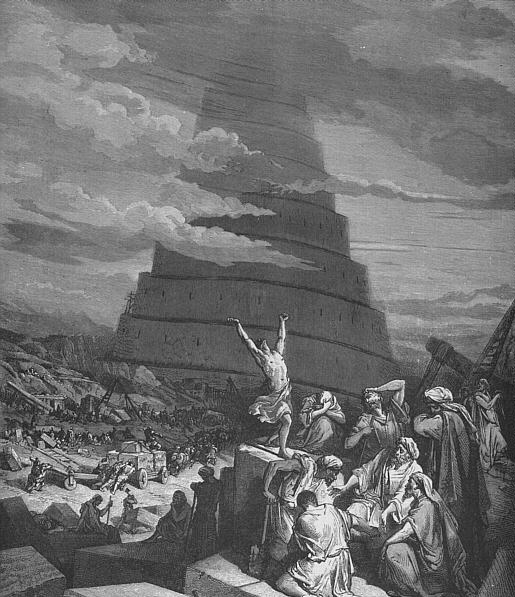
It might seem, in this world of constant misunderstanding, that we might get along better were it not for the Tower of Babel. I mean, we call it a language barrier, right? So why are some people upset about the extinction of languages? Rebecca Morelle writes of how economic success may be behind language extinction in an article on the BBC science and environment page. There are some—many entrepreneurs—who see no cause for mourning. I have to wonder, though. I cut my academic teeth studying dead languages. Koine Greek and “Classical” Hebrew are no longer regularly spoken, and really haven’t been for centuries. Then I moved on to rediscovered languages: Ugaritic, Akkadian, Epigraphic South Arabian, each sounding more exotic than the last. Would world commerce exist if we were all hampered with Sumerian? We got on fine without the wisdom of the past—why should we even care?

I see politicians, mostly male, arguing in the “most advanced” government in the world, that women shouldn’t be given the full benefits of health care because they misunderstand the Bible. It is easily done. As I told my many students of biblical Hebrew over the years, language is not just words. Languages are ways of thinking. No translation is truly perfect. If you want to understand the Bible, you must do it on its own terms: learn to conceptualize in Hebrew and Greek, then come back and tell me what you think. It is, however, much easier to let King James do the talking. A man’s man. Just don’t ask what he did after hours, right Robert Carr? Something seems to have gotten lost in translation.

Languages are more than just ways of expressing ideas. They are the basis of cultures. When languages die off, cultures soon follow. Do you suppose that everyone on Papua New Guinea goes to work wearing a tie? Just give it some time. We call it progress, and it is inevitable. It has happened even closer to home, for those bound to the States like me. It used to be that academics had a language that didn’t necessarily included economics. The rarified domiciles of words like trenchant and salient and boustrophedon soon became superannuated. What are you trying to sell here? Dictionaries? As business marches unstoppably ahead, consuming all in its path, our lesser languages quietly die. With those languages ideas also pass away. With each demise, the world becomes a poorer place. Maybe it’s time to start building a tower.

Confusion_of_Tongues


Men Without Hats

Do you want to start an argument? Mention hijab in a Christian environment. Some tempers will likely flair. The idea that a patriarchal religion would tell women to cover themselves suggests something sinister, doesn’t it? The other day I came across headcoveringmovement.com. There are, as I have come to know, many Christian groups that consider Paul’s directive for women’s headwear as, well, gospel. Commentators still spar about why Paul insisted that women cover their heads in worship. Adding “for the sake of angels” only evokes more convoluted imaginations. As any stroll through Manhattan will reveal, many Jewish men also observe head covering. What is it with bare heads, gods, and angels?

No doubt, in cultures where men are expected to restrain themselves less than women, hair can sometimes be seen as sexually provocative. (I’m not excusing, just observing.) Most men will eventually experience nature’s tonsure in some form or another, and perhaps this knowledge makes feminine hair more alluring. None of this, however, answers the question. What is so hubristic about uncovered heads? I’m not authorized to speak about fashion, but I feel confident in asserting that in many periods of human history, hats were the norm. Look at old portraits. What did Martin Luther or John Calvin look like without their ubiquitous hats? Did they serve to cover bad theological hair days? Or was it just the climate? Distinctive hats have been used to identify social classes and professions. We still use the expression “putting on my [chose a noun] hat.” So what’s all this with head covering for women?

“The wearing of fabric head coverings in worship was universally the practice of Christian women until the twentieth century. What happened? Did we suddenly find some biblical truth to which the saints for thousands of years were blind? Or were our biblical views of women gradually eroded by the modern feminist movement that has infiltrated the Church…? – R.C. Sproul.” So states Headcovering Movement’s homepage at the date of this writing. There can be little doubt about what’s behind this scheme. I recall a phase when my mother wore headscarves to church. Many years later, even in high church Episcopalian settings I’ve seen women walk in with what looked like lace doilies on their heads. Is there an agenda here? I can’t speak for Muslims, but it seems that Sproul believes the rightful place for a woman is beneath a man. Theology in the service of chauvinism. Just try to read 1 Corinthians 11 and come out without a headache. The saint’s logic here is so confused that I want to pull my hat over my eyes. Or I would, if I wore a hat.

Photo credit: Themightyquill, Wikimedia Commons

Photo credit: Themightyquill, Wikimedia Commons