Medical Emergency

Fire drills.  We’ve all been through them.  When an alarm goes off legitimately, people don’t know what to do.  At least not at first.  I was accompanying my wife for a routine colonoscopy.  We were in the recovery room, and she was still coming out of anesthesia when I thought I smelled something chemical-like, almost the caustic kind of petroleum-product smell with none of the sweet undertones.  Now, I have no idea what they use in facilities like that, so I said nothing.  About fifteen minutes later the fire alarm went off.  My wife had already gotten dressed, thank goodness.  The staff was all walking around, apologizing to everyone for the noise.  After about five minutes, the surgeon came over and said, “We have to go outside.  Let me go over this briefly.”  He did and I helped my wife down the stairs and outside.  Firetrucks came.

This was something new in my experience.  Hospitals and clinics are buildings, with all the usual limitations of physical structures with complex machinery in them.  I’d never been in one when an alarm went off before.  There’s always a period of disbelief among staff as well as patients.  I wondered what they did with those in the midst of a colonoscopy.  They’re in a somewhat delicate condition to be rolled outside (and it was none too warm that day).  I can imagine how I might’ve panicked had my wife not yet been in recovery.  As it was, we thought we were clear to leave, so we just came home as others less fortunate stood outside awaiting the all clear.
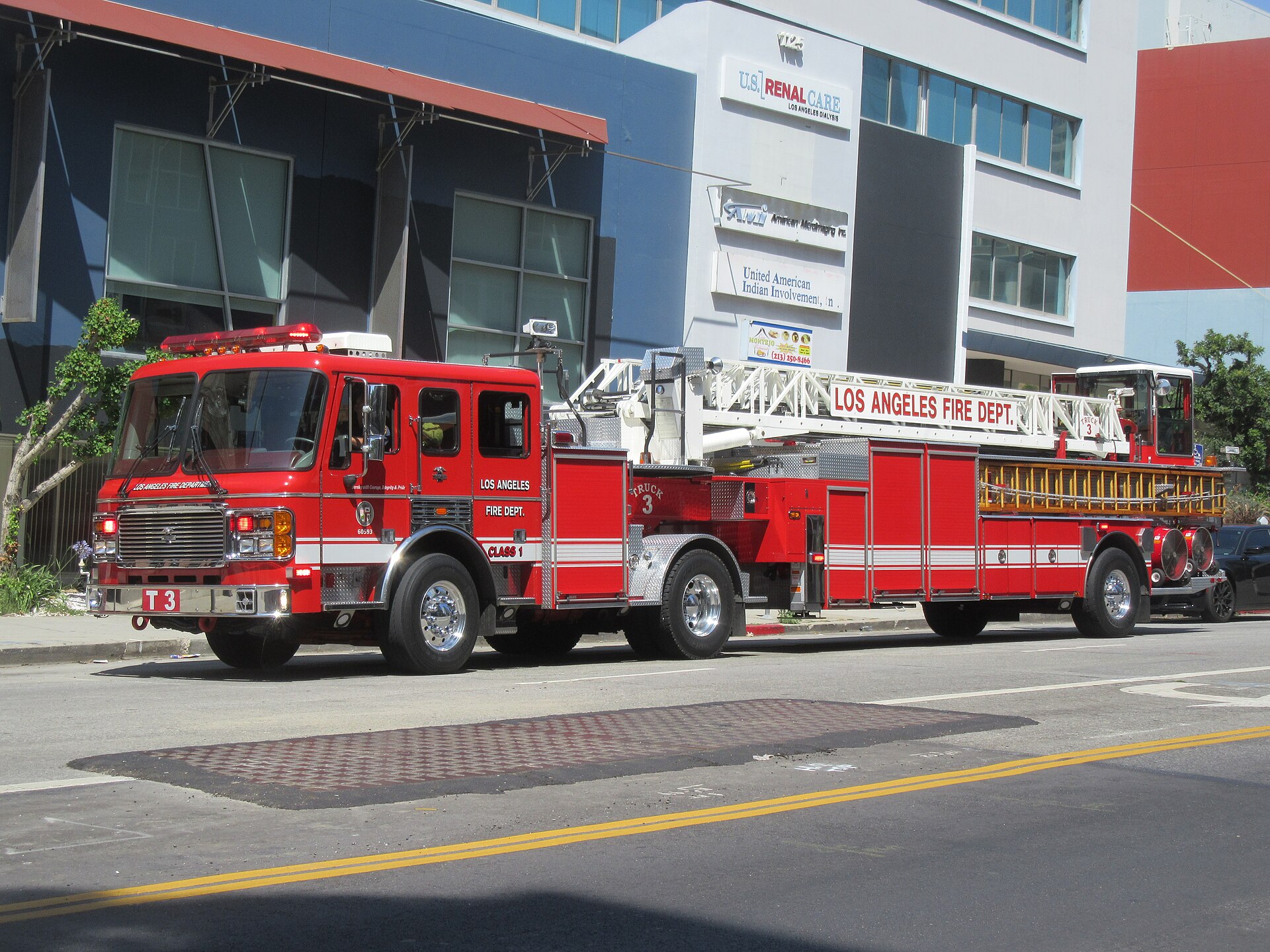
Image credit: Jason Lawrence,  Creative Commons Attribution 2.0 Generic license, via Wikimedia Commons

After a medical procedure we’re used to being able to ask questions.  Take your time.  Come out of anesthesia.  After we got home I could find nothing online about the incident.  It did seem to have “news story” written all over it.  Or “horror story.”  I’ve watched enough MASH to know that doctors sometimes work in less than ideal conditions.  And there must certainly be standard procedures for what to do when the unexpected happens.  Colonoscopies are one of those highly recommended procedures that compromise dignity like few others.  As such, being interrupted by a fire drill puts this particular procedure into a class of its own.  I never look forward to them (few do) but now it seems I have a new worry to add.  What was really missing was a sense of closure.  Too often these days transactions of all kinds are left open-ended.  As the firetrucks came we asked ourselves, is it okay to go?

Looking Back

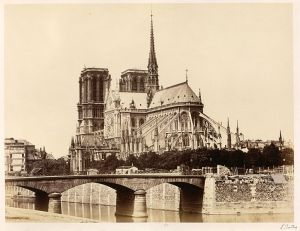
Image credit: David Hunter McAlpin Fund, 1944, via Wikimedia Commons

Like many I’m shocked and saddened by the fire at Notre Dame cathedral.  At the same time a recurring theme of this blog has been that modern people are disinclined to pay for the past, and some analysts are saying that lack of funds for regular upkeep of the cathedral over many years are at least partially behind the tragedy.  Monuments that have stood for centuries require constant care, but it’s so easy to take them for granted.  Cathedrals aren’t just religious buildings.  They are humanistic in the sense that they stand for our natural tendency to create great markers of our time on earth.  So very human.  Many human acts we wish to erase, but some represent a loss to the very soul of our species when they’re gone.

Even in this secular age the great cathedrals of Europe are on the agenda of many a traveller.  My own recollections of Notre Dame have grown hazy with the years—I do recall the stolid towers and flying buttresses.  Even the doubtless inauthentic but still ancient crown of thorns.  The famously secular French stood in the streets and sang hymns as the fire raged. 

My single trip to Paris was followed by a stop in Germany where we saw towers of cathedrals left standing even when the remainders of the buildings were gone—bombed out during World War Two.  Asking a friend about it we learned that the Germans felt these skeletal churches were appropriate reminders of the horrors of war.  No masses could be said in them ever again, but they stood, in their ruined majesty, as their own kind of monument to human folly.

We live in a post-cathedral world.  Symbols of the unity of a nation, demanding resources beyond what could really be afforded, cathedrals served to unite.  Citizens of London, it is reported, shoved bombs off St. Paul’s Cathedral during the Blitz.  Religion today has been turned into a means of dividing and conquering people.  It builds border walls rather than cathedrals where those of any faith might be allowed in and invited to wonder.  Images of that famous spire helplessly falling amid the flames suggest the shock of the twin towers collapsing.  Although the structure survives, much has been lost forever.  And if people react like they are wont to do, there will be outpouring of resources to rebuild and restore, but only for a while.  We tend to think that looking at the past is frivolous.  Yet, my photos of Notre Dame remind me that a life spent looking back may well be the only kind worth living.