If You Do

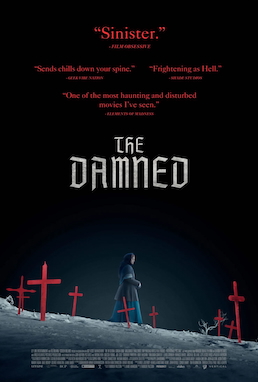
Folk horror is particularly open to religion.  The powerful Euro-horror film, The Damned, is nearly worthy of Robert Egger status.  Indeed, the movie reminded me of Egger’s work, so perhaps Thordur Palsson is his Icelandic incarnation.  Set in a fishing station in a remote arctic bay in the 1870s, the owner’s widow oversees the operations of six fishermen and the woman who cooks and keeps the house.  Her husband died at sea the previous year, and the fishing has been very poor, threatening their existence.  They need to eat their catches, as well as their bait, trying to stay alive until spring.  Eva, the young widow, sees a ship foundering on the distant, jagged rocks.  The men insist that if she orders them to help, their food supplies will quickly be depleted, and the rescue operation would put them all at risk.  Lured to the wreck by a food barrel that has washed ashore, they encounter more men than they can keep and have to fight them off of their small fishing boat, killing one in the process.

The helmsman of the boat falls overboard and drowns as the survivors try to climb aboard.  The small boat manages to escape, however.  Helga, the housekeeper, warns Eva of the draugr, a monster of Nordic folklore that is a kind of zombie.  If it gets into your head, she warns, it will led to death.  Skeptical of folktales, Eva begins to change her mind as her small group of companions begins dying off.  Helga disappears.  One of the men dies after being stopped from killing a companion.  Eva is now left with only four men.  One of the men insists they are paying for their sin, and begins erecting a large cross as an act of penitence.  After seeing a man in the mist, the new helmsman dies by suicide.  Now convinced the draugr is real, Eva leads an expedition to find and destroy it.  This leads to the death of yet another crew member.  The three remaining people decide to flee by night in the boat.  Eva, however, encounters the draugr in the cabin and destroys him by fire.  A spoiler follows.

The shocking end reveals that the draugr was actually a survivor of the shipwreck and his presence explains the “supernatural” events they believed the monster caused.  Eva, delusional, kills the man.  The story plays heavily on both the isolation of the fishing station and the guilt the characters all undergo after leaving their fellow sailors to die on the jagged rocks.  Their fear transforms fevers into deadly paranoia as they kill one another and themselves off.  This is set against the stunning arctic scenery of the fjord that houses the station in a stark winter landscape.  And the conflict between religious systems is right there on the surface and deep within the minds of those isolated, far from civilization.


Folk Kill

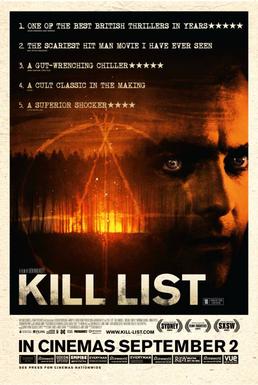
Kill List is a movie that I wish came with some interpretative material.  It’s a touch hard to follow.  The basic idea is that Jay and Gal are Army buds who take a job as hit men.  Jay is married, but not exactly happily.  Gal’s girlfriend leaves him early on.  It seems that Shel, Jay’s wife, knows what he does for a living but seems strangely unconcerned.  Jay is recognized by his victims, but he doesn’t know why.  He becomes insanely brutal on the second of their third jobs, torturing his victim before killing him and then going after his accomplices (not on the eponymous kill list).  At this point Gal and Jay want out of the deal but their unnamed employer won’t release them.  Jay is presented as a man traumatized by a past military action.  He fights frequently with Shel but is very devoted to their son.  Spoilers follow.

The last job is a hit on a member of parliament.  The MP, however, is in a folk religion group that requires human sacrifice.  Jay begins shooting them but he and Gal are outnumbered.  Gal is killed and Jay is subdued.  He then has to fight a hunchback in front of the masked believers.  He frees the knife and kills the hunchback only to discover it is his wife with their son attached to her back.  A rather bleak ending for a rather bleak film.  Kill List is generally considered folk horror.  That is to say that fear derives from both the landscape (less rural in this example) and from the native religion of the non-Christian traditions.  What exactly this religion is is never specified, and it seems that, unbeknownst to himself, Jay is a pretty major player in it.

Perhaps not surprising for a film titled Kill List, this is quite a violent movie.  The somewhat constant fighting of Jay and Shel is unnerving in its own right, and Jay’s berserker-like attacks are also disturbing.  There is a religious element involved, however, beyond paganism.  The first victim on the hit list is a priest.  The reason’s not explained, but the expected religious imagery is there.  This is never tied in with the folk religion exposed at the end.  Although effective as a horror film, it leaves quite a few questions unanswered.  That being said, this Euro-horror is one that I’m unlikely to go back to.  I’m not even sure who made the recommendation to me in the first place.  Folk horror is a fascinating genre and this movie has been compared to The Wicker Man in that regard.  Only in the latter case the plot was easy enough to understand.


Belting Beltane

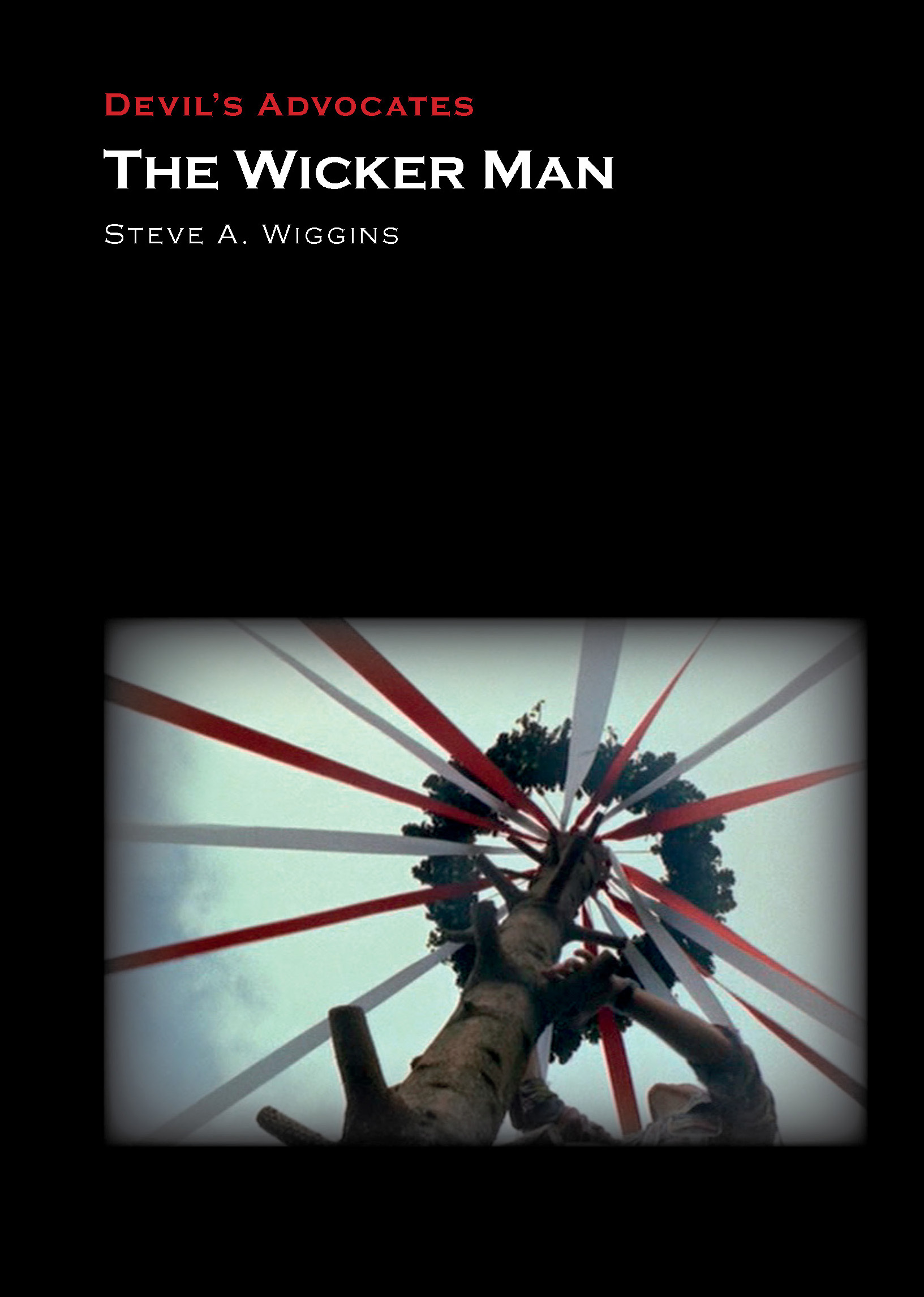
Things have been so busy that I forgot that today is Beltane.  That’s all the more ironic because yesterday I’d been on a panel to address the British Association of Film, Television and Screen Studies special interest group on Horror Studies, about The Wicker Man.  Lest you get the wrong idea, BAFTSS did not approach me to talk about my book (which has largely disappeared, as far as I can tell), but another recent Devil’s Advocate author approached them about having a panel featuring recent titles.  This special interest group has a program called Weekday Night Bites where they gather virtually to have speakers talk about horror.  Yesterday there were seven of us, discussing five books, one of which was The Wicker Man.

The theme of the panel was No Safe Space, about place and space in horror.  This meant I spoke briefly about The Wicker Man as folk horror.  As I told the assembled group, I actually interpret Wicker Man as holiday horror—it’s based on May Day, and I didn’t even think to mention that it was today—instead of folk horror.  One of the the hallmarks of the Devil’s Advocates series is that it tries to approach horror films from unexpected angles.  When I first contacted the editor who started the series at Auteur (who has, unfortunately left), he told me that they didn’t have a Wicker Man volume because everyone was pitching it as folk horror.  He wanted to see a different interpretation.  I’d been writing a book about folk horror and decided to give that a try.  The critics liked it, and thus my book was born.  And here it is, May Day, and I’d forgotten all about it.

There was a reasonably sized group present for the discussion and it was a lot of fun.  It reminded me of my Miskatonic Institute for Horror Studies course on Sleepy Hollow two years ago.  Both of these were efforts to stir some interest in my books.  Horror and religion is a new avenue of approach and there are a handful of us working in this area.  The others, it seems, have a knack for getting their books published in places where you don’t have to take out a mortgage to afford them.  I’m more in the group whose books are relegated to the Summerisle of sales.  Either that, or I’m actually Sergeant Howie, unwittingly flying there to help someone I think is in trouble. Who knows?  Anything’s possible on Beltane. 


The Dark Season

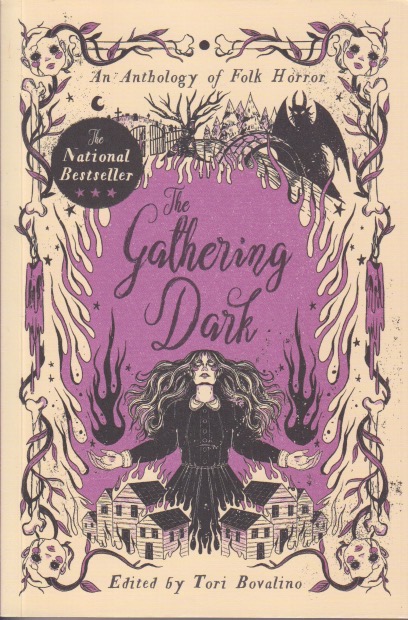
It was on Goodreads that I first saw The Gathering Dark.  Since I’ve been trying to read more short stories, I decided I should give it a go.  Subtitled An Anthology of Folk Horror, it sounded like important for a viewer of said folk horror.  Anthologies, both fiction and non, are uneven by nature.  And something that wasn’t clear at first is that this was a young adult collection.  I’ve read YA books before, of course.  Some of the most creative fiction of the last couple of decades has been for that demographic.  The feature I noticed most here was that the horror was mostly gentile, kind of like the horror in my fiction.  I never consider myself a YA author, however.  Occasionally my characters are teens or twenty-somethings, but for the most part they participate in the adult world, where something is wrong.

Youth is, of course, a fraught time.  We’re exploring relationships and trying to sort out the changes taking place in our bodies and our lives as we leave the larval stage.  There’s a kind of natural horror to it.  At the same time, “folk horror,” like horror itself, is a slippery term.  Some of the stories seem to be based on urban legends, and that is definitely the present-day source of folk horror.  When it’s found online it’s often called “creepy pasta.”  It can be the basis for horror stories, and I’ve seen a few movies that make use of it.  Folk horror tends to favor rural settings (true of all the stories here), and superstition, and isolation.  Often it involves pagan religion, but here only one story dwells in that territory.

Overall I found the collection interesting and well written.  A number of the stories did evoke the feelings of what it was like to be young and afraid.  I do wonder how the anthology came about.  There’s no introduction and, I know from my own publishing experience that anthologies are a hard sell to most publishers.  I’ve noticed Page Street books before.  They recently began accepting horror written for adults.  They already have a strong YA list, thus The Gathering Dark.  They’re also committed to diversity, and that clearly shows throughout this collection.  I think it’s important to read young adult literature now and again.  It is, literally, the literature of the future—this is what forms young people’s tastes.  This particular book was a national bestseller, and it earned some notice on Goodreads.  And that was enough to draw me in.


Not the Witch

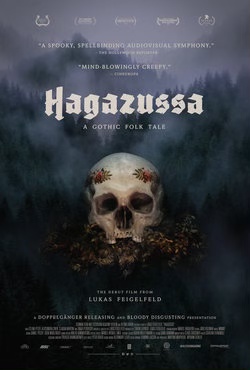
Hagazussa came to my attention from, I believe, the New York Times.  In the autumn normally staid news sources start suggesting horror films to watch.  Subtitled A Heathen’s Curse, this new Euro-horror (filmed in German) immediately reminded me of Robert Egger’s The Witch, but with a lot less plot.  It’s a moody and disturbing story of the life of an outcast young woman in the sixteenth century.  Raised by a poor, goat-herding mother, Albrun watches her mother die of the Black Death, when Albrun’s a tween.  She continues living in her childhood home, with a daughter whose origin, like that of Albrun, is never explained.  The locals shun her as a witch but a seemingly friendly villager befriends her before turning against her and betraying her.  After this neighbor, and then others, die, Albrun drowns her infant daughter after eating a toadstool in the woods.  She then bursts into flames atop a hill in the Alps.

As folk horror, the movie is more about the haunted landscape than about an intricately plotted story.  There’s nevertheless a great deal of symbolism used, including much regarding Eve—apples, serpents, and goddesses all play a part.  Locals fear pagans, and the church interior lined with bones reminded me strongly of St. Stephen’s Cathedral in Vienna, where plague victims’ bones fill the underground vaults.  Seeing such a place reminds you forcefully of your insignificance.  Hagazussa is an art film as well as folk horror, and it appeals to gothic sensibilities.  There’s very little dialogue.  Indeed, the loneliness of Albrun is a major aspect of this moody, atmospheric work.  Such stories always remind me of how difficult life was for those who had to try to scratch a living from the land.  Existence was tenuous at best.  Especially for women alone, as determined by Christian society.

The movie left me reflective.  It also underscored how religion and horror tread the same paths repeatedly.  The village priest tells Albrun that sacrilege must be cleansed, even as he hands her her mother’s skull, polished and decorated.  He wearily admits that he struggles to led the community.  Indeed, Albrun’s new “friend” castigates Jews and heathens, even as she takes part in the robbing of Albrun’s livelihood.  Witches, as “monsters” were invented by the church as fears reached out to point to new sources.  Even if they had to be fabricated at the expense of innocent people.  Fear operates that way still, as anyone who watches political ads knows.  It’s easier to persecute than to educate, it seems.  In the end, Albrun burns up and we realize we’ve just watched a parable.


Gothic Folk

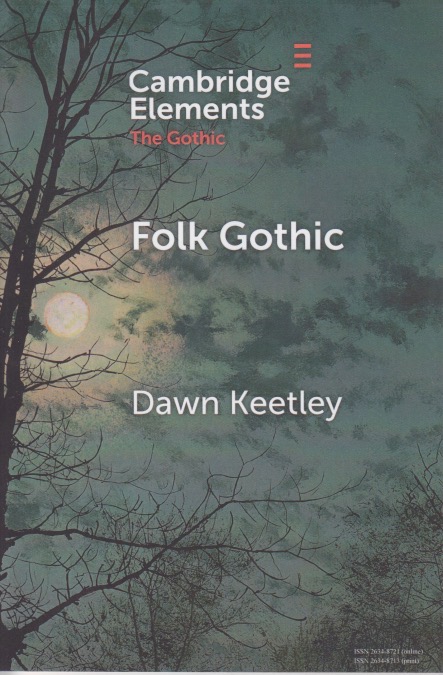
I smelled autumn on the air during yesterday morning’s jog.  Pseudo-non sequitur: Cambridge Elements are one of the many series of short books that academic publishers are promoting these days.  Elements is divided into different categories, one of which is “The Gothic.”  (Thus the pseudo.)  When I saw that Dawn Keetley had written a volume on Folk Gothic I knew I had to read it.  In some ways it reminded me of my own short book, The Wicker Man.  Although I analyze that movie as holiday horror, it is widely known as a textbook example of folk horror.  Just as many people haven’t heard of holiday horror as a category, I hadn’t heard of folk gothic.  Autumn is a gothic time of year, and I enjoy folk horror, so I wanted to find out what this genre is all about.

Keetley is an able guide through all things horror.  She co-runs Horror Homeroom, a wonderful website that sometimes publishes my own musings on horror and religion.  There’s a lot packed in this brief book.  One of the draws to these fascicle-like series is that you can learn a lot in a relatively short time.  As a weary scholar, I do appreciate the monograph—I read plenty of those as well—but something that distills is also appreciated.  So what is folk gothic?  Well, if you want a good, short introduction, read this book.  If I were haltingly to try to put it into a sentence, I would suggest that it is a form of horror with no obvious monsters; one that draws on folklore to set up a melancholy scenario that often involves violence.  If you want a better definition, I would recommend reading what an expert has to say about it.

One of the films discussed in this Element is The Wicker Man.  One of the early folk horror movies, it has no obvious monster.  Folk horror often relies on the very landscape to create a sense of unease.  This is something I always feel as autumn approaches.  I still have a ton of summertime chores to do outside—the too hot summer weekends aren’t conducive to physical labor for a guy my age—but I enjoy the melancholy of that first whiff of autumn.  It brings gothic sensitivities to the fore.  I picked a good time to read Folk Gothic.  I’ve seen nearly all of the movies discussed in the book, but some of the fiction I have yet to read.  There’s so much to do to get ready for autumn’s chill.


Cute Monster

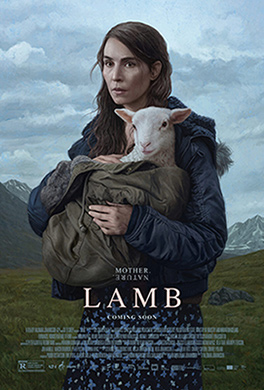
Those who make horror films often rely on the cheap and easy tricks to make viewers jump and  scream.  Some of us are more connoisseurs, preferring films that make you think and that don’t show too much, and maybe even too little.  Lamb once again underscores what has impressed me about Euro-horror over the last few years.  Slow, building dread, it’s the kind of story that you know can’t end happily because it’s, well horror.  There are spoilers here but I hope they won’t stop you from seeing this film if you haven’t.  First of all, the film is in Icelandic, and much of the cinematography focuses on the brutally beautiful cold landscape.  Its sense of isolation and the land make this a fine example of folk horror as well.

A couple, sheep farmers, make a reasonable living from the harsh land.  We come to realize that they live in regret for the death of their daughter.  Then, after the unseen visit of an unseen creature during the dark of an Icelandic Christmas, a lamb is born with a human body.  She quickly becomes their ersatz daughter.  This odd situation, we know, cannot last.  They’ve set their happiness on a gentle monster (of the classic description) and such things never end well.  The movie takes its time spelling out the story, knowing full well that viewers know something is about to happen, but are unsure of what.  Since the husband’s brother stops in (after being forcefully ejected from a car), the film only really involves four characters—six if you count the brief appearances of the lamb’s parents.  And that isolated landscape.

Part-human and part-animal generally counts as a monster.  This one is well behaved.  Cute, even.  Dad, it turns out, isn’t so cute or well behaved.  He has his reasons, though.  The film is scary by implication: What happens when the cute little monster grows up?  The movie invites us to consider that question.  Monsters are often cast as evil and dangerous, but maybe they have to grow to become like that.  With loving foster parents, such as the farmer and his wife, who knows?  This is one of those films that makes you ask questions and offers little by way of explanation.  You just have to accept it.  Something led to a monster in the hills, somewhere back along the line.  But even he may have been even-tempered had is kind been treated with civility.  Monsters have something to teach us.  Even, or maybe especially, cute ones.


For the Eyes

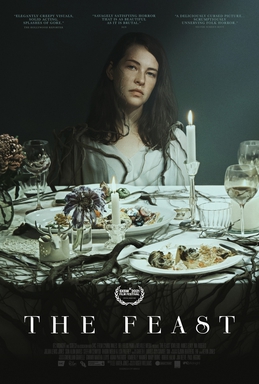
A Welsh horror film?  Lately Euro-horror has caught my attention.  European sensibilities give horror a distinctive flavor, and The Feast doesn’t pull the usual horror tricks.  And reading the subtitles keeps you on your toes.  It’s more a slow build that manages to be unnerving from the start.  A family of four—parents and two boys in their late teens or early twenties—is hosting a feast.  A local girl, Cadi, is hired to help cater the affair.  The family is really seeking to get a neighbor to allow exploratory mineral drilling on her land.  She refuses, horrified when they mention that they’ll only drill on the rise.  The neighbor, aghast, says they know better because they’ll awaken “her.”  The unnamed her is a goddess who is within the rise and who’s been disturbed by the family’s drilling on the land adjacent to their neighbors’ property.

A number of aspects push this beyond Euro-horror.  The goddess, treated as superstition by the family, introduces religion into the horror.  (Cadi, as it turns out, died on her way to the house and the goddess inhabited her body.)  The remote location and role of the countryside also bring this into the folk horror realm.  Having an underlying ecological message, the film is eco-horror as well.  As such it has a positive message, even as all those at the feast, apart from the uncompromising neighbor, die before the evening is out.  Gods will express their wrath.  Although there’s gore, the concept is intelligent and possessed Cady’s unwillingness to speak throughout much of the film adds to the tension.

Horror films with subtitles sometimes don’t work, but The Feast manages pretty well.  Much of the disturbing atmosphere comes from the house.  A modern construction, built over what had formerly been the family’s farm, stands in stark contrast to the natural world all around.  As is often the case in eco-horror, the land is waiting to take its revenge.  It’s a message appropriate for a time when we fail to live up to our own environmental standards, and consider the checks and balances of nature itself as “superstition.”  Maybe a goddess will not awaken and kill everyone at the dinner party, but the wealthy will not be spared, as the movie prophesies.  We share the planet and the earth allows us to survive.  There’s a sense that we deserve to be reminded that living on a finite planet requires careful stewardship of it all.  If you’re going to throw a feast, at least make sure it’s not at the expense of nature.  Some goddesses are best not aroused.


Green Pagan

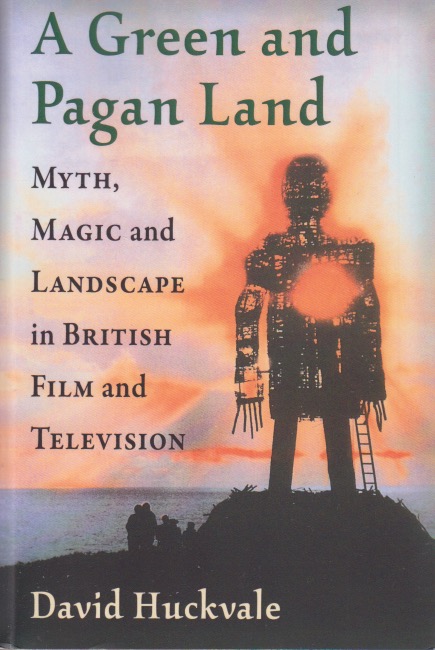
The folk tradition doesn’t encompass folk horror only.  I’ve been working on The Wicker Man, one of the initial folk horror classics, long enough that I sometimes need to remind myself of that.  Of course, it was the cover image featuring said movie that drew me to David Huckvale’s A Green and Pagan Land: Myth, Magic and Landscape in British Film and Television.  The descriptive subtitle more or less informs the reader what the book is about although it reaches further than that.  Huckvale also interprets novels, short stories, and classical music pieces according to landscape.  And sometimes it ranges beyond Britain, especially to other Anglo-Saxon cultures.  Richard Wagner, for example, plays a prominent role in one of the chapters.

Having written about popular media myself, I’m aware of how such issues can easily arise.  A movie too good not to discuss falls out of the precise range you’ve set for yourself.  And no matter how much media you can consume there will be tons more that you could, had you the time, add to your experience of it.  This book looks at mostly British media with an eye toward the pagan landscape.  That doesn’t always mean horror, but sometimes it does.  Huckvale always has interesting things to say about the media he addresses.  Whether the pieces go back to Arthurian legend or to more recent fictional pasts, the landscape has a role to play.

Indeed, folk horror is generally defined by landscape.  That makes sense considering that it’s all around us.  Many people in urban settings may have to struggle to find it.  Indeed, when they want to get away they head for it.  In Britain—and anywhere in which invasion has taken place—the earlier pagan ideas are imprinted on the land.  In Britain they’re perhaps more obvious; think of Stonehenge.  As later interlopers modern people see them and wonder.  And then we create stories—literary, musical, or visual—about the experience.  I’m so used to reading about folk horror that I’d finished the book before I realized it wasn’t really the focus of the entire thing.  While I don’t live in a major city, I too have blinders on for much of the time.  I’ve got a book deadline and I wanted to read this before making final revisions.  I’m glad I did.  There were places where I was just in the backseat, along for the ride, but there were also chapters where The Wicker Man was a crucial component.  And it reminded me of why I enjoyed living in that landscape for a few years.


Devils and Days

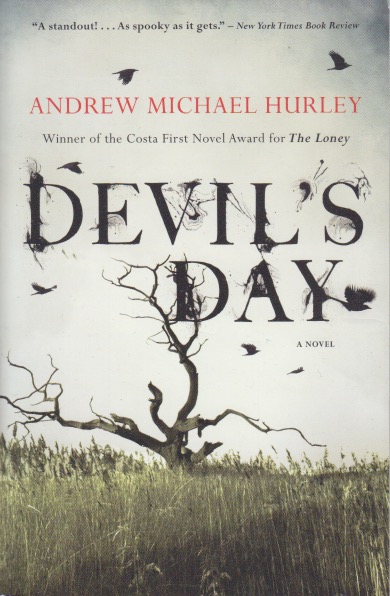
The kind of devil envisioned by Andrew Michael Hurley in Devil’s Day may not be the traditional one, but it’s scary nevertheless.  In his follow-up novel to The Loney, Hurley demonstrates that he knows the devil can still be frightening.  The Endlands, in northern England are hemmed in by the moors.  The landscape plays such a commanding role here that this can only be folk horror.  And it fits folk horror to a tee.  Tradition, an unchanging life in a land untouched by technology, and forbidding moors where survival is difficult, all amid an English sensibility brings this tale into the folk category neatly.  As should be clear already, Hurley is well aware that religion and horror belong together.  This novel makes their companionship clear.

John Pentecost (note the name) has decided that he and his young, expectant wife—both of whom hold professional jobs—are going to move back to the family sheep farm.  The death of John’s grandfather means that his own father is left to run the farm alone.  Knowing that he belongs there and that his unborn child will need to tend the farm when he dies, a visit to help with the gathering of the sheep, and the celebration of Devil’s Day, turns into a lifelong commitment.  At the same time, the devil has been body-hopping as sheep are killed and family members die and a family of bullies cause more harm than their due.  There’s an inevitability to all of this and at the end you’re not really sure who the devil really is.

The story builds slowly.  By the day of the gathering you really have trouble putting it down.  Putting the Devil into a story can be a dicey proposition.  It’s been done successfully a handful of times, but that doesn’t make it an easy sell.  Our worldview has moved beyond a literal netherworld and the theology that accompanies it.  That doesn’t mean we can’t spot legitimate evil in the world.  Or that evil isn’t often vested in the garments of righteousness.  Ways of thinking that jeopardize others for theological purposes that simply don’t match what we know to be just and fair.  Powerful exploiting the weak.  Wealthy taking advantage of the poor.  Bullies getting their way through brute force.  In this novel the devil is active in a number of characters for a short time.  And you never know where that devil might turn up next.


Rusticated Fears

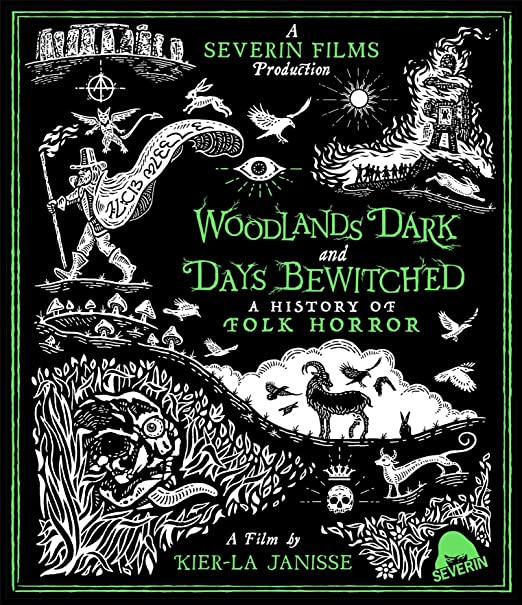
I don’t recommend sick days.  This one was weird with all the symptoms of illness but really having them just be the side-effects of a shingles vaccine.  I don’t recommend it, but I was able to use the day, between dozing off, by watching Woodlands Dark and Days Bewitched: A History of Folk Horror.  This late 2021 documentary is over 3 hours long and I’d been wondering when I’d have the chance to view such a lengthy movie.  Besides, when you’re feeling utterly miserable, horror is a kind of elixir to make it all better.  Watching the film made me aware of just how many movies I haven’t seen.  Another way of putting it is that I still have my work cut out for me.

Folk horror, you see, has a natural appeal for those of us who grew up away from urban centers.  Much that we did in the small towns of my childhood was, frankly, weird.  As the interviewees make plain, cities are the centers of economic and cultural power.  The big educational institutions are there and those of us from the hinterlands might not obey the rules that city dwellers seem to absorb through their feet.  In reality, I suspect, urban culture largely derives from folk culture.  Those who venture away into the large cities take pieces of their home with them.  Cities tend to blend all this together and transform it into something different.  Those in rural areas, however, have their own way of doing things.

Perhaps it’s embarrassing to center this much, but it was clear to me in watching Woodlands Dark and Days Bewitched that much of the fear showcased to city folks (for movies tend to be shown in urban settings) is the weird religion of the country cousins.  Both the words “pagan” and “heathen” are references to those who dwell outside urban areas.  “Pagan” comes from Latin for rustic, while “heathen” means those out in the heath.  Mainstream religion is that of the cities—the Vatican is located in Rome, and the large mosques, synagogues, and cathedrals are in population centers.  There’s no telling what the country dwellers might get up to if left to their own devices.  And religion taken seriously can be quite dangerous to outsiders, as we’ve seen time and time again.  Folk horror never really went away but it is undergoing a resurgence at the moment.  As the documentary suggests, this tends to happen in times of social instability.  At least we have something to look forward to as the world collapses around us.  Folk horror will help us cope, if my experience is anything to go by.


Devils and Witches

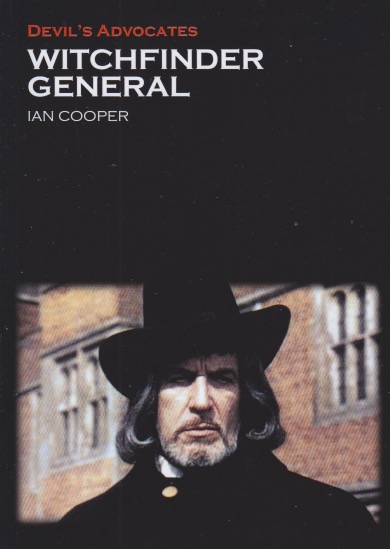
If you’re a regular reader (thank you!) you know that I’m currently under contract to write the Devil’s Advocates series volume on The Wicker Man.  As an editor myself I’m aware that academic series, often unlike fictional series books, tend to vary quite a bit from one another.  I want to try to get my submission close to the goal, however, so I’ve been reading volumes by other authors.  You may also know that The Wicker Man is part of an “unholy trinity” of early British folk-horror, with the other films being Witchfinder General and The Blood on Satan’s Claw.  Of the three my least favorite is Witchfinder General, so I’ve put off reading the particular volume on that film by Ian Cooper.  That has nothing to say about the author, but rather a lot to say about the base film.

The book is quite good.  Cooper is clearly aware of the controversy surrounding the movie and he points out some of the difficulties with it as well as what it does well.  His treatment is quite insightful.  The movie is violent and it’s an representation of the historical violence we thought we outgrew.  Matthew Hopkins was an historical “witch hunter” who was, in reality a serial killer,  mostly of women.  Fearing witches, while getting paid to find them, he was responsible for over 200 deaths.  As Cooper makes clear, the film lingers a bit too long on the abject nature of many of the tortures, not allowing us to look away.  For this reason many critics found the film distasteful.  I personally found it hard to watch.  Education isn’t always easy.

There’s quite a bit of film history in the book.  Cooper does a great job placing the movie in its cinematic context.  Like The Wicker Man, Witchfinder General is sometimes said not to be a horror film.  Indeed, there’s nothing supernatural about it.  Still, it fits the bill for many of those in-between movies that cross over into horror.  In this case it’s due to the violence.  For me, monsters are preferable to human monstrosity.  They’re easier to walk away from.  Although the witch hunts ended centuries ago, violence against women has remained.  Whether it’s legislative or physical or economic, women deserve better treatment than they’re offered by the male establishment.  Movies, and books about movies, like this one may be difficult to watch/read, but they carry important reminders that power continues to corrupt and it must be challenged and changed when it reverts to the mentality of Matthew Hopkins.  His spiritual kin, unfortunately, continue to thrive. 


Haunted Landscapes

The Devil’s Advocates series consists of short books focused on a single horror film.  For horror fans they’re a great resource, as they will hopefully also be in teaching settings.  David Evans-Powell’s recent volume on The Blood on Satan’s Claw is a fine example of just how intelligent horror can be, and how it can be interpreted so.  This particular movie from the early seventies was never a major revenue earner, but that in itself is a lesson.  Influence, measured in smaller scales, can still create an impact on people’s lives.  Evans-Powell’s treatment takes several angles, each of which casts light on this unusual movie.  Reading this little book brought quite a few ideas to mind, both about social structures and religion.  The film is set in the early 18th century, with a city judge who is problematic actually saving the day.

Since The Blood on Satan’s Claw is folk horror, quite a bit of the discussion focuses on landscape.  Paying close attention to landscape reveals hidden information.  It becomes almost a character.  At the risk of too many spoilers, the film is about uncovering Satan—or a demon, it’s not terribly clear on the point—from a farm field.  As this evil character gains power the local children are drawn to him and the village authorities are unaware of what’s going on in the nearby woods.  Landscapes reveal and conceal as the creature gains power and the children engage in acts of violence.  The response of the judge is a violence of its own.  The movie doesn’t really deliver all that it promises in that regard, but Evans-Powell explains how the film was made and that, in turn, explains some of the rough edges.

Religion and horror go naturally together.  I suppose any film with “Satan” in the title will address religion somehow.  Not all horror is religious, of course, but many of our fears derive from religious subjects.  It’s almost as if as we ceased to fear the landscape—nature having been tamed to some degree—we began to find fear in religious thinking.  Put another way, religion has kept fear alive.  The Blood on Satan’s Claw was never a major, big-budget release.  Except for fans of British horror it has largely escaped notice.  Folk horror, because of its recent revival, brought interest back to some of these older efforts to explore such themes, many of them implying a religion hidden in the landscape.  This book provide a useful map in exploring that territory.


Next Trick

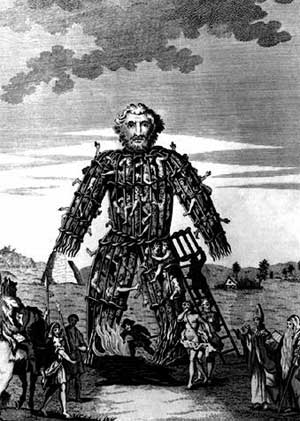
Book contracts make me happy.  For my next trick, I’ll be writing a book on The Wicker Man for the Devil’s Advocate series.  This will be a short book, and hopefully priced down where individuals can afford it.  The Devil’s Advocate series was initiated by Auteur Publishing some years ago.  The series covers individual horror films in about 128 pages.  I pitched the idea of The Wicker Man for a couple of reasons.  One, Auteur didn’t have one in the series.  And two, I’ve been working on holiday horror for some time.  Holiday horror encompasses movies where a holiday features in the story, generally in a significant way.  Think Halloween, or April Fool’s DayThe Wicker Man takes place during a pagan celebration of May Day, falling neatly into the category.  You may see, in coming weeks, posts about various Wicker Man books.

While still in the horror genre, this next book will be a departure from the supernatural horror of Nightmares with the Bible.  Demons are frightening, no doubt, but Wicker Man is more about how religion can motivate people toward evil.  It is part of what has been termed the “unholy trinity” of early folk horror, classed with Witchfinder General and The Blood on Satan’s Claw.  This “unholy trinity” overlaps in time another famous threesome: Rosemary’s Baby, The Exorcist, and The Omen.  There can be little doubt that modern horror really began in 1968, which also gave us Night of the Living Dead.  Folk horror utilizes both folklore and the landscape—generally rural—as the basis for its fear.  And you can’t get much more isolated than Summerisle.

The hope is to get this book out in 2023.  That will be the fiftieth anniversary of the release of The Wicker Man.  Although it came out when I was eleven, I didn’t see it for another thirty years at least.  By that point in time I’d watched and read about enough horror to find out about and appreciate this particular, indeed, peculiar movie.  I was blown away the first time I saw it.  It is quirky but stunning.  Christopher Lee maintained throughout his career that it was his best movie.  I haven’t seen all of Lee’s movies (who has?) but I’m inclined to agree.  I’ll be getting to know this movie in some depth over the next several months.  Having watched it many times already, I’m drawing a map for a journey to Summerisle. You’re welcome to come along.


Scary Folk

Genre is a useful category.  It can be misused, however.  Straightjacketing a piece of literature, music, or film can lead not only to confusion, but to constraining creativity itself.  Nevertheless, the category of Folk Horror is certainly expansive enough for a book-length treatment, such as Adam Scovell has given it.  Unless you’ve read quite a bit about the subject you might wonder what folk horror is.  A good part of Scovell’s work is definitional—providing the reader to an answer to that very question.   Although it has earlier roots, folk horror was initially a British genre that became particularly noticeable in the late sixties and early seventies.  It comprised movies and television programs that dwell on specific aspects of the landscape—particularly the rural—and isolation within it.

What I find particularly compelling about folk horror is that it is often based on religion.  In the countryside you encounter people who think differently about things.  Believe differently.  Their convictions are enforced upon the stranger who may be there by design or by accident.  Ironically the genre largely emerged in a nation that prides itself for its role in civilized behavior.  It speaks volumes about belief.  Civilization has produced more refined strains of religion, but on its own religion will tend to grow wild, even as the weeds in your yard are distantly related to the cereal grains we cultivate.  Examples of this are everywhere.  Fans of horror can name them off, but even those who don’t care for the genre know the kinds of belief this indicates.

Not all folk horror is about religion, of course.  It can be rural ways in general.  No matter how you classify it, most people can identify Deliverance and the danger it implies about being far from civilization where those who live in the woods can do as they please.  Scovell delves into the urban settings of folk horror as well—most of his examples are British—because it is possible to hide in the city also.  Although the genre reached a high point in the 1970s, it didn’t die out.  The book ends with consideration of some more modern examples, such as Robert Eggers’ The Witch.  The problem, as those of us who write about film know, is that just because you’ve written a book it doesn’t mean future examples won’t change the picture.  The Lighthouse and Midsommar were both released in 2019, after the book was published.  And they demonstrate that the scary folk haven’t gone away.