Next Trick

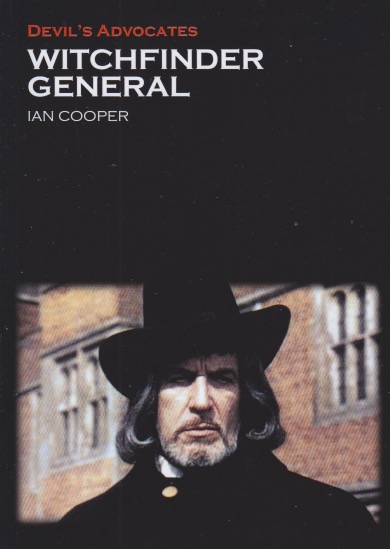
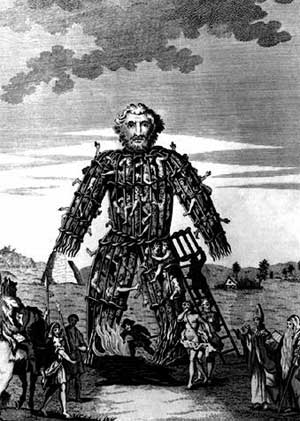
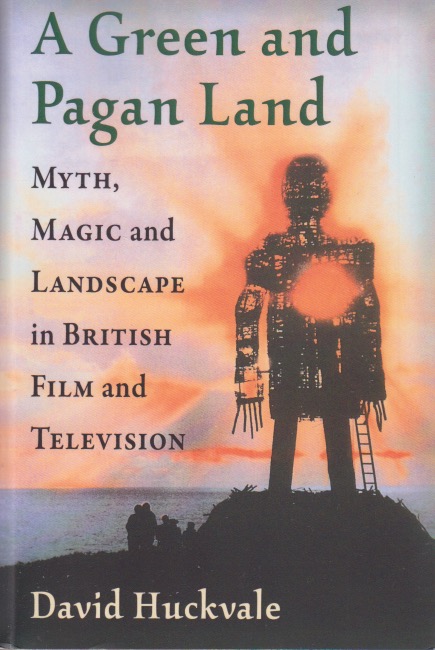
Book contracts make me happy.  For my next trick, I’ll be writing a book on The Wicker Man for the Devil’s Advocate series.  This will be a short book, and hopefully priced down where individuals can afford it.  The Devil’s Advocate series was initiated by Auteur Publishing some years ago.  The series covers individual horror films in about 128 pages.  I pitched the idea of The Wicker Man for a couple of reasons.  One, Auteur didn’t have one in the series.  And two, I’ve been working on holiday horror for some time.  Holiday horror encompasses movies where a holiday features in the story, generally in a significant way.  Think Halloween, or April Fool’s DayThe Wicker Man takes place during a pagan celebration of May Day, falling neatly into the category.  You may see, in coming weeks, posts about various Wicker Man books.

While still in the horror genre, this next book will be a departure from the supernatural horror of Nightmares with the Bible.  Demons are frightening, no doubt, but Wicker Man is more about how religion can motivate people toward evil.  It is part of what has been termed the “unholy trinity” of early folk horror, classed with Witchfinder General and The Blood on Satan’s Claw.  This “unholy trinity” overlaps in time another famous threesome: Rosemary’s Baby, The Exorcist, and The Omen.  There can be little doubt that modern horror really began in 1968, which also gave us Night of the Living Dead.  Folk horror utilizes both folklore and the landscape—generally rural—as the basis for its fear.  And you can’t get much more isolated than Summerisle.

The hope is to get this book out in 2023.  That will be the fiftieth anniversary of the release of The Wicker Man.  Although it came out when I was eleven, I didn’t see it for another thirty years at least.  By that point in time I’d watched and read about enough horror to find out about and appreciate this particular, indeed, peculiar movie.  I was blown away the first time I saw it.  It is quirky but stunning.  Christopher Lee maintained throughout his career that it was his best movie.  I haven’t seen all of Lee’s movies (who has?) but I’m inclined to agree.  I’ll be getting to know this movie in some depth over the next several months.  Having watched it many times already, I’m drawing a map for a journey to Summerisle. You’re welcome to come along.


Scary Folk

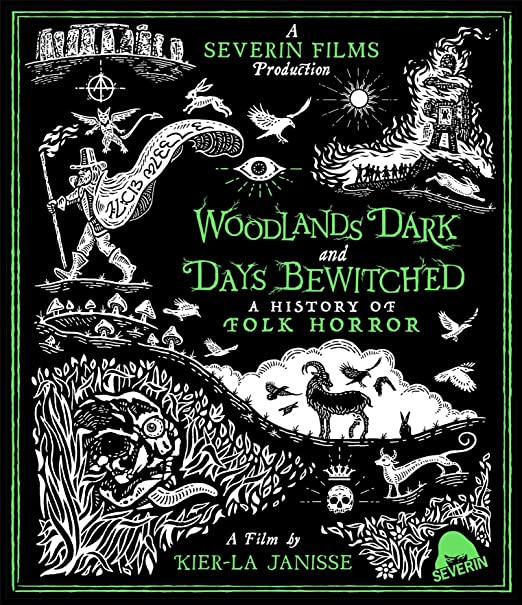
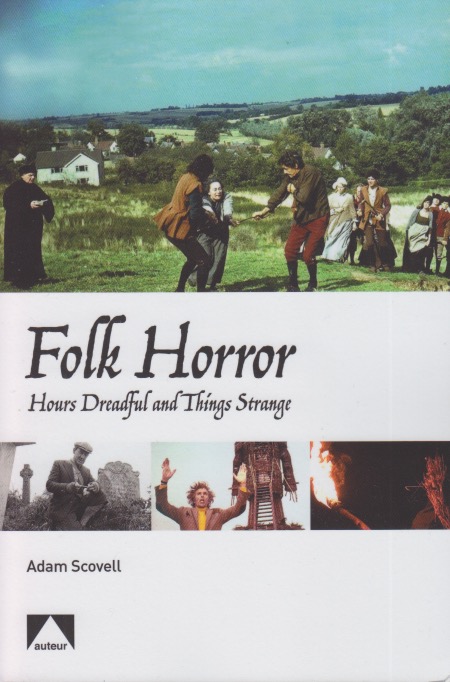
Genre is a useful category.  It can be misused, however.  Straightjacketing a piece of literature, music, or film can lead not only to confusion, but to constraining creativity itself.  Nevertheless, the category of Folk Horror is certainly expansive enough for a book-length treatment, such as Adam Scovell has given it.  Unless you’ve read quite a bit about the subject you might wonder what folk horror is.  A good part of Scovell’s work is definitional—providing the reader to an answer to that very question.   Although it has earlier roots, folk horror was initially a British genre that became particularly noticeable in the late sixties and early seventies.  It comprised movies and television programs that dwell on specific aspects of the landscape—particularly the rural—and isolation within it.

What I find particularly compelling about folk horror is that it is often based on religion.  In the countryside you encounter people who think differently about things.  Believe differently.  Their convictions are enforced upon the stranger who may be there by design or by accident.  Ironically the genre largely emerged in a nation that prides itself for its role in civilized behavior.  It speaks volumes about belief.  Civilization has produced more refined strains of religion, but on its own religion will tend to grow wild, even as the weeds in your yard are distantly related to the cereal grains we cultivate.  Examples of this are everywhere.  Fans of horror can name them off, but even those who don’t care for the genre know the kinds of belief this indicates.

Not all folk horror is about religion, of course.  It can be rural ways in general.  No matter how you classify it, most people can identify Deliverance and the danger it implies about being far from civilization where those who live in the woods can do as they please.  Scovell delves into the urban settings of folk horror as well—most of his examples are British—because it is possible to hide in the city also.  Although the genre reached a high point in the 1970s, it didn’t die out.  The book ends with consideration of some more modern examples, such as Robert Eggers’ The Witch.  The problem, as those of us who write about film know, is that just because you’ve written a book it doesn’t mean future examples won’t change the picture.  The Lighthouse and Midsommar were both released in 2019, after the book was published.  And they demonstrate that the scary folk haven’t gone away.


Witchfinder, Generally

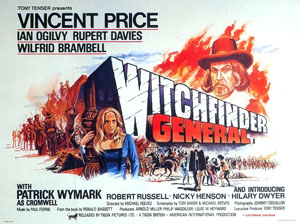
In Holy Horror I describe the “unholy trinity” of movies that figure strongly Christian themes: Rosemary’s Baby, The Exorcist, and The Omen.  These movies span 1968 through 1976 and all were extremely successful.  Another writer earlier dubbed another three horror films from the same era the “unholy trinity” (I didn’t realize I was being trite) of folk horror: Witchfinder General, The Blood on Satan’s Claw, and The Wicker Man.  These three were low budget and not particularly successful at the box office.  They’ve all become cult classics, however.  I suppose that together these six films help mark the late sixties and early seventies as the beginning of a new realm of horror films.  Folk horror continued to exist but wasn’t terribly common.  It has recently been given a high profile by The Witch and Midsommar.

Of all of these films Witchfinder General stands out as the least obviously marked by horror tropes.  It’s set as a fictionalized account of the historical Matthew Hopkins, a man actually responsible for about a fifth of all British witch executions in the seventeenth century.  There’s nothing really supernatural in the film and its horror reputation is attributed to the cruel tortures depicted—these really pushed the envelope in 1968.  Not only was Rosemary’s Baby released that same year but so was Night of the Living Dead, another defining horror film.  The sixties were a chaotic time—the birth pangs of a new outlook that is still being resisted by many politicians.  We all know about the music of the era, but the cinematic impact was also immense, as these six films show.

As different as they are, these two trinities all feature horror that is fueled by religion.  Although this had been pointed out earlier in the century, people were now being made aware that, apart from the good religion does, it also brings potential evil into the world.  There’s no question that misguided over-protectiveness of Christianity led to many, many innocent deaths.  The more cynical might note that the Christianity being “protected” is actually key to an economic system that benefits the rich—that supports the interests of the wealthy.  The historical Matthew Hopkins was the son of a clergyman.  Apart from his reprehensible role in rekindling the witch trials in England, not much is known of his life apart from his preoccupation will executing “witches.”  As time has gone on, we’ve unfortunately circled back toward the religious conflicts in the folk horror trinity.  Watching horror may yield some valuable lessons.