Scientific Seminary

Old Testament. New Testament. Church History. Pastoral Theology. Systematic Theology. Homiletics/Liturgics. This was a typical kind of seminary curriculum about a quarter-century ago. Obviously there were variations, but the basic topics were Bible and its application. When I attended seminary science was already in the ascendent (seriously, it wasn’t that long ago!). Nobody much worried about how it might impact religion. People in the United States still attended church in large numbers but no one I knew really considered science a threat to belief. They were essentially different realms of inquiry and although some on each side asserted the superiority of their enterprise, the debate seemed to be good-spirited and without excessive rancor.
IMG_1656The situation has, of course, shifted radically since then. We’ve become a society guided by business principles and technology, and religion has all the appearances of being quaint at best, likely just useless, and, at worst, dangerous and deadly. Civilization, however, was built on the premises of a religion that permeated every aspect of life. That influence has been slowly replaced by that of a materialistic reductionism that suggests all things, this blog included, are but the random results of dry atoms bumping about a cold universe. Naturally there has been a reaction. The most vocal of believers, the Fundamentalists of all stripes, have directly challenged science in the arena of veracity. As we all know, however, Fundamentalists aren’t really equipped to convince the masses. The Bible, the underlying strength of the literalist, has come under scrutiny and has been demonstrated to be more inclined to myth than history. What more does a scientific worldview need to weld shut its superior outlook? And yet, reasoning, non-reactive religion still exists. Still has a place in this mechanistic universe where miracles are disallowed.

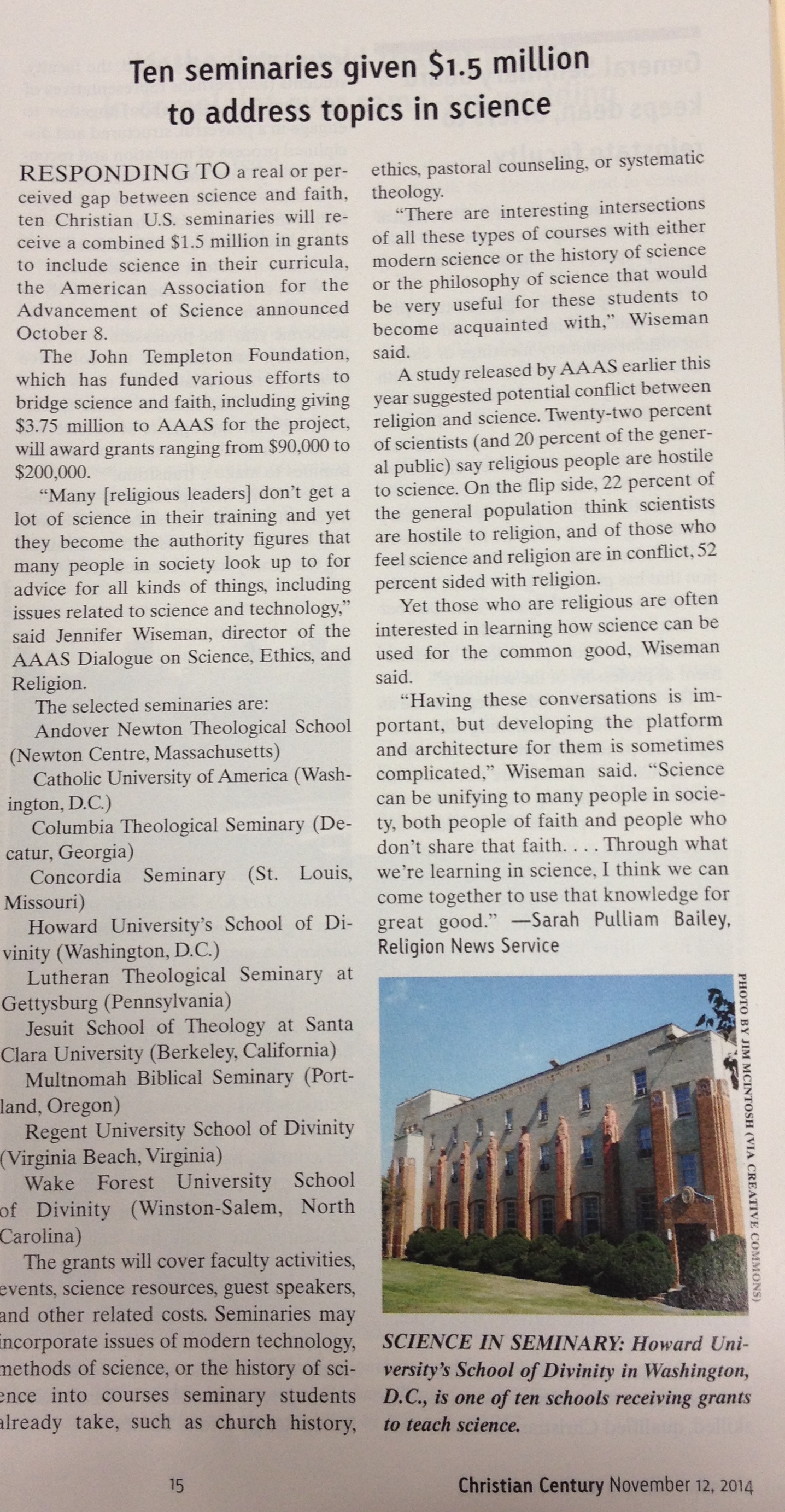
I recently read about a Templeton Foundation initiative that is funding programs on religion and science at seminaries. Some scientists excoriate the Templeton Foundation for trying to keep religion in the picture, but my humble opinion is that Templeton and its money have nothing to do with it. Religion is a very human response to a universe it can’t fully understand. Empirical method seems to work, and the results are so complex that few can even hope to comprehend. All but the most hopeless, on the other hand, can understand “love thy neighbor.” Religion continues to guide countless lives—most of them for the good, and not for the incendiary responses of a challenged literalism. The time has come for seminary curricula to adjust to the world as we know it. That world is run by inhuman forces that may help or harm humanity in equal measure. Religion, however, need not battle with science. It must, however, add it to the curriculum.

Darwin Down the Road

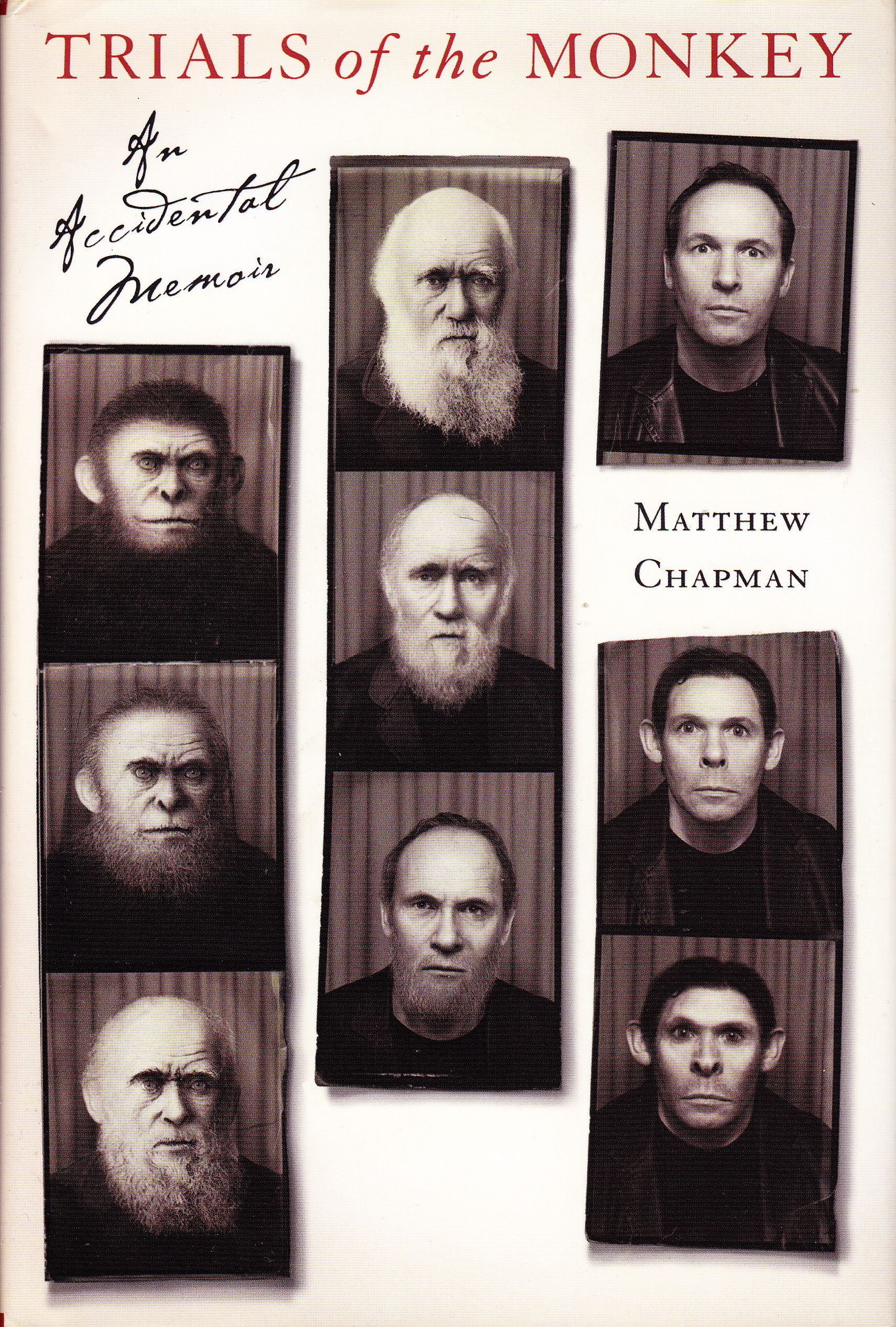
Chapman TrialsThe accidents of birth are the stuff of evolution. When I first heard of Matthew Chapman, direct descendent of Charles Darwin, over a decade ago, I was determined to read his book (then new). Like the accidents of birth, the finding of books at used bookstores is also a kind of evolution, so I picked up Trials of the Monkey: An Accidental Memoir recently and finally read it. Mission accomplished. It had been long enough that I couldn’t recall what the reviews said that made me so eager to read it—I had been developing a course on science and religion at Nashotah House and had been reading about evolution—but I’m glad I got around to it. The book was neither what Chapman nor I had expected. Maybe I’d better explain.

The year 2000, apart from its millennial aspirations, was also the 75th anniversary of the Scopes Monkey Trial. Chapman, a screenwriter from England, decided to go to Dayton, Tennessee to report on the reenactment of the Scopes Trial that was caused, accidentally, by his great-great-grandfather. With acerbic and self-deprecating wit, he narrates how he missed the performance by arriving for the wrong weekend and yet how he’d already begun the book based on it. Instead of reviewing the reenactment, he wove his own life story into those of the people he met on his two trips to Dayton, and left us with an engrossing memoir. Most Europeans, we know, consider American reaction against evolution with some puzzlement. As an Englishman, Chapman shares that curiosity and also, he admits, kind of wanted to make fun of southerners. His encounters, however, forced him to realize just how human all people are.

There’s a healthy dose of exposure to some of the weird ideas of fundamentalism here, but Chapman pulls no punches. The people he met treated him kindly. Some fundamentalists were even likable, even though they could not agree on much. At turns very funny and very sad, this autobiography represents, in its own way, the tensions of any life. The sensual confessions would have made famously squeamish Darwin blush, no doubt, but demonstrate to the reader that a man who can make a lot of money writing movie scripts can be very human as well. And so can the religious. The denizens of Dayton didn’t convince Chapman that their exclusive faith was true. They did, however, open him to the realization that such faith is not as simple as it may seem. A fortnight may have passed since the millennium, but creationism has continued to gain ground. Until more people take Chapman’s cue and actually try to understand those who believe, the trial of the century will continue to go on and on, ever evolving.


Autumn Music

It is an experience as old as humanity itself. At least humanity that started to realize that age, as remote as it may seem, will always eventually catch up with you. This past weekend was Family Weekend at my daughter’s college. Since her school does things up right, there were a variety of events on offer, one of which was an a cappella group concert. A cappella has come a long way since my college days, with students able to use their voices to sound like a band, professionally mixed, and full of energy. Somehow, I don’t recall that much energy from when I was a student. In any case, the inevitable group doing “oldies” took the stage an opened with a song from 1987. Wait. What? Since when was a song of which I remember the first release an oldie? The kids did a great cover, and I suspect in their minds it was really an old song. I was only 25 when it was given to the world. Can I really be an oldie? Outside the leaves on the trees were brilliant, as if on cue for the tuition payers to have their heartstrings wrung. Trees become their most alluring as they are about to die.

Songs, however, have a way of becoming part of you. Back when we were young(er) and idealistic, my wife had thought to study music therapy. Nashotah House, however, decided to change the career trajectories of an entire family in the name of orthodoxy. One of the things she learned in her classwork, prior to being sent back to the work-a-day world, was that patients suffering from dementia can often sing a song from their youth, even if they can’t speak a word. Music gets into our brains in a way that language learning doesn’t, and when we hear that song we are, to borrow a phrase from Bob Dylan (which another of the groups sang), forever young. It is a beautiful wish, endlessly covered and recovered. Watching those kids on stage, I recalled being on the cusp of adulthood myself. Everything seemed possible then. Then a world that others constructed imposed its constraints on me. My hair began to grow gray even as the leaves lit up yellow and scarlet and fire orange.

DSCN4928

Religion is the business of those who are old. Even as a religion major in college I was classed among those old before my time. We think of the hereafter on our deathbeds, not when we’re twenty. For those who teach their children to ponder eternity at a young age, however, that portal is never far from view. My fellow students were looking ahead to careers in all kinds of fields that would make their fortunes and reputations. My modest attempt to bring a younger generation to a more mature outlook faltered at the hands of Fundamentalists, and it was music that helped me through that terrible shock. Little do we think that that song we like so much is marking us indelibly as a child of our age. Time will not relent. We will be the ones, like the trees, showing our signs of age as our children show us where the future lies. And the attitude of that song from 1987 will be, for any who truly listen, forever young.


Small Town Heroes

When World War Three starts I hope someone will let me know. You see, I barely have time to satisfy the needs of employers and tax collectors to get everything done in a day, let alone read newspapers. Or Facebook. I check my page, very briefly, twice a day and get on with the business that I’m assigned in life. But yesterday I had a notice from a high school friend that one of my teachers had died. Since I don’t name people I know here without their permission, suffice it to say I took a current events course with this teacher in either my junior or senior year. Then, as now, I didn’t read newspapers. Given the small town rags available in rustic regions, there was often not much mentioned beyond deer season and local tragedy anyway. Originally enrolled in the regular curriculum, several friends told me, “You’ve got to take Current Events! The teacher is great!” Those who’ve influenced my life for the good were great teachers, and despite my reservations, I took the class. When it came time to sign up for projects, I was a bit flummoxed. What did I know of current events?

Our teacher kindly allowed me to offer evolution as a topic. It was occasionally in the news then. Six of us decided to debate the issue, three for, three against. My religion having held me in a headlock, I was the lead debater against evolution. The day for the debate came and we ran over the bell. Our teacher, with his usual calm wisdom, suggested we continue the next day. And the next. Three days of sometimes acrimonious debate and it looked, from my point of view, as if creationism had demolished evolution. How terribly naive I was. Ironically, I had just posted a piece on evolution yesterday when I saw the notice about my teacher’s demise. The position in my post was a sharp 180 from high school. It was a tribute to the love of education.

Source: Wellcome Images, Wikimedia Commons

Source: Wellcome Images, Wikimedia Commons

I was an outsider in high school. I literally lived outside of town and after school activities were not really feasible. We were poor and couldn’t afford extra-curriculars anyway. I wore a large cross on my chest and although I was shy, I felt that it said all I had to say. My teachers, to their eternal credit, let me explore. In college I learned about Fundamentalism. I had never heard the term although I grew up in it. Gently my teachers nudged me to think more deeply about things. Through three degrees delving more profoundly into the origins of religion, as well as humankind, I came to see the errors of my ways. Had I been forced in high school I would’ve fought back. Instead, a persistent, patient wisdom guided many of my teachers. I don’t know how they recognized that I might be worth salvaging, but they apparently did. They let me speak, they let me trip. Just as I was about to fall they caught me. And I hope, in my own small way, to repay this favor in kind.


Literally Biology

In a New York Times opinion piece on a recent Sunday (ironically, always on a Sunday), college biology professor David P. Barash submitted an article entitled “God, Darwin and My College Biology Class.” Barash notes that increasingly students come to his class thinking evolution is more or less optional. I found the same thing teaching religion classes. When student presentations at state universities addressed Genesis it was fairly common to have a large number of undergraduates suggesting that evolution is “just a theory” and “intelligent” design was a viable option. I tried to show them in class that the Bible does not support the shenanigans that creationists impose upon it, but the message rolled off like rain from an evolved waterfowl. Still, I do have to take exception to some of Barash’s broad strokes. He feels that religion and science cannot coexist. I wonder, however, what he means by religion.

Religion is an ill-defined word. One of the most pragmatic usages I’ve heard is that religion is what people use to give meaning to their lives. Religions may be theistic or a. Religions may be anti-science or pro. Religion, per se, is no threat to science. Fundamentalism is not religion. Fundamentalists use religion to further their ends, which are often political. Since many religions grew up around sacred writings the urge was there from the beginning to take these holy words literally. They gave meaning in a pre-scientific era. Newton, Galileo, Darwin—and even before them Plato and Aristotle—simply shifted the angle of illumination. The problem is that many religious believers feel they have the answers already. New facts only confuse the issue. Left to their own devices such beliefs quietly go extinct.

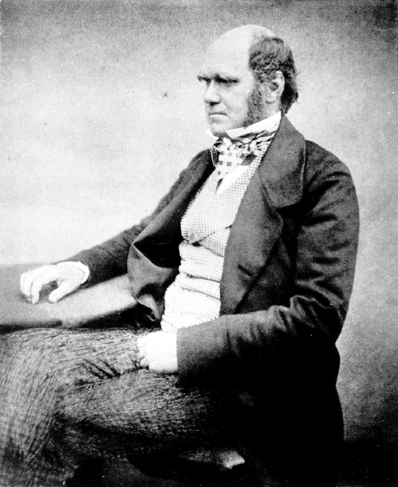
Charles_Darwin_aged_51

It is only when a conscious decision is made to champion archaic writ against empirical evidence that science and religion join combat. Most religious people in scientifically advanced societies have no problems with evolution or particle physics. They simply show the way the world is. The vastness of the universe should give us all pause, but it does make you wonder which way to point your telescope to spy the almighty. I sympathize with Barash. It is not easy to find many of your students, in either science or religion classes, with their minds already made up. Still, it might help to realize that religion is not the culprit here. Literalism is a kind of mental problem. Until it is rightfully separated from religion we will all be left wasting valuable class time trying to convince students of the facts of life.


Exceptionalism

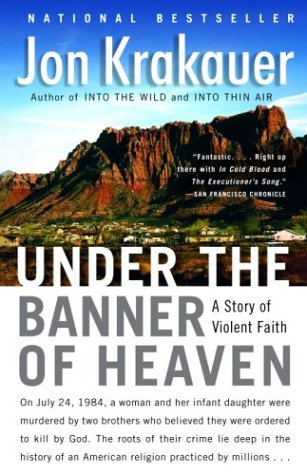
UnderTheBannerOfHeavenSome years ago I was invited to a famous person’s house along with some intellectuals—we’re all mature here, so names aren’t necessary. It’s no surprise that I ended up at the children’s table, being soft-spoken as I tend to be. The discussion had turned to international affairs, and since I can barely manage my own affairs I didn’t have much to say. Eventually it was suggested that if rule of law could take hold in the Middle East, strife would end. I finally spoke up, loudly injecting a “no” into the conversation. The problem with religious-based conflict is that the rule of law has been subordinated to the divine will. That is very well illustrated in Jon Krakauer’s Under the Banner of Heaven: A Story of Violent Faith. As Krakauer explains in his conclusions, he had set out to write a book that explored the history and background of his polite, abstemious, and law-abiding Mormon neighbors and friends. The story, however, takes a darker turn.

What Krakauer delivers is not a slam on Mormonism, but rather something far more difficult—an attempted even-handed history. As even Mormons at the various trials depose in the book, the faith has some strange beliefs. All religions do. For a religion less than 200 years old, the Latter-Day Saints also have an impressive violence in their history; parts of this book are like a fantasy novel, they seem so unlikely. Again, nothing unusual here. All religions have violent episodes. In general, religions aren’t violent—people are. The problems arise when the true believer (and there always will be) insists that religion trumps the rule of law every time. As Krakauer shows, those who violate society’s laws are not insane. They are, however, not judging the world by the same standards of the wider society. It’s just that, occurring as it does in the light of an historical period, the strangeness of how a religion starts is clearly illuminated in Mormonism. No number of apocalyptic horsemen will be able to stop the religious imagination once it is fired up. The problem with lines in the sand is that they easily move.

Perhaps the most disturbing tenet of Joseph Smith’s latter-day revelations is that of polygamy. Like a young Augustine, Smith had an eye for the ladies. Personal indulgence at the hand of a religious founder is not at all unusual. The problem is, the women in this book have been abused and traumatized in a religion, not unlike Judaism, Christianity, or Islam, that asserts (or has asserted) male superiority. Girls as young as thirteen or fourteen being married off to men three times their age to join what is essentially a harem doesn’t offer these young ladies a chance to become their own person. The majority of Krakauer’s study focuses on Fundamentalist Mormon sects, and not the mainstream Mormons who have great political power and occasionally run for president. Still, this is a very important book. It is not primarily about the Mormons. It is about those who can’t see beyond a blind faith in what would otherwise be a perfectly good piece of fantasy literature.


Beyond Redemption?

NonbelieverNation The Roman emperor Gaius, it is said, was insane. He perpetrated such antics as declaring war on the North Sea, making his horse a senator, and appearing in public dressed as various gods. Better known as Caligula, Gaius is often presented as evidence of the decadence that would eventually lead to the fall of the Roman Empire. Civilization, we’re told, has progressed enormously since then. We put people on the moon, and we carry in our pockets technology that appears, to mere mortals, as if it’s magic. We have elected an African-American to the White House and men have magnanimously granted females the right to vote. Oh how far we’ve come! And yet, in the midst of our self-congratulation, we have not one, but a plethora of high-ranking politicians in all three branches of the government who believe the world is only 6000 years old. They firmly believe Jesus will return on a white horse (presumably to be made a senator) any day now. And there will be a massive battle of good (us, or at least some of us) versus evil (those not evangelical in orientation) that will lead to the end of the world. And they are easily elected. Is that a knowing smile I see on Gaius’ face?

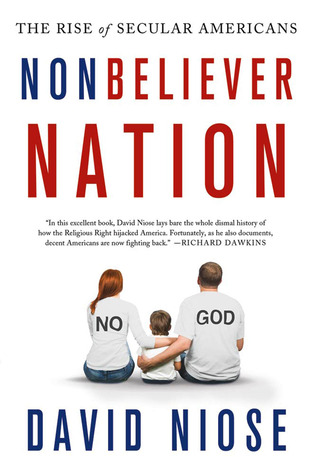
David Niose, president of the Secular Coalition for America, has written an important book entitled Nonbeliever Nation: The Rise of Secular Americans. Before you run for your shotguns, be assured that Niose is—like most secularists—not trying to do away with religion. Secularity is all about the founding principles of this country: freedom of conscience, the right to believe what we will. Or won’t. Up until the 1950’s the secular aspect of this country was taken more or less for granted. Tellingly, Niose opens his book by looking at the presidential elections of 1912 in which not one of the four candidates had a problem with evolution and even the most religious of them was very much a moderate. A century later and we have rampant Fundamentalists well funded and ready to push other nations toward initiating Armageddon. “Well, they started it!” And still, secular Americans are consistently portrayed as insidious snakes in the garden, trying to destroy everything.

It is difficult to read Nonbeliever Nation and not feel embarrassed as we see the promise of an advanced nation winding back its clock to the point that the educated are presented as ignorant at best—or more likely, evil. Where churches and corporations are increasingly difficult to tell apart, and where basic civil liberties for women and gays are still considered somewhat suspect, as if they hadn’t cleared the desk of the Big Man upstairs. Yes, he does have a beard and a son. And yet, despite the message of that putative son—known as a pacifist with radical ideas about social equality—the faithful bar the way for the oppressed while building the most massive arsenal in the world’s history. Rome, they say, was not built in a day. It didn’t even fall until 476, but already in the first century, large cracks had begun to appear. The difference is that America is far more religious. Does that give us any better chances, or worse? Read David Niose and decide. And, since global warming is real, the North Sea will eventually win in the end.


Flying Sorcery

In a post on the Huffington Post recently Michael Zimmerman, founder of the Clergy Letter Project, wrote about the strange antipathy of Ken Ham to the search for extraterrestrial life. Ham, founder of a creationist museum and self-appointed spokesman against evolution, has gone on the record saying that aliens cause problems for a creationist worldview. Therefore they can’t exist. Indeed, creationists should reject aliens because of the flat earth the Bible presents. Zimmerman, with his usual unfailing reason and wry humor, demonstrates the multiple difficulties both with Ham’s understanding of science and of the whole alien agenda. The Bible doesn’t address the modern world on many fronts, which is why literalists so often find themselves out of step with the issues of the day. When the final period (an anachronism, I know) was placed at the end of Revelation, it was expected that the world wouldn’t be around much longer, tottering as it was on the underground pillars that held it up. Somehow the Roman Empire came and went without any kind of cataclysm ending it all, and literalists have been backing and filling ever since.

Ham’s angst about extraterrestrials, however, is not shared by all Fundamentalists. I recall going to a session way out at a country church as a child where the guest speaker, a firm believer in aliens, talked about the “sheep in other folds” referred to by Jesus as aliens. I recall the eerie feeling as we drove home under a dark sky with fliers depicting flying saucers and assurances that we were not alone. In college, when I discovered Larry Norman’s music, I was struck by his lyric “If there’s life on other planets, then I’m sure He must know, and He’s been there once already, and has died to save their souls.” Literalists, like Catholics, take multiple views on the question. It seems a terrible waste of space if, in this infinite universe we’re the only sparks of consciousness around. I’ll leave “intelligence” for time to decide.

What would Genesis do?

What would Genesis do?

Ironically, Ken Ham doesn’t seem to have considered the up side of aliens, at least for his point of view. If the extraterrestrials end up looking like us, that does raise some serious questions about evolution. How did it work identically on two different planets to produce such similar results? You’d think maybe Fundamentalists might welcome aliens with open appendages. Of course, some have gone far off the other end and declared that angels and aliens are the same thing. The problem of the literalist world view is that it is severely limited. The Bible never foresaw the internet or the airplane or even the true nature of our own solar system, let alone the infinite sea of space beyond. In charting a course for belief, accurate maps are necessary. As Zimmerman points out, those maps, of necessity must contain the stars. And as we continue to evolve infinite worlds of possibilities await.


Mores the Merrier

The Presbyterian Church (USA) and I go back a long way now. Not that I’ve ever been a member, but one of their institutions gladly accepted four years of my tuition money and tolerated my presence on campus during that same time. I arrived at college a fundamentalist, but, as a religion major who thought through what was presented in class, I soon discovered that literalism was as wrong as sin. This past week the Presbyterian Church (USA) voted to allow gay marriages. Talking to someone I still know in my native, conservative western Pennsylvania, I learned that disgruntled heterosexuals I’ve known since I was a child are now denomination shopping because of the change. Ironically, this includes divorced individuals and others who can’t seem to get the hang of this heterosexual relationship thing. Marriage may not work for straights, but we sure don’t want the gays to have a chance at it.

Gay marriage, of course, is only the tip of the iceberg upon which modern Christianity is bearing down. And not just Christianity. Any ancient religion that finds itself surviving in a world that has completely changed since its founding has trouble remaining relevant. This issues of peasants in Palestine under imperial Roman rule are very different from a high-tech, service-industry, desk-job society. One could argue that people never change, but I suspect that society gives the lie to that. Some issues are perennial—we still haven’t figured out how to make sure the poor have enough. We will walk out of church, however, when we see affluent people of the same gender walking down the aisle together. With priorities arranged this way, is it any wonder that the mainline churches have difficulties retaining members? For some, the church has become a place to feel comfortable with their prejudices rather than to try to figure out what a first-century religion means in a twenty-first-century world.

I applaud the Presbyterian Church (USA) for its decision. It will certainly cost the denomination numbers. It is, however, a move to try to introduce justice back onto the agenda. One does wonder whether it was predestined. Far be it from me to speak for a first-century carpenter, but I suspect that a church founder who stressed repeatedly that love, not judgment, was the way to become one of his followers might be a bit sad at the political turn this has all taken. We know, from all that biology tells us, that sex has far more importance to humans than reproduction. It has a pair-bonding social function without which many couples would split up. This seems true regardless of the gender combination involved. Why not acknowledge this fact as truth and get on with the important business of negotiating the twenty-first century? Of course, we will have to find some other way to justify our prejudices.

IMG_1087


Elmer Gantry

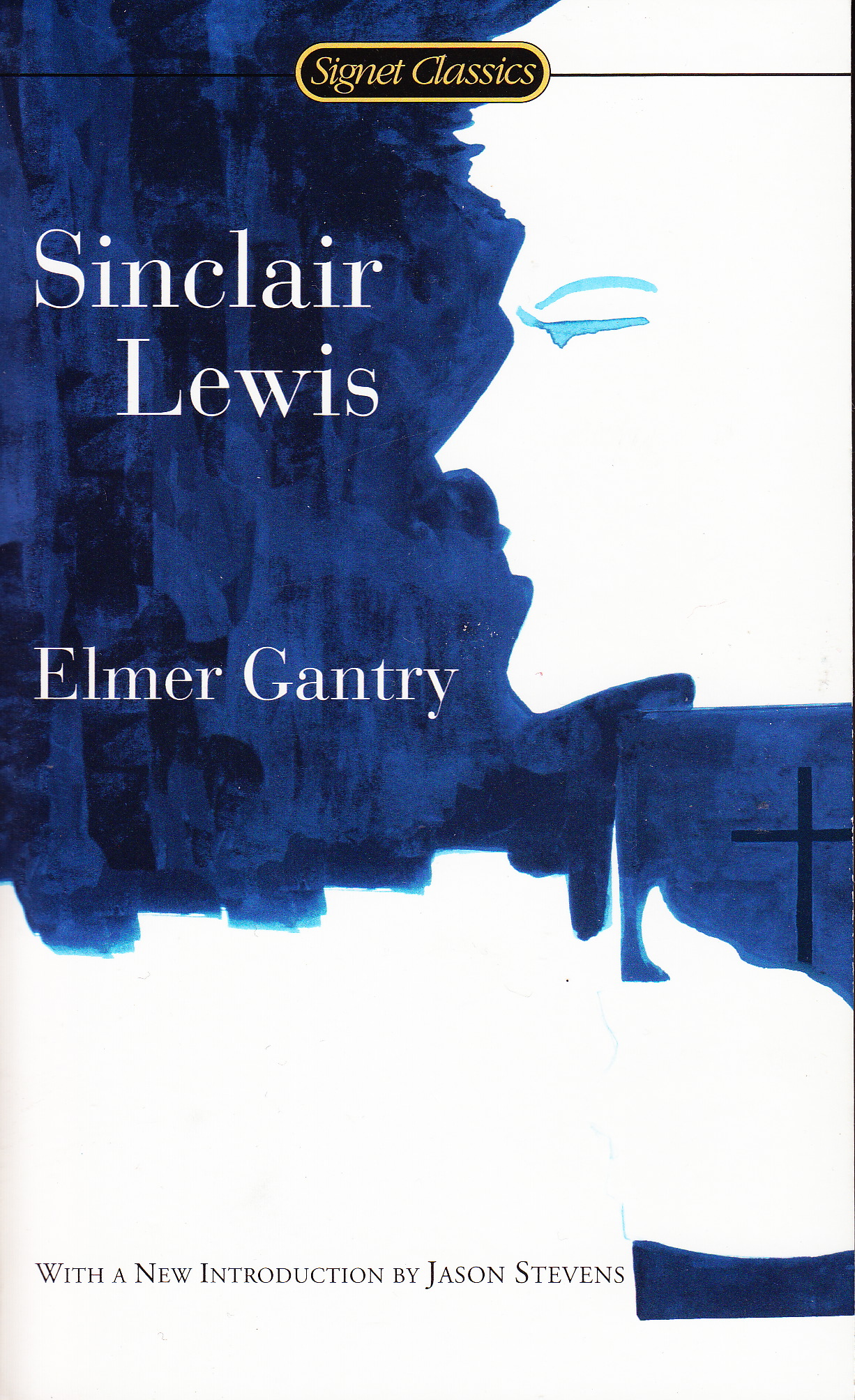
ElmerGantryIn recent years a renewed interest has arisen concerning how powerful entities are perceived by others. Academics are asking how the United States is seen by other nations. Corporations are trying to improve their public images because, well, let’s face it, it effects the bottom line. The same thing applies, but with a difficult kind of finessing, to churches. Part of the difficulty is that churches declare that they have the truth. Backing down from this in the face of public opinion more or less scuttles any claims being made. Thus I’d been curious about Elmer Gantry for some time. Sinclair Lewis’s novel of the self-absorbed, arrogant clergyman who believes in no god other than his own desires, is considered a modern classic. Written during the height of the follies of the Scopes Monkey Trial and Prohibition, as the Fundamentalist movement was just getting started, Lewis used dark satire to try to put the self-righteous in their place. I’d known the name Elmer Gantry from many other media references, so I figured it was time to see who he was.

Going into the novel I had few preconceived notions. Gantry, I knew, would be a hypocrite from the start, but beyond that, cultural references don’t give many hints. Although Lewis’s well-known wit shines through from time to time, on a whole the novel is a distressing read. I suppose it’s the mark of a great writer that you can despise a character so, but really, Elmer is led on his path, indeed, encouraged, by those who know him and whose only zeal is conversion for conversion’s sake. A womanizing, athletic, hard-drinking student, Gantry is where many young men want to be. The campus ministries, however, keep after him until he realizes what all clergy know at some level—there is power in being able to manipulate people by religion. As portrayed by Lewis, Gantry does try, once or twice, really to believe. His cynical and selfish nature, however, are too difficult for him to overcome and he therefore employs them in all his relationships as he climbs the corporate, ecclesiastical ladder.

There is really no triumphalism here, with the society discovering and ousting the charlatan. Indeed, as the book ends, the Reverend Doctor Elmer Gantry dodges a serious threat to his career only to be appointed to one of the most influential churches in New York, poised to go on to even greater things. Trying to find the blame in the novel, however, is not a simple task. Gantry is all too easily led. He follows his base desires deftly and confidently. He knows a mark when he sees one. Throughout his ministerial life, however, he is encouraged and prodded onward to success. Most ministers, in my experience, are burdened with conscience. I’m sure a few slip through with their own agendas, but the working clergy are nothing like the protagonist to this tale. Lewis focuses on the worst offenders. Those who are in it for the power, should they read Elmer Gantry, would find a model who is, like many in the era of early psychology and sociology, too easily excused because of circumstance. More than that, however, they might learn how they look to a larger society for which the church has become a mere historical curiosity. Elmer Gantry is by no means the worst type of figure we can imagine in a secular society.


31 Flavors

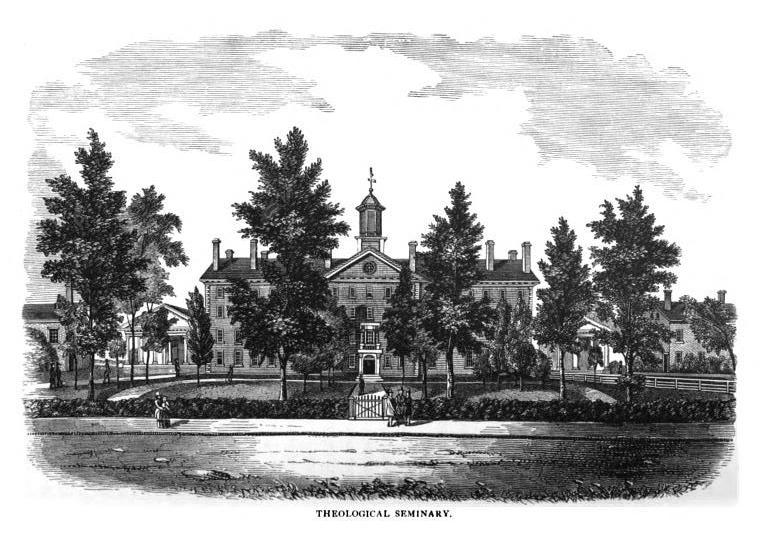
Princeton Theological Seminary, nestled next to its Ivy League sibling university, has never welcomed my advances. Although I’ve long ceased keeping the myriad rejection letters I’ve received over the years and now prefer to throw them in the recycle bin unopened, in my recollection I’ve applied to Princeton Seminary more times than any other school. Given the historic connection between the seminary and my alma mater of Edinburgh University, I often wondered why I never even merited an interview. After all, I live less than 20 miles away and they wouldn’t even have to pay for gas. So it was that I found a recent reference to “Princeton Theology” so interesting. Not every seminary gets to name its own brand of poison.

Princeton_Theological_Seminary

Princeton Theology refers to a movement that helped establish the culture that would give us the dubious gift of Fundamentalism. I have never been a Presbyterian, but I have attended their institutions, and one of the characteristics I’d often noted is that Calvin’s thought, in particular, often left me chilled to the theological bones. Assured of his own place in heaven, his theology seemed designed to keep others out. People, being what they are, naturally want to be on the winning team, especially in the eternity game. Reformed thought, therefore, was often perceived as cold and somewhat unfeeling. Predestination is, after all, determinism. Princeton Theology, beginning in the early nineteenth century, was intended to try to introduce a somewhat cozier evangelicalism to the sternness of Presbyterian theology. You may be condemned to Hell, but there’s no reason you shouldn’t feel good about it. After all, the divine plan trumps human need every time.

The approach of the twentieth century saw an increase in evangelical fervor throughout the United States. The growing number of flavors of Christianity led many to wonder what the true vanilla was. The answer, self-proclaimed, to be sure, was Fundamentalism. If you’ve never attended a gathering of theologians, you might not shudder as much as I do while typing these words, for such a conventicle has enormous power. Indeed, the Niagara Bible Conference was able to do what the Council of Nicaea was not—distill the essence of true Christianity that could be accepted by all believers. Unless, of course, one was raised in a Catholic or Orthodox tradition. Princeton Theological Seminary is not a Fundamentalist institution, but even a well-meaning attempt to make Christianity more palatable might lead to too much vanilla. In a world of 31 flavors, perhaps paradise tastes different to everyone, depending on the formula.


Victorian Secret

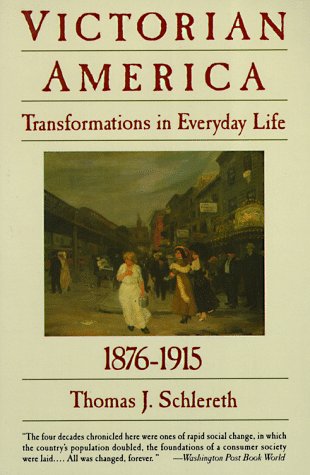
VictorianAmericaPerhaps it’s because the Steampunk World’s Fair is still on my mind, or perhaps because I’m increasingly curious about the way we came to be how we are, I read Victorian America: Transformations in Everyday Life 1876-1915. In this study Thomas J. Schlereth surveys the main aspects of daily existence during the turn of the nineteenth century into the twentieth. It is sobering to consider how quickly change has accelerated since then. Still, so much of what seems normal today was novel just a century or so ago. Although Schlereth doesn’t devote a chapter specifically to religion, he does tie it in with its natural analogue, education. We quickly forget that education was largely established because of religious principles. You can’t tell it today, but one of the main impulses behind higher education was the desire to educate people about the truths of religion so as to improve society.

Also developing in the late part of the nineteenth century was a new religious movement that considered five principles to be fundamental to Christianity. What’s more, those who promulgated this outlook also claimed it was true from the beginning of Christianity, although we know this is decidedly false. The inerrancy of Scripture, the virgin birth, Jesus’ divinity, the second coming, and atonement through Jesus’ sacrificial death—a few concepts that had rudimentary form earlier in the religion’s history—became non-negotiable. Fundamentalism, a new religion, was born in this era and claimed a right to parse true Christianity from false Christianity. This virulent form of belief quickly became politicized, and the relationship between religion and politics clearly impressed Americans from early days. We still reap its whirlwind.

Ironically, the Victorian Era, as designated by Schlereth, saw the birth of the Social Gospel. Doctrine wasn’t the first question on the minds of these reformers, but the human condition was. Yes, they tended towards Fundamentalism, but those who believed in the Social Gospel wanted first of all to eliminate human suffering and misery. It was they, not the Fundamentalists, who came up with the question, “what would Jesus do?” Education and religion eventually divorced, and the Fundamentalist children grew ever stronger in their conviction that they alone were right. The First World War brought a crisis to an optimistic culture that believed the second coming was just around the corner. Of course, we’re still waiting. In the meantime, if you’d like to learn how we got here, Victorian America is not a bad way to pass the time.


Irrational Reform State

Since 1954, after the cut-off date for new religions (see yesterday’s post), American children have been making a pledge to an inanimate object with the words, “under God.” Despite the fact that all parents know that children take liberties, the reality is that conformity is deeply embedded in young people. Totalitarian states everywhere have recognized that indoctrinated children are difficult to deprogram. In the chilly heart of the great panic known as the Cold War, the pledge of allegiance was emended to declare America a nation under God. And the American Humanist Association is backing a New Jersey family in suing to have a castrated pledge on offer. I always felt swearing fealty to a flag was a decidedly pagan activity anyway. Did not Jesus say, “let your communication be, Yea, yea; Nay, nay: for whatsoever is more than these cometh of evil”? Good Christians aren’t supposed to swear. In a land where the IRS controls what counts as a religion, we might consider substituting “under capitalism.” Isn’t that what we really mean anyway?

Nobody has control over where s/he is born. I’m not sure that many people would want to have the burden of making that decision. Still, we have to learn to adjust. Religion is a matter of where you’re born. We may grow to believe, but what we believe depends on what our guardians teach us. In my case, being born into a Fundamentalist family in Pennsylvania led me to nearly a decade-and-a-half teaching stint in an Episcopal seminary in Wisconsin. Who knew? My religion also taught me that swearing—i.e., “pledging” allegiance—was vaguely suspect. I was never discouraged from the pledge of allegiance, however. After all, it said “under God.”

When my daughter was very young, we were in a store in Wisconsin (where she did not choose to be born) when a couple of guys, being guys, let a few choice adjectives slip. One of them looked over, saw us there (my daughter too young to comprehend what was said), and said, “Oh, sorry! I didn’t see her there.” I found his chivalry admirable, but misplaced. We hear what we hear. So I’ve always found it odd when people want to sue if their children are forced to hear the words, “under God.” How does that threaten an atheist’s home teaching any more than swearing to a piece of cloth undermines a Fundamentalist’s? And aren’t we all taught that globalization is the way of the future? Under those multitude of young hands beat the hearts of Jews, Christians, Muslims, Buddhists, Hindus, Sikhs, Jains, Atheists, and any number of other faiths. We’re told the Cold War is over. Maybe the government should consider turning down the thermostat.

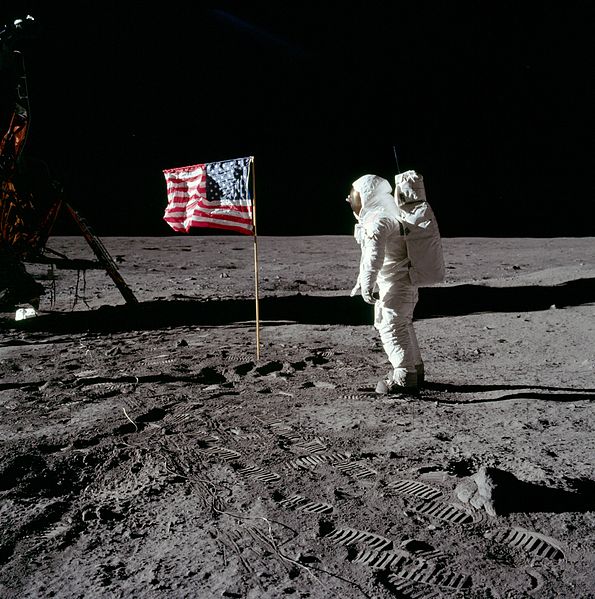
595px-Buzz_salutes_the_U.S._Flag


Inhabit Eden

InhabitingEdenNashotah House, although now a name recognized by only a handful of mostly disgruntled Episcopalians, used to have a name in higher education. Real intellectuals found their way there—scholars who saw that spiritual life did not equal brain-death. Of course, for some that may be the case. While I was on the faculty there, one of the student wives (it is a fully residential campus) was castigated by others for going through the garbage and pulling out discarded recyclables. “How extreme can you get?” they’d say in disbelief. Not extreme enough, I’d say. I just finished reading Patricia K. Tull’s Inhabiting Eden: Christians, the Bible, and the Ecological Crisis. Tull, a retired seminary professor from Louisville Presbyterian, offers a much-needed perspective on the real apocalypse we’re bringing upon ourselves, often justified by the Bible. Many Fundamentalist sects declare the world to be short-lived and for our “domination” because of Genesis. Tull, a biblical scholar, challenges that myopic view of Genesis and suggests that the Bible commends care for our planet. Christians, she indicates, should lead the way in caring for our ailing planet.

Although it is written for the average educated reader, this is not an easy book. It is distressing to read about the many ways that we have blindly (and that’s only putting it in the least culpable language imaginable) set about destroying our environment. Misreading “have dominion over” as “dominate,” Christians have often seen their prerogative as mastery, frequently cruel, over all others. Pollution? The world’s going to end soon, so let’s get the rapture out of here—and throw your waste on those left behind. Economic inequality? You’ll always have the poor, so exploit them. Agri-business? People cannot live by bread alone, so let’s make a huge, exploitative business out of growing crops and processing them to death. Ironically, and not in the good sense, much of this thinking comes from “Christian” entrepreneurs, people who see nothing wrong with making a few extra bucks on the way off the planet. We fry ourselves with our greenhouse gasses and poison ourselves with our drinking water. It’s all gonna burn.

Tull gives the lie to all these misplaced concepts that some claim are biblical. Sure, the Bible is no environmentalist handbook, but then, things weren’t so extreme a couple of millennia ago. We hadn’t yet developed the technology truly to dominate, radiate, and eradicate this planet. Besides, the early Christians figured they’d be long gone a couple hundred centuries ago. It should’ve been clear, even as the Enlightenment lit up, that we were in this for the long haul. And we’ve got only one home. The ethical implications fall thick and fast—those who destroy the environment are worse than war criminals, for it is the entire planet that pays the price for such thoughtless greed. Many turn their noses up at the humble street person collecting bottles and cans for a few pennies. It may not be their motivation to clean up the planet, but then, saints who are willing to dig through the garbage are seldom recognized for what they are.


The Edge

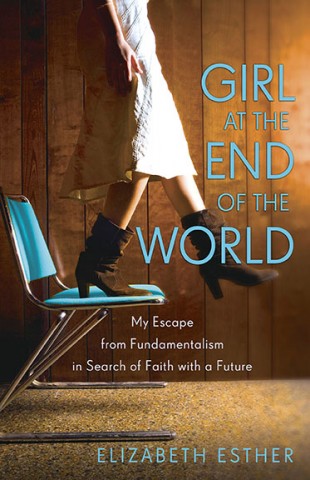
GirlattheEndoftheWorldElizabeth Esther’s Girl at the End of the World is finally out. I can’t remember the last time I read a book within two weeks of its release date. Of course, I have a soft spot for the religious memoirs of women, particularly when they manage to make their escape (I guess otherwise they wouldn’t be writing their experiences) from an unforgiving faith. Reading of the trials they have to go through to get there is far from enjoyable. But necessary. Often Bible-wielding males make the rules with a macho God behind them, and girls are abused in various ways so that the wrathful guy upstairs will be, well, a little less wrathful. I’ve read many of these accounts, and I worry deeply about the state of religion’s soul. Elizabeth Esther was raised in what she calls a cult, begun by her grandfather. This brand of fundamentalist Christianity taught the virtues of daily spankings of children, often beginning at about six months of age. The descriptions of how they used candy to tempt their children so that they could spank them to break their wills made me cringe. Evil wears many disguises, but none so effective as piety.

Religions are able to get away with quite a lot in a land of religious liberty. Elizabeth Esther proves that she’s made of some pretty stern stuff to have come through all of this, although she admits to still having panic attacks all these years later. She calls it Religious PTSD. She is right to do so. Although I grew up in a fundamentalism that scarred me for life, it wasn’t with the physical beatings that members of her grandfather’s religion doled out. When Elizabeth Esther describes the tendencies she has, the hyper-awareness of threat, I know that I am nevertheless still reacting the same way in my own life. After my fundie upbringing, I had the misfortune to be employed by a different kind of literalist religious institution. Faculty whispered about the new malady coming out of the Gulf when we started to develop nervous ticks and odd quirks after being kept under constant threat. When I contact many of my former colleagues I can still tell we were badly damaged there. Some religions, as Nietzsche long ago recognized, are life-denying to the point where a soul death would be more merciful. And yet we carry on.

Elizabeth Esther ends her book with a reluctant escape to Catholicism. She notes that even it doesn’t exist without its problems. We are, however, religiously evolved beings. It is in our constitution to seek the solace of communal worship, or at least a kind of spiritual solidarity. And there are those who will take advantage of people who simply seek their sense of self-worth from authority figures who claim to have it all worked out. Disproportionately those who are made to suffer are women. The Bible, although it cannot be blamed on the abuses heaped upon it in the name of the Judeo-Christian tradition, conveniently emerged from a patriarchal society. In the hands of some men it becomes an implement of torture. And many are left far poorer in life for having encountered this particular form of demon disguised as an angel.