Patriot Games

Earlier this week I had the occasion to find myself in Newark’s Liberty Airport. I had mentally prepared myself for a government-sponsored groping (I find full-body scanners immoral and, no matter what the Patriot Act says, illegal) but I managed to make it through with just emptying my pockets and walking around in my stocking feet. Once I arrived at the gate area, I was once again struck by the duplicitous use of religion in America. Posted above each gate was a small banner reading “God Bless America” surrounding a stylized flag. I thought of the Hindus, Buddhists, and atheists flying out of that terminal (and in Newark I am certain there were all three species, in spades). Since 9/11 the staffs of the large New York City airports are justifiably cautious, but the blending of nationalism with divine will always makes me nervous. Especially since the weightier implications are so readily ignored.

In the biblical world the ideal was that travelers would be treated fairly. Someone away from home is already at a disadvantage. In ancient times the traveler deserved special consideration, not to be swindled or met with unfairness. Looking around at the prices merchants charge for those who’ve gone beyond the gate and have no choice, it struck me how when religion and economy collide, economy always continues on unscathed. The weary traveler, according to the Bible, especially deserves fair treatment. Charging extra to someone already at a disadvantage violates just about every biblical standard that echoes through those unread pages. God bless America? Only if it fills the coffers.

The sentiment expressed in “God bless America” is vastly at odds with the way we behave. Taking advantage of others is the bane of prophets and messiahs alike. Taking care of the poor, the disadvantaged, the traveler—this is the biblical ideal. Instead it is easier to band-aid over our sins with posters asking God’s blessing on our insincerity. Many people fear Islamic fundamentalists without taking into account the more subtle damage done by our own homegrown variety, giddily holding hands with an unfettered free market. Cheating the traveler may not be as wicked as blowing up an airplane, but both these tangled vines, in the biblical view, spring from the same root.


Contriving the Rapture

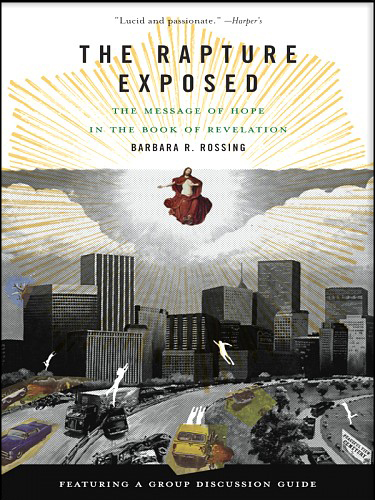
In the light of last month’s failed rapture attempt, I decided to read a book that I picked up some years ago that had been written in the wake of the millennial scare. Having grown up with nightmares of the rapture, I learned during my first college class on the book of Revelation that it was relatively modern meme, invented in the nineteenth century. Barbara Rossing’s The Rapture Exposed seemed a good way to refresh my memory without having to go through all those boxes of books in the attic to find my original textbooks. Rossing, a Lutheran minister and New Testament professor, brings to light some very important facts beyond the historical roots of this theological fabrication—facts that should concern religious and secular alike. The rapture was invented by John Nelson Darby, a founder of the Plymouth Brethren and convoluted biblical scholar. Basing his roadmap of the future singularly on Daniel 9, he concocted the rapture to make sense of his apocalyptic epiphany. Drawing diverse sections of Paul’s letters to the Thessalonians, the Gospel of Matthew, and the book of Revelation together, he mixed thoroughly, half-baked it, and pulled the rapture out of the oven.

The idea caught like wildfire. Today young people who’ve never read the Bible and who’ve seldom attended religious services know what the rapture is. What they do not realize is that nearly all of the Christian tradition rejects it, seeing it for what it is—a Johnny-come-lately of amateur theology that sees the Bible through the lenses of dilettante-sensibilities like those of Michael Drosnin (The Bible Code man). Instead of seriously reading the Bible and trying to understand it, society prefers to see it as a little bit of magic in the midst of our scientific and technical world view. It is a safe place where bits of the supernatural are preserved and that defies rational explanation. Rossing’s book does a good job of exposing the wrong-headedness of LaHaye’s Left Behind conclave, but she overlooks an important feature of this coterie: they have an unconfessed agenda.

The unspoken agenda is best summed up by Lt. Frank Drebin of Police Squad when he says, “blowing away a fleeing suspect with my 44 magnum used to mean everything to me. I enjoyed it, well who wouldn’t?” Rossing misunderstands Fundamentalism when she expresses surprise at the bloodlust present in the Left Behind novels. What she doesn’t take into account is that, as a collective, Fundamentalists thrive on self-righteousness. Feeling the same violent urges that others do—all humans experience violent emotions—they sublimate that aggression and save it for the unrighteous—God’s enemies. When the gloves come off in the apocalypse, that hatred bursts out in good, old-fashioned bloodletting—albeit with combat helicopters and high-tech weaponry. Of the Christians I know who own guns, the Fundamentalists are most avid in their rights to do so. In college I met my first Christian survivalists and I learned that the rapture was a ruse. It is a deadly mix, especially when this warped theology makes it into politics. Although Rossing’s vision of a new earth in the second half of her book may not appeal to everyone, Americans should read at least the first few chapters to learn why the rapture will never occur.


Exegesis Dies

One of the time-honored adages among composition primers is that a serious writer will own a well-worn dictionary and thesaurus. In twenty-first century terms that equates, I suppose, to frequently visiting bookmarked dictionary and thesaurus websites. While writing my dissertation I once cited a dictionary—likely Merriam-Webster—only to be told that the definitive dictionary for academic purposes was the Oxford English Dictionary. Copyright laws prevent some dictionary sites from including entries from the OED, and, given the perpetual vicissitudes of streams of income, I really can’t afford to subscribe to the fee-based OED website, much less purchase the physical hardcopy. Dictionary.com remains free and even has a handy thesaurus, so it is my well-worn website. Many electronic wordsmithies offer a word of the day, and so on my morning visit to dictionary.com I found a familiar word awaiting today: eisegesis. Eisegesis, according to the this online dictionary is: “An interpretation that expresses the interpreter’s own ideas, bias, or the like, rather than the meaning of the text.”

In biblical studies eisegesis is utilized like an academic swear word. The true scholar engages in exegesis, the practice that is supposed to reveal what the original text actually meant. The problem, of course, is that what the text originally meant depends on the baggage the reader brings with him or herself. Reader-response theorists inform us that even an author loses control of words once they are scrawled on paper (or electrons, I suspect). The words convey their own interpretation, and, as in any communication system, the transmission must be interpreted through the medium of a receiver. My understanding of the original meaning will depend on what I bring to the parchment. Even the author cannot control the denotation of what s/he has written, for connotation always lurks in the shadowy corners of the room.

The implication of this simply truth for any religious writing should be transparent. We do not control the words—we interpret them. I’ve taught many fundamentalists over the years who bring this weary refrain to the text: “I don’t interpret the Bible, I just read it.” Reading is interpreting. The words on a page (or monitor) are simply a system of ciphers that must be processed. The way your brain processes them will be different from the way my brain does. For the fundamentalist, God wrote the words, but God has no physical brain so how are we to find the true meaning? Exegesis. At the heart of the matter, however, all exegesis is eisegesis. The example I like to give my classes is the word “die” —what does it mean? Most say something like “to stop living.” Those with a background in machining might say die is a noun indicating a mould or tooling device to form an object. Some even know it could be the singular of the word “dice.” Once they’ve exhausted their suggestions, I inform them any of them could be correct, only I had neglected to tell them it was intended to be the feminine singular form of the definite article in German.


Dog Gone Rapture

With the world about to end tomorrow, a friend pointed me to a story of a savvy entrepreneur. The idea is so obvious that I’m completely jealous I didn’t think of it myself. Among the Fundamentalist camp it is widely acknowledged that animals don’t have souls. They do, however, make wonderful companions nevertheless. When their good Christian owners are raptured to the skies, Rover is consigned to a cruel death by starvation if his soulless biological form is left inside. Poor soulless, sinless Rover! Reason (such as any theological thought can be called “reason”) and emotion clash. Bart Centre comes to the rescue. His company will break into the now abandoned private property that God had blessed you with, and rescue your pet. For a reasonable fee. As an atheist, Centre is pretty sure he won’t be going anywhere.

At notable—and even some rather forgettable—points in human history, people have guessed that it is all about to end. This is a strange belief when parsed apart from its original context. Ancient mythical thought tended to be holistic. We humans, with our own cycle of births and deaths, have trouble imagining anything that doesn’t follow the same pattern. All things must have beginnings and ends. Zoroastrianism began as a persecuted sect among the Old Persian religious realm. Persecuted sects tend to want an end to the suffering, and so it is no surprise that Zoroastrians gave us the end of the world. When Judaism was under the severe predation of Antiochus IV Epiphanes, it too looked for a radical change. Christianity under Nero and Domitian looked for a triumphant culmination of a universal purpose. And no end came. Instead, under Constantine Christianity gained a privileged position. With only periodic outbreaks, concern for the end of all things was pacified.

Today with the ease of lifestyle among most American Christians, it is surprising to see such antipathy toward the world. In the words of the Metatron, “Was Wisconsin really that bad?” Or maybe I have read it wrong. Perhaps this is the final culmination of the Prosperity Gospel: Christians have got it so good that the only way to better their lot is to end it all? Religions have always demonstrated their acquisitiveness either in terms of souls or currency. When you’re on top of that world, what direction is there to go but out? But you can’t take it with you, including your soulless friends. Perhaps that’s the real lesson in all of this: humans struggle to mix reason and emotion into one psyche, despite their diverse evolutionary paths to consciousness. We may readily accept the mythical but still wonder who will take Rover for his walk.

Cafe Press's take on the issue


Of the Zombies, By the Zombies, For the Zombies

In what is sure to be a controversial move, the Center for Disease Control has posted an official government blog post entitled “Preparedness 101: Zombie Apocalypse.” (Be warned, if you click on this link it may be considerable time before the page loads—it has been receiving a tremendous number of hits.) Written by Ali S. Khan, the Assistant Surgeon General and head of the CDC, the article is actually about hurricane preparedness, but with zombie furor being what it is, many on the Internet are taking the warning seriously. Literally even. Citing the tsunami in Japan and the concerns for leaking radiation, the article begins with a lighthearted fear-fest that then reveals the actual concern. Humor in the government? This is something we should all encourage!

The analogue with the current rapture fever was immediately obvious. I grew up in terror of the rapture, but when I began to take courses on the Bible from scholars who knew about apocalyptic literature, its context, and what it was intended to do, I realized that the rapture was invented in the nineteenth century by evangelists with no critical training, misreading the book of Revelation. As much as we like to break history into discrete units, time simply keeps flowing and the current of fear generated in the nineteenth gushed into the twentieth century culminating in the birth of the Christian fundamentalist movement. For many people in the twenty-first century, fundamentalism and Roman Catholicism are the two ancient strands of Christianity that legitimately lay claim to the title. At least half of this history is backward.

The Bible itself, when read in context, shows the errors of the rapture-hungry. The idea is a blend of obscure bits of Paul’s letters, mixed into Revelation and stirred vigorously. Then half-baked. The Bible does not give us a rapture. The CDC does not give us a zombie apocalypse. We know where the myth of zombies originates (I have posted on the topic before) and we know zombies are as fictional as griffons and centaurs. Nevertheless, faith springs eternal. Those dissatisfied with all that life has to offer turn to zombies for an equalizingly grim future for all humankind. It’s all gonna rot, baby. Except, of course, for those who’ve been raptured before it happens. When the zombies fail to show up after Saturday’s non-event, all of us will feel pretty silly just looking at each other as Ali S. Khan comes up with his next zinger.

The author, upon reading the CDC blog.


O Tenn Won’t You See?

Truth goes to the highest bidder. In the United States the highest bidder is the party with the numbers to get elected. Truth by democracy. Once again Tennessee is flirting with Creationism, if not having already climbed into bed with her. High school biology teachers nationwide are afraid to take on the issue directly; many of them are told by their clergy that the concept itself is anti-Christian. This is what happens when mythological needs go unanswered. No one has yet deciphered why human brains evolved the capacity to believe in outside agency beyond the realm of nature. Many Fundamentalists use the phenomenon as proof of their pre-decided answers, despite their willingness to utilize this evolved Internet to spread their ideas. If evolution is false the Internet does not exist.

The larger issue here is the fact that educators have, by-and-large, dismissed the impact of religion. Particularly in higher education. Everyone has their own religion, we don’t discuss it because someone will become offended, and we pretend that, gosh-darn-it, people are just too smart to believe all that. Meanwhile millions of tax-payer dollars are wasted on cases continually going to court where one subset of one religion insists that its mythology has a right to be taught as science. Even the Fundamentalist’s strange bed-fellows in other conservative issues, the Roman Catholic Church, has stood up and put on its slippers. This one is not a matter of opinion, ecclesiastical or otherwise.

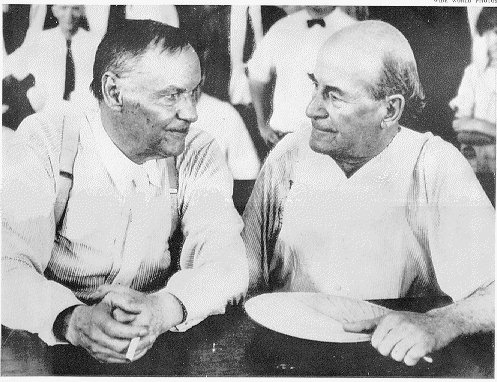
But religious folk understand that if they elect the right candidates, the issue can be forced again and again. The Creationist tactics are evolving to fit the situation. Meanwhile, not only religion, but also the study of history is largely dismissed as irrelevant. It is history that demonstrates the birth, growth, and current goals of the movement. The Scopes Monkey Trial was nearly ninety years ago, but it may as well have not taken place yet. If William Jennings Bryan had been smart, he’d have waited until his cohort had had time to carefully sow their seeds, water, weed, and fertilize them (using the oldest known material to ensure growth – plenty of manure) and then take it to legislators. The results are as predictable as the sunrise over our flat earth.

Seems just like tomorrow...


Origins of Evil

The Bible might have benefited from a good editor. The final product is a world classic, of course, but contemporary people with their busy lives prefer straight and simple answers. These, often, the Bible refuses to yield. During a discussion of prophecy in class the other night the question of the origin of evil arose. I incidentally made reference to Isaiah 45.7 where God casually drops the line, “Forming light and creating darkness, making peace and creating evil, I am Yahweh making all this.” Many English translations attempt to mask the bald use of ra‘ “evil,” in this passage with nicer words such as “woe” or “calamity.” As I explained to my students, however, in a truly monotheistic system all fingers must point the same way for the ultimate responsibility. In this passage of Isaiah, Yahweh is presented as causing evil.

Now the editing of the Bible was never undertaken with the intention of creating uniformity, despite the railing of Fundamentalists. There are plentiful internal inconsistencies and disagreements. We should expect no less of a book written over a period of about a thousand years by several different writers grappling with life’s big questions. Inevitably students ask about the Garden of Eden. Genesis 2.17 has Yahweh state that newly created people must not eat of the “tree of knowledge of good and evil (ra‘).” Here the evil grows on a tree. Who planted that tree? It’s like blatantly laying the keys before your teenager and saying, “now don’t take the car.” Who is the source of that tree? (And, less frequently noted, the eating of the fruit in Genesis 3 is never called “sin.”)

The quintessential problem with a compilation is lack of uniformity. This did not bother ancient people as much as it does modern Fundamentalists. One reason is that many people equate the Bible’s value with it being a book that has all the answers from a single viewpoint. This the Bible lacks. According to the Bible there are various sources of evil. According to a strict monotheism (late in the Hebrew Bible) there can only be one. Enter the devil. To save the goodness of God a Zoroastrian anti-God had to be introduced. But the devil must stand in line to make his patent claim on evil.


Evolving in America

Columnist Leonard Pitts Jr. is one of the most sensible men in America right now. Witty, humble, and bright, he sees clearly and shoots straight. In an allegory entitled “A tale of a giant grown stupid” he illustrates the frustration many intelligent people feel in a country where thinking is viewed askance, and accepting empirical data is rife with suspicion. He begins his article by citing a statistic in Science that indicates some 60 percent of high school biology teachers in the United States inform their students that they don’t have to believe in evolution, they just have to know enough to get through the test. And evolution is not alone in the field of falsified information. Americans are regularly fed a high-fat, low-fiber diet of poor quality religion and told it is the only correct one.

While the remainder of the developed world has moved on to more important issues, we in America are still stuck in Fundamentalist kindergarten. The constant barrage of insipid theology from self-proclaimed doyens of the Scriptures assures the masses that the price of heaven is a healthy dose of creationism. Making matters worse, most biblical scholars choose not to engage these misguided spokespersons, choosing instead to believe they’ll eventually just go away. But why go away when you’re winning the fight?

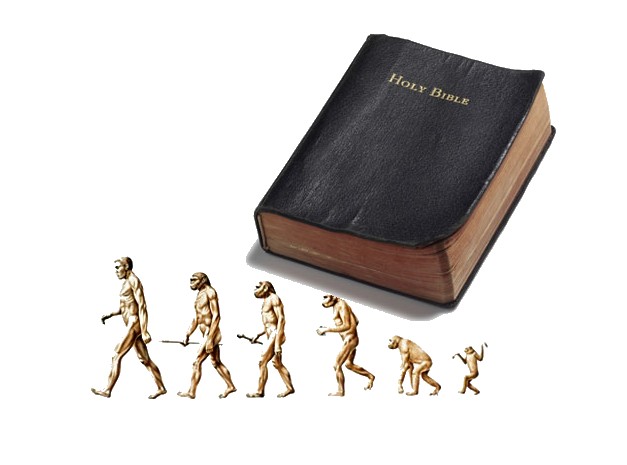
Evolution is such an odd issue over which to argue. Neither serious biologists nor serious biblical scholars have any problem with it. Only a society increasingly under the power of a jacked-up, over-eager, offensive Christianity buys the feeble creationist rhetoric. And buys it in bulk. That is the American way. For many, society’s ills may be blamed on too much thinking. The Bible requires no thought, just the ability to see in black and white. And the Bible has proven a more powerful weapon than an H-bomb in the educational curriculum of our bright young minds. America itself is evolving. Unfortunately it is evolving into a nation satisfied with simplistic solutions to complex problems. And Bible scholars do nothing and wonder why everyone ignores them. Once upon a time there was a giant. Only it was not sleeping, it was already dead.


Dog Gone!

Religion is a strange attractor. Maybe not in the exact same sense as in chaos theory, but in reality it brings together mental states so bizarre that science fiction and fantasy writers have a buyer’s choice. Yesterday the New York Daily News reported on a South Carolina woman who hanged and burned a one-year old pit-bull puppy. Why? The bitch had bitten the woman’s Bible. Citing the animal as a “Devil dog,” the southern woman became a vigilante for the Lord. Now she’s being tried on charges of animal cruelty. This story touched me in a number of ways.

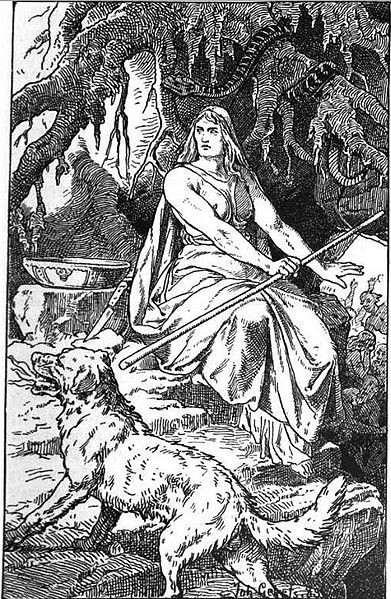
With family roots in South Carolina, I can conjure up images of this happening. Having known many, many Fundamentalists, it seems even more plausible. Given the constant barrage of contrary messages descrying the presence of evil in the world, all the sudden any mutt can become Mephistopheles. Begging off the Baskervilles, the demonic hound has a long pedigree in mythical imagination. It is well known that the Bible cites dogs as unclean animals, but it is their charnel character that leads to the development of the full-blooded hellhound. Prior to the Hebrew Bible, in ancient Ugarit dogs had an infernal connection. It isn’t seen clearly, but the association is there. Snatches of the underworldly dog appear long before Cerberus, and last well nigh into the twenty-first century.

Hel and his hound

Unfortunately for the deceased canine, it is a myth. Hellhounds still abound in popular media, everywhere from The Omen to O Brother, Where Art Thou? Dogs, however, were among humanity’s earliest partners in the survival game. From about as early as I can remember, we always had dogs in the house, and nary a demonic encounter. We never put them on trial, even when house-training was in progress and an accident occurred.

The news story reminded me of an episode of Dragnet I saw as a child. A woman was arrested for murder, and Sergeant Friday, in his unflappable voice, told his partner it was because the victim had shot one of her books. In the final fade out, after Bill Gannon asked what book it had been, Friday holds up a Bible with a bullet-hole through it. I was a little confused. Was the woman guilty or was someone shooting a Bible just cause? The episode did not answer the moral dilemma. I can’t even remember the outcome. But in 2011 things haven’t much changed. If he goes to South Carolina McGruff better watch what he takes a bite out of, or it could be lynching time again.


Winter’s Music

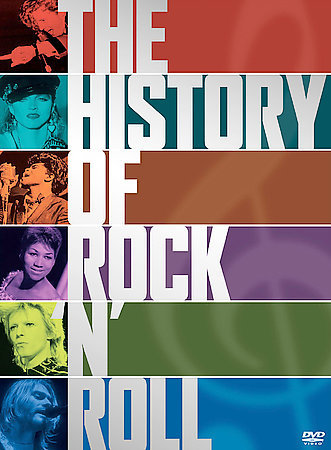
An editorial in this morning’s paper once again raised the question of whether we need a politically correct version of Huckleberry Finn or not. The story led me to recall the origins of rock-and-roll – not that Mark Twain was a rocker, but because I’d recently viewed the first installment of Time-Life’s History of Rock ‘n’ Roll. Both Huckleberry Finn and rock-and-roll owe a vast debt of gratitude to African-American culture, and both bear the scars of prejudice. An unfortunate aspect of life is that few people willingly subject themselves to hard labor when they realize an easier lifestyle is available (thus, Brave New World). This has been true since civilization began. With the advent of the Sumerians we begin to read about the slavery of war-captives. Even today, dressed up in fancy clothes, slavery of various degrees continues to persist. The reprehensible treatment especially of Africans for slavery is a heritage that will not easily be overcome. And yet American culture owes much to its African components.

While already in the back of my head, this was once again brought to the front by the “Rock ‘n’ Roll Explodes” episode of the Time-Life series. Now, being a musically deficient individual, I claim nothing particularly insightful here – my wife and daughter are the musically accomplished ones in this household – rock clearly has its roots in the blues and gospel. In the documentary Little Richard explains how rock was often simply music of the black churches transposed to secular clubs. Xenophobic “white” culture of the 1950s felt threatened by this catchy music and sought to disarm it. Calling it “race music” producers had the more popular songs covered by white singers such as Pat Boone. (His cover of “Tutti-Frutti” always makes me smirk.) The real element at work here was the prejudice against the other.

As a youth I recall literally throwing my rock albums in the trash because of a Fundamentalist tract that declared in no uncertain terms that it was the “Devil’s music.” I’d bought those albums with my own hard-earned money, but sacrificed them to save my soul. Little did I know that “Devil” was a code word for “African” in this fundie literature. Otherwise, why was it alright when Pat Boone (of The Cross and the Switchblade fame) sang the same song? Mistrust runs very deeply in monotheistic religions. Even today many branches of Christianity inveigh against the horrors of rock without acknowledging that the music has its roots in the cry for liberation on the part of slaves, as expressed in Christian worship. Civilization will always insist on retaining its slaves. At the very least modern western culture should say “thank you” for the unrequited gift of the musical voice of the twentieth century.


Casting the First Stone

I’m not overly nostalgic for a guy interested in ancient history. I tend to look at the more recent past as a via negativa for the young who might make a difference today. Very occasionally, however, aspects of society were handled better back in the 1960s and early 70s. One of the most obvious instances of a more sane society was the segregation of politics and religion. Prior to the rise of the “Religious Right” as a political machine the religious convictions, or lack thereof, of politicians played little role in their campaigns and American culture itself was much more open. A story from today’s MCT News Service illustrates this all too well.

In an article entitled “In S.C., religion colors gubernatorial race,” Gina Smith reports on the various religious slurs that now pass for political campaigning in that state. “Raghead” (for a former Sikh), Buddhist, Catholic, and “anti-Christian Jewish Democrats” are among the aspersions freely cast by those without the sin of a non-evangelical upbringing. As if only Fundamentalists are capable of making the right political decisions. As if Fundamentalists ever make the right political decisions. Fundamentalism is a blinding force on the human psyche, and those who are misled by religious leaders who claim unique access to the truth are to be seriously pitied. Conviction that those most like you are to be trusted most may be natural, but dogged belief that pristine morals accompany any religion is glaringly naïve.

The American capacity for belief in fantasy worlds is in the ascendant. No matter how many times Fundamentalists or Evangelical politicians are arrested or forced from office for the very sins they rant against, their overly forgiving constituencies come flocking back to them. Commit the sin of being born Sikh, Hindu, Buddhist, Muslim, Jewish, or Catholic and no quarter will ever be offered. No, I have no desire to go back to the 1960s, but I sure wish politics would.


Jesus at the Prom

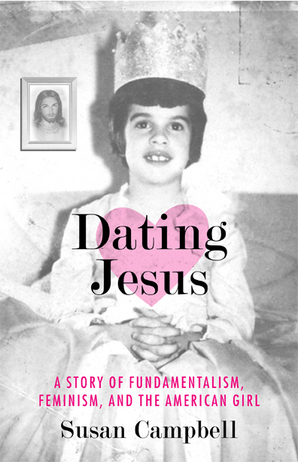
This week I read Susan Campbell’s Dating Jesus: A Story of Fundamentalism, Feminism, and the American Girl. Parts of her autobiographical narrative seemed so familiar that it was almost like we could have been siblings. Other parts demonstrated just how widely a religious upbringing in America may vary. Fundamentalism is a powerful force, and one that often feels impossible to outgrow. The added dimension of a constant, insistent criticism of gender made Campbell’s account truly wrenching at times. Having been raised in a similar environment, I had been taught that ministry is a male prerogative, an activity women were separated from just as surely as begetting babies. Having been raised mainly by my mother, however, I was more sympathetic to a woman’s plight than most of the outspoken advocates for male privilege. Campbell’s story hit close to home.

One of the most tenacious aspects of Fundamentalism is the brain patterning it impresses on young minds. Who doesn’t know that baby birds impress parenthood on the first creature they see after hatching? Young children, trusting well-meaning parents, are impressed with a religious branding iron before they can sort things out for themselves. We make our children in our own image. Few ever undertake the intense reflection later in life to challenge these impressions. Like Campbell, I attended seminary because I was curious. Many of my classmates had no questions in their heads – they knew already that they were to be ministers. Seminary was a hoop to be leapt through rather than a rung to be climbed for a different perspective. And their children will be taught their perspective. Denominations will continue to increase in numbers as acorns roll not far from the tree, but just far enough.

Campbell’s memoir is a gentle indictment of the male establishment. What once began as a biological division of labor has been given a religious imperative; male dominance is ordained by God, and women have no option but to comply. Even as the divine gets pushed into an unlit corner of everyday life, the deity may always be drawn back out for a session of gender oppression before being tucked safely away again. In these days of advanced technology and wide perspectives, women are still held down as some kind of inferior sub-species by men who believe that they are the default version of the image of God. It is time to be honest and admit that the only reason women are kept from the male preserve in any field is because of a jealous green-eyed god called privilege.


Lying Literalists

“I hate, I despise your festivals, and I do not delight in your solemn assemblies!” The words of some godless communist? A disaffected liberal? An angry atheist? No. These stark words come from Amos, the prophet. Each year when I teach my course on the Hebrew Prophets I am struck by how strident their words are. For Fundamentalists and others who take the Bible literally the words belong to none other than the Big Guy. The Primal Y. G-d. God hates the worship conducted in a land where injustice reigns.

Although the basic principles sound correct, it is clear that America cannot really be considered a just society. There are a few too many families without enough to eat, a few too many homeless on the street-corners of our cities, a few too many unemployed. And a few too few filthy rich. There is plenty to go around, and one might naively think prosperity might trickle down. It doesn’t. I’ve always been amazed to see the girth of many prosperity gospelers who inveigh against the unrighteous. A sturdy measuring tape might tell us all we really need to know about righteousness.

Bible believers do not believe in the Bible. They accept the message they wish to hear, that God loves those who are rewarded with wealth, but the message of Amos they have little time for. They miss the part where the prophet calls them cows of Bashan that are fat for sacrifice. Yet when they flip out their iconic Bibles the theologically illiterate follow them to the polls. The more they pound their Bibles the more they are beating innocent victims. Be careful before becoming a Bible believer – it is not always a comfortable place to be!


Naughty Religion is Bad Science

In the continual struggle of Fundamentalist Christianity against the rest of the world, new Creationist grounds have been made in Connecticut. Connecticut is not exactly the first state to spring to mind when it comes to extremist conservative religion, but Fundamentalism knows no bounds. Perhaps the largest disappointment, from the point of view of a student of religion who knows the Fundamentalists a little too well, is that otherwise intelligent people simply accept what their clergy tell them. Having been a seminary student and professor, however, I know the kinds of training clergy receive and if the whole wide world knew things would be different.

Clergy of all stripes of all denominations of all religions are just as human as the rest of us. They do not have special physiognomic features in their brains or hearts or cellular structures that allow them to receive private messages from God/the gods. Many are trained in special schools where people like myself teach them, often against the blustering of their clergy supporters back home, what we factually know about the Bible and other aspects of religion. Many successfully block out what they are forced to hear and emerge just as ossified, if not more so, as when they entered. In other words, their “education” has been an exercise in learning to ignore the truth. They are then made into clergy who continue the deception. Even worse are the clergy who receive no training at all, frequently fresh from an overly-heavy-dinner-induced religious experience, who claim that the biological responses to overtaxed gastric juices is some message from beyond.

The average citizen naively accepts the religious credentials of their clergy, supposing that this “holy” person has had some special word from on high. That word is often factually wrong, especially concerning evolution and the origins of life, but it is accepted as gospel truth and disseminated among unsuspecting children. Religion is a matter of belief, not of fact. As America lags farther and farther behind even developing nations in science education, Fundamentalist clergy give a self-satisfied smile. They have become the gods of a nation that was once able to land some of its citizens on the silvery moon in that great literal dome that surrounds our flat earth.


The End of the World as We Know It

Well, that may be a bit dramatic, but my whole family is scratching its collective head over the news that our time on this planet has been foreshortened by the Chilean earthquake. Yes, scientists from NASA announced yesterday that Saturday’s 8.8 magnitude earthquake actually shook the earth three inches off its axis and has led to a loss of 1.26 milliseconds of time. Even for the gods this seems to be playing against the rules!

I wonder what the Fundamentalists are thinking about it? I do know that some extremely conservative types mess with time when trying to explain how the 4.5 billion-year-old world could have been manufactured in just 6 days — they call it the “day-age theory.” Or that the globe stopped spinning for 24 hours to give Joshua and his invaders more time to kill the Canaanites. I’ve even had students tell me that this latter case was scientifically proven. Time, however, ticks on despite our concerns with it.

It was my daughter who suggested the title for this post. After she said it, however, she noted, “Well, actually the world as we know it ended with the earthquake.” The world as we knew it. Radical changes have taken place with stunning rapidity on this old globe we call home, and some days the whole world changes. In 1815 the eruption of Mount Tambora led to the “year without a summer.” Wayward space rocks sometimes wipe out over 90 percent of all species on the planet. We live in a constantly changing environment. And it is my hunch that when that final disaster comes, those who’ve spent all their energy climbing the money mountain in the company of financial wizards, bank presidents, insurance profiteers, and oil company gods will come running to those who’ve spent their lives learning about religion seeking comfort in the face of the inevitable. We know we live in a temporary world; the wise spend their time contemplating the implications of that fact.

A little more to the left...