
The unexpected changes things. We in the western world live under the false assumption of permanence. We build something and it remains. Well, any homeowner knows that constant maintenance is required, but still. Then something unexpected happens and everything changes. And it can be in the middle of a work week. A death can lead to quick decisions and changes of a usual course of actions. I wrote some funereal thoughts earlier, but a hastily planned drive all the way across Pennsylvania was organized just as a bomb cyclone hit our area. We were thankfully spared feet of snow, but I had to deal with shoveling before driving early the next day. After the funeral, a kind family member had invited us to her home, which we’d never visited before. My wife and I drove there the night of the funeral. The next day we had to cross the state of Pennsylvania again. And then back to work on Thursday.
Something has fundamentally changed in my life, but still work expects the same Steve who was somewhat unexpectedly out of the office on Tuesday and Wednesday. Thursday nothing has fundamentally changed at work, but in my life. Even my usual morning routine feels off as thoughts constantly wander back to the intense previous two days. And Monday’s stressful weather. How the weekend before all plans had to be cancelled to, as the song goes, “let it snow.” My mind, which operates largely on a routine schedule, has been shaken. Jarred. And yet, work persists. Readjusting on a Thursday is difficult. It’s as if I’d forgotten how things were usually done. How did I use to sleep? How did I use to drink so much water? How did I jog before sunrise? It was all routine last Friday.
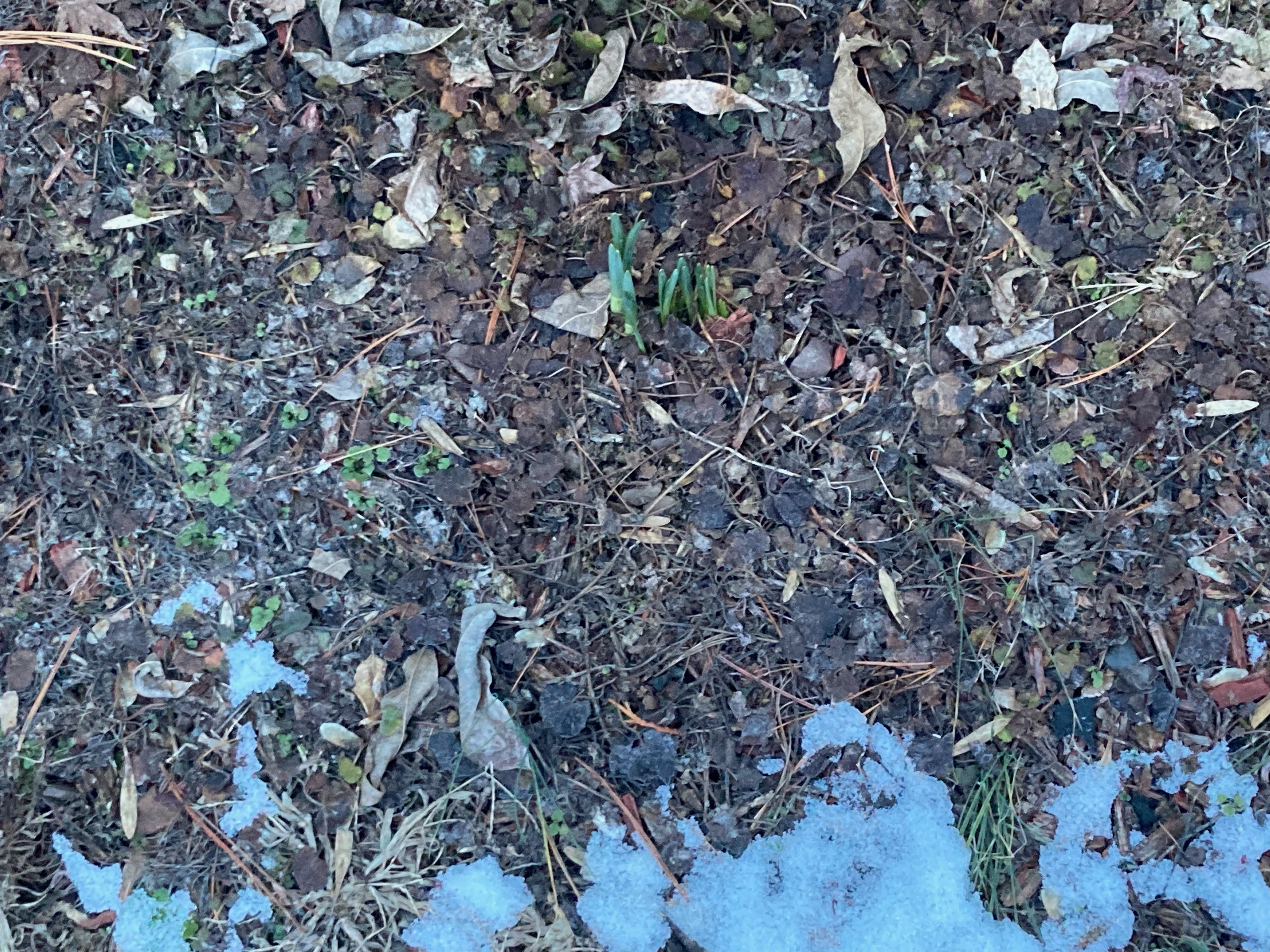
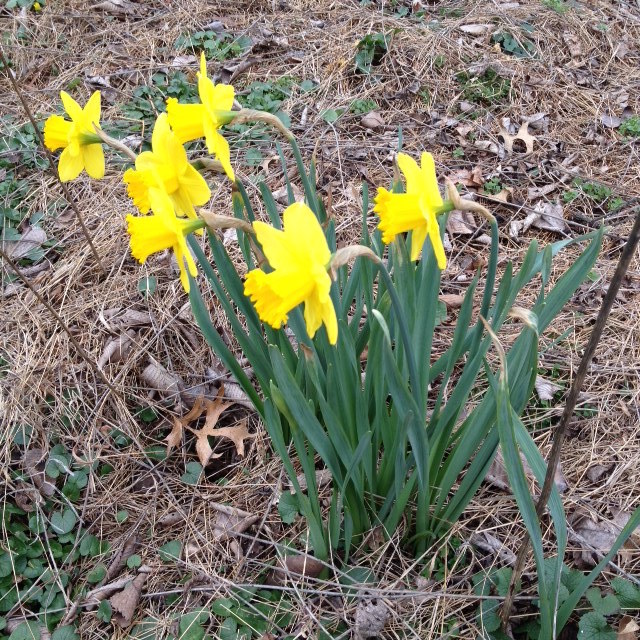
Last Friday. It was a work day, but I could jog. The snow had melted. We knew the drive was coming, but the weather painted a huge question mark over it. It seems, this year, just when that illusory normalcy has once again been established, winter rudely intrudes. Some Good Samaritan plowed all the sidewalks on our block on Monday, relieving a bit of the pressure. But not the anxiety. February in Pennsylvania is anything but predictable. It is the poster child of change. Back home on Thursday I was remembering how to jog on the streets—my usual trail still hasn’t melted—wishing this winter would finally end. I reached our house where I noticed something where the snow had melted while we were gone. The daffodils I transplanted last year were beginning to push through the soil.
 Steve A. Wiggins