A Father’s Day

Some thoughts I hope I’m allowed to share on Father’s Day: I recently saw a review of The Wicker Man that pointed out (rightly) that my treatment of gender was outdated.  Similarly, the (few) readers of Nightmares with the Bible make a not dissimilar observation about my use of Poe’s formulation of women in danger.  I am very much aware that gender studies (which wasn’t even a potential major when I was in college) have done much needed work in clarifying just how complex a phenomenon it is.  I have posted several times on this blog about precisely that.  Still, we all write from a position.  My training is not in horror studies, and it’s not in gender studies.  My writing, despite the price, is intended for non-academic readers, but I too may be between categories here.  I’m trying to escape the academy that has already exiled me, but the framing of my questions is too academic.  I get that.

I also write from the perspective of a man. There’s no denying that I write as a straight, white male.  This is how I experience the world.  And how I experience horror.  Returning to Nightmares, I think my point might’ve been better expressed as noting that writers, directors, producers, and others in the film industry understand that viewers of their particular films may be more moved by a female possession than a male.  Or, in Wicker, that publicly expressed concerns about rape and sexual violence are more commonly expressed by women.  Statements can always be qualified, but that happens at the expense of readability.  There’s no such thing as a free lunch after all.

Academics can’t be blamed for doing what they do.  They critique, poke, and probe.  My books since Holy Horror have been intended as conversation starters.  But they’re conversation starters from the perspective of a man who watches horror and tries to understand why he reacts to it the way he does.  There is an incipient ageism, I fear, that sometimes discounts how people raised to use “man” when referring to mixed or indeterminate genders—taught so earnestly by women who were our teachers—sometimes take our earliest learning for granted.  Those early lessons are often the most difficult to displace.  I try.  Really I do.  I’ve had over six decades looking at the world through a straight man’s eyes.  I welcome comment/conversation from all.  Of course, my intended readership has never been reached, and they, perhaps would have fewer concerns about my view.  Romance (hardly a feminist-friendly genre), after all, is one of the best selling fiction categories, even today.  And many of the writers—generally women—express the gender-expected point of view. That’s a genre, however, outside my (very limited) male gaze.

Steve or Stephanie

I know gender is a construct, and all.  I even put my pronouns (he, him, his) on my work email signature.  I haven’t bothered on my personal email account since so few people email me that the effort seems superfluous.  But I’m wondering if the tech gods, aka AI, understand.  You see, with more and more autosuggests (which really miss the point much of the time), at work the Microsoft Outlook email system is all the time trying to fill things in for me.  Lately Al, which I call Al, has been trying to get me to sign my name with an “@“ so people can “text” me a response.  No.  No, no, no!  I write emails like letters; greeting, body, closing.  People who email like they’re texting sound constantly disgruntled and surly.  Take an extra second and ask “How are you?”  Was that so hard?  But I was talking about gender.

So Al is busy putting words in my fingers and every time I start typing my closing name it autosuggests “Stephanie” before I correct it.  It’s starting to make me a little paranoid.  It does seem that men and women differ biologically, and I identify with the gender assigned to me at birth.  I’m pretty sure Dr. Butter said “It’s a boy,” or something similar all those years ago.  Now I’m not sure if Al is deliberately taunting me or simply going through the alphabet as I type.  Stephanie comes before Stephen (which isn’t my name either) or Steve.  The thing is, I type fairly fast (I won’t say accurately, but fast) and Al has trouble keeping up.  But still Al is autosuggesting Stephanie for me every time.  I’ve been using computers since the 1980s; shouldn’t Al know who I am by now?

Of course, when Al takes over such human things as gender will only get in the way.  I guess we have that to look forward to.  Gender may be something socialized, I realize.  For those of us approaching ancient, we had gender differences drilled into our heads growing up.  I recently saw one of those cutesy novelty signs that resonated with me: “Please be patient with me, I’m from the 1900s.”  I’m not a sexist—I have supported feminism for as long as I can remember.  But I don’t like being called Stephanie.  What if my name was Stefan?  That isn’t autosuggested at all.  I know of others whose names are even earlier, alphabetically.  Maybe Al is overreaching.  Maybe it ought to leave names to humans.  At least for as long as we’re still here.


Glen Da

My current fascination with Ed Wood is, strangely, related to waking up too early.  I’ve tried for years to calibrate my schedule to more like a normal one—I’ve always been an early riser—but have had difficulty doing so.  Weekends at home, therefore, include afternoons when I’m always too sleepy to read, so I watch free movies.  I’d heard about Plan 9 from Outer Space for years before I finally watched it, and it was an epiphany.  Ed Wood, the hapless director, became posthumously famous for his poorly made films, and I’ve been catching as many of those as I can.  While Glen or Glenda wasn’t Wood’s first film, it is the one that kicked off his notoriety.  Considering that it was made in 1953 it is also way ahead of its time.  It is very cheaply made and contains what would eventually become many Wood hallmarks.

Ed Wood was a heterosexual transvestite.  Even today, some seventy years later, this is a category that often confuses hoi polloi.  That’s largely because sex and gender are often misunderstood as the same thing.  Gender is a societally ascribed role—men do this, women do that—based on often unconsidered stereotypes.  Today men dressing as women and vice versa is often played for laughs, or, if serious, is mistaken as an indicative sign of homosexuality.  Glen or Glenda is sometimes classified as a docudrama that attempts to explain this distinction.  Wood, who also stars in the movie, was an actual transvestite, something that wasn’t accepted in the button-down fifties.  After all, one command in the Bible prohibits cross-dressing (likely confusing it with assumed sexual behavior).

None of this makes Glen or Glenda a great movie.  Way ahead of its time, yes, but a strange mix of things nevertheless.  Star billing goes to Bela Lugosi, washed up by this point in his life.  His role as a scientist—often presented as “God”—is unclear.  The devil also appears in the movie, as do several vignettes, reportedly added by the producer, to make this more an exploitation film.  What comes through clearly is that this was a deeply personal film for Wood.  He was trying, as directors and authors often do, to explain himself to the world.  The most successful tend to do this with panache and style, and, let’s be honest, big budgets.  Hollywood, like the publishing industry, is unkind to those who don’t come with well-lined pockets.  It doesn’t mean that the rest of us don’t have stories to tell.  Ed Wood persisted in telling his and, as Glen or Glenda shows, being way ahead of the curve.


Kindred Spirit?

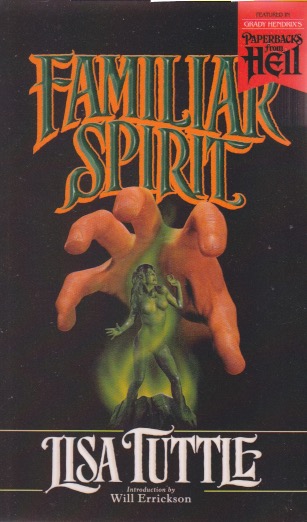
Possession stories have a poignancy to them that perhaps other horror stories lack.  The loss of self-control is a frightful thing.  Lisa Tuttle sets this up well in her novel Familiar Spirit, a tale that has recently been reissued.  The threat against a young women—the usual target of possession—leads to some scary moments here.  As the story unfolds Sarah has to deal with personal loss as she learns that the house she’s just rented is inhabited by an unfriendly spirit that seems to be a demon.  This is a haunting story that features a strong protagonist who ultimately has to decide what she really values most.  It’s a book that stays with you.

I discovered Tuttle by reading a book on female horror writers some time ago.  One of the points I make in Nightmares with the Bible is that female victims of possession match Poe’s dictum about the most poetic topic being the death of a beautiful woman.  That may sound sexist to modern ears, but Poe was a product of his time and he was a keen observer of what made stories memorable.  Possession has largely become a female phenomenon over the centuries.  The biblical stories about possession tend to have male victims, but by the Middle Ages the balance had shifted.  That gender imbalance continues today.  A friend recently asked whether shifting awareness of the gender as not strictly binary might change this in the future.  It’s a fascinating question, especially since we really don’t know what demons are.

Possession is a clash of the unknowns, which is fertile ground for fear of the unknown.  Feminist studies have begun to share space with studies of masculinity and both have been joined by analysts who study gender as nonbinary.  I suspect many of us really didn’t know about such things before the internet began to bring them to our attention.  Many people don’t want to accept such facts.  The world is easier to live in when everything is black or white, male or female, this or that.  Most things, we’re beginning to learn, are on a scale.  Human society, as it takes this into account, will inevitably, if slowly, change.  The old guard (angry white men, mostly) refuse to accept facts, trying to equate them with the person with the loudest voice.  This too is a kind of possession.  I don’t want to give too many spoilers for Familiar Spirit, but if you’re like me it’ll give you many things to think about.


Dark and Light

I perhaps have nothing new to say about Ursula K. Le Guin’s The Left Hand of Darkness.  It was published before I was ten, and although I grew up reading science fiction I really didn’t read any of Le Guin’s work until this year.  It wasn’t intentional—in a small town you read what you can get your hands on, and cover art designed to attract young boys often worked on me.  Now having read it, I’m left in a reflective mood.  Everyone, of course, comments on the gender aspect of the novel.  I guess I’ll be forgiven for doing so as well.  After all, it is the most striking feature of the story.  As we know from our lives on earth, gender affects pretty much everything about our lives.  The biological imperative is strong.  It’s no less strong in Left Hand of Darkness, but it is different.

In case you’re like me and haven’t read it (until now), it’s not a spoiler to indicate that it is the story of a male envoy to a planet where the people (and only large mammals) are genderless until once a month they enter “kemmering” when one becomes temporarily male and another temporarily female.  The genders aren’t fixed, but fluid.  Since the kemmering stage comes only once a month, during that time it become an urgent need among those experiencing it.  The novel isn’t about only that, of course, but it is the noteworthy feature that relates to the religion and daily life of the inhabitants of the planet Winter.

It might seem that this idea of shifting genders is itself science fiction, but it is not.  There are species on earth that change change gender, bringing into question the statement taken for universal that “male and female he made them.”  While gender seems to be evolution’s solution of choice for reproduction, that’s not universal either.  In other words, nature provides us with multiple ways in which plants, animals, and things in-between, can continue their existence on this planet.  The writers of the Bible weren’t great observers of nature, nor were they scientifically minded.  At a glance it looks like animals all conform to the model presented by Genesis.  In reality, the world is much more complex than that.  Religions aren’t always as comfortable with complexity as writers of science fiction tend to be.  Left Hand of Darkness is fine world-building and provocative at that.  This may be nothing new, but it is worth pondering again.


Love, Not Fear

How do we celebrate Valentine’s Day when our governments advocate hate?  You have to wonder when the autocrats last fell in love.  Building entire polities on hatred harshes the elevated feelings of letting love, well, love.  The only time Republicans seem to smile is when they’re taking advantage of someone else.  But it’s Valentine’s Day, so I’ll try to think charitable thoughts about even them.  

My reading recently has been taking me into the realm of sin.  Let me rephrase that—I’ve been reading a lot about sin recently.  One of the more striking aspects about badness is that it seems closely related to love, or at least lust.  I’ve often pondered why Christianity especially has tended to treat sex as bad.  While all religions take an interest in sexuality, not all of them declare it a negative aspect of life.  In fact, many see as it quite the opposite.  Since I like to trace things to their origins, I wonder why this might be.  Why did Christianity, whose putative founder declared the greatness of love, decide that although love is well and good that making it is problematic?

Paul of Tarsus, whom some credit with being the actual founder of Christianity, considered his celibate lifestyle to be superior.  While he didn’t mandate it of his followers, he highly recommended keeping their commitments to divine causes rather than to prurient human ones.  He believed a second coming was going to occur any day now, and that was nearly two millennia ago.  He was also, through no fault of his own, an inheritor of an incorrect understanding of gender and sexuality.  Even today there’s much about these that we don’t understand, but we do have more evidence-based ideas about what’s going on.  And not surprisingly, we tend to find that love is good and expressing it (appropriately) is also good.  Valentine, after all, was a saint.

Looking out my window, it’s still clearly winter.  There’s snow on the ground from the most recent storm and I’m aching from the upper-body workout that it required to get it off the walk.  But still, in the pre-dawn hours I start to hear—rarely but clearly—the birds begin to sing.  The amaryllis on the sill has sprung into full bloom.  The thing about love is that there’s enough to go around.  It’s a renewable resource.  If only our leaders showed a fraction of interest in it as they show in hate and fear. 


The Problem with Shaving

Evil may be an abstract concept, but that doesn’t mean it isn’t real.  Sorry for the double negative—finding the right angle of approach is difficult sometimes.  I say that because I believe that the misattribution of evil is tearing civilization apart.  Science has rightfully taught us the tricks for understanding the material universe.  Problem is there’s more to the universe than material.  If all our minds consist of are electro-chemical signals, well, this batch swirling in my head isn’t alone in doubting itself.  (Think about that.)  So, here’s the problem—those on the opposite side of the political spectrum rending the United States into shreds aren’t evil.  They’re doing what they believe is right, just like the lefties are.  The evil comes from forces trying to tear good people on both sides apart.  The simplest solution, Mr. Occam, isn’t always the best.

Putting it out on the table, right and left have some basic disagreements.  By far the majority of them are sexual.  Both sides believe what they’ve been taught or what they’ve learned.  Sex, of course, is one of the great dividers of humankind.  It brings us together and it tears us apart.  Religions have always been very interested in sexuality—who does what to whom and what to make of the consequences.  None of it is easy to sort out.  Since the Bible voices first-century (and earlier) opinions on a matter they understood even less than we, the situation is very complex indeed.  Especially since many people wrote all the self-contradictory words within its stolid black, pigskin leather covers.

Complexity reigns in the world of explanation for both politics and sex.  Put them together and see what happens (if a Clinton, impeachment, if a Trump, nothing).  The issue with Occam’s razor is that the simplest solution doesn’t always explain things best.  It’s not evil to suggest woman plus man equals marriage.  Unenlightened, maybe, but not evil.  The truth is that things are more complicated than they seem.  A society taught, in many ways, that only one solution works could easily boil it all down to one size fits all.  Evil is the desire for political power that draws its energy from making each group think the other is evil.  I realize this courtesy often goes in only one direction.  That too is part of the evil machinations of a system that divides instead of seeks common ground.


Basic Catholic

One thing upon which we all might agree is that we don’t have enough time. Publishers, eager to find an angle that will help them survive an age when we believe knowledge should be free, have shown a preference for short books. (An exception to this seems to be novels—consumers appear to like getting lost in a long story.) One result of this is the brief introduction format of book. That’s what Michael Walsh’s contribution to The Basics series is. Roman Catholicism is somewhat of a challenge to explain in less than 200 pages. You have to stick to, well, the basics. Having sojourned among the Episcopalians many a year, I felt that I had a fairly good grasp on Catholicism, but as I was reading it struck me that to really understand it, you have to be it.

One thing the Roman church has going for it is direct continuity. Making claims of having been there since the beginning, as an organization they have a leg up over other groups that boast more recent origins. We respect, or at least we tend to, organizations with such longevity. Tracing itself back to Saint Peter, the Catholics have continuity with spades. Or crosses. Of course, one of the things Walsh addresses is how change happens in such a long-lived group. Councils and synods, new scientific information and new Popes. Catholicism today isn’t the same as it was in Pete’s day. Walsh does a good job of guiding us through all that up to the time of Pope John Paul II, who, it turns out, raised global awareness of the papacy in the world as it existed then.

One thing we might agree upon is that Pope Francis has changed perceptions of what it means to be Catholic. The church remains mired in medieval thinking about matters such as gender and sexuality, but since this little book was published there have been steps forward. Even this popular pontiff, however, can’t change the decrees that went against the majority opinion regarding birth control, as Walsh somewhat guardedly notes. Or the ordination of women. He observes at the very beginning of his little book that Catholics know all about and deeply respect authority. This brief introduction helps to get a sense of how things ended up the way they are. We know that Pope Francis has started to speak out on such things, but men like to keep authority, as we all know. And even Popes have just so much time.


Justice for All

One of the perks of working for a publisher is author talks. I’ve worked for three publishers now, and the last two have made great efforts to bring authors to their New York offices to present their work, in a kind of dry run, to those in the industry. When an author (whose book will eventually feature on this blog, so I don’t want to provide any spoilers just yet) was to speak on misogyny this week, I quickly signed up for a seat. Perhaps it’s a lack of imagination, but I could never understand how one human being could ever feel superior to another. As a child with no father around, my experience suggested that women were the strong ones. Yet when out in society I saw men always stepping in to take charge. What was wrong here?

I realize that I view life through male lenses. I’m also aware that gender isn’t nearly as definitive as we tend to think it is. Biology fits us with bits and pieces, and some of those constructed somewhat like me assume this gives them the right to dominate others. And they say we’re better than animals. Better at what, I ask? No, this isn’t about chauvinism—a man stepping in to support weaker women. This is about justice, plain and simple. We’re all born human. Humanity is nothing without those of both genders as well as those somewhere between. What should separate humankind from the vicissitudes of nature is the inherent commitment to fairness. Life is harsh and not all receive fair treatment. Do not listen to the narrative coming out of Washington, DC! The father of lies dwells there. And yes, I mean “father.”

We used to take pride in having climbed above the mere animals. We have constructed something that used to be known as democracy. Lawmakers, while fighting against women’s rights in word, nevertheless tacitly supported them at home. Now our government has declared open war on women. Men who have no idea what it is like to be viewed as and treated like an object every single day of their lives are making laws to punish those who do. I feel as though the sky is about to crack open and that blind principle we call justice is about to shout “Enough!” That’s not, however, the way that nature works. It is only when women are treated equally with men that we’ll ever be able to call ourselves civilized. Or even human. Until that day we’ll hunker down in our caves and await lawmakers who have any inkling at all of what fairness, what justice, even means.


Girls to Men

Seminary in the 1980s was a time of endless debate. Some of my classmates at Boston University School of Theology thought me too conservative—I’d made progress from my Fundamentalist days, but these things wear off slowly. Part of the issue, however, was that I look at things in terms of history. (That’s how I ended up teaching Hebrew Bible although my work is generally history of religions.) I remember an argument over changing a text from reading “man” to “human.” The latter, of course, still has the offensive root, but language is only so flexible. My thought at the time (which has changed since then) was that English “man” derives from German “Man.” In German the noun is masculine since all nouns have gender, but it can refer to either a female or a male. “Man,” in origin, is gender-neutral on the human side of the equation. Mark Twain once famously wrote an essay on the barbarities of the German language where he highlights this.

I’d studied German seriously in high school. After four years of the language I felt that I could understand it in a way that comes when you begin the think of certain expressions and wonder how you say that in English. I had come from strongly Teutonic stock on my mother’s side, and German felt quite natural to me. Of course, in college I had little opportunity to use it. Even less so at seminary, so the details had begun to slip considerably. If “Man” could mean “woman” what was the problem, I wondered. Then I started to think of it from a woman’s perspective. As English speakers, “man” is an exclusive term. It refers to males. Over time it has come to refer to males only. Retaining it in hymns or Bible translations makes them exclusive. We need language to meet new ways of thinking.

The other day I was consulting an Oxford dictionary for something. My eye fell on the word “girl.” To my surprise, I read that “girl” originally referred to a small child of either gender in its germanic roots. This is an archaic usage to be sure, but it helped to explain old photographs where toddler boys were dressed as girls and had long, flowing hair. The young were girls, the adults were men. Gender, I have come to see over the years, is a concept that doesn’t conform to simple binaries. Intersex individuals don’t fit into the either/or paradigm. Language struggles to keep up with reality. Traditionally we all started out as girls and ended up as men. And those would be fighting words these days, whether in seminary or out.


Lions and Lambs

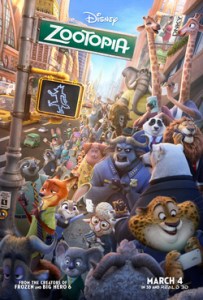
This brief break between Christmas and New Year’s Day, taking into account the vacation days expended to enjoy it, is a time filled with movies, reading, writing, and sufficient sleep. In short, it’s like a dream. I’ll get around to addressing the movies eventually, but right now one in particular is on my mind: Zootopia. Disney movies weren’t a big part of my childhood. We did watch the Wonderful World of Disney on Sunday nights, but movies were an expensive treat. I remember seeing The Jungle Book, Bedknobs and Broomsticks, and Herbie the Lovebug. When we could afford a movie, it was frequently at a drive-in where a carload was cheaper than individual seats. I missed several of the childhood western canon—I never saw Mary Poppins until I was in college. Becoming a parent in the 1990s meant becoming conversant with Disney.

zootopia

Oh, I’ve heard the conspiracy theories: Disney is “the evil empire,” part of the Bilderberg Group, the Illuminati, and any number of other collectives that want to run the world. They have access, we are told, to the young and a reach that excludes few before the age of ten. I know little of Disney’s business practices, but Zootopia suggests to me that they are telling our children the right message. The movie follows the ambitions of Judy Hopps, a bunny that want to be a police officer in Zootopia, the largest city in the animal world. Threatened and bullied because she’s a girl, and small—traditionally prey—she nevertheless overcomes the obstacles necessary to meet her dreams. Once she meets success, however, she finds herself engaging in prejudice against predators. Species profiling takes over and the white sheep (literally) take over.

The message of not assuming someone is a slave to their “biology” is a powerful one. Nick Wilde, the fox that assists Judy to her goal, becomes a victim. The only way forward for Zootopia is to recognize that profiling—gender or species—is wrong. Since the story isn’t preachy, it’s all the better. Watching unchecked prejudice surging through our political machinery today, it was difficult to believe that this movie was released all the way back in March. The prey animals are the majority, and they feel threatened and so follow the leadership that controls, deports the predators who’ve been law-abiding citizens all along. Only when we once again see shrews living peacefully next to elephants, rabbits, lions, and polar bears, do we get the sense that everything’s as it should be. I know nothing of Disney’s business practices, but with messages as important as this, I have but few worries.


Engendering Fear

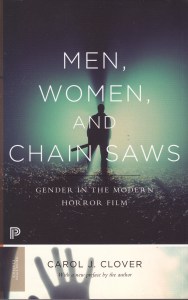
menwomenchainsawWe live in fear. At this point in history, it seems, with good reason. Horror films, apart from being considered low art, teach us to deal with some of these fears. I hadn’t been reading about the genre for very long before I began to notice the repeated references to Men, Women, and Chainsaws: Gender in the Modern Horror Film. This is Carol J. Clover’s seminal study of gender theory and horror. Probably best known for first identifying the trope of “the final girl,” Clover gives much more than that to the conscientious reader. Her chapter on possession movies is among the most insightful that I’ve read. And yes, she does make a very good case for the final girl.

Using theories of gender, she explores why both boys and girls (the former numerically more obvious) flock to such disturbing movies. Although she suggests masochism has something to do with it, is isn’t simply that boys enjoy seeing girls suffer. Quite the opposite. Boys often see themselves in the place of female victims. As with most things associated with gender, it’s far more complicated than it seems. In that sense, this is a book for our time. We live in what George Banks calls “the age of men,” and while Mary Poppins can hardly be called horror, the underlying narrative bears some warning tones. Men, left to their own devices, will seize what power they can grasp. We’ve spent the last five decades teaching men that this is no longer appropriate, only to have that message wiped away with the final trump. Horror can be remarkably pro-feminine. Business, as we’ve seen over and over, is less so.

Not having ever formally studied gender theory, some of the intricacies of Clover’s argumentation were no doubt lost on me. I was, however, able to gather a remarkable amount of appreciation for the subtexts in many of the movies I’ve watched. Gender, you see, touches everything we do. It behooves us to be aware that careless, or thoughtless support of misogyny does not lead to the results that many men suppose. Some horror movies are truly difficult to watch. Not all conform to the standard expectations. What Clover has shown, however, is that often the women are able to draw from a depth of strength to which the male characters lack access. They don’t do so willingly. In fact, they are often reluctant. When the horror is at its end, however, the final girl emerges triumphant.


True to Nature

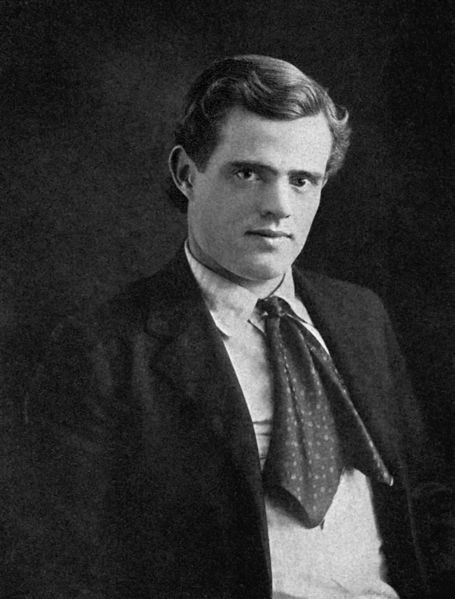
A friend recently sent me an article on Jack London from smithsonian.com. As the article by Kenneth Brandt makes clear, London is an author for our times. Someone who might truly be called a populist, London, like many of us born in the working class, had an epiphany. Perhaps his came earlier than many, but at the age of 18, while working laboring jobs, he noted that he “was scared into thinking.” He decided, before the idea of sending all kids to college had caught on, that he should acquire an education. In the words quoted by Brandt, he wanted to become a “brain merchant.” Certainly London’s works need no introduction from a guy like me. Robust and masculine, his stories are those of man pitted against a nature that is often out to crush, freeze, or starve him. Today we need to loosen up those pronouns a bit. Women, who’ve arguably had it tougher than men for all of biological history, have had to struggle for survival too. In the current political climate we all need to remind those who substitute testosterone for brains that we all share human rights.

455px-jack_london_young

The Religious Right, or “alt-right” as they seem to prefer these days, wasn’t always a fetus farm. It has been historically documented that it was Francis Schaeffer, erstwhile hippie and free thinker, who when he got abortion stuck in his craw, decided that men had to protect the unborn from women. He seemed to have forgotten whose gonads planted that seed in the first place. Prior to Schaeffer Christian saints tried to avoid sex all together. Among the original “abstinence only” crowd, some of the more zealous put their money where their testicles were and castrated themselves. Ah, men were real men in those days. Today masculinity means ganging up on women and grabbing them by the Call of the Wild, apparently.

Like London, I think we all need to be scared into thinking. We’ve let a wildly distorted view of humanity—one-sided and with dangling evidence of gender loyalty—to steal the White House from the woman who thoroughly won it from the vox populi. Where is Buck when we need him? London knew, as evolution repeatedly teaches, in Brandt’s words, “abusive alpha males never win out in the end.” I say that “swing states” should look carefully at that hanging chad. In the meantime, while the fat cats bicker and argue over the best way to suppress females to make themselves look bigger, I think we should all read again about what happens when Spitz meets Buck. If you haven’t read The Call of the Wild before, it’s time to do so now.


Rule Book

gamespeopleplayMirrors can be such deceptive things. In my head I’m a much younger man than the one I see staring at me. And I have to remind myself that other people see what the mirror sees, and not what I really am. Things age. A friend who aged so much that she’s no longer alive recommended to me years ago Games People Play, by Eric Berne. Of course I’d heard of it before—I wasn’t born yesterday. I do enjoy reading psychological books. Psychology like having a window in someone’s forehead. If you could really master it you’d understand so much of what seems a mystery to people like me. But it is an old book. When Berne casually cites the year he was writing it as the year I was born, I began to suspect that some of the data might be outdated. The guy in the mirror certainly seems to be.

We still play games, though. The hope Berne expresses in the last chapter is that we might get beyond this endless game playing to true awareness, spontaneity, and intimacy—the things psychological games are meant to mask. I also have to confess to recognizing myself at several points and then reading that games are played by disturbed people. “So that’s why I x, y, or z,” I found myself thinking. Disturbing thought. And these ideas are as old as I am. Probably older.

Reading this book from ‘60s, I noticed a strong sense of certainty that is now lacking. I can’t imagine too many psychiatrists or psychologists making quite so many declarative statements these days. I know it’s a classic in the field, and I know there are some valuable insights here, but we don’t call people “squares” any more, and a good deal of the analyses point to assumed gender roles that we now know are as much fabrications as the games themselves. I was looking for a game that my departed friend had pointed out to me. We both knew a man who was apparently picking fights because he wanted to leave his job but he couldn’t bring himself to do it. “Stamp collecting,” she called it. She may have been right, and I have to wonder if many of us really know why we do the things we do. Maybe I could use a window into my own forehead. Of course, I would need the mirror to see it. It’s a little game I play.


Simply Complex

What does it mean to be a man? Or a woman? Or intersex? As a society we seem to spend quite a lot of political time thinking about this. We want to regulate something we don’t even understand. An opinion piece by Rabbi Mark Sameth in the New York Times raises this question to a new level. “Is God Transgender?” the title asks. The Bible, which most of the belligerents in this battle claim to follow, doesn’t present as hard and fast a rule on sex as it might seem. As Sameth points out, the language of a number of passages seems “gender confused” and even the gods of olden times could slip from female to male and back. The Ugaritic deity of Athtar could be called Athtart, depending on her or his gender at the time. We human beings prefer our genders to be fixed, but nature doesn’t always agree.

IMG_2578

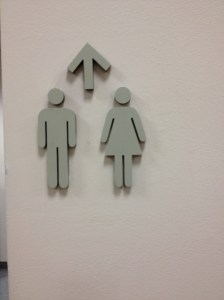
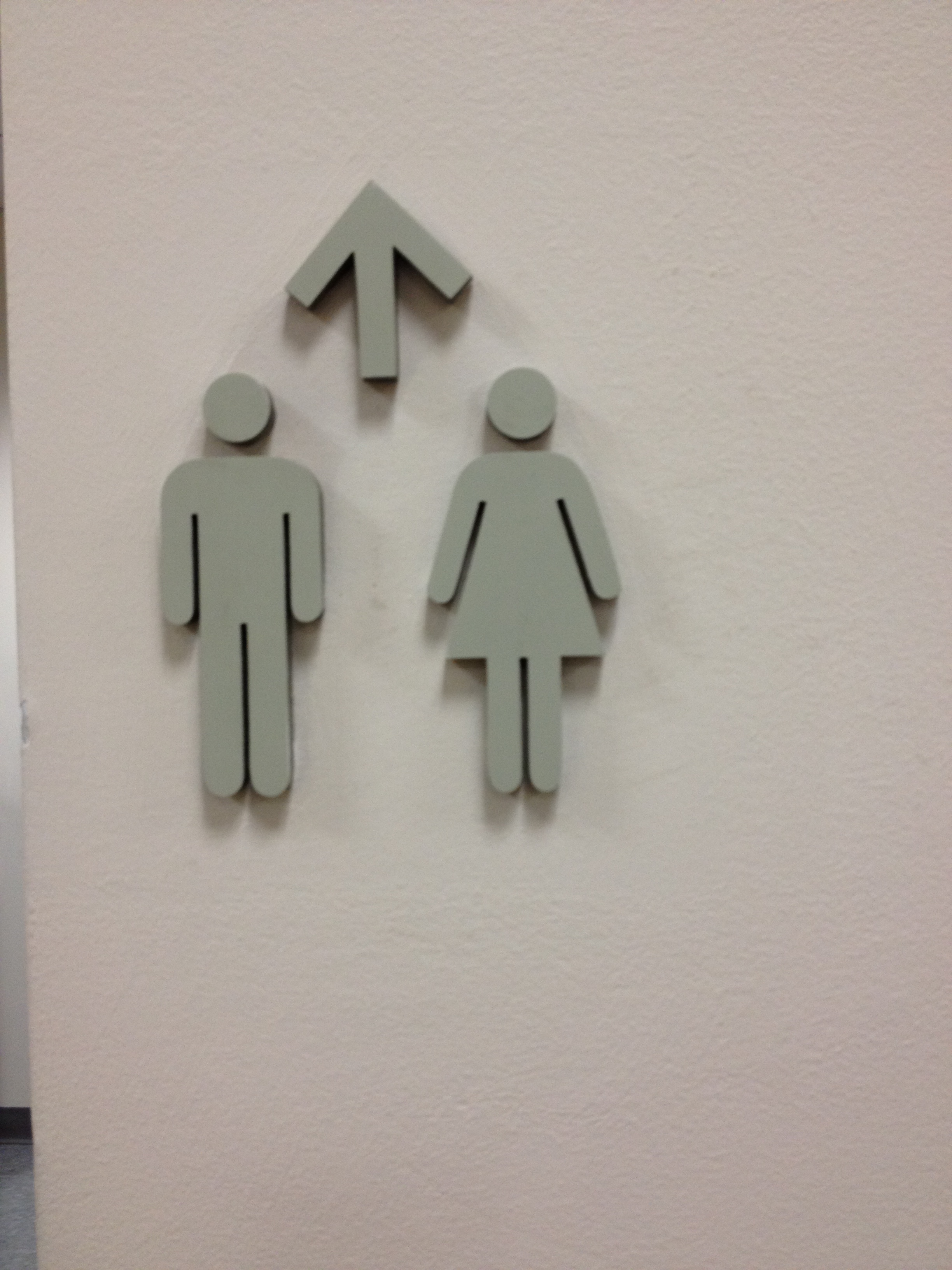
Not only gender identity, but gender itself occurs on a spectrum. In cases of “ambiguous” gender doctors often make the decision at birth. Gender is assigned, and sometimes made surgically. And lawmakers will use an outdated binary system to assign bathrooms. We make industrial, multi-occupant bathrooms because they’re cheaper. At the same time we raise our children telling them that bathroom use is a private function. Of course, when money’s involved the story changes. We thought we understood what gender was. Like most aspects of life, however, our understanding is only partial. Some species have such complex reproductive techniques that the term “gender” just doesn’t apply. Some species naturally change gender in the course of their lives. Which bathroom should they use? Nature doesn’t support our laws here.

For human beings the experience of gender is no doubt important. More important, it might seem, would be the acceptance of difference. A rainbow doesn’t have sharp divisions of color. Light blurs from one hue to another and we say it’s beautiful. When it comes to sexes we only want two. Black and white. As the rabbi points out, however, nature prefers the rainbow. The acceptance of difference in the face of the evidence would appear to be prudent. But many people read the Bible only on the surface (although even here it’s not as straightforward as it might appear at first). The biblical writers probably thought of gender in binary terms. In those days congenital “defects”—at least those visible to the naked eye—were cruelly set aside as a divine curse. We’re at last learning to see this “curse” as a blessing of diversity. As long as we don’t have to share bathrooms.