No Noah

Noah2014Poster

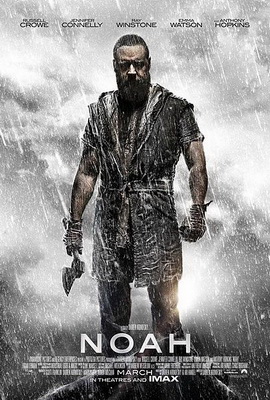
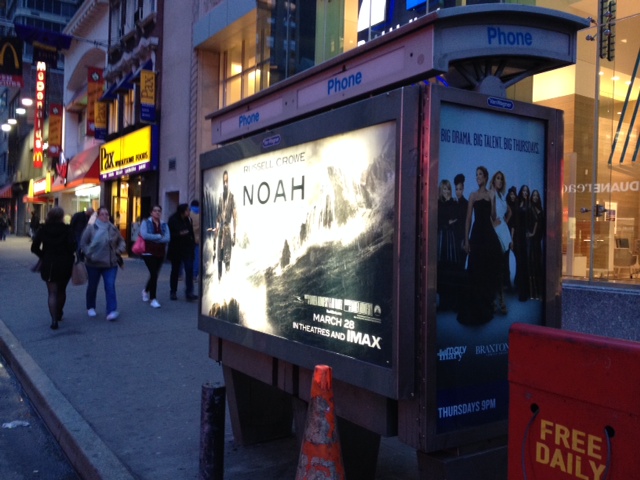
I haven’t seen Noah yet; the timing didn’t work out this past weekend. Besides, you don’t always get to see what you want. Nevertheless, the critics are already having a go at it, and the movie is gathering such attention because it is of biblical proportions. Or more properly, of biblical origins. One commentary in The Guardian suggests that, since knowledge hasn’t moved since Aristotle, that gods really have no place in movies. I have to wonder about that. Sure, the wealthy and powerful seldom have a need for gods, being the captains of their own destinies. Until it comes time to face the flood that all mortals face, and even the rich have to acknowledge that no ark is big enough to take it with them. Who wouldn’t want to have a little divine intervention then? Indeed, God strikes me as the almost perfect antagonist. Before you begin to hurl your stones this direction, think of the book of Job, underrepresented at the box office, but about as honest as they come. We, like Noah, are not in control of this vessel.

To quote Tom Shone, in his review, “[God] has no desire, no needs, no social life, no private life, no self-exploratory intellectual life to speak of.” Of course, the biblical view is quite different. God in the Hebrew Bible is not omnipotent. In fact, he (and he is generally male) comes across as quite lonely. He has anger issues, to be sure, but he is a troubled character rather like a Disney Hercules who doesn’t know how to control his power. Add him to the mix with willful, self-satisfied human beings and it sounds like an afternoon at the movies to me. Perhaps film makers don’t present God with weaknesses—that would be the worst of heresies—but it is also perhaps the most biblical of heresies.

Going back to Aristotle, perhaps it is not that gods should be left out of drama, but that human ideas of God are what writers call a Mary Sue. A Mary Sue is a perfect character with no flaws, the kind of person we first learn to write, since we believe people—and gods—are only good or evil. Then we begin to discover shades of gray. More than just fifty. Characters are complex and experience conflicting wants and wishes. Thus, as Shone notes, God wants people to procreate, but then wants to destroy them. Afterwards he is upset at what he has done. What could be more human than that? The perfect god who knows no struggles, and who never has to fight for what he wants, would be a boring deity indeed. That’s not the divinity skulking around Genesis, however. I’ll have to reserve judgment on Noah’s god until I get to the theater. It seems to me, at this point, that a wee touch of evil makes for deities that are closer to those we experience in our own workaday lives.
The Search for Khan

Star_Trek_II_The_Wrath_of_Khan

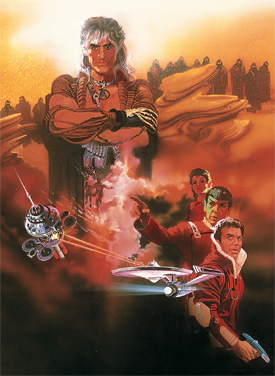
Continuing with the series, I watched Star Trek II: The Wrath of Khan last night. Since weekends are the only time I have for the media, I also threw in Star Trek III: The Search for Spock. Now, I haven’t seen either of these movies since their theatrical release longer ago than I care to admit, but many of the details, particularly from II, had stayed with me. Clearly The Wrath of Khan is superior in every way, but I hadn’t realized how literate it was until I saw it again. From Tale of Two Cities to Moby Dick to the Bible, the viewer in 1982 was given a sci-fi movie with classics sprinkled through it. I hadn’t read Ahab’s famous words on the dying lips of Khan when I first saw it, but I still realized that they were powerful words nevertheless. The premise of both movies, however, is biblical—the Genesis project, which even gets Spock quoting the Bible, is creatio ex nihilo, well, not exactly ex nihilo, as we do have a Big Bang to start the thing. Throughout the language of creating in six days is juxtaposed to morality, for in order to create, you must destroy.

We all know that Spock dies, citing a utilitarianism that would’ve made John Stuart Mill proud, but in what is really a biblical trope: self-sacrifice. And this leads to speculations of resurrection, always lurking in the background of the biblically minded. But theology (and the acting) turn bad in III. We’re all glad to see Spock alive again, but it turns out that Genesis destroys itself after just a short time, and that “Genesis is a failure.” Where do we turn back from the first page of the Bible? There is no preface here. There is, nevertheless, a temporary garden of Eden on the Genesis planet, and it is a federation-level secret. You just can’t keep anything from the Klingons, however. So the Bible implodes and Kirk’s son sacrifices himself so that Spock might live. Can I get a concordance here?

I’m not a trekkie, but I had noticed from the original series through the original cast movies, the assumption was for a biblically literate audience. That assumption can no longer be presumed, although, if pressed, many people could guess that Genesis is in the Bible. Meanwhile, the flood of Noah is also upon us. Exodus comes next. Movies featuring Leviticus are rare. Even as the cast ages visibly from the young, brash Kirk of the 1960’s to the bespectacled, patrician father with regrets in The Search for Spock, society itself has also aged. Some would say, matured. But we need directors telling us now that the flood story is found in Genesis. The Bible has been on self-defense mode for some time as religion has become equated with fanaticism. And yet, even as resurrection looms, we can’t help but to wonder if better things lie ahead.


Brave Old World

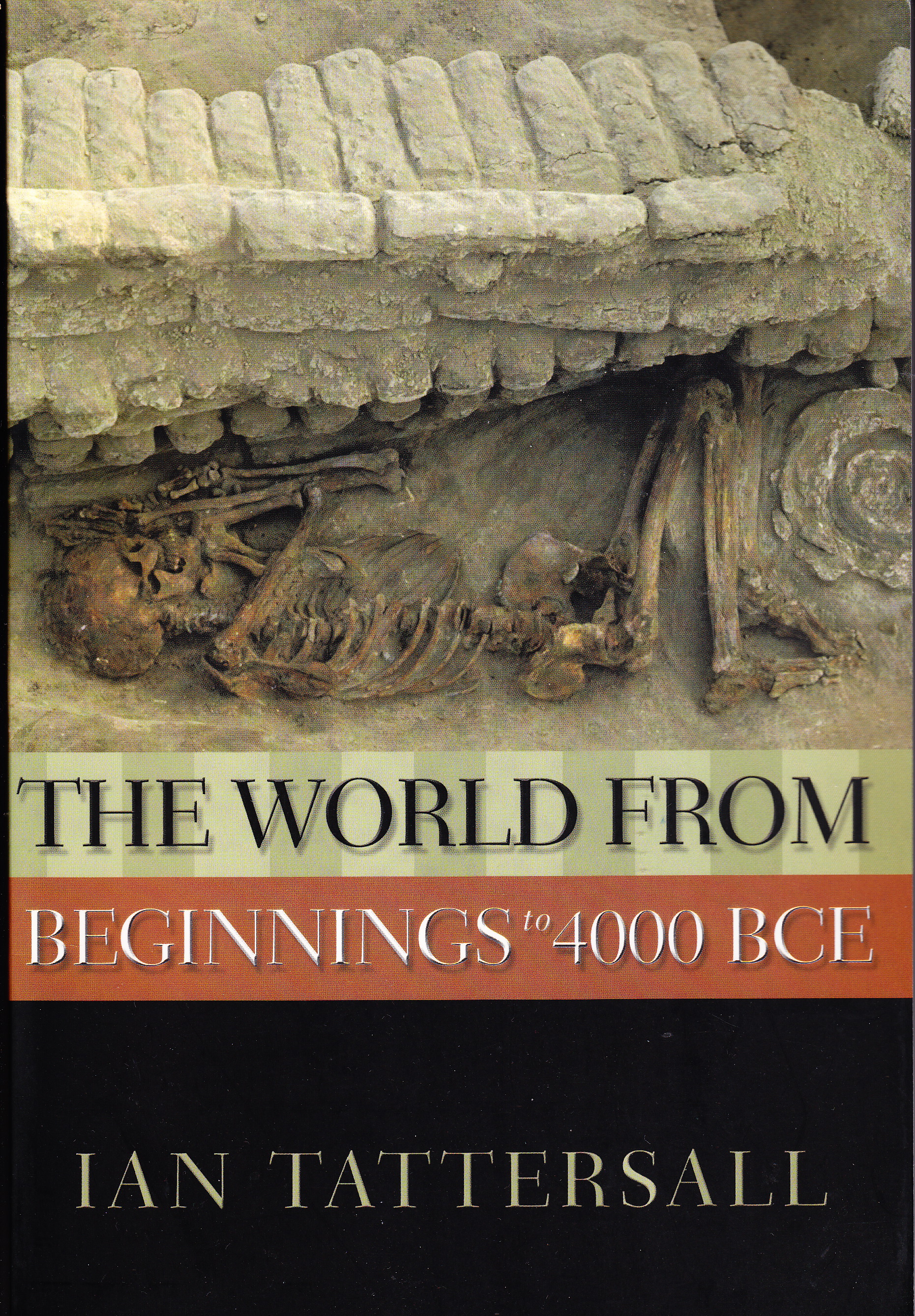
WorldFromBeginningsAs we continue to evolve, it is helpful to learn where we’ve been. Besides, the title, The World from Beginnings to 4000 BCE is difficult for an old Genesis reader to pass up. I knew Ian Tattersall’s book was about human evolution—a subject that has made me feel naughty ever since being raised to believe, quite opposite of reality, that evolution was a myth and Genesis fact. I remember the strange disconnect from my earliest years. Standing under the 13th Street Bridge, just before French Creek joins the Allegheny River, the main tributary of the Ohio, and, in turn, the Mississippi, my brothers and I would look for fossils. And find them we did. If you found the right kind of rock, preferably with a recent fracture, you could find the impressions of dozens of sea shells jumbled together in a glorious, fluted profusion. These were the exoskeletons of animals dead for millions of years, and thinking myself a budding scientist, I stared at them in awe, not quite sure what to make of it all. At church I learned the earth was young—not even a teenager in geologic terms—and yet, in my hand, encased in rock, contrary evidence.

Indeed, Tattersall begins his book, as many college-level texts do, apologizing to the culture that still somehow believes that the earth is just 6000 years old, despite the Tyrannosaurus towering over your head at the Carnegie Museum. Humans are latecomers on this scene, however. Tattersall gives a solid introduction to the current human family tree. Instead of being ashamed of our heritage, I’m more inclined to feel a little pride. Our ancestors, prey to large carnivores, took a distinctive evolutionary track that enlarged our brains to help us outwit our natural enemies and learn how to destroy the very planet we inhabit. Well, maybe pride is a little too strong a word. Good and evil, it seems, always stroll hand-in-hand. So we evolved, but not yet to perfection.

Evolution always makes me think of the future. A strange sense of accomplishment makes prominent thinkers, particularly those who declare themselves bright, marvel at our greatness. I can’t help but to think that something better must lie ahead. We’re told that evolution has no direction in mind—traits that help to survive until reproduction are all that really count—and yet, having the minds we do, it seems that something more might be going on. Have we built all this merely to have sex and die? Glorified May-flies? Isn’t the future a wonder of what we might become? Evolution takes so long, even with punctuated equilibrium, that we’ll never live to see it. I have a suspicion, however, that if we give it enough time, we might offer our as yet unimagined offspring a world as full of wonder as it always has been. And they’ll still be standing by the river, staring in amazement at animals made of stone.


Flood of Fancy

Years ago I was approached to write a book about Noah. There was still some hope at that time that I might find a university job and that my words would have more credibility than just any old internet hack. At the time I’d read just about every book about Noah that had been written—and there weren’t that many. Biblical scholars, beyond tying the story to its obvious Mesopotamian sources, have long relegated the tale to the nursery school of biblical drama. Sure, it’s a great story, but what serious scholar takes an interest in a great story? Well, I outlived my academic job and it looks like Noah is going to have the last laugh. We’re told that the Pope has been tweeted about the movie by Russell Crowe and that several Islamic nations have already banned it. According to Today Darren Aronofsky, the director, is more interested in getting non-believers into the theater than trying to please the faithful. Well, let’s face it. A movie based strictly on the Bible would have to be pretty preachy.

The bigger draw seems to be this: our society is simultaneously deemed secular and religious. Americans go to church. They also respond to surveys that they believe in God, the Devil, Heaven, and Hell. They also act as if none of this were true. Business practices tend to be anything but caring, and we show no concerted effort to make sure basic healthcare is offered to all our citizens, let alone the millions who are daily suffering and dying elsewhere in the world. We don’t want to reduce our emissions as a real flood—a literal flood—is on the rise on a global scale. Maybe we’re waiting for a biblical-scale miracle to save us. Noah’s face stares out at you all across Midtown. Judgment is upon us.

NoahMovie

Action films draw male viewers. Religious movies draw females. Aronofsky and Crowe have the winning combination. No gender-bias for a secular-religious nation that has enough loose change to spend a weekend at the movies. The biggest complaint is that it isn’t the Bible. I have to admit I’m kind of enjoying the hype, despite the fact that I never received the chance to write that Noah book that was next on my agenda. If I had, now it might have enjoyed the sales that Irving Finkel’s The Ark Before Noah—scheduled for release three days before the movie—surely will. Timing has never been my strong suit. Of course, money can be its own sort of flood, and many more drown in it than in the literal waters of a secular-religious society. According to Genesis a raven was released to fly about looking for land. The Crowe might have been a better choice since movies, as we all know, improve upon the book.


No, Uh

Noah2014Poster

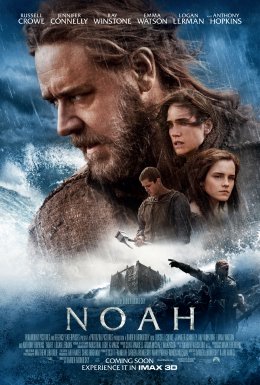
“Give me any two pages of the Bible and I’ll give you a picture.” The words belong to Cecil B. DeMille, according to Stephen Whitty’s weekend write-up about Bible movies in the New Jersey Star-Ledger. The story was inspired by a trio of big-budget Bible films—Son of God, Noah, and Exodus—set to be released this year. While Mel Gibson put me off of Jesus movies, perhaps forever, I’ve been planning to see Noah ever since my wife first pointed the poster out to me in a local theater lobby last month. The flood story has always spoken to me, lasting well beyond the nursery years with all the fluffy animals aboard the ark. One of the points that Whitty is making, however, is that Hollywood knows something the New Atheists do not—there’s big money in religion. People will pay to see it on the big screen. The Bible still speaks to a secular nation.

Noah’s story has been dramatized many times over in the entertainment media. It is often a theme in popular fiction, although well hidden, and reemerges in the occasional search for the lost ark documentaries or Veggie Tales shorts. There’s something timeless about the world-wide flood. For me it seems to go back to the thrill of the impossible. Those first eleven chapters of Genesis teem with the surreal world of lifespans centuries long, primordial gardens full of good food, gods intermarrying with humans, and waters that cover any number of sins. There’s a robust, adventurous air to such stories—they push on the boundaries of human experience and burst beyond them. It doesn’t matter whether Noah’s ark is round, boxy, or extraterrestrial—the flood’s the thing. It appeals to imagination like less mundane disasters simply can’t.

I don’t go to the movies to learn about the Bible. I can do that right at home with a single outlay for a relatively cheap book that can be read over and over again. No, it is these early days of the Bible that give rise to the prepositional phrase “of biblical proportions,” that the movies show so well. I’m not sure that I’ll be able to make the transition from Batman to Moses when Exodus comes out later this year, but next month I do plan to let the waters of the largest event in earth’s fictive history wash over me with all its CGI glory. Seeing is not always believing, but the flood is one of the most powerful stories ever told. Who can resist the calling of deep unto deep? Be warned, the entire theater will be in the splash zone.


Dromedary Dilemma

Photo credit: John O'Neill, WikiCommons

Photo credit: John O’Neill, WikiCommons

This past week two friends have pointed me to news articles about camels. In the modern, western imagination camels are biblical animals, pushing their way onto the ark, carrying long-suffering patriarchs across the desert, and squeezing through the eyes of needles. These news stories indicate that camels were actually not introduced into the Levant until about the tenth century B.C.E., i.e., a few centuries too late for poor Father Abraham, whom, according to Genesis, was a noted camel owner. Of course, the reason that this is news is because Fundamentalist groups insist that every word of the Bible is literally true. If it says Abraham had camels, then, by gosh, camels he had—archaeological evidence or no. One story points out the problems for Zionists, for whom claims on the land derive from the mandate to Abraham (and, presumably, his camels). Biblical scholars have long been aware of the complex methods of scripture writing, and no camels are no problem. The bigger issue, I suspect, is that Abraham has been awol for some time as well.

Abraham, as the progenitor of the three major monotheistic religions, bears a tremendous weight on his weary shoulders. It is the weight of history. Or lack thereof. I may be a few years outdated here, but the earliest figure historically attested in the Bible is (or was) Omri, the king of Israel who spawned the notorious Ahab. Prior to that, historical records are pretty silent. Yes, I know the Tel Dan stele mentions “house of David,” but that is like mentioning Willy Wonka’s chocolate factory—it doesn’t make Mr. Wonka any more real (even though you can buy a Wonka bar at some candy stores). That means that, in the jumble of biblical history, everyone in Genesis falls into the questionable historical category. Even if Moses (himself historically dubious), wrote Genesis (and he didn’t), he wouldn’t have known Mr. Abraham personally. He had been long dead. If he’d ever been born. I’m getting worried about his camels.

Religions have often tied themselves to historical claims. Such claims are always tenuous and negotiable. For instance, I watched a movie about Abraham—Lincoln, it was called—where I learned quite a bit that I didn’t know about a very historical Abraham. At the same time, I knew the movie wasn’t history. When we rely on history to cite our superiority (often one of the functions of religion), we had better be willing to take the risks. The first biblical historical figure is a “bad guy” king of a secessionist kingdom, this time in the north. Even once we learn that the storied characters of the Bible may have never trod the earth, we don’t leave them as camel fodder. They are part of the tradition, whether they participated in history or not. I realize, however, for some it would be easier to swallow a camel than to strain out this particular gnat.


Sail Away With Me

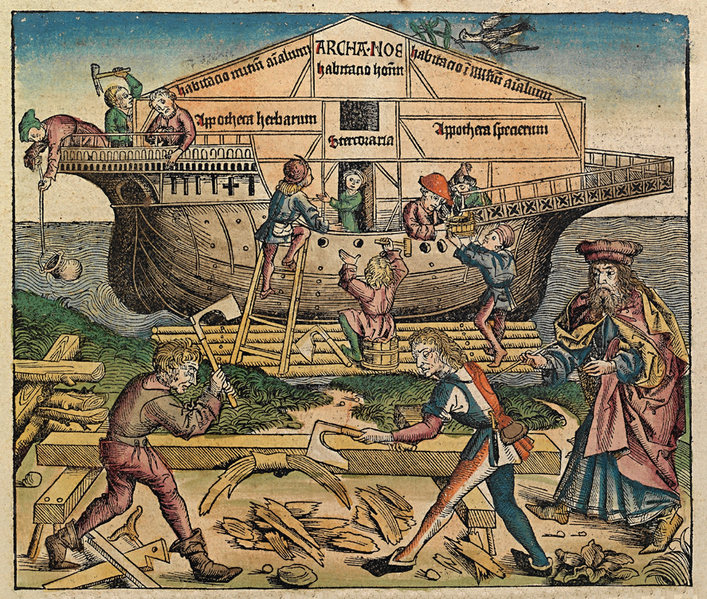
Fascination with Noah’s ark is never-ending. It represents the salvation of life in the face of deadly catastrophe, the concern of the divine for humanity, and cuddly animals we put in our children’s cribs. I suppose, however, I properly shouldn’t call it “Noah’s” ark, because the story predates Noah by some time. The Mesopotamian cultures seem to have been the original flood mythographers; more specifically, the Sumerians first gave shape to the tale. Perhaps in anticipation of his new book, Irving L. Finkel, curator of Mesopotamian artifacts at the British Museum, is quoted as saying the ark was disk-shaped. In a story that is sure to catch the attention of Ufologists, the argument is made that a newly translated text reveals the ark to have been a floating saucer. Why does Styx come to mind?

This past weekend I discovered Ancient Origins, a website purporting to give information about the ancient world. The story of the round ark appeared there recently. The author of the piece, April Holloway, suggests something that has been on some people’s minds all along—maybe the ark was real after all, but we’ve been looking for the wrong thing. Holloway doesn’t outright say that, but the article hints that this may be more than a myth. Usually the dividing line between myth and history is drawn at the biblical borders. According to those bound with faith commitments, pagan myths continue right up until Moses. Once they enter the covers of the Holy Bible they become history. We have known for decades now that the story of the ark was borrowed from other ancient cultures. We also know that the world, physically, in any case, could never be entirely flooded and come out of it looking like our world. Ours is a somewhat drier history, watered by wonderful myths.

707px-Nuremberg_chronicles_f_11r_1

Some Christian groups use the flood story as a paradigm for the rapture—the belief that Christians will be rescued, animal-like, before the worst unnatural disaster ever hits the planet. (Although “planet” may be a misnomer—no biblical writer knew that we orbited the sun on a roughly spherical rock with a molten center.) Earlier Christians saw the ark story as a metaphor for the more spiritual salvation of the faithful in a godless world. There is a strange kind of security in this story, like knowing that you don’t have to go to work for an entire week. And so we can’t let it go, even when we know it’s a myth. “I thought that they were angels, but to my surprise, we climbed aboard their starship, we headed for the skies.” We’ve done a good job polluting our planet and we want to be pulled out of this mess, like the world Wall-e’s people know, to a realm of comfort in the skies. But it is a myth after all, even if I do find myself squeezing my teddy bear and hoping against hope for a happy ending.


Not Knowing

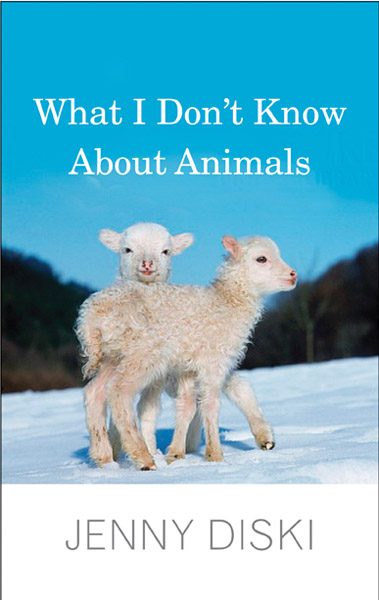
WhatIDontKnowAboutAnimalsBegin with a basic premise: we cannot know what a creature without language thinks. Add in the thoughtful anxieties of a post-domestic writer who knows about animals and you have What I Don’t Know About Animals, by Jenny Diski. Part biography, part science, part philosophy, wholly human. I knew from the day the book was released that I would read it since, like the author, I am one haunted by the relationship between the exploited and the exploiter. Diski’s confessions are difficult to read at times, veiling herself, as she does behind the curtains of one’s most private experiences, but she reveals plenty to those who read on. We can’t know for certain what another person thinks, so how can we know what a sentient animal thinks? Some, following Descartes and Skinner, would declare that animals don’t think, they simply do as programmed. The rest of us know that they are wrong. The evidence accumulates more each year that animals think and feel, but, as Diski repeatedly points out, we need to drive with the brakes on. We can’t get inside them to actually know if human experience corresponds at all with animal experience. We’ve shared the planet for millions of years, but we’ve lost track of our common origins.

As I suspected, the Bible came into the discussion. The book of Genesis lurks in the background of most human-animal rationalizations. The divine division into separate “kinds” must be kept discrete at all times. The problem is, nature won’t always play along with that game. One type slowly morphs into another and some biologists are even questioning the usefulness of “species” at all. Fear of bestiality, as Diski points out, is found already in the Bible. Best to keep everything in its proper pigeon-hole, whether that’s where it belongs or not. Genesis gives us the right to exploit, and so we continue to use animals for our own purposes. Although the feline, it turns out, may have figured out how to set this order on its head. In some cases.

What I Don’t Know About Animals is not a defense of vegetarianism or of radical, thoughtless abandon. Diski writing on spiders will cause many heads to nod in agreement, and her rage against the loss of the common lady-bug struck an amazingly responsive chord with this reader. The lady-bug’s demise came at human tampering, importing asian beetles as pest control—beetles that eventually edged out the harmless lady-bug, replacing the Volkswagen of beetles with a biting, omnivorous, massing pest. In Wisconsin the southern side of our faculty house was literally blanketed with them in the spring. Diski uses the same word I did then: biblical. Swarms seem to be the way that the Almighty has of telling us too much of even a good thing will go bad. Although I couldn’t agree with every statement Diski makes, I have the feeling this is a book I will reread more than once. Wisdom often comes in the form of admitting just how little we know.


Alien Bears

“And if there’s life on other planets, I’m sure that he must know, and has been there once already, and died to save their souls.” Larry Norman, one of the original Jesus Freaks, may not have been the deepest theologian, but his words come to mind as I see scientists reluctantly admitting that maybe life on earth is not so unique after all. It’s been in the news that Kepler Space Telescope’s data have been indicating that other planets like earth may be quite common. It has always amazed me that people have been so reluctant to let go of the notion that we are the only spark of intelligence in this vast, vast, cold, and dark universe. We seem to need to think we’re special. Religions generally indicate that the gods made us for some purpose or another, some love us, some are indifferent, others may be hostile. But generally, we’re unique. The Mormons have for years taught that there is life out there, but mainstream Christianity has generally been agin it, mainly owing to the crucifixion. Larry Norman, the original Christian rock artist, speculated that cosmic history repeated itself: if Jesus died for us, well then, he must’ve done the favor for them too.

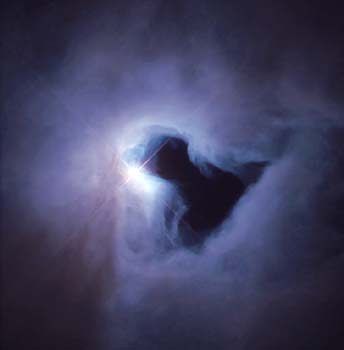
Once Edwin Hubble stepped away from the telescope, stuck his famous pipe in his mouth, and said “huh,” I would’ve thought other scientists might’ve considered, like H. G. Wells, that “they” were out there looking back at us. Why this reluctance to suppose that we’re not alone? The story in the Washington Post cites the typical reason: the Goldilocks effect. Scientists, perhaps unwittingly influenced by the anthropic principle, have supposed other planets, if they existed, were either too hot or too cold to support life. We, like Goldilocks, happened to inhabit the only planet among the billions of galaxies of billions of stars, that got it just right. More like God-ilocks. The idea derives from Genesis where, it is strongly implied, we are the only ones. Religion influences culture, whether materialists want to admit it or not. The earth-only bias is inherently religious.

Who's looking back at Hubble?

Who’s looking back at Hubble?

Astronomers will gradually come around to the idea that there are other planets like ours. It will likely take decades, perhaps centuries, before they will commonly admit that life forms like ours are out there walking around. Eventually they may decide that there’s something to UFOs after all. Meanwhile, various New Religious Movements have already hitched rides on those flying saucers and they will be laughing once the rest of us catch up. We tend, under the influence of those who claim religion is always Bronze Age drivel, to forget that religion often leads the way to new territory. When the little green men and women land, we’ll find that many religions have beat science to the punchline. I’m not so sure, however, that the aliens will know who Jesus is. After all, this chair’s too hard, and this one’s too soft.


Falls Tree

The autumn trees have been absolutely transcendent the past few days. From my earliest memories fall has been my favorite time of year, and a large determinant is the trees. Some weeks back, while on the campus of Notre Dame University, I noticed the highly stylized icons of biblical tropes etched into the stone walls of the library. The marble of the walls was highly polished, making images difficult to capture, but I tried to snap one of the tree of life. The tree of life has many associations that go back even into pre-biblical times. Many people are familiar with the story from Genesis, where the tree of life is forbidden to Adam and Eve because they ate from the tree of knowledge. That tree, however, goes back to ancient Mesopotamian stories of paradise as well. Even the Sumerians considered trees foundational.

IMG_1001

I suspect that trees are impressive partially because of their longevity. From a human perspective, they long outlast us—some of the oldest trees in the world are located in western Asia. If we don’t attack them, some species have a pretty good chance of lasting hundreds of years. With roots that run deep and crowns that reach high, trees have been a rich source of symbolism for religions for a very long while. The goddess Asherah was, in some way, connected with trees. I’ve noted in some of my more academic work that the precise nature of this relationship is never really clarified, but some have suggested that the tree of life itself is a form of the goddess. Certainly in Judaism the tree of life inspired the menorah and its gift of light, to be celebrated later this month.

Looking out my window at the brilliant reds and yellows, I am glad for the solidity of trees. Much of life is much less stable than our wooden companions. The myth of the tree of life is a reminder that even if we can hold the eons in our heads, our bodies will not last so long. It is a poignant thought, best captured by the slow falling of the leaves at this time of year. The leaves had just started to change as I strolled the campus of Notre Dame, unaware that my own fall was likely already set in place. The proverbial axe, as it were, was already laid to the root of the tree. I was perhaps too busy thinking about the tree of life to notice the changes taking place around me. A good metaphor will do that to you, and it might even live as long as the tree of life itself.


The Tell-Tale Telegraph

Steampunk CityThere’s a guy next to me with a robotic arm. Women with lace umbrellas and aviator googles walk by on the arms of Victorian gentlemen with walking sticks. A couple have an effervescing water-cooled device on their backpacks. I must be in Steampunk City. The forecast had predicted rain, but it is a beautiful October day in Speedwell, New Jersey. Steampunk City, an event dreamed up by Jeff Mach to make money for local museums, draws in a good crowd of the garishly bedecked, causing my wife and me to feel desperately underdressed. I’ve read my share of steampunk fiction, and I am really thrilled to see so many people taking an interest in such a literary event. I did wonder, however, what demonology had to do with it. Kevin Meares of Delaware Valley Demonology Research is giving a talk on demons, and it’s interesting to notice how the light laughter of customers from the booths outside wafts through the door where stories of possession are being told.

It is difficult to listen to Mr. Meares and believe that he hasn’t seen some pretty strange things. A practicing demonologist rather than the armchair variety, he has accompanied priests on exorcisms and is utterly convinced of the reality of the entities. When asked where demons come from, he relies on the Bible and Bible lore. Either they are fallen angels, remnants of a prior creation (thus the discrepancy between Genesis 1 and 2), or the offspring of the Nephilim of Genesis 6. Whatever they are, he has seen them in the dark, and people have died because of their activity. Being somewhat of a skeptic, I still find myself a little creeped out, kind of wishing I was outside with the laughing, costumed fiction readers.

Steampunk is often about alternate realities. A world where technology developed in the fog of steam rather than the neat circuitry of electricity. Speedwell, ironically, (and probably intentionally) is where the telegraph was invented and first demonstrated. It is a key site in the Industrial Revolution, the development that made the modern world what it is with smart phones, air-light laptops, and iCloud. I’m in the basement of an historic building having my rational worldview threatened by stories of demons. Although I’m wearing my nonplused face, I know that things will be different in the middle of the night. I’ve got brass gears in my pockets and supernatural entities in my head. I’ve met a watch maker outside who translates Aramaic manuscripts. What hath God wrought indeed, Mr. Morse? Yes, I’m in an alternate universe, and I may decide not to come back to the work-a-day one after all.


Inhumane Society

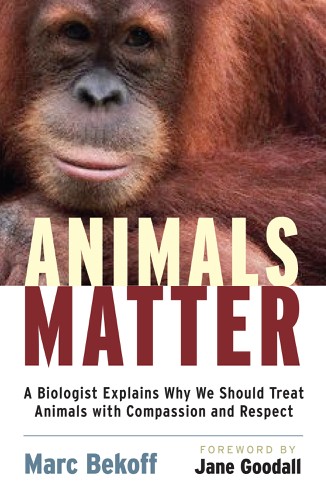
AnimalsMatter“I’m a member of PETA,” I’ve had more than one wag say, quoting bumper sticker wisdom as if it were profound, upon learning I’m a vegetarian. “People Eating Tasty Animals,” they then spell out with a smirk. I stopped eating animals at about the turn of the millennium, and since then I’ve discovered more and more reasons that it was the correct decision. I’ve just read Marc Bekoff’s Animals Matter: A Biologist Explains Why We Should Treat Animals with Compassion and Respect. It saddens me that in our world where nothing escapes being posted on Facebook, people still tend not to notice the suffering we impose upon animals as a matter of course. I’ve always been inclined to look closely at things, including animals. Watching them, it is clear that humans are indeed animals only differently evolved. Our mannerisms, our emotions, even our expressions, can be found among our animated kin. We share a planet on which we all evolved together, so why do we find it so easy to exploit other creatures?

One of the reasons Bekoff notes, without being judgmental, is that some religions inform us that people alone are special because we bear the image of God. Although God is supposed to be altruistic, we don’t wish to share that exalted status with any other species, apparently. Even in the twenty-first century many otherwise intelligent people still claim that animals feel no pain. Can’t reason. Are mere machines. We’ve been taught to distrust common sense that informs us that if an animal in distress acts like a human in distress that it experiences the same anxiety. The more we study animals the more human they become. The theology of Genesis has much for which it will be called to answer.

It seems, however, that the Bible is used as a mere excuse here. We exploit other animals because we can. We have taught bovines and ovines to trust us so that we may more easily slaughter them. Perhaps this is an exercise in divine image bearing, but somehow I doubt it. Reading Animals Matter in many ways felt like listening to a scientist who has taken the message of the Lorax to heart. We treat animals the way we do because we don’t understand their language, but we are morally obligated to speak for those who have no tongues. Although accessible to younger readers, Animals Matter is nevertheless a profoundly disturbing book. What does it say about the highly evolved when they exploit their relatives who’ve not learned the language of humans? Or, more accurately, who’ve not learned to vocalize like humans. Other animals speak, just like people sometimes, if we would only translate their actions into words.


Neither Black nor White

What hath Rome to do with Lagos? In the portion of the newspaper where religion is freely discussed—the Sunday edition, of course—Jeff Kunerth published a thoughtful piece entitled “Black atheists might feel lonely, but they’re not alone.” Kunerth reveals a double dilemma for the African-American non-believer: strong emic social pressure to be religious and etic deconstruction of race by many atheists. I know African-American humanists, and I have been informed of the lack of attention given to humanism and race. Both, in many circles, are troubling concepts. We like to think we’d evolved to the point of “race” disappearing from the social spectrum, but we also feel pride concerning cultural achievements, some of which are tied to “race.” Where would our culture be without the influence of African-American music, story, and art? Is belief required to truly belong?

I often wonder why it is that skin tone is used to divide people. Inevitably my thought goes back to the Bible. In the ancient view reflected in the book of Genesis, all creatures, humanity included, were created with inviolable boundaries of “kind.” As mules and ligers demonstrate, however, boundaries are often only as strict as we permit them to be. “Can the Ethiopian change his skin?” Jeremiah rhetorically asks in 13.23 of his eponymous book, “or the leopard his spots?” Not only is race fixed, but gender as well. Each according to his own kind. It’s this easy division that’s troubling me. Humans of all “races” may interbreed, something not possible for the liger or mule. We are free to change our outlook. The leopard spots are in our minds.

None of this is meant to belittle the difficulties faced by black atheists, or any others who are excluded by their own “kind.” It is simply a suggestion that we might enlarge the pie, to borrow from Getting to Yes, before dividing it. Belief has to be a matter of conscience, and acceptance should be a matter of principle. Too often religious beliefs divide rather than unite. Atheists and true believers, of one “race” or many, have a common cause to make a better world for all. The prophet anticipates a negative answer to his rhetorical question. Allow me, Jeremiah, respectfully to disagree. Yes, a leopard may change its spots anywhere except in the prejudiced savannah of the human mind.

Leopard_africa


Stonefaced

Railsea Imagine, if you will, life on the open sea. Back in the whaling days. Days before enlightenment really took hold. Transpose that thought onto railroads. In a day of huge moles and other underground creatures. Days when no one can imagine where the rails end. That might give you the slightest glimpse of China Miéville’s Railsea. I haven’t read too much of Miéville’s fiction, but I have read enough to know to expect a reality distorting romp through very interesting places. In this take on Herman Melville’s Moby Dick, Miéville takes some noteworthy risks in providing his characters with a native religion. Fiction authors sometimes find religion a constraining topic. Consider Salman Rushdie. More often the restraint appears to be a lack of imagination on the writer’s part—although we can’t define religion very well, we all know what it is and what it’s supposed to look like. Miéville, although in backstory, provides a new religious world where the gods are called Stonefaces and everybody believes in angels, and the explanation of where the railways came from is “theology.” Even our erstwhile Captain Ahab is chasing after her “philosophy” in the form of a giant mole that seems to have taken her arm.

With a sensitivity I’ve rarely found (the fault could well be entirely mine), Miéville utilizes religion, particularly Christianity, to construct an alternate universe. The gospel therefore appears as godsquabble, and to suggest there is anything beyond the sea of rails is literally heresy. Our protagonist Shamus ap Soorap on his voyage of discovery ends up riding to heaven on the rails only to find that there is yet even more beyond. Although religion itself is not central to the story its adjuncts are, creating an entire mythos of life on the railroad. It this world it is clear that wood and trees are related, but no one quite knows how; some suppose an evil god planted false evidence to deceive them. There’s even a healthy dose of the Odyssey thrown in, with the Medes having to pass through a mountain dwelling monster, the siller, and the Kribbis Hole.

But aren’t we really on the ark once more? For surely the bedeviled Pequod was a shadow of the same. In Miéville’s fantasy world, the open ground unpopulated by islands is dangerous. All kinds of innocuous creatures burrow out and will eat the traveler who is not safely ensconced on a train. As if to underscore the Noahic connection, Sham ends up on an actual boat on an actual endless sea. I’m pretty sure Homer never read Genesis, but the parallels between Greek mythology and the Hebrew Bible were long ago recognized by Cyrus Gordon and his colleagues. Miéville continues the tradition. Stranded on an island, Sham tries walking on the rails (read walking on the water and you’ll get the picture) until his faith fades. There are many who declare that religion has outlived its usefulness, but if an author can bring Melville, Homer, and the Bible into an intensely creative story, I think I’ll have to beg to differ.


Leviathan’s Sibling

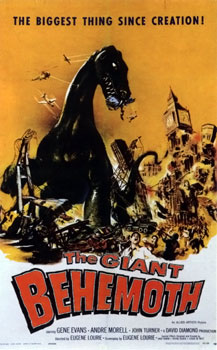
TheGiantBehemoth Formulaic to the point of plagiarism at times, 1950s science fiction movies often follow the deeply worn ruts left by countless forgettable monsters. One such film that I managed not to see until recently was the biblically entitled The Giant Behemoth. In a more biblically literate society the poster’s catchphrase “The Biggest Thing Since Creation!” may not have been necessary, even though leviathan’s lesser known companion stole the title this time. Of course the movie begins with stock footage of nuclear explosions, and although I’ve seen such renditions hundreds of times, they remain troubling to the core. Those 1950s that many consider so carefree were days of insidious freewheeling with the environment, days before human infatuation with the power over nature revealed its horrifying consequences. The behemoth, a sign of Yahweh’s great creativity in Job, here becomes the human-wrought agent of destruction.

Poor Tom Trevethan is blasted by the beast’s radioactive breath in a scene more fitting to Revelation than to Job. In the funeral scene, the priest somewhat insensitively reads a description of behemoth before Tom’s sole surviving family, his daughter Jean. So like the 1950s the minister then declares that the Bible gives comfort to those left behind, when the Lord said to Job, “Gird up thy loins like a man.” Indeed. Loin girding was a masculine activity in the days before Fruit of the Loom had been grown. Comfort for the woman comes in acting like a man. Yes, the 1950s considered the man the default model of human being. It says so in sacred writ. Genesis 3, to be exact.

When the scientists can’t figure out what killed the old man, along with thousands of fish, they ask Jean if her father said anything before he died. She tells them about behemoth. Being scientists, they have no idea what a mythical, biblical creature might be. Jean informs them, “It’s some prophecy from the Bible; it means some sort of great, monstrous beast.” Well, Job is technically not prophecy. Actually it’s not even untechnically prophecy either. In the 1950s, however, if it was biblical, it could be interpreted as prophecy. The real foretelling, though, is clearly atomic. Such films can easily be forgiven their biblical infelicity for the sake of their good intentions of reigning in human self-destructive behavior. In the end science destroys the biblical beast, but I’m left wondering if it isn’t more of a parable than a prophecy. I guess it’s time to gird up my loins and go find out.